
A spiritual awakening is a shift in how you see yourself, other people and life itself, in which the ordinary sense of being a separate, isolated self loosens and a deeper awareness, meaning or presence comes forward. People describe it as waking from a long sleep. Some arrive at it gently through meditation or loss, others in a single night. Almost everyone says that once it begins, the old way of seeing no longer quite fits.
This guide explains what a spiritual awakening is, how the world’s traditions describe it, what tends to set one in motion, what it can feel like, how the dark night of the soul and spiritual emergency fit in, and how to ground it in daily life. It is the hub for our awakening series. For a detailed list of signs, see our guide to the 15 signs of a spiritual awakening.
Key Takeaways
- What it is. A shift from living on autopilot to living with awareness, meaning and a sense of connection to something larger than the ego.
- Not the same as enlightenment. Awakening is a beginning and a series of openings. Enlightenment names a full, stable realization in most traditions.
- Many doorways. Meditation, loss, illness, love, near-death experiences, or no obvious cause at all can set it in motion.
- It can be hard. Waves of emotion, sleep changes and a dark night are common. Seek a doctor or mental health professional when anything overwhelms you.
- Integration is the work. Awakening becomes real in daily life: in how you speak, listen, rest and love.
What Is a Spiritual Awakening?
At its simplest, a spiritual awakening is the moment, or the long season, when you begin to wake up to a larger reality than the one your daily routines describe. The word is old and widely shared. The title Buddha means “Awakened One,” from a Sanskrit root meaning to wake or become aware, and Zen teachers speak of kensho, seeing into one’s true nature. In everyday language people use the phrase for any deep turn toward meaning: a sudden knowing that life is more than we were told, a quiet opening in meditation, or the slow undoing of beliefs that no longer hold.
In the NLS tradition we treat an awakening as a movement of the soul, not a mood. The soul remembers what it came here to learn, and the personality, with its habits and fears, gets the chance to follow. Author Ora Nadrich says in her NLS episode that she believes the purpose of life is to awaken, and that mysticism is not reserved for gurus and monks but is open to anyone willing to widen their awareness.
Our glossary entry on spiritual awakening gives the short definition. This guide goes much further: how the traditions describe awakening, what sets it in motion, what it can feel like, how a dark night or a spiritual emergency fits in, and how to ground the whole experience in a life you actually live.
What an Awakening Is and Is Not
| An Awakening Is | An Awakening Is Not |
|---|---|
| A widening of awareness and meaning | A personality upgrade into someone who is never upset |
| Often disorienting before it feels peaceful | Constant bliss |
| A relationship with something larger than the ego, called spirit, source, God or awareness | Tied to one religion or one teacher |
| Something that can begin gradually or all at once | A contest, a rank or a badge |
| Lived out in ordinary days, with ordinary people | An escape from responsibility |
Spiritual Awakening vs Enlightenment
The two words are often used as if they meant the same thing. In most traditions they do not. Awakening usually names the first opening, the glimpse, the turning of the heart. Enlightenment names a full and stable realization. In the Zen tradition, for example, kensho is described as an initial insight or sudden awakening, not full Buddhahood. Many teachers compare awakening to seeing the sun for the first time and enlightenment to living in its full daylight.
| Spiritual Awakening | Enlightenment | |
|---|---|---|
| Common meaning | A turning toward awareness, meaning and the sacred | A full, stable realization of one’s true nature |
| Time frame | A moment, a season or a lifelong series of openings | Described as complete and lasting in the traditions that use the word |
| Experience | Glimpses, waves of emotion, new questions, deeper compassion | Described as freedom from the sense of a separate self |
| Role of the ego | Loosens and is often challenged | Seen through completely, in the traditional accounts |
| Who it is for | Anyone, at any stage of life | Presented as the goal of a lifetime of practice |
You do not need to settle the vocabulary to benefit from the path. If you want to explore the larger destination, see our guides to spiritual enlightenment across traditions and to choosing a spiritual path, and the enlightenment glossary entry.
Awakening Across Traditions
Every major wisdom tradition has its own language for the same turning point. The overlap is part of why awakening feels both personal and ancient. In 1902 the psychologist William James published The Varieties of Religious Experience, drawn from his Gifford Lectures, in which he compared private religious and mystical experiences across traditions and identified what they had in common.
| Tradition | Word or Idea | What It Points To | Go Deeper |
|---|---|---|---|
| Buddhism | Bodhi, awakening | Seeing clearly into the nature of mind and of suffering | Gautama Buddha: his life and teachings |
| Zen | Kensho and satori | A sudden glimpse of one’s true nature. The Ten Bulls pictures describe the path toward awakening and the return to the world to act with wisdom and compassion | Meditation |
| Hinduism and Vedanta | Moksha, self-realization | Liberation through knowing the true Self | Ramana Maharshi and self-inquiry; Adi Shankara |
| Yoga | Kundalini, the rising of energy | An inner current said to climb the spine and open higher states | Kundalini energy; Kriya yoga |
| Christian mysticism | Purification, illumination and union; the dark night | Union with God, reached through surrender. John of the Cross, a 16th-century Spanish mystic, wrote the poem behind the phrase “dark night of the soul” | Dark night of the soul |
| Sufism | Fana | The annihilation of the self in the Divine | Oneness |
| Western psychology | Peak experience; cosmic consciousness; spiritual emergency | Maslow named the peak experience in 1956. Richard Maurice Bucke described “cosmic consciousness” in a book of 1901. Stanislav Grof used the term spiritual emergency for crises of transformation | What is consciousness? |
Evelyn Underhill, in her 1911 book Mysticism, described the mystic’s journey as a path of stages, from the awakening of the self through purification, illumination and a dark night to union. You will recognize echoes of that path in nearly every modern account of waking up.
What Sets a Spiritual Awakening in Motion?
There is no single cause. Some people can name the day it began. Others can only say that one year they noticed the old life no longer fit. The most common doorways fall into a few groups.
Gradual Awakenings
Many awakenings unfold slowly through meditation, therapy, time in nature, a book that lands at the right moment or a teacher who says something you already knew. Nothing dramatic happens. One day you notice you are kinder, quieter inside and less interested in what used to run you. Ora Nadrich describes this kind of path as an ongoing inner practice of taking your spiritual pulse, catching the thought behind the emotion and getting comfortable being uncomfortable.
Sudden Awakenings
Others describe a single overwhelming shift. Author Eckhart Tolle says that one night in 1977, at age 29, after long periods of depression, he experienced an inner transformation. Screenwriter Bruce Joel Rubin, who wrote Ghost and Jacob’s Ladder, describes in his NLS episode a 1960s experience in which everything he knew about himself dissolved, and says a voice told him he was back to tell people what he saw. Sudden awakenings can be luminous and frightening in the same hour. They are the ones most likely to need extra grounding and support.
Awakenings Through Loss and Crisis
Grief, illness, divorce, burnout and the end of a long identity are among the most common triggers. When the structures that held your life fall away, the question “who am I without them?” becomes impossible to ignore. Musician Moby tells Alex in his NLS episode that he assumed money, fame and validation would bring happiness and found they did not, and that he found a surprising peace in being of service. Many people recognize that arc: the thing we chased empties out, and something quieter takes its place.
Awakenings Through Love, Birth and Beauty
Falling deeply in love, holding a newborn, standing under a night sky or hearing a piece of music that cracks the heart open can all be doorways. Our guides to twin flame awakenings and soul contracts explore how a powerful bond can set the whole process off.
Near-Death Experiences
People who return from a near-death experience often describe an awakening that reorders their life: less fear of death, a new sense of purpose and a conviction that love is the point. Our complete guide to near-death experiences covers what experiencers report and how it changes them.
Signs of a Spiritual Awakening at a Glance
Awakening looks different in every life, but certain signs come up again and again. This is the short version. Our dedicated guide to the 15 signs of a spiritual awakening describes each one in depth.
| Sign | What It Can Feel Like |
|---|---|
| A sense that something is missing | A quiet ache or restlessness that success does not fix |
| Questioning inherited beliefs | Old answers about God, work, success and identity stop satisfying |
| Shifts in friendships | Some bonds deepen while others fade without a clear reason |
| Heightened sensitivity | Crowds, noise, news or other people’s moods feel louder |
| Changes in sleep and dreams | Vivid dreams, waking at the same hour, bursts of energy at night |
| Synchronicities | Meaningful coincidences, repeating numbers and well-timed encounters |
| Waves of emotion | Old feelings rise to be felt and released |
| A pull toward stillness and nature | Silence, trees and water feel like medicine |
| Growing intuition | A clear inner knowing that you trust more over time |
| Compassion | Less judgment of others and of yourself |
| Less fear of death | A calmer relationship with impermanence |
| A quiet sense of oneness | Moments of peace and belonging that need no explanation |
The Arc of an Awakening: Maps From the Traditions
People often ask whether awakening follows a fixed order. It does not, and anyone who offers you a rigid timetable is simplifying. Still, maps can be reassuring, because they tell you that others have walked this ground. These three are useful companions.
| Map | How It Describes the Path |
|---|---|
| Evelyn Underhill’s mystic way (1911) | Awakening of the self, purification, illumination, a dark night and union |
| The Ten Bulls of Zen | A series of poems and drawings showing the stages of progress toward awakening and the return to society to act with wisdom and compassion |
| Loch Kelly’s head and heart awakening | Psychotherapist and meditation teacher Loch Kelly describes two stages of one path: an awakening of awareness in the head, and an awakening of the heart. He calls the integrated state awake loving flow |
For a step-by-step view that stays close to what people report today, see our guide to the stages of a spiritual awakening. A simple three-movement view also helps. First comes shaking loose, when old structures wobble and questions multiply. Next comes seeing, when glimpses of a larger reality arrive. Finally comes settling, when the glimpses become a way of living. People move back and forth between these movements for years, and that is normal.
What a Spiritual Awakening Can Feel Like
Because awakening touches the whole person, its effects show up in the body, the mind, the emotions and the energy field. The table below sorts the most commonly reported experiences. It is not a diagnosis, and any physical symptom deserves a medical check first. Our detailed guide to spiritual awakening signs goes through each in turn.
| Area | Commonly Reported Experiences | A Grounded Response |
|---|---|---|
| Emotional | Sudden tears, waves of grief or joy, old memories surfacing, mood swings | Let feelings move. Journal, rest and talk with someone you trust. |
| Mental | Racing questions, loss of interest in old goals, brain fog, a sense of unreality | Slow down. Simple routines and time outdoors steady the mind. |
| Physical | Fatigue, changes in appetite, sleep disruption, headaches, tingling or pressure | See a doctor first. Then support the body with food, water, movement and rest. |
| Energetic | Heat, buzzing, pressure at the head or heart, heightened sensitivity to places and people | Ground through your feet, breathe slowly and spend time in nature. |
| Relational | Distance from old friends, new longing for meaningful connection, a shifting sense of family roles | Speak honestly and kindly. Make room for your changing needs. |
These experiences can also have ordinary medical or psychological causes. A doctor or licensed mental health professional can help you sort out which is which, and caring for your body and mind is itself a spiritual act.
The Dark Night of the Soul
Many awakenings include a stretch when meaning drains away. Prayer feels empty, old comforts stop working and the future looks blank. The phrase “dark night of the soul” comes from the poem of St. John of the Cross, the 16th-century Spanish mystic, who described a phase of passive purification in the soul’s journey. Today the phrase is used for any long, disorienting passage that strips away identity and certainty before something new can arrive. Our complete guide to the dark night of the soul describes its signs and how people move through it.
NLS guests have spoken about this territory with great candor. Actor Guy Pearce tells Alex in his episode on surviving a dark night of the soul that at the end of 2001 he stepped away from acting to ask whether it was still his own choice, and that the lesson that took him longest was learning to be kind to himself. Kyle Cease explores the collective version in Humanity’s Dark Night of the Soul. Moby’s story, mentioned above, is a quieter version of the same passage.
A Dark Night Is Not the Same as Depression
The two can look alike, and they can also overlap. If you have persistent low mood, loss of interest in nearly everything, trouble sleeping or eating, a sense of hopelessness or any thought of harming yourself, please see a doctor or licensed mental health professional. In the United States you can call or text 988 to reach the 988 Suicide and Crisis Lifeline at any time. Spiritual meaning and professional care work well together, and you never have to choose between them.
Spiritual Emergency: When Awakening Becomes a Crisis
Sometimes an awakening arrives faster than a person can integrate. The term spiritual emergency, associated with Stanislav and Christina Grof in 1989, describes an identity crisis in which a person’s meaning system changes drastically following a spontaneous spiritual experience, such as a mystical opening, a near-death experience or a powerful kundalini episode. The experience can overlap with anxiety and panic, and people in this state often need specialized, respectful support.
Seek help promptly if you notice any of the following:
- You have gone without sleep for several days and cannot rest.
- You feel confused about what is real, or you hear or see things that frighten you.
- You cannot care for yourself, eat or keep up basic safety.
- You have thoughts of harming yourself or someone else.
Contact a doctor, a licensed mental health professional or an emergency service. If you are in the United States and in immediate danger, call 911, or call or text 988. If you work with a spiritual teacher, tell them you are also seeing a professional. A good teacher will welcome it.
Awakening, Energy and the Chakras
Mystical traditions describe awakening as an energetic event as well as a psychological one. In yoga, the image is kundalini, a form of divine energy said to rest at the base of the spine and rise through the body. In the chakra system, the energy centers along the spine open in their own time, from the root chakra that grounds you to the heart chakra that connects you to others and the third eye that is linked with inner seeing. Our complete guide to the seven chakras maps them all.
People often feel these shifts as warmth, tingling, pressure or a sense of expansion. Teachers of the kundalini tradition caution against forcing the process, because energy that rises faster than the body and mind can integrate can be unsettling. Move gently, favor grounding practices and seek experienced guidance. For the head and heart together, see our guide to awakening the third eye.
How Awakening Changes Relationships, Work and Family
Waking up rarely happens in a vacuum. It happens in the middle of a marriage, a job, a family and a circle of friends who did not sign up for the change. Expect some of these shifts.
- Friendships realign. Conversations built on gossip, complaint or distraction may lose their pull. New friendships built on honesty and meaning tend to arrive, often after a lonely stretch.
- Partners notice. A partner may feel left behind, or may feel inspired. Share what is happening in plain language rather than spiritual jargon, and ask about their experience too.
- Work asks new questions. A job that once felt fine can begin to feel hollow. Resist the urge to quit overnight. Explore what is calling you, and build a bridge. Our guide to soul purpose can help you sort the questions.
- Family roles shift. Old patterns, such as the peacemaker, the fixer or the quiet one, may stop fitting. Boundaries become both more necessary and more loving.
One of the most useful teachings here comes from Jon and Missy Butcher, who say in their NLS episode that the inner work is clearing the noise and other people’s opinions so you can hear your soul’s song. Awakening is not a reason to withdraw from people. It is a reason to meet them more truthfully.
Common Myths About Spiritual Awakening
| Myth | A Wiser View |
|---|---|
| Awakening means you will feel happy all the time | Awakening opens the whole range of feeling. Peace grows underneath the waves, not instead of them. |
| You must leave your life to awaken | The path runs through your ordinary life. Awakening shows up in how you speak, listen and choose. |
| It happens only to special people | Teachers across traditions describe awakening as available to everyone who is open to it. |
| Awakened people never struggle | Loch Kelly says awakening does not erase trauma and that inner psychological work still matters. |
| More signs mean more progress | Signs invite attention. They are not a scoreboard. |
| You need a guru | A teacher can help, and many teachers say their role is to introduce you to your own inner teacher. |
| It is over once you have a big experience | A big opening is a beginning. Integration takes years and rewards patience. |
What Psychology and Research Traditions Say
Western psychology has been circling awakening for more than a century. William James treated mystical experience as a serious subject of study in 1902. Richard Maurice Bucke, a Canadian psychiatrist, proposed in 1901 that humanity might be evolving toward a higher form of consciousness he called cosmic consciousness. In the 1950s Abraham Maslow described peak experiences as rare, deeply moving moments that give an advanced form of perceiving reality. In the decades since, the field of transpersonal psychology has studied experiences of self-transcendence and meaning, and Stanislav Grof, an American psychiatrist, helped bring the idea of spiritual emergency into clinical conversation.
These perspectives do not replace the spiritual view, and the spiritual view does not replace them. They offer a shared vocabulary, and they remind us that awakening is a human experience worth understanding with care. Our guide to what consciousness is explores where science and spirituality meet and where they still ask each other questions.
How to Navigate a Spiritual Awakening: 12 Practices
No single practice suits everyone, but these twelve have helped many people stay steady while the old life reorganizes. Choose two or three and let them become habits.
- Ground the body. Walk barefoot on grass, wash dishes slowly, stretch, or hold something warm. Feeling your feet is the quickest way back to now.
- Meditate, a little, every day. Ten quiet minutes beat an hour once a month. See our guide to how to meditate and our upcoming list of meditations for spiritual awakening.
- Keep a journal. Write what you feel, what you notice and what you are afraid of. Patterns appear on the page long before they appear in the mind.
- Breathe slowly. Inhale for four counts, exhale for six. The longer exhale calms the nervous system.
- Sleep and eat well. An awakening is a whole-body event. Regular meals, water and rest are spiritual practices.
- Spend time in nature. Trees, water and open sky have steadied seekers for thousands of years.
- Find a trusted guide or community. Look for teachers who encourage your autonomy and welcome questions.
- Add professional support. A therapist who respects spirituality can help you integrate, and a doctor can rule out medical causes. Both belong on your team.
- Do some shadow work. Awakening brings what you have avoided into the light. Our shadow work entry introduces the practice of meeting those parts with compassion.
- Practice gratitude. Naming what is good is a reliable way to widen the heart. See the power of gratitude.
- Serve someone. Moby’s experience points the same direction: peace often arrives through being of use to others.
- Support your energy. Some people find crystals, sound or ritual helpful companions. Our guide to crystals for spiritual awakening offers gentle options, and our guide to raising your vibration covers everyday habits.
A Gentle 7-Day Awakening Rhythm
If you feel scattered, try this rhythm for one week. Keep each practice short and kind.
| Day | Focus | Practice |
|---|---|---|
| 1 | Arrive | Sit for five minutes with your feet on the floor. Notice three things you can see, hear and feel. |
| 2 | Write | Fill one page with whatever is on your mind, without editing. |
| 3 | Move | Take a 20-minute walk without a phone. Look at the sky. |
| 4 | Breathe | Do five minutes of slow breathing, four counts in and six counts out. |
| 5 | Thank | Write five specific things you are grateful for and say one thank you aloud. |
| 6 | Serve | Do one quiet kindness for someone, with no need for credit. |
| 7 | Review | Read your pages. Note what felt true, what felt hard and what you want to carry forward. |
Journal Prompts for an Awakening
- What in my life feels ready to change, and what feels ready to stay?
- When do I feel most like myself?
- What beliefs did I inherit that I now want to examine?
- What would a kinder way of living this week look like?
- Who or what helps me feel grounded?
Integration: Living the Awakening
The most important teaching about awakening may be the least dramatic: it has to be lived. Loch Kelly says in his NLS episode that what you are looking for is already here, just covered over, and that awakening still needs inner psychological work. He teaches brief glimpses, short shifts from the thinking self into awareness, and says the integrated state, awake loving flow, is awareness living inside ordinary life.
Integration looks like this: you speak a little more kindly to the cashier. You notice when you are reacting and pause. You tell the truth sooner. You rest when you are tired. You keep a practice on the days it feels dull. Teachers in nearly every tradition describe the return to the marketplace, the Zen image of coming back into the world with open hands, as the true test of awakening.
If you want a map for the long view of human consciousness, our guide to the yugas explores the traditional idea of great ages of awareness, and our guide to the ascended masters introduces the teachers many seekers turn to for inspiration.
How Long Does a Spiritual Awakening Last?
There is no fixed answer. Some intense phases settle within weeks or months. Others unfold over years, in cycles, with rests in between. Many teachers say awakening deepens over a lifetime, with each opening revealing another layer. If you feel anxious about the timeline, that is worth noticing too. The path is not a race, and no one is behind.
A Note on Care
A spiritual awakening can stir powerful emotions, unusual sensations and hard questions. This guide offers spiritual perspective and is not medical or mental health advice. If you are struggling with persistent low mood, panic, loss of sleep, confusion or thoughts of harming yourself, please contact a doctor or licensed mental health professional. In the United States you can call or text 988 to reach the 988 Suicide and Crisis Lifeline at any time.
Watch: Real Conversations on Awakening, Mysticism and the Dark Night
These NLS guests speak about mysticism in everyday life, an awakening that changed a screenwriter’s work, a teaching on awakening and the heart, and a dark night that led to service.
Ora Nadrich: The Secret to Spiritual Awakening
Author Ora Nadrich talks about her books Mindfulness and Mysticism and Time to Awaken, higher states of consciousness, being present, the inner work of knowing yourself, and why she believes the purpose of life is to awaken. Watch the full episode and read the show notes.

Bruce Joel Rubin: A Man’s Astounding Spiritual Awakening
Screenwriter Bruce Joel Rubin tells the story behind Ghost, Jacob’s Ladder and My Life, and the 1960s awakening that shaped all of them, including why he says it all comes down to being kind. Watch the full episode and read the show notes.

Loch Kelly: Awakening in a Chaotic World
Psychotherapist and meditation teacher Loch Kelly explains effortless mindfulness, why he says what you are looking for is already here, and why awakening still needs inner psychological work. Watch the full episode and read the show notes.

Moby: Rebirth and a Dark Night of the Soul
Moby talks about his documentary Moby Doc, the success that did not bring him happiness, the surprising peace he found in being of service, and the big questions he keeps asking about the divine. Watch the full episode and read the show notes.

Watch More on Next Level Soul TV
Next Level Soul TV has movies and episodes on awakening, mystics and the nature of consciousness, including Awake: The Life of Yogananda, The Etruscan Smile, and What is Consciousness? Join Next Level Soul TV and keep exploring.
Go Deeper with Next Level Soul
- Spiritual Awakening Signs: 15 Signs You Are Awakening
- Dark Night of the Soul: Meaning, Signs and How to Move Through It
- Spiritual Enlightenment: Meaning, Paths and Signs Across Traditions
- Paths to Enlightenment: How to Choose Your Spiritual Path
- Kundalini Energy: Awakening, Signs and Safe Practice and Chakras: The Complete Guide to the 7 Energy Centers
- Near-Death Experiences (NDEs): The Complete Guide
- Soul Purpose: What It Means and How to Find Yours
- The Stages of a Spiritual Awakening, Spiritual Awakening Signs, Meditations for Spiritual Awakening and Crystals for Spiritual Awakening
- Spiritual Awakening, Enlightenment and Kundalini in the glossary
- The full spiritual glossary
Sources and Further Reading
- The Buddha (Wikipedia)
- Kenshō (Wikipedia)
- Moksha (Wikipedia)
- Ten Bulls (Wikipedia)
- Dark Night of the Soul (Wikipedia)
- Evelyn Underhill (Wikipedia)
- The Varieties of Religious Experience (Wikipedia)
- Cosmic Consciousness (Wikipedia)
- Peak experience (Wikipedia)
- Spiritual crisis (Wikipedia)
- Stanislav Grof (Wikipedia)
- Eckhart Tolle (Wikipedia)
- Fana (Sufism) (Wikipedia)
- 988 Suicide and Crisis Lifeline
Spirituality for the Rest of Us™
Movies, teachings and community on Next Level Soul TV.
Go Deeper with NLS Mastery: Awakening Divine Consciousness
If you are ready to move from reading about awakening to experiencing it, this course is a direct path. Paul channels the Guides through attunements that clear the static of the mind, in eight lessons you can take at your own pace. Paul Selig teaches it in Awakening Divine Consciousness, part of NLS Mastery. Watch the course preview below.
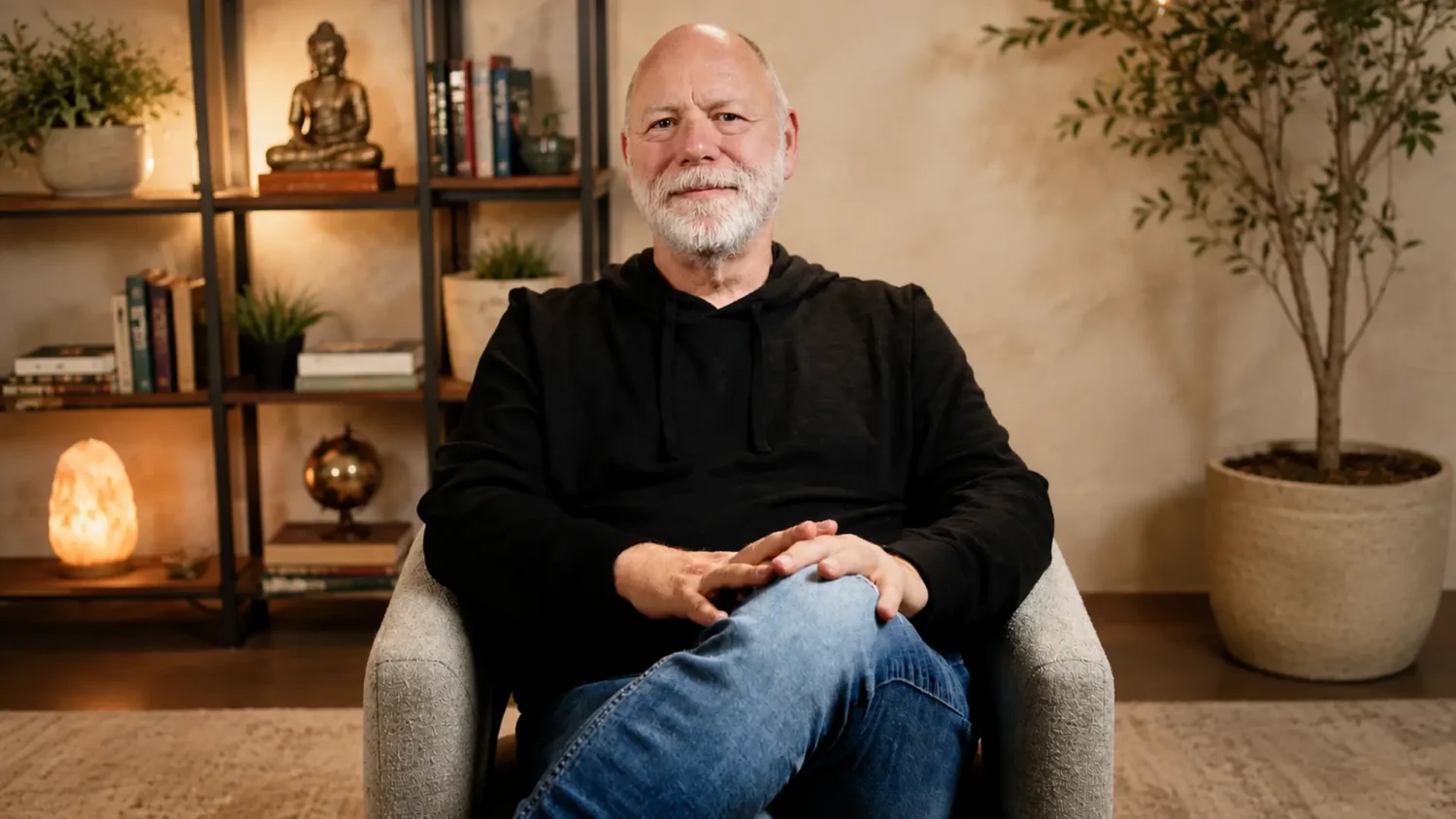
Not Ready Yet? Watch Paul’s Free Masterclass on Divine Consciousness, or explore all free masterclasses.
Frequently Asked Questions
What is a spiritual awakening?
A spiritual awakening is a shift in awareness in which you begin to see yourself, other people and life from a deeper, more connected place. It can arrive suddenly or unfold over years, and it often changes what you value.
What are the signs of a spiritual awakening?
Common signs include a sense that something is missing, questioning old beliefs, shifts in friendships, heightened sensitivity, vivid dreams, synchronicities, waves of emotion and a growing compassion. See our guide to the 15 signs of a spiritual awakening.
What are the stages of a spiritual awakening?
Traditions describe the path in different ways, from Evelyn Underhill’s five-part mystic way to the Ten Bulls of Zen. Most modern maps move through a stirring, a season of questioning, a dark night, an opening and integration. See the stages of a spiritual awakening.
What are the symptoms of a spiritual awakening?
People report emotional waves, changes in sleep, fatigue, heightened sensitivity and sensations of energy. Because many of these can also have medical causes, see a doctor first. Our guide to spiritual awakening signs goes into more detail.
How long does a spiritual awakening last?
There is no fixed timeline. Intense phases may settle in weeks or months, while the wider process often unfolds in cycles across years or a lifetime.
What triggers a spiritual awakening?
Triggers include meditation, loss, illness, burnout, deep love, a near-death experience or no clear cause at all. Some awakenings are gradual and others arrive in a single night.
Is a spiritual awakening the same as enlightenment?
No. Awakening usually describes a first opening or a series of openings. Enlightenment describes a full and stable realization in the traditions that use the word.
Is a spiritual awakening the same as depression?
No, though the two can look alike and can overlap. If you have persistent low mood, loss of interest, trouble sleeping or eating, hopelessness or thoughts of self-harm, please see a doctor or mental health professional. In the United States you can call or text 988.
What is the dark night of the soul?
It is a long, disorienting passage in which meaning drains away and old identity falls apart. The phrase comes from a poem by the 16th-century Spanish mystic St. John of the Cross. See our guide to the dark night of the soul.
What is a spiritual emergency?
Spiritual emergency, a term associated with Stanislav and Christina Grof, describes a crisis in which a spiritual experience changes a person’s meaning system faster than they can integrate it. It often calls for specialized, respectful professional support.
How do I ground myself during a spiritual awakening?
Walk barefoot on grass, slow your breathing, keep regular meals and sleep, journal and spend time in nature. Add support from a therapist or doctor if you feel overwhelmed.
Why do I feel lonely or lose friends during an awakening?
As your values shift, some bonds loosen and new ones form. The loneliness is often a passing stretch between old connections and new ones that match who you are becoming.
Can a spiritual awakening happen suddenly?
Yes. Some people describe a single night or event, such as an intense mystical experience, that changes how they see everything. Sudden awakenings often benefit from extra grounding and support.
What helps most during a spiritual awakening?
Daily meditation, grounding, journaling, time in nature, honest community and professional support when needed. See our upcoming list of meditations for spiritual awakening.
Where can I learn more about awakening?
Explore Paul Selig’s NLS Mastery course Awakening Divine Consciousness, or start with a free masterclass.