
The root chakra, or Muladhara, is the first energy center in yogic teaching. It is said to govern safety, stability and grounding. This guide covers its color, location, signs of imbalance, practices, affirmations and mystical sources.
Key Takeaways
In This Guide
- What Is the Root Chakra?
- Reading the Symbol of Muladhara
- Root Chakra at a Glance
- Signs of a Balanced vs Blocked Root Chakra
- The Root Chakra and the Nervous System
- What Is Said to Block the Root Chakra
- Practices to Balance the Root Chakra
- A Four-Week Grounding Plan
- Root Chakra Affirmations
- Sources and Mystical Context
- The Root in Mystical Traditions
- When Kundalini Stirs
- Learn More on Next Level Soul
- Books on the Chakras
- Watch and Listen on Next Level Soul TV
- Where to Go Next
- Frequently Asked Questions
- Go Deeper: The Stress Detox
What Is the Root Chakra?
The root chakra, called Muladhara in Sanskrit (“root support”), is the first of the seven main energy centers in yogic and Tantric teaching. It is said to sit at the base of the spine and to govern survival, safety, stability and the feeling of belonging. Its color is red and its element is earth. In kundalini teaching, the dormant energy rests here, pictured as a serpent coiled three and a half times. For the full system, read our guide to the seven chakras.
Reading the Symbol of Muladhara
The classic picture in the Shat-Chakra-Nirupana is full of meaning. Each part is a teaching.
| Part of the symbol | Traditional meaning |
|---|---|
| Four-petaled crimson lotus | The petals carry Sanskrit syllables and are linked in the texts to forms of bliss rooted in being alive. |
| Yellow square | The earth element. A square stands for stability. |
| Elephant | The mythic elephant Airavata, carrying the seed sound LAM. Huge strength that stays steady. |
| Coiled serpent | Kundalini, wrapped three and a half times around a stone-like lingam, asleep until awakened. |
The message is simple. The whole spiritual journey starts with solid ground. The sages never told students to skip the body. They told them to build on it.
Root Chakra at a Glance
| Attribute | Traditional Description |
|---|---|
| Sanskrit name | Muladhara |
| Location | Base of the spine, pelvic floor |
| Color | Red |
| Element | Earth |
| Bija (seed) mantra | LAM |
| Symbol | Four-petaled lotus |
| Themes | Safety, survival, grounding, home, money, health |
| Body areas (traditional) | Legs, feet, hips, lower spine |
| Sense | Smell |
Signs of a Balanced vs Blocked Root Chakra
| Balanced | Blocked or Overactive |
|---|---|
| Feeling safe and grounded | Constant anxiety or fear |
| Trust in basic needs being met | Worry about money and survival |
| Healthy routines | Restlessness or feeling “spacey” |
| Feeling at home in your body | Disconnection from the body |
| Steady energy | Fatigue or, on the other side, rigidity and hoarding |
These are traditional associations, not medical findings. If you have physical or mental health symptoms, see a professional.
The Root Chakra and the Nervous System
Modern psychology says something similar. In 1943 Abraham Maslow put physical and safety needs at the base of his hierarchy of needs, because growth is hard when basic safety is missing. Stephen Porges’s polyvagal theory proposes that the body is always scanning for safety or danger, below the level of thought. Trauma therapists such as Peter Levine, who developed Somatic Experiencing, use grounding, looking around the room and feeling the feet to help the body feel safe again. Polyvagal theory is debated by some researchers, but the practical tools are widely used.
Put simply, “a blocked root chakra” and “a nervous system stuck on alert” often describe the same felt experience. You can use both maps.
What Is Said to Block the Root Chakra
- Unsafe or unstable childhood experiences
- Major change, such as job loss or moving
- Financial stress
- Illness or trauma
- Disconnection from nature and the body
Practices to Balance the Root Chakra
- Ground yourself. Walk barefoot on grass or soil for 10 minutes.
- Try root poses. Mountain (Tadasana), Garland (Malasana) and Child’s pose are traditional choices.
- Chant LAM. Chant slowly with a hand on the lower belly.
- Visualize red light at the base of the spine for 5 minutes.
- Build routines. Regular sleep, meals and movement signal safety.
- Eat root foods. Tradition favors beets, carrots and potatoes.
- Use red stones. Red jasper, garnet and hematite are common. See our crystals guide.
A Four-Week Grounding Plan
Ten minutes a day is enough. Move to the next week when the last one feels natural.
| Week | Focus | Daily practice |
|---|---|---|
| 1 | Body | Stand or sit barefoot and feel each foot. Breathe in for 4 counts, out for 6. |
| 2 | Rhythm | Keep the same wake, meal and sleep times. Take one 20-minute walk outside. |
| 3 | Sound and breath | Chant LAM for 5 minutes, then sit in silence for 5. |
| 4 | Energy | Practice Mula Bandha (below) and the red light visualization. |
Mula Bandha, the root lock
- Sit tall and breathe normally.
- On an exhale, gently lift the muscles of the pelvic floor, softly, about 30 percent effort.
- Hold for a few breaths, then release fully.
- Repeat 5 times. Do not clench your buttocks or hold your breath.
If you have pelvic floor pain, are pregnant or are recovering from surgery, ask a doctor or pelvic-floor therapist first.
Quick reset when anxiety spikes
Name 5 things you can see, 4 you can feel, 3 you can hear, 2 you can smell and 1 you can taste. It pulls attention out of worry and into the room.
Why nature helps
A 2019 study in Scientific Reports by Mathew White and colleagues found that people who spent at least 120 minutes a week in nature reported better health and wellbeing. Walking barefoot on grass is a simple way to do it. Claims about “earthing” healing the body are far less proven, so treat it as a calming ritual, not a cure.
Root Chakra Affirmations
- I am safe.
- I am grounded and supported.
- I have what I need.
- I belong here.
Sources and Mystical Context
| Source | Date | Contribution |
|---|---|---|
| Sat-Chakra-Nirupana, Purnananda | 1577 | The Tantric text that describes six chakras and the rising kundalini |
| Arthur Avalon (Sir John Woodroffe), The Serpent Power | 1919 | Brought the text to Western readers |
| C. W. Leadbeater, The Chakras | 1927 | Theosophical description of the centers |
| Edgar Cayce readings | 1920s to 1940s | Linked the spiritual centers to the endocrine glands |
| Anodea Judith, Wheels of Life | 1987 | Popular modern psychological system |
Research on chakras is limited. Modern psychology does confirm that feeling safe and having stable routines supports wellbeing, which echoes the root chakra’s themes. Compare with the heart center in our heart chakra guide and learn about kundalini energy.
The Root in Mystical Traditions
| Tradition | Teaching |
|---|---|
| Hatha yoga | Mula Bandha, the root lock, is taught in the Hatha Yoga Pradipika to seal and direct energy at the base. |
| Kriya Yoga (Paramahansa Yogananda) | Breath moves energy along six spinal centers, starting with the coccygeal center at the base. Hear him on Ascended Master Yogananda. |
| Taoism | The Hui Yin point at the perineum, and the lower dantian in the belly, the “field of the elixir” where energy is stored. |
| Kabbalah | Malkuth, “the Kingdom,” the earthly sphere at the base of the Tree of Life, often linked with the root. |
| The Law of One (Ra Material) | The red ray is the first energy center and the foundation for all the others. |
| Theosophy | C. W. Leadbeater called the base center the seat of the “serpent fire.” |
| Edgar Cayce | Linked the lowest center with the gonads and urged balance between body and spirit. |
When Kundalini Stirs: Go Slowly
Tradition says the serpent power sleeps at the root. The old texts warn that waking it too fast carries risk, which is why teachers insisted on a guide. In Kundalini: The Evolutionary Energy in Man (1967), Gopi Krishna described his own spontaneous awakening, an experience that brought both ecstasy and years of distress.
People who push breathwork or long meditation too hard sometimes report insomnia, anxiety, heat in the body or feeling unable to ground. If that happens:
- Cut back on intense breathwork and long sits.
- Eat regular meals, walk outside and protect your sleep.
- See a qualified medical professional to rule out other causes.
Learn more in our kundalini energy guide, or try the guided Kundalini Awakening Meditation on NLS TV.
Learn More on Next Level Soul
- What Are Chakras?. All seven centers explained. Read the guide
- Kundalini Energy. The energy that rests at the root. Read the guide
- Chakra Stones. Stones for each center. Read the guide
- How to Meditate. A simple way to start. Read the guide
Books on the Chakras
- Wheels of Life by Anodea Judith. The modern classic on the chakra system.
- Eastern Body, Western Mind by Anodea Judith. Chakras and psychology.
- The Serpent Power by Arthur Avalon. The classic translation.
- Anatomy of the Spirit by Caroline Myss. Chakras and health.
- The Book of Chakras by Ambika Wauters. A visual introduction.
As an Amazon Associate, Next Level Soul earns from qualifying purchases.
Watch and Listen on Next Level Soul TV
These titles from the Next Level Soul TV catalog go deeper into this topic.
- Chakra Cleansing Meditations. Guided meditations on NLS TV.
- Chakra Alignment Meditations. Guided meditations on NLS TV.
- Kundalini Awakening: Powerful Meditation & Breathwork with Nikki Dutta. Guided meditation on NLS TV.
- Chakra Meditation: Balance Your Energy Centers. Episode.
- Understanding Chakra Blockages: Causes & Relief. Episode.
- Chakra Healing Techniques for Balance and Energy. Episode.
- Chakra Yoga: Balance Your Energy for Holistic Health. Episode.
- Awakening Kundalini Energy with Patrick Paul Garlinger. Episode.
- NLS Mastery: Raising Your Frequency. NLS Mastery training.
- Yogi Science of Breath. Audiobook on NLS TV.
Where to Go Next
- The seven chakras
- The heart chakra
- Kundalini energy
- Chakra stones
- How to meditate
- Go deeper with Next Level Soul Mastery, our collection of in-depth courses.
Frequently Asked Questions
What Is the Root Chakra?
The first of the seven main chakras, called Muladhara. It is said to sit at the base of the spine and to govern safety, stability and grounding.
What Color Is the Root Chakra?
Red.
Where Is the Root Chakra Located?
At the base of the spine, near the pelvic floor.
What Are the Signs of a Blocked Root Chakra?
Traditionally, anxiety, insecurity about money or home, restlessness, and feeling disconnected from the body.
How Do I Balance My Root Chakra?
Common practices are grounding in nature, root poses, chanting LAM, visualizing red light, building routines and working with red stones.
What Is the Root Chakra Mantra?
LAM, the bija or seed mantra for Muladhara.
What Does Muladhara Mean?
A Sanskrit word meaning “root support.”
Is There Scientific Evidence for Chakras?
No. Chakras are a spiritual and yogic concept. The practices linked to them, such as breathing, grounding and routines, can support wellbeing.
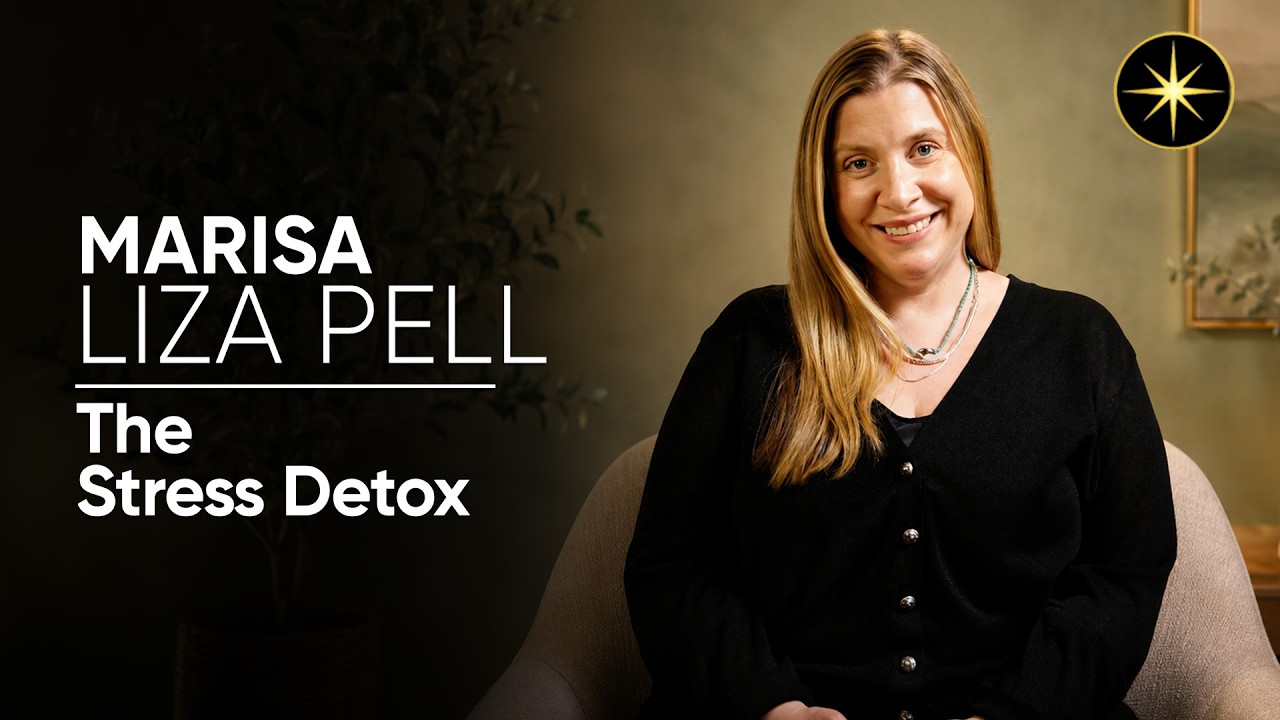
Go Deeper: The Stress Detox with Marisa Liza Pell
The root chakra is about feeling safe in your body and on the earth. Marisa Liza Pell teaches how to return to that sense of safety in her Next Level Soul Mastery course.
In this exclusive NLS Mastery course, Marisa Liza Pell guides you through her signature Frequency Upgrade Framework, helping you clear the noise that’s kept you disconnected from your own energy. Each lesson builds on the last, moving you from awareness into action, from what you consume and speak into what you protect and regulate. By the end, you’re not just informed, you’re embodied, grounded enough in your own nervous system to finally hear yourself again.
What you will walk away with
- Notice what drains you
- Turn down the noise
- Protect your peace
- Return to safety within
6 lessons, part of Next Level Soul Mastery, our collection of in-depth courses.