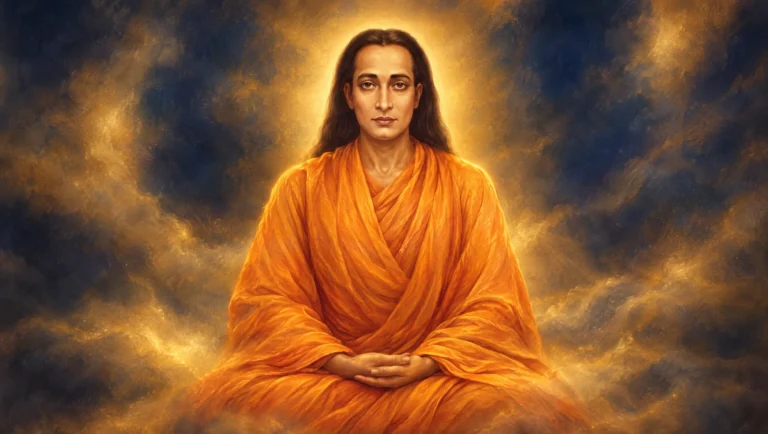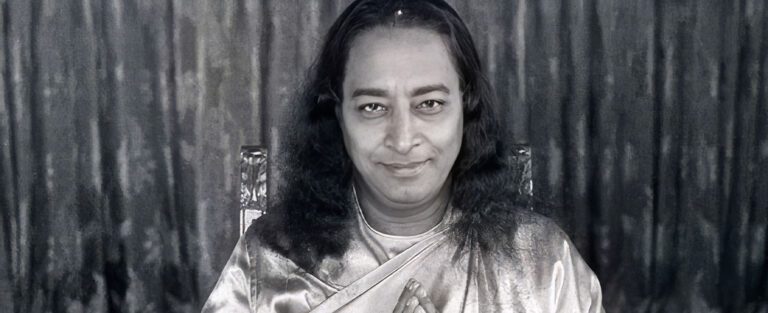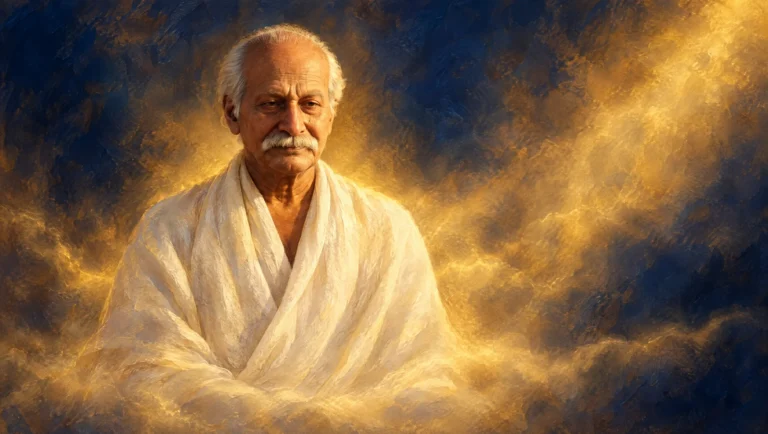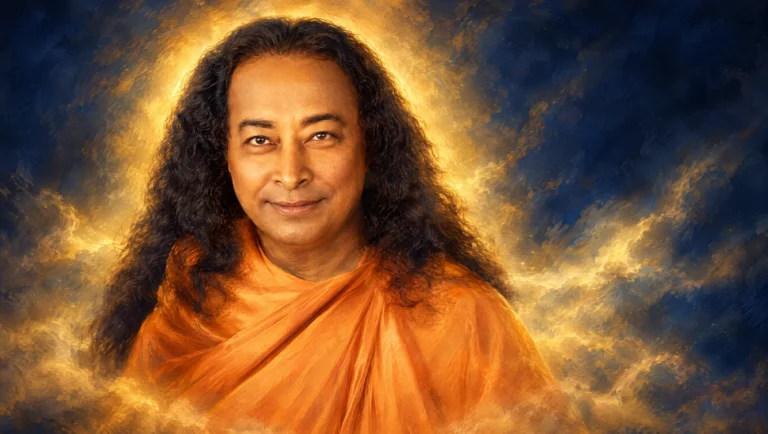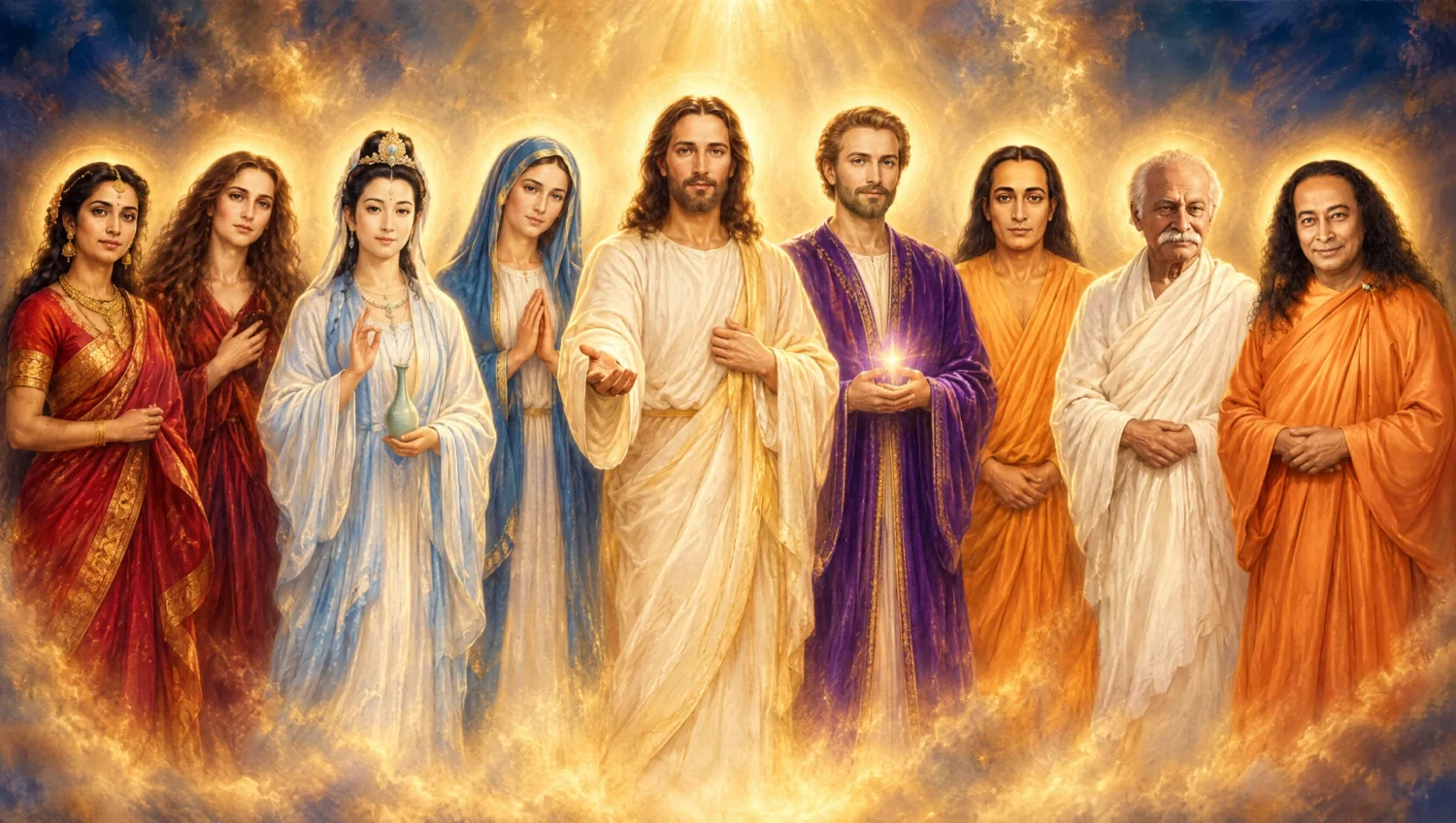
Ascended Masters are spiritually enlightened beings believed to have transcended the physical plane, and to still guide humanity from beyond it. Historical figures like Jesus, Buddha, and Krishna are counted among them, alongside more recent teachers such as Paramahansa Yogananda and Saint Germain.
This guide covers everything: where the term “Ascended Master” actually comes from, the three core concepts behind the belief (karma, reincarnation, and ascension), an in-depth list of the most widely recognized Ascended Masters, the different traditions that shape how people understand them, and practical ways people work with them today.
What Are Ascended Masters?
Ascended Masters are spiritually advanced beings who, according to this belief system, have reached a high level of enlightenment and moved beyond the limits of physical existence. They’re believed to:
- Guide people on their spiritual path, often through mediums or channelers
- Exist in a non-physical state, but take physical form when needed
- Assist with healing, physical, emotional, and spiritual
- Support both personal transformation and large-scale, global change
- Have once lived ordinary physical lives before achieving mastery over the ego, the mind, and the cycle of rebirth
Anyone can theoretically become an Ascended Master through sustained spiritual practice: meditation, service to others, and inner transformation. The path is considered available to anyone, in any culture, at any point in history, which is part of why the list of recognized masters spans so many different traditions.
Where the Term “Ascended Masters” Came From
The idea of enlightened beings who continue to guide humanity after death shows up independently in many traditions, Hindu and Buddhist teachings on liberated souls, folk Christian ideas about saints interceding from heaven, and Sufi concepts of hidden spiritual guides. But the specific term “Ascended Master,” and the idea of a defined, namable group of them, has a much more traceable, and more Western, philosophical lineage.
Theosophy and the “Hidden Masters” (1870s to 1880s). The modern concept begins with Helena Blavatsky, a Russian-born occultist who co-founded the Theosophical Society in New York in 1875. Blavatsky claimed to be in contact with a group of highly evolved spiritual teachers she called the “Mahatmas” or “Masters of the Ancient Wisdom”, beings who had supposedly guided human spiritual development for millennia from remote locations, often described as being in Tibet. She published these teachings in works like Isis Unveiled (1877) and The Secret Doctrine (1888), blending Western esotericism, Hindu and Buddhist philosophy, and her own claimed correspondence with these Masters. This was the first time the idea took the shape of an organized “hierarchy” of specific, individually named spiritual teachers overseeing humanity’s evolution, sometimes called the “Great White Brotherhood,” with “White” referring to the belief’s association with light rather than any racial meaning.
Alice Bailey and the Esoteric Teachings (1920s to 1940s). Theosophist Alice Bailey expanded on Blavatsky’s framework, claiming to telepathically receive a large body of teaching from a master she called Djwal Khul, or “the Tibetan.” Bailey’s writings further systematized the idea of a spiritual hierarchy working behind the scenes of world events, and introduced much of the language around spiritual “rays,” ascension, and cosmic evolution still used today.
Guy Ballard and the “I AM” Activity (1930s). The term “Ascended Master” specifically, as opposed to “Mahatma” or “Hidden Master”, was popularized by Guy Ballard, an American mining engineer who claimed to have met Saint Germain in 1930 on Mount Shasta in California. Ballard and his wife Edna founded the “I AM” Activity, publishing books under the pen name Godfré Ray King that described direct encounters with Saint Germain and other masters. This movement is largely responsible for the specific vocabulary still used today, “Ascended Masters,” the “I AM Presence,” and the “violet flame” of transmutation associated with Saint Germain.
Later movements (1950s to present). The “I AM” Activity’s teachings were later built upon by groups like the Bridge to Freedom and the Summit Lighthouse (later the Church Universal and Triumphant, founded by Mark and Elizabeth Clare Prophet), which expanded the roster of named Ascended Masters and further developed the philosophy around them.
Where the two threads meet. Over the 20th century, this Western esoteric lineage increasingly wove together with existing Eastern spiritual figures, Kriya Yoga’s Babaji, Lahiri Mahasaya, and Paramahansa Yogananda among them, as well as major religious figures like Jesus, Buddha, Krishna, and Moses. The result is the cross-tradition list recognized today: part Western occult philosophy, part Eastern spiritual lineage, part world religion, all merged under a single modern umbrella term that didn’t fully exist, in this form, before the late 19th and early 20th centuries.
The Role of Ascended Masters
- Teachers & Guides. Offer wisdom and direction, often through channeling.
- Healers. Address physical, emotional, and spiritual wounds.
- Protectors. Offer support through hardship.
- Transformation Facilitators. Help individuals move past personal blocks.
- Global Helpers. Influence positive change on a larger scale.
Ascended Masters are also closely tied to the idea of self-mastery, gaining control over your own thoughts, emotions, and actions. Believers hold that these beings help people quiet the ego, access inner wisdom, and connect with a higher power.
To understand why Ascended Masters matter within this belief system, it helps to understand three foundational concepts first: karma, reincarnation, and ascension.
Karma: The Law of Cause and Effect
Karma comes from Hinduism, Buddhism, and other Eastern traditions. In short:
Your actions (cause) shape your future experiences (effect).
- Good actions → positive future experiences
- Harmful actions → negative future experiences
- Karma doesn’t always resolve in this lifetime, it can carry into future lives, which is where reincarnation comes in
- Karma is often tied to personal responsibility: your choices matter, and you live with their consequences
- Some traditions believe karma can be softened or “paid off” through good deeds, spiritual practice, or the help of spiritual beings like Ascended Masters
Karma is frequently described less as punishment and more as a mirror, a way the universe reflects back the energy a person puts out, whether that’s across a single lifetime or several.
Reincarnation: The Soul’s Ongoing Journey
Reincarnation is the belief that the soul is reborn into a new body after death, continuing a cycle of birth, death, and rebirth. Beliefs vary, but common threads include:
- The soul may be reborn on Earth, or on a non-physical plane
- Rebirth can serve spiritual growth, or resolve karmic debts from past lives
- Some traditions believe the soul carries memories and traits forward; others believe each life starts fresh
- Reincarnation is often used to explain why people are born with different talents, tendencies, and life circumstances
- The soul is believed to choose (or be guided toward) each new incarnation based on lessons still needed for growth
Within this framework, an Ascended Master is often understood as a soul that has completed this cycle, having learned what physical life had to teach, and graduating beyond the need to be reborn.
Ascension: Rising to a Higher Consciousness
Ascension describes the process of raising one’s vibration and consciousness to connect with higher planes of existence. It typically involves:
- Releasing lower-vibration states like fear, negativity, and attachment
- Integrating body and soul into a state of unity with the divine
- Expanding awareness beyond the physical world
- Practices like meditation, service, and inner work are believed to support the process
- A gradual shift from ego-driven identity toward a broader, more compassionate sense of self
Together, karma, reincarnation, and ascension form the framework that Ascended Masters are believed to operate within, guiding souls through the cycle toward higher understanding.
The List of Ascended Masters
Babaji: The Deathless Avatar
Babaji holds a foundational place in the Kriya Yoga tradition as an eternal, deathless master, a being who, according to these teachings, never dies and can appear physically whenever needed, then return to a non-physical state. He’s said to have first appeared in modern times in the Himalayan foothills of India during the 19th century, where he initiated the householder-yogi Lahiri Mahasaya into the practice of Kriya Yoga, a form of meditation said to accelerate spiritual evolution. Babaji is described as an embodiment of divine love, credited in Kriya Yoga lore with miracles ranging from manifesting objects out of thin air to healing incurable illness. Because so little verifiable biographical detail exists about him, Babaji occupies a somewhat different role than most masters on this list: less a historical figure with a documented life, and more a timeless spiritual presence believed to move quietly behind the entire Kriya Yoga lineage.
Read the full guide: Mahavatar Babaji: The Complete Guide
Buddha (Siddhartha Gautama)
Buddha, born Siddhartha Gautama, a prince in what is now Nepal, is the founder of Buddhism and one of the most widely recognized spiritual teachers in human history. According to tradition, he renounced a life of royal comfort after encountering old age, illness, and death for the first time, setting out to understand the root of human suffering. After years of ascetic practice and meditation, he’s said to have attained enlightenment at age 35 while seated beneath what’s now called the Bodhi Tree, an event so pivotal it’s referred to simply as “the Great Enlightenment.” His teachings, known as the Dharma, center on the Four Noble Truths (that suffering exists, that it arises from craving, that it can end, and that there’s a path to end it) and the Eightfold Path, a set of ethical and mental disciplines. Buddha’s influence extends across billions of practitioners today and forms one of the three major world religions represented among the Ascended Masters.
Jesus Christ
Jesus of Nazareth is the central figure of Christianity, revered by billions as the Son of God and the embodiment of divine love made manifest in human form. Born in Bethlehem and raised in Galilee under Roman rule, he preached forgiveness, compassion, and moral transformation, while performing acts described in the New Testament as miraculous healings. His crucifixion and reported resurrection form the theological core of Christianity and are seen by believers as proof of his triumph over death itself. Whether Jesus specifically belongs among the “Ascended Masters” as the term is used in Theosophical and “I AM” teachings is genuinely debated, some traditions place him at the very top of the Ascended Master hierarchy, overseeing what’s referred to as the “Christ office,” while more orthodox Christian perspectives would reject the framing entirely. Either way, his life and teachings remain one of the most referenced spiritual touchpoints across nearly every tradition on this list.
Bhagavan Krishna
Krishna is one of the most beloved and complex figures in Hinduism, revered by many traditions as a full incarnation, an avatar, of the god Vishnu, and by others as the supreme deity in his own right. Born, according to tradition, in the ancient city of Mathura, Krishna’s life is woven through Hindu scripture as both a mischievous, flute-playing youth and a profound spiritual strategist. His most enduring teaching appears in the Bhagavad Gita, a conversation on the battlefield of the Mahabharata in which he counsels the warrior Arjuna on duty, action without attachment, and the eternal nature of the soul, teachings that remain a cornerstone of Hindu philosophy. Depicted with blue-tinted skin and often shown mid-play or mid-teaching, Krishna represents the union of playfulness and profound wisdom, and is frequently invoked for guidance through moral complexity.
Paramahansa Yogananda
Born in India in 1893, Paramahansa Yogananda is best known for bringing the practice of Kriya Yoga to the Western world, arriving in the United States in 1920 and spending decades teaching across America and Europe. His 1946 book, Autobiography of a Yogi, remains one of the most widely read spiritual texts of the 20th century, recounting his own spiritual journey and his encounters with teachers including Sri Yukteswar, as well as with notable public figures like Mahatma Gandhi. Yogananda founded the Self-Realization Fellowship (SRF), an organization still active today with centers around the world, dedicated to teaching Kriya Yoga and meditation. His core teaching held that self-realization, direct, experiential union with the divine, was achievable through consistent inner discipline, regardless of a person’s cultural or religious background.
Read the full guide: Paramahansa Yogananda: The Complete Guide
Lahiri Mahasaya
Lahiri Mahasaya occupies a pivotal position in the Kriya Yoga lineage as the teacher initiated directly by Babaji in the Himalayas during the 19th century, and the one credited with bringing Kriya Yoga’s teachings out into the wider world for the first time in the modern era. What distinguishes Lahiri Mahasaya from many spiritual teachers is that he lived as a householder, he held a job, raised a family, and remained embedded in ordinary life rather than retreating into monastic renunciation. This is often cited within Kriya Yoga teaching as proof that profound spiritual attainment doesn’t require abandoning worldly responsibilities. He’s remembered for emphasizing inner discipline over external ritual, and for teaching that Kriya Yoga’s techniques were appropriate for people of any background or faith, not reserved for a spiritual elite.
Read the full guide: Lahiri Mahasaya: The Complete Guide
Swami Sri Yukteswar
A direct disciple of Lahiri Mahasaya and the guru of Paramahansa Yogananda, Swami Sri Yukteswar is best known for his book The Holy Science, a comparative study arguing that the underlying teachings of Hinduism and Christianity point toward the same essential spiritual truths, simply expressed through different cultural language. Sri Yukteswar’s approach combined scholarly rigor with direct spiritual instruction, and his role bridging Lahiri Mahasaya’s teachings to Yogananda, who would go on to bring Kriya Yoga to the West, makes him a critical link in the lineage’s transmission from India to a global audience.
Read the full guide: Sri Yukteswar: The Complete Guide
Anandamayi Ma
Born in 1896 in what is now Bangladesh, Anandamayi Ma became one of the most revered spiritual figures of 20th-century India, known from a young age for entering profound states of meditative absorption seemingly without formal training. As her reputation grew, she attracted a wide following of devotees, including, according to some accounts, even Mahatma Gandhi, who was said to have sought her spiritual counsel. Her teachings centered on the fundamental unity of all existence and the importance of surrendering the individual ego to the divine, delivered with an emphasis on love and compassion as the foundation of any spiritual practice, rather than complex philosophy or ritual.
Watch on Next Level Soul TV: Anandamayi Ma, Mother of the World
Maharishi Mahesh Yogi
Born in India in 1917, Maharishi Mahesh Yogi developed and popularized Transcendental Meditation (TM), a mantra-based meditation technique intended to produce deep relaxation and expanded awareness. He rose to international prominence in the 1960s teaching TM across the United States and Europe, and became closely associated with the counterculture movement of the era, most famously through his relationship with The Beatles, who studied with him in India in 1968. That association helped legitimize meditation as a mainstream Western wellness practice, well beyond its roots in Hindu spiritual tradition, and TM centers he established continue to operate worldwide today.
Saint Francis of Assisi
Born in the Italian town of Assisi in the 12th century, Francis lived a privileged, carefree youth before undergoing a profound spiritual conversion that led him to renounce wealth entirely and dedicate his life to poverty, service to the poor and sick, and radical simplicity. He founded the Order of Friars Minor, the Franciscans, an order still active today, and is remembered as much for his ecological consciousness as his theology, having preached to and cared for animals and the natural world in ways unusual for his era. Canonized by the Catholic Church, Saint Francis is often invoked as a model of humility, compassion, and simple living within both Christian and broader spiritual contexts.
Moses
A foundational figure across Judaism, Christianity, and Islam, Moses is described in the Hebrew Bible as an Israelite raised in the household of Egypt’s Pharaoh who later led his people out of slavery in one of the most consequential liberation narratives in religious history. After fleeing Egypt following an act of violence in defense of an enslaved Israelite, Moses lived for decades as a shepherd before being called, according to tradition, by God speaking through a burning bush. He returned to lead the Exodus and later received the Ten Commandments atop Mount Sinai, a text still foundational to Jewish and Christian law today. Within Ascended Master frameworks, Moses is often invoked specifically around themes of leadership, liberation from bondage (literal or spiritual), and divine law.
Ramana Maharshi
Born in 1879 in Tamil Nadu, India, Ramana Maharshi became one of modern India’s most influential spiritual teachers through a strikingly simple practice: self-inquiry, or repeatedly asking oneself the question “Who am I?” as a direct route to spiritual realization. Rather than prescribing rituals, scriptures, or elaborate philosophy, Maharshi taught that sustained, honest investigation into the nature of one’s own consciousness would reveal the illusory nature of the ego and the deeper, unchanging reality beneath it. He emphasized presence, non-judgment, and the idea that this path to realization was equally available to anyone, regardless of background, education, or prior spiritual training, a notably democratic approach to enlightenment that continues to influence contemporary teachers of self-inquiry and non-duality.
Saint Germain
One of the most enigmatic figures on this list, the historical Comte de Saint Germain was an 18th-century European nobleman, alchemist, and musician whose true origins were never definitively established, fueling rumors that ranged from immortality to secret royal parentage. He moved in elite European circles, reportedly fluent in multiple languages and skilled across science, music, and diplomacy, and was rumored to possess the ability to transmute base metals into gold and to have discovered the secret of eternal youth. Within the modern Ascended Master Teachings, particularly the “I AM” Activity founded by Guy Ballard, who claimed to have personally met Saint Germain on Mount Shasta in 1930, he holds a central founding role, associated with the “violet flame,” a spiritual energy said to transmute negative karma and accelerate personal transformation.
Avalokitesvara
Avalokitesvara is a bodhisattva, an enlightened being who has vowed to remain engaged with the world to help all beings reach liberation, central to Mahayana Buddhism and revered across nearly every East Asian Buddhist tradition. The name translates roughly to “the lord who looks down [with compassion],” and Avalokitesvara is considered the embodiment of the compassion of all buddhas. The bodhisattva’s form shifts by culture and era: depicted as male in many South and Southeast Asian traditions, as the female deity Tara in Tibetan Buddhism, and as Kuan Yin (or Kanzeon) in Chinese and Japanese Buddhism respectively, making Avalokitesvara one of the most widely and diversely venerated figures in the entire list.
El Morya
Within the Ascended Master Teachings originating in Theosophy and later developed by the “I AM” Activity and successor movements, El Morya is described as one of the “Chohans,” or lords, overseeing a specific spiritual “ray”, in his case, associated with willpower, leadership, and divine purpose. He’s said to have lived multiple significant physical incarnations historically, including, according to some accounts, associations with figures central to the founding of Theosophy itself. El Morya is typically invoked by practitioners seeking clarity of purpose, courage in leadership, or the strength to follow through on difficult decisions.
Devi: The Universal Mother
Devi is not a single figure but the Hindu term for the divine feminine principle itself, the ultimate creative, nurturing, and protective force of the universe, from which numerous individual goddesses are understood to emanate. Kali, Durga, and Lakshmi are among the most prominent of these emanations, each representing distinct qualities: Kali as fierce transformation, Durga as protective strength, and Lakshmi as abundance and prosperity. Devi is typically depicted with multiple arms, each holding a symbolic object representing a different aspect of her power, and is invoked across Hindu practice both for material blessings and spiritual protection.
Kuthumi
Another Chohan figure within the Ascended Master Teachings, Kuthumi is associated with wisdom, education, and matters of the heart, often depicted as a gentle, compassionate teacher rather than a fierce or commanding presence. Within Theosophical lore, Kuthumi is described as one of the specific “Mahatmas” with whom Helena Blavatsky claimed correspondence in the founding years of the Theosophical Society, making him one of the more historically documented figures within that specific esoteric lineage, even though his precise biographical history remains murky and much disputed.
Adi Shankara
Adi Shankara was an 8th-century Indian philosopher and theologian widely regarded as the most influential architect of Advaita Vedanta, the Hindu philosophical school built on the principle of non-dualism, the idea that the individual self (Atman) and ultimate reality (Brahman) are one and the same. He traveled extensively across India during his short life, establishing monastic centers (mathas) that still operate today, and engaging in public philosophical debates that helped Advaita Vedanta rise to prominence over rival schools of thought. His written commentaries on core Hindu scriptures remain foundational texts studied by scholars and practitioners of Vedanta philosophy to this day.
Serapis Bey
Within the Ascended Master Teachings, Serapis Bey is associated with discipline, purification, and the process of spiritual “ascension” itself, often described as overseeing what’s referred to as an ascension temple, a symbolic or etheric location where souls are said to be prepared for their final transition beyond the cycle of rebirth. The name draws on Serapis, a syncretic Greco-Egyptian deity from the Ptolemaic era, though the modern Ascended Master figure is a distinct construct built primarily within 20th-century esoteric teaching rather than ancient Egyptian religion itself.
Lady Master Nada
Lady Master Nada is associated within the Ascended Master Teachings with unconditional love, particularly as it intersects with law, justice, and the healing of relationships. She’s often invoked by practitioners navigating legal disputes, custody matters, or emotional repair work within families, an example of how individual masters within these teachings are frequently associated with very specific, practical life domains rather than only abstract spiritual qualities.
Djwal Khul (The Tibetan)
Djwal Khul is central to the esoteric writings of Theosophist Alice Bailey, who claimed to receive his teachings telepathically over more than two decades beginning in the 1920s, resulting in over twenty published books covering healing, astrology, meditation, and humanity’s collective spiritual evolution. Often referred to simply as “the Tibetan,” Djwal Khul’s teachings introduced much of the specific technical vocabulary, spiritual “rays,” esoteric psychology, planetary hierarchies, that later esoteric and New Age movements continued to build upon.
Hilarion
Hilarion is associated within the Ascended Master Teachings with truth, healing, and science, often invoked by those working in medicine, research, or any field requiring the combination of precise, grounded analysis with intuitive insight. Some traditions associate Hilarion with the historical Saint Hilarion, an early Christian ascetic, though, as with several figures on this list, the connection between the ancient namesake and the modern Ascended Master figure is more symbolic than historically documented.
Ascended Masters Vs. Saints Vs. Spirit Guides
These terms get used interchangeably, but within this belief system they describe different things:
- Ascended Master. Defined By: Cross-tradition; achieved full mastery over the physical/karmic cycle. Scope: Universal, works with anyone, regardless of religion.
- Saint. Defined By: Recognized within a specific religion (e.g., Catholicism). Scope: Typically tied to that faith’s followers.
- Spirit Guide. Defined By: Personal, often non-famous guide assigned to one individual. Scope: Individual, usually one person’s guide, not a public figure.
The key distinction: Ascended Masters are believed to have once been physical, historical beings who completed their spiritual evolution, whereas a personal spirit guide may never have lived a well-known physical life at all.
How People Work with Ascended Masters
Believers describe a few common practices for connecting with Ascended Masters:
- Meditation. Quiet, focused meditation is considered the most direct channel, clearing mental noise to become receptive to guidance.
- Invocation and prayer. Directly addressing a specific master by name, often asking for a specific quality (protection, clarity, healing) associated with them.
- Channeling. Some practitioners work with mediums who claim to relay messages directly from a specific Ascended Master.
- Visualization. Picturing a master’s presence, light, or energy as a way of inviting their guidance into a specific situation.
- Journaling. Writing questions and allowing intuitive answers to surface, sometimes called “automatic writing.”
Prefer guided support? Explore NLS Mastery courses from leading spiritual teachers, or begin with a free masterclass.
Most traditions emphasize that these practices work best paired with genuine inner work, Ascended Masters are described as guides and mirrors for growth, not shortcuts around it.
Common Misconceptions
- “Ascended Masters are gods.” Most traditions distinguish them from deities, they’re described as evolved souls, not divine beings from the start.
- “You have to belong to a specific religion to connect with them.” The list spans nearly every major tradition, and most teachings present the masters as available to anyone, regardless of religious background.
- “Only Theosophy or the ‘I AM’ movement uses this term.” While those movements formalized the modern language around Ascended Masters, the underlying idea of enlightened beings who continue to guide humanity appears independently across Hinduism, Buddhism, and other traditions.
- “All Ascended Masters are ancient historical figures.” Some, like Saint Germain, are understood to have far more recent, even 18th-century, physical lives, and the belief holds that new masters continue to ascend over time.
Go Deeper: Watch Ascended Masters Channeled on Next Level Soul TV
Reading about these masters is one thing, hearing directly from them is another. Ascended Masters Channeled is a powerful series on Next Level Soul TV that brings through the timeless wisdom of the great spiritual masters who have transcended the physical realm.
Through renowned channeler Genevieve Taeger, beings such as Saint Germain, Kuan Yin, and others offer guidance for humanity’s awakening and evolution. Each episode delivers profound insights on consciousness, purpose, and the shifting energies of our world.
This is an invitation to receive teachings that transcend time, and ignite the soul’s highest potential.
Watch Ascended Masters Channeled now →
Final Thoughts
The belief in Ascended Masters offers a framework for understanding spiritual guidance that spans cultures and centuries, from Jesus and Buddha to more contemporary figures like Yogananda and Saint Germain. Whether approached through karma, reincarnation, or ascension, the throughline is the same: growth is ongoing, and guidance is always available to those who seek it.
Ready to go even deeper? Watch Ascended Masters Channeled on Next Level Soul TV, or explore more at Next Level Soul TV and the Next Level Soul Podcast.
Go Deeper: Watch Awake: The Life of Yogananda
Watch Awake on Next Level Soul TV Not Ready Yet? Read Our Awake Review
Frequently Asked Questions
What is the difference between an Ascended Master and a saint?
Saints are typically recognized within a specific religious tradition (like Catholicism), while Ascended Masters are a broader, cross-tradition concept describing beings who’ve transcended physical existence entirely, regardless of religious origin.
Can anyone become an Ascended Master?
According to this belief system, yes, through consistent spiritual practice, service to others, and personal transformation over time (potentially across multiple lifetimes).
How do people communicate with Ascended Masters?
Believers hold that Ascended Masters communicate primarily through mediums, channelers, meditation, invocation, and inner guidance rather than direct physical contact.
Are Ascended Masters tied to a specific religion?
No, the list spans Hinduism, Buddhism, Christianity, Judaism, and standalone spiritual teachings, making it a cross-tradition rather than religion-specific concept.
Where does the term “Ascended Master” come from?
The specific term was popularized in the 1930s by Guy and Edna Ballard’s “I AM” Activity, building on earlier ideas from Helena Blavatsky’s Theosophical Society (1870s to 80s) and Alice Bailey’s esoteric writings (1920s to 40s), which together introduced the idea of an organized hierarchy of enlightened teachers guiding humanity.
How many Ascended Masters are there?
There’s no fixed number, teachings describe an open-ended hierarchy, and different traditions recognize different (sometimes overlapping) lists of masters.