
Maybe you have done most things right and still feel like you are living someone else’s script. The work is fine. The days are full. And underneath it all, a small voice keeps asking what any of it is for.
Soul purpose is the soul-level answer to that question. Not a job title. Not a five-year plan. It is the idea that you arrived with lessons to learn, gifts to share and a way of loving that is yours alone. This guide walks through soul contracts, life lessons, your natural gifts, astrology and numerology as reflection tools, the signs people describe when they are on or off their path, and the questions worth asking. It is a spiritual teaching, not something science can measure, and we will say so plainly where it matters.
Looking for the practical side, with values, routines and everyday direction? Our companion guide to living with purpose covers that ground. Think of this article as the view from higher up, and that one as the walk on the ground. Both matter.
Key Takeaways
- Soul purpose is about who you become and how you love, not only what you do for a living.
- The soul contract idea says your soul chose certain lessons, though you keep your free will.
- Repeating patterns, natural gifts and deep longings are your best clues.
- Astrology and numerology work best as mirrors, not verdicts.
- Feeling lost is part of the path. Small, honest steps beat waiting for certainty.
What Is Soul Purpose?
Ask ten traditions and you get ten phrasings. Hindu teaching speaks of dharma, your right way of living, and the Bhagavad Gita says it is better to follow your own dharma imperfectly than someone else’s well. Plato, in the Republic, tells the Myth of Er, where souls choose their next lives before they are born. Modern spiritual writers talk about a soul plan, a blueprint, a sacred contract. The wording changes. The question underneath stays the same.
Most of these teachings land on a few shared ideas. Your life has meaning beyond survival. Growth is part of the point. And what you are here to give is tied to who you are, not to what looks impressive.
It helps to separate three words that get tangled together.
- Career is how you earn a living. It can express your purpose, but it does not have to.
- Passion is what lights you up. It is a clue, not the whole map.
- Soul purpose is the deeper thread: the qualities you are developing and the way you affect the people around you.
A nurse, a retired teacher, a parent raising a child alone, a person who keeps a neighborhood together by simply showing up. Any of them can be living their soul purpose without a single title to prove it. That is good news. It means purpose is not reserved for the famous or the fearless.
Try this: Write one sentence that begins, “People tend to feel ___ when they are around me.” Do not edit it. Keep it somewhere you will see it.
Three Layers of Soul Purpose
One helpful way to hold the question is to split it into three layers. Many teachers describe something similar, though the labels vary.
- Being. The qualities you are here to embody, such as patience, courage, joy or honesty.
- Learning. The lessons your life keeps placing in front of you, until you meet them with more awareness.
- Giving. The gifts you share, whether through work, family, art, friendship or quiet service.
Notice that only the third layer shows up on a resume. The first two are lived, not listed. A person can be doing “ordinary” work and still be deeply fulfilling their purpose by becoming more loving, more honest and more present each year.
This is also why comparison does so much damage. You can see someone else’s giving. You cannot see their being and learning, which is where most of the real work happens. Your path will not look like theirs, and it is not supposed to.
Try this: Under three headings, Being, Learning and Giving, write one line each about where you are right now. Revisit it in a month.
Soul Contracts: The Idea of Agreements Before Birth
A soul contract is the belief that, before you were born, your soul agreed to certain experiences, relationships and lessons in order to grow. The language became popular through writers such as Caroline Myss, who wrote about sacred contracts, and through Michael Newton, whose life-between-lives regression work described souls planning their next incarnations. Our guide to reincarnation and what past lives really mean looks at the wider tradition.
Practitioners say contracts can include the family you were born into, a few key partners, a challenge you return to again and again, and a gift you are meant to bring. Some describe them as agreements made out of love, even when the lessons are painful.
Now the honest part. There is no scientific proof of soul contracts. They are a spiritual framework, and the way you use them matters. Used well, the idea can bring compassion and perspective: this hard season may be teaching me something. Used badly, it can turn into blame. Nobody agreed to be harmed, and “it was your contract” is never an acceptable answer to abuse or injustice. If that framing ever makes you feel smaller, set it down.
The healthiest version holds two things at once. Meaning can be found in difficulty, and you are always free to change course. Most teachings that describe a soul plan also say you are free to honor it, ignore it or rewrite it.
Try this: Pick one relationship that has challenged you. Ask, “What has this person taught me about myself?” Write three answers. You are not excusing anything. You are collecting the wisdom.
Life Lessons: The Curriculum You Keep Meeting
Have you noticed the same situation arriving in different costumes? A boss who does not listen, then a friend who does not listen, then a partner. A pattern of overgiving until you are empty. A habit of leaving right before things get close.
Many spiritual teachers describe repeating patterns as a curriculum. The lesson returns until it is learned, and each return is an invitation rather than a punishment. Eastern traditions speak of karma in this way, as cause and effect that asks you to grow. Jungian thinkers put it in psychological terms: what you do not become aware of tends to run your life.
Common lessons people describe include trust, boundaries, self-worth, forgiveness, surrender and courage. You may notice that your biggest lesson sits right next to your biggest gift. The person who learned to speak up after years of silence often becomes the one who helps others find their voice. Pain does not always point to purpose, but it often points toward the place where your compassion lives.
Hard seasons deserve their own mention. Some people call a total collapse of meaning a dark night of the soul, and our guide to the dark night of the soul explains what it can feel like and how people move through it. It is not a sign you have failed.
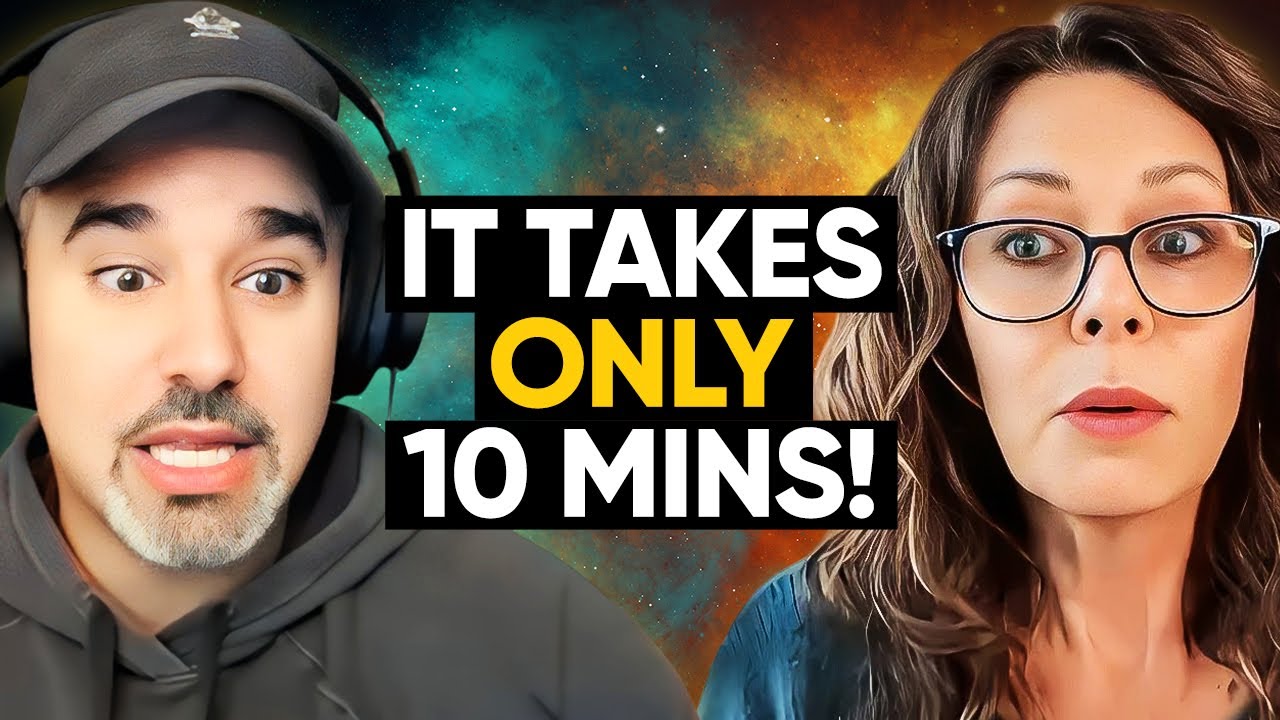
For a warm, practical conversation on this theme, Cheryl Richardson shares her view on transforming your soul’s purpose in this lifetime on the Next Level Soul Podcast. You can also read our Cheryl Richardson episode page.
Try this: List three patterns that have repeated in your life. Beside each, write the quality it may be asking you to grow, such as patience, honesty or self-trust.
Your Gifts Are Clues
Gifts are what come easily to you and matter to others. You might not even think of them as gifts because they feel ordinary. That is usually the tell.
- Things people thank you for. Listening, organizing, making people laugh, calming a room.
- Things you lose time doing. The hours that vanish while you garden, write, fix, teach or sit with someone.
- Things you cannot stop noticing. The injustice that bothers you, the person who is being left out, the beauty others walk past.
- Things you wish someone had done for you. Often the clearest hint of what you are here to offer.
Many traditions also describe subtler gifts, like intuition, empathy, healing presence or creative vision. Practitioners say these can be developed with practice, and that humility is part of using them well. A gift is not a ranking. It is a responsibility you get to enjoy.
One note for the perfectionists. Your gift does not need to be polished before you offer it. It tends to grow in the offering.
Try this: Message three people you trust and ask, “What do you think I am good at that I might not see?” Notice what repeats.
Soul Plans and the Akashic Records
Some seekers go further and explore a soul plan through readings or meditation. The Akashic Records, described by practitioners as a kind of energetic archive of every soul’s journey, are one popular route. Our guide explains what the Akashic Records are and how people approach them.
On the Next Level Soul Podcast, Laura Coe talks about discovering your soul’s purpose through the Akashic Records. You can read the related soul plan episode page as well. As with any reading, listen for what resonates, keep your discernment, and be cautious with anyone who claims to know your future for a fee. You are the authority on your own life.

Try this: Before any reading, write down your three biggest questions. After it, mark what felt true in your body and what did not.
Astrology and Numerology as Tools
Neither astrology nor numerology has been shown by science to predict a person’s life. People use them anyway, often with real insight, because they offer a structured way to ask good questions. Treat them as mirrors, not rulebooks.
Astrology
Astrologers read the birth chart, a map of the sky at the moment you were born, as a picture of themes and tendencies. The school most connected to soul purpose is evolutionary astrology, associated with astrologers such as Jeffrey Wolf Green and Steven Forrest. Its practitioners focus on the Moon’s nodes. The South Node is said to show familiar habits and comfort zones. The North Node is said to point toward the growth your soul is reaching for. Saturn is often described as the teacher of discipline and lessons, and the Sun, Moon and rising sign as core identity, emotional nature and the face you show the world.
If you want to hear this explained by a working astrologer, listen to our conversation on evolutionary astrology and your soul’s journey with Ricky Williams.
Numerology
Numerology assigns meaning to numbers. Modern Western numerology borrows the name of Pythagoras, though most of its current form dates to the early twentieth century. The most common soul-purpose tool is the life path number.
- Step one. Write your birth date as month, day and year.
- Step two. Reduce each part to a single digit. For July 19, 1980: July is 7, the 19th is 1+9=10, then 1+0=1, and 1980 is 1+9+8+0=18, then 1+8=9.
- Step three. Add the results and reduce again: 7+1+9=17, then 1+7=8. The life path number is 8.
- Master numbers. If you reach 11, 22 or 33 along the way, many practitioners keep it as a master number instead of reducing it.
In numerology, an 8 is traditionally linked with themes of power, resources and integrity, and a 2 with cooperation and sensitivity. Those descriptions are interpretive, so read them the way you would read a horoscope: with curiosity, not obedience.
How to Use Them Well
- Look for what rings true. Ignore the rest.
- Use a reading to start a journal entry, not to end a decision.
- Never let a chart or number talk you out of an obvious need, like rest, medical care or leaving an unsafe situation.
- Remember that the power is within you. A tool can point. You still choose.
Try this: Find your life path number and your North Node sign. Write down one line from each description that surprised you, and one that missed.
Signs You Are on Your Path
No sign proves anything. Still, people who feel aligned tend to describe a similar texture to their days.
- A sense of rightness. Even when the work is hard, something in you says yes.
- Energy that returns. You get tired, but you recover. The effort feels like it belongs to you.
- Meaningful coincidences. The right book, person or idea arrives when you need it. Jung called this synchronicity, and many seekers treat it as a quiet sign of alignment.
- Growth that feels like unfolding. You are changing, and it feels more like becoming than striving.
- Other people feel safer with you. Your presence helps, often in ways you do not see.
- Your values and actions begin to match. Less performing, more living.
If you are curious how awakening changes daily life, our guide to spiritual awakening signs describes many of the shifts people report.
Signs You May Be Off Course
First, a gentle word. Being off course is not failure and it is not a verdict on your worth. It is information. Your inner compass is simply trying to get your attention.
- Chronic dread. A heaviness on Sunday night that has become the whole week.
- Numbness. Going through the motions, with nothing registering as joy or sorrow.
- Constant comparison. Measuring yourself against other people’s highlight reels.
- Resentment. Feeling used, unseen or stuck in a role you outgrew.
- Saying yes when you mean no. Living by other people’s expectations.
- Restless searching. Always looking for the next teacher or answer instead of listening within.
Please also hear this. Exhaustion, flat mood and loss of interest can have physical or emotional causes. If these feelings are heavy or last more than a couple of weeks, talk with a doctor or licensed therapist. Spiritual work and professional care work well together.
Try this: Choose one thing you are doing out of obligation. Ask whether it can be changed, reduced or released this month. Take one small step.
Purpose Through the Seasons of Life
Purpose is rarely one thing for an entire lifetime. Many seekers describe seasons, each with its own emphasis.
- Early adulthood. Exploring, testing, learning who you are outside your family’s expectations.
- The building years. Careers, partnerships and children. Purpose often shows up as devotion and responsibility.
- The turning point. Often around midlife, a loss, a diagnosis, a divorce or an empty house cracks things open and the old questions return louder.
- The wisdom years. Many people say purpose becomes simpler here: presence, mentoring, forgiveness, and the legacy of how you loved.
If you are past forty and feel it is late to ask, hear this clearly. Nothing in the teaching says purpose expires. Many people find their clearest direction after the roles they built their identity around fall away. The years behind you are not wasted. They are your material.
Try this: Ask which season you are in. Then ask what that season may be inviting you to release, and what it may be inviting you to begin.
Why Your Purpose Can Feel Hidden
If it is meant for you, why is it so hard to see? Teachers point to a few common reasons.
- Noise. A busy mind and a busy calendar drown out quiet guidance.
- Fear. Purpose often asks you to be seen, and being seen feels risky.
- Waiting for certainty. Direction usually becomes clear while you are walking, not before.
- Old stories. Beliefs like “I am not talented enough” or “that is for other people” can shade everything.
- Grief and burnout. When the heart is tired, the path blurs. Rest is part of it.
Surrender gets misunderstood here. It does not mean giving up or passively waiting. Spiritual teachers describe it as loosening your grip on how it must look, while still taking the next honest step. You do your part, and you stay open to being surprised.
Try this: Sit for five quiet minutes with no phone. Ask, “What is the next honest step?” Write whatever comes, even if it seems small.
Questions to Ask Yourself
Good questions do more than quick answers. Choose two or three to journal on this week.
- What did I love doing as a child, before anyone told me what mattered?
- What do I find myself explaining to others without being asked?
- What problem in the world makes my heart ache or my blood boil?
- When have I felt most like myself? Who was there, and what was I doing?
- What lesson keeps returning in my relationships?
- What would I try if I knew I could not embarrass myself?
- What am I tolerating that my soul has outgrown?
- Who do I admire, and what exactly do I admire in them?
- What did my hardest year teach me that I could now offer someone else?
- If I trusted myself completely, what would I do tomorrow?
- What do I want to be remembered for, in one sentence?
There are no wrong answers, and nothing needs to be shared. Notice which questions make your chest tighten or your eyes sting. Those usually have the most to say.
A Seven-Day Practice
Reading about purpose is a start. Living with the questions is what shifts things. Here is a simple week you can begin on any Monday.
- Day 1, Stillness. Ten minutes of quiet. Breathe. Ask for guidance and listen.
- Day 2, Patterns. Write the three patterns that keep repeating.
- Day 3, Gifts. Ask three people what they see in you.
- Day 4, Nature. Walk outside without headphones. Let your mind settle.
- Day 5, Tools. Look up your life path number or chart. Journal on what resonates.
- Day 6, Service. Do one kind thing for someone, with no credit.
- Day 7, Review. Reread your notes. Choose one small step for the coming week.
Then repeat. Purpose is not a destination you reach. It is a relationship you keep tending.
Books Worth Reading
Books are guides, not authorities. Take what rings true and leave the rest.
- Sacred Contracts by Caroline Myss, on archetypes and the idea of a life contract.
- Journey of Souls by Michael Newton, accounts of the soul between lives.
- The Seat of the Soul by Gary Zukav, on authentic power and spiritual growth.
- Man’s Search for Meaning by Viktor Frankl, a psychiatrist’s account of finding meaning in the hardest conditions.
- Autobiography of a Yogi by Paramahansa Yogananda, a classic on the soul’s path and the guru-student bond.
Begin Where You Are
You do not have to figure out your whole soul tonight. Choose one question, one practice, one conversation. Then take the next honest step. Purpose tends to reveal itself to people who keep walking, and to people who are kind to themselves while they do.
If you want company on the path, you will find teachers, films and conversations on these themes available on Next Level Soul, a spiritual ecosystem for seekers. You are already enough to begin.
Go Deeper with NLS Mastery: Your Soul’s Blueprint
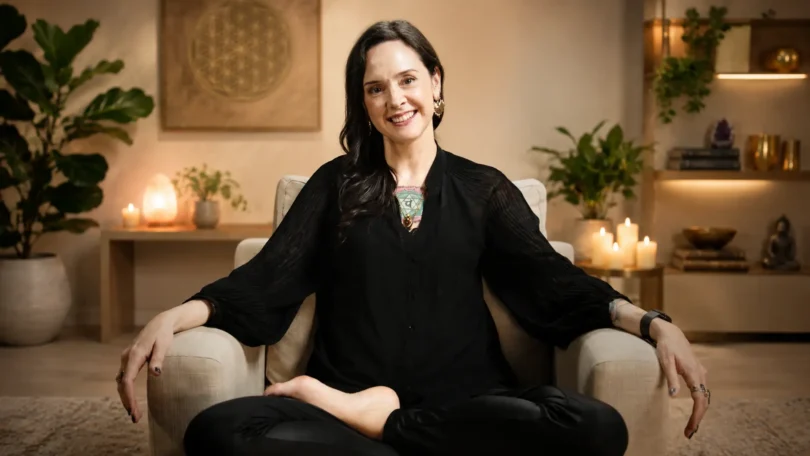
If you are searching for your purpose, you can go deeper with a guided course. Karen Bell teaches it in Your Soul’s Blueprint, part of NLS Mastery. Watch the course preview below.
Frequently Asked Questions
What Is a Soul Purpose?
Soul purpose is the idea that your soul came into this life to learn, grow and contribute in a particular way. Different traditions describe it differently, but most agree it is less about a job title and more about who you become and how you love.
How Do I Find My Soul Purpose?
Most teachers describe it as something you uncover over time rather than decode in one sitting. Pay attention to what you are drawn to, what your life keeps teaching you, and what you do that makes you feel most like yourself. Then take small steps and notice how they feel.
What Is a Soul Contract?
A soul contract is the belief that before birth your soul agrees to certain relationships, challenges and lessons for the sake of growth. It comes from spiritual teaching and past-life regression work, not from science, and many people use it as a way to find meaning in hard seasons.
Is Soul Purpose the Same as Life Purpose?
They overlap, but they are not identical. Life purpose is often practical and visible: your work, your values, the way you spend your days. Soul purpose is the deeper layer, the lessons and qualities your soul is said to be developing. Our guide to living with purpose covers the everyday side.
Can Astrology Reveal My Soul Purpose?
Astrologers, especially in the evolutionary school, use the birth chart as a map of themes, lessons and growth directions. There is no scientific evidence that a chart predicts your life, so many people treat it as a mirror for reflection rather than a verdict.
What Is a Life Path Number?
In numerology, the life path number comes from adding the digits of your birth date until you reach a single digit, or one of the master numbers 11, 22 or 33. Practitioners say it describes your central lessons and strengths. It is a reflective tool, not a proven science.
How Do I Know If I Am on My Soul Path?
People often describe a sense of rightness even when things are hard, meaningful synchronicities, energy that returns after effort, and a steady pull toward growth. Feeling lost for a while does not mean you are off path. It is often part of it.
Can You Have More Than One Soul Purpose?
Many traditions say yes. Your central theme may stay the same while the way you express it changes across seasons of life. A purpose can show up as parenting in one decade and teaching, creating or healing in another.
What If I Feel I Have No Purpose?
That feeling is common and worth taking seriously. Start small: one act of kindness, one honest conversation, one hour spent on something that interests you. If the emptiness is heavy or does not lift, please talk with a doctor or licensed therapist as well.
Does Soul Purpose Mean I Have No Free Will?
No. Most teachings that describe a soul plan also say you are free to follow it, ignore it or rewrite it. The plan is described as a set of themes and opportunities, not a script you must perform.