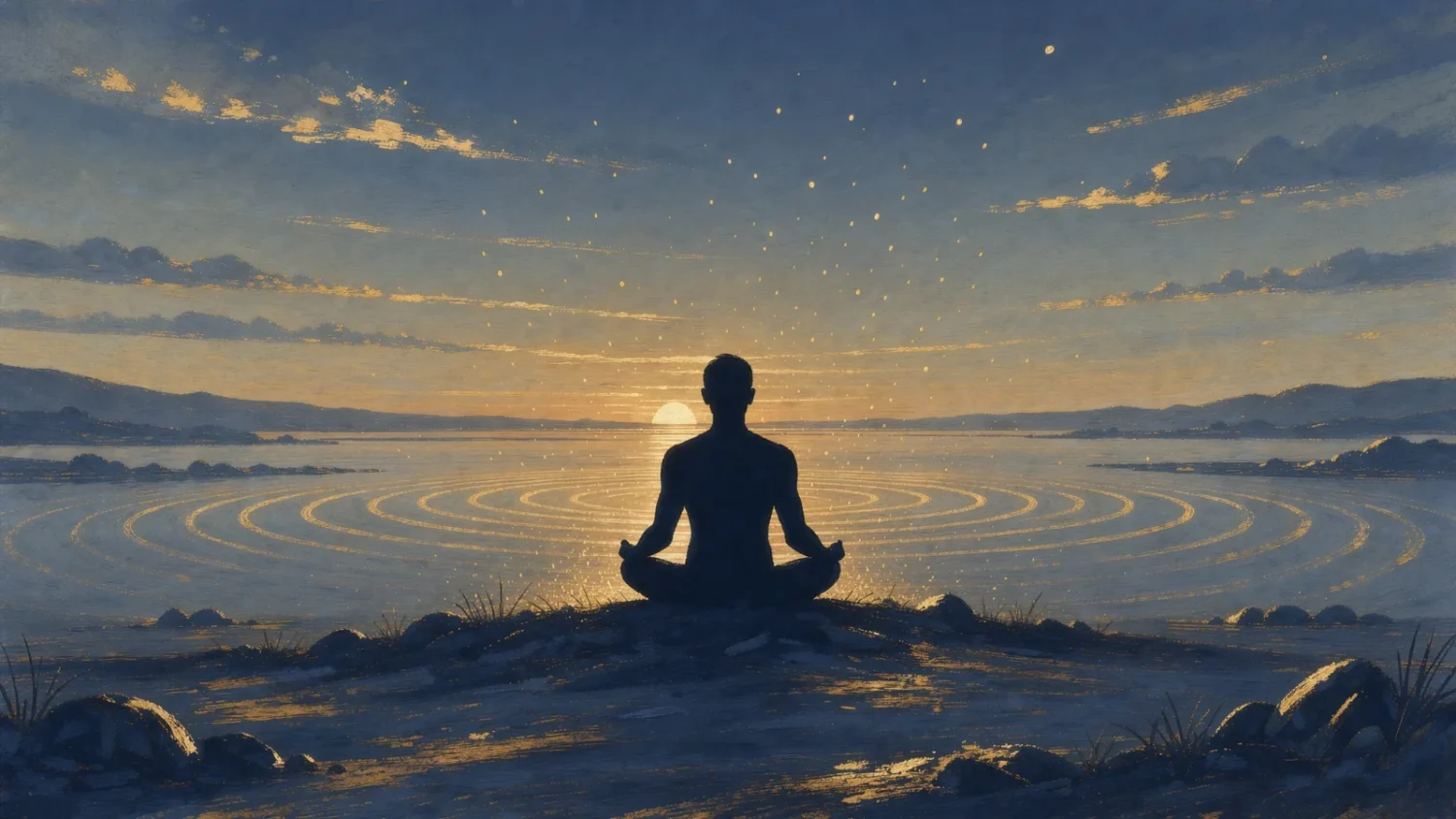
Some mornings the whole house feels heavy. Nothing is wrong, exactly. The coffee is hot and the day is ordinary, and still your body moves like it is wading through syrup. Then other days, after a good night of sleep or a long walk or a phone call with someone who loves you, everything feels lighter. Clearer. Like someone opened a window.
Many people search for "raising your vibration" to name that difference, and it is a popular phrase for a reason. It points at something real in lived experience. Here at Next Level Soul we prefer the words frequency, energy and awareness. They keep us honest, and they keep the power where it belongs, with you.
This guide walks through what people mean by frequency, the everyday basics that shape it, and the practices that tradition and common sense both recommend: meditation, music, supportive people, service and gratitude. It ends with a simple seven day plan. Take what resonates. Leave the rest.
One note up front. Frequency, in this guide, is a spiritual metaphor for how you feel and where your attention rests. It is not a physical measurement, and we will keep that line clear all the way through.
Key Takeaways
- Frequency is a spiritual metaphor for feeling lighter, clearer and more connected.
- The basics come first: sleep, movement, food, time in nature and slow breathing.
- Meditation, music, supportive people, service and gratitude deepen the shift.
- No device measures your frequency, and specific Hz claims about emotions are not supported.
- Heavy days are human. Be gentle, and seek professional help when you need it.
What Does It Mean to Raise Your Vibration?

You will hear this called raising your vibration, raising your frequency, or working with vibrational energy. This guide treats them as the same idea: a spiritual way of describing how light, steady and open you feel. It is a metaphor for an experience, not a measurement. If you are early on your path, our guides to spiritual awakening signs and the seven chakras pair well with this one.
Ask ten people and you will hear ten answers. One says it is the feeling of being in flow. Another says it is how open her heart feels. A third says it is the difference between a day spent reacting and a day spent responding. Underneath the different words, the same experience keeps showing up.
On a lighter day, people describe three things. Their mood is steadier. Their energy feels available. Their attention rests on what is in front of them instead of on a loop of worry. Many call that being aligned: what you think, what you feel and how you act are pointing the same direction.
The language has a long history. Mystics across traditions have spoken of the world as movement and rhythm, of the soul as something that can be tuned, of the breath and the voice as instruments. Yogis speak of prana, the life force that moves with the breath. Taoists speak of qi. Many cultures describe sacred sound. You do not have to adopt any of it to see the common thread. Human beings have always felt that some states of being are brighter than others, and that we can move toward the brighter ones.
In a conversation on the Next Level Soul Podcast, How Your Frequency Shapes Your Future with Allison Carmany, the idea is explored from the angle of transformation. Real change, she suggests, can feel less like climbing a ladder and more like renovation: familiar walls come down before the new space appears. That is a useful picture to carry. Feeling lighter is not always instant, and sometimes it begins with letting something old fall away.
Notice what this means. Frequency is not a score you earn. It is a quality of experience you can become more aware of, and then gently influence. The power is within you, and everything in this guide is only a way to remember that.
Try this: Right now, take one slow breath and ask yourself, "How do I feel in my body?" Give it one word. Heavy, tight, tired, calm, bright. Just name it. Naming is the first act of awareness.
A Spiritual Metaphor, Not a Measurement
Let us be plain about this, because you deserve plain.
In physics, frequency is real and measurable. It describes how often a wave repeats: a musical note, a radio signal, a color of light. Nothing in that science tells us that your mood, your thoughts or your spiritual state have a frequency that a machine can read. When we say someone feels "high" or "low" in frequency, we are using a poetic shorthand for lightness or heaviness of experience.
That matters, because the wellness world is full of confident claims. You may have seen charts that assign a specific number of hertz to love, to fear, to gratitude or to shame. Those charts are not backed by evidence, and we will not repeat them here. You may also meet products that promise to tune or boost your frequency for a fee. Be careful with those. A device cannot give you what a good night of sleep, an honest conversation and a quiet walk can.
There is a second caution, and it is gentler. Frequency is not a moral scoreboard. You are not a lesser person on the days you feel heavy. Grief, anger and exhaustion are honest signals, not failures. Spiritual language can sometimes turn into pressure to stay cheerful at all times, and that is not the path we walk. A real practice makes room for the whole range of human feeling.
If heaviness stays with you for weeks, or if you feel hopeless or unsafe, please speak with a doctor or a licensed therapist. Spiritual practice can sit alongside professional care and often supports it. It is not a replacement. For more on tender, deeper healing, see our guide to healing from trauma spiritually.
So here is the grounded way to hold this whole subject. Treat frequency as a lens for paying attention to how you feel, and treat the practices below as ordinary, well-loved ways of caring for a body, a mind and a soul. They work for many people because they are good for people. Nothing more mystical is required for them to help.
Try this: Write down one belief about "high" and "low" energy that makes you feel judged. Then cross out the judgment and rewrite it as a simple observation. "I am tired today" is kinder than "my energy is bad."
Start With the Basics: Sleep, Movement, Food, Nature and Breath
Before incense and chanting, there is the body. Almost every wisdom tradition begins with the body, because the body is where you live. If the foundation is shaky, the lofty practices wobble. Start here, and notice how much shifts.
Sleep
Few things change how you feel faster than rest. After a poor night, thoughts run sharper, patience runs thin, and small things loom large. After a good one, the same day feels workable. Most health authorities encourage adults to protect their sleep, and many people find that consistent habits help: similar bedtimes, a dark and cool room, and less screen time in the last hour of the day.
Some people like to close the day with a short prayer, a few deep breaths or a moment of thanks. It tells the nervous system the work is done. If you struggle with persistent sleep problems, a doctor can help you look at the cause.
Movement
The body is built to move, and stillness for too long leaves energy stuck. You do not need a gym. A walk around the block, stretching on the living room floor, gentle yoga, dancing in the kitchen: all of it counts. Many people report that even ten minutes of movement lifts a heavy mood, and regular exercise is widely recommended for mental wellbeing.
Choose movement you actually enjoy. Joy is part of the point. If a practice feels like punishment, it will not last, and it will not lift anything.
Food and Water
What you eat and drink shapes how you feel through the day. Steady meals, plenty of water and real food made of recognizable ingredients tend to leave people feeling more even than long gaps followed by sugar and caffeine. Some seekers choose lighter, plant-forward meals because they feel clearer afterward. Others feel best with something different. Pay attention to your own body rather than a rule from a book.
A small ritual helps. Pause before you eat, take one breath and say thank you. That pause turns fuel into something closer to communion, and it slows you down enough to notice when you are full.
Time in Nature
Walk under trees and something loosens. Many studies suggest that time in green spaces is linked with lower stress and better mood, and anyone who has stood barefoot in a garden or watched a lake at dusk knows the feeling without needing a study. Traditions everywhere treat the natural world as a teacher.
If you are curious about the practice of connecting with the ground itself, our guide to earthing and grounding explores what people practice, what they report and where the evidence is still developing. Even without that, ten minutes outside with your phone in your pocket is a gift.
Breath
Breath is the one automatic function you can also steer. Slow, steady breathing, with a longer exhale than inhale, tends to calm the body and settle racing thoughts. Yogic tradition has refined breath practice for thousands of years, calling it pranayama. Modern breathwork teachers carry the lineage forward.
Listen to the conversation with breathwork guide Niraj Naik in The Art of Spiritual Breathwork to hear how one man came to see the breath as a doorway after a long health struggle. Pace yourself with any strong breathing technique, and skip intense methods if you are pregnant or have a heart, lung or panic condition, unless a professional guides you.
Here is a gentle starter you can use anywhere: breathe in through the nose for a count of four, breathe out slowly for a count of six, and repeat for two minutes. That is all.
Try this: Pick the one basic from this section that feels most neglected. Give it five minutes of care today. Tomorrow, add a second.
Meditation: Learning to Notice
Meditation is not about emptying your mind. It is about noticing what is already there, kindly, again and again. Over time that noticing becomes a steadier awareness, and many people find that their reactions soften and their days feel more spacious.
Traditions offer many doors. Some focus on the breath. Some repeat a sacred word or mantra. Some rest in silence, and some move, like walking meditation. Some use guided imagery. None is the right one for everybody. Our complete meditation guide walks through the most common styles so you can find your fit.
Here is a simple ten minute practice that fits into a real morning:
- Sit comfortably, spine tall but not stiff, hands resting on your lap.
- Close your eyes or lower your gaze. Take three slow breaths.
- Let your breathing return to normal. Feel it at the nostrils, chest or belly.
- When your mind wanders, and it will, notice that, and return to the breath. That return is the practice.
- After ten minutes, rest for a moment. Place a hand on your heart and say thank you.
If you are new, five minutes is plenty. Consistency beats length. Some people find it easier to meditate right after waking, before the day begins to pull at their attention. Others prefer the evening. Choose the time you will actually keep.
You may also hear about energy practices that work with the subtle body, such as Reiki, qigong or chakra work. Practitioners describe them as ways to feel more balanced. Research on many of them is limited, so we encourage curiosity and discernment. Our overview of energy healing practices explains what each tradition teaches, so you can decide what feels right for you.
Meditation also connects naturally to the larger spiritual path. If you are curious where this all leads, read our guide to spiritual enlightenment. And if you want a teacher beside you, Next Level Soul Mastery offers in-depth courses from respected guides.
Try this: Set a timer for five minutes tomorrow morning, before your phone. Sit, breathe and return. Do the same the next day. Let it become small and ordinary.

Music and Sound
Music reaches places words cannot. A song from your youth can bring back a whole summer in seconds. A hymn can quiet a room. A drumbeat can wake your whole body. Almost every spiritual tradition uses sound: chanting, kirtan, gospel, Gregorian song, Sufi devotional music, Tibetan bowls, the single sacred syllable Om.
People use sound in simple ways. Some play calming instrumental music while they work or rest. Some sing in the car, loudly and badly, and feel wonderful afterward. Some hum or chant for a few minutes. Some sit with a singing bowl or a recording of one and let the tone settle them. Practitioners often describe these experiences as feeling the body relax and the mind slow.
It is fair to say that sound affects how people feel. It is not fair to claim that any particular note or tone fixes illness or tunes you to a specific number. Treat sound as a companion to your practice, not a cure.
The best soundtrack is the one that honestly moves you. For one person that is a choir. For another it is classic rock. Notice what lifts you, and notice what leaves you flat, and curate your day a little. The playlist you choose for the morning commute may do more than you expect.
Try this: Make a short playlist of songs that make your chest feel open. Play it while you cook or drive. Add a song every time one surprises you.
The People and Places Around You
Energy is shared. Spend an afternoon with someone who laughs easily and you will probably leave lighter. Spend it with someone who complains without pause and you may leave tired. This is not a mystery. We are social beings, and we take on the moods of those near us.
So pay attention. After time with each person in your life, ask yourself a quiet question: how do I feel now? Steadier or smaller? Seen or unseen? You do not have to cut anyone off. Many relationships improve with honest conversation and kinder boundaries. But you can choose to spend a bit more time with people who leave you feeling like yourself, and a bit less in situations that drain you.
Community matters just as much. Many seekers tell us that the sense of belonging, of being among others who ask the same big questions, changes everything. It reminds you that you are not odd for wondering, and not alone in the wondering.
Your space speaks too. A cluttered counter, a dim room and a television murmuring bad news all day shape your mood without your noticing. You can change a lot with small acts: open a window, clear one surface, add a plant, light a candle, keep a corner for quiet. A tiny altar or reading nook can become a daily signal that this time is yours.
Try this: Choose one person who lifts you and reach out today. Then choose one small thing in your space to change.
Service: Lifting Someone Else
There is an old teaching in nearly every faith that we rise by lifting others. It sounds like a nice saying until you try it. Hold a door, bring soup to a neighbor, listen to a friend without checking your phone, volunteer for a few hours. Something in you brightens.
Service pulls attention away from the endless chatter of the self and places it on someone real. That alone can be a relief. Many traditions, from karma yoga to Christian charity to Buddhist compassion practice, treat service as a path in its own right, not just a nice extra.
It does not have to be big. A kind word to a stranger counts. So does forgiving someone quietly, in your own heart, even if you never say it aloud. Forgiveness often feels like setting down a heavy bag you did not know you were carrying. It is not excusing harm. It is deciding you will no longer carry it.
Give from fullness, not depletion. If you are exhausted, rest first. Service that costs you your health is not the kind the teachers meant.
Try this: Do one small kind thing today that nobody will ever know about. Notice how you feel an hour later.
Gratitude That Is Real
Gratitude has become a bit of a slogan, so let us rescue it. Real gratitude is not pretending everything is fine. It is a quiet turning of attention toward what is good while still admitting what hurts. Many people find that a regular gratitude practice helps their mood, and the habit is simple enough to try.
Keep a small notebook by your bed. Each night, write three things from the day. Be specific. Not "my family," but "my daughter laughed at the dinner table." Not "nature," but "the light on the maple at four o’clock." Specific details train your eyes to see more of them.
On hard days, make the list smaller. One thing is enough. A warm cup of tea counts. A hand on your shoulder counts. The point is not to force a smile. The point is to remember that even on a heavy day, something good is within reach.
Some people like to speak their thanks aloud, to the universe, to God, to their ancestors, to the day itself. Others write thank you notes. Choose the form that feels honest, and let it be short.
Try this: Tonight, write three specific things you are grateful for. Read them once, slowly, before you turn off the light.
A 7 Day Frequency Practice
Here is a week to try. Each day takes about fifteen minutes or less. Do them in order or mix them up. If you miss a day, simply pick up where you left off. There is no failing here, only practicing.
- Day 1: Rest. Choose a bedtime and keep it. Turn off screens thirty minutes before. Place a glass of water by the bed. Write one sentence in the morning about how you slept.
- Day 2: Move. Take a twenty minute walk, with no headphones if you can. Notice the sky, the air, the sounds. Stretch for five minutes when you return.
- Day 3: Nourish. Eat one meal slowly and without a screen. Pause before the first bite, breathe and say thank you. Drink water through the day.
- Day 4: Breathe and Sit. Do the ten minute meditation from earlier in this guide, or five minutes if you are new. Follow it with two minutes of slow breathing, four counts in and six counts out.
- Day 5: Sing and Listen. Play your uplifting playlist. Sing along. Spend five minutes listening to one song with your full attention, eyes closed.
- Day 6: Connect and Serve. Call or visit someone you care about. Do one small kind thing for another person. Tidy one corner of your home.
- Day 7: Give Thanks. Write down ten specific things you are grateful for from the week. Sit quietly for a few minutes with a hand on your heart. Ask yourself what felt best, and plan to keep it.
At the end of the week, look back. Which day felt like coming home? Which practice felt forced? You are not trying to complete a program. You are learning what helps you, and that knowledge is yours to keep.
Many people find it works best to pick two or three practices and repeat them daily for a month, rather than doing everything at once. Small and steady wins.
Books to Keep Nearby
These are widely loved books that touch on awareness, presence and lightness of being. Read one slowly instead of five quickly.
- The Untethered Soul by Michael A. Singer, on noticing the inner voice and learning to rest in awareness. Find The Untethered Soul on Amazon.
- The Power of Now by Eckhart Tolle, a popular guide to presence. Find The Power of Now on Amazon.
- Wherever You Go, There You Are by Jon Kabat-Zinn, a clear and kind introduction to mindfulness. Find Wherever You Go, There You Are on Amazon.
- The Book of Joy by the Dalai Lama and Desmond Tutu with Douglas Abrams, a warm conversation about joy in hard times. Find The Book of Joy on Amazon.
Where to Go Next
If one idea here stayed with you, follow it. Sit with the meditation guide, listen to the conversation on how frequency shapes the future, or step into the wider path in our guide to spiritual enlightenment. When you are ready for a teacher and a structure, Next Level Soul Mastery offers in-depth courses. You are already enough to begin.
Go Deeper with NLS Mastery: Raising Your Frequency
Simple, repeatable practices for shifting your energy and staying steady in it. Asil Toksal teaches it in Raising Your Frequency, part of NLS Mastery. Watch the course preview below.

Frequently Asked Questions
What Does Raising Your Frequency Mean?
It is a spiritual way of describing a lighter, clearer, more connected state of mind and body. It is a metaphor for how you feel and where your attention rests, not something a device can measure.
Is Raising Your Vibration the Same Thing?
People use the two phrases to mean nearly the same thing. “Raising your vibration” is the popular search term. Here we say frequency, energy and awareness, and we treat all of it as a personal, spiritual language.
Can Science Measure Your Frequency?
No. Sound and light have frequencies that physics can measure. A person’s mood or spiritual state does not have a measured frequency, and claims that specific emotions match specific numbers are not supported by evidence.
How Do I Feel Lighter Quickly?
Drink water, step outside, take ten slow breaths and move your body for a few minutes. These simple acts often shift mood within minutes. Lasting change comes from repeating them most days.
Does Meditation Help?
Many people find it does. Regular practice trains attention and helps you notice thoughts and feelings without being carried off by them. Even five to ten minutes a day is a real start.
Can Music Change How I Feel?
For most people, yes. Music and sound can calm, energize or move you, and many traditions use chanting and singing bowls as part of practice. Choose what genuinely settles or lifts you.
Do I Need to Cut Off Negative People?
Not necessarily. Start by noticing how you feel after time with each person, then set kinder boundaries and spend a little more time with people who leave you feeling steady and respected.
What If I Feel Low Even When I Do Everything Right?
Low days are part of being human. They are not a failure of practice. If heaviness lasts for weeks, or you feel hopeless, please talk with a doctor or licensed therapist alongside any spiritual practice.
How Long Until I Notice a Difference?
Some people notice a shift after one good night of sleep or one walk outside. For deeper, steadier change, give a daily practice at least a few weeks before you judge it.
What Is a Good Daily Practice to Begin With?
Try this: drink a glass of water, take five slow breaths, spend a few minutes outside, and write down one thing you are grateful for. Add meditation when that feels natural.
Is It Wrong to Feel Heavy Emotions?
No. Grief, anger and fear are honest signals. The aim is not to avoid them but to meet them with awareness and care so they can move through instead of settling in.
Where Can I Learn More on Next Level Soul?
Explore the Next Level Soul Podcast, the guided teachings available on Next Level Soul TV and the in-depth courses in Next Level Soul Mastery.