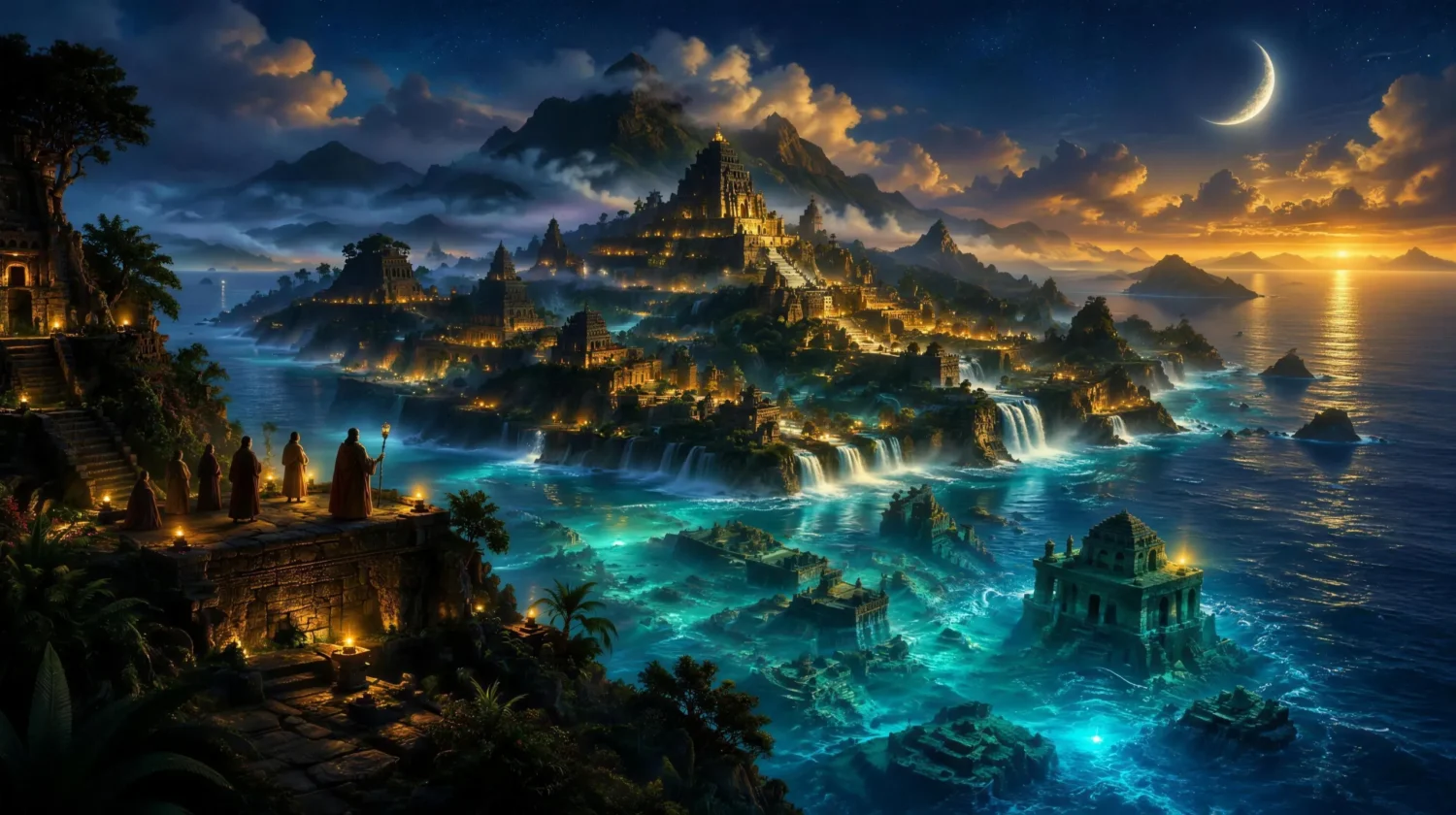
Lemuria and Mu are legendary lost continents, said to have sunk beneath the ocean long ago. Lemuria began in 1864 as a zoologist’s guess about lemur fossils, became a spiritual homeland in Helena Blavatsky’s Theosophy, and was renamed Mu, a lost Pacific motherland, by James Churchward in the 1920s. Today the two names often point to the same idea: an ancient, heart-centered civilization that many seekers feel they remember.
This guide walks through who said what, where each idea came from, what modern geology says about plate tectonics and the old land-bridge theory, and why the story still speaks to people on a spiritual path. Every claim is credited to the person who made it, so you can see the sources for yourself and decide what rings true. If you are new to lost-world lore, our companion guide to Atlantis, the lost civilization is a good place to pair with this one.
Key Takeaways
- Lemuria was first proposed in 1864 by zoologist Philip Sclater to explain lemur fossils in Madagascar and India, and Ernst Haeckel expanded it in 1870.
- Helena Blavatsky made Lemuria a spiritual homeland in The Secret Doctrine (1888), placing the Lemurians as the third “root race” before Atlantis.
- Mu is the Pacific lost continent popularized by James Churchward in The Lost Continent of Mu (1926), who identified it with Lemuria.
- Mount Shasta lore began with Frederick Spencer Oliver’s 1894 novel and grew through writers such as H. Spencer Lewis and Guy Ballard, with the hidden city of Telos at its center.
- Plate tectonics replaced the land-bridge theory: India and Madagascar drifted apart as parts of Gondwana, and a continent cannot sink in a single night.
- Seekers still care because Lemuria stands for an origin story of healing, heart-led culture and remembering who you are.
What Are Lemuria and Mu?
Lemuria is the name given to a sunken land said to have existed in the Indian or Pacific Ocean in ancient times. Mu is the name given to a lost continent in the Pacific, most famously described by James Churchward. Over the twentieth century the two merged in popular spiritual writing, so “Lemuria” and “Mu” are now often used for the same vanished homeland. The people said to have lived there are called Lemurians, and the word covers everything from the gentle ancestors of Theosophy to the robed beings said to live inside Mount Shasta.
Whatever your own view, the most useful way to read this guide is as a map of human imagination, memory and meaning, with each claim credited to the person who made it.
Lemuria and Mu at a Glance
| Idea | First put forward by | Where it was placed | Kind of source |
|---|---|---|---|
| Lemuria (scientific) | Philip Sclater, 1864 | Indian Ocean, linking Madagascar and India | Zoology and fossil distribution |
| Lemuria (spiritual) | Helena Blavatsky, 1888 | A vanished southern continent, home of the third root race | Theosophical writing |
| Mu | Augustus Le Plongeon (the name), James Churchward (the Pacific continent) | Pacific Ocean, from the Marianas toward Easter Island in Churchward’s telling | Antiquarian and esoteric writing |
| Telos and the Shasta Lemurians | Frederick Spencer Oliver, 1894 | Tunnels beneath Mount Shasta, California | Occult novel and later lore |
| Kumari Kandam | Tamil writers, including Devaneya Pavanar | A sunken land south of India | Tamil literature and tradition |
Where Did the Idea of Lemuria Come From?
The first Lemuria was not spiritual at all. It was a scientist’s solution to a puzzle, and understanding it helps everything else in this story make sense.
A Zoologist’s Puzzle in 1864
In 1864, English zoologist Philip Sclater published a paper called “The Mammals of Madagascar” in The Quarterly Journal of Science. He was puzzled by the fossils of lemurs and their relatives. They turned up on Madagascar and in India, but not in nearby Africa or the Middle East. Sclater proposed that a large land once stretched across the Indian Ocean, later broke into islands, and left Madagascar as one of its remnants. He suggested the name Lemuria, after the lemurs themselves.
That is the whole origin of the word. Lemuria means, quite literally, the land of the lemurs. The idea that it was the cradle of a lost human civilization came later.
Why Sunken Land Bridges Made Sense in the 1800s
Sclater’s idea was not unusual for his day. After Charles Darwin’s work, naturalists wanted to trace how species spread from their places of origin. Nobody yet had a way to move continents, so when the same animals or rocks appeared on opposite sides of an ocean, the natural answer was a bridge of land that had since sunk. The geologist Melchior Neumayr made a systematic attempt at this in 1886, and many hypothetical land bridges were proposed across the nineteenth century. The French naturalist Étienne Geoffroy Saint-Hilaire had even suggested a southern continent between India and Madagascar about two decades before Sclater.
Ernst Haeckel Makes Lemuria the Cradle of Humanity
In 1870 the German biologist Ernst Haeckel took the idea further. Looking for the “missing links” between apes and humans, he proposed Lemuria as the ancestral home of our species. That one step turned a map of lemur fossils into an origin story for people, and it is the doorway through which spiritual writers entered.
The Lemuria and Mu Timeline
| Year | Who | What happened |
|---|---|---|
| 1864 | Philip Sclater | Proposes a sunken Indian Ocean continent and names it Lemuria |
| 1864 | Charles Etienne Brasseur de Bourbourg | Reads the word “Mu” in the Madrid Codex, then called the Troano Codex, as a land lost to catastrophe |
| 1870 | Ernst Haeckel | Proposes Lemuria as the ancestral home of humans |
| 1882 | John Newbrough | Publishes Oahspe, with a lost northern Pacific continent called Pan |
| 1888 | Helena Blavatsky | Publishes The Secret Doctrine, making Lemurians the third root race |
| 1894 | Frederick Spencer Oliver | Publishes A Dweller on Two Planets, placing Lemurian survivors beneath Mount Shasta |
| 1904 to 1908 | Rudolf Steiner | Publishes essays on Lemuria and Atlantis later gathered as Cosmic Memory |
| 1912 | Alfred Wegener | Proposes continental drift |
| 1926 | James Churchward | Publishes The Lost Continent of Mu and identifies Mu with Lemuria |
| 1931 | H. Spencer Lewis | Publishes Lemuria: The Lost Continent of the Pacific, popularizing the Shasta connection |
| 1960s | Earth scientists | Accept plate tectonics, replacing the land-bridge approach |
Helena Blavatsky, Theosophy and the Root Races

The person who turned Lemuria into a spiritual homeland was Helena Petrovna Blavatsky, the Russian-born mystic who co-founded the Theosophical Society in 1875. In 1888 she published The Secret Doctrine, a vast work that she presented as a commentary on the Stanzas of Dzyan, an ancient text she said she had been shown. If you want the wider background, our entries on Theosophy and esotericism explain the tradition she belonged to.
The Seven Root Races
In Blavatsky’s scheme, humanity unfolds through seven “root races,” each tied to a different age and a different continent. The first were ethereal beings. The third root race were the Lemurians, who lived on a vanished southern continent. The fourth were the Atlanteans, who in her telling developed formidable psychic gifts and technologies and eventually misused them. The fifth, the so-called Aryan root race, is the one that follows the fall of Atlantis and includes humanity today.
Blavatsky described the early Lemurians as strange proto-humans, egg-laying and androgynous, who were not yet fully self-aware. She wrote that the human mind awakened late in Lemuria’s long story, and that this awakening was a pivotal event in the descent of spirit into matter. That is a very different picture from the peaceful, healing Lemuria many seekers imagine today, and it shows how much the idea has changed in the telling.
A Fair Word on the Root Race Scheme
The root race scheme has drawn criticism over the years for the way it ranked peoples, and many modern readers treat it as a symbolic map of stages of consciousness rather than literal history. It is worth knowing this so you can read the old texts with open eyes. The teachings of the Theosophical movement also fed into the Ascended Masters tradition, which we meet again at Mount Shasta below.
Rudolf Steiner and the Akashic Chronicle
Between 1904 and 1908 the Austrian philosopher Rudolf Steiner published a series of essays describing the early Earth, including Lemuria and Atlantis, later gathered in the book known in English as Cosmic Memory. Steiner did not say he was recalling these ages. He said he was reading them, from a subtle record called the Akasha Chronicle. That idea is the root of the modern interest in the Akashic Records, and if it calls to you, our guide to the best Akashic Records books and our article on what happens when you access your Akashic Records are the next steps. For Steiner’s own spiritual system in plain language, see our Theosophy study guide and workbook, and for the Theosophical Society tradition, the Ocean of Theosophy study guide and workbook.
James Churchward and the Continent of Mu
Where the Name Mu Came From
The name Mu comes from earlier than Churchward. In 1864, the French writer Charles Étienne Brasseur de Bourbourg studied the Madrid Codex, then called the Troano Codex, a Maya manuscript. Using the de Landa alphabet, a reading that later scholarship set aside, he believed one word referred to a land called Mu that had been submerged by catastrophe. The British-American antiquarian Augustus Le Plongeon, who studied Maya ruins in Yucatán, took up the name. He linked Mu with Atlantis and, following Ignatius Donnelly’s 1882 book Atlantis: The Antediluvian World, placed it in the Atlantic.
Churchward’s Story
James Churchward was a British writer, engineer and inventor. Beginning with The Lost Continent of Mu, the Motherland of Man in 1926, he wrote a series of books that moved Mu to the Pacific and made it the center of a global story. His follow-ups included The Children of Mu (1931), The Sacred Symbols of Mu (1933), and two volumes on the cosmic forces of Mu.
According to Churchward, his knowledge came from ancient clay tablets. He said that decades earlier, while serving as a soldier in India, he befriended a high-ranking temple priest who showed him tablets written in a lost “Naga-Maya” language and taught him to read it. He also drew on a collection of stone tablets that William Niven had uncovered in Mexico.
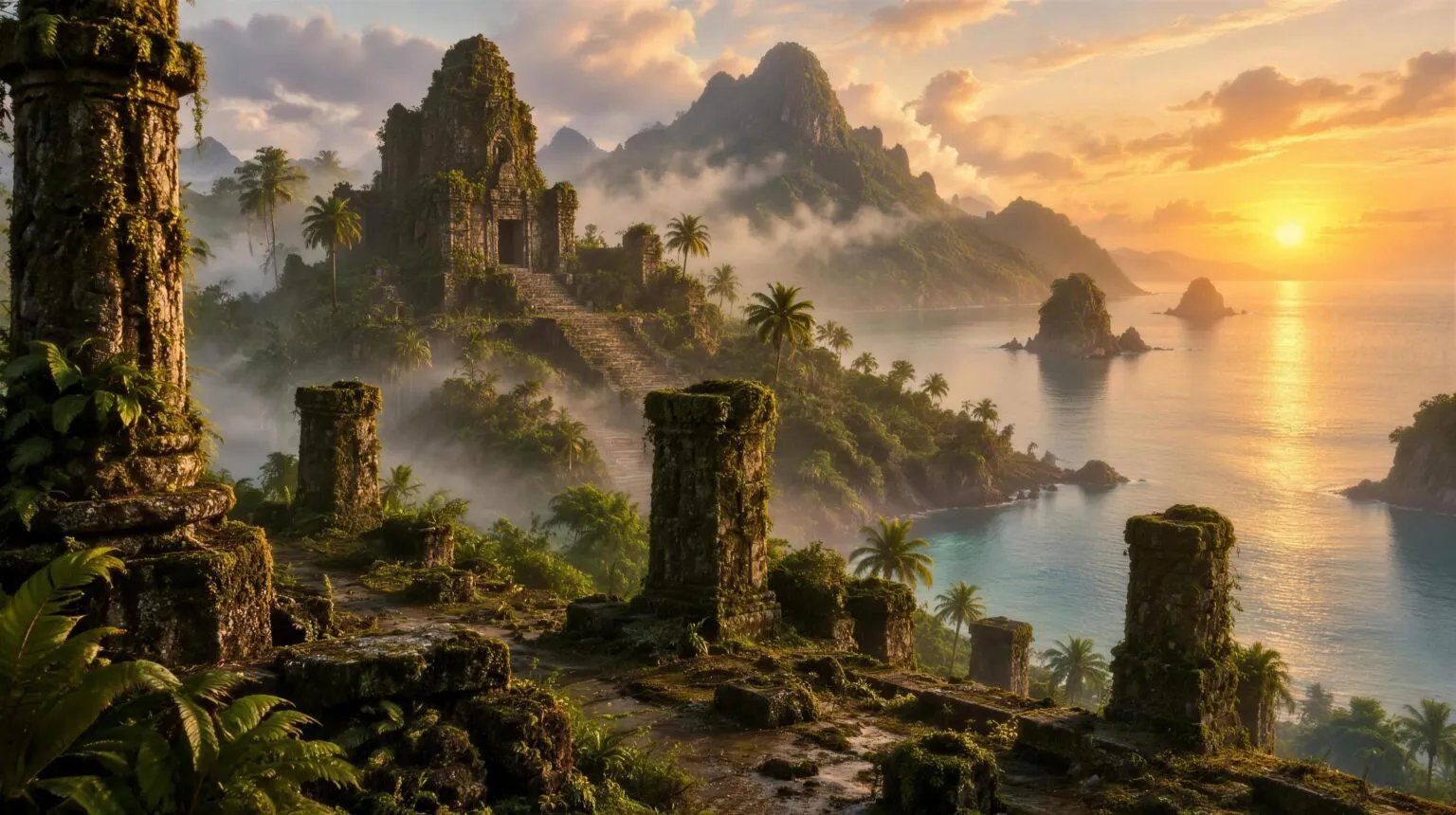
From these sources, Churchward described the following. Mu was the home of an advanced civilization he called the Naacal. It flourished between roughly 50,000 and 12,000 years ago and reached 64 million people in seven major cities. The continent stretched across the Pacific from the Marianas to Easter Island and from Hawaii to Mangaia. In his account, it was lifted by volcanic gases and then destroyed in almost a single night when its gas-filled chambers collapsed, sinking the land beneath the sea. Churchward also held that Mu was the common mother of the great cultures of Egypt, Greece, Central America, India and Burma, and he read a shared sun symbolism, including a king named Ra, across ancient lands.
Pan, Rutas and Other Pacific Lands
Churchward was not alone. John Newbrough’s Oahspe (1882) mapped a lost northern Pacific continent called Pan, which some writers have linked with Mu. The French occultist Louis Jacolliot wrote of a lost land called Rutas in the 1870s. Each writer adds a layer, and by the mid twentieth century the writer L. Sprague de Camp could survey the whole tradition in his book Lost Continents: The Atlantis Theme in History, Science, and Literature (1954), which traces how Atlantis, Lemuria and Mu relate to one another.
Hear It From a Guest: Billy Carson on Lemuria and Atlantis

Billy Carson joins Alex Ferrari and describes Lemuria and Atlantis from his own research. He says Aboriginal elders have passed down a verbal history of an island that sank off Australia, where people were seeded in a spiritual golden age. It is a useful counterpoint to Churchward’s Mu, and it is Billy’s perspective, shared as his view. Watch Emerald Tablets and Humanity’s Origins with Billy Carson and read the show notes.
Mount Shasta and the Hidden City of Telos
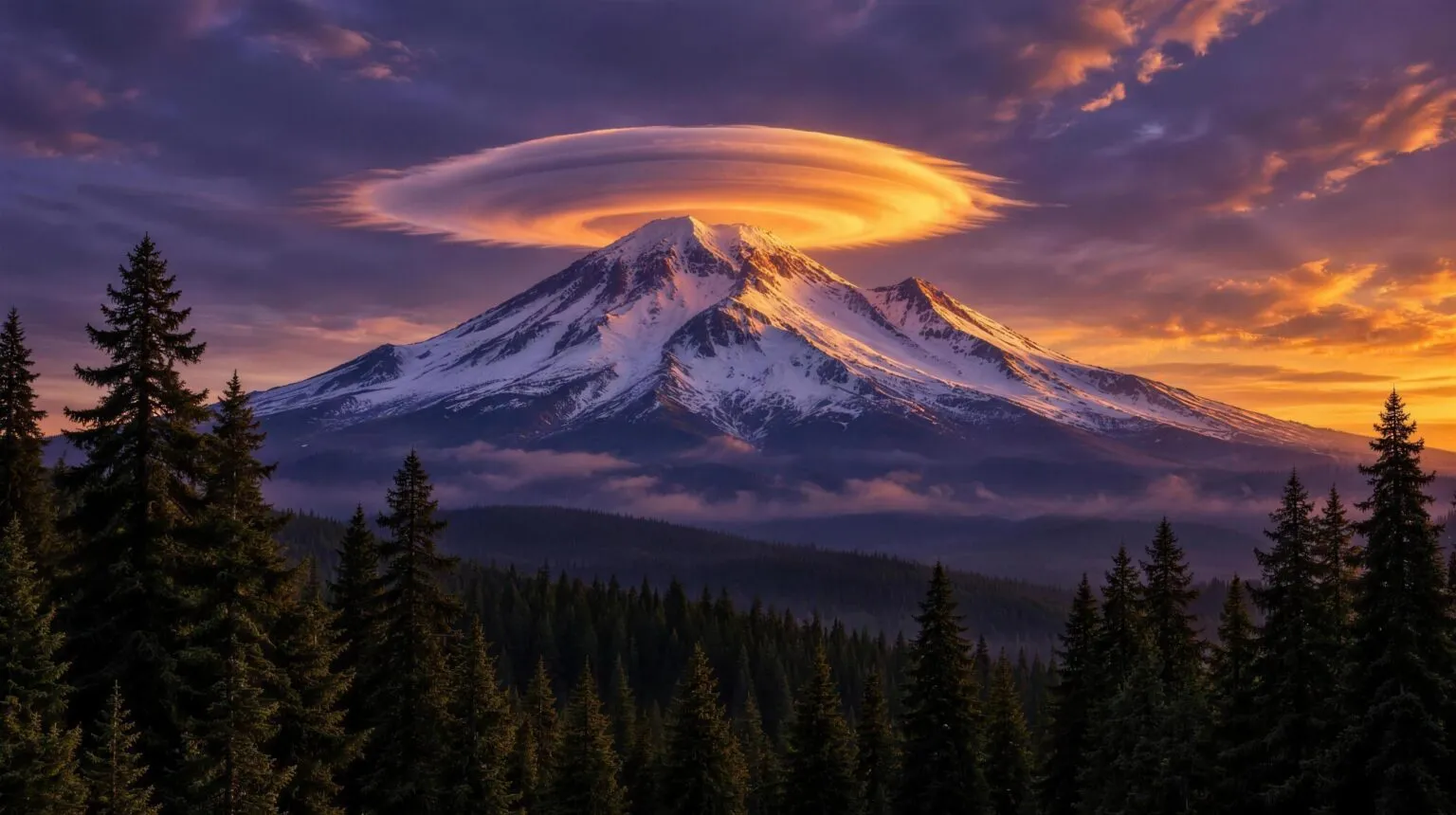
If Blavatsky gave Lemuria its philosophy and Churchward gave it a map, Mount Shasta gave it an address. Rising 14,179 feet in Siskiyou County, California, Mount Shasta is the second-highest peak in the Cascade Range, and it is known for the lens-shaped lenticular clouds that gather over its summit when moist air flows across the peak. The sight has fed more than a century of stories.
The legend begins in 1894 with Frederick Spencer Oliver’s book A Dweller on Two Planets. Oliver wrote that survivors of Lemuria lived in a complex of tunnels beneath the mountain, in a city called Telos, with fur-lined carpeted floors and jeweled walls. He added that Lemurians could sometimes be seen walking the surface in white robes.
In 1931 Harvey Spencer Lewis, writing under the pen name Wishar Spenle Cerve, published Lemuria: The Lost Continent of the Pacific, which spread the idea that Shasta was a repository for Lemurian survivors. In the 1930s Guy Ballard, writing as Godfré Ray King in Unveiled Mysteries, said he met the Ascended Master Saint Germain on the mountain. The I AM movement that grew from his work, along with other groups in the Ascended Masters tradition, placed Shasta at the heart of its teaching. You can read the wider tradition in our list of Ascended Masters.
Every year, pilgrims from many spiritual groups travel to Mount Shasta for gatherings and festivals. Whether you see the mountain as a physical peak or a sacred symbol, it remains one of the great pilgrimage sites of American spirituality.
Hear It From a Guest: Michael Le Flem and the Book Born Near Mount Shasta
Michael Le Flem tells Alex about A Dweller on Two Planets, the book he says Frederick Spencer Oliver wrote by hand in the 1880s, beginning around age 17 near Mount Shasta. It is the same book behind the Telos legend above, and this episode walks through how Michael understands its story. Watch Lost Civilization of Atlantis Revealed with Michael Le Flem and read the show notes.
Channeled and Intuitive Accounts of Lemuria
Alongside the books, a living river of accounts comes from channelers, intuitives and hypnosis practitioners. On the Next Level Soul Podcast, several guests have spoken about Lemuria from their own experience. Each one speaks from personal perspective rather than settled history, and we credit them as such. If you are new to this kind of source, our entries on channeling and trance channeling explain how it works.
| Source | How they describe Lemuria | Listen |
|---|---|---|
| Belinda Womack and the 12 Archangels | Lemuria was a sacred, creative time rich with feminine genius, and the time fear entered the feelings; Atlantis was when fear entered the mind | Lost History of Atlantis and Lemuria |
| Eluña Noelle | A culture of healers who arrived with their third eyes open and could reach the fifth dimension almost at once; Atlantean influence later brought fear | Channeled Wisdom for Humanity’s Future |
| Sarah Breskman Cosme | Under hypnosis, a friend described a South Pacific island society run by women, with sacred symbols and crystals | Atlantis History Revealed Through Hypnosis |
| Billy Carson | Aboriginal elders pass down a history of an island that sank off Australia, where people were seeded by Pleiadians in a spiritual golden age | Emerald Tablets and Humanity’s Origins |
| Matias De Stefano | Speaks of Atlantis and Lemuria from his own memory and perspective | Prophecy of Atlantis’ Fall |
The Archangels: Fear Entered the Feelings
In episode 287 of the podcast, Belinda Womack channeled the 12 Archangels of the Central Sun. In their account, Lemuria was a sacred and creative time with a full connection to divine oneness. They describe it as the time when fear first entered the emotions, bringing separation between ego and soul and between heart and mind, along with the belief in lack. When Alex asked how many years ago this was, the angels laughed and said they do not speak in years. Belinda said they show her time as a spiral rather than a line, with Lemuria as the beginning of our evolution. Their lesson is that Atlantis, the time fear entered the mind, still lives within us as direct access to source and creative genius.
Eluña Noelle: A Lifetime as a Lemurian Healer
Akashic reader and trance channeler Eluña Noelle told Alex about her own lifetime in Lemuria. She prefers the phrase parallel lives to past lives and describes the soul as a fractal not bound by time or space. In her account, Lemurians normally arrived with their third eyes open and could tune into healing and access the fifth dimension almost immediately, which she explains as reaching the multidimensional self rather than leaving the body. Atlantis, she says, evolved highly in the third dimension and only somewhat in the fifth, which is why people often say Atlantis was about technology and Lemuria about healing. After the great floods, she says, most Lemurians went south to Polynesian islands and joined existing cultures. Her closing counsel: take the practices from Lemuria and Atlantis that worked, and leave the human drama about them aside.
Sarah Breskman Cosme: Lemuria Under Hypnosis
Hypnotist and author Sarah Breskman Cosme uses a Dolores Cannon type method in which she speaks with the higher self of the person under hypnosis. She says her first session with a friend uncovered a story of an ancient South Pacific island society run by women, with sacred symbols such as the Flower of Life and special crystals, which they came to understand as Lemuria. She says many of us feel bliss around Atlantis or Lemuria in dreams because we were there, and that we came back to rebalance karma. Our entries on past life regression and reincarnation give background on this approach.
Billy Carson and the Aboriginal Memory
In his interview, Billy Carson says Aboriginal elders have passed down a verbal history of an island that sank off Australia, where people were seeded by Pleiadians in a spiritual golden age. He describes people there with telekinesis, psychic abilities and the ability to speak without opening their mouths. He offers this as his reading of ancient texts and oral history, and he places it beside his views on the Anunnaki and the Great Pyramid. For the starseed angle, see our guides to starseeds and the types of starseeds.
Kumari Kandam and the Tamil Tradition
Lemuria also found a second home in South India. Some Tamil writers, including Devaneya Pavanar, associated Lemuria with Kumari Kandam, a legendary sunken land mentioned in Tamil literature, and described it as a cradle of civilization. The commentator Adiyarkunallar described a southern land between the Pahrali and Kumari rivers that the ocean later took. This is a distinct cultural tradition with its own roots, and it shows how the Lemuria idea was welcomed by different communities for their own reasons.
The Lemurian Fellowship
The Lemurian Fellowship is a school of what it calls Lemurian Philosophy, located on 60 acres near Ramona, California. It teaches cosmic or universal law and principles for applying them, and it is one of several organizations that have carried the Lemurian name into the present.
Hear It From a Guest: Belinda Womack Channels the 12 Archangels on Lemuria

Belinda Womack channels the 12 Archangels of the Central Sun on Lemuria, Atlantis and Terra. In her account, the Archangels describe Lemuria as the time fear entered the feelings and Atlantis as the time fear entered the mind, and they call Lemuria a sacred and creative time. This is Belinda sharing what she channels, in her own words. Watch Lost History of Atlantis and Lemuria with Belinda Womack and read the show notes.
Hear It From a Guest: Eluña Noelle on Her Lifetime in Lemuria
Eluña Noelle talks about her lifetime in Lemuria, the fall of Atlantis and a live channeled message about humanity’s future. She says that in Lemuria it was normal for beings to arrive with their third eyes open and tune into healing, and that fear shaped her Lemurian lifetime after Atlantean influence reached that culture. Watch Eluña Noelle: Channeled Wisdom for Humanity’s Future and read the show notes.
Hear It From a Guest: Sarah Breskman Cosme on Lemuria and Atlantis Sessions

Hypnotist and author Sarah Breskman Cosme shares what she says her hypnosis sessions have revealed about Lemuria and Atlantis. She describes a first session that uncovered a Lemuria and Atlantis story, and says many of us feel bliss around these lost worlds because we were there. Watch Atlantis History Revealed Through Hypnosis with Sarah Breskman Cosme and read the show notes.
Lemuria vs Atlantis: How the Two Lost Worlds Compare
Lemuria and Atlantis are almost always mentioned together, and the sources agree on one thing: they are two chapters of one story. Here is how the main voices compare. For the full Atlantis side, read our complete guide to Atlantis and the glossary entry for Atlantis.
| Theme | Lemuria | Atlantis |
|---|---|---|
| Blavatsky | Third root race, on a southern continent | Fourth root race, with great psychic gifts and technology |
| Churchward | Mu, the Pacific motherland, source of other cultures | Often discussed alongside Mu in the same body of writing |
| The 12 Archangels (Belinda Womack) | When fear entered the feelings; sacred and creative | When fear entered the mind; thought as creation |
| Eluña Noelle | Healing, open third eye, fifth dimension access | Technology, will and force, third dimension |
| Location in the legends | Indian or Pacific Ocean | Atlantic Ocean in Plato’s account |
| Fate in the legends | Flood, volcanic collapse, or integration with Atlantis | Destroyed in a catastrophe after misuse of power |
Notice how the Archangels and Eluña Noelle describe a similar pattern in different words: Lemuria as the heart, Atlantis as the mind, and a lesson about bringing the two back together. That reading turns two lost continents into a teaching about the human being, which is exactly how many seekers use them. Our article on the yugas and Sri Yukteswar’s 24,000-year cycle of consciousness gives another lens on rising and falling ages.
Hear It From a Guest: Matias De Stefano on Ancient Civilizations

Matias De Stefano returns to the show to talk about ancient civilizations, Atlantis and Lemuria. He says that instead of asking how to handle reality, ancient civilizations asked how to become that reality, a thought that sits well beside the comparison above. Watch Prophecy of Atlantis’ Fall with Matias De Stefano and read the show notes.
Want the Atlantis story as narrated listening? The NLS TV audiobooks The Chronicles of Atlantis, Book 1: The Fall of the First Age, Book 2: In the Shadows of the Pyramids and Book 3: Atlantis Reborn in America, by Phylos the Thibetan and Lucien Ardan, follow it from the fall to rebirth.
What Does Science Say About Lemuria and Mu?
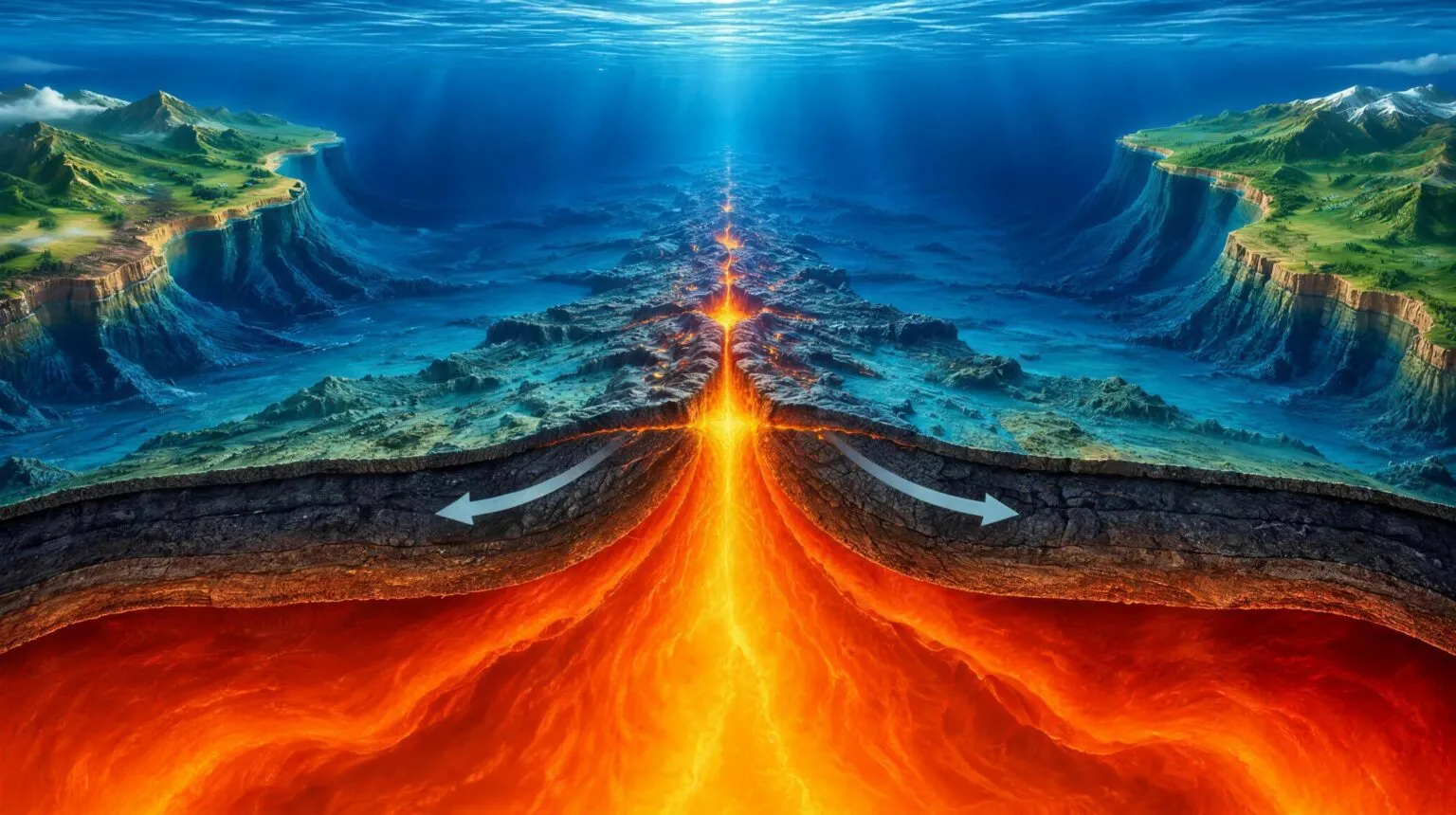
The science is clear, and it is also more interesting than a simple “no.” Here is the story as geologists tell it.
From Land Bridges to Plate Tectonics
In 1912 the German scientist Alfred Wegener proposed continental drift, the idea that continents move across the globe over geologic time. It was widely rejected at first. Then, in the 1950s and 1960s, studies of the ocean floor revealed seafloor spreading, and plate tectonics became the accepted framework. In that framework, Earth’s outer shell is broken into large plates that have been slowly moving for billions of years.
This solved Sclater’s puzzle in a way he could not have imagined. India and Madagascar were once part of the same landmass within the supercontinent Gondwana. Over many millions of years the plates carried India away to the north and Madagascar apart from Africa. No sunken bridge was needed. Sclater was right that India and Madagascar had once been joined, he simply lacked the mechanism. Many biologists today also hold that lemurs reached Madagascar by rafting across the Mozambique Channel on floating vegetation, which fits with a long and ancient separation.
Why a Continent Cannot Sink in a Night
Continents are made of thick, relatively light rock that floats high on the denser mantle beneath, the way a block of wood floats on water. Ocean floor is thinner, denser and, geologically speaking, young: it is constantly made at ridges and recycled at trenches. Geologists therefore say that a continent can neither sink nor be destroyed in the short span of time described in the legends of Mu and Atlantis. Surveys of the Pacific and Indian ocean floors have not found continental crust of that size or age where Churchward placed Mu.
Archaeology adds its own picture of the Pacific. Researchers trace the settlement of the Pacific islands, including Polynesia, to skilled ocean voyagers who crossed the sea in stages over the last few thousand years. The great stone works of Polynesia, including those of Easter Island, are understood as the achievements of those island cultures themselves.
The Real Lost Lands Beneath the Waves
There is a true and beautiful footnote to the legend. Real sunken continents and lands exist. Zealandia, in the southwest Pacific, is a continental fragment now mostly under water. Mauritia, a piece of old crust in the Indian Ocean, and the Kerguelen Plateau are also real, even though no geological feature under the Indian or Pacific oceans is known that could have served as a land bridge between continents. And when the last ice age ended, rising seas flooded vast coastal plains, such as the land beneath what is now the North Sea and the shallow shelves of Southeast Asia. Some researchers have wondered whether very old flood memories survive in cultures around the world. That is a question, not a conclusion, but it shows where the poetry of Lemuria and the facts of geology can meet.
If you are curious about catastrophes and ancient history from a researcher’s angle, the conversation with Randall Carlson in Cataclysms, Atlantis and Gobekli Tepe and the Michael Le Flem interview on Atlantis are good listens.
Why Does Lemuria Still Matter to Seekers?

If geology has retired the sunken continent, why does Lemuria keep drawing people in? Because the story was never only about land. It is about what a person longs to remember. Here are the threads that matter most to seekers.
A Story of Origin and Belonging
Almost every culture tells a story of a first homeland. Lemuria gives modern people one that is gentle: a world of healers, intuition and harmony with nature. For anyone who feels out of place in a fast, loud world, that picture offers a sense of belonging to something older. Many starseeds and old souls describe feeling just that, as explored in our guide to starseeds and their origins.
Heart First, Mind Second
In the telling of the Archangels, Eluña Noelle and others, Lemuria is the age of feeling and Atlantis the age of thought. Read as a teaching, the pair becomes a map of your own inner life. Your heart can lead, your mind can serve, and trouble begins when thought runs ahead of love. That is the same message you will find in our guides to the fifth dimension and the heart chakra.
Memory and the Soul
Lemuria also gives language to a strange experience many people share: a sudden feeling of homesickness for a place you have never been, or a sense of bliss at the sight of the ocean or a sacred mountain. Whether you understand that as a memory of past lives, a message from the Akashic Records, or the voice of your own deeper self, the feeling is real, and it points inward. At Next Level Soul we keep returning to one idea: the power is within you.
A Gentle Practice: Meeting Lemuria Within
Here is a short practice you can try tonight. Sit comfortably near a window or, if you can, near water. Breathe slowly for a few minutes until your body settles. Then ask yourself three questions, and write down whatever arises without judging it.
- What would a world run by the heart feel like in my body?
- Where in my life am I letting thought run ahead of love?
- What is one small way I can bring healing or harmony into my day tomorrow?
Hold what you receive as a symbol, a map and an invitation. If guided meditation helps you, the meditations on Next Level Soul TV and our ten practices and four-week plan for spiritual awakening are good companions.
Go Deeper: Explore Lemuria and Ancient Mysteries on Next Level Soul
Here is where to continue, from audio to film to conversation.
Audio Courses, Audiobooks and Study Guides
- Echoes of Atlantis, an 11-chapter audio course of retellings, guided practices and sacred reflections on the rise and fall of Atlantis
- Mystery Schools of the Ancients, a 22-chapter audio course on the guarded teachings of Egypt, Atlantis and Greece
- The NLS TV audiobooks The Chronicles of Atlantis, Book 1, Book 2 and Book 3, a spiritual epic of Atlantis from its fall to its rebirth
- Browse the full audio course library and the audiobook library, both on Next Level Soul TV
- The study guides for The Ocean of Theosophy, Theosophy, The Astral Plane and The Emerald Tablet
Movies and Series on NLS TV
- The Atlantis Puzzle, with our Spiritual Cinema review
- When Atlantis Ruled the World
- Dwarka: Atlantis of the East, a 2012 expedition into the legend of a drowned city beneath the Arabian Sea
- More in the movies library and series library
Next Level Soul TV brings movies, series, audiobooks, meditations and audio courses together in one place, and you can learn more on our Join Us page. If you know a seeker who would love it, a Next Level Soul TV gift membership is a thoughtful way to share the journey.
Podcast Episodes to Listen To
- Lost History of Atlantis and Lemuria with Belinda Womack
- Eluña Noelle: Channeled Wisdom for Humanity’s Future
- Atlantis History Revealed Through Hypnosis with Sarah Breskman Cosme
- Emerald Tablets and Humanity’s Origins with Billy Carson
- Prophecy of Atlantis’ Fall with Matias De Stefano
- Cataclysms, Atlantis and Gobekli Tepe with Randall Carlson
Browse every conversation on the Next Level Soul Podcast page.
Glossary Terms Worth Knowing
Lemuria, Atlantis, Theosophy, Akashic Records, Ascended Masters, channeling, sacred geometry, reincarnation and esotericism. The full spiritual glossary has hundreds more.
Related Reading
- Atlantis: The Complete Guide to the Lost Civilization
- List of Ascended Masters: Names, Meaning and Traditions
- Saint Germain: The Violet Flame Master
- Darryl Anka and Bashar: The Complete Guide
- Anunnaki: Who They Were and What the Sumerian Texts Say
- The Yugas: Sri Yukteswar’s 24,000-Year Map of Consciousness
- Starseeds: Signs, Types and Your Origin
- Remote Viewing: History, Method and How to Learn It
Sources and Further Reading
Spirituality for the Rest of Us™
Movies, teachings and community on Next Level Soul TV.
Episodes to Watch Next
These six conversations on the Next Level Soul Podcast go deeper on the lost worlds in this guide. Each guest speaks from their own research or perspective.
- Emerald Tablets and Humanity’s Origins with Billy Carson with Billy Carson: a sunken island, Lemuria and Atlantis
- Lost Civilization of Atlantis Revealed with Michael Le Flem with Michael Le Flem: A Dweller on Two Planets and Mount Shasta
- Lost History of Atlantis and Lemuria with Belinda Womack with Belinda Womack: channeled Archangel teachings on Lemuria and Atlantis
- Eluña Noelle: Channeled Wisdom for Humanity’s Future with Eluña Noelle: a lifetime in Lemuria and the fall of Atlantis
- Atlantis History Revealed Through Hypnosis with Sarah Breskman Cosme with Sarah Breskman Cosme: hypnosis sessions on Lemuria and Atlantis
- Prophecy of Atlantis’ Fall with Matias De Stefano with Matias De Stefano: ancient civilizations, Atlantis and Lemuria
Frequently Asked Questions
What is Lemuria?
Lemuria is a legendary sunken continent. Zoologist Philip Sclater proposed it in 1864 to explain lemur fossils in Madagascar and India, and Helena Blavatsky later made it the home of the Lemurians, the third root race in Theosophy.
What is the continent of Mu?
Mu is a legendary lost continent in the Pacific Ocean. The name came from Augustus Le Plongeon, and James Churchward popularized it in The Lost Continent of Mu (1926), identifying it with Lemuria.
Are Lemuria and Mu the same place?
In most modern spiritual writing, yes. Churchward identified Mu with the hypothetical Lemuria, so many seekers use the names interchangeably, though they began as separate ideas from separate authors.
Who was James Churchward?
James Churchward was a British writer, engineer and inventor who wrote a series of books on Mu beginning in 1926. He said his knowledge came from ancient tablets he read in India and from stone tablets found in Mexico.
What did Helena Blavatsky teach about the Lemurians?
In The Secret Doctrine (1888), Blavatsky described the Lemurians as the third of seven root races, living on a vanished southern continent before the Atlanteans. Many modern readers treat the scheme symbolically.
Who were the Lemurians according to the legends?
The legends differ by source. Blavatsky describes early proto-humans, Oliver and later Shasta writers describe robed survivors in Telos, and channeled accounts such as those of Eluña Noelle and the 12 Archangels describe a healing, heart-led culture.
What is the connection between Lemuria and Mount Shasta?
Frederick Spencer Oliver’s 1894 book said Lemurian survivors lived in tunnels beneath Mount Shasta in a city called Telos. H. Spencer Lewis and Guy Ballard later spread the idea, and pilgrims still visit the mountain.
What does science say about Lemuria?
Sclater’s land bridge idea was set aside when plate tectonics showed that India and Madagascar drifted apart as parts of Gondwana. Geologists also note that a continent cannot sink in a short span of time.
How is Lemuria different from Atlantis?
Lemuria is usually pictured as the older, heart-centered civilization of healing and feeling, and Atlantis as the later, mind-centered civilization of technology and thought. Blavatsky made them the third and fourth root races.
Where was Lemuria supposed to be located?
Sclater placed it in the Indian Ocean. Churchward and later writers placed it in the Pacific, and Tamil writers linked it with Kumari Kandam south of India. Other legends place its survivors beneath Mount Shasta.
Why do people feel a connection to Lemuria?
Many seekers describe a sense of homesickness for an older, gentler world. Some read that feeling as a past-life or Akashic memory, and others read it as a symbol of the heart-led life they long for.
Where can I learn more about Lemuria on Next Level Soul?
Start with the Lemuria glossary entry, our Atlantis guide, the Echoes of Atlantis audio course and the podcast episode with Belinda Womack on Lemuria and Atlantis.
Go Deeper with NLS Mastery: Your Soul’s Blueprint
If the question of where we come from calls to you, this course helps you map your own soul’s origins and purpose. Karen Bell teaches it in Your Soul’s Blueprint, part of NLS Mastery. Watch the course preview below.