
A near-death experience (NDE) is a vivid, lucid experience that a person reports after coming close to death, often during cardiac arrest, severe injury, or surgery. People describe leaving their body, a feeling of deep peace, a tunnel or passage, a brilliant light, reunions with loved ones, and a review of their life. Most come back changed.
Maybe you have had one. Maybe someone you love has. Or maybe you are simply here because the biggest question there is keeps pulling at you: what happens when we die? You are in good company. Doctors, psychiatrists, cardiologists, neuroscientists, and millions of everyday people have been asking the same thing for as long as there have been people.
This is the complete guide. We cover what a near-death experience is, the features people describe, how researchers measure them, what the best studies show, what skeptics say, and what experiencers say changed in their lives afterward. We also cover shared death experiences, distressing near-death experiences, and how children and different cultures describe them. Where something is research, we say so. Where something is interpretation, we say that too.
Next Level Soul is a spiritual media company founded by Alex Ferrari. Our podcast has more than 1,000 episodes, and dozens of them are conversations with people who have died and come back. You will find their stories linked throughout, so you can hear each one in their own words.
Key Takeaways
- What it is: An NDE is a profound, lucid experience reported by people who came close to death. It is real as an experience, and it is documented in medical literature worldwide.
- How common: About 5 percent of Americans reported one in a 1982 Gallup poll. In prospective studies of cardiac arrest survivors, between roughly 6 and 39 percent report one, depending on the study.
- Common features: Peace, an out-of-body view, a tunnel, a light, meeting deceased loved ones or a presence, a life review, and a sense of being sent back.
- How it is measured: The Greyson NDE Scale has 16 items. A score of 7 or more out of 32 counts as an NDE.
- What causes it: No one knows for certain. Brain-based explanations and consciousness-based explanations both remain on the table, and the research is still moving.
- Not all are blissful: A minority are frightening or distressing. Many of those people also describe lasting positive change.
- The aftereffects are the strongest signal: Reduced fear of death, more compassion, less interest in status, and a stronger sense of meaning, often lasting decades.
What Is a Near-Death Experience?
A near-death experience is a set of perceptions, emotions, and sensations that a person reports after being close to death or believing they were. Researchers describe it as a profound, often spiritual, and highly memorable event. The person is usually unconscious or clinically unresponsive at the time, yet afterward describes an experience that felt clearer and more real than ordinary waking life.
The triggers vary. Cardiac arrest is the most studied. Others include drowning, traumatic injury, complications in surgery or childbirth, severe illness, and in some cases the sincere belief that death is imminent, even when the body is not in danger.
Who Has Near-Death Experiences?
Anyone can. Kenneth Ring, one of the field’s early researchers, found NDEs among atheists, nominal believers, and devout people alike. Children have them. So do people who had never heard of the phenomenon beforehand. Our own guests include a physician, a veteran, a priest, and several self-described atheists, including Stephanie Kraft, Jack Morrigan, and Jose Hernandez.
What a Near-Death Experience Is Not
It is not a dream, as most experiencers describe it. They say dreams fade and this did not. It is not simply a drug trip, though researchers have studied that comparison closely. It is also not proof of anything by itself. An NDE is a report of an experience. What it means is the part people argue about, and we will lay out both sides below.
NDE vs. Out-of-Body Experience vs. Deathbed Vision
| Term | What It Means | Close to Death? |
|---|---|---|
| Near-death experience (NDE) | A full experience that may include peace, a light, a life review, and meeting beings or loved ones | Yes, or the person believed so |
| Out-of-body experience (OBE) | Feeling separate from the physical body and observing from outside it. Can be one part of an NDE | Not necessarily |
| Deathbed vision | A dying person sees or speaks with deceased loved ones or presences in the final days or hours | Yes, in the dying process |
| Shared death experience (SDE) | A bystander at a death feels they take part in the dying person’s transition | The bystander is not in danger |
| Near-death-like experience | Similar content, but no real threat to life, for example during deep meditation or fainting | No |
The Common Features of a Near-Death Experience
No two experiences are identical. Still, the same elements appear again and again, across ages, countries, and beliefs. In 1975, Dr. Raymond Moody interviewed about 150 people who had come close to death and identified fifteen recurring elements in his book Life After Life. In 1980, psychologist Kenneth Ring studied 102 survivors and boiled the pattern down to five stages. Here is the journey as people most often describe it.
1. A Feeling of Peace and Well-Being
This is often the first thing and the last thing people mention. Pain drops away. Fear drops away. What replaces it is a stillness that people struggle to put into words. In Ring’s research, peace was the most frequently reported stage, and it is what most people say they miss.
2. Leaving the Body
Many describe floating above their own body and watching the scene below: doctors working, family members crying, the room itself. They often say they felt completely themselves, still thinking clearly and still able to see. This stage is also where researchers test whether anything people report seeing can be checked, and we look at those cases below. Physician Dr. Yvonne Kason shares her own experience after a plane crash and what she says she was shown.
3. The Tunnel or Passage
A sense of moving quickly through darkness, a tube, a spiral, or a passage, usually toward a distant light. Not everyone reports a tunnel, and some researchers note it is more common in Western accounts. In Ring’s data, entering the darkness was reported by a smaller share of experiencers than peace or body separation.
4. The Light and a Presence
A brilliant light, often described as loving, warm, and alive, not harsh. Many say the light seemed to know them completely. Some meet a being of light, a guide, an angel, or what they call God, using the words of their own tradition. Others meet deceased relatives, sometimes people they did not know had died. Betty Eadie and Dannion Brinkley are two well-known experiencers who describe encountering a presence of unconditional love.
5. The Life Review
Often described as the most powerful part. People relive moments from their lives in rapid, vivid detail, and many say they felt the effect of their actions on other people, not just their own side of events. A number say there was no judgment from the outside, only their own clear seeing. William J. Peters, founder of the Shared Crossing Project, joined us to talk about a life review and what he learned from it.
6. A Border and the Return
Many describe reaching a threshold, a gate, a river, or a point of no return. They are told, or they choose, to go back. The return can feel like a heavy re-entry into a body that hurts. Some say they did not want to come back at all.
Other Frequently Reported Features
- Altered time: Time feels stretched or irrelevant.
- Heightened senses: Colors, sounds, and thoughts seem sharper than normal.
- Rapid, clear thinking: Thoughts feel faster and more organized.
- A sense of knowing: A feeling of understanding how everything fits together.
- Unity: A felt connection to all life, sometimes described as oneness.
- Glimpses of the future or of other realms: Reported by some, and treated with caution by researchers.
Moody’s 15 Elements vs. Ring’s 5 Stages
| Researcher | Year | Method | Result |
|---|---|---|---|
| Raymond Moody | 1975 | Interviews with about 150 people who came close to death, with about 50 studied in depth | Fifteen recurring elements, including out-of-body experience, a tunnel, a being of light, a life review, and a border |
| Kenneth Ring | 1980 | Structured study of 102 survivors | A five-stage “core experience”: peace, body separation, entering the darkness, seeing the light, entering the light. Later stages were reported by fewer people |
| Bruce Greyson | 1983 | Statistical scale built from reported features | A 16-item scale with a cutoff score of 7, now the standard research tool |
Hear the man who started it all. Dr. Raymond Moody sits down with Alex Ferrari to talk about what he learned from decades of listening to people who came back. For his full story, books and research, read our complete guide to Dr. Raymond Moody.
How Researchers Measure an NDE: The Greyson Scale
“I had an NDE” can mean many things. Is a dizzy spell and a flash of light an NDE? To answer that, psychiatrist Dr. Bruce Greyson of the University of Virginia developed the Greyson Near-Death Experience Scale in 1983. It remains the most widely used measure in the field.
The scale has 16 questions. Each is scored 0, 1, or 2, for a possible total of 32. A score of 7 or higher counts as an NDE. That threshold was chosen because it sits about one standard deviation below the average score of people already identified as having had one.
The Four Clusters
| Cluster | What It Measures | Examples |
|---|---|---|
| Cognitive | Changes in thinking and time | Time sped up or stopped, thoughts became faster, a life review, sudden understanding |
| Affective | Emotions | Peace, joy, cosmic unity, a feeling of love |
| Paranormal | Unusual perceptions | Heightened senses, intuition, vision of the future, out-of-body experience |
| Transcendental | Other-worldly elements | Another realm, a mystical being or voice, deceased spirits, a border or point of no return |
Greyson’s scale did something important. It gave researchers a shared language, so studies in different countries could be compared. It has held up well. Researchers have tried to add new features over the years, and the original 16 still do the job. For more on how the field works and why the measurement matters, listen to Dr. Scott Taylor on 30 years of NDE exploration.
A Short History of Near-Death Experiences
The phrase is modern. The experience is not. People have been returning from the edge of death and telling the same kinds of stories for thousands of years.
| When | Who or What | Why It Matters |
|---|---|---|
| About 375 BCE | Plato, The Republic | The “Myth of Er” tells of a soldier who appears dead on a funeral pyre, then revives and describes what he witnessed. It is often cited as one of the earliest Western NDE-like accounts |
| 731 CE | The Venerable Bede | Bede records the vision of Drythelm, a man who appeared to die and returned with an account of the afterlife |
| 1892 | Albert Heim, Swiss geologist | Heim collected accounts from mountaineers who survived falls. Many described calm, a life review, and a sense of beauty as they fell |
| 1944 | Carl Jung | After a heart attack, Jung described a vision of seeing the Earth from far above. He wrote about it afterward as a deeply significant experience |
| 1975 | Raymond Moody, Life After Life | Named and popularized the “near-death experience” and brought the topic into homes worldwide. The book sold millions of copies |
| 1978 to 1981 | John Audette, Bruce Greyson, Kenneth Ring, and Michael Sabom | Founded what became the International Association for Near-Death Studies (IANDS). The Journal of Near-Death Studies began in 1982 |
| 1980 | Kenneth Ring, Life at Death | First structured study with a core-experience model |
| 1983 | Bruce Greyson | Published the Greyson NDE Scale |
| 2001 | Pim van Lommel and colleagues, The Lancet | A prospective study of 344 cardiac arrest survivors in the Netherlands, published in a leading medical journal |
| 2008 to 2012 | Sam Parnia, AWARE study | A large hospital study of awareness during cardiac arrest |
| 2017 to 2020 | Sam Parnia, AWARE-II study | 567 cardiac arrests, with brain monitoring. Published in 2023 |
Moody Did Not Invent the Experience
Raymond Moody was a philosopher who became a physician. While teaching philosophy in the early 1970s, he noticed students describing strikingly similar stories about relatives who had nearly died. He started collecting accounts. Earlier uses of the phrase “near-death” exist, but his 1975 book is what turned it into everyday language and gave the field its starting vocabulary.
Moody himself was careful. He said his sample was not random and that his book was a collection of cases as he found them, not a scientific proof. What the book did was make people willing to talk. Doctors and nurses who had heard these stories for years suddenly had a name for them. You can hear Moody tell the story in his own words.
From Stories to Science
The decades after 1975 shifted the conversation. Researchers built scales, ran prospective studies, and started asking hard questions. The field now has its own peer-reviewed journal, a professional association, and a growing body of hospital-based research. The question has moved from “do people really report this?” to “what is actually going on?”
How Common Are Near-Death Experiences?
More common than most people think. The numbers depend on who is asked and how the experience is defined, so here are the main sources side by side.
| Study | Who Was Studied | What They Found |
|---|---|---|
| Gallup poll, 1982 | A national sample of Americans | About 5 percent reported a near-death experience |
| van Lommel et al., The Lancet, 2001 | 344 cardiac arrest survivors in ten Dutch hospitals | 62 patients (18 percent) reported an NDE. 41 (12 percent) described a deep “core” experience |
| Scoping review of cardiac arrest studies | Prospective studies up to July 2023 | Incidence ranged from 6.3 to 39.3 percent |
| Crowdsourced study, Copenhagen University Hospital researchers | 1,034 people | 106 people, or about 10 percent, met the Greyson threshold of 7 |
| AWARE-II, 2023 | 567 in-hospital cardiac arrests in the US and UK | Of 28 survivors interviewed, 6 (21 percent) recalled a transcendent experience commonly called an NDE. About 40 percent of survivors recalled some awareness during CPR |
Why the Numbers Vary So Much
- Definitions differ. Some studies use the Greyson threshold. Others count any recalled experience.
- Timing matters. The sooner a survivor is interviewed, the more they recall, but very sick patients may not be able to talk right away.
- Many people do not share. Greyson has noted that many experiencers are reluctant to speak about it, so surveys likely undercount.
- Memory is fragile after an arrest. Sedation, brain injury, and recovery can all affect what a person recalls.
One finding from the Dutch study is worth noting. The experience was not associated with the length of the cardiac arrest, medication, or fear of death beforehand. In other words, it did not simply track how long someone was without a heartbeat or how scared they were. That is part of why the question has stayed open.
What Causes a Near-Death Experience?
The honest answer: we do not know. There are two broad families of explanation, and thoughtful people hold both. We will lay them out fairly.
Brain-Based Explanations
These propose that NDEs are produced by a brain under extreme stress. Researchers have looked at:
- Low oxygen and high carbon dioxide: Oxygen starvation can cause tunnel vision and altered perception.
- Brain chemistry: Endorphins, ketamine-like effects at certain receptors, and DMT have each been proposed.
- A surge of brain activity: Studies in dying animals and a few dying human patients have found brief bursts of gamma-wave activity.
- REM intrusion: A state where dream-like sleep activity intrudes on waking awareness.
- Expectation and culture: What a person has heard about death may shape how the experience is told.
Consciousness-Based Explanations
These propose that the experience reflects something more than brain activity alone. Some researchers suggest consciousness may not be produced by the brain at all, and that the brain may work more like a filter or receiver. This idea has a long history, going back to philosophers such as William James and Henri Bergson. Others stay agnostic. They say only that current brain-based models do not yet account for everything experiencers report. If this idea interests you, our guide to what consciousness is and our article on quantum physics and spirituality go deeper.
What Each Side Explains, and Where It Struggles
| Explanation | What It Can Explain | Where It Struggles |
|---|---|---|
| Low oxygen | Tunnel vision, confusion, altered perception | NDEs are typically clear and organized, while hypoxia usually causes confusion. In the Dutch study, NDEs were not linked to how long the arrest lasted |
| Brain chemicals (endorphins, ketamine-like effects, DMT) | Euphoria, dissociation, visions | Chemical states do not easily account for structured, shared elements. No chemical has been shown to produce the full pattern |
| Gamma surge in the dying brain | A burst of organized activity could underlie vivid inner experience | So far found in only a few patients. The authors cannot rule out that it is unrelated to conscious experience. It has not been linked to reports from survivors |
| REM intrusion | Dream-like imagery, paralysis, vivid sensations. More common in people who scored 7 or higher on the Greyson scale in one study (47 percent vs. 26 percent) | Does not by itself explain a life review or the accurate perceptions some report. Many people with REM intrusion never have an NDE |
| Expectation and culture | Different cultures describe different imagery, such as guides, angels, or divine figures | Children and people with no prior knowledge report the same core features. The core pattern repeats across cultures |
| Consciousness beyond the brain | Lucid experience during minimal brain function, reports of accurate perception, lasting transformation | Not directly testable with current tools. Verified accurate perceptions remain rare and disputed |
A note on how to read this table. “Where it struggles” does not mean an explanation is wrong. It means science has not closed the question. Good researchers on every side say so.
The Evidence Debate: Cases and Studies
The strongest claims about near-death experiences concern what people seem to perceive while unconscious. Here are the cases and studies that come up most, with the support and the pushback for each.
The Case of Pam Reynolds (1991)
Pam Reynolds was a 35-year-old singer and songwriter from Atlanta with a giant brain aneurysm. In 1991, neurosurgeon Robert Spetzler at the Barrow Neurological Institute in Phoenix used a rare technique called hypothermic cardiac arrest, nicknamed “standstill.” Her body was cooled, her heart stopped, and blood was drained from her head so the aneurysm could be repaired safely. Her eyes were taped shut and small monitoring devices were placed in her ears.
Afterward, Reynolds described hearing the surgical saw, floating above the operating table, and hearing a conversation between members of the surgical team. She also described a tunnel, a light, and meeting deceased relatives. Cardiologist Michael Sabom compared her account with the operative report and found that parts of it seemed to match what had occurred. The operation was a success and she recovered completely.
The pushback: Critics argue that some of what she described may have happened during lighter moments of anesthesia, before or after the standstill period, and that reports of sounds can be explained without leaving the body. The case remains one of the most discussed in the field because it was so heavily monitored. Neither side has a clean win.
Maria’s Shoe (1977)
Social worker Kimberly Clark Sharp was working at Harborview Medical Center in Seattle when a patient named Maria, who had suffered a cardiac arrest, described floating outside the building and seeing a tennis shoe on a third-floor ledge. Sharp went to look. She found the shoe, with its lace caught under the heel, as Maria had said.
The pushback: In the 1990s, skeptics visited the hospital, placed a shoe on that ledge, and found it easy to see and identify. They argued the account does not require anyone to have left their body. Sharp stands by it. She went on to interview more than 2,000 experiencers. You can hear Kimberly Clark Sharp share what dying taught her.
The Dutch Study (2001)
Cardiologist Pim van Lommel and colleagues followed 344 resuscitated cardiac arrest patients in ten hospitals. Sixty-two of them, or 18 percent, reported an NDE. The study was prospective, meaning patients were interviewed after the event rather than recruited long afterward. The researchers found the experience was not explained by the length of the arrest, medication, or fear of death. They also said they did not know why so few cardiac patients report one.
The pushback: Some critics say that interviews, even prospective ones, rely on memory, and that more objective measures were needed.
The AWARE Studies (2008 to 2020)
Critical care physician Sam Parnia led two large hospital studies of awareness during resuscitation. In the first AWARE study, among the survivors who completed interviews, one described accurate details related to the technical equipment used in resuscitation. Hidden images placed on high shelves to test out-of-body perception were never reported, largely because few arrests happened in the rooms equipped with them.
AWARE-II followed 567 in-hospital cardiac arrests between 2017 and 2020 in the United States and United Kingdom. It added brain monitoring and was published in the journal Resuscitation in 2023. The main findings:
- About 4 in 10 survivors recalled some degree of awareness during CPR, which standard measures had missed.
- Six of 28 survivors interviewed (21 percent) described a recalled experience of death that fits what is commonly called an NDE.
- Brain monitoring picked up signs of brain activity associated with higher mental function, in some cases as long as 60 minutes into CPR.
- The study also tested whether people could perceive hidden images and sounds in the room. The results did not show that patients perceived the external environment.
Parnia’s summary: “These lucid experiences cannot be considered a trick of a disordered or dying brain, but rather a unique human experience that emerges on the brink of death.” The authors also say the recalled experience of death merits further scientific investigation. Some press coverage went further than the authors did, so it is worth reading what the study actually reports.
The Dying Brain Studies
In 2013, neurologist Jimo Borjigin and colleagues at the University of Michigan found that the brains of dying rats showed an organized surge of gamma-wave activity in the seconds after the heart stopped. In 2023, her team reported similar surges in two of four comatose patients who died while being monitored. Gamma waves are associated with heightened mental activity.
The pushback and the limits: The authors themselves wrote that they cannot rule out that the surge is a dying process unrelated to conscious experience. Pim van Lommel, who was not part of the study, noted there is no evidence these surges correlated with any experience in those patients, and that the two patients with the surge also had a history of seizures. This is promising science, not a settled answer.
Blind Experiencers
Kenneth Ring and Sharon Cooper’s 1999 book Mindsight reported on 31 blind people, including 14 blind from birth, who described NDEs. Several said they had visual impressions during the experience. Researchers continue to debate how to interpret such reports, since the accounts rely on memory and are hard to verify independently.
Where That Leaves Us
| Question | What Is Reasonably Established | What Is Still Open |
|---|---|---|
| Do people report these experiences after cardiac arrest? | Yes, consistently, across countries and decades | Exact frequency |
| Are they hallucinations from oxygen loss? | Simple explanations do not account for the clarity, structure, and lasting aftereffects | Whether a more complete brain-based model will |
| Can the brain be active during cardiac arrest? | Yes. Brain activity has been recorded in dying patients and during CPR | Whether it is linked to experience |
| Do people accurately perceive events while unconscious? | A few compelling cases exist | None have been confirmed under controlled conditions |
| Do the experiences prove an afterlife? | Greyson has said NDEs are not evidence for or against the existence of God | The deeper interpretation remains a matter of reasoning and personal belief |
Shared Death Experiences
A shared death experience (SDE) happens to someone who is with a dying person but not in danger themselves. They report sensing, seeing, or taking part in the dying person’s transition. It is different from an NDE because the person who has it does not come close to death.
Dr. Raymond Moody popularized the term in his book Glimpses of Eternity. Researcher William J. Peters, who founded the Shared Crossing Project, has since studied more than 200 cases. His interest began in 2000, when he was a hospice volunteer in San Francisco reading to a patient and suddenly felt himself floating outside his body.
What People Report
- A sense of leaving the body alongside the dying person
- A room filling with light, or a feeling that “a guest of honor” is arriving
- Seeing or sensing deceased loved ones who seem to come to meet the person
- A shared life review
- A perceived border the bystander is not allowed to cross
- Deep comfort afterward, and often relief from grief
Peters found that the closeness of the relationship appeared to relate to the intensity of the experience. He also describes death as less of a single instant and more of a process that can unfold over hours.
Deathbed Visions
Closely related are deathbed visions, where the dying person themselves sees or speaks with people others cannot see. Hospice workers have reported these for generations. For a close look at them, listen to Julie Ryan on what happens at deathbed visions. If you have lost someone, you may also find comfort in our guide to communicating with your spirit guides.
Shared death experiences are far less studied than NDEs, and the evidence is mostly in the form of collected accounts. Treat the current research as early, and interesting, rather than conclusive.
Distressing Near-Death Experiences
Most reported NDEs are peaceful. Some are not. Researchers estimate that a meaningful minority are frightening or painful. Reported rates vary by study, and some estimates run close to one in five. Because these experiences are talked about less, many people carry them quietly for years.
If this is you, please hear this first: you are not alone, and a hard experience does not mean something is wrong with you.
Three Types, According to Researchers
Nancy Evans Bush and Bruce Greyson described three types of distressing NDE:
- Inverse: The usual features appear (the tunnel, the out-of-body view, a presence), but they feel terrifying instead of comforting. Control is lost, and there is a sense of being pulled somewhere against your will.
- Void: A sense of vast emptiness, isolation, or nonexistence.
- Hellish: Landscapes or beings that feel threatening. This is the least common type.
Researchers also describe three common ways people respond afterward: turning toward a faith or framework that helps them hold it, trying to dismiss it, or spending years working it through. Notably, Greyson has reported that the long-term aftereffects of distressing experiences are often as positive as those of pleasant ones. Many people say the experience changed what they valued and how they treated others.
Some of our guests describe a mix of difficult and beautiful. M.K. McDaniel shares an experience in which she says she saw both hell and heaven. The International Association for Near-Death Studies, at iands.org, offers support for people processing distressing experiences. A therapist or counselor can help too, especially one who has worked with unusual experiences.
Near-Death Experiences Across Ages and Cultures
Children
Children have NDEs, and their accounts carry many of the same features as adults, including a light, a tunnel, and meeting beings, sometimes without any prior knowledge of what such experiences are supposed to look like. Pediatrician Melvin Morse was among the first to study this. Three of our guests share childhood experiences: Ingrid Honkala, who drowned at age two, Jacob Cooper, and Dr. Spirit Sunshine.
Different Cultures, Familiar Themes
Researchers find that the core themes repeat worldwide: peace, leaving the body, a light, meeting deceased relatives, and a life review. The cultural dressing changes. Western accounts more often mention tunnels. Indian accounts, studied by Satwant Pasricha and Ian Stevenson, sometimes describe messengers of Yama, the lord of death, who take the wrong person and then send them back. A Christian may meet Jesus. A Hindu may meet a deity. Someone with no religion may describe a presence of love without a name.
Anthropologist Greg Shushan has studied how ancient civilizations described experiences that sound like NDEs, long before modern medicine. You can hear him on the show in Ancient Civilizations Described NDEs.
Different Beliefs, Same Questions
Experiencers tend to interpret what happened through the framework they already know. That is part of why researchers separate the experience from the interpretation. As Greyson puts it, near-death experiences are not evidence for or against the existence of God. What they do reliably show is that a deep sense of love, meaning, and connection can arise at the edge of life.
Life After the Experience: The Aftereffects
Ask Dr. Bruce Greyson what impresses him most after fifty years of research, and the answer is not the tunnel or the light. As a psychiatrist, he says it is how people’s lives change afterward. This is the part of the story that is easiest to check, because friends and family see it too.
The Changes Researchers See Most Often
- Less fear of death. Often much less, sometimes none. People who came close to death without an NDE do not show the same shift.
- More compassion and empathy. A stronger pull toward kindness and service.
- Less interest in status and possessions. Money, titles, and image matter less.
- A deeper sense of meaning. Many describe a clear sense of purpose.
- Greater spiritual well-being. One study of experiencers found higher spiritual well-being than in people who had a brush with death but no NDE, and the deeper the NDE, the higher the score.
- A stronger belief that consciousness continues. Not always tied to a religion.
Greyson notes that these changes have been confirmed by people who knew the experiencers before and after, and that long-term studies show they do not fade over decades. That durability is one reason the field takes the experiences seriously, whatever their cause.
The Harder Side
Coming back is not always easy. Many experiencers describe a period of adjustment that can be lonely and confusing.
- Re-entry: Returning to a body, a routine, and a job that no longer fits who they feel they are.
- Telling the story: Many hesitate to share, afraid of being doubted or dismissed.
- Relationships: Partners and friends may struggle with the change in values or in what the person wants from life.
- Sensitivity: Some report unusual sensitivity to light, sound, or electrical devices. Greyson and colleagues have studied this.
- Grief for the other place: Some miss the peace they felt and have trouble accepting being back.
None of this means something is wrong. It means a large experience needs room to settle.
What Near-Death Experiences Teach Us
Set aside, for a moment, the debate about what causes them. Listen instead to what people bring back. Across ages, countries, and beliefs, the messages are strikingly alike. These are the experiencers’ reports, offered here as wisdom to consider, not as proven fact.
1. Love Is the Point
The most repeated theme is love: the sense of being completely known and completely accepted. Many experiencers say love is what we are here to give and receive. Nancy Rynes describes being shown love without dogma or religion, and Ruth Rousseau Clothier shares what she learned about love when she died.
2. The Life Review Is About Care, Not Punishment
Many describe feeling what their choices felt like to others. Small kindnesses mattered. Cruelty mattered. Status did not. Most say the review came without condemnation, just honest seeing.
3. You Are Not Here by Accident
People often return with a strong sense of purpose and of being sent back to finish something. If you have ever wondered about your own path, our article on living with purpose is a good next step. Others describe a sense of having chosen this life, a theme that connects to pre-birth memories and soul groups.
4. Death Is Not the Enemy
The most common shift is the loss of fear. People describe death as a transition rather than an ending. That does not make loss any less painful for those left behind. It does give many families comfort.
5. The Power Is Within You
This is the thread we come back to at Next Level Soul. The experiencers we talk with do not point to a guru or a ritual. They point to the same place: inward. Love, meaning, and connection were already part of them. The experience helped them remember.
Five Small Things You Can Do on a Real Tuesday
You do not have to nearly die to live like someone who came back. Experiencers say the lessons are portable.
- Run a gentle life review each night. Ask: Where did I give love today? Where did I hold it back? No grading. Just notice.
- Make the call. Contact the person you keep meaning to reach.
- Sit in stillness for five minutes. Our guide to how to meditate shows you where to start.
- Practice gratitude out loud. Say one specific thing you appreciate to someone. Our piece on the power of gratitude explains why it works.
- Choose one thing that matters more than status and give it an hour this week.
If you want to look at how your own actions ripple outward, our article on understanding karma pairs well with the life review theme.
If You Have Had a Near-Death Experience
If this is your story, here is what experiencers and researchers suggest.
- Write it down. Do it soon, in your own words, before the details soften.
- Tell it to someone safe. A friend who listens without correcting. Many people find peer groups especially helpful. The International Association for Near-Death Studies at iands.org lists groups and resources.
- Give it time. Integration is measured in months and years, not days.
- Be patient with the people around you. They did not go where you went.
- Consider a therapist who is open to spiritual experiences. Especially if the experience was frightening or you feel stuck.
- Hold the interpretation lightly and the meaning firmly. You do not need to prove anything to anyone.
This guide is for education and is not medical or mental health advice. If thoughts of ending your life are part of your story right now, please call or text 988 in the United States, or contact your local emergency number. You matter, and there is help.
Hear Near-Death Experiences in Their Own Words
Reading about these experiences is one thing. Hearing a person tell their own story is another. Here are conversations from the Next Level Soul podcast, grouped by what you might be looking for.
Want every conversation in one place? Browse our directory of all near-death experience interviews, listed A to Z.
Start Here
- Four life-changing near-death experiences in one episode
- Dr. Raymond Moody, the man who named NDEs
- Dr. Jeffrey Long on 5,000 NDEs and what they reveal
- Dr. Scott Taylor on 30 years of NDE exploration
Doctors and Scientists
- Neurosurgeon Dr. Eben Alexander on his coma and what he says he experienced
- Physician Dr. Yvonne Kason on her experience after a plane crash
- Dr. Rod Chelberg, a doctor who was clinically dead
- Dr. Anoop Kumar on what he was shown about healing
Skeptics and Atheists Who Came Back Changed
- Stephanie Kraft, who describes her experience as an atheist
- Jack Morrigan, an atheist stunned by his experience
- Jose Hernandez, on overcoming fear and finding peace
- Lesley Lupo, an atheist whose experience changed how she lives
Extreme Circumstances
- Natalie Sudman, a veteran who died in a blast
- David Ditchfield, hit by a train
- Dean Braxton, who describes being clinically dead for 105 minutes
- Rob Gentile, who describes being dead for 20 minutes
Healing, Love, and Faith
- Anita Moorjani on healing and the truth of existence
- Dr. Mary Helen Hensley, whose faith was transformed
- Kimberly Clark Sharp on love, God, and the meaning of life
Watch on Next Level Soul TV
- 44 Hours, the film about a man declared brain dead who stays fully aware, then awakens 44 hours later
- Divine Encounters: Near Death Experiences & Beyond, a series of personal near-death stories
- Afterlife: What Happens When You Die, a film on near-death experiences, consciousness, and what may await after death
- Life After Death and Beyond with James Van Praagh, a conversation with the medium on life beyond death
- The Life After Death Project, a documentary on the search for evidence of life beyond death
- Ghosts and the Afterlife, a film on the spirit realm and what may await beyond this lifetime
- Beyond the Veil with Julie Ryan, a Next Level Soul Mastery course on life's final transition and the Twelve Phases of Transition®
Keep Going
Explore every near-death conversation on the Next Level Soul podcast, browse more in our article library, or watch full episodes on the Next Level Soul YouTube channel, home to 1.6 million+ subscribers.
If you are ready to go deeper, start with our free masterclasses. When you want a complete path, join Next Level Soul TV for movies, series, audiobooks, and meditations, with Next Level Soul Mastery courses included in the yearly plan.
Spirituality for the Rest of Us™.
Best Books on Near-Death Experiences
If this guide made you curious, these six books are the best next step. Five are written by researchers or clinicians who worked with experiencers directly, and one is an experiencer's own story.

The 1975 book that gave the field its name. Read it for the original interviews and the classic list of common elements.
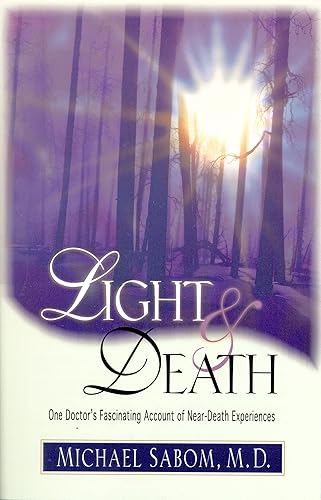
A cardiologist's study of cardiac arrest patients. Read it for their accounts of leaving the body during resuscitation.

The first major book on shared death experiences. Read it for the stories of people who sat with the dying.

A study of more than 200 shared death experience cases. Read it for what they suggest about dying well and living better.

Five decades of research from the psychiatrist behind the Greyson NDE Scale. Read it for a clear overview written for general readers.

Betty J. Eadie's own account of her near-death experience. Read it for what she says she saw and learned.
As an Amazon Associate, Next Level Soul earns from qualifying purchases. It costs you nothing extra and helps support this work.
Audiobooks on Next Level Soul TV
Prefer to listen? These audiobooks on Next Level Soul TV explore death, the afterlife, and what may come next.
- The Dead Have Never Died: A Lawyer's Real Case for Life After Death, by Edward C. Randall, a lawyer's investigation into whether consciousness survives physical death
- The Life Beyond Death: Next Level Soul Edition, by Yogi Ramacharaka, on the soul's journey beyond the physical realm
- The Between: A Living Guide to Death and Awareness, inspired by the Tibetan Book of the Dead, on the awareness that exists beyond body and mind
Go Deeper with NLS Mastery: Beyond the Veil
A grounded exploration of what lies beyond death and how that understanding changes how we live. Julie Ryan teaches it in Beyond the Veil, part of NLS Mastery. Watch the course preview below.
More near-death interviews: Buddha Betty Guadagno, Betty Guadagno on Divine Encounters and Father Nathan Castle on helping souls cross over.
Frequently Asked Questions
What Is a Near-Death Experience?
A near-death experience (NDE) is a vivid, lucid experience reported by people who came close to death or believed they were dying. Common elements include deep peace, leaving the body, a tunnel, a bright light, meeting deceased loved ones or a loving presence, a life review, and a sense of being sent back. Researchers use the 16-item Greyson NDE Scale, where a score of 7 or higher counts as an NDE.
What Does a Near-Death Experience Feel Like?
Most people describe it as calm, clear, and more real than everyday life. Pain and fear fade, thinking feels sharp, and time seems to stop or stretch. Many report floating above their body, a feeling of unconditional love, and a sense of knowing. A smaller number describe frightening or empty experiences instead.
How Common Are Near-Death Experiences?
A 1982 Gallup poll found about 5 percent of Americans reported one. In prospective studies of cardiac arrest survivors, reported rates range from about 6 to 39 percent, and a well-known Dutch study found 18 percent. A large crowdsourced study found about 10 percent of respondents met the Greyson threshold. Rates vary with how an NDE is defined and when people are interviewed.
What Causes Near-Death Experiences?
No one knows for certain. Brain-based explanations include low oxygen, changes in brain chemistry, a surge of brain activity in the dying brain, and REM sleep intrusion into waking awareness. Consciousness-based explanations suggest the brain may filter rather than produce awareness. Each has strengths and gaps, and the research is ongoing.
Are Near-Death Experiences Real?
As experiences, yes. They are consistently reported across countries and decades, and they produce measurable, lasting changes in the people who have them. What they mean is the open question. Some researchers see a dying brain, others see evidence that consciousness can continue beyond brain function, and many stay undecided.
Do Near-Death Experiences Prove There Is an Afterlife?
Not on their own. Researcher Bruce Greyson has said near-death experiences are not evidence for or against the existence of God. They raise serious questions, especially when people report lucid awareness while their brain function is minimal, but no study has settled the matter. Many people weigh the evidence and reach their own conclusions.
What Is the Greyson NDE Scale?
The Greyson Near-Death Experience Scale, created by psychiatrist Bruce Greyson in 1983, is the standard research tool for identifying an NDE. It has 16 questions across four clusters (cognitive, affective, paranormal, and transcendental). Each is scored 0 to 2, for a total of 32. A score of 7 or higher counts as a near-death experience.
Who Has Near-Death Experiences?
Anyone can. Researchers have found them among atheists, nominal believers, and devout people, and among children and adults. Many experiencers had never heard of the phenomenon before. Common triggers include cardiac arrest, accidents, surgical complications, childbirth, and severe illness.
Are All Near-Death Experiences Peaceful?
No. Most reported experiences are peaceful, but a minority are distressing, with estimates in some studies near one in five. Researchers describe three types: inverse (familiar features that feel frightening), void (emptiness or isolation), and hellish. Many people with distressing experiences also report positive long-term change.
What Is a Shared Death Experience?
A shared death experience (SDE) happens to someone who is with a dying person but is not in danger themselves. They report sensing or taking part in the dying person's transition, such as a room filling with light, seeing deceased loved ones, or a shared life review. Raymond Moody popularized the term, and William Peters of the Shared Crossing Project has studied more than 200 cases.
How Does a Near-Death Experience Change People?
Researchers most often report reduced fear of death, greater compassion, less interest in status and possessions, a deeper sense of meaning, and stronger spiritual well-being. Studies and people who knew the experiencers suggest these changes often last for decades. Adjusting to life afterward can also be difficult, and support helps.
Who Coined the Term Near-Death Experience?
Dr. Raymond Moody popularized the term in his 1975 book Life After Life, based on interviews with about 150 people who had come close to death. Earlier uses of the phrase exist, but his book brought it into everyday language. The field was then built out by researchers including Bruce Greyson, Kenneth Ring, and Michael Sabom.
What Should I Do If I Have Had a Near-Death Experience?
Write your experience down soon, share it with someone who will listen without judgment, and give yourself time to integrate it. Peer groups through the International Association for Near-Death Studies can help, and a therapist open to spiritual experiences can be valuable, especially if the experience was frightening or you feel stuck.
Sources and Further Reading
Here is where the facts in this guide come from. Last reviewed October 13, 2026.
Research Papers and Reviews
- Greyson, B. (1983). The Near-Death Experience Scale: Construction, reliability, and validity. Journal of Nervous and Mental Disease, 171(6), 369-375. Scale description (University of Virginia)
- Greyson, B., and Stevenson, I. (1980). The phenomenology of near-death experiences. American Journal of Psychiatry, 137(10), 1193-1196.
- van Lommel, P., van Wees, R., Meyers, V., and Elfferich, I. (2001). Near-death experience in survivors of cardiac arrest: a prospective study in the Netherlands. The Lancet, 358, 2039-2045.
- Parnia, S., et al. (2023). AWAreness during REsuscitation II: A multi-center study of consciousness and awareness in cardiac arrest. Resuscitation. doi.org/10.1016/j.resuscitation.2023.109903
- Near-death experiences after cardiac arrest: a scoping review (searched through July 2023)
- Bush, N. E., and Greyson, B. (2014). Distressing near-death experiences: The basics. Missouri Medicine.
- Khanna, S., and Greyson, B. Near-death experiences and spiritual well-being. Journal of Religion and Health. Full text (University of Virginia)
- Borjigin, J., et al. (2013). Surge of neurophysiological coherence and connectivity in the dying brain. PNAS. And Xu, G., et al. (2023). Surge of neurophysiological coupling and connectivity of gamma oscillations in the dying human brain. PNAS. Coverage in Scientific American
- Pasricha, S., and Stevenson, I. (1986). Near-death experiences in India: A preliminary report. Journal of Nervous and Mental Disease, 174, 165-170.
Books
- Moody, R. (1975). Life After Life. Mockingbird Books.
- Ring, K. (1980). Life at Death: A Scientific Investigation of the Near-Death Experience.
- Ring, K., and Cooper, S. (1999). Mindsight: Near-Death and Out-of-Body Experiences in the Blind.
- Sabom, M. (1998). Light and Death.
- Moody, R. Glimpses of Eternity: Sharing a Loved One’s Passage from this Life to the Next.
- Peters, W. At Heaven’s Door: What Shared Journeys to the Afterlife Teach About Dying Well and Living Better.
- Greyson, B. (2021). After: A Doctor Explores What Near-Death Experiences Reveal About Life and Beyond.
- Gallup, G., and Proctor, W. (1982). Adventures in Immortality.
Organizations
- International Association for Near-Death Studies (IANDS)
- Psi Encyclopedia: Distressing Near-Death Experience (Society for Psychical Research)