
An astral journey is the experience of traveling outside the physical body, usually during sleep, deep relaxation or meditation, and moving through the astral plane. It is also called astral projection, astral travel or soul journey, and cultures around the world have described it for thousands of years.
Key Takeaways
- An astral journey is an out-of-body experience in which a subtle astral body travels the astral plane.
- Cultures from ancient Egypt to the Amazon, India, Japan and the Inuit describe soul travel.
- Robert Monroe’s Journeys Out of the Body (1971) sold about one million copies and made “OBE” a household term.
- The silver cord is the best-known image of the thread linking traveler and body.
- No scientific evidence confirms astral travel, yet travelers describe lasting spiritual meaning.
New to this? Start with the astral projection guide for practice, then return here to explore the experience and the astral plane.
What Is an Astral Journey?
An astral journey is the experience of traveling outside the physical body while the body rests, usually in sleep, deep relaxation or meditation. Many traditions describe a subtle body, often called the astral body, that can leave the physical form and move through other layers of reality known as the astral plane.
The same experience goes by many names: astral projection, astral travel, soul journey, spiritual travel and the out-of-body experience, or OBE. The word “astral” comes from the Greek for “starry,” and the term was popularized by 19th-century Theosophists. The idea itself is much older and appears in cultures all over the world.
This guide focuses on the journey itself: what people describe, where they say they go, how different traditions understand it, and who shaped the modern conversation. If you want step-by-step practice instructions, see our complete astral projection guide.
What Do People Experience on an Astral Journey?
Accounts vary, but many share a familiar shape. People describe lying down, entering a deeply relaxed state, and then becoming aware of themselves outside the body. Common reports include:
- Floating or rising above the physical body, sometimes looking back at it.
- A sense of lightness and freedom without the weight of the body.
- A silver thread or cord that seems to connect the traveler to the body.
- Vivid, clear perception that feels more real than an ordinary dream.
- Travel by intention, where attention or thought seems to carry the traveler from place to place.
- Encounters with other beings, guides, loved ones or luminous landscapes.

Many travelers describe the return as simple: a thought of the body, and they are back. Others describe a gentle drop, a flicker of vibration or a sudden waking. How people interpret the experience differs just as widely, and the traditions below show how long humans have been asking about it.
Darius J. Wright is an out-of-body experience teacher. In this conversation he shares his perspective on what OBE practice can awaken.

OBE Master Reveals the Great Disclosure for Humanity with Darius J. Wright
Out-of-body experience teacher Darius J. Wright talks about awakening dormant abilities, portals and pyramids, and the choice between love and fear.
Go Deeper with NLS Mastery: Astral Therapy: Journey Into the Higher Realms
If the astral realms call to you, this course guides you to explore the higher realms with intention and care. Mariko Frederick teaches it in Astral Therapy: Journey Into the Higher Realms, part of NLS Mastery. Watch the course preview below.

What Is the Astral Plane?
The astral plane is the realm that the astral body is said to travel through. Rather than one place, many traditions describe it as a set of layers or worlds that lie between the physical and the purely spiritual. It is often described as dreamlike, responsive to thought and emotion, and richly colored.

The idea shows up in many forms. Theosophy and neo-Rosicrucian teaching describe the astral plane directly. Plotinus and the Neoplatonists described levels of being between matter and the One. Hermeticism teaches that the cosmos is layered. Paramahansa Yogananda describes an astral world in his Autobiography of a Yogi (1946). Islamic writing speaks of the unseen realm of Al-Ghaib, the intermediate world of Barzakh and the imaginal world, alam al-mithal. In Kabbalah, the World of Yetzirah is the realm of formation. Dante’s Paradiso is read by some as an astral voyage through the heavens.
C. W. Leadbeater’s The Astral Plane (1900) became one of the best-known Theosophical descriptions. Travelers in the modern era also report dreamlike worlds and what they describe as the Akashic records, the field of all memory. Our astral plane study guide goes deeper into the plane itself, and our Akashic records book list follows that thread.
Astral Travel Across Cultures and Traditions
Long before the word “astral” existed, people described the soul leaving the body. Here are some of the clearest examples.
| Tradition | How the journey is described |
|---|---|
| Ancient Egypt | The ba and the ka, aspects of the soul that could move beyond the body |
| Amazon (Waiwai) | Soul flight, known as yaskomo |
| Inuit | The angakkuq, or shaman, who journeys in spirit |
| Hindu teaching | The Linga Sarira, the subtle body; the Yogavashishta; and a scene in the Mahabharata where Drona leaves his body |
| Japan | Ikiryo, the living spirit that can travel |
| Taoism | The energy body |
| Judaism and Christianity | The silver cord of Ecclesiastes 12:6 and Paul’s account in 2 Corinthians 12:2 |
Scholars read these passages in different ways. Rabbi Nosson Scherman, for example, reads the silver cord of Ecclesiastes as a metaphor, while James Hankins reads Paul’s words in 2 Corinthians 12:2 as a reference to the astral planes. What stands out is the pattern: across continents and centuries, people keep describing a self that is larger than the body.
Astral Projection, OBE, Soul Travel: Understanding the Terms
You will meet several names for the same territory, and each carries a slightly different flavor. Knowing where they come from makes reading in this field much easier.
| Term | Where it comes from | What it emphasizes |
|---|---|---|
| Astral projection | Popularized by 19th-century Theosophists | A subtle astral body traveling the astral plane |
| Out-of-body experience (OBE) | Used by J. Arthur Hill in 1918, by Oliver Fox in 1920 and introduced into wider use by G. N. M. Tyrrell in his 1943 book Apparitions | The simple fact of perceiving from outside the body, without a belief attached |
| Astral travel or soul journey | Spiritual and esoteric writing | The soul’s movement and its meaning |
| Spirit walking | Folk and shamanic language | A traditional way of speaking about spirit travel |
Researchers such as Celia Green and Robert Monroe adopted “out-of-body experience” as an alternative to belief-centric labels like astral projection or spirit walking. That is why you will see both families of words in this guide. We use “astral journey” because it captures the experience people describe and the spiritual meaning many find in it, while “OBE” is the neutral term used by researchers.
How Common Are Out-of-Body Experiences?
More common than most people think. Estimates cited in the research summary of the subject say that about one in ten people have an out-of-body experience at least once in their lives, and many have several. They tend to arrive in a few recognizable ways.
- Near sleep. Many people who report an OBE say they were on the verge of sleep or already asleep, often in a light sleep that was disturbed by illness, noise, stress, exhaustion or frequent waking. Some describe a lucid dream that came first. About half of these accounts mention a feeling of sleep paralysis.
- Near-death experiences. Some people report leaving the body during severe physical trauma such as a near-drowning or major surgery. These accounts often include a sense of peace, a tunnel, beings of light, a life review and a reluctance to return.
- Extreme physical effort. Activities such as high-altitude climbing and marathon running have been linked with OBEs, sometimes with a sense of seeing from both the ground and the air at once.
- Deliberate practice. Some people induce the experience on purpose, using relaxation, intention and the state sometimes called “mind awake, body asleep.”
That last phrase describes falling asleep physically without losing awareness. It is widely suggested as a gateway to OBEs. The inventor Thomas Edison is said to have used a related technique to solve problems: he rested a silver dollar on his head while sitting with a metal bucket nearby, so that as he drifted off, the coin would fall into the bucket and bring him back. The idea is the same as in many astral practices: stay present on the edge of sleep.
The Silver Cord: A Thread Between Worlds
The silver cord, sometimes called the silver thread, is one of the most recognizable images in astral literature. Travelers describe it as a shimmering line linking the astral body to the physical body, stretching as far as needed and keeping the journey connected to home. In traditions that use the image, it is a symbol of the bond that holds the traveler to the body until the moment of death.
You can hear a personal account in our conversation with Chrystal Rae, who speaks about a silver thread and a childhood out-of-body experience.
Chrystal Rae shares her first out-of-body experience as a child and her near-death experience after an 80-foot cliff accident.

The Silver Thread Between Body and Soul with Chrystal Rae
Near-death experiencer Chrystal Rae shares her first out-of-body experience as a child and the silver thread between body and soul.
The History of the Modern Astral Journey
From Swedenborg to the Theosophists
Emanuel Swedenborg recorded his visions of other worlds in his Spiritual Diary between 1747 and 1765. In the 19th century, Theosophists gave the astral plane its modern name and structure. Our Theosophy study guide and Ocean of Theosophy study guide trace that story.
Writers and Mystics
Others carried the idea forward. Helen Keller described traveling to Athens in her book My Religion. Aleister Crowley wrote of a “body of light.” Edgar Cayce, Hereward Carrington and Oliver Fox all explored the subject. Carlos Castaneda brought dreaming practices to a wide audience, and Michael Crichton wrote about his own experiences in Travels (1988).
Sylvan Muldoon
Sylvan Muldoon (1903 to 1969) wrote The Projection of the Astral Body (1929) with Hereward Carrington and followed it with The Phenomena of Astral Projection (1951). He described two main approaches: the “passive-will” method and the “dream-control” method.
Robert Monroe
Robert Monroe (1915 to 1995) did more than anyone to bring the out-of-body experience into the mainstream. His first experience came in 1958. He described it in Journeys Out of the Body (1971), which popularized the term “OBE” and sold about one million copies. He followed it with Far Journeys (1985) and Ultimate Journey (1994). Monroe mapped his experiences in terms of “locales,” and “Locale I” is what he called the Here-Now, the familiar physical world.
The Monroe Institute and Hemi-Sync
Monroe founded the Monroe Institute, which developed a sound technology called Hemi-Sync. It plays slightly different tones in each ear, 170 Hz in one and 174 Hz in the other, so that the brain perceives a 4 Hz beat, which falls in the theta range of brain activity. The aim is to guide the listener into a deeply relaxed state while staying aware.
The Institute’s Gateway Voyage program grew from this work. Participants and writers describe places in Monroe’s maps such as “The Park” and the Reception Center, and Monroe wrote of a kind of energy he called “loosh.” These terms are part of Monroe’s own language of exploration.
Astral Journey vs. Lucid Dreaming, Etheric Travel and the NDE
People often ask how an astral journey differs from other altered states. Here is a simple comparison.
| Experience | What sets it apart |
|---|---|
| Astral journey | Awareness outside the body, often with a sense of the body resting nearby, and travel through other realms |
| Lucid dream | Awareness that you are dreaming, usually inside the dream world itself. Learn more in our lucid dreaming guide |
| Etheric travel | Travel close to the physical world; Robert Bruce calls this the “Real Time Zone” |
| Near-death experience | An out-of-body journey during a medical crisis, often with a life review. See our near-death experience guide |
The lines can blur. Some travelers begin in a lucid dream and find themselves traveling, and some near-death experiences include a distinct astral phase. Our guides to shared death experiences, the 4th dimension and the fifth dimension look at how these realms connect.
Lucid dreaming is one of the closest neighbors of the astral journey. Charlie Morley explains how it works and how dream yoga fits in.

Man Travels to Realms in OBE with Charlie Morley
Lucid dreaming expert Charlie Morley talks about lucid dreaming, Tibetan dream yoga and the guidance dreams can hold.
What Does an Astral Journey Mean Spiritually?
For many people, the heart of the experience is not the scenery. It is the recognition that consciousness is not limited to the body. Travelers often describe a lasting shift: less fear of death, a stronger sense of purpose and a feeling of being part of something larger.

In the Next Level Soul approach, an astral journey is one of many doorways into the same truth: you are a soul having a human experience. Meditation, lucid dreaming, prayer, energy work and astral travel can each help you remember it. If you want guidance from a teacher, Mariko Frederick teaches astral therapy in NLS Mastery, and she shares more in this conversation on astral therapy.
Sleep Paralysis, Vibrations and the Threshold
One reason astral travel feels mysterious is that the doorway to it is often physical. Many accounts, including Robert Monroe’s, describe sensations of paralysis and vibration just before leaving the body. Understanding this threshold can take much of the fear out of the experience.
- Paralysis. The body is deeply asleep while awareness is awake. Many people find this alarming at first, yet travelers often describe it as the signal that the shift is beginning.
- Vibration or humming. A buzzing, electric or wave-like sensation is one of the most commonly described signs of the approach.
- Light or sound. Some travelers see a bright light, hear a rushing noise or notice pressure, as Monroe did in his first episodes.
If you meet these sensations and feel uneasy, the usual advice from experienced teachers is to stay calm, breathe slowly and remember that the sensations pass. You are safe in your own bed. If you have any medical concern about sleep, speak with a qualified professional.
Robert Monroe’s Story: From Radio Executive to Explorer
Few stories in this field are as grounded as Robert Monroe’s. Monroe (October 30, 1915 to March 17, 1995) was an American radio broadcasting executive. In 1953 he formed RAM Enterprises, which produced network radio programs, and in 1956 the firm created a research division to study the effects of sound patterns on human consciousness, including the sleep state. He was especially interested in sleep-learning, and the aim was to find more constructive uses for that knowledge.
Then, in 1958, something unexpected happened. By his own account in Journeys Out of the Body, he experienced sensations of paralysis and vibration, together with a bright light that seemed to shine on him from a shallow angle. The sensations returned nine more times over the next six weeks, without the light, and culminated in his first out-of-body experience.
At first he did not know what was happening and feared he had a mental illness. His physician suggested he was working too hard. A psychologist friend told him he was performing astral projection. Monroe then went looking for what he called the psychic underground, reading books by Oliver Fox, Sylvan Muldoon and others. He began to record his experiences carefully, and those records became the book that introduced the experience to a mass audience.
His institute later developed Hemi-Sync, short for hemispheric synchronization. It is based on a finding from 1839 that when the brain hears two frequencies, it produces a third that makes up the difference. With 170 Hz in one ear and 174 Hz in the other, the brain produces 4 Hz waves, which are theta waves. Hemi-Sync was designed to generate brainwave states conducive to going out of body, and it formed the basis of the Institute’s Gateway, Guidelines and Lifeline audio programs.
What makes Monroe’s story valuable for beginners is its honesty. He was afraid, he sought a medical explanation first and he took years to understand his experiences. If you are curious about the same territory, you are in good company.
Emanuel Swedenborg: The Scientist Who Visited Heaven
Long before Monroe, a Swedish polymath described journeys through other worlds with remarkable detail. Emanuel Swedenborg (1688 to 1772) was a scientist, engineer, astronomer, anatomist, theologian, philosopher and mystic. He had a prolific career as an inventor and scientist, and in 1741, at 53, he entered a spiritual phase in which he began to experience dreams and visions, notably on Easter weekend in 1744.
Swedenborg came to believe that his spiritual eyes had been opened so that he could freely visit heaven and hell and converse with angels, demons and other spirits. He recorded his journeys across many years and is best known for his 1758 book on the afterlife, Heaven and Hell. His story matters here because it shows that astral-style travel was already being described in rich, structured detail more than a century before the Theosophists gave the astral plane its name.
The Stages of a Typical Astral Journey
No two journeys are identical, but many accounts follow a similar arc. Seeing the arc can make the experience less mysterious and easier to recognize.
- Deep relaxation. The body grows heavy and still while awareness stays present. This is the same threshold that meditators and lucid dreamers describe.
- The shift. Travelers describe a change in sensation: humming, vibration, a feeling of lightness or a sense of expansion. Some describe a sound like a rushing wave.
- Separation. Awareness moves outside the body. Many people say they look back and see the body resting, with the silver thread visible.
- Exploration. The traveler moves by intention through the room, the home or into other realms. Time and distance often feel flexible.
- Encounter. Some meet guides, loved ones or luminous beings, and some simply observe landscapes and light.
- Return. A thought of the body brings the traveler back. People often describe a soft re-entry, followed by a clear memory of the journey.
These stages are descriptions that travelers share, not rules. Your own journey may look different, and that is part of what makes it yours.
What Travelers Say They Learn
When people describe why the experience matters, the same themes come up again and again.
- Consciousness is larger than the body. Many travelers say the experience ended any doubt about this for them.
- Fear of death softens. Seeing yourself free of the body changes how you think about the end of life.
- Thought shapes experience. On the astral plane, travelers say intention and emotion seem to shape what appears, which is a mirror for how thought shapes everyday life.
- Presence is the real skill. The ability to stay calm and aware is the same ability that serves meditation, prayer and daily life.
This is why many teachers treat an astral journey as a doorway to self-knowledge rather than a destination. The scenery is interesting, but the lasting gift is a deeper sense of who you are.
Common Myths About Astral Journeys
| Myth | What traditions and travelers say |
|---|---|
| You might get lost and not return | Traditions that describe the silver cord present it as the link that keeps the traveler connected to the body, and travelers describe returning naturally with a thought of the body |
| It is only for mystics | Muldoon and Monroe were ordinary writers and researchers who described spontaneous experiences, and many people report one at some point in life |
| It is the same as a dream | Travelers describe clearer, more continuous awareness than an ordinary dream, although the two states can overlap |
| It needs special equipment | Relaxation, intention and patience are the core of most approaches. Tools such as Hemi-Sync are optional supports |
| It is always visual | Some travelers describe sound, feeling or simple knowing more than sight |
What the Laboratory Has Tried
Researchers have tried to test out-of-body claims directly. One of the best-known experiments was run in 1968 by the psychologist Charles Tart, a professor at the University of California, Davis, and a founder of the field of transpersonal psychology. He worked with a subject known as Miss Z for four nights in his sleep laboratory. She was attached to an EEG machine, and a five-digit code was placed on a shelf above her bed. She did not claim to see the number on the first three nights, but on the fourth she gave the number correctly.
Critics responded that ordinary sensory means were not ruled out and that Tart himself admitted he had occasionally dozed during the night. Tart’s own view was that evidence of the paranormal was bringing science and spirit closer together. The experiment remains a landmark in the story, because it shows both the promise of testing these experiences and the difficulty of designing a test that satisfies everyone.
Psychologists and neuroscientists generally regard OBEs as dissociative experiences caused by various psychological and neurological factors. Researchers have also found that OBEs can be induced by traumatic brain injuries, sensory deprivation, dehydration, sleep disorders, dreaming and electrical stimulation of the brain, and by hallucinogens such as psilocybin, ketamine, DMT, MDA and LSD, which are thought to act on a brain structure called the precuneus.
Many travelers see no conflict here. Brain states may be the doorway through which consciousness is able to explore, and the question of what lies on the other side remains open. Whatever your view, the experiences are common, well documented as experiences and deeply meaningful to those who have them.
What Does Science Say About Astral Travel?
There is currently no scientific evidence confirming that a separate body leaves the physical body, and parapsychology experiments have been inconclusive. Researchers have shown that experiences resembling out-of-body travel can be produced by brain stimulation and by substances such as ketamine, PCP and DMT. Skeptics including Donovan Rawcliffe, Arthur Wiggins and Robert Todd Carroll have offered natural explanations.
Travelers answer that the experience is deeply personal, and that the meaning they take from it is real in their lives. You can hold both views: study the research with an open mind, and treat your own experience as the final teacher.
The Astral Journey in Literature and Art
The astral journey has inspired writers for centuries, and a few examples show how widely the idea has traveled.
- Dante’s Paradiso. Some readers see Dante’s ascent through the heavens as an astral voyage through layered realms.
- Helen Keller. In her book My Religion, Keller described traveling to Athens in astral form.
- Aleister Crowley. He wrote of a “body of light” that could travel.
- Carlos Castaneda. His books brought dreaming practices to a wide audience.
- Michael Crichton. In Travels (1988), the bestselling author described his own explorations.
What links these voices is the sense that a person can be larger than the body. Each describes the journey in the language of their own time and culture, and each leaves a record that readers can still follow today.
The Astral Plane in Different Traditions at a Glance
The astral plane has many names. This quick table shows how different traditions describe the realm between the physical world and the purely spiritual.
| Tradition | Name or idea | How it is described |
|---|---|---|
| Theosophy | The astral plane | The realm of the astral body, described in detail by C. W. Leadbeater in 1900 |
| Neoplatonism (Plotinus) | Levels of being | Realities between matter and the highest source |
| Hermeticism | Layered cosmos | A universe of correspondences between planes |
| Yogic teaching | The astral world | Described by Paramahansa Yogananda in Autobiography of a Yogi (1946) |
| Islamic writing | Al-Ghaib, Barzakh and alam al-mithal | The unseen, the intermediate world and the imaginal world |
| Kabbalah | The World of Yetzirah | The realm of formation |
| Monroe’s maps | Locale I and beyond | Locale I is the Here-Now, with other locales beyond it |
Notice the similarity beneath the different words. Almost every tradition places a layered, responsive world between ordinary life and pure spirit, and many describe it as the place where the soul prepares, learns and travels.
A Short Glossary of Astral Terms
| Term | Meaning |
|---|---|
| Astral body | The subtle body said to travel the astral plane |
| Silver cord | The thread said to connect the astral body to the physical body |
| OBE | Out-of-body experience, the neutral term for perceiving from outside the body |
| Lucid dream | A dream in which you know you are dreaming |
| Etheric travel | Travel close to the physical world, which Robert Bruce calls the Real Time Zone |
| Akashic records | The field of all memory, often described as visited in deeper states |
| Hemi-Sync | Sound technology from the Monroe Institute using binaural tones |
| Theta waves | Slow brainwaves, about 4 Hz in the Hemi-Sync example, linked with deep relaxation |
| Locale I | Monroe’s name for the Here-Now, the familiar physical world |
Dean Brinson shares an account of leaving the body during a hospital stay in 2019 and traveling to the astral region.

PROFESSOR DIES and Is SHOWN the ASTRAL WORLD and the 7 LEVELS of HEAVEN with Dean Brinson
Dean Brinson shares his near-death account of leaving his body, traveling through a tunnel to the astral region and meeting his teacher.
Astral Journeys and the Fear of Death
One of the most consistent things travelers describe is a change in how they feel about death. When you have experienced yourself outside the body, even once, the idea that you are only your body becomes harder to hold. Many people report that their fear softens and that they feel more present in daily life.
This theme connects the astral journey to near-death experiences, where people often report peace, beings of light and a life review. It also connects to shared death experiences, where those at a bedside sense something similar. Dean Brinson’s account in his Divine Encounters episode includes an astral region, and Chrystal Rae’s childhood out-of-body experience shows how early these experiences can begin.
Whatever your beliefs, many readers find comfort in a simple idea: consciousness may be larger and more flexible than we usually assume. That thought can change how you live today.
Bringing the Journey Into Daily Life
The deepest value of an astral journey often appears in ordinary moments. Travelers say that the experience helps them in several ways.
- Calm under pressure. The practice of relaxing deeply while staying aware is a skill you can use in a hard conversation or a busy day.
- Creativity. The edge of sleep is a rich place for ideas, as Thomas Edison’s silver dollar story suggests.
- Perspective. Seeing life from outside the body can make problems feel smaller and choices clearer.
- Compassion. Many people describe feeling more connected to others after an experience of unity.
- Purpose. A glimpse of a larger reality often brings a renewed sense of direction.
Jannecke Øinæs speaks about these benefits in the video above, and our lucid dreaming guide offers a complementary path for building awareness at night.
Wellbeing and Common-Sense Notes
Inner exploration is a natural human activity, and a few simple habits keep it healthy.
- Keep life balanced. Sleep, food, movement and time with people you love are the foundation of any spiritual practice.
- Do not force. Curiosity and patience work better than effort.
- Stay grounded afterward. Drink water, move your body and write down what you remember.
- Seek support when needed. If an experience leaves you distressed, or if you have concerns about sleep or mental health, speak with a qualified professional or a trusted teacher.
- Respect your own pace. Some people have vivid journeys, and others have quiet, subtle ones. Both are valid.
Journal Prompts After an Astral Experience
Writing is one of the best ways to understand an experience. Try these prompts the morning after a journey, a vivid dream or a deeply relaxed meditation.
- What did I notice first, and how did it feel in my body?
- What was the quality of the light, the space or the sound?
- Did I meet anyone, and what did I feel in their presence?
- What did the experience show me about my fears or hopes?
- What would I like to explore next, and what would help me feel supported?
- How can I bring one insight into today?
Over time, your notes become a map of your own inner territory, and you can see patterns that are hard to notice in the moment.
Signs That Your Awareness Is Growing
Progress in this field rarely looks dramatic. These gentle signs often come first.
- You remember more of your dreams.
- You notice the moment of falling asleep.
- You become aware that you are dreaming while it is happening.
- You notice vibrations, humming or heaviness at the threshold of sleep, and you stay calm.
- You feel a sense of lightness or expansion during deep relaxation.
- Your daily life feels more present and spacious.
Each of these is a sign that your attention is becoming more flexible. That flexibility is the real foundation, and it grows with patience.
Astral Journey and Meditation: How They Fit Together
Meditation and astral travel share the same foundation. Both ask you to slow down, quiet the mind and notice what is present without grasping. Many teachers say that a steady meditation practice is the best preparation for any inner journey, because it teaches you to stay calm and aware as your state of consciousness changes.
Here is how the two practices support each other.
- Meditation builds stillness. The deep relaxation at the heart of astral work is the same relaxation you cultivate when you sit.
- Meditation builds witness awareness. Observing thoughts and sensations without reacting prepares you for the vibrations, sounds and images that can appear at the threshold of sleep.
- Astral experiences deepen meditation. A glimpse of consciousness outside the body can make your sitting practice feel more purposeful.
- Both bring perspective. Each reminds you that you are more than your thoughts and your body.
If you would like a gentle place to begin, the free Sacred Awakening Toolkit below includes meditations that calm the mind and open the heart. Practiced regularly, they create a strong base for everything in this guide.
How to Begin: A Gentle Overview
Our full astral projection guide covers technique in depth. Here is the short version of how most teachers approach it.
- Rest well. A calm, rested body makes it easier to stay aware.
- Set an intention. Decide before you lie down what you want to explore.
- Relax deeply. Let the body settle while the mind stays gently alert.
- Do not force it. Curiosity works better than effort.
- Ground yourself afterward. Move your body, drink water and write down what you remember.
Keeping a journal helps, because memories of these experiences can fade quickly. A teacher such as Jannecke Øinæs can also help, and she shares her insights in the video below.
Integrating an Astral Experience
What you do after a journey matters as much as the journey itself. Here is a simple approach many people find helpful.
- Write it down right away. Details fade quickly, just as with dreams. A short note on what you saw and felt is enough.
- Look for the meaning, not the spectacle. Ask what the experience showed you about your life, your fears and your path.
- Stay grounded. Eat, move, walk outside and talk with a friend. Ordinary life is where insight becomes real.
- Be patient with yourself. Some people have one powerful journey and others have gentle, subtle experiences. Both are valid.
- Keep learning. Reading, listening and talking with teachers builds a steady foundation.
If you want a calm place to begin, the free toolkit below includes meditations that settle the mind, which is a helpful foundation for any inner exploration.
A Four-Week Awareness Plan
If you want to explore gently, a steady plan works better than forcing results. Here is a simple four-week outline that follows the general approach many teachers share. For deeper technique, see our astral projection guide.
Week 1: Sleep and Dream Awareness
Keep a notebook beside the bed and write down every dream or impression the moment you wake. Go to bed at a regular hour. The goal is simply to strengthen your memory of the night and to make your inner life more visible to you.
Week 2: Deep Relaxation
Practice a slow body scan each evening, moving attention from your feet to the top of your head. Let each part of the body soften. Notice how it feels to be very relaxed while staying alert, and do not worry about any other result.
Week 3: Intention and the Threshold
As you relax, state a simple intention, such as exploring with calm and curiosity. Notice the edge of sleep, the heavy body, the changing images, the faint hum. Stay a quiet observer. If you drift off, you simply begin again the next evening.
Week 4: Reflection and Integration
Review your notebook. Look for patterns in the dreams and states you recorded. Ask what the experiences are showing you about your life and your path. Share your notes with a trusted friend or teacher, and decide what you would like to explore next.
The point of this plan is not to produce a particular result. It is to build presence, which is the skill that serves every form of inner exploration.
Choosing a Teacher or Course
A good teacher can save you time and help you stay grounded. Here is what to look for.
- Grounding. A good teacher emphasizes calm, safety and integration, not spectacle.
- Clarity. You should understand what you are being asked to practice and why.
- Respect for your experience. Your own insights matter more than any teacher’s map.
- Spiritual depth. The best teaching connects the experience to a larger purpose such as healing, growth and compassion.
If you are drawn to astral work as a path of healing, Mariko Frederick’s NLS Mastery course on astral therapy is a natural next step, and our conversation with her on astral therapy is a good preview.
If the astral realms call to you as a path of healing, Mariko Frederick explains astral therapy in this episode.
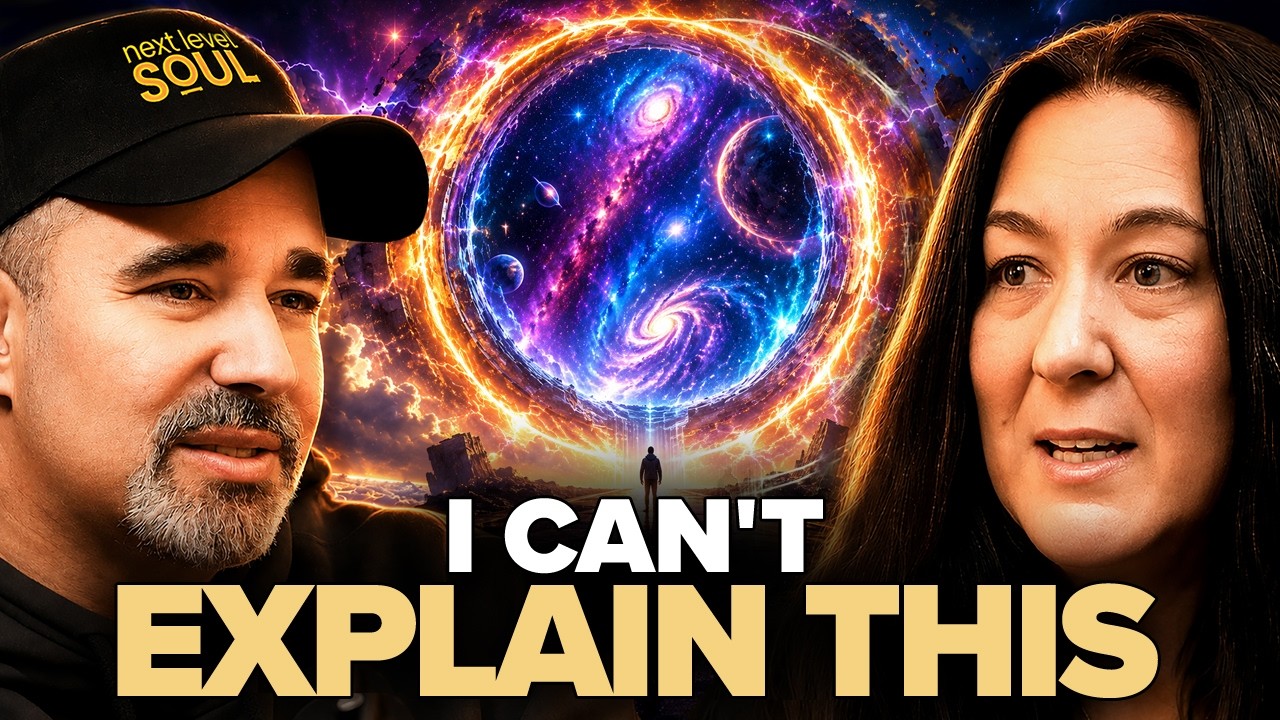
Astral Therapy & Deep Soul Healing with Mariko Frederick
Mariko Frederick explains astral therapy and shares how she says she stayed conscious between lifetimes.
Astral Journey Books Worth Reading
These books are good starting points. Each link below goes to Amazon, and we may earn a small commission at no cost to you.
Journeys Out of the Body by Robert Monroe
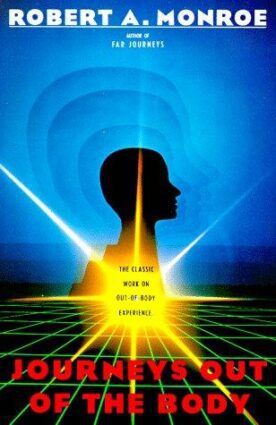
The book that brought the term OBE to a wide audience, with Monroe’s own first-person accounts of leaving the body and exploring other realms. See it on Amazon.
Far Journeys by Robert Monroe
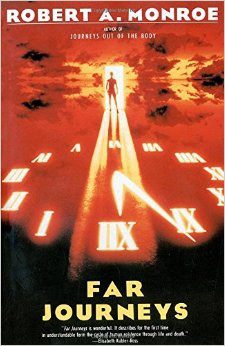
Monroe’s second book, which expands his maps of the places and beings he met. See it on Amazon.
Ultimate Journey by Robert Monroe
The final book in Monroe’s trilogy, looking at life, death and what lies beyond. See it on Amazon.
The Projection of the Astral Body by Sylvan Muldoon and Hereward Carrington
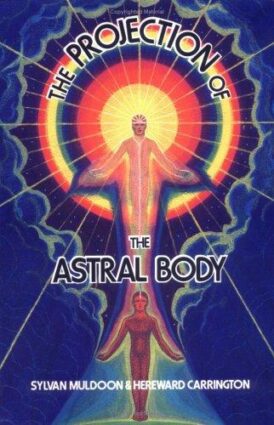
A classic from 1929 that describes the passive-will and dream-control approaches. See it on Amazon.
Autobiography of a Yogi by Paramahansa Yogananda
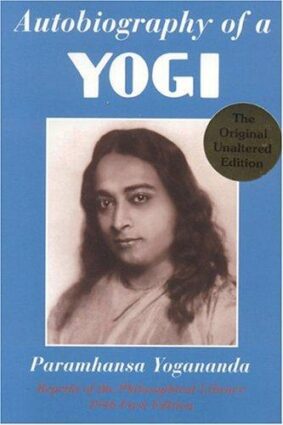
Yogananda’s classic describes the astral world from the yogic perspective. See our Yogananda guide as well. See it on Amazon.
Astral Dynamics by Robert Bruce
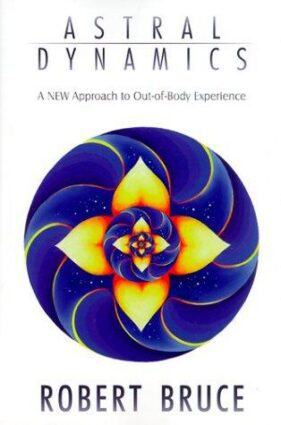
A practical manual that covers the etheric and astral realms and Bruce’s “Real Time Zone.” See it on Amazon.
Adventures Beyond the Body by William Buhlman
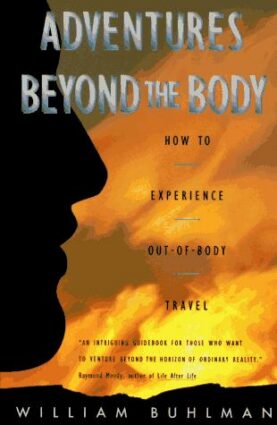
A practical guide to out-of-body travel by a long-time explorer of the subject. See it on Amazon.
Heaven and Hell by Emanuel Swedenborg
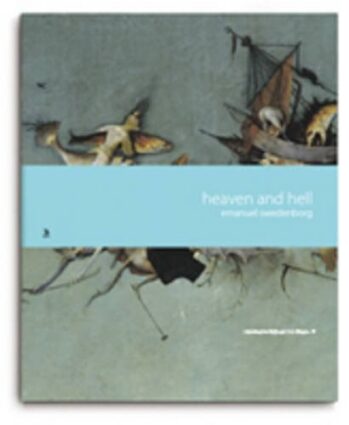
Swedenborg’s 1758 account of the afterlife and the spiritual worlds he said he could visit. See it on Amazon.
The Astral Plane by C. W. Leadbeater
The classic Theosophical description of the astral plane, first published in 1900, and a foundation for much later writing. See it on Amazon.
More Conversations on Out-of-Body Travel
- Charlie Morley. Lucid dreaming, dream yoga and travel through other realms in Man Travels to Realms in OBE.
- Chrystal Rae. A silver thread and a childhood out-of-body experience in her NLS conversation.
- Dean Brinson. A near-death account that includes an astral region in Divine Encounters.

Benefits of Astral Projection with Jannecke Øinæs
Jannecke Øinæs shares the benefits of astral projection in this Next Level Soul episode.
A Free Gift
Explore the astral realms, then find your inner calm.
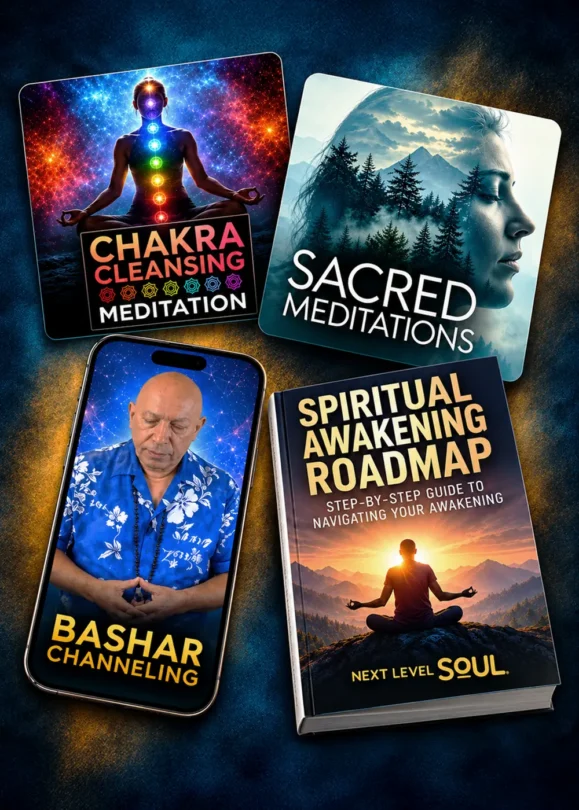
Reading about the astral journey is one thing. Finding your own inner stillness is another. The free Sacred Awakening Toolkit is a collection of meditations, teachings and guidance to help you find calm, clarity and balance.
- Exclusive Bashar Channeling (20 Min). An original channeling recorded exclusively for Next Level Soul, with direct insights from one of the most influential channeled teachings of our time.
- 5 Sacred Meditations. Calm the mind, open the heart and reconnect with inner presence.
- Bonus: Cosmic Chakra Meditation (30 Min). Align and activate your energy centers.
- Spiritual Awakening Roadmap PDF. A clear, grounded guide to the awakening process.
Free. Unsubscribe anytime. Your email is safe with us.
Frequently Asked Questions About the Astral Journey
What is an astral journey?
An astral journey is an out-of-body experience in which a person feels their awareness leave the physical body and travel through other realms. It is also called astral projection, astral travel or soul journey.
What is the astral plane?
The astral plane is the realm that the astral body is said to travel through. Theosophy, Hermeticism, Neoplatonism, Kabbalah and Islamic writing each describe layered worlds between the physical and the purely spiritual.
Is astral projection the same as an out-of-body experience?
The terms are often used together. An out-of-body experience, or OBE, is the general term. Astral projection usually means an intentional OBE in which the astral body travels the astral plane.
What is the silver cord?
The silver cord is a shimmering thread that travelers say connects the astral body to the physical body. It is mentioned in Ecclesiastes 12:6 and in many modern accounts.
Who made astral projection popular?
Theosophists coined and promoted the term in the 19th century. In the 20th century, Sylvan Muldoon and Robert Monroe brought it to wide audiences, and Monroe’s Journeys Out of the Body (1971) sold about one million copies.
What is Hemi-Sync?
Hemi-Sync is sound technology from the Monroe Institute. It plays 170 Hz in one ear and 174 Hz in the other so the listener perceives a 4 Hz theta beat, which supports deep relaxation with awareness.
How is an astral journey different from lucid dreaming?
In a lucid dream you know you are dreaming and you are inside the dream. In an astral journey people describe a sense of being outside the body. Many travelers move between the two states.
How is an astral journey different from a near-death experience?
A near-death experience happens during a medical crisis. An astral journey is usually intentional or happens in sleep or meditation. Both can include leaving the body.
What do people see on the astral plane?
Travelers describe dreamlike landscapes, luminous colors, guides, loved ones and sometimes the Akashic records. Each person describes it in their own terms.
Does science support astral travel?
There is currently no scientific evidence confirming it, and parapsychology experiments have been inconclusive. Brain stimulation and some substances can produce experiences that resemble it.
Is an astral journey dangerous?
Most travelers describe it as peaceful. A simple approach is to rest well, relax and ground yourself afterward. If you have health concerns, speak with a qualified professional.
Where can I learn more?
Start with our astral projection guide, the astral plane study guide and the books listed above.
Where does the term out-of-body experience come from?
J. Arthur Hill used the phrase in 1918 and Oliver Fox in 1920, and G. N. M. Tyrrell introduced it into wider use in his 1943 book Apparitions. Researchers such as Celia Green and Robert Monroe adopted it as an alternative to belief-centric labels like astral projection.
How common are out-of-body experiences?
About one in ten people are said to have one at least once in their lives, and many have several. They often happen near sleep, during near-death experiences or after extreme physical effort.
How did Robert Monroe have his first out-of-body experience?
In 1958, Monroe experienced sensations of paralysis and vibration with a bright light. After nine more episodes over six weeks, he had his first out-of-body experience, as he describes in Journeys Out of the Body.
Is sleep paralysis part of astral travel?
Many accounts describe paralysis and vibration just before leaving the body, and about half of near-sleep OBE reports mention sleep paralysis. Teachers advise staying calm and breathing slowly while the sensations pass.
Who was Emanuel Swedenborg?
Swedenborg (1688 to 1772) was a Swedish scientist, theologian and mystic who said his spiritual eyes were opened so he could visit heaven and hell. He is best known for Heaven and Hell (1758).
Has anyone tested out-of-body claims in a lab?
Yes. In 1968, Charles Tart ran an experiment with a subject known as Miss Z, who gave a hidden five-digit number correctly on the fourth night. Critics said ordinary senses were not ruled out.
Sources and Further Reading
Astral projection (Wikipedia) · Astral plane (Wikipedia) · Robert Monroe (Wikipedia) · Sylvan Muldoon (Wikipedia) · Out-of-body experience (Wikipedia) · Emanuel Swedenborg (Wikipedia) · Charles Tart (Wikipedia)