Divine Encounters Episode 034 | Near-Death Experience Story
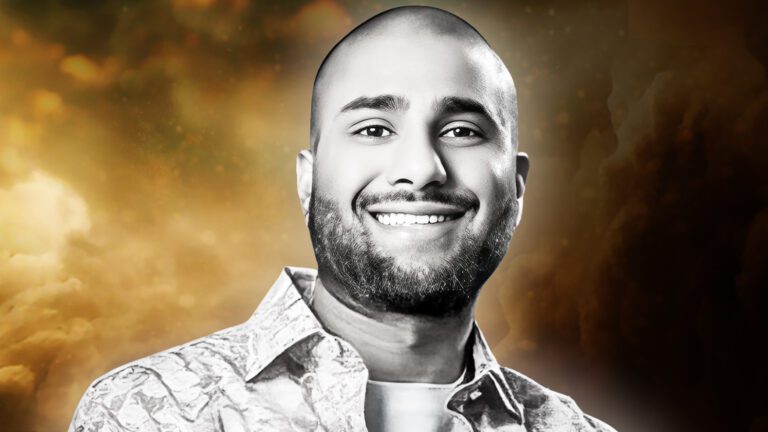
Anoop Kumar was in medical school, in his later twenties, reading philosophy in his bedroom at his parents’ house when, he says, everything seemed to explode and he found himself sitting in the sun. He tells Alex Ferrari that there was no body and no world, only bliss, and then a voice stopped him at the edge of going beyond. Today he is an emergency physician. In this Divine Encounters episode he explores what he calls a near-death-like experience, how long it took him to speak about it, and what he sees when he looks at the world now.
Key Takeaways
- Anoop says he grew up immersed in Advaita Vedanta, the philosophy of non-duality, and that sitting in on adult classes as a child felt like his first education.
- He says he found school, including medical school, dissatisfying because it studied the world but forgot the person looking at it.
- He describes a sudden event while reading, in which he felt “like I was sitting in the sun” with no body and no world.
- He says a thought stopped him just as he was about to go beyond: “this wouldn’t be fair, and it’s not yet time.”
- He says that afterward he saw the world as made of light, with space itself appearing as light.
- He says he did not tell anyone for about 10 years, because he had been taught not to take mystical experiences too seriously, and to integrate them and keep moving.
- He says the biggest emergency is that “we have forgotten who we are.”
| Guest | Anoop Kumar |
| Episode | Divine Encounters 034 |
| Background | Raised in a family immersed in Advaita Vedanta; now an emergency physician |
| When it happened | In medical school, in his later twenties |
| Where it happened | In his bedroom at his parents’ house, while reading philosophy |
| What Anoop says happened | A sense of sitting in the sun, with no body and no world, and then a pause at the edge of going beyond |
| Who or what he met | A secondary flame within the blaze, which put a thought in his mind |
| The message | Everything affects everything, and the deepest emergency is that we have forgotten who we are |
A Childhood in Advaita Vedanta
Anoop tells Alex that what happened to him took place in medical school, in his mid to late twenties. But he starts earlier, because everything that came before shaped it. He grew up immersed in spirituality, specifically in Advaita Vedanta, the philosophy of non-duality, which he notes is getting very popular these days. His parents were deeply involved, and so, as a child, he was too.
He describes weekends and weeks spent at the center, sitting in on adult classes about the mind, the nature of reality and the purpose of life. That, he says, was his first education. He did not understand everything intellectually, but it seemed relevant. It just made sense. For a quick introduction, see our glossary entries on Advaita Vedanta and non-duality.
Restless in School, Restless in Medical School
Then he would go to school and, he says, it did not seem relevant. Now he understands why. School, he says, looks at everything from the objective side and forgets about the person who is looking, which seems insane to him. In his childhood classes, you looked at everything together, and especially at the lens you were coming from.
He found school dissatisfying, including medical school, because of the way the human being and the human body were looked at. There was a restlessness in him, a kind of searching that he had never formalized. Where was I before? What is after? What is all this? He experimented with his mind, doing little exercises like standing right next to a wall and seeing what it felt like to be through the wall. He was always trying to come to a state of rest and peace, though he was not even sure he knew that was what he was doing.
The Day He Sat in the Sun
One day he came back from medical school to his parents’ house and was in his bedroom reading philosophy. It was not medical reading. He read something, and he does not remember what, and in that moment it felt like a huge explosion went off. Everything blew to smithereens, so to speak. It felt like he was sitting in the sun.
He tells Alex that he has said this many times and cannot say it any other way, no matter how bizarre it sounds. “There was no body, there was no world.” It was just sun and him, and he was part of the sun in a sense. It was blissful, perfect, timeless, all the things we always hear. He is not sure how long it went on.
Then, he says, he felt himself going through the sun, or beyond it. He had one foot beyond and one foot still in that brilliant orange blaze, “this mother of all blazes.” And he knew that if he took that step, that was it. He would not come back. He does not say that would have been a bad thing, only that it is what it is.
A Flame, a Thought and a Pause
Just as that step was about to be completed, he says, a flame arose within the blaze of the sun. A secondary flame, he calls it. And it put a thought in his mind: “this wouldn’t be fair, and it’s not yet time.”
He explains how it felt. When you hear something that is so true and so deep, he says, it does not require any force. It just makes you stop. It freezes you. And that is what happened. He paused, even as he was about to step beyond. He knew it was true.
He says everything that remained to be done, the strength of that karma, the rubber bands that keep us wherever we are supposed to be, snapped back, and everything re-imploded. You can read more about the idea in our glossary entry on karma.
A World Made of Light
He found himself sitting in the same room in the same body, looking around. What is this, he thought. He had thought he knew this place, but in that moment he could see that he never really had. It was crystal clear, he says, that our world is constructed out of light. The space between your hands, he says, is not an emptiness. “It is light that is appearing as space.” What we call hands and objects are modifications of that light, different densities of it.
He sat there for some time, he is not sure how long. Then he got up and began to explore. He went to the bathroom and looked in the mirror. What struck him was that he did not recognize the man looking back, because “that guy looked too peaceful.”
The Man in the Mirror
Anoop says he had carried a restlessness and tightness in his body that he had never been very conscious of. He knew he was on some kind of search, perhaps. But he says he could only realize how much tightness was there when it was gone. When he saw that face he thought, I would like to know this guy. He looked much more relaxed and content.
That was the beginning of everything, he says, a long process of integrating that continues today. Everything he has communicated over the last 15 plus years, he says, would not have been possible without the clarity that came from that day. He describes assimilation, integration and healing of traumas from this lifetime and, as he puts it, other lifetimes, of relationships and karma. It was not just that someone has an experience and that is great. It raises questions, he says: how do you live it, how do you spend the rest of this lifetime, and what does it mean across all the lifetimes we experience?
An Emergency Doctor’s Responsibility
Anoop is now an emergency physician, and he links his work and his experience. “I diagnose emergencies, right? And I treat emergencies.” The biggest emergency, he says, is that “we have forgotten who we are,” and we do not really know what this world is.
Speaking about that coherently and clearly, with compassion and love, has been a process for him. He feels a responsibility to do it. He says he could not be doing this without the clarity that came with the experience and beyond.
Ten Years of Silence
Here is the funny thing, he says. He did not tell anyone for about 10 years. It was not hesitation, and it was not worry about what people would think. It was because of what he had heard his whole life from people who dedicated their lives to this: you will have mystical experiences, and “don’t take them too seriously.” They are part of the journey. “Integrate it and keep moving.”
That was his approach, even soon after, as he began his residency training in emergency medicine, which he calls nuts and incredibly difficult. He had a teacher in the area near Philadelphia whom he visited once in a while. Even to him, Anoop says, he never described what actually happened. He would say that he used to think a certain way and was considered a really smart guy, and that was not happening anymore. The teacher gave short, redirecting answers.
When he started talking about it, around 10 years later, he realized it was a way to get people interested in what is possible. He says he spoke with the International Association for Near-Death Studies, and the president told him that what he had was a near-death-like experience. He began to learn the terminology. He decided to tell his personal story, rather than only talking about consciousness, which can be too abstract.
For readers new to the term, our glossary has a short entry on the near-death experience, and our complete guide to near-death experiences explains how accounts like Anoop’s are described.
When Words Run Out
Alex and Anoop talk about the limits of language. In spiritual culture, Anoop says, there are words like enlightenment, dark night and NDE. You can name five, six or seven of them. But what happens when all of that is done? You are not done, he says. You are at a place where we do not language it well.
If you look in the mirror once a year, he says, you will see a different person each year, and it never ends. Looking in the mirror is like looking into the depths of the galaxy, with supernovas and pulsars, and you never know what will come up. At some point, he says, English is not enough.
He says that is why he does not feel he has the authority to tell anybody that what they are perceiving is not real. “I’m not the expert on reality,” he says. What he can say is that he does not experience what you experience, and then let us talk about the meaning of it.
Everything Affects Everything
Near the end Anoop shares a simple principle. “Everything affects everything.” At a fundamental level, he says, there are no impermeable boundaries. There is a boundary between my body and yours, or between this finger and my hand, but once you zoom in, all boundaries become permeable and eventually disappear. They are ways of perceiving, or shared notions.
He gives examples. Put hot water and cold water together and you get warm water. Put an anxious person with a calm person and you may get something in between. Turn on a light and it affects the room. A yogi is no different from anybody else in that sense. The difference, he says, is that the yogi is aware that boundaries are permeable and can function beyond the boundaries of a person who has not realized it.
That is why, he says, a distance that seems great to one person is nothing to a certain kind of yogi. They have realized the reality of consciousness and how space and time are structured in it. “1000 miles is a matter of switching attention,” he says, rather than getting on a plane.
Placing His Experience Beside Others
Anoop is careful about the label. His experience did not begin with a medical crisis, so the president of the International Association for Near-Death Studies, he says, called it a near-death-like experience. It shares several themes with classic accounts: a sense of timelessness, bliss, a threshold where he could have gone beyond, a being or presence that intervened, and a return. It also stands apart. There is no tour of another realm. The event unfolded in a bedroom, and its fruit was a way of seeing.
If this resonates, you may also be interested in our glossary entries on oneness and consciousness.
Questions to Sit With
- Anoop says he was taught not to take mystical experiences too seriously, and to integrate them. How do you handle experiences that do not fit your usual story?
- He says he did not recognize the peaceful man in the mirror. What tightness have you been carrying that you have not yet noticed?
- If everything affects everything, what are you putting into the room you walk into today?
Look at yourself in a mirror for one minute this week, without judging. Notice what you see that is new.
Spiritual Takeaways
- Anoop says there was no body and no world, only sun and bliss.
- He says that a quiet thought stopped him because it was so true that it needed no force.
- He says our world is made of light, and that even space appears as light.
- He says the deepest emergency is that we have forgotten who we are.
- He says everything affects everything, and boundaries are more permeable than they appear.
Please enjoy my conversation with Anoop Kumar.
Guest Links: Connect With Dr. Anoop Kumar
Listen to the Episode
- Watch this episode ad-free on Next Level Soul TV
- Download the MP3
- More episodes: Divine Encounters
- Listen to Divine Encounters on Apple Podcasts
- Listen to Divine Encounters on Spotify
Frequently Asked Questions
Who is Anoop Kumar?
Anoop Kumar is an emergency physician who was raised in a family immersed in Advaita Vedanta. He shares his near-death-like experience in this Divine Encounters episode.
What happened to Anoop Kumar in medical school?
He says that while reading philosophy in his bedroom at his parents’ house, it felt like a huge explosion went off. He says he felt like he was sitting in the sun, with no body and no world.
What stopped Anoop from going beyond the sun?
He says a secondary flame arose within the blaze and put a thought in his mind: this wouldn’t be fair, and it’s not yet time. He says it froze him because it was so true.
What does Anoop mean by saying the world is made of light?
He says that after the experience he saw that the world is constructed out of light, and that space itself is light appearing as space. He says objects are different densities of that light.
What is a near-death-like experience?
Anoop says the president of the International Association for Near-Death Studies used the term for his experience, because it did not involve a medical crisis. It shares many themes with near-death experiences.
Why did Anoop wait 10 years to tell his story?
He says it was not fear. He says he had been taught that mystical experiences should not be taken too seriously and that you should integrate them and keep moving.
What does Anoop mean by the biggest emergency?
As an emergency physician, he says the biggest emergency is that we have forgotten who we are. He says he feels a responsibility to speak about it with compassion and love.
What does Anoop mean by everything affects everything?
He says there are no impermeable boundaries at a fundamental level. He says hot and cold water mix, calm and anxious people influence each other, and a yogi is aware of this.
What does Anoop say about the distance of a thousand miles?
He says that for a certain kind of yogi who has realized the nature of consciousness, 1000 miles is a matter of switching attention, rather than getting on a plane.
Is a near-death experience proof of an afterlife?
Next Level Soul shares near-death experiences as lived experiences told in the guest’s own words. Researchers continue to study and debate what they mean. Nothing here is medical advice or a medical claim.
Keep Exploring
- The complete guide to near-death experiences
- What non-duality means, in plain language
- A short explanation of Advaita Vedanta
- Scientist Anton Grosz on discovering that we are one
- Scientist Dr. Manmit Kummar on leaving her body and hearing spirit guides
- Peter Redgrove on turning dying into awakening
- Dr. Eben Alexander, a neurosurgeon, on what happens between lives
- Dr. Yvonne Kason on being transported from Earth after a plane crash
- Browse more free masterclasses and the Divine Encounters podcast.
Follow Along with the Transcript
Alex Ferrari 0:00
Tell me what your life was like before you died.
Anoop Kumar 0:08
So that was actually in medical school, in my in my kind of mid to late 20s. I think later 20s is when it happened, when I was in medical school. Before that, you know, I was growing up. I was immersed in spirituality in Vedanta, Advaita Vedanta, or the philosophy of non duality, which is getting very popular these days. My parents were very much into that. Our family was so as a kid that felt like my first education actually, you know, because we would go there on the weekends, we would be there during the week and sitting in on the adult classes talking about mind and the nature of reality and the purpose of life. And I loved it. I mean, it just made sense to me, you know, not that I understood everything intellectually, but it seemed relevant. Let's just put it that way. And then I'd go to school and sit there and I'd be like, I don't know, it just did not seem so relevant, you know, to put it mildly. And of course, now I know it's because school, they look at everything on the objective side of it, but they forget about the person who's looking at it, which is like insane, you know, whereas this was no you have to look at everything together and specifically look at the lens that you're coming from. So that's how I was going about my life. And I found school very dissatisfying, including medical school, to be frank, to the way we looked at the human being, the way we looked at the human body. And so there was this restlessness in me, you know, there was this kind of searching, even though it wasn't formalized as to, like, you know, what is this? What is this about? You know, kind of like, where was I before? What is after? Like, what is this stuff? So I was always experimenting with my mind and and doing little exercises like standing right next to the wall and seeing what it felt like to like be through the wall, and just always playing around with stuff to try to figure out or experiment with, and come to rest, come to that state of rest and peace, you know. So that's what it was like before. Even though it was a formal process, I'm not even sure I was aware that I was doing that, but it was just that restlessness was there until things kind of opened up. So that day, I had come back from med school, and I was at my parents house, and I was in my bedroom, and I was reading and reading some philosophy actually wasn't. It wasn't medical related, and I read something I don't remember what it was in in that moment, it felt like a huge explosion went off, you know, it just felt like everything blew to smithereens, so to speak, and it felt like I was sitting in the sun. And, you know, it's funny, Alex, I've said this so many times, and every time I say it, it's so strange how I can't say it any other way, like it just seems so true, like I was sitting in the sun, no matter how bizarre that seems, or how whatever it is, that's what it was. There was no body, there was no world. It was just sun and me and I was part of the sun, in a sense. And it was blissful, it was perfect, it was timeless. It was all the things that we always hear, you know, those kinds of things. And I'm not sure how long that went on, exactly. But I remember then feeling like I'm going through the sun or beyond the sun. It got to this place where I had one foot beyond and one foot still there in this brilliant orange Blaze, this mother of all blazes, right? And just when that was going to happen just when that was going to complete, let's say then this flame arose within this brilliant Blaze that's the sun. This secondary flame arose and instilled this thought in my mind, which is that this wouldn't be fair, and it's not yet time. And you know, like when, when you hear something that's so true and so deep, you know, it doesn't require any force. It just makes you stop. You know what I mean? It freezes you. And this, this froze me, made me pause, even as I was about to take that step beyond and I knew if I took that step, that was it. I was not coming back. It was not, you know, that was it, which wasn't a bad thing, but it is what it is. But when this being put this idea in my mind, it was just so true. I knew it was so true. And I think everything that remained to be done, the strength of that, that karma, you know, those rubber bands that keep us wherever we're supposed to be, they snap back, and everything re imploded. And there I was sitting with that body in that same room, and just I remember kind of looking around and being like, almost like, what is this? I thought I knew this place, but I could see in that moment that I never really knew what this actually was. And it was so crystal clear that our world just gonna use a word light, that our world is made of. Light is constructed out of light. You know, that space that we consider like space between our hands, that that there is light here it is light that is appearing as space. It's not an emptiness, you know, and that what we call hands or objects are modifications of that light densities, different kinds of density. Cities, and I sat there for some period of time. I'm not really sure how long I sat there, and then I got up and started exploring, and I remember going to the bathroom and looking in the mirror, and what struck me about that was I didn't recognize a guy in the mirror because that guy looked too peaceful, and I had this restlessness in my body before which I can't say that I was ever too conscious of. I mean, I kind of knew that I was on some kind of search, maybe. But I could only realize how much tightness there was in the body when it was gone, and when I saw that guy's face, and I was almost like, you know, I would like to know this guy, this guy looks, looks, you know, much more relaxed, much more content. And that was the beginning of everything, a long process of integrating that continues today. Well, you know, I could not have communicated all they have communicated in the last 15 plus years, if it were not for the clarity that has come from that so much clarity just came in to my life and continues to come into my life, and so much assimilation and integration and healing. You know, of my traumas from this lifetime, from other lifetimes. You know, my relationships, karma. You know, there's so much. You know, it's not just like somebody has an experience and that's great, but you know, like, how do you live that in your life, and how do you spend the rest of this lifetime, and what is the meaning and significance of that in the space of all lifetimes that we experience, you know? So all that, there has to be some clarity to communicate about this. I feel like, and especially as an ER doc, I feel like I have a responsibility. I diagnose emergencies, right? And I treat emergencies. So I think the biggest emergency is that we have forgotten who we are, and we don't really know what this world is. That's the emergency, and the heart attacks and the strokes and everything come downstream from that. As a result of that, there's so many steps in between that leads then to these kinds of diseases, and for me to speak about that coherently and clearly and with compassion and love has been a process, so I feel a responsibility there, and I don't think I could be doing that without the clarity that has come with that and beyond. So here's the funny thing about that. I don't know that I told anybody about this for like, 10 years or something like that, and here's the reason why, it wasn't because I hesitated, it wasn't because I was worried about what people think. It's because I had heard from my whole life that from people who had dedicated their lives to this experience, these things and so on. You have these experiences. You have these blood experiences, you have these mystical experiences. Don't take them too seriously. They're part. It's what happens. It's part of the journey. Integrate it and keep moving. And so that was my approach to this, you know, as as much as it did, especially soon after that, I started my residency training emergency medicine, which was nuts, and that was incredibly difficult. But even then, I hardly talked about it. I had a teacher in the area near Philadelphia, who I would go to once in a while and be like, you know, I used to think like this, and I used to be considered a really smart guy, and I used to think in this way, that's not happening anymore. You know, he would just have these very short, redirecting answers. And because I trusted this person that helped me, and even to him, I never talked about this, about what actually happened. So for me, like, I guess in my mind, I had always had that perspective that it's not, don't give it too much importance. And once I started talking about it, like, 10 years later or so, what I realized is that this is actually a way to get people interested and start learning about what is possible, you know. So that's when I started talking about it, and I started to realize, oh, okay, I talked to the Ian's International Association for near death studies, and I think the President said, Okay, what you had is called a near death like experience, because your body actually was so I started learning all this terminology, and that's when I said, Okay, I am going to start talking about this rather than just talking about consciousness, because sometimes it can be too abstract. So I started telling my personal story as well. If you look at yourself in the mirror once a year, every year, you'll see a different person each year. It never ends, you know. So, like, you know, it's funny.
In culture, there are certain words, right? Especially in spiritual culture, there's enlightenment, there's Dark Knight, there's NDE, you know, you can probably name, like, 5 6 7, terms that come up a lot. But then what happens when all that stuff is kind of done, like, you're not done, you're just at a place where we don't really language that well, you know, where we don't really talk about but if you look in the mirror there, it's still something new and different, and five years later, it's still something new and different, and you're getting to a place now where English isn't enough. You know, there are no real words to capture some of those things. So I agree with you. Like looking in the mirror is it's like looking into the depths of the galaxy and the cosmos, you know, where you have supernovas and pulsars, you don't know what's going to come up. And so these things are all happening at some level, different densities, you know, that's why even even hallucinations, you know, I don't feel I have the authority to tell anybody, hey, what you're perceiving is not real. You. I don't know. I'm not the expert on reality to say that what you're experiencing is not real. What I can say is I don't experience what you're experiencing. Now let's talk about the meaning of what you experience, because we're already at the point where neuroscience is telling us that this is a co constructed, collective hallucination, right? No. So, I mean, so at some point I think it's just a matter of honesty. Let's just be honest. Like a simple principle in this universe is that everything affects everything, and that at a fundamental level, there are no impermeable boundaries, right there. They may appear to be, you know, of course, there's a boundary between, let's say, my body and yours. Boundary between this finger and my hand. There are these. But once you start zooming in and really looking, all boundaries start to really become permeable and eventually disappear. So what we call boundaries are, let's say, ways of perceiving all right, or shared notions. So everything affects everything. So if you put hot water and cold water together, what do you get? You get warm water because the two kinds of water affect each other, right? If you get two people together, one is really anxious, one is really calm, you might get something in between, right? So a yogi is no different than anybody else in that sense, right? They affect the things around them, just like all of us do, just like everything does. You turn on the light the room gets a lumen. The light affects the room. The difference is with the yogi is that they're aware that their boundaries are all permeable, and they can function beyond the boundaries of a person who has not realized this, right? So their their activation, their capacity to influence, goes far beyond that of another person that has not yet moved through their boundaries. And that's simply the difference. And so what seems like a great distance for one person is nothing for a certain kind of Yogi, because they've realized the nature the reality of consciousness and how space and time are structured in consciousness, and so it's simply a matter of switching attention. You know, 1000 miles is a matter of switching attention rather than getting on a plane and traveling 1000 miles.
Our Sponsors
- Next Level Soul TV: exclusive spiritual movies, series, audiobooks, courses and events. Get the app.
- Earthing.com: discover the science-based healing powers of earthing and grounding.
If you enjoyed today’s episode, watch and subscribe to Divine Encounters on YouTube.