Pre-birth experiences are memories, images and impressions that some people carry from the time before they were born or conceived: a place of light, a gathering with guides, a choice of family, an agreement to learn certain lessons. People describe them as clear, calm and hard to shake, and many say these moments shaped how they understand their whole life. This guide explains what pre-birth experiences are, how people describe choosing their parents and agreeing to life lessons, how soul contracts and the life between lives fit in, and how all of it differs from past-life memory and near-death experiences.
It also covers what researchers and authors such as Helen Wambach, Ian Stevenson, Sarah Hinze, Elisabeth Hallett and Michael Newton have gathered, how children tend to talk about it, how to listen without leading, and grounded ways to explore your own through journaling, meditation, dreams and guided regression. These are personal accounts and spiritual teachings, and we keep the line between report and proof clear.
Key Takeaways
- Pre-birth experiences are reported impressions of the time before birth or conception: light, guides, a soul family, a choice to come here.
- People describe choosing their parents and agreeing to life lessons. Teachers such as Dr. Linda Backman and Michael Newton describe this soul planning.
- A pre-birth memory is not a past-life memory (an earlier lifetime) and not a near-death experience (a brush with death in this life).
- Helen Wambach, Ian Stevenson, Sarah Hinze and Elisabeth Hallett collected accounts, and their methods draw real criticism.
- Parents can listen without leading: open questions, no corrections, simple notes.
- You can explore your own through journaling, meditation, dreams or a trained guide, and hold what comes with both feeling and discernment.
Maybe your child once said something that made you stop mid-sentence. Or maybe you carry an early sense of your own: a feeling of arriving from somewhere, of having agreed to something before you got here. You never told anyone. It sounded too strange. You are not alone, and there is a long human tradition behind that feeling.
Pre-Birth Experiences Explained
A pre-birth experience, often called a pre-birth memory, is any memory, image or impression a person links to the time before birth. Some people describe the weeks in the womb. Some describe birth itself. Others describe something earlier: a place of light, a gathering of beings, a decision to come here, a sense of choosing a family. The phrase covers a lot of ground, so it helps to sort it into kinds.
- Womb and birth recall. Impressions of the womb, the sound of a mother’s voice, or the moment of birth.
- Pre-conception impressions. A sense of existing before the body, sometimes with a feeling of watching or being drawn toward one’s future parents.
- Soul-planning scenes. Meeting guides or a soul family and agreeing to a life, a family or a set of lessons.
- Contact before birth. Parents who report a dream, a vision or a strong sense of a particular child before conception or during pregnancy. Some authors call this pre-birth communication.
- Born aware. A term podcast guest Diane Brandon uses for people who say they remember their own thoughts and perceptions at the moment of birth.
Kinds of Pre-Birth Experience at a Glance
| Kind | What People Describe | Where You Meet It |
|---|---|---|
| Womb and birth recall | Sounds, sensations and the moment of birth | Adults, and parents recalling a child’s words |
| Pre-conception impressions | A sense of existing before the body and being drawn toward parents | Quiet reflection, meditation and dreams |
| Soul-planning scenes | Meeting guides or a soul family and agreeing to a life | Podcast guests Rebbeca Wertz and Akerke Muratova, and the teaching of Dr. Linda Backman |
| Contact before birth | A dream, vision or strong sense of a particular child | Parents, and the collections of Sarah Hinze and Elisabeth Hallett |
| Life-between-lives scenes | Guides, a soul group and planning between one life and the next | Guided regression and the work of Michael Newton |
A memory can feel vivid, calm and true and still be a personal report. That is the case for every kind of memory, including the ordinary ones. We can honor the experience and stay clear about what has been shown.
Try this: write down the earliest thing you remember feeling about being alive. Do not edit it. Do not decide yet whether it is memory or imagination. Just get it on the page.
Where the Idea Comes From
Nobody invented this in the twentieth century. Ideas about a life before life run through many traditions, and they share a surprisingly similar shape: something exists before the body, and something is forgotten at birth.
- Ancient Greece. In the Myth of Er, which closes Plato’s Republic (Book X), souls choose their next lives, then drink from the River of Forgetfulness before they return. Plato offered it as a story, not a report.
- Jewish tradition. The Talmud (Niddah 30b) describes an angel teaching an unborn child the whole Torah, then, just before birth, causing the child to forget it.
- Hindu tradition. The Garbha Upanishad describes the unborn child, late in pregnancy, becoming aware of its earlier births and resolving to turn toward the divine, then forgetting through the passage of birth. Rebirth is central across Hindu and Buddhist traditions.
- Tibetan Buddhism. The Bardo Thödol, known in the West as the Tibetan Book of the Dead, is recited to guide a consciousness through the intermediate state between death and rebirth toward a favorable rebirth.
- Latter-day Saint teaching. According to the tradition, spirits lived with God before mortal life began.
- Poetry. In his 1807 Ode: Intimations of Immortality, William Wordsworth wrote that birth is a sleep and a forgetting, and that children arrive trailing a trace of where they came from.
Traditions at a Glance
| Tradition | Source | Before Birth | The Forgetting |
|---|---|---|---|
| Greek | Myth of Er, Plato’s Republic | Souls choose their next lives | The River of Forgetfulness |
| Jewish | Talmud, Niddah 30b | An angel teaches the unborn child | The angel causes the child to forget at birth |
| Hindu | Garbha Upanishad | The child becomes aware of earlier births and makes resolutions | Forgetting through the passage of birth |
| Tibetan Buddhist | Bardo Thödol | Consciousness moves through the intermediate state toward rebirth | The focus is guidance toward a favorable rebirth |
| English poetry | Wordsworth, 1807 | Children arrive trailing a trace of where they came from | Birth as a sleep and a forgetting |
You do not have to hold any of these views to see why the question feels so old. People have always wondered where they were before they were here. If you are exploring that wider search, our guide to spiritual enlightenment shows how different traditions name the same big questions, and our guide to reincarnation covers the beliefs and research around rebirth.
Try this: choose the tradition closest to your own background and read one primary passage slowly. Notice what it stirs, and what it does not.
What Researchers and Authors Have Reported
Several researchers and writers have gathered pre-birth accounts. They worked in different ways, and their work carries different levels of scientific support. Here is what each reported, described carefully.
Helen Wambach
Helen Wambach was a psychologist who led group hypnosis sessions in which volunteers were guided back to the time before birth and asked what they experienced. In her 1979 book Life Before Life, she reported on the answers of several hundred people. Many described choosing to be born, and some described a gradual connection with the baby’s body instead of a single moment of entry. Wambach took her results as support for the idea of choice before birth.
Critics note that participants were volunteers, that hypnosis is open to suggestion, and that group sessions offer little control over what people expect to find. Wambach is better known for her past-life work. Our guide to past-life regression explains how that method works and what the research says.
Ian Stevenson and Jim Tucker
Ian Stevenson was a psychiatrist at the University of Virginia who spent decades documenting young children who said they remembered a previous life. His research, continued by Jim Tucker, focused mainly on past-life statements such as names, places and the manner of a death, which investigators then tried to check against records. Some children in these files also said things about the time between lives or before birth, though that was not the heart of the work.
Stevenson was careful. He called his early collection Twenty Cases Suggestive of Reincarnation, not proof. Critics argue that cultural beliefs, parental expectations and interpreters can shape the stories, and that the cases are hard to repeat under controlled conditions.
Sarah Hinze
Sarah Hinze is an author who gathered first-person accounts of people describing contact with a spirit before birth, published in Coming from the Light (1997). Many of the stories come from parents and from adults who describe a sense of a child’s presence before conception or pregnancy. These are collections of personal accounts, not controlled studies. Their value lies in the patterns people describe and in the comfort many readers report, not in proof.
Elisabeth Hallett
Elisabeth Hallett is an author who collected stories of what she calls pre-birth communication, in books such as Soul Trek and Stories of the Unborn Soul. Like Hinze, she relies on personal accounts. Her focus is on parents who say they sensed, dreamed of or heard from a child before conception or birth, and on how that contact changed the way they approached pregnancy.
Michael Newton
Michael Newton was a hypnotherapist who gave the phrase “life between lives” to a wide audience. His 1994 book Journey of Souls, published by Llewellyn, presents 29 case studies of people who describe, under hypnosis, the time between one life and the next. Like Wambach’s work, it depends on hypnosis and on what each person brings to the session, and critics raise the same questions about suggestion. Readers who find meaning in it often value the shared picture it paints more than any single account.
Robert Schwartz
Robert Schwartz is the author of Your Soul’s Plan, a book of personal stories built around the idea that people plan their major life challenges, such as illness, addiction or loss, before birth as chances for spiritual growth. It is a work of storytelling and spiritual interpretation, and many readers find it a gentle way into the idea of a pre-birth plan.
How to Read All of This
Notice what these sources share. They gather reports. They do not measure the thing itself. A thoughtful reader can find them moving and still say the evidence is not established. Both responses are honest.
Try this: when you read any pre-birth account, ask three questions. Who collected it? How was the person guided? Could anything else explain it?
Pre-Birth Stories on the Next Level Soul Podcast
We have sat with guests who describe these experiences in their own words. Their stories are personal accounts, shared openly, and we offer them that way.
- Diane Brandon uses the term “born aware.” She describes a pre-birth memory of a vast, indescribable energy, not a figure, and a sense of safety and understanding.
- Rebbeca Wertz was raised in the Mormon church. She describes recalling a room with her soul family, planning lives together and volunteering for the life she lived.
- Akerke Muratova describes her earliest memory as moving through a dark void toward a bright light, with a gentle voice guiding her to Earth. She later describes being shown a life plan.
- Dr. Linda Backman is a psychologist turned spiritual regressionist. From her work with clients, she teaches that souls gather with guides and companions to design a life plan before they are born.
If you would rather hear one of these accounts than read about it, here is Diane Brandon’s conversation on the Next Level Soul Podcast.
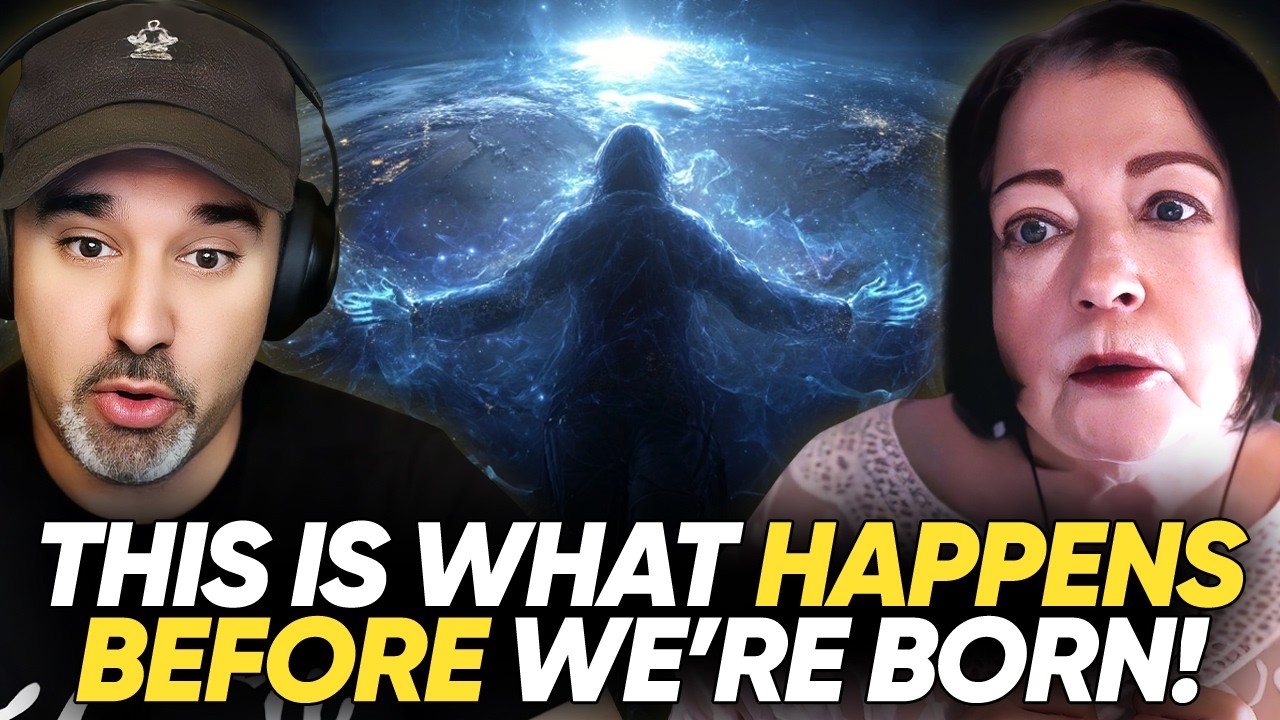
Listen the way you would listen to a friend. Notice what resonates and what does not. A story that moves you is not a requirement to believe it.
Life Between Lives and the Soul’s Journey
Pre-birth experiences make more sense inside a larger picture that many spiritual traditions share: a soul that lives, leaves the body, rests and reviews, and then prepares to live again. The phrase life between lives names the stretch in that picture between one incarnation and the next. Michael Newton popularized it, and Dr. Linda Backman teaches it from her work with clients as a psychologist turned spiritual regressionist.
In this view, the time between lives is not empty. It is a place of activity, and a pre-birth memory is a glimpse of its final stage: the planning, the farewells and the step toward Earth.
The Journey as Teachers Describe It
Teachers in this tradition describe the cycle in roughly the same order. The details differ from person to person, so treat this as a map and not a script.
- Leaving the body. The soul steps out of the life just lived and is met with a sense of release and welcome.
- Meeting guides and soul family. Guides and companions gather, and there is a feeling of recognition.
- Reviewing the life. The soul looks back over choices, relationships and lessons, often without judgment.
- Planning the next life. Guides and companions help design themes, relationships and lessons for the coming life. Dr. Backman describes souls gathering this way to design a life plan before they are born.
- Entering the body. The soul draws toward its chosen family, and the memory of the plan softens as the new life begins.
That last step ties back to the old teaching about forgetting that appears across the traditions above. The forgetting is often described as part of the design: a life lived fully requires not knowing the whole script.
If you want to hear this in a guest’s own words, listen to Mariko Frederick, whose episode explores the life between lives after a near-death experience.
Try this: sit with the five steps above and notice which one you feel closest to. Write one sentence about why.
Pre-Birth Memory vs Past-Life Memory vs Near-Death Experience
These three are often mixed together, and they do overlap in what they point to: a self that continues beyond one body. They are still different experiences. Here is a plain side-by-side.
| Pre-Birth Memory | Past-Life Memory | Near-Death Experience | |
|---|---|---|---|
| Time frame | Before this life, before birth or conception | An earlier lifetime on Earth | A brush with death in this life |
| Who reports it | Adults, young children and parents | Young children, and adults in regression or dreams | People who came close to death or were revived |
| How it arrives | Quietly, in meditation or dreams, or in guided sessions | Spontaneously in children, or through regression | Suddenly, during a crisis, and remembered afterward |
| What it often contains | Light, a void, guides, a soul family, a choice of family and lessons | Names, places, daily details and the manner of a death | Light, a life review, deceased loved ones and a choice to return |
| Where to read more | This guide and our guide to soul contracts | Our guides to reincarnation and past-life regression | Our guide to near-death experiences |
How to Tell Which One You Are Having
- If the scene has a body, a name and a place on Earth, it sounds like a past-life memory.
- If it happens in a non-physical space before this life, with light, guides or a decision to come, it sounds like a pre-birth experience.
- If it arrived while you were close to death in this life, it is a near-death experience.
Raymond Moody brought the term near-death experience into wide use with his 1975 book Life After Life. Ian Stevenson’s research on children’s past-life statements began earlier, and Helen Wambach’s pre-birth work came in 1979. Each opened a different door onto the same question: what are we, and where do we come from?
How Children Describe It
Young children are often the ones who surprise their parents. They say things in passing, in the car, at bath time, at bedtime. Usually the words are plain and the tone is matter-of-fact. Researchers who study children’s spontaneous statements about previous lives report that such talk tends to begin when a child first speaks in sentences, often between about two and four, and often fades by around six or seven.
Parents describe children saying things like these. They are illustrations, not quotes from a study.
- “I was waiting for you.”
- “Before I was in your tummy, I was up high.”
- “I picked you.”
- “I used to watch you from a bright place.”
Children speak in the language they have: light, sky, floating, waiting, watching, a place before. They may mix in imagination, stories from books and things overheard. Then many simply move on and forget it. Those who hold a spiritual view say a real memory fades as the child’s attention turns outward. Skeptics say ordinary imagination and pretend play explain the same words. A parent does not have to decide, and the child does not need an answer in order to be heard.
Try this: keep a small notebook for what your child says about big questions. Write the date and the exact words. Leave your interpretation off the page.
Soul Planning, Soul Contracts and Choosing Your Parents
A popular idea holds that before birth, a soul plans its next life with the help of guides, choosing parents, family, relationships and lessons. Dr. Linda Backman describes this in her work. Michael Newton wrote about it from hypnosis sessions in Journey of Souls. Robert Schwartz tells stories of it in Your Soul’s Plan. Several of our podcast guests have shared their own versions. Many people find it deeply comforting.
It is a belief that people hold close, taught in several traditions and described through personal experience and hypnosis. You can learn from it without needing a final answer about how it works.
The Soul Contract Explained
A soul contract is the term many spiritual teachers use for the agreements a soul is said to make before birth: with parents, partners, children and friends, and with the themes and lessons of the coming life. Some teachers describe it as a detailed blueprint. Others describe it as a loose outline with room to move. Our guide to soul contracts covers the mystical sources and the signs people notice, and Phillip Mountrose speaks on the podcast about how to remember yours. Akerke Muratova describes being shown a life plan.
Plan, Fate and Free Will
| Idea | What It Says | Your Role |
|---|---|---|
| Fate | The main events of life are fixed in advance | You witness what unfolds |
| Soul plan | Key themes, people and lessons were chosen before birth | You choose how to meet each one |
| Free will alone | Nothing is set in advance | You create the meaning as you go |
Most people who speak of soul planning sit in the middle row. Dr. Backman describes a life as planned like mile markers on a road, with the route between them left to you. That is her view, and you can weigh it for yourself.
Where the Idea Can Help
- It can make a life feel less random.
- It can soften old resentment and open the door to forgiveness.
- It can turn a hard relationship into a question: what is this teaching me?
Where It Needs Care
- Never tell someone they chose abuse or harm. Suffering is not a punishment someone ordered. Saying so can wound a person who is already hurting.
- Planning and free will can sit together. A plan gives the outline, and you still decide what you do inside it.
- It is not a substitute for help. A belief about a plan does not replace therapy, boundaries or safety.
The idea is related to the belief in soul groups. Our guide to soulmates, twin flames and soul groups looks at that side of it, with cautions. And you do not need any of this to live a meaningful life. The power is within you, with or without a pre-birth story.
Try this: without deciding anything is true, ask yourself: if my life had a theme, what would it be? What has my hardest relationship taught me?
How Parents Can Listen Without Leading
If your child says something that sounds like a memory from before birth, how you respond matters more than what you believe about it. The goal is to hear the child, not to build a story around them.
- Stay calm and curious. A relaxed “Oh? Tell me more” is enough.
- Ask open questions. “What was that like?” works. “Were you in heaven? Did you see angels? Did you choose me?” puts answers in the child’s mouth.
- Do not supply words. Skip names, places and religious language. Let the child find their own.
- Do not correct, and do not cheer. Neither “that’s silly” nor “how amazing, you are so special” helps. Both change what the child says next.
- Write it down. Record the date, the exact words, what prompted it and what you asked. Keep your interpretation separate.
- Let it fade if it fades. Do not press for more the next day. Children notice when a topic earns attention.
- Protect their privacy. A child’s words are not a performance for relatives or social media.
- Keep it in proportion. If the child seems frightened, distressed or stuck on the topic, speak with a pediatrician or a child therapist.
Adults can use the same rules on themselves. When you explore your own impressions, avoid feeding yourself the answers you hope for.
Try this: this week, practice one open question in an ordinary conversation with your child. Then stop and listen to the whole answer.
How to Explore Your Own Pre-Birth Experience
You do not need a special gift. Most people begin with quiet attention. Here are four doorways. Take them one at a time, go slowly, and let each one be enough.
Start With Journaling
Writing by hand is the gentlest way in. It lets impressions arrive without an audience. Use the journaling prompts below, ten minutes at a time, and date every page so you can see what repeats.
Try a Simple Meditation
Meditation quiets the part of the mind that explains, so the part that senses can speak. Our guide to meditations for spiritual awakening has more practices. For this one, give yourself ten minutes.
- Sit comfortably with your feet on the floor and let your breath slow down.
- Set a simple intention: “I am open to whatever comes, and it does not need to be anything.”
- Breathe slowly for a few minutes until your body feels settled.
- Gently ask: “What do I know about how I arrived?”
- Rest in whatever shows up: a feeling, an image, a color, a sense of place. If nothing shows up, that is a complete answer for today.
- Come back slowly. Feel your feet, name five things you can see, and take a drink of water.
- Write down what you noticed, in plain words, before you interpret it.
Watch Your Dreams
Keep a notebook by the bed and write before you move or check your phone. Over a few weeks, some people notice repeating images: doorways, waiting rooms, bright open spaces or a presence that feels like a guide. Our guide to spirit guides offers a grounded way to think about that last one.
Consider a Guided Regression Session
Past-life regression and life-between-lives sessions are led by a trained practitioner who guides you into deep relaxation and asks open questions. Our guide to past-life regression explains how a session works. If you decide to try one, choose with care:
- Ask about the practitioner’s training, and about how they handle ethics and aftercare.
- Look for open questions such as “What do you notice?” and avoid anyone who tells you what you will find.
- Ask whether the session is recorded so you can listen again later.
- Be wary of anyone who offers to remove or rewrite a soul contract for a fee.
- If you have a history of trauma or are working with a therapist, speak with your therapist first.
Keep Your Feet on the Ground
After any practice, eat something, walk outside and talk with someone you trust. Treat an image as an invitation to reflect, and give it time. Do not make a big life decision from a single session or a single dream. The aim is to know yourself better, and the experience can do that without needing to be settled.
Try this: pick one doorway and commit to it for two weeks. Journaling is the easiest place to start.
What the Skeptics Say
Honest exploration includes the other side. Researchers who doubt that these are literal memories raise points worth taking seriously.
- Childhood amnesia. Most adults recall almost nothing from before about age three. The memory systems that store life stories are still developing, so a detailed memory of the womb or of an earlier existence runs against what we know about memory.
- What babies can really do. Research suggests babies hear sound in the womb and recognize their mother’s voice and speech rhythm after birth. That is real. It is sound and rhythm, not scenes and conversations.
- False memory and suggestion. Memory is rebuilt each time we recall it. Researchers such as Elizabeth Loftus have shown that leading questions can produce vivid, confident memories of events that did not happen. Hypnosis can raise confidence without raising accuracy.
- Expectation. Psychologist Nicholas Spanos and colleagues studied hypnotic past-life reports and found that the content tracked what participants had been led to expect.
- Forgotten sources. Cryptomnesia is the name for a story we heard or read, forgot, and later recall as our own experience.
- Culture. The stories people tell tend to reflect the beliefs of the world around them.
People who report these experiences often answer that the feeling carried a different quality from imagination: calm, clear, unforced and lasting for decades. A feeling is not evidence, but it is part of why people trust their own experience. A fair summary is this. Mainstream science has not accepted pre-birth memories as established. The experiences remain real to the people who have them, and the question stays open for personal belief.
Try this: test your own account. Write down what you remember, then list everything else that could explain it. Keep both lists and see how they sit side by side.
Holding It Lightly
You can hold two things at once. The experience was real to you, and the explanation is open. That is not a weak position. It is a grounded one, and it keeps you out of the two ditches on either side of the road: believing everything, and dismissing everything.
Whatever you remember or do not remember, you are already enough. Meaning does not depend on a pre-birth story. It grows from how you live, who you love and what you do with the time you have. Let the memory, if you have one, be a doorway and not a verdict.
Journaling Prompts for Pre-Birth Reflection
Set a timer for ten minutes. Write by hand if you can. Do not edit, and do not try to decide what is true. Choose one prompt at a time.
- What is the earliest feeling I can remember, and where was I?
- What stories has my family told about the time just before or after I was born?
- If I had a dream, a feeling or a name come to me before my child arrived, what exactly was it?
- If I imagine a place before this life, what does it feel like? Light, quiet, crowded, familiar? I will write without deciding if it is memory or imagination.
- What themes keep returning in my life?
- If this life were a school, what might the current lesson be?
- Which of my beliefs about birth and before came from my family, my religion or my culture, and which came from me?
- What would I say to myself at age five about where I came from?
- What do I want to remember, whatever the explanation turns out to be?
- What am I willing to hold loosely right now?
Date your pages. Come back in a month, read them slowly, and notice what repeats. Repetition is a clue worth following, whatever its source.
Books on Pre-Birth Memory
- Life Before Life by Helen Wambach. Hypnosis accounts of the time before birth.
- Life Before Life by Jim Tucker. Children’s memories of previous lives, continuing Ian Stevenson’s research.
- Twenty Cases Suggestive of Reincarnation by Ian Stevenson. The careful early collection of children’s cases.
- Coming from the Light by Sarah Hinze. Spiritual accounts of life before life.
- Stories of the Unborn Soul by Elisabeth Hallett. Accounts of pre-birth communication.
- Journey of Souls by Michael Newton. Hypnosis accounts of the life between lives.
As an Amazon Associate, Next Level Soul earns from qualifying purchases.
Sources and Further Reading
- Britannica: Bardo Thödol. The Tibetan Book of the Dead and the intermediate state between death and rebirth.
- Wikipedia: Myth of Er. Plato’s story of souls choosing their next lives, from Book X of the Republic.
- Wikipedia: Garbha Upanishad. The Hindu text on the unborn child’s awareness of earlier births.
- Aish: Torah Study in Utero. A discussion of the Talmud’s teaching in Niddah 30b.
- Representative Poetry Online: Wordsworth’s Ode: Intimations of Immortality. The 1807 poem on birth as a sleep and a forgetting.
- Wikipedia: Journey of Souls. Michael Newton’s 1994 book on the life between lives.
- Wikipedia: Twenty Cases Suggestive of Reincarnation. Ian Stevenson’s 1966 collection of children’s cases.
Where to Go Next
If one idea here stayed with you, follow it. Read our guide to soul contracts to see how the idea of pre-birth agreements is explored. Read our guide to past-life regression to see how regression work is done and where it falls short. Explore reincarnation for the wider picture of rebirth, and the complete guide to near-death experiences for the other side of the veil. Return to spiritual enlightenment for the larger map of the path. Or listen to Diane Brandon and Rebbeca Wertz and decide for yourself what rings true. Next Level Soul is a spiritual ecosystem built for seekers who ask big questions, and you are already enough to begin.
Spirituality for the Rest of Us™
Movies, teachings and community on Next Level Soul TV. Or start with the free masterclasses.
Go Deeper with NLS Mastery: Beyond the Veil
If you are curious about the soul’s journey before and after this life, you can go deeper with a guided course. Julie Ryan teaches it in Beyond the Veil, part of NLS Mastery. Watch the course preview below.
Frequently Asked Questions
What Are Pre-Birth Experiences?
Pre-birth experiences, also called pre-birth memories, are memories, images or impressions that a person links to the time before birth or conception. They range from impressions of the womb to scenes of a place before life, a gathering of beings or a decision to be born. They are personal reports.
Are Pre-Birth Memories Real, and What Do Skeptics Say?
They are real as experiences. People describe them sincerely and often keep them for decades. Skeptics point to childhood amnesia, false memory, suggestion in hypnosis, imagination, forgotten sources and culture, while those who report them say the experience feels different from imagination.
Can You Remember Being in the Womb?
Some people say they can. Research suggests babies hear sound in the womb and recognize their mother’s voice and speech rhythm after birth, so sound and feeling are plausible. Adults rarely recall anything from before about age three, so detailed scenes are harder to explain.
What Did Helen Wambach Find?
Helen Wambach, a psychologist, guided groups of volunteers into a hypnotic state and asked about the time before birth. In her 1979 book Life Before Life she reported that many described choosing to be born. Critics point to suggestion, volunteer bias and limited controls.
What Is Pre-Birth Planning?
It is the belief that a soul plans its coming life before birth, often with guides or a soul family, including parents, relationships and lessons. Many spiritual teachers hold this view, and traditions describe it in different ways.
Do We Choose Our Parents Before We Are Born?
Some traditions and teachers say yes, and many people find the idea comforting. It should never be used to tell someone that they chose abuse or harm. Others set it aside and focus on how to live well now.
What Is a Soul Contract?
A soul contract is the term many spiritual teachers use for the agreements a soul is said to make before birth, with parents, partners and friends and around the lessons of the coming life. Some describe it as a blueprint and others as a loose outline that leaves room for free will.
What Is Life Between Lives?
It is the phrase for the time a soul is said to spend between one incarnation and the next, with guides and a soul group, reviewing the last life and planning the next. Michael Newton popularized it in his 1994 book Journey of Souls.
How Is a Pre-Birth Memory Different from a Past-Life Memory or a Near-Death Experience?
A pre-birth memory concerns the time before this life, a past-life memory concerns an earlier lifetime on Earth, and a near-death experience happens during a brush with death in this life. They can overlap in meaning, but they are different experiences.
What Do Children Say About Before They Were Born?
Parents report children saying things like “I was waiting for you” or “I picked you,” usually in simple words and often between ages two and five. Researchers who study children’s past-life statements say such talk usually fades by about age six or seven.
How Should a Parent Respond to a Child’s Pre-Birth Story?
Stay calm and curious. Ask open questions such as “What was that like?” and do not supply words, correct the child or applaud the story. Write down the date and the exact words, and speak with a pediatrician or child therapist if the child seems frightened.
What Does Born Aware Mean?
Born aware is a term used by podcast guest Diane Brandon for people who say they remember their own thoughts and perceptions at the moment of birth. It describes a personal experience, not a medical or scientific category.
How Can I Explore My Own Pre-Birth Experience?
Start with journaling, a short quiet meditation and a dream notebook, and keep notes on what repeats. If you try a guided regression, choose a trained practitioner who asks open questions and does not tell you what you will find.