The winter solstice is the moment each year when your hemisphere is tilted farthest from the Sun, giving the Northern Hemisphere its shortest day and longest night. In 2026 it arrives on Monday, December 21, at 20:50 UTC, which is 2:50 p.m. Central Standard Time. From that moment the light returns a little more each day, which is why cultures around the world have treated this night as a doorway to rest, rebirth and renewal.
Key Takeaways
- The winter solstice 2026 is on Monday, December 21, at 20:50 UTC (2:50 p.m. Central, 3:50 p.m. Eastern, 12:50 p.m. Pacific).
- It happens because Earth is tilted about 23.4 degrees on its axis, not because Earth is farther from the Sun.
- It is the shortest day and longest night of the year in the Northern Hemisphere, and the longest day in the Southern Hemisphere.
- Stonehenge, Newgrange, Dongzhi in China, Inti Raymi in Peru, Soyal among the Hopi and Zuni, Saturnalia in Rome and Yule in the Germanic world all mark the same turning point.
- Yule began as a Germanic midwinter festival and is closely tied to the Yule log, evergreens and Mother Night.
- Spiritually, the solstice is about the return of light, rest, rebirth, honest time with your inner darkness and the quiet that comes before a new cycle.
- You can mark it with a candle vigil, a Yule log, journaling, meditation, time outdoors and a simple gathering. This guide includes prompts, a guided meditation and comparison tables.
What Is the Winter Solstice?
The winter solstice is the astronomical event that marks the shortest period of daylight in a year. It happens twice a year on Earth, once in each hemisphere, and it always falls near December 21 in the north and near June 21 in the south.
The word solstice comes from the Latin solstitium, usually explained as sol (sun) and sistere (to stand still). It describes how the Sun seems to pause in its climb or fall along the horizon for a few days before it turns around. Anyone who has watched a sunrise or sunset spot over a season has seen it: the point where the Sun appears slides south for months, slows, stops, and then slowly begins to travel north again.
For most of human history, people did not need a calendar app to know this. They watched the sky. A farmer needed to know when the dark half of the year had reached its bottom. A priest or elder needed to know when to light the fires. A family needed to count how much food was left. The solstice was the clearest signal in the sky that the year had turned, and it was marked with stone, fire, feasting and prayer in almost every part of the world.
Other names for the winter solstice
| Name | Where it comes from |
|---|---|
| December solstice | The neutral astronomical name, used in both hemispheres so that nobody has to say which season it is |
| Midwinter | Old English and common in folk writing, even though the solstice is where astronomical winter begins |
| Yule or Yuletide | Germanic and Norse winter festival, now also the name of the solstice sabbat in modern Paganism |
| Dongzhi | The 22nd solar term of the traditional Chinese calendar |
| Alban Arthan | A name used in some modern Druid traditions, often translated as the Light of Arthur |
| Soyal | The winter solstice ceremony of the Hopi and Zuni peoples |
| Longest night | A modern, poetic name used by many spiritual communities |
When Is the Winter Solstice in 2026?
The December solstice in 2026 happens on Monday, December 21, 2026, at 20:50 UTC. That moment is the same everywhere on Earth, but the clock time and sometimes the calendar date changes with your time zone. In the Americas it falls on the afternoon or evening of December 21. In Asia and Australia it is already December 22.
| Where | Time zone | Local time of the 2026 solstice |
|---|---|---|
| Universal Time | UTC | Monday, December 21, 8:50 p.m. (20:50) |
| Austin, Chicago and Dallas | Central Standard Time (UTC-6) | Monday, December 21, 2:50 p.m. |
| New York and Atlanta | Eastern Standard Time (UTC-5) | Monday, December 21, 3:50 p.m. |
| Denver | Mountain Standard Time (UTC-7) | Monday, December 21, 1:50 p.m. |
| Los Angeles and Seattle | Pacific Standard Time (UTC-8) | Monday, December 21, 12:50 p.m. |
| London | Greenwich Mean Time (UTC+0) | Monday, December 21, 8:50 p.m. |
| India | India Standard Time (UTC+5:30) | Tuesday, December 22, 2:20 a.m. |
| Beijing | China Standard Time (UTC+8) | Tuesday, December 22, 4:50 a.m. |
| Tokyo | Japan Standard Time (UTC+9) | Tuesday, December 22, 5:50 a.m. |
| Sydney | Australian Eastern Daylight Time (UTC+11) | Tuesday, December 22, 7:50 a.m. |
The 2026 time above matches the equinox and solstice table on Wikipedia, which gives 20:50 UTC, and a second independent calendar source. A few websites round or list slightly different minutes, so for a ritual that depends on the exact minute, check an astronomy source for your own location in December.
All four turning points of 2026
| Event | Date and time (UTC) | Central time (Austin) |
|---|---|---|
| March equinox | Friday, March 20, 14:46 | 9:46 a.m. CDT |
| June solstice | Sunday, June 21, 08:25 | 3:25 a.m. CDT |
| September equinox | Wednesday, September 23, 00:06 | Tuesday, September 22, 7:06 p.m. CDT |
| December solstice | Monday, December 21, 20:50 | 2:50 p.m. CST |
Winter solstice dates for the next few years
| Year | Date and time (UTC) | Central Standard Time |
|---|---|---|
| 2025 | December 21, 15:03 | December 21, 9:03 a.m. |
| 2026 | December 21, 20:50 | December 21, 2:50 p.m. |
| 2027 | December 22, 02:43 | December 21, 8:43 p.m. |
| 2028 | December 21, 08:20 | December 21, 2:20 a.m. |
| 2029 | December 21, 14:14 | December 21, 8:14 a.m. |
| 2030 | December 21, 20:09 | December 21, 2:09 p.m. |
The date drifts from year to year because a calendar year and the real orbit of Earth do not match exactly. Leap years pull the date back, and the whole pattern resets over time. That is why the solstice can land on December 20, 21 or 22 depending on the year.
Why Does the Winter Solstice Happen? The Astronomy
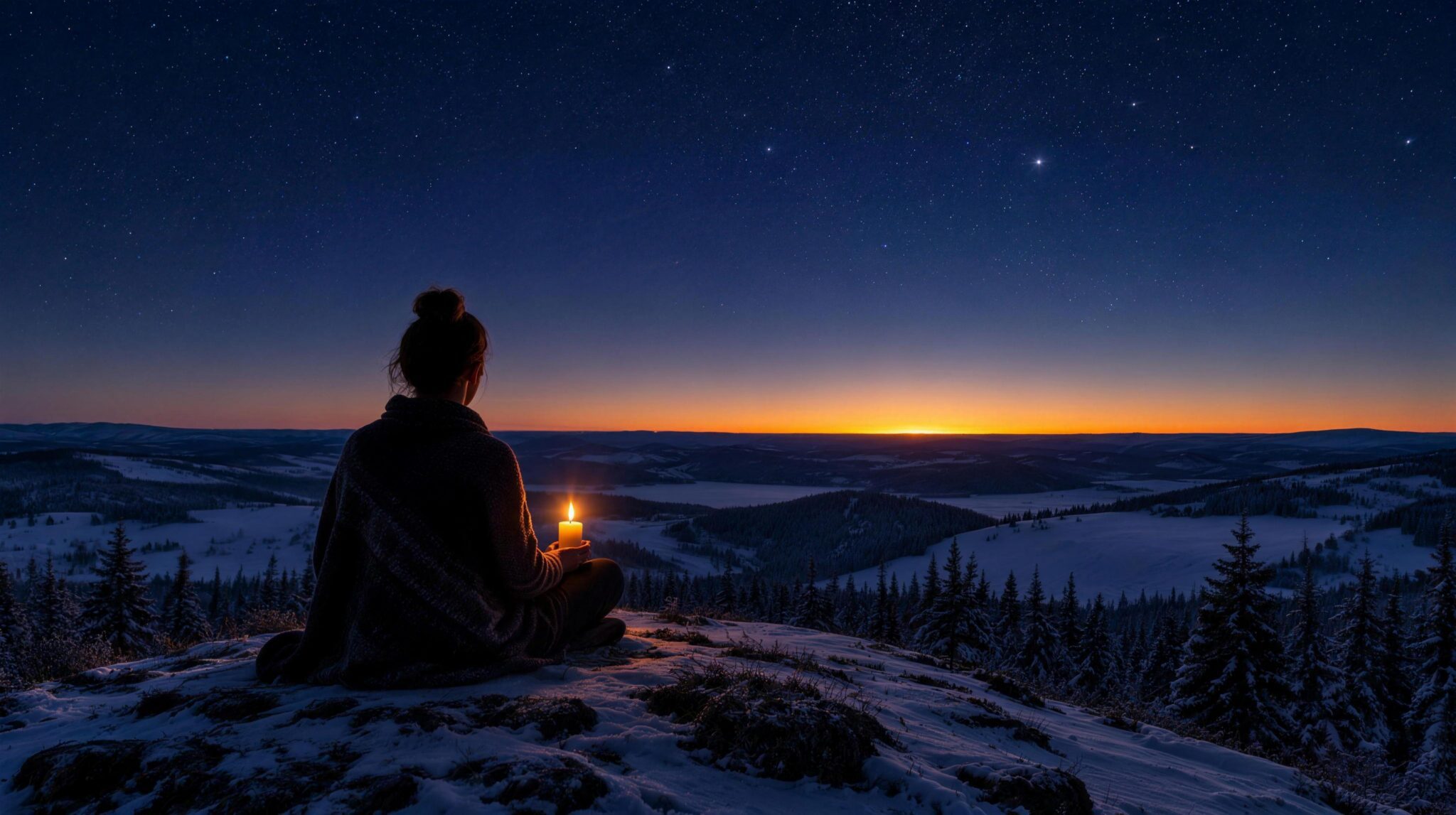
The seasons are not caused by Earth being closer to or farther from the Sun. They are caused by the tilt of Earth’s axis, which is about 23.4 degrees. As Earth travels around the Sun in a year, that tilt keeps pointing in the same direction in space. So for part of the year the Northern Hemisphere leans toward the Sun, and for part of the year it leans away.
On the December solstice the North Pole is tilted as far from the Sun as it ever gets. The Sun is directly overhead at noon on the Tropic of Capricorn, at about 23.4 degrees south of the equator. In the north, sunlight arrives at a low angle and spends the fewest hours above the horizon. In the south, the Sun is high and the days are long.
What changes by latitude
| Place | What happens on the December solstice |
|---|---|
| North Pole and the Arctic Circle | The Sun stays below the horizon, a stretch of polar night |
| Northern mid-latitudes (the United States, Europe, most of Asia) | Shortest day and longest night of the year, with the Sun low in the southern sky |
| Southern mid-latitudes (Australia, Chile, South Africa) | Longest day of the year and the start of astronomical summer |
| The Antarctic Circle and South Pole | The Sun stays up for 24 hours, the midnight Sun |
Solstice and equinox: what is the difference?
| Solstice | Equinox | |
|---|---|---|
| Meaning | The Sun stands still at its farthest point north or south | The Sun crosses the celestial equator |
| Day and night | Most unequal of the year | Close to equal |
| Count per year | Two (June and December) | Two (March and September) |
| Spiritual tone | Extremes: deepest dark and brightest light, turning inward and turning outward | Balance, harmony and weighing |
Why the earliest sunset is not on the solstice
Many people are surprised to learn that in the Northern Hemisphere the earliest sunset of the year comes before the solstice, and the latest sunrise comes in early January. The reason is that the time the Sun is highest, solar noon, shifts a little on the clock through the year. So the shortest day is on the solstice, but the earliest sunset and latest sunrise fall on different dates.
Is the Winter Solstice the First Day of Winter?
It depends on who you ask. Astronomers count the solstice as the start of astronomical winter, which runs until the March equinox. Meteorologists divide the year into four neat three-month blocks and count December 1 as the first day of meteorological winter. Traditional folk calendars across Europe often called the solstice midwinter, because the cold and dark were already well underway when it arrived.
| Way of counting | Winter begins | Winter ends |
|---|---|---|
| Astronomical | The December solstice (December 21 in 2026) | The March equinox (March 20, 2027, in the standard tables) |
| Meteorological | December 1 | The last day of February |
| Traditional folk calendar | Often about November 1, near Samhain | Often about February 1, near Imbolc |
If you follow the spiritual Wheel of the Year, you already know that the dark half begins at Samhain, the season when many traditions say the veil is thin. The winter solstice sits at the center of that dark half, about seven weeks later, like the lowest note of a long song.
Why Did Ancient People Honor the Winter Solstice?
For people who lived close to the land, the solstice was not a poetic idea. It was a survival marker. Historians often point out that in northern Europe midwinter was a time when livestock were slaughtered because they could not all be fed through the cold months, and when the beer and wine made in autumn were finally ready to drink. A feast at the darkest point of the year was practical as well as sacred.
It was also a spiritual marker. If the Sun was a source of life, then its weakest hour was a moment of fear and a moment of faith. Would the light return? People answered with fire, with song, with food and with stone. They built monuments that caught the sunrise or sunset on exactly the right day, and they gathered in them. Archaeologists often describe these places as calendars, temples and meeting halls at the same time.
Across very different cultures, the same pattern repeats:
- Light is lit on purpose. Fires, candles, torches and lamps appear in nearly every tradition.
- Evergreens come indoors. Pine, holly, ivy and mistletoe stay green when everything else sleeps, so they became symbols of life that does not die.
- Community gathers. Winter is hard to survive alone, so feasts, gift-giving and storytelling become sacred duties.
- The dead are remembered. The long night is a natural time to honor ancestors and the unseen.
- The year is reset. Many cultures treat the solstice as a new year or the seed of one.
Go Deeper with NLS Mastery: Ancient Meditation for Inner Stillness
The longest night is a natural doorway into stillness, and this course teaches you how to walk through it with the quiet of a Vedic meditation practice. Acharya Shunya teaches it in Ancient Meditation for Inner Stillness, part of NLS Mastery. Watch the course preview below.
Stonehenge and the Winter Solstice
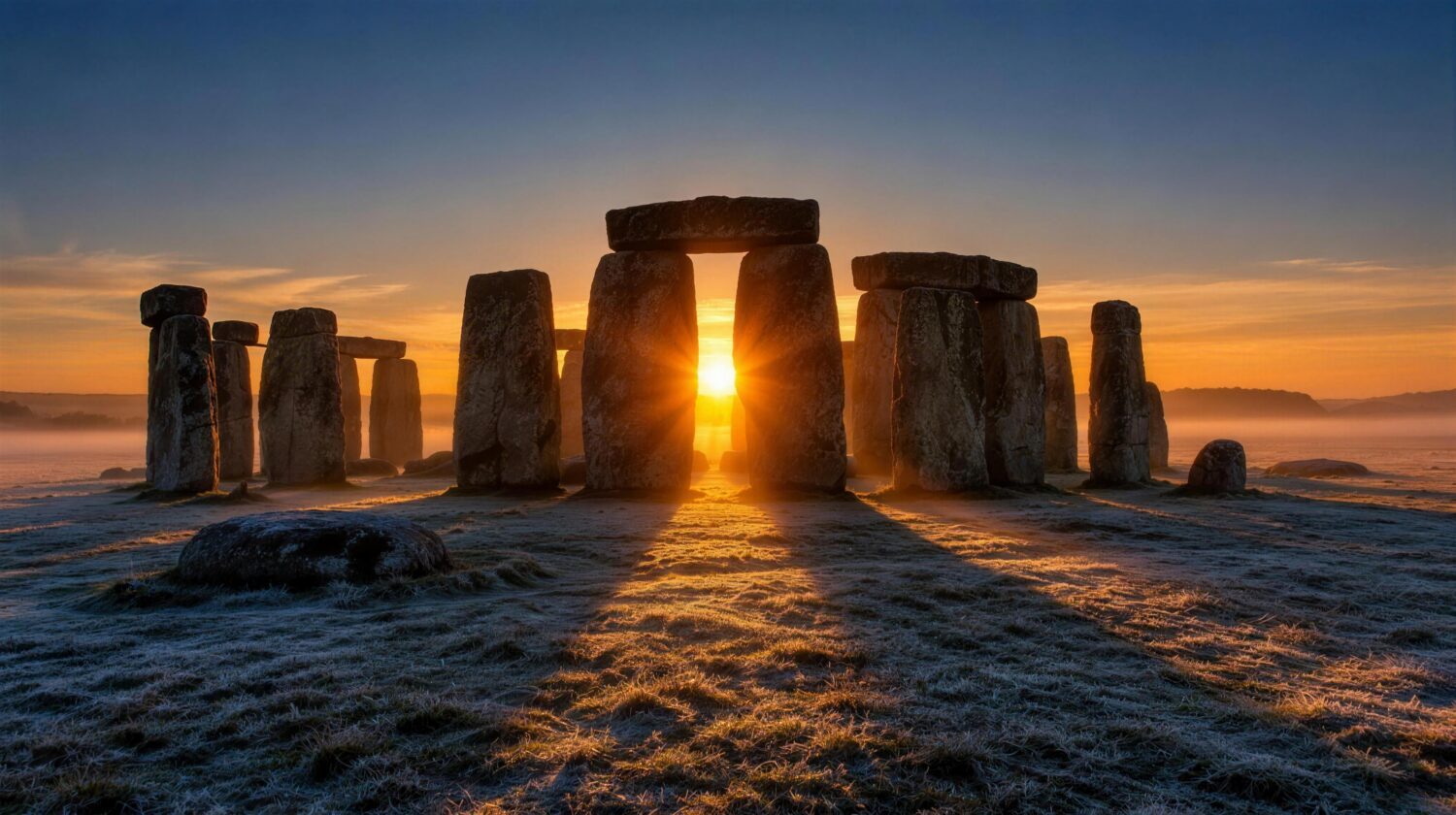
Stonehenge on Salisbury Plain in Wiltshire, England, is the monument most people picture when they think of the solstice. Construction happened in stages over many centuries. The first circular ditch and bank date to about 3000 BC, and the large sarsen stones were raised around 2500 BC. The smaller bluestones were brought from the Preseli Hills in Wales, a distance of roughly 150 miles, which is one of the great puzzles of the site.
The main axis of Stonehenge lines up with the midsummer sunrise in one direction and the midwinter sunset in the other. Many archaeologists now think the winter solstice sunset was at least as important to the builders as the summer sunrise that crowds are better known for. Standing in the center of the circle and looking toward the great trilithon on the southwest side, you face the direction where the Sun sets on the shortest day.
Evidence from nearby Durrington Walls, a large settlement about two miles from Stonehenge, adds to this picture. The researchers of the Stonehenge Riverside Project, led by Mike Parker Pearson, found large amounts of pig bones and other remains that they interpret as the leftovers of great winter feasts. In their view people came from far away at midwinter to feast, to remember their dead and to watch the year turn.
Today English Heritage opens the stones for managed access at the solstices, and thousands of people gather in the dark to see the Sun appear or disappear behind the monument. For visitors it is as much a spiritual event as a historical one: drumming, silence, candles, and the hush when the first light touches the stone.
| Fact | Detail |
|---|---|
| Location | Salisbury Plain, Wiltshire, England |
| Earliest earthworks | About 3000 BC |
| Large sarsen stones raised | About 2500 BC |
| Bluestones from | The Preseli Hills, Wales |
| Solstice focus | Midsummer sunrise and midwinter sunset along the main axis |
| Nearby feasting site | Durrington Walls, where researchers found evidence of large winter gatherings |
Newgrange and Other Ancient Solstice Monuments
Newgrange, Ireland
Newgrange in County Meath is the other great solstice monument of the British Isles, and in some ways the more astonishing one. It is a large passage tomb built around 3100 BC, which makes it older than both Stonehenge and the Egyptian pyramids. The mound sits above the River Boyne as part of the Brú na Bóinne World Heritage Site.
A long stone passage leads from the entrance into a chamber at the heart of the mound. Above the entrance is a narrow opening known as the roof-box. For a few mornings around December 21, the rising Sun shines through the roof-box and sends a thin beam of golden light along the passage floor and into the chamber. The beam lasts for roughly seventeen minutes and then slides away. The builders carved spirals and other signs into the stones, and they placed the opening so precisely that the light still arrives today, about five thousand years later.
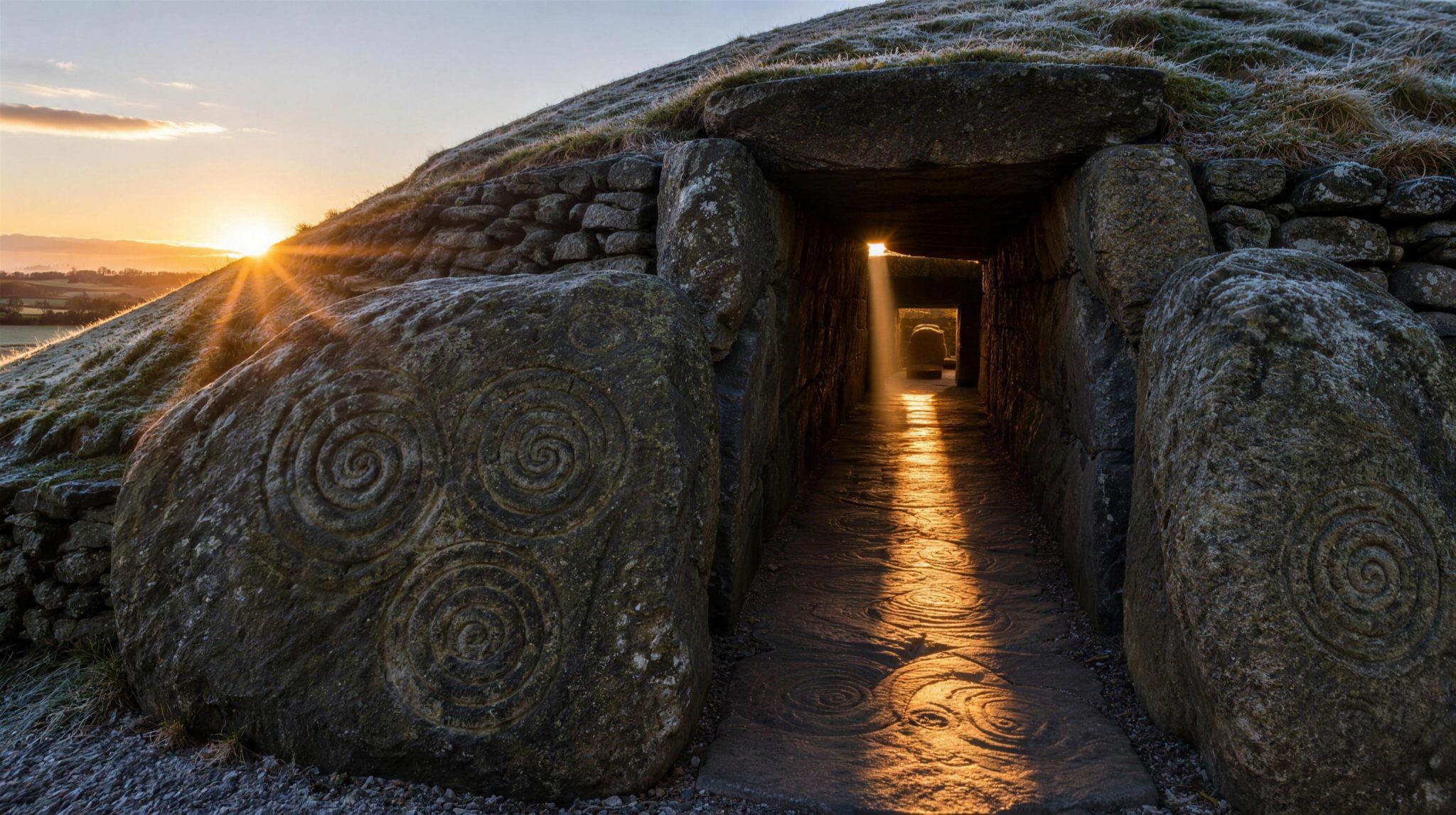
Newgrange is a tomb, so many people see the solstice beam as a message about the dead: even in the deepest dark, light enters the place of the ancestors. Places inside the chamber on solstice mornings have long been given out by lottery, and many people follow the sunrise through a live broadcast online.
Maeshowe, Orkney
Maeshowe on Mainland Orkney, Scotland, is a chambered cairn built probably around 2800 BC. In the weeks around the winter solstice, the setting Sun shines down the entrance passage and lights the back wall of the chamber. Centuries later, Norse visitors broke into the mound and left runic graffiti on its walls, a reminder that people kept coming back to these places for thousands of years.
| Monument | Place | Approximate date | Solstice connection |
|---|---|---|---|
| Stonehenge | Wiltshire, England | 3000 to 2500 BC | Midwinter sunset and midsummer sunrise along the main axis |
| Newgrange | County Meath, Ireland | About 3100 BC | Winter solstice sunrise enters the passage through the roof-box |
| Maeshowe | Orkney, Scotland | About 2800 BC | Winter solstice sunset lights the back wall of the chamber |
| Goseck Circle | Saxony-Anhalt, Germany | Neolithic | Gates thought to frame solstice sunrise and sunset |
What Is Yule? The Norse and Germanic Winter Solstice
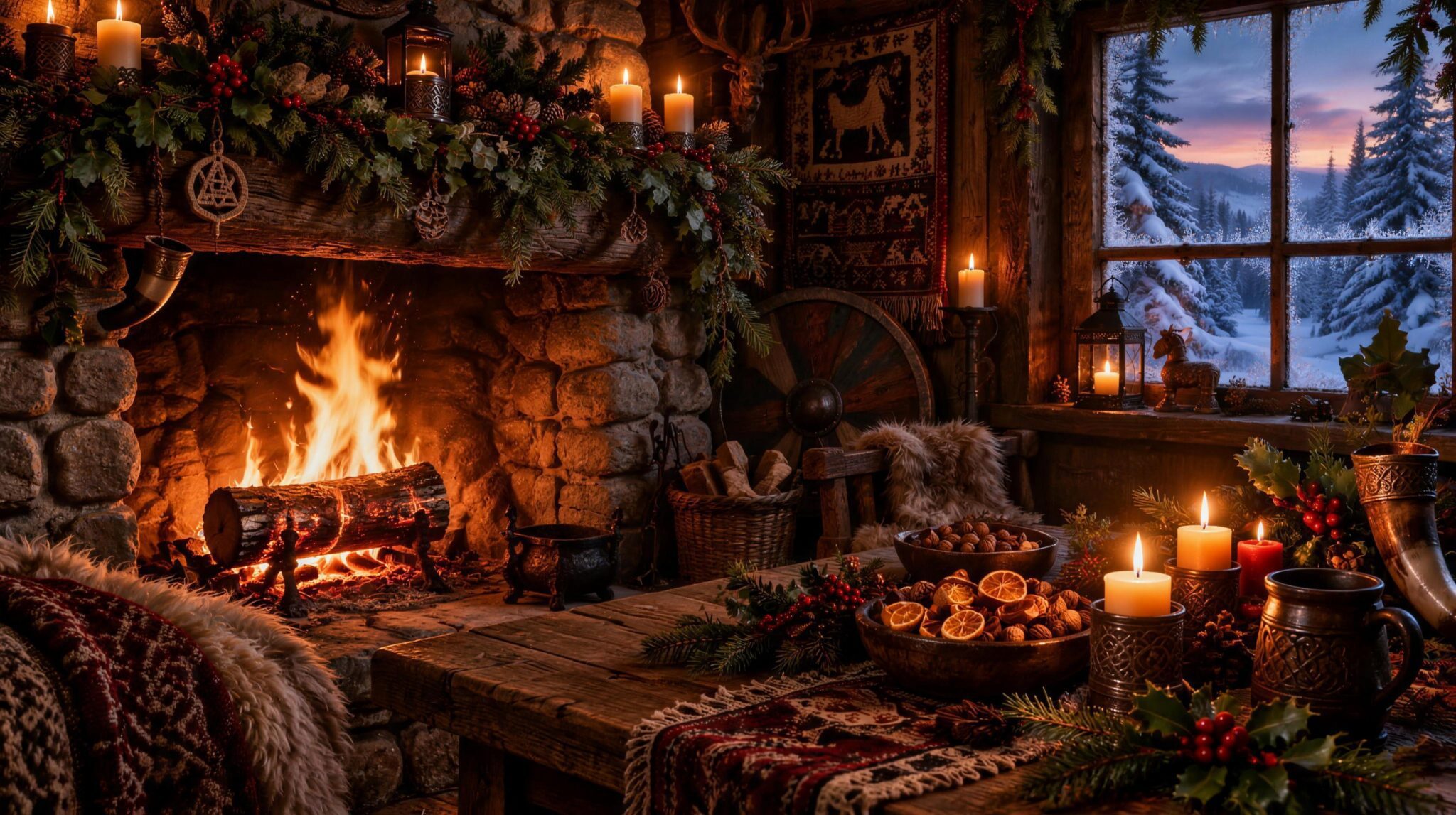
Yule is the winter festival of the pagan Germanic peoples, and it is the name most modern Pagans give to the winter solstice sabbat. The word appears as jól in Old Norse and as gēol or gēola in Old English. The oldest accounts describe two Yule months in the early Germanic calendar, centered on the winter solstice. Over centuries, Yule merged with Christmas, and the two are still entwined today, which is why we say Yuletide for the whole Christmas season.
Yule in Norse and Anglo-Saxon sources
The English monk Bede wrote about the old English calendar in his work De temporum ratione in the early 700s. He says the Anglo-Saxons named December and January after Yule, and that they began their year on what we now call December 25. He also records a night that they called Modranicht, which he translates as the night of the mothers. We return to that below.
In Norse sources, Snorri Sturluson’s Heimskringla describes Yule as a great feast with toasts to the gods and to the king. The same text says that King Haakon the Good ordered Yule to be held at the same time as the Christian Christmas, which is one of the clearest written examples of the two festivals being joined. Old Norse poetry also gives Odin the by-name Jólnir, which is usually read as a title connected with Yule. Later folklore across Scandinavia and Germany links the Yule season with the Wild Hunt, a ghostly procession of riders in the winter sky.
Mother Night (Modranicht)
Mother Night is the name many modern Heathens and Pagans give to the eve of the winter solstice or the longest night of the year. It comes from Bede’s Modranicht, which is the only direct record of the name. Scholars have suggested that the night may be connected to the matron goddesses, groups of three mother figures seen on Roman-era altars in Germanic lands, and to the female ancestral spirits that Norse sources call the dísir. The details are uncertain, but the image has become powerful: the longest night as a womb, a dark mother from whom the new light is born.
In modern practice, Mother Night is often a night of vigil. People stay awake or keep a candle burning through the dark, honor the women of their family line, sit in silence or storytelling and wait for the sunrise. It is a good example of how a thin historical record can still grow into a living spiritual practice.
The Yule log
The Yule log is a specially chosen log that is burned in the hearth during the winter festival. The first solid evidence for the tradition dates to 1184, where it appears as a Christmas Eve custom, and scholars still debate its deeper origin. Some trace it to medieval Christmas customs, and others point to older pagan Germanic, Celtic, Roman or Baltic rituals.
Customs varied from region to region. In some parts of Britain and France, families kept a piece of last year’s log to light the new one, so the fire carried from year to year as a living thread. Ashes were often kept for luck or scattered on the fields. The idea is simple and beautiful: fire passed forward through the dark.
Yule symbols and what they mean
| Symbol | Traditional meaning | Modern spiritual use |
|---|---|---|
| Evergreen boughs | Life that stays green through winter | Endurance, hope, the part of you that does not die back |
| Holly | Protection, with berries like drops of blood or fire | Guarding the home, courage in the dark half of the year |
| Ivy | Faithfulness and clinging life | Connection, loyalty, the unseen roots of family |
| Mistletoe | Sacred plant in several European traditions, linked in Norse myth to the death of Baldr | Peace, forgiveness and reconciliation |
| Yule log | A fire carried through the dark, burned in the hearth | Releasing the old year and calling in the light |
| Candles | Small suns that keep darkness company | Intention, vigil, remembrance |
| Wreath | A circle with no beginning or end | The wheel of the year, cycles of return |
The Oak King and the Holly King
In modern Pagan and Wiccan storytelling, the year is a battle between two kings. The Holly King rules the waning half of the year, and the Oak King rules the waxing half. At the winter solstice the Oak King defeats the Holly King and the light begins to grow. This story is a modern Pagan tradition shaped in the twentieth century, not a surviving ancient myth, but it gives many people a simple and moving way to feel the turning of the year.
Yule and Christmas
Christmas is celebrated on December 25, and several older festivals fell around the same time, including Roman Saturnalia and the Roman festival of the Unconquered Sun. Historians still debate how much of Christmas comes from these earlier celebrations and how much grew from within Christianity. What is clear is that the customs people cherish, including evergreens, candles, feasting and gift-giving, are old and overlap with the midwinter practices of many peoples. You do not have to choose between them. Many families now keep both: a Christmas morning and a quiet solstice night.
The Celtic and Druid Winter Solstice
Because the ancient Celtic world left almost no written record of its own, what we know comes from archaeology, later Irish and Welsh literature and the traditions of modern Druid orders. We do know that the Celtic year was often divided into a dark half and a light half, with the dark half beginning at Samhain and the light half beginning in spring. The midwinter solstice sat at the turning point of the darkness.
Some modern Druid traditions call the winter solstice Alban Arthan, which is usually translated as the Light of Arthur, and honor it as the birth of the new Sun. The language and symbols are modern, but they draw on older Welsh and Irish themes: the sacred oak, the mistletoe, the hidden sun in the dark womb of the earth. At Newgrange the connection with the ancestors is physical. The solstice light enters the place of the dead, and in the Irish imagination the passage tombs were also doorways to the Otherworld.
If you would like to hear a Celtic soul tradition explained in an interview, retired intensive care nurse Judy Hilyard talks with Alex Ferrari about the Celtic idea of the Anam Cara, the soul friend, and her own account of journeys beyond the veil.
Ancient Celtic Mysticism with Judy Hilyard
Retired intensive care nurse Judy Hilyard shares the Celtic soul companion tradition known as Anam Cara and her own account of journeys beyond the veil.
For a deeper look at the time of year that leads into the solstice, our guides to Samhain and building an ancestor altar are good companions to this article.
Dongzhi: The Winter Solstice in China and East Asia
In China the winter solstice is called Dongzhi. It is the 22nd of the 24 solar terms of the traditional Chinese calendar, and it begins when the Sun reaches 270 degrees of celestial longitude. In everyday use Dongzhi means the day of the solstice itself, and the solar term runs until about January 5.
The philosophy behind Dongzhi is the balance of yin and yang. In this view the winter solstice is the moment when yin, the dark, cold and receptive force, reaches its fullest strength, and yang, the bright, warm and active force, begins to return. A famous saying holds that the winter solstice is as important as the New Year. Historically, emperors performed rites at the Altar of Heaven in Beijing on this day, and families gathered to honor their ancestors and to share a meal.
The I Ching connects with the same idea. Hexagram 24, Fu, is usually translated as Return. Its image is a single yang line appearing at the bottom of five yin lines, and it is traditionally associated with the winter solstice. It is a small, wise image: the first spark of light appears at the very bottom of the dark, quietly, before anyone can see it.
Dongzhi foods and customs
- Tangyuan. In southern China, families eat round glutinous rice balls, often in sweet soup. Their round shape stands for reunion and wholeness.
- Dumplings. In northern China, dumplings are the traditional winter solstice food. A popular legend ties the custom to a physician who gave dumplings to the poor to protect their ears from frostbite.
- Ancestor honoring. In some regions, families make offerings at the family altar or visit ancestral graves.
- Nine-nines cold counting. A folk custom divides the cold season into nine periods of nine days, counted from the solstice, until spring arrives.
Dongzhi also has cousins across East Asia. In Japan, the solstice is called Tōji, and many families take a hot bath with yuzu citrus fruit and eat kabocha squash for good health through the winter. In Korea, Dongji is marked with red bean porridge, which is traditionally eaten to drive away bad luck and ill spirits.
For a spoken view of how Chinese metaphysics sees time, cycles and the years ahead, Joey Yap explains Bazi, the four pillars of destiny, and why he says the I Ching is a philosophy about how to live.

Chinese Astrology’s Predictions for the Coming Decade with Joey Yap
Joey Yap teaches Chinese metaphysics and explains Bazi, Qi Men Dun Jia, and why he says the I Ching is a philosophy of how to live.
Inti Raymi: The Festival of the Sun in Peru (and Why It Happens in June)
Inti Raymi is the Festival of the Sun of the Inca. It honored Inti, the sun god and the most venerated deity in Inca religion, and it celebrated the winter solstice and the Inca new year, the time when the hours of light begin to lengthen again. According to the chronicler Inca Garcilaso de la Vega, it was the most important festival of the Inca Empire, held in the main square of Cusco.
Here is the detail that surprises many readers: Inti Raymi takes place in June, not December. Peru is in the Southern Hemisphere, where the seasons are reversed. The June solstice is the winter solstice there, and in 2026 it falls on June 21 at 08:25 UTC. So the same turning point that Europeans honored in December, the Inca honored in June.
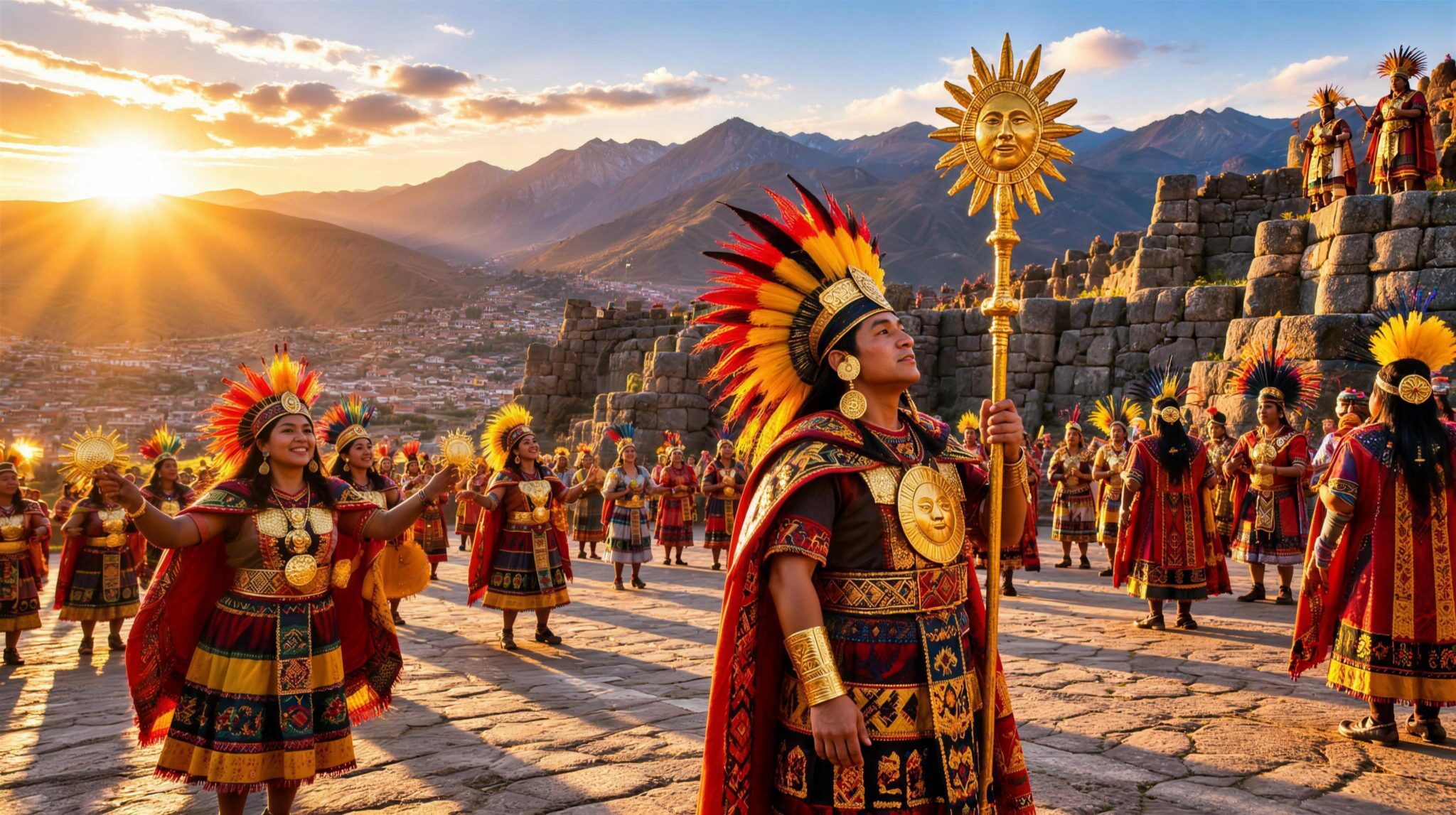
Accounts from the colonial era describe fasting, purification and ceremonies at dawn in which the Inca ruler greeted the rising Sun. Spanish colonial authorities suppressed the festival in the sixteenth century. In 1944 it was revived as a theatrical reenactment, and today it is staged each year on June 24 at the great stone site of Sacsayhuamán above Cusco, with thousands of performers and spectators. The modern version is a cultural pageant based on historical sources, and it is also a living expression of Andean pride.
Alberto Villoldo, a medical anthropologist who says he spent about twenty-five years studying with shamans in the Andes, Tibet and the Himalayas, spoke with Alex Ferrari about what he learned from those traditions. His interview offers a window into the shamanic approach to healing that grew in the same mountain world where Inti Raymi was born.

The Ancient Path to Healing Your Body with Alberto Villoldo
Medical anthropologist Alberto Villoldo shares his journey from the Amazon to the Andes and Himalayas and what he says modern science and ancient shamanic wisdom share about the body.
Soyal: The Hopi and Zuni Winter Solstice Ceremony
Soyal is the winter solstice ceremony of the Zuni and Hopi peoples of the American Southwest, held around December 21. In the words of the traditional description, participants ceremonially bring the Sun back from its long slumber, mark the beginning of a new cycle of the year and work on purification. Prayer sticks, called pahos, are made before the ceremony to bless the community, including homes, animals and plants. The sacred underground kiva chambers are ritually opened, and this marks the beginning of the season of the katsinam, the spirit beings who are said to visit the villages.
Soyal reminds us that in many Indigenous traditions the Sun is not simply watched, it is helped. The ceremony is an act of partnership with the cosmos: people do their part so that the world can turn. This is a very different feeling from simply waiting for the solstice to pass.
A note on respect: many details of Hopi and Zuni ceremonies are private, and some are closed to visitors. If you want to learn more, look for sources written or approved by Hopi and Zuni people themselves, follow any guidelines for visitors, and do not copy ceremonies you were not invited into. You can honor the same turning of the Sun in your own way.
Saturnalia and Sol Invictus: The Roman Winter Solstice
Saturnalia was the great winter festival of ancient Rome, held in honor of the god Saturn. It began on December 17 in the Julian calendar and was later extended to a week of festivities, ending around December 23. There was a sacrifice at the Temple of Saturn in the Roman Forum, a public banquet, and then private gift-giving and a joyful, carnival-like mood in which normal social rules were turned upside down. Masters served their slaves at the table, gambling was permitted, and a mock ruler, the King of Saturnalia, gave playful orders. The poet Catullus called it the best of days. Gifts were often small clay or wax figurines called sigillaria and humorous presents.
Later Rome added a different festival. The emperor Aurelian promoted the cult of Sol Invictus, the Unconquered Sun, in 274 AD. A Roman calendar from 354 AD lists December 25 as the birthday of the Unconquered. Scholars still debate how this connects to the date of Christmas, but the theme is unmistakable: at the darkest time of year, Roman culture celebrated the Sun that does not die.
What Saturnalia teaches us spiritually is the value of play. Joyful reversal, shared meals and generosity are not distractions from the solstice, they are part of it. A people who can laugh in the dark are a people who will survive it.
More Winter Solstice Traditions Around the World
Yalda Night in Persia
Shab-e Yalda, or Yalda Night, is celebrated in Iran and by Persian-speaking communities on the longest night of the year. Families gather, stay awake, eat pomegranates, watermelon and nuts, and read poetry, often the verses of Hafez. The red of the fruit stands for the glow of dawn and the cycle of life. It is one of the warmest and most accessible solstice customs in the world: stay up together until the light returns.
Saint Lucia and the festival of light in Scandinavia
Saint Lucia’s Day on December 13 is a major festival in Sweden and across the Nordic countries. A girl in a white gown wears a crown of candles and leads a procession of singers. The date reflects the old Julian calendar, in which December 13 was close to the winter solstice, and the poet John Donne wrote of St. Lucy’s Day as the shortest day of the year. Lucia means light, and the festival is a bright song in the dark.
Uttarayana in India
In Hindu tradition, Uttarayana is the period when the Sun travels northward, while Dakshinayana is the southward journey. In the Mahabharata, the warrior Bhishma waits on a bed of arrows for Uttarayana before he leaves his body, because this northward turning is considered auspicious. Uttarayana is celebrated at the festival of Makar Sankranti in mid-January, which is later than the astronomical solstice because of the way the Hindu sidereal calendar is reckoned.
The Twelve Nights (Rauhnächte)
In parts of Germany, Austria and Switzerland, folk tradition speaks of the twelve nights between Christmas and Epiphany as a special, charged time outside ordinary days. People burn incense in homes and stables, pay attention to dreams and, in some customs, treat each of the twelve nights as a preview of one month of the coming year. It is a gentle, mystical way to carry the solstice quiet across the turn of the year.
Winter Solstice Traditions Compared
| Tradition | Culture or place | Timing | Core meaning | Signature custom |
|---|---|---|---|---|
| Yule | Germanic and Norse peoples, modern Paganism | Around December 21, historically a longer midwinter season | Rebirth of the Sun, feasting and kinship | Yule log, evergreens, Mother Night vigil |
| Dongzhi | China and East Asia | About December 21 to 22 | Yin at its peak, yang returning | Tangyuan or dumplings, honoring ancestors |
| Inti Raymi | Inca, Cusco, Peru | June (the southern winter solstice) | Honoring the Sun god and the new year | Dawn ceremonies, reenactment at Sacsayhuamán |
| Soyal | Hopi and Zuni peoples | Around December 21 | Bringing the Sun back and purification | Prayer sticks, opening of the kivas |
| Saturnalia | Ancient Rome | December 17 to 23 | Freedom, generosity and play | Gift-giving, banquets, role reversal |
| Sol Invictus | Late Roman Empire | December 25 (calendar of 354 AD) | The Unconquered Sun | Imperial festivals and games |
| Yalda Night | Iran and Persian-speaking communities | The longest night, about December 20 to 21 | Staying awake together until the light returns | Pomegranates, watermelon, Hafez poetry |
| Newgrange | Ancient Ireland | Winter solstice sunrise | Light entering the place of the ancestors | Sunrise beam in the passage tomb |
| Saint Lucia | Sweden and the Nordic countries | December 13 | Light in the dark | Candle crown procession |
| Uttarayana | India | Mid-January (Makar Sankranti) | The Sun begins its northward journey | Kite flying, bathing in rivers, sharing sesame sweets |
| Tōji | Japan | About December 21 to 22 | Health and warmth through winter | Yuzu bath, kabocha squash |
| Dongji | Korea | About December 21 to 22 | Driving away ill spirits | Red bean porridge |
What About the Southern Hemisphere?
The December solstice is the summer solstice in the Southern Hemisphere, the longest day of the year. People in Australia, New Zealand, South Africa, Chile and Argentina celebrate the peak of the light in December, and mark their winter solstice in June, when the Northern Hemisphere has its summer solstice.
| Event | Northern Hemisphere | Southern Hemisphere |
|---|---|---|
| December solstice (Dec 21, 2026) | Winter solstice, shortest day | Summer solstice, longest day |
| June solstice (June 21, 2026) | Summer solstice, longest day | Winter solstice, shortest day |
| Yule | December | Many Southern Pagans celebrate it in June, matching the local winter |
| Litha | June | Often celebrated in December |
| Inti Raymi | Not applicable | June, in Cusco, Peru |
In New Zealand, the Māori new year festival Matariki falls in midwinter. It is marked by the rising of the Pleiades star cluster, usually in June or July, and it is a time to remember those who have passed, celebrate the present and look forward to the year ahead. The theme is the same one found in the north at Yule: honor the dark, then turn toward the light.
If you live in the south, this article still works for you. Swap the dates, and use the same practices on your June solstice. The December solstice becomes a celebration of the Sun at its fullest, and a wonderful time to give thanks.
What Is the Spiritual Meaning of the Winter Solstice?
The spiritual meaning of the winter solstice is the promise that darkness is not the end. At the very moment the night is longest, the light turns and begins to grow. That is why the solstice has been read, in so many traditions, as a symbol of rebirth, hope and the quiet beginning of something new.
The return of the light
The most direct meaning is also the oldest: the Sun is coming back. After weeks of shrinking days, the solstice says that the tide has turned. The change is tiny, a minute or two of extra daylight in the first days, but it is real, and every tradition built a festival around that tiny change. The lesson for the heart is that the first sign of light does not need to look like much. It only needs to be real.
Death and rebirth
The solstice is a symbolic death and birth at once. The old year, the old self and the old story reach their lowest point, and something new is conceived in the dark. Newgrange shows this beautifully: a tomb that fills with light on the one morning of the year. The Yule log, burned and then saved as an ember for next year, shows the same cycle. If you are going through an ending right now, the solstice does not ask you to hurry. It asks you to trust that the next beginning is already forming underground. For more on the stages of inner change, see our guides to spiritual awakening and the seven stages of a spiritual awakening.
Rest and the fertile dark
We tend to treat darkness as a problem. Nature treats it as a workshop. Seeds sleep in the soil, bears hibernate, trees pull their energy into their roots. The long night invites us to do the same: to sleep more, say no more often, simplify and rest without guilt. In Katherine May’s book Wintering, winter is also a name for the hard seasons of life, and the book argues that resting and retreating during them is a wise act, not a failure. Nothing in nature blooms all year.
Ancestors and the unseen
Almost every culture that honors the solstice also honors the dead. Newgrange is a tomb. Dongzhi involves ancestors. Mother Night honors the mothers of the line. The longest night is a natural time to feel the presence of those who came before you. If this resonates, our guide to the ancestor altar and the article on why the veil is thin give gentle ways to listen and remember.
Community and warmth
The solstice is also a social festival. Saturnalia, Yule feasts, tangyuan dinners and Yalda gatherings all bring people together around food and fire. A spiritual practice does not have to be solitary. Sharing a meal on the longest night may be the most powerful ritual of all.
The Winter Solstice, Inner Darkness and the Dark Night of the Soul
The solstice is an outer event, but its message is inner. Each of us has our own long nights: grief, burnout, confusion, endings that have not yet become beginnings. The darkness of the year gives us permission to look at the darkness within us.
The phrase dark night of the soul comes from the sixteenth-century Spanish mystic Saint John of the Cross, whose poem Noche oscura describes a soul walking in darkness toward union with the divine. Today the phrase is used for any season of spiritual disorientation in which old beliefs fall away before new ones arrive. Our full guide to the dark night of the soul describes its signs and how people move through it. A dark night is not the same as clinical depression, and the two can overlap, so it is wise to seek professional support when you are unsure.
The psychologist Carl Jung used the image of a night sea journey for the descent into the unconscious, where a person meets what has been hidden and returns changed. Many modern spiritual teachers use the winter solstice as a time to do this kind of descent gently, through journaling, meditation and what is often called shadow work: looking honestly at the parts of ourselves we usually push out of sight.
Kyle Cease speaks with Alex Ferrari about this very experience of collective and personal darkness. He says that the light is so bright it brings up all the lies, and that it can feel like falling when old patterns come to the surface. He also says that when you follow your soul instead of your fear, the fear goes away. You do not have to agree with every idea in a conversation to find something in it that helps you see your own night more clearly.

Humanity’s Dark Night of the Soul with Kyle Cease
Author Kyle Cease shares why he says the light is so bright it brings up the lies, and why he says to move based on your soul instead of your fear.
A caring note. The dark months can be heavy. If you are struggling with low mood, grief, anxiety or thoughts of harming yourself, please reach out to a licensed professional or a crisis line. In the United States you can call or text 988 to reach the Suicide and Crisis Lifeline at any hour. If you are elsewhere, your local emergency number or health service can connect you with help. A spiritual practice can sit beside professional care, never in place of it.
Winter Solstice Astrology: The Sun Enters Capricorn
In Western tropical astrology, the Sun enters Capricorn at the moment of the December solstice. Capricorn is a cardinal earth sign, traditionally ruled by Saturn, and its themes are structure, discipline, responsibility, long-term goals and mastery over time. The symbolism fits the season: the year is gathering itself into form, and the work of the dark months is to build something that will last.
Astrologers often read the solstice chart, a map of the sky for the exact moment of the solstice, as a forecast for the season ahead. If you enjoy this layer of meaning, our guide to astrology, signs, birth charts and cosmic cycles is a good starting point, and our article on Scorpio season explores the deeper, darker part of the autumn wheel that leads to this turning.
Winter Solstice Rituals and Practices
You do not need a stone circle or a coven to honor the solstice. A few chosen acts, done with attention, are enough. Choose what feels right and let the rest go.
1. Light a candle at the turning
The moment of the 2026 solstice is 2:50 p.m. Central, which is still daylight in the Americas. You can pause at that minute for three quiet breaths, then light a candle at sunset as a small sun that keeps you company through the night. Say aloud what you are letting go and what you are inviting in.
2. Burn a Yule log or a small fire
If you have a hearth, fire pit or safe outdoor space, burn a log with intention. Write what you are releasing on a slip of paper and place it in the fire. If you do not have a hearth, use a heatproof bowl with a tea light and a small piece of paper, and keep water nearby. Follow all fire safety rules: never leave a flame unattended, and keep it away from curtains, children and pets. Some families keep a small piece of the log to light next year’s fire.
3. Keep a Mother Night vigil
For a deeper practice, stay awake through the longest night, or keep a candle burning as you sleep in shifts. In 2026, the solstice moment falls in the afternoon in the Americas, so the longest night is the night of December 21 into December 22. Sit with your family line, with the women who raised you, or with your own inner mother. Journaling, quiet music or storytelling suit the hours.
4. Greet the first sunrise
Go outside before dawn and watch the sky change. You may wish to face east, hold a candle or a cup of warm tea, and say thank you. If you cannot go outside, sit at a window. This simple ritual connects you to every person who ever waited for the light.
5. Cleanse and decorate the home
Bring in evergreen boughs, holly and ivy. Open the windows for a few minutes, tidy a room that has been weighing on you, and light incense or simmer citrus and cinnamon on the stove. If you like water rituals, see our guide to the spiritual cleansing bath for a gentle step-by-step method.
6. Honor your ancestors
Set out a photograph, a candle and a small plate of food, and say the names of those who came before you. Our guide to the ancestor altar and the dumb supper explains how people have done this with respect for centuries.
7. Build a four-element solstice altar
A small altar can be as simple as a tray. Use a candle for Fire, a stone or a sprig of evergreen for Earth, a bowl of water for Water and incense or a feather for Air. For the meaning of each, read our guide to the four elements of nature.
8. Spend time in nature
Take a short walk outside, even in the cold. Touch a tree, notice the bare branches and the evergreens, and feel your feet on the ground. If you want to explore this practice further, our complete guide to earthing and grounding shows how people reconnect with the earth.
9. Share a seasonal meal
Choose warm, simple foods that echo the Sun: oranges, apples, root vegetables, soups, dumplings or sweet rice balls. Invite a friend or neighbor who might otherwise be alone. Generosity is one of the oldest solstice rituals.
A Simple Timeline for Solstice Day and Night
Here is a flexible schedule for December 21, 2026, using Central Standard Time. Adjust it to your own time zone and your own energy.
| Time | Practice | Purpose |
|---|---|---|
| Morning | Light a candle and set a simple intention for the day | Begin the day of the shortest light with intention |
| 2:50 p.m. | Pause for three breaths at the exact moment of the solstice | Mark the turning point |
| Sunset | Turn off screens, light candles and fire | Welcome the longest night |
| Evening | Share a meal, tell stories, give thanks | Community and warmth |
| Late night | Journal, meditate and honor ancestors | Turn inward |
| Midnight | Five minutes of silence in the dark | Sit with the deepest point of the night |
| Before dawn | Make tea, go outside or to a window | Wait for the light |
| Sunrise, December 22 | Greet the first sunrise after the solstice | Welcome the returning light |
A Winter Solstice Meditation for the Longest Night
This is a gentle fifteen-minute meditation you can do at sunset, at midnight or before dawn. Read it through once, then follow it from memory or record it in your own voice. If you want more guided practices, see our collection of meditations for spiritual awakening.
- Arrive. Sit or lie down somewhere warm. Dim the lights and light a single candle if you can. Let your shoulders drop. Breathe in through your nose for four counts and out through your mouth for six, five times.
- Welcome the dark. Close your eyes. Imagine the night as a soft blanket, not an enemy. Say silently: I am safe in the dark. The dark is a place of rest.
- Descend to the seed. Picture yourself walking down a quiet path into the earth, like a seed going into soil. You reach a warm, still chamber under the ground. Here nothing is asked of you.
- Release. Bring to mind one thing from this year that you are ready to put down: a resentment, a fear, a role, a habit. See it as a stone in your hand. Place it on the floor of the chamber. Breathe out and let it go.
- Rest in the stillness. For two or three minutes, simply rest in the silence. If thoughts come, notice them and let them float by. You are not trying to fix anything.
- Find the spark. In the center of the dark, imagine a tiny point of light, as small as a seed of gold. It glows in your chest. It is yours. It has never gone out.
- Let it grow. With each breath, the light grows a little, like the daylight after the solstice. Feel it fill your chest, your arms, your whole body. Notice the quality of it: warm, calm, steady.
- Name one intention. Choose one simple word or phrase for the season ahead, such as trust, rest, courage or return. Repeat it three times.
- Return. Take three slow breaths. Wiggle your fingers and toes. When you open your eyes, look at your candle, thank the dark and thank the light, and write down your word.
If you would like to deepen your meditation practice with a teacher, the NLS Mastery course on Vedic meditation above is a beautiful companion for the season, and you can also try a free class first on our free masterclasses page.
Winter Solstice Journaling Prompts
Journaling on the solstice is a way to harvest the year and plant the next one. Set a timer for twenty to thirty minutes, light a candle and write by hand if you can. There are no wrong answers. Choose a few prompts, not all of them.
Looking back on the year
- What was the biggest lesson of this year?
- What did I let in that I would like to keep?
- What did I let in that I would like to release?
- Where did I grow, even if no one noticed?
- What am I proud of that I have not yet celebrated?
- What did this year take from me, and what did it give back?
Sitting with the dark
- What is my own longest night right now?
- What am I afraid to look at honestly?
- What would I say to a friend who was feeling what I am feeling?
- What part of me is asking for rest?
- If my darkness could speak, what would it want me to know?
Seeds of light
- What is the smallest spark of hope I can feel right now?
- What is one thing I am ready to begin, even in a small way?
- What gives me warmth when the world feels cold?
- Who are the people who are my light, and have I told them?
- What would it mean to trust that the light is returning?
- If I could plant three seeds this winter, what would they be?
Ancestors and gratitude
- Which ancestor or elder do I want to honor tonight, and what would I say to them?
- What traditions from my family do I want to carry on?
- What am I most grateful for right now?
For the sunrise
- What is the one word I want to carry into the next season?
- What is one promise I can make to myself that I can keep?
- What does the returning light look like in my life?
Solstice Intentions or New Year Resolutions?
Many people find the winter solstice a gentler, more honest time to set intentions than January 1. The old year has not yet ended, so you are not pressured to reinvent yourself overnight. The darkness encourages reflection. And the light is just beginning to return, which matches how real change actually works: slowly, with small gains.
How to set solstice intentions
- Release first. Write a list of what you are leaving behind. Burn it safely or tear it up.
- Name a theme. Choose one word for the next season rather than ten goals.
- Write three small seeds. Each one should be something you can begin within a week.
- Say it out loud. Speaking an intention makes it real. For a deeper look at how intention shapes your life, see our glossary entry on manifestation.
- Come back at the light. Revisit your intentions on the first day of spring, the March equinox.
If you are working on kindness toward yourself as part of this season, our guide to self love offers simple practices that pair well with a quiet solstice night.
Winter Solstice, Light and Your Mood
Short days can affect energy, sleep and mood. Some people notice a seasonal pattern of low mood in the dark months, and it is recognized by health professionals. Simple supports such as getting outside in daylight, moving your body, keeping a steady sleep routine, eating warm nourishing food and staying in touch with other people can help many people feel steadier.
If low mood is heavy, lasts for weeks, or makes daily life hard, please speak with a doctor or licensed therapist. They can talk with you about options that fit your body and your life. If you are in crisis, please call or text 988 in the United States, or contact your local emergency services or crisis line. This article is spiritual and educational, and it is not medical advice.
Common Winter Solstice Myths and Misunderstandings
| Myth | What is true |
|---|---|
| The solstice is the coldest day of the year. | The coldest weeks in the Northern Hemisphere usually come in January and February, because land and oceans release heat slowly. |
| Earth is farthest from the Sun at the winter solstice. | Earth is actually closer to the Sun in early January. Seasons come from axial tilt, not distance. |
| The Sun really stands still. | The word comes from how the Sun seems to pause on the horizon for a few days. It is an effect of our viewpoint. |
| The earliest sunset is on the solstice. | In the Northern Hemisphere the earliest sunset comes before the solstice, and the latest sunrise comes after it. |
| The solstice is always December 21. | It can fall on December 20, 21 or 22 depending on the year. In 2026 it is December 21 in UTC, and December 22 in time zones far east of Greenwich. |
Winter Solstice Calendar: Dates to Know in 2026
Here is a season calendar that puts the solstice in context. Dates for traditional festivals follow common modern practice, and a few vary by region or tradition.
| Date | Event | Tradition |
|---|---|---|
| October 31 to November 1 | Samhain, the start of the dark half of the year | Celtic and modern Pagan; see our Samhain guide |
| December 1 | Meteorological winter begins | Meteorology |
| December 13 | Saint Lucia’s Day, the festival of light | Sweden and the Nordic countries |
| December 17 to 23 | Saturnalia | Ancient Rome |
| Night of December 20 to 21 | Yalda Night, the traditional longest night | Persia and Iran |
| December 21, 20:50 UTC (2:50 p.m. CST) | The December solstice | Astronomy; Yule, Dongzhi, Soyal and many others |
| Night of December 21 to 22 | The longest night in the Americas; Mother Night vigil | Norse, Germanic and modern Pagan |
| December 22 | Dongzhi day in East Asian time zones; first sunrise after the solstice | Chinese, Japanese and Korean traditions |
| December 25 | Christmas; the Sol Invictus date in the Roman calendar of 354 AD | Christian and Roman |
| December 25 to January 5 | The Twelve Nights | Germanic folk tradition |
| Early January | Earth reaches its closest point to the Sun | Astronomy |
| Mid-January | Makar Sankranti, the start of Uttarayana | Hindu tradition |
| February 1 to 2 | Imbolc, the first stirrings of spring | Celtic and modern Pagan |
| March 20, 2027 | The March equinox, the astronomical start of spring | Astronomy |
Books for Your Winter Solstice Season
If you want to read more, these five books make a thoughtful shelf for the season. The links go to Amazon, and we may earn a small commission at no cost to you.
The Winter Solstice: The Sacred Traditions of Christmas by John Matthews
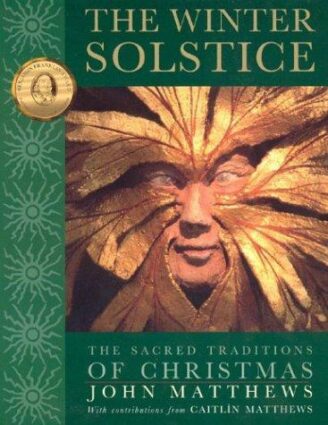
A readable exploration of the customs, myths and sacred roots of the midwinter season, from ancient solstice festivals to modern Christmas. A good first book for the curious. See it on Amazon.
Yule: A Celebration of Light and Warmth by Dorothy Morrison
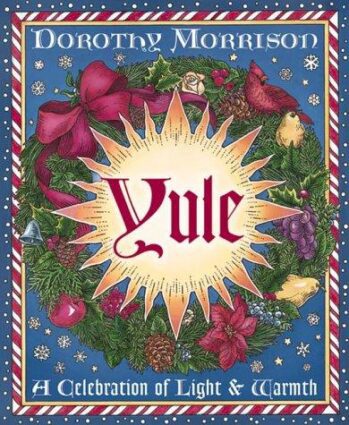
A hands-on guide to celebrating Yule as a modern Pagan, with rituals, crafts, recipes and ideas for making the season your own. See it on Amazon.
The Stations of the Sun by Ronald Hutton

A scholarly history of the ritual year in Britain by a professor of history. It is the book to read when you want to separate documented history from modern legend. See it on Amazon.
Wintering by Katherine May
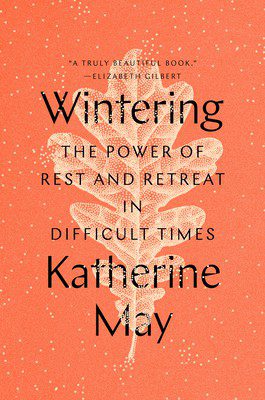
A gentle memoir and meditation on treating the hard seasons of life as winters: times to rest, retreat and heal. A beautiful companion for the longest night. See it on Amazon.
The Dark Night of the Soul by Gerald G. May
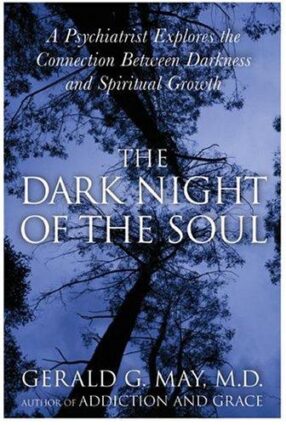
A psychiatrist’s guide to the dark night described by Saint John of the Cross, written to help modern readers tell the difference between spiritual darkness and depression. See it on Amazon.
Frequently Asked Questions About the Winter Solstice
When is the winter solstice in 2026?
The winter solstice in 2026 is on Monday, December 21, at 20:50 UTC. It is the shortest day and longest night of the year in the Northern Hemisphere.
What time is the winter solstice 2026 in Central time?
The 2026 winter solstice happens at 2:50 p.m. Central Standard Time on December 21. That is 3:50 p.m. Eastern, 1:50 p.m. Mountain and 12:50 p.m. Pacific.
What is the winter solstice?
The winter solstice is the moment when a hemisphere is tilted farthest from the Sun, producing the shortest day and longest night of the year. It happens near December 21 in the Northern Hemisphere and near June 21 in the Southern Hemisphere.
Why is the winter solstice the shortest day of the year?
Earth is tilted about 23.4 degrees on its axis. On the December solstice the Northern Hemisphere is tilted farthest from the Sun, so the Sun takes its lowest, shortest path across the sky.
Is the winter solstice the first day of winter?
Astronomically, yes. The solstice marks the start of astronomical winter, which ends at the March equinox. Meteorologists count December 1 as the first day of winter, and many folk traditions called the solstice midwinter.
What is the difference between Yule and the winter solstice?
The winter solstice is an astronomical event. Yule is a winter festival of the Germanic peoples that is celebrated around the solstice, and the name is also used for the solstice sabbat in modern Paganism. For the full story, see our guide to Yule.
What is Mother Night?
Mother Night is the name many modern Pagans and Heathens give to the longest night of the year. It comes from Bede, who recorded that the Anglo-Saxons called the night around December 25 Modranicht, the night of the mothers.
What is the spiritual meaning of the winter solstice?
The spiritual meaning is the return of light after the longest dark. Traditions treat it as a time of rebirth, rest, honoring ancestors, releasing the old year and planting quiet intentions for the next cycle. Our guide to the dark night of the soul explores the inner side of the darkness.
What is the Yule log and why is it burned?
The Yule log is a special log burned in the hearth during the winter festival. The first solid evidence of the custom dates to 1184, and its deeper origins are debated. Many families see it as a way to carry fire and light through the dark.
What happens at Stonehenge on the winter solstice?
Crowds gather at Stonehenge to watch the Sun set, and sometimes rise, along the monument’s main axis. Many archaeologists believe the midwinter sunset was especially important to its builders. English Heritage manages access at the solstices.
What happens at Newgrange on the winter solstice?
For a few mornings around December 21, the rising Sun shines through the roof-box above the entrance of Newgrange and lights the chamber of the 5,000-year-old passage tomb for roughly seventeen minutes.
What is Dongzhi and what do people eat?
Dongzhi is the Chinese winter solstice festival and the 22nd solar term. In southern China people traditionally eat tangyuan, sweet glutinous rice balls, and in northern China they eat dumplings.
When is Inti Raymi and why is it in June?
Inti Raymi, the Inca Festival of the Sun, is celebrated around the June solstice. Peru is in the Southern Hemisphere, where June is winter, so it marks the local winter solstice. The modern reenactment is held on June 24 in Cusco.
How can I celebrate the winter solstice at home?
Light a candle at sunset, share a warm meal, burn a Yule log or a tea light safely, write in a journal and watch the first sunrise after the solstice. Simple acts done with intention are enough. See the full list of rituals and the timeline above for more ideas.
Is the winter solstice in December everywhere in the world?
No. The December solstice is the winter solstice in the Northern Hemisphere, but it is the summer solstice in the Southern Hemisphere. People in places like Australia and Chile celebrate their winter solstice in June.
Is the winter solstice the coldest day of the year?
No. In the Northern Hemisphere the coldest weeks usually come in January and February, because land and oceans release their stored heat slowly after the solstice.
Sources and Further Reading
Winter solstice (Wikipedia) · Stonehenge (Wikipedia) · Newgrange (Wikipedia) · Yule (Wikipedia) · Dongzhi Festival (Wikipedia) · Inti Raymi (Wikipedia) · Saturnalia (Wikipedia)
Solstice times come from the equinox and solstice table on the Wikipedia article for the solstice, checked against a second calendar source. Descriptions of traditions are summaries of widely documented history and living customs; where scholars disagree, we have said so.
Walk Through the Dark Season With Us
Explore free masterclasses with Next Level Soul teachers, or join NLS TV for films, series and Mastery courses that support your inner winter.
Related reading: Samhain · The Veil Is Thin · Dark Night of the Soul · Ancestor Altar · Hunters Moon 2026 · Spiritual glossary · Help Center