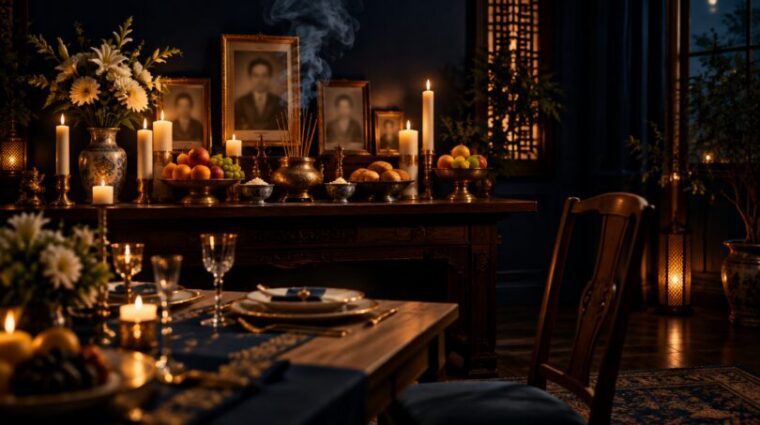
An ancestor altar is a small, dedicated space where you honor the people who came before you, with photographs, candles, flowers, food and keepsakes. A dumb supper is a quiet meal in which a place is set for the departed and the living eat in silence or near-silence. Together they are two of the simplest and most moving ways to keep Samhain, All Souls Day or any day of remembrance.
This guide shows how to build an ancestor altar step by step, what to place on it, how to hold a dumb supper, what to say, and how to care for the space afterward. It also shares what Next Level Soul guests say about ancestors and the other side. For the wider season, read our guides to Samhain and the thin veil.
Key Takeaways
- What it is. A small altar of photographs, candles, flowers, water and keepsakes that honors your ancestors and loved ones who have died.
- What the dumb supper is. A silent or near-silent meal with a place set for the dead, usually held on Samhain night, ending with thanks.
- Who are your ancestors? Blood relatives, adoptive family, chosen family, teachers and anyone whose love shaped you. You decide.
- How to start. A shelf, a photo, a candle and a glass of water. Simple is powerful.
- How to keep it safe. Never leave flames unattended, keep a clear space around the altar, and approach with love and a calm mind.
- If the family story is hard. You can honor the ancestors who gave you life or wisdom and still set boundaries around those who hurt others.
What Is an Ancestor Altar?
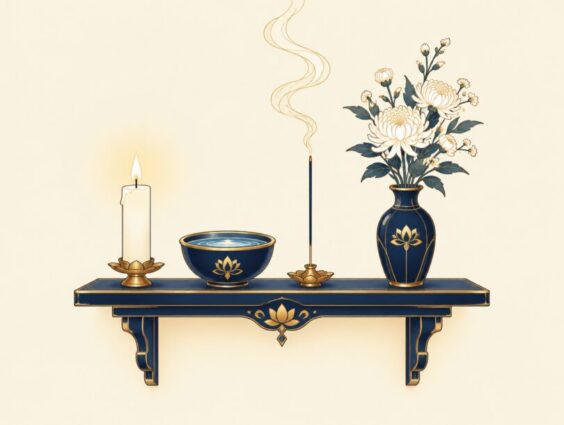
An ancestor altar is a dedicated place in the home that honors the family who came before you. It might be a corner of a bookshelf, a small table, a windowsill or a mantle. In many cultures, from East Asia to West Africa to Latin America to Europe, such shrines have been kept for centuries. They say that the dead are not erased by death and that gratitude and relationship continue across generations.
You do not need to belong to any tradition to build one. The point is a place of love, memory and thanks. Whether you call it an altar, a memory shelf or a remembrance table, the energy is the same: you are saying, “You mattered. You are remembered.”
Who Counts as an Ancestor?
Ancestors are not only blood relatives. They can include grandparents and great-grandparents, parents, siblings and children who have died, adoptive or step family, chosen family and friends, mentors and teachers, and the wider lineage of people who came before you in your culture or craft. Some people also honor pets. There is no wrong list.
Why Build an Ancestor Altar?
- To remember. A visible place keeps memory alive in daily life.
- To heal. Many people find that talking to a photograph softens grief and brings forgiveness.
- To connect. The practice can open a quiet channel of presence and guidance.
- To honor your roots. Knowing who came before you can give a sense of belonging and strength.
- To mark the season. The altar anchors your celebration of Samhain, All Souls Day or the Day of the Dead.
Jonathan Hammond, a shaman who joined Alex from Maui, describes a shaman as a healer of relationships: with ourselves, with others and with the planet. An ancestor altar is a daily way of tending one more relationship. Watch his full episode and read the show notes.
How to Build an Ancestor Altar: Step by Step
- Choose a place. Pick a spot you pass often but where it will not be disturbed. Avoid damp places and areas near flammable materials.
- Clear and clean it. Wipe the surface, tidy the area and, if you like, cleanse it with smoke, sound or an open window. See our guide to smudging.
- Add a cloth. A white, black or colored cloth marks the space as special.
- Place photographs. Set pictures of your ancestors at the center or the back. If you have no photos, a name written on paper works just as well.
- Add a candle. Use a candle holder that is stable and fireproof, or an LED candle if you prefer.
- Offer water. A small glass of clean water is a traditional gift of welcome.
- Add flowers or greenery. Fresh flowers, dried herbs, leaves or branches bring life to the altar.
- Include keepsakes. Jewelry, a favorite book, a watch, a recipe card, a pipe, a toy, something that tells their story.
- Offer food or drink. A favorite treat, a cup of coffee, a piece of bread.
- Speak to them. Introduce yourself, say hello and tell them why you built the altar. Light the candle and say their names.
| Element | What it represents | Easy substitute |
|---|---|---|
| Photographs | The person, face to face | A name on paper |
| Candle | The light that continues and guides | LED candle |
| Water | Purity and a welcome drink | A small glass of clean water |
| Flowers or leaves | Beauty and the cycle of life | Leaves from a walk |
| Salt or earth | Grounding and protection | A bowl of garden soil |
| Food or drink | Hospitality and love | A cookie, tea or coffee |
| Keepsakes | Memory and personality | A card or a note |
| Incense or herbs | Cleansing and offering | A drop of essential oil |
Caring for Your Altar
- Refresh the water and flowers regularly.
- Remove food offerings after a day or two, and return them to the earth if possible.
- Never leave a flame unattended. Use a safe holder and blow it out when you leave the room.
- Visit often, even for a minute, to say hello.
- Adjust the altar as the seasons change.
What to Say at Your Altar
There is no required script. Speak from the heart. If you would like a starting point, try something like this:
“Ancestors and loved ones, I welcome you with love. Thank you for the life you gave me and the lessons you taught me. I honor you and remember you. Walk with me and guide me for my highest good. When I am finished, I thank you and I release this space in peace.”
Questions to Ask Quietly
- What would you like me to know?
- What do you want me to carry forward?
- Is there anything I should forgive?
- How can I honor you in my life?
Then listen. Answers may arrive as a feeling, a memory, an image, a dream or a sign in the days that follow. For common signs, see our guide to signs from deceased loved ones.
How to Hold a Dumb Supper
The dumb supper is a traditional meal of silence and remembrance. “Dumb” here means silent. It is usually held on Samhain night, though you can hold one any time you wish to honor the dead.
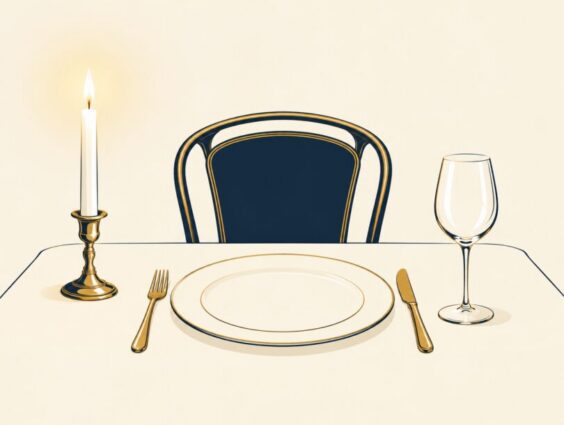
- Set the table. Place a setting for each person present, plus a setting for each ancestor you are inviting. Many people put the ancestors’ seats at the head of the table or leave a place beside them.
- Light candles. Use a candle for each ancestor or one central candle.
- Bring in food. Choose dishes the departed enjoyed and seasonal foods such as apples, root vegetables and bread. Serve the ancestors’ plates first.
- Begin in silence. Invite everyone to quiet their minds. Some traditions say no one should speak from the moment the meal begins until it ends.
- Welcome the guests. Silently, or in a whisper, greet each ancestor by name.
- Eat slowly. Notice each bite. Let memories rise.
- Listen. Pay attention to impressions, feelings or images that arise.
- End with thanks. When the meal is finished, speak aloud a word of gratitude and say goodbye.
- Return the offerings. Place the ancestors’ food outside or in compost with thanks.
Variations
- A near-silent version. Allow quiet conversation, with each person sharing a memory of someone who has died.
- A family version. With children, make it a storytelling dinner where each person shares a favorite memory and a candle is lit for each name.
- A solo version. Set one extra place and eat quietly with a photograph of someone you miss.
If Your Family History Is Complicated
Not every family story is warm. If your ancestors include people who caused harm or whom you cannot honor, you do not have to place them on the altar. You can honor the ones who gave you life, kindness or strength. You can also hold an intention of healing for the whole lineage without welcoming a specific person. In some traditions, ancestral healing means releasing patterns that were passed down, so the generations after you can walk freer.
Near-death experiencer Chrystal Rae says that in her life review a small kindness mattered more than accomplishments, status or recognition. Forgiveness works in a similar way. It does not condone harm. It frees you from carrying it. If the weight is heavy, seek the support of a counselor or a trusted guide. Hear her talk about her life review.
Ancestor Traditions Around the World
| Tradition | Where | How ancestors are honored |
|---|---|---|
| Ofrendas | Mexico and Latin America | Altars with marigolds, food and photographs on Nov 1 to 2 |
| Qingming and Obon | China and Japan | Tomb sweeping, offerings and lanterns to welcome the spirits |
| Samhain | Celtic lands | Candles, food and a place set for the dead |
| All Souls Day | Christian Europe and beyond | Prayers, cemetery visits and candles |
| Ancestor altars | West African and diasporic traditions | Libations, names spoken aloud and family shrines |
If you are drawing on a tradition that is not your own, learn about it first and honor it with respect. See our guide to the meaning of the Day of the Dead.
What Next Level Soul Guests Say About Ancestors and the Other Side
Dr. Toni Reilly says she believes past life regression comes directly from the soul, and that what a person is shown is meant to help the life they are living now. Watch her full episode. Our Spiritual Cinema review of Spirit Talker follows Mi’kmaw medium Shawn Leonard as he gives readings for families in First Nations communities, with themes of forgiveness, reassurance and belonging.
Watch: Conversations on Ancestors, Loss and Love
These Next Level Soul guests speak to the heart of the ancestor altar: connection across lifetimes, healing relationships and remembering what matters.
Dr. Toni Reilly: Past Lives and Soul Contracts
Dr. Toni Reilly shares how past life regression led her back to her intuition, and what she believes regression can show about the life we are living now. Watch the full episode and read the show notes.

Chrystal Rae: The Silver Thread Between Body and Soul
Near-death experiencer Chrystal Rae shares her first out-of-body experience as a child, the 80-foot cliff accident behind her near-death experience, and a life review built around a small act of kindness. Watch the full episode and read the show notes.

Jonathan Hammond: What a Shaman Actually Does
Jonathan Hammond, who joins Alex from Maui, describes a shaman as a healer of relationships with ourselves, with others and with the planet, and shares the seven Huna principles. Watch the full episode and read the show notes.

Watch More on Next Level Soul TV
Next Level Soul TV has films and episodes on death, ritual and the ancestors, including Crossing the River: Meeting Death with Ritual with Sarah Kerr and The Souls of the Salem Witches with Marie Manuchehri. Join Next Level Soul TV and keep exploring.
Go Deeper with Next Level Soul
- Samhain: Meaning, History, Rituals and How to Celebrate
- All Souls Day: Meaning, History and How to Observe It
- Day of the Dead Meaning, History and Traditions
- What “The Veil Is Thin” Means
- Signs From Deceased Loved Ones
- Creating a Sacred Space at Home
- Afterlife and Mediumship in the glossary
- The full spiritual glossary
Sources and Further Reading
Spirituality for the Rest of Us™
Films, teachings and community on Next Level Soul TV.
Go Deeper with NLS Mastery: Beyond the Veil
A grounded exploration of what lies beyond death and how that understanding changes how we live. Julie Ryan teaches it in Beyond the Veil, part of NLS Mastery. Watch the course preview below.
Frequently Asked Questions
What is an ancestor altar?
An ancestor altar is a dedicated space in the home with photographs, candles, flowers, water, food and keepsakes that honors family and loved ones who have died. It is a place for remembering, thanking and speaking with them.
What is a dumb supper?
A dumb supper is a silent or near-silent meal with a place set for the departed. “Dumb” means silent. It is traditionally held on Samhain night and ends with words of thanks.
How do I build an ancestor altar?
Choose a quiet spot, clean it, add a cloth, photographs, a candle, a glass of water, flowers and keepsakes, then speak to your ancestors, light the candle and say their names. Keep flames safe and attended.
What should I put on an ancestor altar?
Photographs or names, a candle, water, flowers or leaves, a favorite food or drink, salt or earth for grounding, and keepsakes that tell their story. Simple items are enough.
Who should I honor on my ancestor altar?
Anyone whose love or lineage shaped you: relatives, adoptive and chosen family, mentors and friends. You may leave out anyone you cannot honor, and focus on those who gave you life, kindness or strength.
When should I set up an ancestor altar?
Many people set one up for Samhain (October 31 to November 1), All Souls Day (November 2) or the Day of the Dead, but it can stay up all year. Choose a time that feels right to you.
What do you say to your ancestors at an altar?
Speak from the heart. You might welcome them, thank them, share news of your life, ask what they want you to know and say goodbye when you are finished. There is no required script.
How do you hold a dumb supper?
Set a place for each ancestor and each living guest, light candles, serve the ancestors’ plates first, eat in silence, listen for impressions and end with thanks. Return the ancestors’ food to the earth afterward.
What if I do not have photographs of my ancestors?
Write their names on paper, use a keepsake or a symbol that reminds you of them, or place a candle for the ancestors you do not know. Intention matters more than objects.
Is it safe to talk to the dead at an ancestor altar?
Approaching with love, a calm mind and a clear intention is considered the heart of safe practice. Close each session with thanks. If anything feels distressing, step back and speak with a trusted person or healthcare provider. See our guide to spirit communication.
How is an ancestor altar different from an ofrenda?
An ofrenda is a specific Mexican altar tradition for the Day of the Dead, with marigolds, pan de muerto and sugar skulls. An ancestor altar is a broader term for any space honoring the dead. Learn more about the Day of the Dead.