“The veil is thin” is a spiritual saying that the boundary between the physical world and the unseen world becomes easier to sense or cross at certain times and in certain places. It is most often said around Samhain, from October 31 to November 1, when many traditions teach that the living and the dead draw close. People describe feeling presences, dreaming vividly of loved ones, or noticing signs that seem to arrive on cue.
This guide explains what the saying means, where it comes from, when the veil is said to be thinnest, the signs people describe, whether there is a reasonable skeptical view, and how to work with the idea in a grounded, loving way. For the full festival behind it, read our guide to Samhain.
Key Takeaways
- What it means. A metaphor and a lived experience: the line between the seen and unseen feels softer, and intuition, dreams and signs seem to speak more clearly.
- Where it comes from. Celtic and Gaelic traditions of Samhain, the Celtic Christian idea of “thin places,” and many other cultures that honor the dead at this time of year.
- When it is said to be thin. Most famously at Samhain, and also at other thresholds: solstices, equinoxes, All Souls Day, the Day of the Dead and moments of birth, death and deep grief.
- Common signs. Vivid dreams, a sense of presence, familiar scents, flickering lights, repeating numbers, feathers, songs and unexpected memories.
- A grounded view. The season turns attention inward, grief rises, and meaning-making is strong. You can hold the experience as both psychologically real and spiritually meaningful.
- How to work with it. Quiet your mind, light a candle, honor loved ones, journal and set a loving intention. Close each practice with thanks.
What Does “The Veil Is Thin” Mean?
The veil is an image for the barrier between ordinary awareness and a larger reality that many traditions describe: the world of spirit, the ancestors, the realm of the dead, or simply the unseen. A veil is not a wall. It is a thin curtain that can lift, shift or turn transparent in the right light. To say the veil is thin is to say that contact, insight and presence feel nearer.
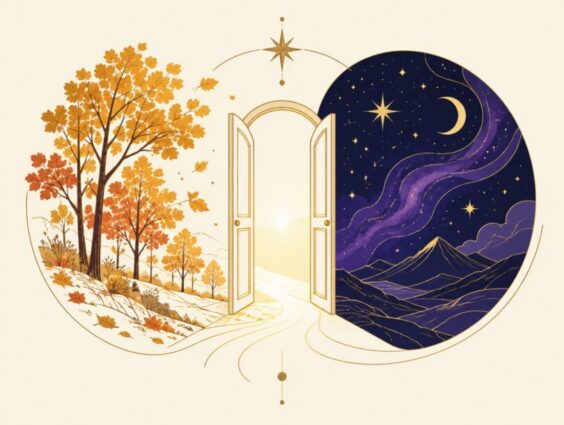
For some, this is literal. They feel that spirits can cross more easily and that mediums can hear them more clearly. For others, it is poetic and psychological: a way of naming a shift in mood and attention that makes the invisible feel closer. Both ways of holding the idea can be valuable.
Near-death experiencer Garnet Schulhauser offers a version that many find comforting. He describes a spirit side with no hell, no punishment and no judgment, where we can regroup and choose to return. Watch his full episode and read the show notes.
Where the Idea Comes From
Samhain and the Gaelic Year
The phrase is tied above all to Samhain, the Gaelic festival that marks the end of harvest and the beginning of winter. Early Irish stories describe it as a time when the doors to the otherworld stand open and boundaries loosen. Households lit fires, shared food and set places for the dead. See our full guide to Samhain.
Thin Places in Celtic Christianity
Celtic Christian writers describe “thin places,” sites where heaven and earth feel close. Island sanctuaries such as Iona in Scotland, hilltops, ancient stone circles and quiet chapels have all been called thin places. The idea is that certain landscapes make it easier to feel the sacred, whether through beauty, silence or long centuries of prayer.
Parallels in Other Cultures
- Mexico. On the Day of the Dead, families welcome the dead back to altars. See our guide to the meaning of the Day of the Dead.
- Christian Europe. All Saints and All Souls draw the living and the dead together in prayer. See All Souls Day.
- East Asia. Festivals such as Obon in Japan and Qingming in China honor ancestors with lanterns, offerings and tomb visits.
- Many Indigenous traditions. Ceremonies mark seasons and thresholds when ancestors are close.
When Is the Veil Said to Be Thinnest?
| Time | Why it is said to be thin |
|---|---|
| Samhain (Oct 31 to Nov 1) | The great doorway between the light and dark halves of the year |
| All Souls Day and Day of the Dead (Nov 1 to 2) | Cultures worldwide set aside this time to remember the dead |
| Solstices and equinoxes | Turning points of the sun, when the year changes its direction |
| Beltane (Apr 30 to May 1) | The opposite doorway of the Gaelic year, when the light half begins |
| Dusk and dawn | Liminal hours between day and night |
| Moments of birth, death and deep grief | Personal thresholds when the boundary of ordinary life softens |
| Sacred places | Thin places such as island sanctuaries, hilltops, stone circles and old churches |
Some people also feel the veil thin in meditation, in dreams, in nature and in the hours after a death. The idea is less a calendar than a quality of attention.
Signs People Describe When the Veil Feels Thin
- Vivid dreams. Dreams of loved ones that feel real, with clear messages or a sense of visit. See our guide to lucid dreaming.
- A sense of presence. The feeling that someone is in the room, a warmth, a gentle touch or the feeling of being watched kindly.
- Familiar scents. The smell of a perfume, tobacco, cooking or flowers with no source.
- Sudden memories. A rush of memory about a loved one with no clear trigger.
- Electrical oddities. Lights flickering, a radio switching on, a phone buzzing at a meaningful moment.
- Repeating numbers and synchronicities. Seeing the same number or a meaningful coincidence repeatedly. See our glossary entry on synchronicity.
- Feathers, coins and birds. Small objects or animals that appear at a poignant moment.
- Songs at the right time. A song that carries a message arrives just as you think of someone.
- Heightened intuition. Gut feelings that seem unusually clear.
- Emotional waves. Tears, tenderness or a sudden feeling of peace.
For a fuller list, see our guides to signs from deceased loved ones and ghost signs.
A Grounded, Skeptical View
It helps to look honestly at what else might be going on, and the good news is that a grounded view does not cancel the meaning.
- The season turns attention inward. Shorter days, cooler weather and cultural cues put death and memory on our minds.
- Grief rises on anniversaries and holidays. We are more likely to notice reminders of loved ones.
- Meaning-making is strong. We naturally search for patterns, especially around love and loss.
- Sleep and stress affect perception. Tiredness, strong emotion and changes to routine can color dreams and sensations.
You can hold these points and still treasure the experience. A sign that arrives when you are open to it can be both a natural event and a meaningful one. If a sensation frightens you, causes distress or is paired with changes in sleep, mood or thinking that worry you, speak with a doctor or counselor.
How to Work With a Thin Veil
1. Ground First
Before any practice, plant your feet, breathe slowly and feel your body. Eat something warm, drink water and spend time outside. Grounding helps you stay clear and calm.
2. Set a Loving Intention
Say aloud, “I welcome only loving presence for my highest good. I close this space when I am finished.” Garnet Schulhauser says that meditation is the best way for most people to hear their spirit guides more clearly. Come with calm and clear intention, not curiosity that provokes. Watch his episode on spirit guides.
3. Honor Your Loved Ones
Light a candle, set out a photograph and say their names. Our guide to the ancestor altar and dumb supper shows how.
4. Sit and Listen
Spend ten to twenty minutes in meditation. Ask a simple question, such as “Is there anything I need to know?” and let whatever arises come without chasing it.
5. Journal
Record dreams, impressions and signs. Patterns often emerge after a few days.
6. Close and Ground
Say thank you and goodbye, blow out the candle, wash your hands, drink water and do something ordinary. A clean close helps you return to everyday life.
What to Avoid
- Do not use alcohol or drugs during spiritual practice.
- Do not provoke or dare spirits to appear. See our guide to the Ouija board for a closer look at why.
- Do not ask about death dates or harm.
- Do not do deep spiritual work when you are exhausted or in acute distress.
What Next Level Soul Guests Say About the Veil
Fire captain Bill Letson says he slipped out of his body in an intensive care unit and describes a realm of colorful orbs and stars where he felt complete euphoria. He says he came to see his earthly life as something like a game he had been playing. His account is his own, offered in his own words. Watch his full episode.
Steven Noack says that when he was four he was shown a blueprint behind material reality, and was told that we are the identity of love, having a human experience. His view echoes a theme across traditions: what we hold in the heart shapes what we experience. Watch his full episode.
Near-death experiencers also speak of crossing a threshold. See our complete guide to near-death experiences.
Watch: Conversations on the Veil, the Other Side and the Unseen
These Next Level Soul guests describe what they say lies beyond the veil: spirit guides, other realms and the love behind reality.
Garnet Schulhauser: A Spirit Guide in Disguise
Garnet Schulhauser says a homeless man with sparkling blue eyes stopped him on the street, and that the man later introduced himself as Albert, one of his spirit guides in disguise. Watch the full episode and read the show notes.

Bill Letson: What a Fire Captain Saw After Death
Bill Letson says he slipped out of his body in an intensive care unit and describes a realm of colorful orbs and stars, a figure of overwhelming love, and being told it was time to go back. Watch the full episode and read the show notes.

Steven Noack: The Blueprint Behind Reality
Steven Noack says that at four, after being hit by a car, he left his body and was shown a living heaven and a blueprint behind material reality. Watch the full episode and read the show notes.

Watch More on Next Level Soul TV
Next Level Soul TV has films and episodes on life after death and the other side, including 44 Hours and Life After Death and Beyond with James Van Praagh. Join Next Level Soul TV and keep exploring.
Go Deeper with Next Level Soul
- Samhain: Meaning, History, Rituals and How to Celebrate
- Ancestor Altar and the Dumb Supper
- Spirit Communication and Ghost Signs
- Signs From Deceased Loved Ones
- The Wheel of the Year and Pagan Holidays
- Near-Death Experiences: The Complete Guide
- Afterlife, Synchronicity and Intuition in the glossary
- The full spiritual glossary
Sources and Further Reading
Spirituality for the Rest of Us™
Films, teachings and community on Next Level Soul TV.
Go Deeper with NLS Mastery: Beyond the Veil
A grounded exploration of what lies beyond death and how that understanding changes how we live. Julie Ryan teaches it in Beyond the Veil, part of NLS Mastery. Watch the course preview below.
Frequently Asked Questions
What does “the veil is thin” mean?
It is a spiritual saying that the boundary between the physical and unseen worlds feels softer at certain times and places, making intuition, dreams, signs and a sense of presence more noticeable.
When is the veil thinnest?
Most often said to be at Samhain, October 31 to November 1. Other times named include All Souls Day, the Day of the Dead, solstices and equinoxes, dusk and dawn, and personal thresholds such as grief.
Why is the veil thin on Halloween?
Halloween grew from All Hallows’ Eve and from older Gaelic Samhain customs, when the otherworld was said to stand open. The saying has stuck to the date, though it can be felt at other times too.
What are signs the veil is thin?
People report vivid dreams, a sense of presence, familiar scents, flickering lights, repeating numbers, feathers, songs at the right moment, sudden memories and heightened intuition.
What are thin places?
Thin places are sites where heaven and earth are said to feel close, a phrase from Celtic Christianity. Island sanctuaries, hilltops, stone circles and old chapels are often described this way.
Is the thin veil real?
It is a spiritual belief and also a shared human experience. Skeptics point to seasonal mood, grief and meaning-making. Believers say a real boundary shifts. You can hold both and still find the experience meaningful.
Is it safe to communicate with spirits when the veil is thin?
Approaching with calm, loving intention and closing with thanks is considered the heart of safe practice. Avoid alcohol, drugs and provocation, and seek help if you feel distressed. See our guide to spirit communication.
How can I connect with a loved one when the veil is thin?
Light a candle, set out a photograph, say their name, sit in quiet and journal what you notice. See our guide to the ancestor altar.
What does the veil mean in Celtic tradition?
Early Gaelic stories describe Samhain as a time when doors to the otherworld stand open. Dr. Greg Shushan compares afterlife beliefs across ancient cultures in his NLS episode.
Can the veil be thin at other times of year?
Yes. Many people feel it at solstices and equinoxes, at dawn and dusk, in sacred places and in deep grief, meditation or dreams. It is as much a quality of attention as a date.
What should I do if I feel scared?
Ground yourself with water, food and fresh air, speak with a friend, and consider a counselor if the fear persists. Spiritual practice supports care and does not replace it.