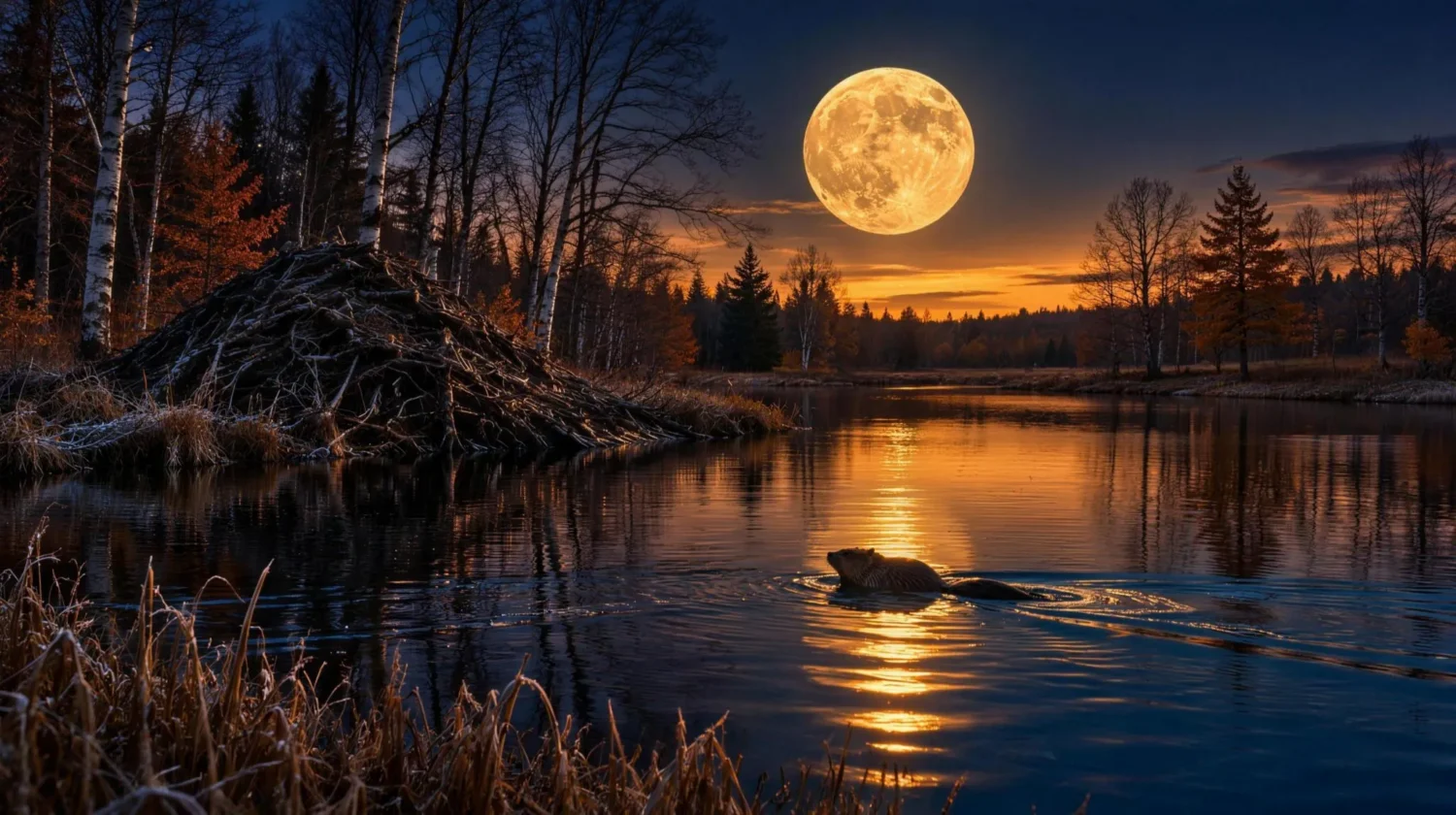
The Beaver Moon is the traditional name for November’s full moon. In 2026 it peaks on Tuesday, November 24, at 9:53 a.m. Eastern Time (14:53 UTC, or 8:53 a.m. Central), with the Moon in the zodiac sign Gemini. It is also a supermoon, so it will look full, bright and close on the evenings of November 23 and 24.
Key Takeaways
- The Beaver Moon peaks on Tuesday, November 24, 2026, at 14:53 UTC, which is 9:53 a.m. Eastern, 8:53 a.m. Central and 6:53 a.m. Pacific.
- The Moon will be in Gemini, opposite the Sun in Sagittarius, a pairing that astrologers link to learning, travel, truth and the stories we tell.
- It is a supermoon, described by the Farmers’ Almanac as the first of three in a row (November, December and January 2027). No eclipse falls on this full moon.
- The name comes from colonial almanac tradition, where it is often attributed to Native American and Algonquian sources. Two explanations are common: beavers finishing their lodges before the freeze, and the start of the trapping season.
- Spiritually, this is a moon of shelter, preparation, gratitude and release before winter. A simple 30-minute ritual, journal prompts and a manifesting plan are below.
Looking for last month’s moon? Read our guide to the Hunter’s Moon in 2026, then come back here to prepare for November. For the sign itself, see our complete guide to astrology, signs and birth charts.
What Is the Beaver Moon?
The Beaver Moon is the name given to the full moon of November in the Northern Hemisphere. Like the Wolf Moon in January and the Harvest Moon in autumn, it is a seasonal nickname, not an astronomical term. Every full moon is the same event: the Sun, Earth and Moon line up so that the side of the Moon facing us is fully lit. The names simply tie each one to what is happening in nature at that time of year.
The full moon repeats about every 29.5 days, the length of the lunar cycle. Because the calendar months are slightly longer than that, most months have exactly one full moon, and every two or three years a month has two. When that happens the second one is commonly called a blue moon. In 2026 that is the full moon of May 31.
November is the threshold month. In much of North America the leaves are down, the ground is hardening and the days are short. The Beaver Moon arrives at exactly this moment, when living things are finishing their preparations for winter. That is why the name resonates with so many people who follow the moon as a spiritual calendar.
One note for readers in the Southern Hemisphere: the name follows the calendar month, not the local season. In Australia or South Africa the November full moon rises in spring, so the “getting ready for winter” theme flips. Many southern practitioners turn the same moon into a time of growth, planting and abundance instead.
When Is the Beaver Moon in 2026?
The Beaver Moon reaches its exact full phase on Tuesday, November 24, 2026, at 14:53 UTC. We cross-checked this time against the Farmers’ Almanac and an independent astronomical calculation, and both agree. Here is how that moment looks in different time zones.
| Place | Local time of the exact full moon |
|---|---|
| UTC / London (GMT) | Tuesday, November 24, 2:53 p.m. |
| US Eastern (EST) | Tuesday, November 24, 9:53 a.m. |
| US Central (CST) | Tuesday, November 24, 8:53 a.m. |
| US Mountain (MST) | Tuesday, November 24, 7:53 a.m. |
| US Pacific (PST) | Tuesday, November 24, 6:53 a.m. |
| India (IST) | Tuesday, November 24, 8:23 p.m. |
| Japan (JST) | Tuesday, November 24, 11:53 p.m. |
| Sydney (AEDT) | Wednesday, November 25, 1:53 a.m. |
In the Americas the exact peak happens in the morning, while the Moon is below the horizon. That is fine. A full moon looks full to the eye for about three nights, so the best viewing is when the Moon rises at sunset on Monday, November 23 and again on Tuesday, November 24. If you want your ritual to be close to the exact peak, an early-morning practice on the 24th also works well, and so does an evening practice. Both are traditional.
Is the November 2026 Full Moon a Supermoon?
Yes. The Farmers’ Almanac describes it as a supermoon at a distance of about 360,768 km, and our own check of the orbit agrees that the Moon will be very near its closest point to Earth. The word “supermoon” was coined by astrologer Richard Nolle in 1979 and refers to a full or new moon that occurs at or near perigee, the Moon’s closest approach to Earth. A full moon at perigee appears roughly 14% larger in diameter than at its farthest point, and about 30% brighter, according to Wikipedia’s summary of the science. Many people also feel the difference is subtle to the eye, especially when the Moon is high in the sky.
The Farmers’ Almanac notes that this is the first of three supermoons in a row: the Beaver Moon in November, the Cold Moon in December and the Wolf Moon in January 2027. For people who follow lunar rhythms, this makes late 2026 a strong stretch for reflection and intention work.
Is There an Eclipse?
No. The two lunar eclipses of 2026 fall on other full moons: a total lunar eclipse on March 3 and a partial lunar eclipse on August 28. The November full moon is a regular, uneclipsed supermoon. If you saw a headline promising a “Beaver Blood Moon,” it does not apply to this year.
Where Does the Name “Beaver Moon” Come From?
There is no single, settled origin for the name, and that is worth saying plainly. The Beaver Moon belongs to a family of full moon names that spread through North American almanacs, folklore and popular books. Here is what the sources actually support.
The beaver and the season
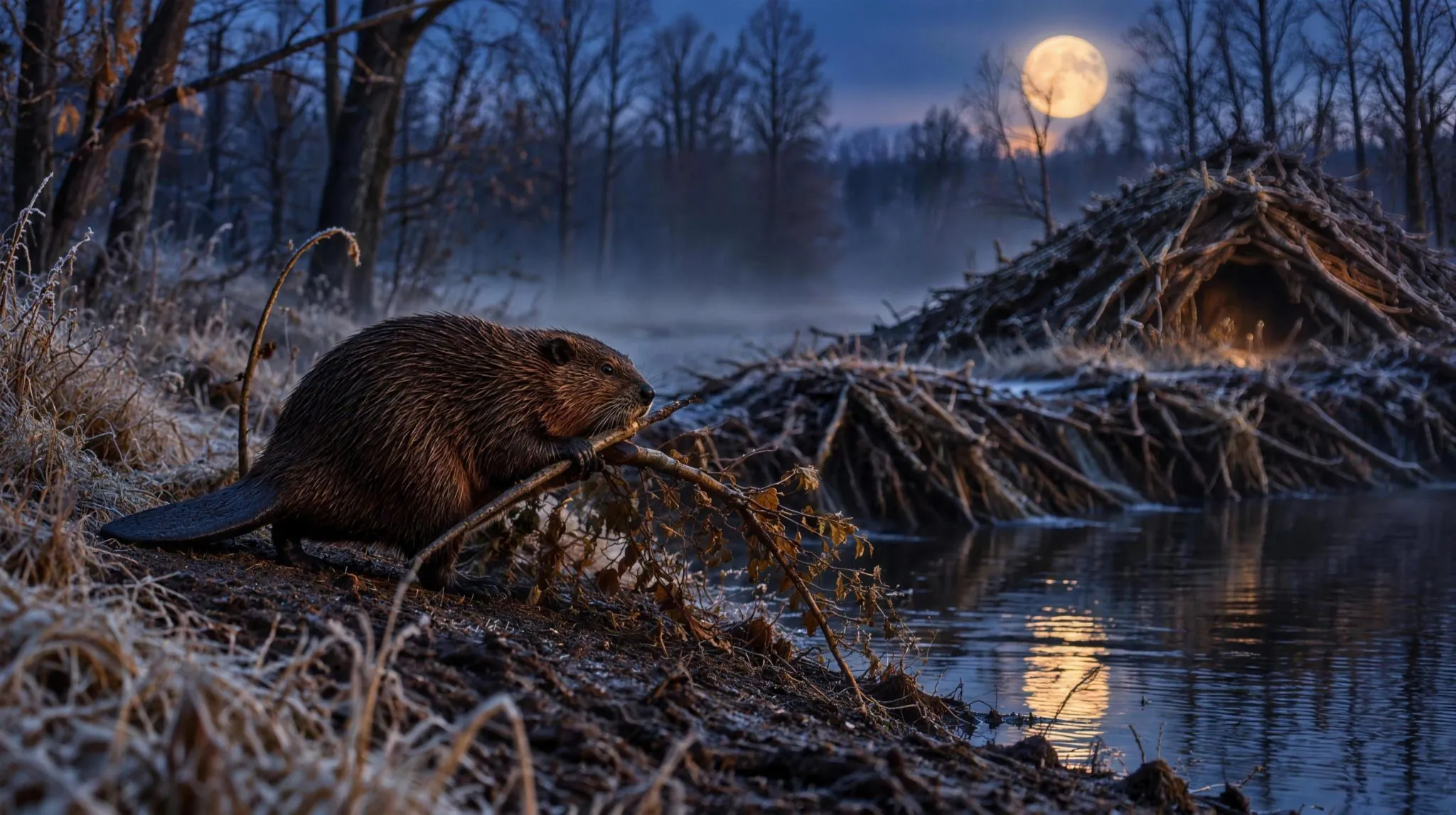
The Farmers’ Almanac gives two common explanations. The first is nature-based: in late autumn, beavers finish their lodges and dams and stock food before the ground freezes. A beaver lodge is a dome of sticks and mud, and a beaver family retreats inside it for the winter. November is the last window to get that work done.
The beaver itself is remarkable. According to Wikipedia, the North American beaver is a large rodent native to North America and one of the national symbols of Canada. Beavers build dams that create ponds and wetlands, which is why ecologists often call them ecosystem engineers. A single family’s winter shelter ends up shaping an entire landscape for many other species.
The fur trade explanation
The second explanation is historical. In the fur trade, November marked the start of trapping season, when beaver pelts were thick and heavy snow had not yet arrived. Wikipedia describes the fur trade as a worldwide industry buying and selling animal fur, with the furs of cold-climate mammals among the most valued. Under this reading, the “Beaver Moon” named a working moon for the people who set traps, and it sits close in meaning to another November name, the Trading Moon.
Native American names and almanac attribution
Many articles say the Beaver Moon is a Native American name, and it is often described as having an Algonquian root. The record is more complicated. Wikipedia’s survey of the sources explains that 18th and 19th century writers published lists of what they said were Native American month names. These were generally names for lunar months, not for individual full moons. Jonathan Carver, writing in 1778, gave a list of twelve lunar months in which “Beaver” is the ninth, counted from the March equinox. Other writers of the era, including Eugene Vetromile in 1856 and Peter Jones in 1861, published completely different lists.
Later, names like these were folded into American almanacs. The Maine Farmers’ Almanac printed a list of full moon names in 1937, and the Farmers’ Almanac, published in Maine since 1955, continues to print such names. Some of the names are described as colonial American, drawn partly from Algonquian languages once spoken in New England and partly from European tradition. Wikipedia notes that “Beaver Moon” is supposedly based in an Algonquian language, and that many of these names have since entered popular folklore.
So the careful statement is this: the Beaver Moon name comes to us through colonial and almanac tradition, where it is attributed to Native American sources, and the exact origin is uncertain. Different nations had and have their own names, calendars and teachings about the moons, and those vary by place and by community.
A note of respect
If you are not Indigenous, it helps to approach full moon names with humility. Treat the Beaver Moon as a seasonal nickname from the almanac tradition, not as a sacred teaching you have received from a particular nation. If you want to learn how Indigenous peoples relate to the moon, the seasons and the more-than-human world, look for books and teachers from those nations themselves. One widely loved place to begin is Braiding Sweetgrass by Robin Wall Kimmerer, a Potawatomi botanist, listed in the book section below. We share this not to limit your practice but to honor where names come from.
Go Deeper with NLS Mastery: Ancient Meditation for Inner Stillness
If the Beaver Moon is calling you inward, this course offers a steady practice for stillness. Acharya Shunya teaches it in Ancient Meditation for Inner Stillness, part of NLS Mastery. Watch the course preview below.

Other Names for the November Full Moon
The Beaver Moon is not the only name for this moon. Almanac and folklore lists give several, usually tied to the same late-autumn mood of cold, scarcity and preparation. The Farmers’ Almanac lists the names below and attributes them to various nations and traditions. Because the attributions in popular lists are not always documented, treat them as traditions to explore rather than settled fact.
| Name | What it is usually taken to mean |
|---|---|
| Beaver Moon | Beavers finishing lodges and dams, and the start of trapping season. |
| Frost Moon | The first hard frosts of late autumn. |
| Trading Moon | A season of trade, tied to the fur trade. |
| Deer Rutting Moon | The deer breeding season in many regions. |
| Turkey Moon | Wild turkeys foraging and gathering in flocks. |
| Freezing Moon | Ponds and rivers beginning to ice over. |
| Mourning Moon | The quiet, remembering mood of the darkening year. |
Notice how the names move between two themes: work (beavers, trade, trapping) and tenderness (mourning, frost, stillness). That tension is the heart of this moon. It asks you to be practical and soft at the same time.
What Is the Spiritual Meaning of the Beaver Moon?
The spiritual meaning of the Beaver Moon is preparation with gratitude. It is the moon of building your shelter, securing what sustains you and letting go of what you cannot carry into the cold season. People who work with the lunar calendar often describe it as a hinge between harvest and rest.
Four themes show up again and again in modern moon practice. They are interpretations, not rules, and you are free to find your own.
Shelter: building a safe inner and outer home
A beaver lodge is a refuge. On the Beaver Moon, many people ask what their own refuge needs. That can be practical, such as a tidy room, a warm blanket, a stocked pantry or a repaired door. It can also be inner: a boundary, a daily practice, a trusted friend, a regular hour of quiet. If you feel scattered, this moon invites you to strengthen the structure around your life.
Industry: honest, steady work
The beaver is known for patient, unglamorous effort. One branch at a time becomes a dam. The Beaver Moon is a good time to look at what you have been building, whether a project, a relationship, a business or a habit, and to ask what the next small piece is. You do not need a dramatic leap. You need the next stick.
Community: you do not build alone
Beavers live in family groups, and a lodge shelters the whole colony. In November many cultures also gather, with feasts, thanksgivings and remembrance of ancestors. The Beaver Moon is a lovely time to reach out, share a meal and say thank you to the people who hold up your life.
Release: clearing what will not survive winter
A full moon is traditionally a time of culmination and release. In November the natural world is shedding leaves and letting plants go dormant. You can do the same with old resentments, outdated goals and clutter. Release here is not rejection. It is a clear-eyed choice to stop spending energy on what no longer serves your life.

Astrology & Feminine Energy in the Stars with Molly McCord
Astrologer Molly McCord joins Alex Ferrari to talk about astrology and feminine energy in the stars, a good companion to the lunar themes in this guide.
Beaver Symbolism: The Builder Animal
Animal symbolism is personal, and many Indigenous nations hold their own teachings about the beaver that belong to those communities. In the broader spiritual world, beaver is often read as an emblem of building, persistence and cooperation. Here is how modern seekers commonly interpret it.
| Beaver quality | Common spiritual reading | Question for you |
|---|---|---|
| Lodge builder | Creating a safe, supportive home base. | What would make my home feel more like a refuge? |
| Dam maker | Setting boundaries that create calm water. | Where do I need to say “this far, and no further”? |
| Steady worker | Patience and daily effort over big gestures. | What small step can I take every day this week? |
| Family colony | Cooperation and shared responsibility. | Who do I want to build with? |
| Pond maker | Creating habitat that helps others thrive. | How does my work benefit more than just me? |
Beaver Moon Astrology: The Full Moon in Gemini
In astrology, a full moon happens when the Moon sits directly opposite the Sun in the zodiac. On November 24, 2026, the Sun is in Sagittarius and the Moon is in Gemini, about 2 degrees into each sign. The Sun entered Sagittarius on November 22, 2026, at about 16:14 UTC, which ends Scorpio season and opens the festive, expansive weeks of the Sagittarius season. If you want a refresher on the weeks leading into this moon, our Scorpio season 2026 guide covers the dates and themes.
The Gemini-Sagittarius axis is one of the twelve pairs of opposite signs. Both signs are mutable, which astrologers connect with adaptability, change of season and the ability to adjust. Gemini is an air sign ruled traditionally by Mercury. Sagittarius is a fire sign ruled traditionally by Jupiter. Together they hold a big question: how do we turn information into wisdom? For a deeper look at the zodiac itself, see our guide to the four elements of nature and our complete astrology guide.
| Gemini (the Moon) | Sagittarius (the Sun) | |
|---|---|---|
| Element and mode | Air, mutable | Fire, mutable |
| Traditional ruler | Mercury | Jupiter |
| Gift | Curiosity, communication, flexibility | Vision, faith, a love of truth and travel |
| Shadow | Scattered attention, gossip, restlessness | Overreach, preaching, avoiding details |
| Key question | What do I know and who can I learn from? | What do I believe and where am I headed? |
| Beaver Moon balance | Gather the facts and speak honestly | Commit to a direction and act on it |

Pam Gregory Astrologer: The Origins of Astrology and How It Works
Astrologer Pam Gregory explains the origins of astrology and how she describes it as a language for reading cycles.
What a Gemini full moon feels like
Gemini is the sign of the mind and the word. Astrologers describe a Gemini Moon as chatty, curious and quick to change, a Moon that processes feelings by talking them through. Under this full moon, many people report a surge of ideas, messages, conversations and decisions. You may feel pulled to say things you have been holding back, to sort papers and plans, or to reconnect with siblings, neighbors and old friends. This is the opposite of a silent, secluded moon, and it pairs interestingly with the beaver’s work ethic: build through communication.
What the Sagittarius Sun adds
Opposite the Gemini Moon, the Sagittarius Sun asks for meaning. It nudges you to zoom out and ask why you are doing what you are doing. This is a good moment to revisit your beliefs, your plans for the year ahead and your ideas about travel, study and teaching. Many astrologers say that a Gemini-Sagittarius full moon helps you see the difference between a thousand facts and one true story. Which one are you living by?

How the Beaver Moon may speak to each Sun sign
The list below is a general guide. Use it as a prompt for reflection, not as a prediction. Your full chart is always more specific than your Sun sign.
| Sun sign | Theme to reflect on this Beaver Moon |
|---|---|
| Aries | Communication, learning and your beliefs (the 3rd and 9th houses when counted from your Sun sign). What do you need to say, study or believe? |
| Taurus | Money, values and shared resources (2nd and 8th). What do you truly need to feel secure this winter? |
| Gemini | Self and partnership (1st and 7th). The Moon is in your sign, so notice your own needs and say them clearly. |
| Cancer | Rest and daily work (12th and 6th). Where do you need quiet, and which routines deserve repair? |
| Leo | Friends and joy (11th and 5th). Who are your people, and what makes you feel creative and alive? |
| Virgo | Career and home (10th and 4th). How do your public work and private refuge support each other? |
| Libra | Learning and conversation (9th and 3rd). What do you want to study, teach or discuss honestly? |
| Scorpio | Shared resources and money (8th and 2nd). What can you release, and what are you ready to value? |
| Sagittarius | Partnership and self (7th and 1st). The Sun is in your sign, so ask who you are building with and what you want next. |
| Capricorn | Work, health and rest (6th and 12th). Which habits carry you, and what needs to be let go behind the scenes? |
| Aquarius | Creativity and community (5th and 11th). Where do you want to play, and which groups feel like home? |
| Pisces | Home and career (4th and 10th). What does your inner foundation need so your outer path can grow? |
These prompts use the simple whole-sign method: count your Sun sign as the first house, and see which houses Gemini and Sagittarius fall into. A full birth chart, with your Moon sign and rising sign, will always be more precise than a Sun sign guide.
The Beaver Moon in Vedic and sidereal astrology
Western astrology uses the tropical zodiac, which is tied to the seasons. Vedic astrology, called Jyotish, uses the sidereal zodiac, which is tied to the stars. The two differ by about 24 degrees today. Using most sidereal calculations, the same November 24 full moon falls roughly 24 degrees earlier, in the sign of Taurus, rather than in Gemini. If you follow Vedic astrology, your teacher or app will give you the exact placement and the nakshatra, or lunar mansion.

Inside the Mysterious & Ancient Vedic Astrology with Vish Chatterji
Vish Chatterji explores Vedic astrology, the ancient Indian system of reading the sky, in conversation with Alex Ferrari.
Vedic tradition also treats the Moon as central. The Moon sign, called Rashi, is often considered as important as the Sun sign. In Hindu, Sikh and Jain tradition the full moon of the month of Kartika, called Kartika Purnima, is a festival that Wikipedia says falls in November or December. Calendars vary by region, so check a local panchang for the exact date.
Moon Phases and the Beaver Moon Cycle
The Beaver Moon is one point in a cycle that repeats about every 29.5 days. Understanding the full cycle helps you use the full moon well, because what you plant at the new moon often shows up at the full. Wikipedia describes the lunar phase as the apparent shape of the Moon’s lit side as seen from Earth, which changes as the Moon orbits us.
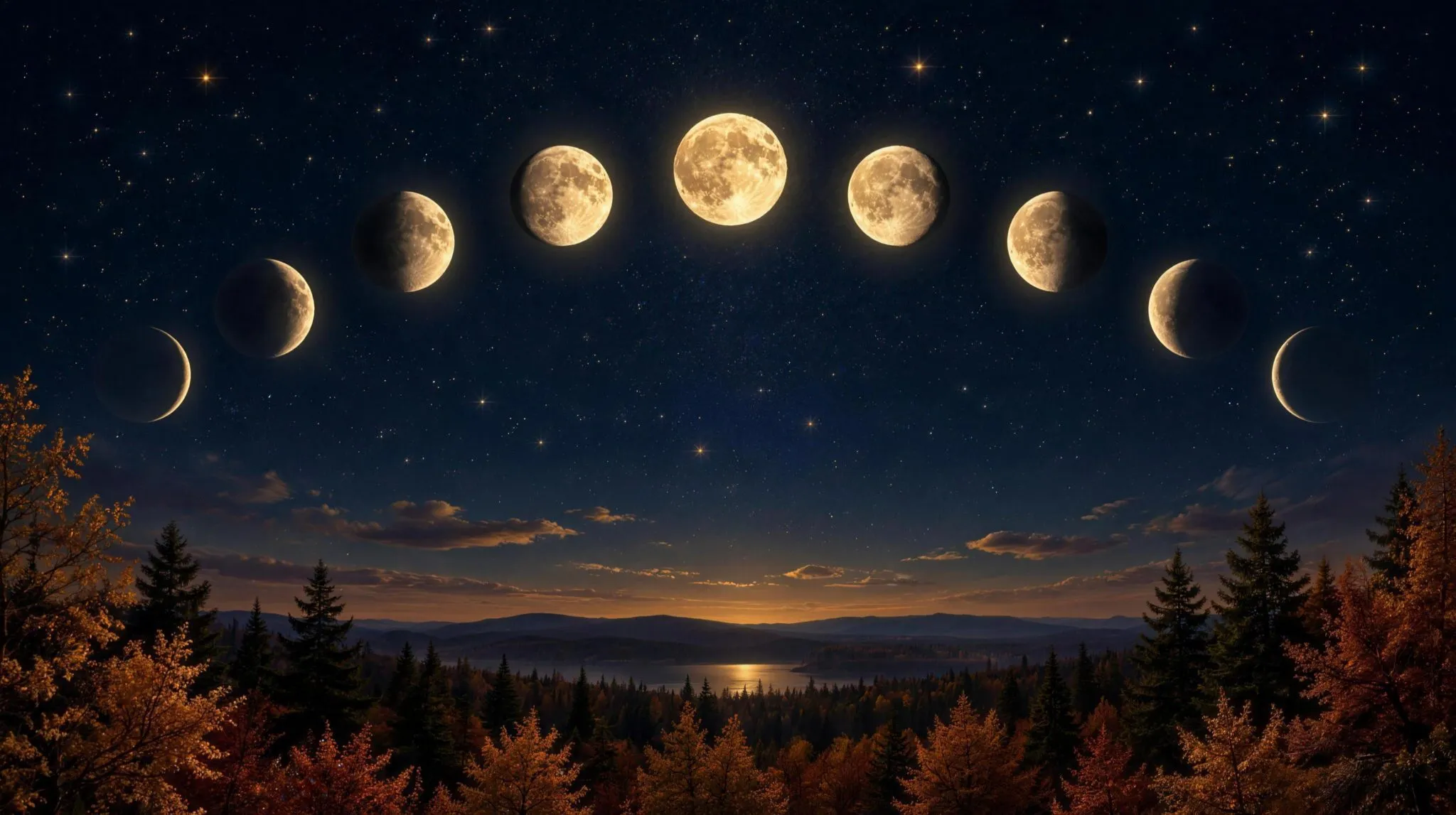
| Phase | What you see | Traditional energy | A simple practice |
|---|---|---|---|
| New Moon | The Moon is dark and close to the Sun. | Beginnings, intention, rest | Write one intention for the cycle. |
| Waxing Crescent | A thin sliver on the right (Northern Hemisphere). | Curiosity, first steps | Take one small action toward your intention. |
| First Quarter | Half the Moon lit, the right side. | Decision, challenge | Solve one obstacle you have been avoiding. |
| Waxing Gibbous | More than half lit, growing. | Refinement, patience | Edit, practice and prepare. |
| Full Moon | The whole disc is lit. | Culmination, clarity, release | Celebrate progress and let go of what is complete. |
| Waning Gibbous | Slightly less than full. | Gratitude, sharing | Share what you learned. Say thank you. |
| Last Quarter | Half lit, the left side. | Forgiveness, letting go | Clear clutter. Close open loops. |
| Waning Crescent | A thin sliver on the left. | Rest, surrender | Sleep early. Keep the schedule light. |
The cycle around the 2026 Beaver Moon
Here are the main phases of this lunar cycle, calculated from the orbit of the Moon. Times are shown in UTC and US Central Time.
| Phase | Date and time (UTC) | US Central |
|---|---|---|
| New Moon | Monday, November 9, 07:02 | Monday, November 9, 1:02 a.m. CST |
| First Quarter | Tuesday, November 17, 11:47 | Tuesday, November 17, 5:47 a.m. CST |
| Full Moon (Beaver Moon) | Tuesday, November 24, 14:53 | Tuesday, November 24, 8:53 a.m. CST |
| Last Quarter | Tuesday, December 1, 06:08 | Tuesday, December 1, 12:08 a.m. CST |
| New Moon | Wednesday, December 9, 00:52 | Tuesday, December 8, 6:52 p.m. CST |
Plant at the November 9 new moon, check in at the November 17 first quarter, harvest and release at the Beaver Moon, and clear space at the December 1 last quarter.
Full Moon Calendar 2026: Every Full Moon and Its Name
Here are all thirteen full moons of 2026, with names from the almanac tradition. Times are calculated from the orbit of the Moon and match the Farmers’ Almanac for the Beaver Moon. The “Moon sign” is the tropical zodiac sign the Moon is in at the exact moment.
| Date (UTC) | US Central time | Moon sign | Name and notes |
|---|---|---|---|
| Jan 3, 10:02 | Sat, Jan 3, 4:02 a.m. CST | Cancer | Wolf Moon |
| Feb 1, 22:09 | Sun, Feb 1, 4:09 p.m. CST | Leo | Snow Moon |
| Mar 3, 11:37 | Tue, Mar 3, 5:37 a.m. CST | Virgo | Worm Moon, with a total lunar eclipse |
| Apr 2, 02:11 | Wed, Apr 1, 9:11 p.m. CDT | Libra | Pink Moon |
| May 1, 17:23 | Fri, May 1, 12:23 p.m. CDT | Scorpio | Flower Moon |
| May 31, 08:45 | Sun, May 31, 3:45 a.m. CDT | Sagittarius | Blue Moon (the second full moon of the month) |
| Jun 29, 23:56 | Mon, Jun 29, 6:56 p.m. CDT | Capricorn | Strawberry Moon |
| Jul 29, 14:35 | Wed, Jul 29, 9:35 a.m. CDT | Aquarius | Buck Moon |
| Aug 28, 04:18 | Thu, Aug 27, 11:18 p.m. CDT | Pisces | Sturgeon Moon, with a partial lunar eclipse |
| Sep 26, 16:48 | Sat, Sep 26, 11:48 a.m. CDT | Aries | Harvest Moon (the full moon nearest the September equinox) |
| Oct 26, 04:11 | Sun, Oct 25, 11:11 p.m. CDT | Taurus | Hunter’s Moon (see our Hunter’s Moon guide) |
| Nov 24, 14:53 | Tue, Nov 24, 8:53 a.m. CST | Gemini | Beaver Moon, a supermoon |
| Dec 24, 01:28 | Wed, Dec 23, 7:28 p.m. CST | Cancer | Cold Moon, a supermoon |
Different almanacs and traditions use slightly different names, so you may see other names on other calendars. Always check the time in your own region, because a full moon that falls late at night in the Americas can land on the next date in Asia and Australia.
A Beaver Moon Ritual: Build, Thank and Release
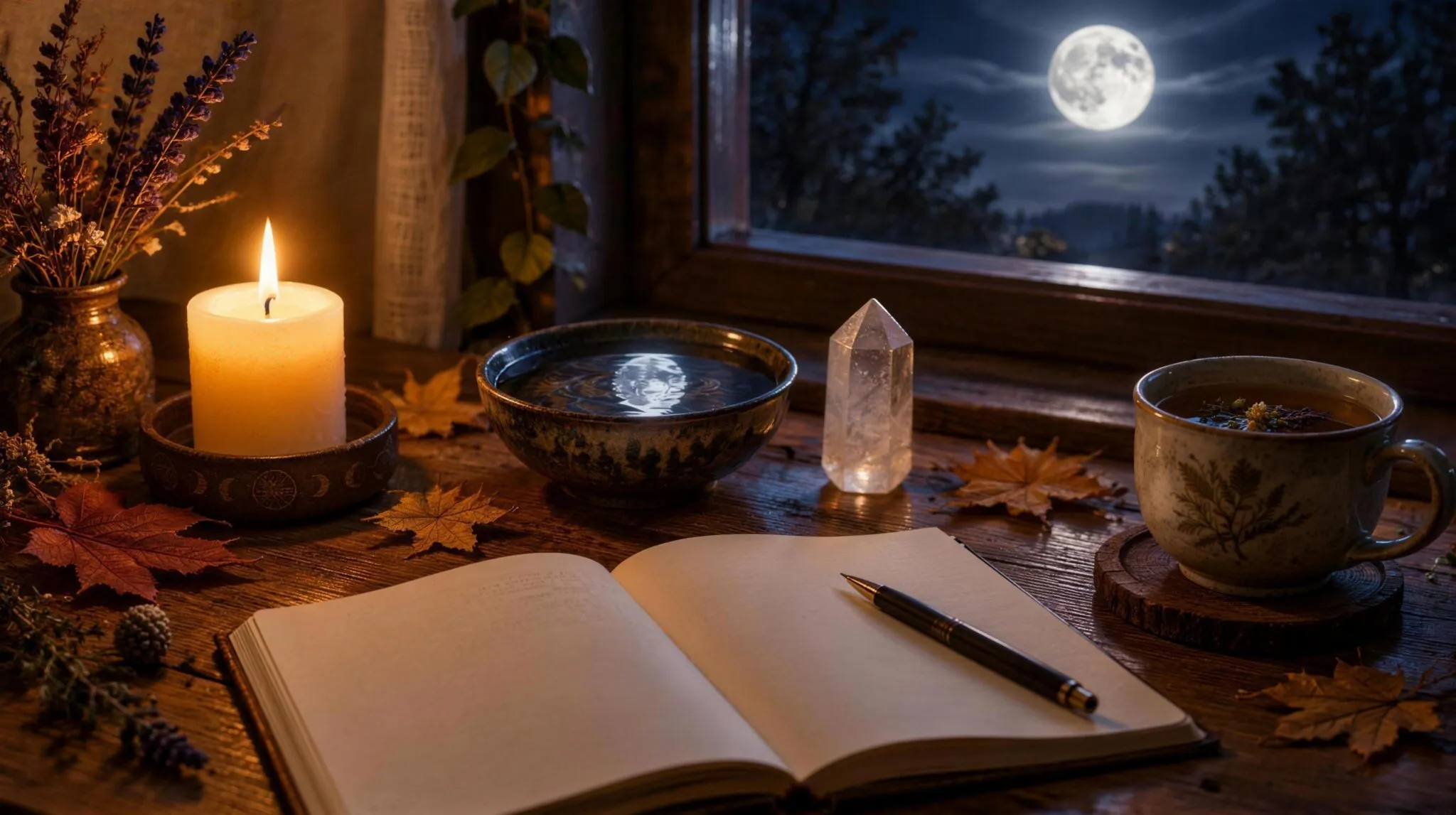
You do not need special tools to honor the Beaver Moon. A candle, a notebook and twenty minutes of quiet are enough. The ritual below follows the moon’s themes in order: gratitude for what you have built, honest release of what you cannot carry, and a simple act of shelter for the winter ahead. Adapt it freely. A ritual works when it is sincere, not when it is elaborate.
What you will need
- A quiet place, ideally with a view of the sky or a window facing east, where the full moon rises.
- A candle and a safe holder.
- A notebook and pen.
- A bowl of water. Water is a classic symbol of the Moon’s influence on tides and emotion.
- A few natural items: an autumn leaf, a stick, a stone or a piece of clear quartz. You can learn more in our guide to crystals for spiritual awakening.
- Optional: a small fireproof dish and a slip of paper for a release letter.
The ritual in eight steps
- Arrive. Sit comfortably. Take nine slow breaths. Let your shoulders drop. If you want a longer practice, our meditation guide offers ten options.
- Light the candle. Say, silently or aloud, “I welcome the Beaver Moon.” Notice the flame and the quiet around it.
- Count what you have built. On the first page of your notebook, list ten things you built, repaired or protected this year. Include small ones, such as a boundary, a friendship, a routine or a skill.
- Give thanks. Beside each item, write one line of gratitude. Who helped? What taught you? Read the list aloud slowly.
- Name what you cannot carry. On a second page, write what you are ready to release before winter: a grudge, a belief, a habit, a debt of energy. Be specific. Write it as a sentence beginning “I release…”.
- Release it. You can tear the page into small pieces and place them in the compost, or burn a small slip in a fireproof dish with great care and never leave it unattended. Pour a little water from your bowl onto the earth or into a houseplant as a symbol of cleansing.
- Build your shelter. On a third page, write three actions that will make your life warmer and steadier this winter. One for your home, one for your body, one for your heart. Choose small, doable steps and write a date beside each.
- Close. Say thank you to the Moon. Blow out the candle. Drink the rest of your tea or water and write one sentence about how you feel.
Many people like to follow a ritual with a cleansing bath or a long evening walk. If that appeals to you, read our guide to the spiritual cleansing bath for history, ingredients and steps.
The five-minute version
On a busy night, stand outside or at a window for five minutes. Breathe slowly and look at the Moon. Think of one thing you built this year and say thank you. Think of one thing you are ready to let go and say goodbye. Go back inside and do one small thing for your home before you sleep. That is a real practice.
Beaver Moon Journal Prompts
Journaling is a classic full moon practice because the full moon throws light on things you may have been avoiding. Pick three or four prompts, not all of them. Write for ten minutes without editing.
Shelter and home
- What does it feel like when I am truly safe, and when did I last feel that way?
- What would make my home feel like a refuge this winter?
- Which relationships are shelter for me, and which ones leave me exposed?
- What boundary would protect my peace like a dam creates a calm pond?
Work and building
- What am I building right now, and who is it for?
- Which of my efforts this year are still unfinished, and what is the next small stick?
- Where am I working hard but not in the right direction?
- What would I do if I trusted slow, steady progress?
Gratitude and community
- Who helped me build my life this year, and have I told them?
- What am I taking for granted that I would miss if it were gone?
- Who would I like to invite to my table this season?
- What small act of generosity could I do before the year ends?
Release
- What am I carrying that does not belong to me?
- What story about myself am I ready to retire?
- What would change if I forgave someone, including myself, a little more?
- What clutter, physical or digital, is draining my energy?
If journaling brings up heavy grief, anxiety or memories, go gently. You do not have to work through everything in one sitting. If you are struggling, please reach out to a licensed professional or a crisis line in your area.
Manifesting and Release Work Under the Beaver Moon
In many moon traditions the new moon is for planting and the full moon is for harvest and release. The Beaver Moon fits that pattern beautifully, because November is literally the month of harvest and storage. So rather than start a brand-new goal, use this moon to look at what has grown, collect it, and clear what is in its way.
The Harvest and Release method
Draw a line down the middle of a page. On the left, write Harvest. On the right, write Release.
- Harvest. List everything that has grown since the new moon on November 9, or since the start of the year: results, lessons, relationships, skills, insights.
- Release. List everything that is complete, blocked or draining: unfinished tasks you will no longer do, old stories, expectations of others.
- Choose one winter intention. Ask: what is the single most important thing I want to tend until spring? Write it in the present tense, as if it is already underway.
- Add three supports. Name three actions, three people and three boundaries that will help that intention survive the cold months.
- Act within 48 hours. Take one real step before the Moon leaves its full phase. Send the email. Make the call. Clear the shelf.
How manifesting actually works in practice
Manifesting in spiritual circles generally combines clear intention, feeling the desired state, and aligned action. Our guide to manifestation vs. the law of attraction explains the history and the differences, and our glossary entry on manifestation gives a short definition. If you like a structured framework, read our breakdown of the Bashar formula, a five-step process for acting on what excites you.

Manifesting with the Law of Attraction with Christy Whitman
Christy Whitman joins Alex Ferrari to talk about manifesting with the law of attraction, a useful companion for your full moon intentions.
One useful rule under a full moon: manifest from fullness, not from lack. Intentions made in fear tend to feel heavy. Intentions made in gratitude feel light. The Beaver Moon is a gratitude moon, so begin by naming what is already here.
A gentle note on release
Release work can stir up old pain. If you are working with grief, loss or trauma, keep your practice simple and kind, and do not push yourself to let go faster than feels safe. If you are struggling, please reach out to a licensed professional or a crisis line in your area. Spiritual practice supports healing, and it is not a substitute for professional care.
How to See the Beaver Moon
The best viewing is free and simple. Here are practical tips for the evenings of November 23 and 24.
- Look at moonrise. A full moon rises around sunset. Find a spot with a clear eastern horizon, such as a hill, field, beach or rooftop.
- Enjoy the Moon illusion. The Moon often looks enormous near the horizon. Wikipedia explains that this is an optical illusion: it appears larger near the horizon than higher in the sky, though its real size does not change. The effect is part of why supermoons feel so dramatic.
- Dress warmly. It is a November night. A blanket and a hot drink turn viewing into ritual.
Common Beaver Moon Myths and Facts
| Common claim | What the sources say |
|---|---|
| “Beaver Moon is an official Native American name.” | It is attributed to Native American and Algonquian sources in colonial almanac tradition, but the origin is not firmly documented, and nations have their own moon names. |
| “A supermoon is hugely bigger than a normal full moon.” | A full moon at perigee appears roughly 14% larger in diameter than one at its farthest point. It is real, and it is subtle. |
| “The Beaver Moon is a blood moon.” | No. A blood moon refers to a total lunar eclipse, and there is no eclipse on November 24, 2026. |
| “You have to do your ritual at the exact minute.” | The Moon looks full for about three nights. Any time from November 23 to 25 works well. |
| “Full moons change human behavior.” | Literature reviews summarized by Wikipedia have found no correlation between the lunar cycle and human biology or behavior, though there is strong evidence of lunar effects in some marine animals. |
| “The name only applies in the Northern Hemisphere.” | The name follows the calendar month. In the Southern Hemisphere the same moon rises in spring. |
The point of moon practice does not depend on the Moon changing your biology. The Moon gives you a monthly reason to stop, look up, reflect and begin again, and that rhythm is valuable on its own.
The November Full Moon Around the World
Many cultures mark the November full moon with festivals of light, water and gratitude. These are separate traditions, each with its own meaning, and their dates follow their own lunar calendars, so check local listings.
| Tradition | What it is |
|---|---|
| Loy Krathong (Thailand) | A festival in which people float decorated vessels and lamps on water. According to Wikipedia it is celebrated annually throughout Thailand and in nearby countries. |
| Kartika Purnima (Hindu, Sikh and Jain) | A cultural festival held on the full moon day of the lunar month Kartika, which Wikipedia says falls in November or December. |
| Tazaungdaing (Myanmar) | A national holiday held on the full moon day of Tazaungmon that marks the end of the rainy season, according to Wikipedia. |
| Esbat (Wicca and modern Paganism) | A ritual held at a time other than the seasonal festivals. In modern Pagan practice many people use full moons for esbats, between the festivals of Samhain and Yule. |
If you feel a pull toward remembrance this season, our guides to Samhain and to why people say the veil is thin explain how many traditions treat the weeks between autumn and winter as a time for honoring those who came before.
A Seven-Day Beaver Moon Plan
Use these days as a gentle framework. Each practice takes ten to twenty minutes.
| Day | Focus | Practice |
|---|---|---|
| Sat, Nov 21 | Declutter | Clear one drawer, shelf or inbox. Give away what you no longer use. |
| Sun, Nov 22 | Direction | The Sun enters Sagittarius. Write where you want to be by spring. |
| Mon, Nov 23 | First full night | Watch moonrise. Take a short walk and notice what you are grateful for. |
| Tue, Nov 24 | Beaver Moon | Do the ritual and the Harvest and Release page. |
| Wed, Nov 25 | Connection | Send three messages of thanks to people who helped you build your year. |
| Thu, Nov 26 | Gratitude | Share a meal. If you celebrate Thanksgiving, add a moment of thanks for the Moon. |
| Fri, Nov 27 | Rest and follow-through | Take one concrete step on your winter intention, then rest. |
Bringing the Beaver Moon Into Your Winter
The Beaver Moon asks a simple question: what are you building, and is it ready for the cold? You do not need to answer it perfectly. Take one honest step toward shelter, one toward gratitude and one toward release. When the Moon wanes, notice what has shifted. Then, when the next full moon arrives on December 24, return to your notebook and begin again.
Beaver Moon Books Worth Reading
These books are good starting points for moon practice, astrology and gratitude. Each link below goes to Amazon, and we may earn a small commission at no cost to you.
Moonology by Yasmin Boland
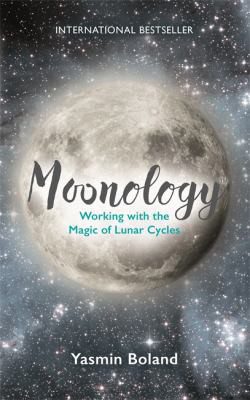
A popular guide to working with the Moon’s phases and signs, with ideas for new moon and full moon rituals. See it on Amazon.
Lunar Abundance by Ezzie Spencer
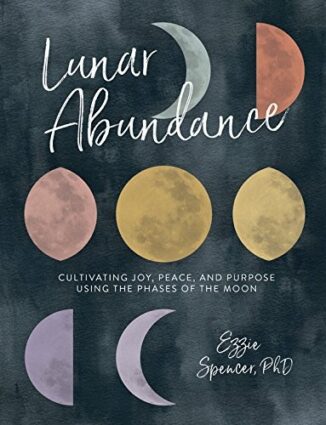
A guide to living in rhythm with the lunar cycle, with reflection and planning ideas for each phase of the month. See it on Amazon.
Braiding Sweetgrass by Robin Wall Kimmerer

A beloved book that weaves Indigenous knowledge, botany and gratitude, and a respectful way to learn how the natural world teaches reciprocity. See it on Amazon.
Astrology for the Soul by Jan Spiller

An introduction to the Moon’s nodes and what they say about growth in the birth chart, a good next step after a full moon in Gemini. See it on Amazon.
Ask and It Is Given by Esther and Jerry Hicks

A well-known introduction to the law of attraction, with practical exercises that pair well with full moon intentions. See it on Amazon.
More Conversations on the Soul’s Journey and the Stars
If this moon has you curious about how the sky relates to your path, this episode goes further into the birth chart as a map of the soul. You can also explore our free masterclasses and the full NLS Mastery library.

Evolutionary Astrology: Decoding Your Soul’s Journey with Ricky Williams
Ricky Williams explores evolutionary astrology and what the birth chart can say about the soul’s journey.
Frequently Asked Questions About the Beaver Moon
When is the Beaver Moon in 2026?
The Beaver Moon peaks on Tuesday, November 24, 2026, at 14:53 UTC. The Moon looks full on the evenings of November 23 and 24.
What time is the Beaver Moon on November 24, 2026?
The exact full moon is at 14:53 UTC, which is 9:53 a.m. Eastern, 8:53 a.m. Central, 7:53 a.m. Mountain and 6:53 a.m. Pacific. In India it is 8:23 p.m. and in Sydney it is 1:53 a.m. on November 25.
What zodiac sign is the November 2026 full moon in?
The Beaver Moon is in Gemini, about 2 degrees into the sign, opposite the Sun in Sagittarius. In sidereal (Vedic) calculations the same Moon falls about 24 degrees earlier, in Taurus.
Is the November 2026 Beaver Moon a supermoon?
Yes. The Farmers’ Almanac lists it as the first of three supermoons in a row, followed by December 2026 and January 2027. A supermoon is a full moon near the Moon’s closest approach to Earth, and it looks roughly 14% larger than a full moon at its farthest.
Is there a lunar eclipse in November 2026?
No. The lunar eclipses of 2026 are a total eclipse on March 3 and a partial eclipse on August 28. The November full moon is not eclipsed.
Why is it called the Beaver Moon?
Two explanations are common. Beavers finish building their lodges and dams in late autumn before the freeze, and November was the start of the trapping season, when beaver pelts were thick.
Is Beaver Moon a Native American name?
It is attributed to Native American and Algonquian sources in colonial almanac tradition, but its exact origin is uncertain, and different nations have their own moon names. We suggest treating it as an almanac nickname and learning from Indigenous teachers about their own traditions.
What is the spiritual meaning of the Beaver Moon?
It is a moon of preparation, shelter, gratitude and release before winter. Many people use it to take stock of what they have built and to let go of what they cannot carry into the cold season.
What should I do on the Beaver Moon?
Try a simple ritual: light a candle, list what you built this year, give thanks, write what you are ready to release, and choose three actions to make your winter steadier. Our eight-step ritual above takes about 20 to 30 minutes.
What are good journal prompts for the Beaver Moon?
Try “What am I building, and who is it for?”, “What would make my home feel like a refuge?”, and “What am I ready to release before winter?” The article above includes more than twenty prompts grouped by theme.
Is the Beaver Moon good for manifesting?
Traditionally the full moon is for harvest and release, while the new moon is for planting. The Beaver Moon is a strong time to gather results, release what is blocking you and choose one winter intention, followed by a real action step.
What is the difference between the Beaver Moon and the Hunter’s Moon?
They are different months. The Hunter’s Moon is the full moon after the Harvest Moon, in October 2026 on October 25 to 26. The Beaver Moon is the next full moon, in November. See our Hunter’s Moon guide.
What is the next full moon after the Beaver Moon?
The next full moon is the Cold Moon on December 24, 2026, at 01:28 UTC, which is December 23 at 7:28 p.m. Central. It is also described as a supermoon.
How many full moons are there in 2026?
There are thirteen full moons in 2026, including a blue moon on May 31 because May has two. See the full list in the calendar table above.
Does the Beaver Moon affect sleep and emotions?
Many people say they sleep or feel differently around the full moon, though literature reviews have found no clear link between the lunar cycle and human behavior. If your sleep or mood feels unsteady, be gentle with yourself, and if you are struggling, please reach out to a licensed professional or a crisis line.
Sources and Further Reading
Beaver Moon 2026 (Farmers’ Almanac) · Full moon (Wikipedia) · Supermoon (Wikipedia) · Lunar phase (Wikipedia) · Gemini (astrology) (Wikipedia) · North American beaver (Wikipedia) · Lunar effect (Wikipedia)
Full moon times were checked against the Farmers’ Almanac and an independent calculation of the Moon’s orbit. Moon-sign placements and phase times are calculated, so double-check against your preferred ephemeris if you need minute-level accuracy for astrological work.