
A numerology chart is a map of the numbers hidden in your birth date and your name. It reduces both to a handful of core numbers, each describing a different layer of you: your life path, your natural gifts, your inner desires and the way others first experience you. You can calculate yours in about ten minutes with nothing more than a pen and the table below.
Key Takeaways
- What it is: A set of core numbers drawn from your full birth name and date of birth, read together as one portrait.
- The big four: Life path, expression, soul urge and personality numbers form the foundation of every chart.
- How to calculate: Add and reduce digits to a single number from 1 to 9, keeping master numbers 11, 22 and 33 when they appear.
- Beyond the core: Birthday number, maturity number, pinnacles, challenges and personal year add timing and depth.
- Best use: A mirror for reflection and self-understanding, not a prediction or a substitute for professional advice.
Numerology Chart at a Glance
| Question | Quick answer |
|---|---|
| Origin | Often linked to the Greek teacher Pythagoras, with parallel traditions in Chaldean, Hebrew and Indian systems |
| Core inputs | Full birth name at birth and complete date of birth |
| Main numbers | Life path, expression, soul urge, personality, birthday, maturity |
| Number range | 1 to 9, plus master numbers 11, 22 and 33 |
| Time to calculate | About 10 minutes by hand |
| Systems | Pythagorean (most common in the West) and Chaldean |
| Timing tools | Pinnacles, challenges and personal year cycles |
| Best for | Self-reflection, relationships, career direction and life transitions |
What Is a Numerology Chart?
A numerology chart gathers the numbers drawn from your name and birth date into a single layout, much the way an astrology chart gathers planets and signs. Each number carries a theme. Read together, they describe temperament, strengths, recurring lessons and the seasons of life you move through.
The idea is old. Many traditions held that numbers are more than quantities; they are patterns that shape everything from music to the movement of the stars. The Greek philosopher Pythagoras and his followers taught that numbers have character, and later numerologists built systems that assign a number to every letter of the alphabet. Your name becomes a number. Your birth date becomes a number. The chart is the conversation between them.
It helps to be clear about what a chart does and does not do. It is a tool for reflection. It offers language for patterns you may already sense in yourself, such as why you crave independence, why you keep stepping into leadership, or why quiet creative work feels like home. It does not decide your future, and it should never replace medical, legal or financial guidance.
Why people turn to it
Most seekers arrive at numerology during a moment of transition: a move, a career change, the end of a relationship, a new decade of life. A chart gives the confusion some shape. When you see that you are in a Personal Year 9, a year of completion, letting go starts to feel natural rather than frightening. That small shift in understanding is often worth the ten minutes it takes to build the chart.
The Core Numbers in Your Chart
Every numerology chart is built from the same few pieces. Some come from your birth date, which describes your path. Others come from your name, which describes how you express and experience that path.
| Number | Calculated from | What it reveals |
|---|---|---|
| Life path | Full birth date | Your core purpose and the major lessons of this lifetime |
| Expression (destiny) | All letters in your full birth name | Your natural talents and how you work in the world |
| Soul urge (heart’s desire) | Vowels in your birth name | What you want most deep down |
| Personality | Consonants in your birth name | The first impression you make on others |
| Birthday | Day of the month you were born | A specific gift that colors your path |
| Maturity | Life path plus expression | Who you are growing into, especially after your late thirties |
Think of the life path as the road, the expression number as the vehicle, the soul urge as the reason you are driving, and the personality number as the paint job people see from the sidewalk. None of them tells the whole story alone. The chart only comes alive when you notice how they agree or pull against each other.
Name versus birth date
The birth date is fixed. It describes what you came in with. The name is where numerology gets personal, because it is the sound and shape your family chose for you. Most practitioners use the full name exactly as written on your birth certificate for the core chart, then look separately at nicknames, married names and chosen names for added insight.
How to Calculate Your Numerology Chart Step by Step
You need two things: your full name as given at birth and your complete date of birth. Work slowly and write each step down. The method is the same for every number: add the digits, and if the total has two digits, add those together until you reach a single digit. The exceptions are the master numbers 11, 22 and 33, which are kept as they are.
The letter table (Pythagorean)
| 1 | 2 | 3 | 4 | 5 | 6 | 7 | 8 | 9 |
|---|---|---|---|---|---|---|---|---|
| A | B | C | D | E | F | G | H | I |
| J | K | L | M | N | O | P | Q | R |
| S | T | U | V | W | X | Y | Z |
Vowels are A, E, I, O and U. Y is usually treated as a vowel when it makes a vowel sound, as in Lynn, and as a consonant when it begins a syllable, as in Yolanda. Every other letter is a consonant.
A worked example
Take someone named Maria Anne Lopez, born on March 14, 1988. Start with the life path. Reduce each part of the date separately: March is 3, the day 14 becomes 1 + 4 = 5, and the year 1988 becomes 1 + 9 + 8 + 8 = 26, then 2 + 6 = 8. Add 3 + 5 + 8 = 16, and 1 + 6 = 7. Her life path number is 7.
For the expression number, convert every letter of MARIA ANNE LOPEZ using the table and add the results. Reduce the total the same way. For the soul urge, add only the vowels. For the personality number, add only the consonants. Each of these takes under two minutes once you have the letter values written above the name.
If you reach a single digit, you are done. If you reach 11, 22 or 33 at the final step, stop there and treat it as a master number. Many numerologists also note the number you passed through on the way, such as the 16 that became a 7 above, because the earlier number adds a hint of nuance to the reading.
Always use the exact full name from your birth certificate for the core chart. Middle names count. Shortened or married names are read as a secondary layer, not a replacement.
Your Life Path Number: The Heart of the Chart
If you only calculate one number, make it this one. The life path number describes the central theme of your life: the qualities you are here to develop and the kind of experiences that keep returning until you learn from them. Our full guide to the life path number goes through every type in depth. Here is the short version.
| Life path | Keywords | Core lesson |
|---|---|---|
| 1 | Leader, pioneer, independent | Trusting your own voice without isolating yourself |
| 2 | Peacemaker, partner, intuitive | Balancing sensitivity with healthy boundaries |
| 3 | Creator, communicator, joyful | Expressing yourself fully without scattering your energy |
| 4 | Builder, steady, practical | Creating structure while staying open to change |
| 5 | Explorer, adaptable, free | Finding freedom through commitment |
| 6 | Nurturer, responsible, devoted | Caring for others without losing yourself |
| 7 | Seeker, analyst, mystic | Trusting inner knowing as much as logic |
| 8 | Achiever, powerful, ambitious | Using power and money with integrity |
| 9 | Humanitarian, wise, compassionate | Letting go and giving without expectation |
| 11 | Illuminator, intuitive, sensitive | Grounding high sensitivity into purpose |
| 22 | Master builder, visionary | Turning big visions into real structures |
| 33 | Master teacher, healer | Serving without self-sacrifice |
Notice that none of these is better than another. A 4 is not a lesser 8. Each is a different way of learning, and each has a shadow side that the chart can help you see with kindness rather than judgment.
Your Expression Number: Talents and Calling
The expression number, also called the destiny number, comes from every letter in your full birth name. Where the life path describes the road, the expression number describes what you carry with you: your abilities, your style of working and the way your energy naturally wants to move into the world.
A person with an expression number of 3 tends to communicate, perform or create without much effort. Someone with a 6 is drawn toward caring roles and tends to hold their community together. An 8 reads situations in terms of structure, resources and results. These are tendencies, not job titles. Plenty of 3s become accountants who write wonderful reports, and plenty of 8s lead quiet lives of service.
When life path and expression agree
Pay attention to how your life path and expression numbers relate. When they share a similar energy, such as a life path 5 with an expression 3, the road and the gifts support each other, and life can feel as though it flows. When they differ strongly, such as a life path 4 with an expression 5, you may feel pulled between stability and freedom. That tension is not a flaw. It is the creative friction that makes you who you are, and the lesson is to hold both.
Your Soul Urge Number: What You Want Underneath
The soul urge number, sometimes called the heart’s desire, is built from the vowels in your name. It describes what you want when no one is watching: the quiet motivations that steer your choices even when you do not name them. It often explains why a life that looks fine from the outside can still feel off.
A soul urge of 2 longs for harmony and close connection. A soul urge of 7 craves solitude, depth and understanding. A soul urge of 1 wants independence and the freedom to lead. Many people are surprised by their soul urge because it contrasts with the face they show the world. The shy writer with a soul urge of 3 may secretly ache to be heard. The confident manager with a soul urge of 6 may most want a peaceful home.
You can explore this number in more detail in our guide to the soul urge number. If the number rings true, let it guide small decisions: how you spend free time, the kind of friendships you invest in, the work that feeds rather than drains you.
Your Personality Number: The Face You Show
The personality number is built from the consonants in your name. It describes the energy you project and the impression people form before they know you well. It is the outer layer: your style, your manner and the mood you create when you walk into a room.
Someone with a personality number of 9 can seem warm, wise and a little distant, as if they are carrying the world on their mind. A personality number of 4 comes across as dependable and grounded. A 5 appears lively and curious. Often, friends describe you in terms close to your personality number long before they understand your soul urge. When the two numbers are very different, people may be surprised to find out who you are underneath, and that discovery can become the foundation of deep trust.
Birthday Number and Maturity Number
Two supporting numbers round out the chart. They are small, but they often explain details that the big four miss.
The birthday number
This is simply the day of the month you were born. Someone born on the 17th has a birthday number of 17, reduced to 8. It adds a specific talent or flavor to the life path. A life path 3 born on the 22nd carries the creativity of the 3 along with the practical vision of a master 22, which can make for a person who builds something lasting out of imagination.
The maturity number
Add your life path number to your expression number and reduce the result. This is the maturity number, and it is said to grow louder in the second half of life, particularly after your late thirties or forties. Many people describe feeling more like themselves as they age, and the maturity number gives that familiar experience a name. It suggests who you are becoming once you have lived through the lessons of your early years.
Pinnacles and Challenges: The Four Seasons of a Life
Beyond the core numbers, a fuller chart divides life into four major periods, each with its own pinnacle (an opportunity) and challenge (a lesson to be met). Together they give the chart a sense of timing.
| Period | Typical span | How it is calculated |
|---|---|---|
| First pinnacle | Birth to about age 27 to 36 | Birth month plus birth day, reduced |
| Second pinnacle | Nine years after the first | Birth day plus birth year, reduced |
| Third pinnacle | Nine years after the second | First plus second pinnacle, reduced |
| Fourth pinnacle | From the third period onward | Birth month plus birth year, reduced |
The length of the first period depends on your life path number. Subtract your life path from 36 to find the age at which the first pinnacle ends. A life path of 7 means the first period ends at age 29. Each later period typically lasts nine years, except the last, which continues for the rest of life.
Challenges are found by subtracting rather than adding, using the reduced month, day and year. They tend to be quieter than pinnacles but just as meaningful. A challenge number of 0 is considered rare and suggests that you may choose which lessons to focus on, while other numbers point to specific themes such as confidence, boundaries or trust.
Reading your pinnacles with perspective
Treat these periods as weather reports rather than verdicts. A pinnacle of 4 might ask you to build discipline and structure. A pinnacle of 5 may bring travel, change and new ways of thinking. Many people look back and recognize the shape of a period they have already lived, which is part of what makes the system feel real.
Personal Year, Month and Day: Your Current Cycle
Numerology also works in nine-year cycles. Your personal year number tells you the theme of the current year and is the most popular way to use the chart in daily life.
To calculate it, add your birth month, your birth day and the current calendar year, reducing each part first. For someone born on March 14, the year 2026 gives 3 + 5 + 1 = 9, a personal year of 9, which is a time of completion and release. The next year will be a personal year 1, a fresh beginning. Add your personal year to the calendar month to find your personal month, and to the day for your personal day.
| Personal year | Theme | Best use of the year |
|---|---|---|
| 1 | New beginnings | Start projects, take initiative |
| 2 | Patience and partnership | Cooperate, nurture, wait |
| 3 | Creativity and joy | Express, socialize, play |
| 4 | Foundation and effort | Build systems, do the work |
| 5 | Change and freedom | Travel, take risks, adapt |
| 6 | Home and love | Care for family, commitment |
| 7 | Reflection and rest | Study, meditate, go inward |
| 8 | Power and results | Pursue goals, manage money |
| 9 | Completion | Release what no longer fits |
If you are curious about the quiet influence of repeating numbers in daily life, our guide to angel numbers explores how people interpret the patterns they notice.
What the Numbers 1 to 9 Mean
Every number from 1 to 9 carries a character. Here is a brief portrait of each, which applies whether the number shows up as your life path, expression, soul urge or personality. The meaning shifts slightly depending on where it sits, but the core energy remains.
Number 1: The Initiator
Number 1 is the spark: independence, courage and the drive to begin. People with strong 1 energy lead by instinct and dislike being told how to do things. Their gift is originality. Their challenge is learning that asking for help is strength, and that leadership grows when others are invited to shine. In shadow, the 1 can become stubborn or lonely. In balance, it is the friend who goes first so everyone else feels brave enough to follow.
Number 2: The Peacemaker
Number 2 is receptivity: diplomacy, intuition and the gift of making others feel safe. A 2 reads the room before anyone speaks and works best in partnership. The lesson is voice. Many 2s give too much and resent it later, so healthy boundaries are the practice. When balanced, the 2 is the quiet force that holds families, teams and communities together.
Number 3: The Communicator
Number 3 is expression: creativity, humor and a talent for lifting the mood. Words, art, music or simply presence come easily. The shadow is scattered energy and avoiding deeper feelings behind a bright face. The lesson is depth and follow-through. A mature 3 turns joy into something others can feel and remember.
Number 4: The Builder
Number 4 is structure: patience, loyalty and respect for process. Fours build the systems others rely on, and they dislike shortcuts. Their challenge is rigidity, a fear that change will topple what they built. The lesson is trust. When a 4 learns to bend without breaking, their steadiness becomes a refuge for everyone around them.
Number 5: The Explorer
Number 5 is freedom: curiosity, adaptability and a hunger for experience. Fives learn by doing and grow restless in routine. The shadow is overindulgence and commitment avoidance. The lesson is discernment, using freedom with purpose. A grounded 5 brings fresh air into every room and shows others that change can be exciting.
Number 6: The Nurturer
Number 6 is care: responsibility, beauty and devotion to home and community. Sixes are the ones who remember birthdays and show up with soup. The shadow is control or martyrdom, taking on too much. The lesson is balance, caring for yourself with the same tenderness you offer others.
Number 7: The Seeker
Number 7 is wisdom: analysis, solitude and a longing to understand what lies beneath the surface. Sevens are drawn to research, spirituality and quiet. The shadow is isolation and skepticism that blocks connection. The lesson is to combine mind and heart. When they do, 7s become teachers who make the mysterious feel approachable.
Number 8: The Achiever
Number 8 is power: ambition, organization and an understanding of money and influence. Eights are natural managers who think in terms of results. The shadow is workaholism or an unhealthy tie between worth and status. The lesson is integrity. An evolved 8 uses influence to create abundance for many, not just for themselves.
Number 9: The Humanitarian
Number 9 is completion: compassion, wisdom and a wide view of life. Nines feel the suffering of the world and often work to ease it. The shadow is bitterness or difficulty letting go. The lesson is release. A mature 9 gives freely and trusts that endings make room for something new.
Master Numbers 11, 22 and 33
Master numbers are double digits that are not reduced. They are thought to carry a higher potential and a heavier load. Our full guide to master numbers covers them at length, but a quick summary helps you read your chart.
| Master number | Root | Theme | Common challenge |
|---|---|---|---|
| 11 | 2 | Intuition, inspiration, spiritual insight | Nervous tension and self-doubt |
| 22 | 4 | Practical vision, building at scale | Pressure to achieve and fear of failure |
| 33 | 6 | Compassionate teaching and healing | Taking on too much responsibility |
If you have a master number, you also carry its root. A person with an 11 lives both the 11 and the 2: the sensitive, relational 2 supports the visionary 11. Many people with master numbers find it easier to live the root energy first and grow into the higher expression over time. There is no failure in this. Some numerologists hold that most people live the root number most of the time, and that is perfectly good living.
Karmic Debt Numbers: 13, 14, 16 and 19
When a core number passes through 13, 14, 16 or 19 on the way to a single digit, some systems call it a karmic debt number. The idea is that these numbers point to lessons from the past that the soul is invited to work through now.
| Number | Reduces to | Lesson |
|---|---|---|
| 13 | 4 | Honest effort over shortcuts |
| 14 | 5 | Moderation and wise use of freedom |
| 16 | 7 | Humility and rebuilding after ego falls away |
| 19 | 1 | Independence balanced with accepting help |
You do not need to take karmic debt literally. Many readers find it more useful as a gentle prompt: notice the pattern, ask what it wants to teach, and meet it with patience. If your chart shows one, treat it as a place where growth is available, not as a punishment.
Pythagorean vs Chaldean Numerology
Two systems dominate the conversation. The Pythagorean system, described above, assigns the numbers 1 to 9 to letters in order and is the most common in Western countries. The Chaldean system is older in lineage and assigns values from 1 to 8 based on the sound vibration of each letter, leaving 9 aside as a sacred number.
| Feature | Pythagorean | Chaldean |
|---|---|---|
| Letter values | 1 to 9 in alphabetical order | 1 to 8 by sound |
| Where 9 appears | Used for I and R | Only appears in totals |
| Master numbers | Kept (11, 22, 33) | Treated differently, often not used |
| Popularity | Most widely used in the West | Favored by traditional practitioners |
| Best for | Personality and life purpose | Name vibration and business names |
Neither is more correct. Try both if you are curious, but choose one for your core chart and stay with it, because switching systems midway muddles the reading. This guide uses Pythagorean values throughout.
Missing Numbers and Repeating Numbers
Look at the letters of your full birth name and count how many times each number from 1 to 9 appears. This simple tally is sometimes called the karmic lessons or hidden passion chart. A missing number is not an absence of the quality; it simply suggests an area where you may have to work a little harder or seek deliberate practice.
Missing a 4, for example, may point to a lifelong lesson in consistency and structure. Missing a 2 can mean that tact and cooperation take effort. A number that appears many times, such as five or six times, suggests a strong, even overwhelming, natural talent in that area. Someone with many 8s in their name may be both highly capable and prone to overwork.
Use this part of the chart as a to-do list for your growth rather than a limitation. If you are missing a 7, you can deliberately build quiet time into your week. If you are missing a 3, joining a choir or writing group can bring that energy into your life.
How to Read Your Chart as a Whole
Reading one number at a time is useful, but the real insight comes from noticing relationships. Lay your numbers out on one page and ask a few simple questions.
- Which numbers repeat? A number that shows up in several places is a dominant theme in your life.
- Where do numbers conflict? A life path of 4 with a soul urge of 5 suggests wanting stability and adventure at once.
- Which numbers support each other? A life path of 6 with an expression of 2 combines caring with diplomacy.
- What does the current personal year ask of you? Compare it with your pinnacle to see the larger and smaller cycles at work.
- What feels true, and what does not? Your own recognition is the final test.
A short example of interpretation
Imagine a chart with a life path 7, an expression 3, a soul urge 6 and a personality 9. The 7 suggests a seeker; the 3, an expressive communicator. This person might write or teach about deep subjects in a way that others find warm and clear. The soul urge of 6 shows a longing for home and belonging beneath the intellectual pursuit, and the personality 9 suggests that others see them as wise and slightly remote. The tension might be between the need for solitude and the longing for close community. The practice would be to schedule both, rather than choose one.
Notice how this reading turns four numbers into a story. That is the skill to build. Start with the simplest sentence you can write for each number, then connect them with the word because, as in: I seek depth because I long for belonging.
Numerology Charts and Relationships
Many people look at charts to understand partners, family members and friends. Comparing life path numbers is the most common method, and the idea is simple: some numbers move at similar speeds, others complement each other, and others challenge each other in useful ways.
- Shared numbers often feel like instant recognition. You understand each other with few words.
- Complementary numbers, like a 1 and a 2, balance leading with listening.
- Challenging numbers, like a 4 and a 5, can feel frustrating yet teach each person something they lack.
- Personal years matter too. Two people in different cycles, such as a 1 and a 9, may feel out of step until they notice the timing.
Resist the urge to treat numbers as verdicts on whether a relationship can work. People of every combination have built deep, lasting bonds. Use the chart as a conversation starter: What do you need in a 7 year? What does a 3 in me want from us? These are the questions that build intimacy.
Using Your Chart for Career and Life Decisions
A chart works best as one voice among many when you face a big choice. If your life path is 3 and your job asks you to work in silence for ten hours a day, the discomfort makes sense, and you can start thinking about how to bring creativity into your role. If your expression number is 8 and you have been avoiding leadership, the chart may be nudging you to stretch.
Timing a new beginning
Many people use their personal year as a gentle guide to timing. A personal year 1 supports new ventures. A personal year 7 supports study and rest. A personal year 9 favors clearing out. Adjust, do not obey. If a personal year 9 coincides with a great opportunity, take the opportunity, and use the energy of the year to let go of what stands in its way.
Names and name changes
Some people explore the numbers of a chosen name, a pen name or a business name. This can be a creative exercise: how does the new name sound, and what energy does it carry? Remember that the birth name remains the foundation of your core chart. A new name adds a layer rather than erasing what came before.
Common Mistakes When Reading a Numerology Chart
- Using a nickname instead of the full birth name for the core numbers.
- Reducing master numbers when they should be kept, or keeping them when you are still learning the basics.
- Mixing Pythagorean and Chaldean values in one chart.
- Reading each number in isolation instead of looking for patterns between them.
- Treating the chart as fate. Numbers describe tendencies, and you remain free to choose.
- Arithmetic slips. Double check each addition, especially the year.
If a reading does not feel right, recheck the math before you doubt the system. A single wrong digit can change the whole chart.
Myths and Honest Limits
Numerology is a spiritual and cultural practice, not a laboratory science. Studies have not shown that numbers predict events, and thoughtful practitioners say so. The value people report is reflective: a structured way to ask questions about identity, timing and purpose.
- Myth: Your numbers lock in your destiny. Truth: They describe themes, and your choices shape how you live them.
- Myth: Some numbers are lucky and others unlucky. Truth: Every number has gifts and challenges.
- Myth: A master number means you are more spiritual. Truth: It signals a different kind of workload, not superiority.
- Myth: You need a professional to read your chart. Truth: You can calculate and reflect on your own, then seek a guide if you want more depth.
Approach your chart with curiosity and discernment. Keep what rings true, set aside what does not, and let the practice serve your growth rather than become another source of pressure.
A Brief History of Numerology
Number mysticism appears across the ancient world. Babylonians and Egyptians used numbers in calendars, architecture and ritual. Greek thinkers in the Pythagorean tradition taught that numbers underlie harmony in music and order in the cosmos. Hebrew and Greek cultures assigned numerical values to letters, creating practices such as gematria and isopsephy, in which words could be read as numbers.
Modern Western numerology took shape in the early twentieth century, when writers popularized the simple one to nine letter table and linked it with personal character. Since then it has become a favorite of seekers who want a hands-on tool for self-study. It remains a living tradition, with many teachers adding their own insights and methods.
Understanding this lineage helps you hold the practice with the right spirit. It is a symbolic language, inherited and reshaped by many cultures, and your job is not to prove it but to see what it reflects back to you.
Expression, Soul Urge and Personality by Number
The same digit means something slightly different depending on where it appears in your chart. This table gives a quick comparison to help you separate the layers.
| Number | As expression (talent) | As soul urge (desire) | As personality (impression) |
|---|---|---|---|
| 1 | Pioneering, directing | Independence and achievement | Confident, direct |
| 2 | Mediating, supporting | Love and harmony | Gentle, approachable |
| 3 | Creating, communicating | Joy and self-expression | Charming, lively |
| 4 | Organizing, building | Security and order | Reliable, practical |
| 5 | Adapting, promoting | Freedom and variety | Dynamic, magnetic |
| 6 | Caring, teaching | Family and beauty | Warm, trustworthy |
| 7 | Researching, analyzing | Truth and solitude | Reserved, intriguing |
| 8 | Managing, leading | Success and influence | Powerful, polished |
| 9 | Serving, inspiring | Compassion and meaning | Wise, generous |
When you read your own numbers, find each row and notice what resonates. A person with a 7 in the soul urge position and a 3 in the personality position might seem outgoing yet quietly crave solitude. This is the kind of detail that makes a chart feel personal.
Living Your Personal Year
Because the personal year changes every January, it is the part of your chart you can work with most often. Here are practical ways to match your actions to the energy.
Years 1 to 3: planting and growing
A personal year 1 invites you to begin: a project, a habit, a new chapter. Do not wait for the perfect moment. A year 2 slows things down. Relationships and patience are the work, so resist forcing outcomes. A year 3 opens creative and social doors. Say yes to invitations and share what you make.
Years 4 to 6: building and tending
A year 4 asks for steady effort, budgeting and routine. It may not feel glamorous, yet it builds the base for what follows. A year 5 shakes things up with travel, change and surprise. Stay flexible. A year 6 turns toward home, family and responsibility, and many people find love or commitment deepening.
Years 7 to 9: reflecting and releasing
A year 7 is the quiet year. Study, meditate, rest and listen to your inner voice. A year 8 brings power, money and results, so act on what you have prepared. A year 9 completes the cycle. Clear clutter, forgive, and let go so the next year 1 has room to begin.
Write the number at the top of your journal each January and revisit it quarterly. Many people find that simply naming the theme reduces anxiety, because the year no longer feels random.
Daily Practices to Work With Your Numbers
A chart on paper is only a start. These simple practices bring it into everyday life.
- Morning intention: choose one quality from your life path number to practice that day, such as courage for a 1 or patience for a 4.
- Evening reflection: write one sentence about where you lived your numbers well and one about where you struggled.
- Journaling prompts: What does my soul urge want this month? What is my personality number hiding from others?
- Meditation: sit quietly, repeat your life path number slowly, and notice any image, feeling or word that arises.
- Share with a friend: compare charts and talk about what resonates. Conversation often reveals what private study misses.
Keep it light. The aim is not to interpret every moment through numbers but to give yourself a few trusted handrails for growth. If you enjoy deepening your practice, explore the related teachings on birth chart houses and meditation for beginners, which pair beautifully with numerology.
A Full Chart Walkthrough
To see how everything fits together, consider a fictional person, Daniel James Carter, born on November 29, 1975.
| Number | Calculation | Result |
|---|---|---|
| Life path | Month 11 (kept), day 2 + 9 = 11 (kept), year 1 + 9 + 7 + 5 = 22 (kept); 11 + 11 + 22 = 44, then 4 + 4 | 8 (via 44) |
| Birthday | Day 29, 2 + 9 = 11 | 11 (reduces to 2) |
| Pinnacle 1 ends | 36 minus life path 8 | Age 28 |
Even without finishing every letter, this chart already tells a story. A life path of 8 reached through the powerful 44 suggests someone with strong capacity to build and lead. The birthday number of 11 adds intuition and sensitivity, an interesting contrast to the practical 8. Daniel might be the executive who also meditates, or the builder with a gift for sensing what people need.
When reading your own, write two or three sentences like these before consulting any book. Your first instincts are often wise.
Numerology and Astrology: How They Complement Each Other
Many seekers pair numerology with astrology. Where a birth chart maps the sky at the moment of your birth, a numerology chart maps the numbers in your date and name. They approach the same question from different angles: who am I, and what am I here to learn?
Some readers notice correspondences. A life path 1 and a fire sign may both speak of initiative. A life path 6 and a Taurus or Libra Venus may both highlight love and beauty. Neither system requires the other, but together they can offer a more textured portrait. If the two disagree, treat the difference as a question rather than a problem.
Working With a Numerology Reader
You can read your own chart, but some people enjoy a guide. If you decide to work with a reader, look for someone who explains their method, invites your questions and speaks in terms of tendencies and choices rather than fixed outcomes. Be wary of anyone who predicts disasters, pressures you into paying for fixes or claims certainty about your future.
- Ask what system they use and why.
- Notice whether you leave feeling clearer and more capable, or more anxious.
- Take notes and test the insights against your own experience over time.
- Keep your decisions in your own hands.
Living Your Life Path in Everyday Life
Once you know your life path number, you can look for practical ways to live it well. These short notes pair each path with fitting work, relationship patterns and a simple growth practice.
Life path 1 in daily life
Careers that reward initiative, such as entrepreneurship, leadership and design, tend to suit this path. In relationships, the 1 does well with partners who respect independence. A practice for growth: ask for input before deciding, and notice how collaboration strengthens your vision.
Life path 2 in daily life
Counseling, teaching, mediation and healing roles are natural fits. In relationships, the 2 gives deeply and needs reciprocity. A practice for growth: state one need clearly each day, without apology.
Life path 3 in daily life
Writing, speaking, the arts and hospitality often feel like home. In relationships, the 3 brings play and needs space to talk things through. A practice for growth: finish one creative project before starting the next.
Life path 4 in daily life
Engineering, finance, construction and administration suit the careful 4. In relationships, loyalty is the gift and flexibility the edge. A practice for growth: add one unplanned, joyful activity to your week.
Life path 5 in daily life
Travel, sales, media and any work with variety fit the 5. In relationships, freedom matters, so honest conversations about space help. A practice for growth: commit to one thing for thirty days and see what it teaches.
Life path 6 in daily life
Healthcare, education, design and community work often attract the 6. In relationships, devotion is the gift and perfectionism the trap. A practice for growth: let someone else take care of you this week.
Life path 7 in daily life
Research, writing, spiritual teaching and technical analysis fit the 7. In relationships, solitude needs are normal, and clear communication prevents misunderstanding. A practice for growth: share one private thought with someone you trust.
Life path 8 in daily life
Business, law, management and finance often call the 8. In relationships, generosity with time matters as much as generosity with money. A practice for growth: give something away without a return in mind.
Life path 9 in daily life
Humanitarian work, the arts, teaching and healing suit the 9. In relationships, the 9 loves widely and benefits from learning to receive. A practice for growth: complete one old task and release one old grudge.
Choose the one that matches your number, try the practice for a week, and see how it feels. Small experiments teach more than long analysis.
Your Numerology Chart Worksheet
Copy this outline onto paper and fill it in. Doing the arithmetic yourself is part of how the numbers become familiar.
- Write your full birth name across the top, leaving a line above each letter for its number.
- Write your date of birth as month, day and year, and reduce each part to a single digit or master number.
- Add the three results for your life path number and reduce again, noting any master number or karmic debt number you pass through.
- Add all the letter values for the expression number, only the vowels for the soul urge, and only the consonants for the personality number.
- Note your birthday number, then add life path and expression for your maturity number.
- Tally each digit from 1 to 9 in your name to spot missing or repeated numbers.
- Calculate your personal year using the current calendar year.
- Write one sentence about each number in your own words before you read any interpretation.
Keep the worksheet. Many people return to it every January, update the personal year, and add notes on how the year unfolded.
Reflection Questions for Each Core Number
Numbers become real when you ask them questions. Try these prompts in a journal, one core number at a time.
- Life path: What themes have kept returning in my life, and what might they be teaching me?
- Expression: When do I feel most capable, and what kind of work or play brings that out?
- Soul urge: What do I want when I am not trying to impress anyone?
- Personality: How do people describe me, and how much of that feels true?
- Birthday: What small, specific gift do I carry that others notice?
- Maturity: Who do I want to become in the second half of my life?
- Personal year: What is this year asking me to begin, tend or release?
Answer quickly, without editing. Then reread your answers after a week. Patterns often appear that were invisible in the moment. If a number does not seem to fit, ask whether it describes something you have not yet allowed yourself to be, or something you have outgrown.
Where to go from here
Numerology rewards patience. Start with your life path number and live with it for a month before adding the others. Read about the number in books, in conversations and in your own experience. When you are ready, move on to the expression and soul urge numbers, then to pinnacles and personal years. Each layer adds depth without losing the simplicity of the first.
If you feel drawn to explore other ways of understanding yourself, the teachings on Next Level Soul can help. Spirituality grounded in practice, curiosity and kindness is what we offer, and your numbers can be one of the many doorways in.
Numbers in Sacred Traditions Around the World
Numerology is one expression of a very old human instinct: to find meaning in number. Across cultures, certain numbers have carried special weight, and knowing this can deepen your sense of the practice.
- Three appears in many traditions as a symbol of completeness, from beginning, middle and end to body, mind and spirit.
- Seven is sacred in countless cultures, linked to the days of creation, the visible planets of ancient astronomy and the chakras of yogic teaching.
- Nine marks completion in many systems, which is why it closes the numerology cycle.
- Twelve organizes the zodiac, the months and the hours of the clock face.
- Forty shows up repeatedly in spiritual stories as a period of testing and transformation.
Seeing these threads helps you hold numerology with humility. You are stepping into a long river of human wonder about pattern and meaning, one that has also shaped music, art, architecture and ritual.
Numbers and the body
Some practitioners connect the numbers with the body and its energy centers. A 4 may relate to grounding, a 6 to the heart, a 7 to the crown or the thinking mind. These links vary by teacher and tradition, so treat them as poetic bridges rather than rules. If you work with chakras, you may enjoy exploring how your life path number resonates with a particular center, then using that insight in meditation.
Whatever approach you take, return to experience. Notice how you feel when you read about a number, and whether the description gives you more room or less. The right interpretation tends to widen your sense of choice, never narrow it.
A Simple Meditation With Your Life Path Number
Meditation is a gentle way to let a number settle into your awareness instead of staying an idea on paper. This practice takes about ten minutes.
- Sit comfortably and take five slow breaths, letting each exhale be a little longer than the inhale.
- Silently say your life path number and its keyword, for example: Seven, seeker.
- Let a few images or memories rise when you repeat the words. Do not chase them.
- Ask a simple question, such as: How does this energy want to live through me today?
- Rest in silence for a few minutes, then write down anything that came to you.
Repeat this once a week for a month. Many people find that the number begins to feel less like a label and more like a quiet companion, one that reminds them what they care about when life gets noisy. If thoughts wander, that is fine. Return to the number and the breath, and begin again.
Begin With Your Own Numbers
Take ten minutes today. Write your full birth name and date of birth, work through the letters, and arrive at your life path, expression, soul urge and personality numbers. Read the portraits above slowly. Notice which sentences make you pause, which make you smile, and which you want to argue with. All of that is information.
Then return to the chart in a week, a month, a year. The numbers will not change, but you will. The real purpose of a numerology chart is the conversation it begins with yourself.
Go Deeper with NLS Mastery: Your Soul’s Blueprint
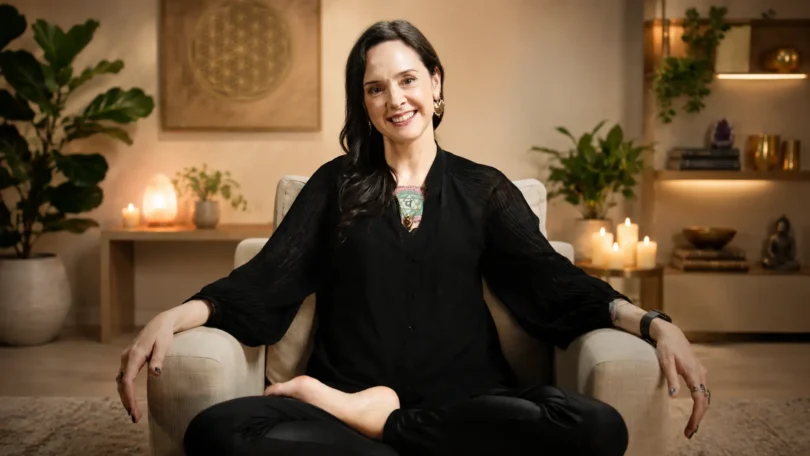
Explore your soul blueprint through astrology and the birth chart. Karen Bell teaches it in Your Soul’s Blueprint, part of NLS Mastery. Watch the course preview below.
Frequently Asked Questions
What is a numerology chart?
A numerology chart is a set of numbers calculated from your full birth name and date of birth. It usually includes your life path, expression, soul urge and personality numbers, read together as a portrait of your strengths, motivations and life themes.
How do I calculate my numerology chart?
Convert your birth date and the letters of your full birth name into numbers, add the digits, and reduce each total to a single digit from 1 to 9. Keep the master numbers 11, 22 and 33 when they appear. The step-by-step method above takes about ten minutes.
What is the most important number in a numerology chart?
Most practitioners consider the life path number the most important because it describes your central purpose and recurring lessons. The expression, soul urge and personality numbers add detail about your talents, desires and outer style.
What name should I use for my numerology chart?
Use the full name exactly as it appears on your birth certificate, including middle names. Nicknames, married names or chosen names can be explored as a secondary layer but do not replace the birth name.
What are master numbers in numerology?
Master numbers are 11, 22 and 33. They are not reduced to a single digit and are believed to carry heightened potential along with greater pressure. Each also carries the energy of its root number: 2, 4 and 6.
Is Pythagorean or Chaldean numerology better?
Neither is better. The Pythagorean system is the most popular in the West and is easier to learn. The Chaldean system is older and uses sound-based values. Choose one and stay with it for consistency.
What does a missing number mean in a numerology chart?
A missing number suggests an area where you may need to build the quality deliberately, such as structure for a missing 4 or reflection for a missing 7. It is a prompt for growth rather than a flaw.
What is a personal year number?
Your personal year number shows the theme of the current year in a nine-year cycle. Add your birth month, birth day and the current year, reducing each part, to find it.
What are pinnacles and challenges?
Pinnacles are four major life periods, each with an opportunity, while challenges are the lessons attached to those periods. Together they add timing to your chart.
Can numerology predict the future?
No. Numerology is a reflective tool that describes tendencies and cycles. It cannot predict specific events, and it should not replace professional medical, legal or financial advice.
Do my numbers change over time?
Your birth-based numbers stay the same. Your personal year, month and day change with the calendar, and many people feel the meaning of their numbers deepen as they grow.
How accurate is a numerology chart?
Accuracy in the scientific sense has not been demonstrated, but many people find the portraits meaningful and useful for self-reflection. Judge a reading by whether it helps you understand yourself and act with more care.
Can I use numerology to compare myself with a partner?
Yes. Comparing life path and personal year numbers can start good conversations about how you each approach life. Treat it as a guide for understanding, not as a test of compatibility.
Sources and Further Reading
Spirituality for the Rest of Us™
Movies, series, documentaries, audiobooks, audio courses and guided meditations on awakening and consciousness, all in one place. 14-day money-back guarantee.