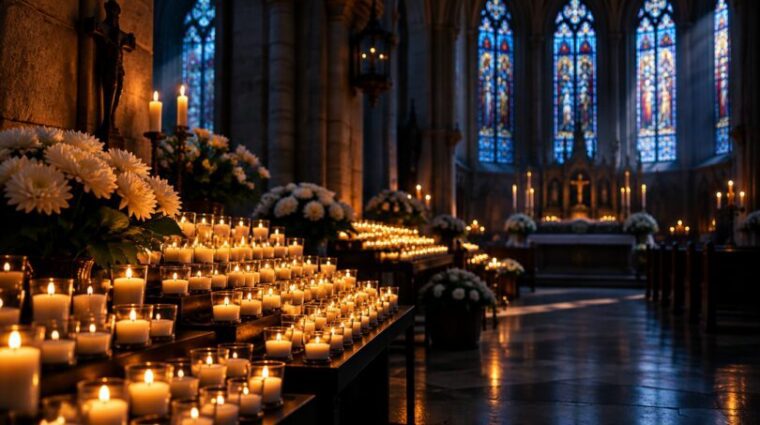
All Souls Day is the Christian observance, held on November 2, in which the faithful remember and pray for the souls of the dead. In the Catholic tradition it follows All Saints Day on November 1 and is a day for visiting graves, lighting candles, offering Masses and praying for those who have died. Many people of other faiths and of no formal tradition now use the day as a quiet time of remembrance too.
This guide explains the meaning of All Souls Day, where it came from, how it relates to All Saints Day, Halloween, Samhain and the Day of the Dead, and simple ways to observe it. For the older Gaelic festival of the same season, read our guide to Samhain.
Key Takeaways
- What it is. A day, observed on November 2, to remember and pray for all the faithful departed.
- Where it came from. Abbot Odilo of Cluny established the commemoration in 998, and it spread across Western Christianity.
- The three-day rhythm. Halloween (All Hallows’ Eve) on October 31, All Saints Day on November 1, and All Souls Day on November 2.
- Common customs. Prayers and Masses for the dead, visiting cemeteries, lighting candles, soul cakes and family meals.
- Beyond the church. Many people use the day to write letters, tend graves, share stories and light a candle for those they miss.
- Related traditions. It is connected to, but different from, Samhain and the Mexican Day of the Dead.
What Is All Souls Day?
All Souls Day, also called the Commemoration of All the Faithful Departed, is observed on November 2 in the Roman Catholic Church and in some Anglican and Lutheran communities. Where All Saints Day honors those believed to be in heaven, All Souls Day is dedicated to prayer for those who have died and who, in Catholic teaching, may still be undergoing purification before entering fully into God’s presence.
In practice, the day is also a family occasion. Households visit cemeteries, clean and decorate graves, light candles and share meals. It is a day of tenderness and memory, and in many places it carries an atmosphere closer to love than to sorrow.
All Souls Day vs All Saints Day
| Detail | All Saints Day | All Souls Day |
|---|---|---|
| Date | November 1 | November 2 |
| Focus | Honoring saints, known and unknown | Praying for all the faithful departed |
| Mood | Celebration and gratitude | Remembrance and prayer |
| Common customs | Mass, feasts, church observances | Cemetery visits, candles, Masses for the dead |
The History of All Souls Day
Praying for the dead is an ancient Christian custom, with roots in early Church practice and, before that, in Jewish tradition. The Church set aside a particular day for the commemoration in the early Middle Ages. In 998, Abbot Odilo of Cluny, in France, ordered that all monasteries linked to Cluny pray for the dead on November 2. The practice spread across Western Europe, and Rome later adopted the observance.
Over time, local customs grew around the day. In parts of England, people went “souling,” going door to door and singing for small round loaves called soul cakes, offered in exchange for prayers for the dead. In Poland, families cover cemeteries with candles on the evening of All Saints and All Souls. In the Philippines, the days are known as Undas, when families gather at graves for vigils and meals. In Mexico, Catholic observance blended with Indigenous customs to shape the Day of the Dead, which we explore in our guide to the meaning of the Day of the Dead.
All Hallows’ Eve and Halloween
The evening before All Saints Day was known as All Hallows’ Eve, which became Halloween. Together, All Hallows’ Eve, All Saints and All Souls form a three-day season sometimes called Allhallowtide. Historians debate how much the Christian dates were shaped by the earlier Gaelic festival of Samhain, but the overlap in timing and in the themes of remembrance and the dead is clear.
What Does All Souls Day Mean Spiritually?
At its core, All Souls Day affirms that love and relationship continue after death. Praying for the dead says that the bond is not broken and that the living can still offer something to those who have gone before. That intuition shows up across many spiritual traditions. Dianne Sherman, for example, says that after she left her body during surgery in 1981 a hooded figure told her it was not her time. Watch her full episode and read the show notes.
Former research scientist Anna Stone, who shared her near-death story on Next Level Soul, offers a related view from a scientist’s perspective. She says that after she left her body she felt souls linked together, sharing data, and that her fear of judgment and hell left her. Hear her full conversation.
Whether you hold the day in a traditional sense or a more open spiritual one, it offers the same gift: a set-aside time to say their names, offer a prayer and let love flow toward those who are gone.
How to Observe All Souls Day
1. Say a Prayer or Offer a Blessing
You can use a traditional prayer such as the Eternal Rest prayer, or speak simply from the heart: “May you be at peace. Thank you for the love you gave me. I carry it with me.” Even a single sentence is a prayer.
2. Attend a Service or Offer a Mass
Many Catholic and Anglican parishes hold special services on November 2, often with a reading of the names of the parish’s departed. Some families request a Mass intention for a loved one by name.
3. Visit a Cemetery
Walk slowly, clear the stone, leave flowers or a candle, and speak. If a grave is far away, visit a place that holds meaning, such as a garden or a bench they loved.
4. Light a Candle
A candle in a window is a simple, beautiful gesture. Light one for each person you are remembering, and let it burn while you share a story or sit in silence.
5. Write a Letter
Write what you wish you had said, what you are grateful for, and what you are learning. Keep it on your ancestor altar or burn it safely as a symbol of release.
6. Bake Soul Cakes or Cook a Favorite Meal
Prepare a dish they loved and share it with the family. Telling stories while you eat is one of the oldest ways to remember.
7. Give in Their Name
Donate to a cause they cared about, volunteer for a day, or do a kindness for a stranger in their memory. Love turned into service can be a deep form of prayer.
8. Be Gentle With Your Grief
The day can stir up tears. Let them come. If grief feels heavy or lasts a long time, speak with a counselor, a clergy member or a grief support group.
All Souls Day, Samhain and the Day of the Dead
| Tradition | Roots | Dates | Mood |
|---|---|---|---|
| All Souls Day | Christian, medieval Europe | Nov 2 | Prayerful, tender |
| Samhain | Gaelic seasonal festival | Oct 31 sunset to Nov 1 | Threshold, ancestors, release |
| Day of the Dead | Mexican, Indigenous and Catholic | Nov 1 to 2 | Joyful reunion, ofrendas |
| Halloween | Christian eve of All Saints with folk customs | Oct 31 | Playful and spooky |
They share a season and a theme, but each has its own roots and feeling. You can honor one, several or all of them as they speak to you.
What Next Level Soul Guests Say About Remembering the Dead
Maria Lupita Gurulé says that her life review was not about blame. As she puts it, it was more of, let’s look at the life. Her experience suggests a gentle way to approach every act of remembrance, including All Souls Day: look at a life with love, not blame. Listen to her episode on eight minutes in the light.
Hospice nurse Julie McFadden says that dying people often see loved ones, pets or spiritual figures, sometimes weeks before death and with a clear mind. For many families, that image of loved ones arriving first sits gently beside the Christian practice of prayer. Hear her story.
Watch: Conversations on Death, Prayer and the Afterlife
These Next Level Soul guests share what they say they experienced at the edge of death, and what it taught them about love and the afterlife.
Dianne Sherman: Why We Never Truly Die
Dianne Sherman says she left her body during knee surgery in 1981, was pushed into a blackness she had feared, then watched a glimmer of light grow into an iridescent white and was told it was not her time. Watch the full episode and read the show notes.

Maria Lupita Gurulé: Eight Minutes in the Light
Maria Lupita Gurulé says she was out for about eight minutes after a reaction during her daughter’s birth, and describes white light, a council of beings and a life review she says was about looking at the life, not about blame. Watch the full episode and read the show notes.

Anna Stone: A Scientist’s Near-Death Experience
Former research scientist Anna Stone says she left her body during a medical emergency, watched the team try to resuscitate her, and felt her fear of judgment and hell leave her. Watch the full episode and read the show notes.

Watch More on Next Level Soul TV
Next Level Soul TV has films and episodes on death and the afterlife, including The Life After Death Project and Afterlife: What Happens When You Die. Join Next Level Soul TV and keep exploring.
Go Deeper with Next Level Soul
- Samhain: Meaning, History, Rituals and How to Celebrate
- Day of the Dead Meaning, History and Traditions
- Ancestor Altar and the Dumb Supper
- What “The Veil Is Thin” Means
- Signs From Deceased Loved Ones
- Near-Death Experiences: The Complete Guide
- Afterlife and Reincarnation in the glossary
- The full spiritual glossary
Sources and Further Reading
Spirituality for the Rest of Us™
Films, teachings and community on Next Level Soul TV.
Go Deeper with NLS Mastery: Beyond the Veil
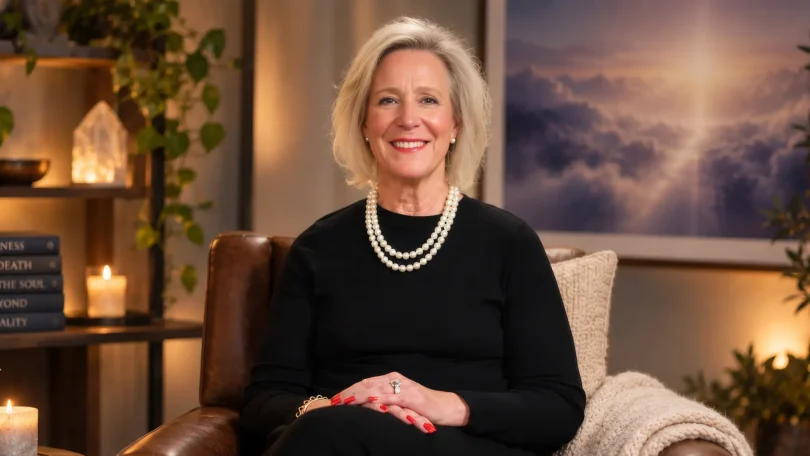
A grounded exploration of what lies beyond death and how that understanding changes how we live. Julie Ryan teaches it in Beyond the Veil, part of NLS Mastery. Watch the course preview below.
Frequently Asked Questions
What is All Souls Day?
All Souls Day, observed on November 2, is a Christian day of remembrance and prayer for all the faithful departed. It follows All Saints Day on November 1.
When is All Souls Day in 2026?
All Souls Day falls on Monday, November 2, 2026, the day after All Saints Day on Sunday, November 1.
What is the difference between All Saints Day and All Souls Day?
All Saints Day (November 1) honors the saints in heaven, known and unknown. All Souls Day (November 2) is dedicated to prayer for all the faithful departed, especially those who may still be undergoing purification in Catholic belief.
Who started All Souls Day?
Abbot Odilo of Cluny established the commemoration in 998, directing the monasteries linked to Cluny to pray for the dead on November 2. The practice spread across Western Christianity.
Why is All Souls Day on November 2?
November 2 follows All Saints Day on November 1. The pairing creates a two-day moment of remembrance, first honoring the saints and then praying for all the departed.
What do people do on All Souls Day?
Common customs include praying for the dead, attending Mass, visiting cemeteries, lighting candles, baking soul cakes, sharing family meals and telling stories about loved ones.
What are soul cakes?
Soul cakes are small, round, spiced cakes traditionally shared on or around All Souls Day. In England, people went “souling,” singing door to door and receiving soul cakes in exchange for prayers for the dead.
Is All Souls Day the same as Halloween?
No. Halloween is the evening of October 31, known historically as All Hallows’ Eve. All Souls Day is two days later, on November 2. They belong to the same Allhallowtide season but differ in feeling and focus.
Is All Souls Day connected to Samhain?
They fall in the same season and share themes of remembering the dead, and historians debate how much the Christian dates were influenced by the earlier Gaelic festival. They are separate observances. Read our guide to Samhain.
How is All Souls Day different from the Day of the Dead?
The Day of the Dead is a Mexican tradition on November 1 and 2 with Indigenous and Catholic roots, featuring ofrendas and marigolds. All Souls Day is the Catholic day of prayer for the departed. They overlap in history. See our guide to the Day of the Dead.
Can non-Catholics observe All Souls Day?
Yes. People of many faiths and of no formal tradition light a candle, visit a grave, write a letter or say a few kind words to honor those they miss. It is a day open to anyone who wishes to remember.