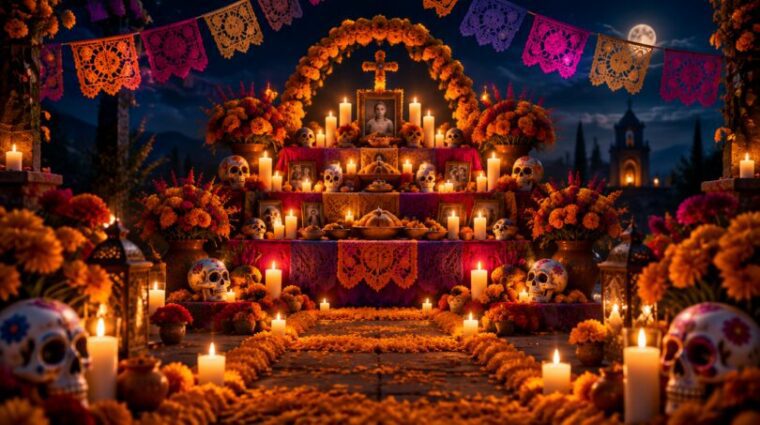
The Day of the Dead (Día de Muertos) is a Mexican tradition, celebrated on November 1 and 2, in which families welcome the spirits of their loved ones back for a joyful reunion. It is not a Mexican version of Halloween and it is not a sad day. It is a celebration of love that continues beyond death, marked by altars called ofrendas, marigolds, candles, favorite foods, music and stories.
This guide explains the meaning of the Day of the Dead, its history, the symbols you will see, how an ofrenda is built, and how people outside the culture can honor the day with respect. For the older Gaelic festival that falls at the same time of year, read our guide to Samhain.
Key Takeaways
- What it is. A Mexican celebration on November 1 and 2 that honors deceased loved ones with altars, flowers, food, music and storytelling.
- What it means. Death is seen as part of life, and the dead are believed to return each year to visit the living. Remembering them keeps them present.
- Who it belongs to. It is a living cultural and family tradition with Indigenous and Catholic roots. It is not a costume theme or a Halloween variation.
- Key symbols. Ofrendas, cempasúchil (marigolds), candles, copal incense, pan de muerto, sugar skulls, papel picado and La Calavera Catrina.
- Two days. November 1 is traditionally for children who have died, and November 2 is for adults.
- How to honor it respectfully. Learn the meaning, support Mexican and Mexican-American artists and makers, avoid using sacred symbols as costume, and build your own personal remembrance rather than copying an ofrenda.
What Is the Day of the Dead?
The Day of the Dead, or Día de Muertos in Spanish, is an annual Mexican holiday on November 1 and 2. Families gather in homes and cemeteries to remember those who have died. They build altars, cook favorite foods, light candles and tell stories, trusting that the spirits of the departed return for a visit.
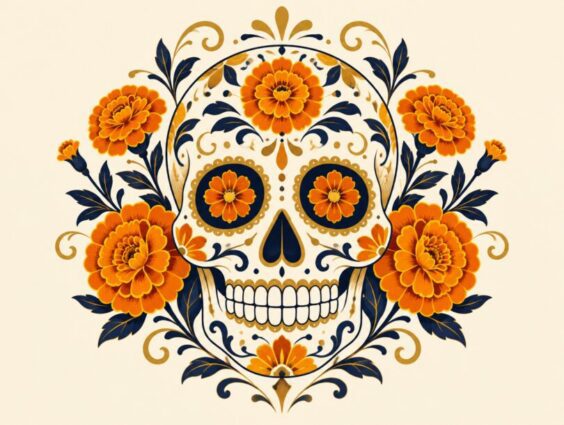
The holiday is recognized by UNESCO as part of the intangible cultural heritage of humanity, and it is observed in many forms across Mexico and in Mexican communities around the world. Practices differ by region, family and village, and no single custom defines it.
November 1 and November 2
Traditionally, November 1 is a day to welcome the spirits of children, sometimes called Día de los Angelitos (Day of the Little Angels). November 2 is the day for adults. Altars on the first day may include toys, sweets and small treats. On the second day, they hold favorite meals, drinks and keepsakes of grown loved ones.
Why It Is Not “Mexican Halloween”
Halloween and the Day of the Dead fall close together, so they are often confused. They are different in spirit. Halloween is rooted in Christian and Gaelic folk traditions and often plays with fear. The Day of the Dead is about welcome and love. It centers on family and the dead as beloved guests. The skulls you see in Día de Muertos art are cheerful and affectionate, not frightening.
What Does the Day of the Dead Mean?
At its heart, the Day of the Dead teaches that death is part of life, not its opposite. The dead are not gone. They live on in memory, in family stories and in the love that continues. Each year, in this view, they come back to be fed, honored and loved, and the living come back to them.
That belief changes how people face loss. Instead of hiding from death, the tradition invites families to speak about it openly, to laugh at the memories, to cry freely and to teach children that those they love remain part of the family. Many spiritual traditions share this core insight, and it echoes what Next Level Soul guests say about the afterlife. Hospice nurse Julie McFadden, for example, says that dying people often see loved ones, pets or spiritual figures, sometimes weeks before death and with a clear mind. Watch her full episode and read the show notes.
The History of the Day of the Dead
The Day of the Dead grew from the meeting of Indigenous Mesoamerican beliefs and Spanish Catholic practice. Long before the Spanish arrived, Indigenous peoples of what is now Mexico, including the Mexica (Aztec), held rituals to honor the dead and understood death as a stage in a larger cycle. The Mexica worshiped Mictēcacihuātl, often called the Lady of the Dead, who is considered a forerunner of today’s Catrina, and they spoke of Mictlān as the place of the dead.
After the Spanish conquest, Catholic observances of All Saints’ Day (November 1) and All Souls’ Day (November 2) blended with existing customs, shaping the dates and many of the practices we see today. Our guide to All Souls Day traces the Catholic side of that story. What emerged was something new and distinctly Mexican, carried forward by families and communities for centuries.
La Calavera Catrina
One of the most recognizable figures of the holiday is La Calavera Catrina, an elegant skeleton in a fancy hat. She was created by the Mexican printmaker José Guadalupe Posada in the early twentieth century as a satire of those who put on airs, and later popularized by the muralist Diego Rivera. Today she stands for the idea that death comes to everyone equally.
Symbols of the Day of the Dead and What They Mean
| Symbol | Meaning |
|---|---|
| Ofrenda (altar) | A home altar that welcomes the dead with photos, food, candles and keepsakes |
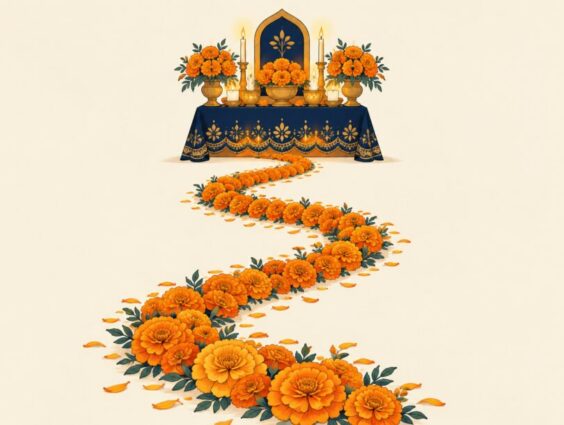
| Cempasúchil (marigolds) | Bright orange flowers whose color and scent are said to guide spirits home |
| Candles and veladoras | Light to show the way and honor each soul |
| Copal incense | Fragrant resin burned to cleanse and call the spirits |
| Pan de muerto | Sweet “bread of the dead,” often decorated with bone shapes |
| Sugar skulls (calaveras de azúcar) | Playful, affectionate skulls, often inscribed with a name |
| Papel picado | Cut tissue-paper banners that represent the wind and the fragile veil between worlds |
| Water | Offered to refresh weary travelers from the journey |
| Salt | Said to purify and keep the body from spoiling on the journey |
| Favorite foods and drinks | A gift of love that recalls the person’s tastes and presence |
How an Ofrenda Is Built
An ofrenda is a personal altar that families assemble in homes, schools, public spaces and cemeteries. Many are built in levels that represent stages of the soul’s journey. Others are simple tables. What matters is the love and attention that go into it, not the size.
- Choose a place. A table, shelf or corner where the altar can stay for several days.
- Add photographs. Place pictures of the loved ones you are honoring at the center or the top.
- Lay out marigolds. Scatter petals or arrange flowers to make a path leading to the altar.
- Light candles. Place one candle for each soul, or a single large one for the family.
- Offer food and drink. Set out favorite dishes, pan de muerto, fruit, a bottle of their preferred drink and a glass of water.
- Add personal items. Include keepsakes, a hat, a book, a toy, or a hobby item that tells their story.
- Burn copal or incense. The fragrance welcomes the spirits.
- Speak and share. Call their names, tell stories, play their music and share the food after the visit.
If you wish to build a remembrance space of your own, our guide to the ancestor altar and the dumb supper offers a gentle approach that is not tied to any single culture.
How to Honor the Day of the Dead Respectfully
If you are not part of the culture, you are welcome to learn from the tradition and to honor your own loved ones at this time of year. A few guidelines help you do so with care.
- Learn before you borrow. Read about the history and meanings so you understand what each symbol represents.
- Do not treat it as a costume. Sugar skull face paint and Catrina dress are often worn by Mexican and Mexican-American families as part of the holiday. If you are not part of the culture, consider whether it feels like participation or like play-acting.
- Support the community. Buy from Mexican and Mexican-American artists, bakers and florists. Attend public events hosted by cultural organizations.
- Make it your own. Build a remembrance space for your own people. The point of the day is love for your own dead.
- Do not turn it into Halloween. Keep the tone warm and affectionate, not scary.
Regional Traditions Across Mexico
There is no single way to keep the day. Customs shift from village to village, and families often add their own touches. A few well-known examples show the range.
- Oaxaca. Streets fill with marching bands, costumed processions called comparsas, and candlelit cemetery vigils. Families decorate graves with flowers and spend the night beside them.
- Michoacán. Around Lake Pátzcuaro, including the island of Janitzio, families keep all-night vigils at the cemetery with candles, flowers and food.
- Mexico City. Public ofrendas, cultural events and neighborhood celebrations bring the tradition into the capital, and communities such as Mixquic are known for their cemetery observances.
- Beyond Mexico. Related remembrance traditions exist across Latin America. In Guatemala, communities fly giant kites for the dead, and in Ecuador, families share colada morada and bread figures at the time of Día de los Difuntos.
Foods and Drinks of the Day of the Dead
Food is the language of welcome. The dishes placed on the altar are the ones the loved one enjoyed in life, and after the spirits have taken in the essence, the family shares the meal.
| Food or drink | Notes |
|---|---|
| Pan de muerto | Sweet, lightly spiced bread, often topped with bone-shaped dough and sugar |
| Tamales | A classic family dish, made in many regional styles |
| Mole | A rich sauce of chiles, spices and chocolate, served at celebrations |
| Atole and hot chocolate | Warm drinks for a chilly night |
| Fruit, nuts and sweets | Seasonal offerings, especially for the children’s altars |
| The departed’s favorite dish | Whatever they loved: a particular soup, a candy, a drink |
Calaveras Literarias: Verses for the Dead
Another beloved custom is the calavera literaria, a short, humorous verse that playfully imagines a living person as if they had already died. The poems poke gentle fun at friends, family and public figures. They remind everyone that death comes for all and that laughter is part of loving life.
How to Talk With Children About the Day of the Dead
The tradition is a gift to families who want to speak honestly with children about loss. You can invite them to help choose photographs, draw a picture for the altar, bake something the person loved, or share a favorite memory. Keep your language simple and warm: “We remember Grandpa because we love him, and love keeps him close.” Children often take to the ritual naturally, because it gives them something to do with big feelings.
Common Misunderstandings About the Day of the Dead
- “It is a day to be sad.” It is a day of remembrance, and joy and tears are welcome together.
- “It is the same as Halloween.” The dates are close, but the roots, meanings and moods are different.
- “It is about worshiping the dead.” Families honor and remember their loved ones. For many, it sits comfortably alongside their faith.
- “Everyone does it the same way.” Regional and family traditions vary widely, and so do the altars.
- “Anyone can wear the face paint.” The imagery is meaningful and sacred to many families. It is best approached with learning and respect.
What the Day of the Dead Can Teach Us
Love Does Not End
The tradition says that the dead remain part of the family. Animal communicator Karen Anderson puts a similar idea in her own way when she says that you will always be connected to your animal companion. Hear her full conversation.
Ritual Is Medicine
Television writer and producer Matt Williams says that laughter heals, connects people and opens us up. The altar, the food, the flowers and the songs of Día de Muertos can be read the same way: they keep love and laughter in the room while we grieve, and they give grief a shape and a place to go. Listen to Matt Williams on love, creating and serving.
Joy and Grief Can Sit Together
The Day of the Dead is both tender and festive. People laugh, sing and eat together beside photographs of those they miss. This is a reminder that grief and gratitude are not opposites. Karen Anderson, an animal communicator who appears on Next Level Soul, says that holding on to guilt is unnecessary. Watch her episode on animal souls in the afterlife.
Watch: Conversations on Love, Loss and the Other Side
These Next Level Soul guests speak to the heart of the Day of the Dead: remembrance, loss and the belief that love continues.
Julie McFadden: What Happens Moments Before We Die
Hospice nurse Julie McFadden shares what she says she saw at the bedside, including dying people seeing loved ones, and an unexplainable moment of her own. Watch the full episode and read the show notes.

Karen Anderson: Animal Souls in the Afterlife
Karen Anderson talks about communicating with animals and what she says about their souls in the afterlife, and why she says holding on to guilt is unnecessary. Watch the full episode and read the show notes.

Matt Williams: Where Do Your Stories Go When You Die?
Television writer and producer Matt Williams talks about the spiritual side of storytelling and the question behind the episode: when a writer dies, what happens to the untold stories? Watch the full episode and read the show notes.

Watch More on Next Level Soul TV
Next Level Soul TV has films and episodes on death, ritual and the afterlife, including Crossing the River: Meeting Death with Ritual with Sarah Kerr and The Life After Death Project. Join Next Level Soul TV and keep exploring.
Go Deeper with Next Level Soul
- Samhain: Meaning, History, Rituals and How to Celebrate
- All Souls Day: Meaning and How to Observe It
- Ancestor Altar and the Dumb Supper
- What “The Veil Is Thin” Means
- Signs From Deceased Loved Ones
- Near-Death Experiences: The Complete Guide
- Afterlife and Mediumship in the glossary
- The full spiritual glossary
Sources and Further Reading
Spirituality for the Rest of Us™
Films, teachings and community on Next Level Soul TV.
Go Deeper with NLS Mastery: Beyond the Veil
A grounded exploration of what lies beyond death and how that understanding changes how we live. Julie Ryan teaches it in Beyond the Veil, part of NLS Mastery. Watch the course preview below.
Frequently Asked Questions
What is the Day of the Dead?
The Day of the Dead (Día de Muertos) is a Mexican holiday on November 1 and 2 when families remember and welcome the spirits of deceased loved ones with altars, flowers, candles, food, music and stories.
What does the Day of the Dead mean?
It means that death is part of life and that love continues. The dead are believed to return each year for a visit, and remembering them keeps them present in the family.
Is the Day of the Dead the same as Halloween?
No. They fall at a similar time of year, but Halloween has Christian and Gaelic folk roots and often plays with fear, while the Day of the Dead is a Mexican tradition of welcome, love and reunion with ancestors.
What are the two days of the Day of the Dead?
November 1 is traditionally for children who have died (Día de los Angelitos), and November 2 is for adults. Families may begin preparing in the days before.
What is an ofrenda?
An ofrenda is a personal altar built to welcome the spirits. It holds photographs, candles, marigolds, favorite foods and drinks, water, incense and keepsakes of the person being honored.
Why are marigolds used on the Day of the Dead?
Cempasúchil, or marigolds, are used for their bright color and strong scent, which tradition says guide the spirits back to the altar. Petals are often scattered to make a path home.
What is pan de muerto?
Pan de muerto, or bread of the dead, is a sweet bread baked for the season. It is often shaped with bone-like strips on top and is placed on the altar and shared by the family.
Who is La Catrina?
La Calavera Catrina is an elegant skeleton figure created by printmaker José Guadalupe Posada and popularized by Diego Rivera. She has become a symbol of the holiday and a reminder that death comes to everyone.
Can anyone celebrate the Day of the Dead?
Anyone can learn from the tradition and honor their own loved ones. If you are not part of the culture, approach it with respect: learn the meanings, support Mexican and Mexican-American makers, and avoid treating sacred symbols as a costume.
How is the Day of the Dead related to Samhain?
Both honor the dead at a similar time of year, but they come from different cultures. Samhain is a Gaelic festival, and the Day of the Dead is a Mexican tradition with Indigenous and Catholic roots. See our guide to Samhain.
What do Next Level Soul guests say about life after death?
Guests such as Julie McFadden and Karen Anderson describe loved ones appearing at the end of life and a bond that continues after death. Watch Julie McFadden and Karen Anderson.