Advanced Course in Yogi Philosophy and Oriental Occultism is the sequel to Fourteen Lessons in Yogi Philosophy and Oriental Occultism, issued under the name Yogi Ramacharaka, a pen name attributed to William Walker Atkinson. First released as monthly lessons starting in 1904, it takes the reader deeper into the paths of action, wisdom and devotion, and into questions about duty, spirit and the universe. This study guide walks through all 12 lessons in plain language, then hands you a workbook to try the ideas on your own life.
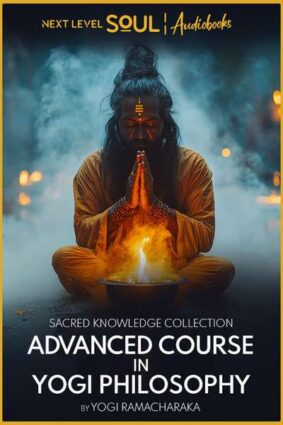
Listen While You Study
The audiobook is available on Next Level Soul TV. Play a lesson, then come back here for the notes and the workbook prompt.
Key Takeaways
- The book teaches three paths to growth, which the author calls Karma Yoga (action), Gnani Yoga (wisdom) and Bhakti Yoga (devotion).
- Inner life comes first in the early lessons, where the author describes spiritual consciousness and an inner “voice of the silence.”
- Duty gets two full lessons, as the author explains dharma as the right path for each person at each stage of life.
- The last lessons ask big questions, about matter, force, mind and spirit, and how the author sees them fitting together.
- It is a practical text as well as a philosophical one, so each lesson can be turned into a small daily habit.
The Book at a Glance
| Detail | What to Know |
|---|---|
| Author | Yogi Ramacharaka, a pen name attributed to William Walker Atkinson (1862 to 1932) |
| First published | 1904 to 1905, as monthly lessons by the Yogi Publication Society, Chicago |
| Lessons | 12 |
| Tradition | Yogic philosophy as presented to Western readers in the early 1900s |
| Audiobook | Available on Next Level Soul TV |
What Is Advanced Course in Yogi Philosophy About?
This book is a follow-up course. The author writes as a teacher speaking to students who have already met the basics and want to go further into how a spiritual life is actually lived, day by day, in work, duty and thought.
Across twelve lessons, the author describes three yogic paths, explains dharma, and then turns to large questions about the universe, matter, force, mind and spirit. Like the first course, it was written for Western readers and presents its teachings in a clear, lesson-by-lesson style.
The Board: 12 Lessons
Each square is a lesson. Tap one to jump to its study notes.
- 1Light
- 2More Light
- 3Spirit Sense
- 4Silence
- 5Karma Yoga
- 6Gnani Yoga
- 7Bhakti Yoga
- 8Dharma
- 9More Dharma
- 10The Riddle
- 11Matter, Force
- 12Mind, Spirit
Lesson-by-Lesson Study Notes
These notes are our own summary, written to help you follow the book. Each one ends with a small practice you can try this week.
Some Light on the Path
The opening lesson sets the tone for the whole course. The author invites the student to see spiritual growth as a path with steady steps rather than a sudden leap. He describes the goal as a clearer understanding of one’s true nature and place in the larger whole. It works as a gentle orientation before the deeper material begins, and it asks you to read with patience and an open mind.
More Light on the Path
The second lesson continues the opening theme and adds more guidance for the traveler. The author describes how the student can meet obstacles with calm instead of worry, and how steady practice builds understanding over time. He presents the path as something each person walks in a personal way. This lesson helps you settle in and keep going when the ideas feel unfamiliar.
Spiritual Consciousness
Here the author describes spiritual consciousness as an awareness that goes beyond ordinary thought and the five senses. He teaches that this awareness points toward a sense of oneness with all life. The lesson explains it in the language of the tradition and treats it as something the student can grow toward. Our guide treats these as the author’s teachings, offered for reflection rather than proof.
The Voice of the Silence
This lesson turns to the inner voice the author associates with stillness. He teaches that when the noise of the mind quiets, a deeper guidance can be heard. The lesson encourages the student to value silence and to listen inward before acting. Readers can take it as an invitation to build quiet moments into the day and to see what comes up when nothing is being said.
Karma Yoga
The author presents Karma Yoga as the path of right action. He teaches that work and daily duties can become a form of spiritual practice when done with the right attitude. The idea is to act well and to care less about being rewarded for it. The lesson invites you to look at ordinary tasks, like chores or a job, as places where growth can quietly happen.
Gnani Yoga
Gnani Yoga is described as the path of wisdom and understanding. The author teaches that study, thought and discernment can help the student tell what is lasting from what is passing. He presents it as a reasoning path that still aims at a living realization, not just knowledge. The lesson speaks to readers who like to ask questions and think things through carefully.
Bhakti Yoga
Bhakti Yoga is the path of devotion and love, which the author describes as a way of drawing close to the divine through the heart. He explains how feeling and reverence can lift the student above self-centered thinking. This lesson balances the wisdom path with warmth. It suggests that the three paths are different roads to the same place, and each person may lean toward one.
Dharma
In this lesson the author explains dharma, a word often understood as duty or right living. He teaches that each person has a role to fill and a stage of life to live through, and that facing these duties honestly is part of spiritual growth. The lesson is practical in tone. It asks the student to stop wishing to be elsewhere and to meet what is in front of them.
More About Dharma
The author returns to dharma for a second lesson, adding detail and examples. He continues to stress that duty is not meant to be a burden but a way to learn. The student is encouraged to look at family, work and community as places where lessons arrive. Taken with the first dharma lesson, it makes a full portrait of the author’s view of a well-lived life.
The Riddle of the Universe
Here the author moves from personal practice to the biggest questions. He describes his view of how the universe came to be and what lies behind its forms. The lesson draws on the thought of the yogic tradition and presents it for Western students. As with the rest of the book, this is the author’s teaching, and the guide invites you to consider it as a perspective, not a settled fact.
Matter and Force
This lesson looks at matter and force, two ideas the author uses to explain how the world is built and how it moves. He teaches how the yogic view relates them to deeper principles. The language is of its time, so readers may want to read slowly. The practical thread is that what we see and feel is part of a larger order the author asks us to think about.
Mind and Spirit
The final lesson brings the course together by looking at mind and spirit. The author teaches that the mind is a tool and that spirit is the deeper reality the student is meant to recognize. He ties this back to the earlier paths and to the inner silence from the opening lessons. It closes the book by pointing the reader toward practice, not just reading.
Key Ideas in Plain Language
| Idea | What It Means | Lesson |
|---|---|---|
| Yoga paths | The author describes three main roads to growth: action, wisdom and devotion. Each suits a different temperament. | 5, 6, 7 |
| Karma Yoga | The path of right action, where daily work becomes practice when done with a good attitude. | 5 |
| Gnani Yoga | The path of wisdom, using thought and discernment to look past appearances. | 6 |
| Bhakti Yoga | The path of devotion, using love and reverence to rise above self-centered thinking. | 7 |
| Spiritual consciousness | An awareness the author describes as reaching beyond ordinary thought toward oneness with life. | 3 |
| Inner silence | The quiet in which the author says a deeper guidance can be heard. | 4 |
| Dharma | Duty or right living for one’s own stage of life, as the author explains it. | 8, 9 |
| Mind and spirit | The author’s view that mind is a tool and spirit the deeper reality behind it. | 11, 12 |
Who This Book Is For
This guide is for curious beginners who want a clear way into a 1904 yogic text, and for anyone who already knows the basics of yoga philosophy and wants a next step. It is also useful for people who like to study with a notebook. You do not need any background in yoga or philosophy. You only need a willingness to read slowly and to test ideas against your own experience.
A 12-Day Way to Use It
- Days 1 to 4: Read one lesson a day, starting with Lessons 1 to 4, and write down one line you want to remember.
- Days 5 to 8: Take Lessons 5 to 8 and do the practice for each, noting how the three paths feel to you.
- Days 9 to 12: Finish Lessons 9 to 12 and answer the workbook prompts in your own words.
- On day 13, reread your notes and choose the lesson whose practice felt most useful.
Your Workbook
Your answers save on this device as you type. They are not sent anywhere. Use the copy button to move them into your own notes.
Watch More on Next Level Soul TV
Next Level Soul TV brings together full episodes, courses, movies, series and audiobooks, ad-free. Join Next Level Soul TV and keep exploring.
Keep Going
- Yoga for Spiritual Growth: A Practice Beyond the Mat
- The Yogi’s Guide to the Infinite audio course
- Fourteen Lessons in Yogi Philosophy: Study Guide and Workbook
Sources and Further Reading
Go Deeper with NLS Mastery: Ancient Meditation for Inner Stillness
Ramacharaka teaches that stillness and spiritual consciousness open the way to a deeper Self behind the busy mind. If you want to take that further, Acharya Shunya teaches it in Ancient Meditation for Inner Stillness, part of NLS Mastery. Watch the course preview below.

Frequently Asked Questions
What is Advanced Course in Yogi Philosophy and Oriental Occultism about?
It is a course of twelve lessons in which the author describes three yogic paths, explains dharma, and explores large questions about the universe, matter, force, mind and spirit.
Who wrote Advanced Course in Yogi Philosophy and when?
It was published under the name Yogi Ramacharaka, a pen name attributed to William Walker Atkinson. The lessons were first issued from 1904 by the Yogi Publication Society in Chicago. Some sources date the bound book 1905.
What kind of book is it?
It is an esoteric and philosophical text in the yogic tradition, written for Western readers in the early 1900s. It reads like a series of lessons from a teacher to students.
How many lessons are in the book and what are they?
There are twelve. They are Some Light on the Path, More Light on the Path, Spiritual Consciousness, The Voice of the Silence, Karma Yoga, Gnani Yoga, Bhakti Yoga, Dharma, More About Dharma, The Riddle of the Universe, Matter and Force, and Mind and Spirit.
What are the three yoga paths in the book?
The author describes Karma Yoga, the path of action, Gnani Yoga, the path of wisdom, and Bhakti Yoga, the path of devotion. He presents them as different roads suited to different temperaments.
What does the book say about dharma?
The author teaches that dharma is a person’s right duty at their stage of life, and that meeting it honestly is part of growth. He gives it two full lessons.
What is spiritual consciousness according to the author?
The author describes it as an awareness beyond ordinary thought and the senses, which points toward oneness with all life. This guide presents it as his teaching, not as a proven fact.
How should a beginner read this book?
Read one lesson at a time and keep a notebook. Start with the early lessons on the path and inner silence, then move to the three yogas. Try one small practice from each lesson before moving on.
Is the book hard to read?
It is written in clear language, but it is more than a century old, so some terms and phrasing feel dated. Reading slowly and using a study guide makes it easier to follow.
How long does it take to read or listen to?
Most people can take it one lesson per sitting, which makes twelve sittings. A 12-day plan, one lesson a day, is a comfortable pace for most readers and listeners.
How does this study guide help, and where can I listen?
This guide gives a plain summary of each lesson, key ideas and a workbook of small practices. The audiobook is available on Next Level Soul TV, so you can listen and use the guide alongside.
What should I read or listen to next?
Many readers move on to other classic works on yoga, meditation and mysticism, or to talks and courses on inner stillness. Choose whatever matches the lesson that spoke to you most in this book.
Spirituality for the Rest of Us™
Movies, teachings and community on Next Level Soul TV.