
An Akashic Records meditation is a guided inner practice in which you settle your breath, set an intention, ask for access to your own records, and listen. Practitioners describe the records as an energetic library of every thought, word and deed, and they say meditation is the quiet doorway in. This guide gives you a full 20-minute script, a short version, and everything you need before and after.
If you are new to the idea, start with our hub guide to the Akashic Records or the glossary entry. When you are ready to practice, this page walks you through it step by step.
Key Takeaways
- A meditation, not a performance. An Akashic Records meditation is a quiet, guided practice for turning inward and asking one open question. There is nothing to get right.
- Ask permission first. Practitioners teach that your records are opened with intention and respect, and that only your own are yours to enter.
- Twenty minutes is plenty. This guide offers a full 20-minute practice, a 5-minute version and ways to adapt both.
- Expect subtle, not dramatic. Readers describe words, feelings, images or a simple sense of knowing. Many people notice little the first few times.
- Close with grounding. Writing it down, drinking water and feeling your feet bring you back into the day.
- Pair it with care. Meditation is not a replacement for medical or mental health care, and it is not a place to ask for diagnoses.
What Is an Akashic Records Meditation?
The word Akasha comes from Sanskrit and is often translated as space, ether or sky. In the late nineteenth century, Theosophy brought the phrase Akashic records to the West, and later teachers such as Rudolf Steiner and Edgar Cayce shaped how people talk about them today. Our hub guide covers that history in depth.
An Akashic Records meditation is the practice side of that story. Instead of asking a reader, you sit quietly, set an intention, and invite your own records to speak. Many people pair it with a short opening prayer, and you can find one in our guide to the Akashic Records prayer.
Bonni McCliss, a psychic and Akashic reader who joined Next Level Soul, puts it this way on the show: the portal to deeper layers is going within, so learn to meditate. That is the heart of this practice.
Why Meditation Is the Gentle Doorway
Readers and teachers describe many ways into the records, from prayer to formal readings. Meditation stands out because it asks for nothing you do not already have. A steady breath, a few quiet minutes and an honest question are enough.
It also protects you from a common trap, which is outsourcing your own knowing. When you sit with your own question, you practice trusting your inner voice. Over weeks you learn how your guidance tends to feel, whether as a calm word, a warm sensation or a simple clarity, and that familiarity becomes the real skill. Readers and clients can be a gift, but your own practice is the one that grows with you.
Research on meditation in general is wide and varied, and practitioners of the Akashic records describe their experiences as personal and spiritual rather than as measurable results. Treat the practice as a reflective, contemplative one and hold your insights with an open, discerning mind.
Where Akashic Records Meditation Comes From
The idea behind the practice is older than the phrase. In Hindu philosophy, akasha is a Sanskrit word for space or ether, one of the five classical elements, the open field in which everything else arises. The Western use of the word is much more recent, and it travels through three names worth knowing.

Theosophy Brings the Idea West
The Theosophical Society was co-founded in 1875 by Helena Blavatsky, and Theosophical writers of the late nineteenth century, among them A. P. Sinnett, helped introduce the notion that a subtle record of everything that happens is held in akasha. They blended Eastern vocabulary with Western occult thought, and the phrase Akashic records entered English through that stream. If you enjoy primary reading, our Theosophy study guide and workbook and the Theosophy glossary entry are a good place to begin.
Rudolf Steiner and the Akasha Chronicle
In the early twentieth century, Rudolf Steiner wrote about what he called the Akasha Chronicle, a spiritual record he said could be read through disciplined inner development. He later founded Anthroposophy. Steiner is notable here because he treated access as a matter of training the mind and heart, which is very close to how modern meditation approaches the records.
Edgar Cayce, the Sleeping Prophet
Edgar Cayce, an American clairvoyant who lived from 1877 to 1945, is often called the Sleeping Prophet. He gave thousands of transcribed readings from a sleep-like state, and in the tradition that grew up around his work, the Akashic records are described as the source of his life readings. Followers of the Cayce material emphasize prayer and meditation as the preparation for any inner seeking, which is one reason many modern teachers open a session with a prayer.

| Era | Name | What they added |
|---|---|---|
| Ancient India | Vedic and Hindu tradition | Akasha as space or ether, the field in which things arise |
| 1875 onward | Helena Blavatsky and the Theosophists | The phrase and idea of Akashic records, introduced to Western readers |
| Early 1900s | Rudolf Steiner | The Akasha Chronicle, approached through inner training |
| 1900s to 1945 | Edgar Cayce | Trance readings described as drawing on the records, paired with prayer |
| Today | Modern teachers and meditators | Personal, guided practices for opening your own records |
None of this history proves anything about the records, and it is not meant to. It shows you the lineage you are stepping into when you sit down to practice: seekers across more than a century who treated stillness, respect and humility as the doorway. For the wider story, see our hub guide, Akashic Records: What They Are and How People Access Them, and what happens when you access your Akashic records.
Go Deeper with NLS Mastery: Ancient Meditation for Inner Stillness
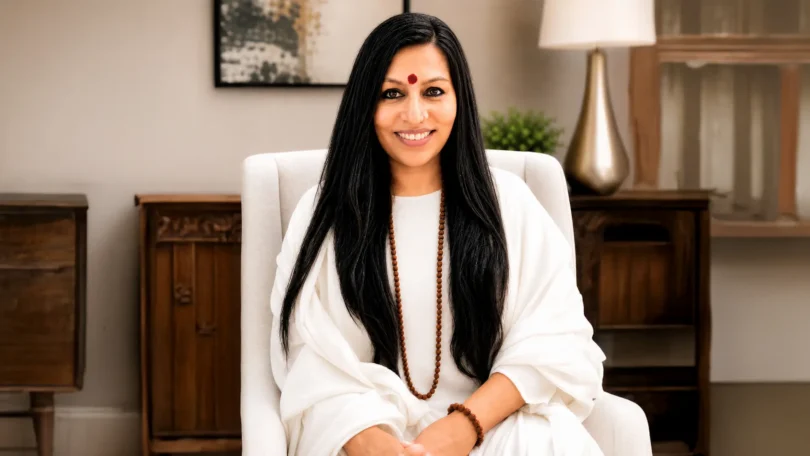
If you want a deeper foundation for any inward practice, this course offers ancient meditation methods for inner stillness. Acharya Shunya teaches it in Ancient Meditation for Inner Stillness, part of NLS Mastery. Watch the course preview below.
Before You Begin
A little preparation makes the practice smoother. Most of it is simple.
| Element | What to do | Why it helps |
|---|---|---|
| Time | Choose 20 minutes when you will not be interrupted | A rushed mind finds it hard to listen |
| Place | A quiet room, a chair or cushion, a dim light or a candle | Signals to the body that this time is different |
| Posture | Sit with a tall, relaxed spine and feet on the floor | Comfort keeps attention on the practice, not the body |
| Intention | Write one open question or theme on paper | A clear question keeps the practice focused |
| Tools | A notebook, a pen and a glass of water | You will want to record what comes up right away |
| Mindset | Curious, kind and unhurried | Pressure to get a result tends to quiet the experience |
If you are new to meditation, spend a week with our guide to how to meditate or the beginner meditation techniques first. Five minutes of simple breathing will prepare you well.
An Opening Prayer for Your Meditation
A prayer is optional, but it gives the mind a clear signal that the practice has begun. Use your own words if you have them. If you would like a starting point, here is a simple one you can adapt:
I am here with an open heart. I ask to be surrounded by light and love. I ask permission to open my own records, for my highest good and the highest good of all. May I receive only what is kind, clear and useful today. I am grateful.
Say it slowly, once, and let the last word settle before you move on. You can also explore longer versions in our guide to the Akashic Records prayer. Whatever your faith or lack of one, the point is the same: you are approaching with respect, not demanding an answer.
Safety and Grounding: Before, During and After
Meditation is gentle for most people, yet any inward practice can stir feelings. Grounding is how you keep the practice steady and finish it well. Think of it as a three-part habit.
- Before: eat lightly, use the bathroom, silence your phone and sit somewhere you feel safe. Decide in advance that you may open your eyes and stop at any time.
- During: if emotion rises faster than you like, lengthen your exhale, feel your feet and open your eyes. Stopping is a skillful choice, not a failure.
- After: close the space on purpose, then bring your body back with one or two of the tools below.

| Grounding tool | How to do it | When it helps most |
|---|---|---|
| Feet on the floor | Press both feet down and feel the weight of your legs for ten breaths | Any time you feel floaty or foggy |
| Five senses check | Name five things you see, four you feel, three you hear, two you smell, one you taste | When thoughts race or feelings feel large |
| Water and food | Drink a full glass of water and eat something simple | After every session |
| Cool water | Rinse your hands or face with cool water | When you feel flushed or overwhelmed |
| Time outdoors | Stand barefoot on grass or walk for ten minutes | After longer practices, see our earthing and grounding guide |
| Say the date aloud | Say today’s date, your name and where you are | When you need to return to the present quickly |
The 20-Minute Guided Akashic Records Meditation
Read the steps through once, then practice from memory. You can also record yourself reading them slowly and play it back.
Step 1: Arrive and Settle (2 minutes)
Sit comfortably and close your eyes. Take three slow breaths, in through the nose and out through the mouth. Feel your weight in the chair and your feet on the floor. Let your shoulders drop. Say quietly to yourself, I am here and I am safe.
Step 2: Breathe Into the Heart (3 minutes)
Place a hand on your chest. Breathe slowly, and let each exhale be a little longer than the inhale. Imagine your breath moving in and out through the center of your chest. Let thoughts drift by like clouds. When your mind wanders, return gently to the breath.
Step 3: Set the Space (2 minutes)
Picture a soft light around you, in a color that feels safe, such as gold or white. This is your protected space. Say in your own words that only what is for your highest good may come through. If you use a prayer, say it now.
Step 4: Ask Permission (1 minute)
Brynne Dippell, an Akashic reader, says the records are protected, and that she could enter Alex’s only because he gave permission. In your own meditation, you are entering your own records, so ask for permission and wait a moment. Say, I ask for permission to open my Akashic records for my highest good. Then listen. A sense of warmth, openness or a quiet yes is what many people notice.
Step 5: Imagine Your Records (3 minutes)
Let an image form without forcing it. Some people picture a library, a book, a glowing field or a river of light. Others see nothing at all. Lisa Wetsel, who says she opens the records and relays what she hears, says she hears words, feels sensations and sees images, but has never seen a library or a book. Whatever comes, or nothing, is fine. Let your own way of perceiving lead.
Step 6: Ask Your Question (4 minutes)
Silently ask the question you wrote down. Keep it open, such as, What do I need to understand about this season of my life? Then be quiet. Let a word, a feeling, a picture or a sense of knowing arise. Do not chase it. If nothing comes, rest in the stillness and trust that some answers arrive later, in a dream, a thought in the shower or a line in a book.
Step 7: Give Thanks and Close (2 minutes)
Thank your records, your guides and yourself. Say that you are now closing the space. Picture the light gently drawing back around you. Take three slow breaths. Move your fingers and toes.
Step 8: Ground and Write (3 minutes)
Open your eyes. Feel your feet. Drink some water. Then write down exactly what you noticed, in the words you received, without editing it. Date the page.
A Word-for-Word Script to Read Aloud
If you prefer to be guided, read this slowly into a phone voice memo, leaving the pauses, and play it back. Speak softly and keep a steady pace. Each pause is about ten seconds unless noted.
Find a comfortable position and let your eyes close. Take a slow breath in through your nose, and let it go through your mouth. Again. In, and out. Feel the weight of your body being held by the chair or the floor. (Pause.)
Let your shoulders soften. Let your jaw unclench. Let your hands rest. Nothing needs to be done right now. (Pause.)
Bring your attention to the center of your chest. Breathe as if the breath is moving gently through your heart. With each exhale, release a little more. (Pause for thirty seconds.)
Now imagine a soft light surrounding you, gold or white, whichever feels safe. This light is your protected space. Only what is kind and for your highest good may enter. If you would like, say your opening prayer now. (Pause.)
In your own words, ask permission to open your own records. Silently say: I ask permission to open my Akashic records for my highest good. Then wait. Notice any sense of warmth, openness or quiet. If you feel a no, or nothing at all, simply thank yourself and return to your breath. If you feel a yes, continue. (Pause.)
Let an image form, or let none form. A library, a book, a river of light, a field of stars, or only darkness. All of these are fine. Allow your own way of perceiving to lead. (Pause for twenty seconds.)
Now gently ask your question, the one you wrote down. Ask it once, kindly. Then let go of the asking and listen. A word may come, or a feeling, a picture or a quiet sense of knowing. Do not chase anything. (Pause for two full minutes.)
If something arrived, thank it. If nothing arrived, thank the stillness. Either way, you showed up, and that matters. (Pause.)
Now say thank you to your records and to yourself. Picture the light gently drawing back around you and say, I now close this space. Take three slow breaths. Feel your feet. Move your fingers and toes. When you are ready, open your eyes, drink some water and write down what you noticed.
A Five-Minute Version
When time is short, use this version. Three slow breaths. Hand on the heart. Say your permission line. Ask one question. Listen for two minutes. Say thank you. Write one sentence. The short practice, done daily, can build more trust than a long practice done once a month.
What You Might Notice
Practitioners describe several channels, and most people have one or two that come easiest. Knowing the range keeps you from dismissing a quiet experience.
| Channel | How it often shows up | A gentle way to work with it |
|---|---|---|
| Hearing | A phrase, a single word or a quiet inner voice that feels different from your own chatter | Write it down exactly as it came |
| Feeling | Warmth, tingling, a lump in the throat or a sense of release in the chest | Name the feeling and breathe into it |
| Seeing | Colors, symbols, scenes or a mental picture | Sketch it or describe it in a sentence |
| Knowing | A calm certainty or a sudden clarity with no image or voice | Record the thought and revisit it in a day |
| Nothing obvious | Stillness, sleepiness or a quiet mind | Treat it as practice and try again, without pressure |
Theresa Cheung, an author who joined the show to talk about dreams and the records, cautions against putting gurus and psychics on pedestals and encourages humility and authenticity. That is a good attitude for your own practice too.
Questions to Bring to Your Records
Open, kind questions tend to work best. A few to start with:
- What do I most need to understand right now?
- What is one gentle next step for this part of my life?
- What would help me feel more at peace with this situation?
- How can I use my gifts with more joy?
- What am I ready to release?
Some questions are best left alone. Do not ask for medical diagnoses, legal or financial decisions, predictions about when something will happen, or private information about other people. Take those to qualified professionals, and keep your records practice for reflection and perspective.
After the Meditation: Journal and Integrate
What you do in the hour after the practice matters as much as the practice itself. A few habits help:
- Write it all down. Include odd or unclear fragments. Meaning often shows itself later.
- Do not decide right away. Let it sit for a day before you act on anything.
- Check it against your life. Does it fit your values, your relationships and what you already know to be true?
- Take one small action. A conversation, a walk or a first step makes the insight real.
- Ground the body. Eat something, drink water and spend a little time outdoors.
Dr. Ervin Laszlo, a systems philosopher who spoke with Alex about the Akashic field, describes it as a field of interconnection and oneness, and says the authority we look for is inside us. That is a helpful reminder as you work with your own notes: you are the final judge of what is true for you. You can hear more in his episode, Akashic Records and the Quantum Field with Dr. Ervin Laszlo.
Journal Prompts for After Your Practice
Writing turns a fleeting impression into something you can learn from. Choose one or two prompts after each session, and write quickly without judging.
- What was the very first thing I noticed when I sat down?
- Which of my senses was strongest today: hearing, feeling, seeing or knowing?
- What words, images or feelings came up, exactly as they came?
- What in my body changed during the practice?
- What does this ask of me this week, in one small step?
- What felt kind and clear, and what felt unclear or heavy?
- What am I grateful for right now?
- If a friend had received this message, what would I tell them about it?
Re-read your notes after a month. Patterns that were invisible in a single entry often become obvious, and you will learn your own style of perceiving.
A Seven-Day Starter Plan
If you would like structure, use this one-week plan. Each day takes between five and twenty minutes.
| Day | Practice | Focus |
|---|---|---|
| 1 | Five minutes of breath only | Settle the body and mind |
| 2 | Five-minute version with permission line | Learn how a yes or no feels to you |
| 3 | Full 20-minute guided meditation | Gratitude, with a simple open question |
| 4 | Journal-only session | Free-write to a question for ten minutes |
| 5 | Five-minute check-in | One question about today |
| 6 | Full 20-minute guided meditation | A theme such as clarity or release |
| 7 | Rest and review | Re-read the week and note one pattern |
You can also pair this plan with the ten practices in our meditations for spiritual awakening guide, or open with a few minutes of chakra meditation.
Three Sample Sessions by Intention
Once the basic practice feels familiar, you can give each session a theme. These three are good starting points, and each uses the same eight steps with a different question in Step 6.
| Theme | Sample question | Journal prompt afterward |
|---|---|---|
| Clarity in a decision | What do I need to see more clearly about this choice? | What did I notice about how my body responded as I asked? |
| Releasing the past | What am I ready to let go of, and how can I do it gently? | What is one small ritual or action that could mark this release? |
| Purpose and gifts | How can I express my gifts with more joy this month? | What is one thing I can do this week that feels like me? |
Keep each theme for a week or two before moving on. Repetition helps you notice patterns that a single session can miss.
Ways to Adapt the Practice
| Variation | How it works | Best for |
|---|---|---|
| Daily five-minute check-in | Breath, permission, one question, one sentence of notes | Building a steady habit |
| Weekly full practice | The 20-minute guided meditation on the same day each week | Reflection on bigger themes |
| Before sleep | Set a question as you fall asleep and note any dream in the morning | People who notice dreams |
| Walking meditation | Ask your question and walk slowly outdoors, noticing what arises | Restless minds and nature lovers |
| With a journal only | Skip the visualization and write a question, then free-write for ten minutes | People who find imagery difficult |
How to Tell If What You Received Is Useful
Teachers in this field often say good guidance tends to be kind, clear and practical. It invites you to take responsibility rather than hand your power away. Ask yourself four questions about anything that comes through:
- Is it kind? Guidance that shames or frightens you is worth setting aside.
- Is it clear? A simple, steady message usually serves better than a dramatic one.
- Is it useful? Does it point to a small, real step in your life?
- Does it respect your free will? Brynne Dippell says people shape their own reality by going within and choosing the next higher possibility, which is a reminder that you always keep the choice.
If a message fails these tests, let it go and try again another day. You are not obliged to act on anything that does not sit right with you.
If It Feels Hard
Almost everyone hits a few snags. Here are the common ones and some gentle fixes.
| What you notice | What often helps |
|---|---|
| My mind will not stop | Count ten slow breaths and begin again. A busy mind is normal. |
| I see or hear nothing | Try the journal-only version. Nothing is a valid result. |
| I am not sure it is real | Hold it lightly. Keep what is kind, useful and consistent with your values. |
| I fall asleep | Sit upright, practice earlier in the day or try the walking version. |
| Strong emotions come up | Slow your breath, open your eyes and place both feet on the floor. Take a break and talk with a trusted person if it persists. |
Common Myths About Akashic Records Meditation
Myth: you must see something. Many people only feel calm or hear nothing at first. Quiet is part of the practice.
Myth: you need special training. Some readers study for years, but a simple meditation of intention and listening is open to anyone.
Myth: the answers are fixed. Practitioners emphasize free will. What you receive is guidance and perspective, not a script you must follow.
Myth: more time means better results. Short, regular practice often builds more trust than occasional long sessions.
A Note on Care
This guide offers spiritual perspective and is not medical or mental health advice. If meditation brings up distress, persistent low mood, anxiety or thoughts of harming yourself, please pause and contact a doctor or licensed mental health professional. In the United States you can call or text 988 to reach the 988 Suicide and Crisis Lifeline at any time.
Watch: Five Akashic Records Voices on Going Within
Five Next Level Soul guests share how they approach the records.
Bonni McCliss: Akashic Records Reveal Humanity’s Spiritual Future
Psychic, channel and Akashic reader Bonni McCliss describes the Akashic field as a cosmic internet and says the portal to deeper layers is going within. Watch the full episode and read the show notes.

Brynne Dippell: Alex’s Personal Akashic Records Channeled Live
Akashic reader Brynne Dippell gives a live reading of Alex Ferrari’s records and talks about permission, free will and shaping your reality. Watch the full episode and read the show notes.

Lisa Wetsel: Ancient Beings from Akashic Records Reveal Mankind’s Future
Lisa Wetsel explains how she says she opens the records and relays what she hears from the guides there. Watch the full episode and read the show notes.

Dr. Ervin Laszlo: Akashic Records and the Quantum Field
Systems philosopher Dr. Ervin Laszlo joins Alex to discuss the Akashic field as a field of interconnection and oneness. Watch the full episode and read the show notes.

Laura Coe: Unlocking the Akashic Records
Laura Coe joins Alex to talk about unlocking the Akashic Records. Watch the full episode and read the show notes.

More Akashic Records Conversations
For more, listen to Theresa Cheung on the Akashic Records, Laura Coe on unlocking the Akashic Records and Heather Ivany on what the Akashic Records want humanity to know.
Watch More on Next Level Soul TV
Next Level Soul TV brings together full episodes, courses, movies, series and audiobooks, ad-free. Join Next Level Soul TV and keep exploring.
Go Deeper with Next Level Soul
- Akashic Records: What They Are and How People Access Them
- Akashic Records Prayer
- Soul Contracts: What They Are, Signs and Mystical Sources
- Intuition Development: A Complete Guide to Inner Knowing
- Meditation in the NLS Glossary
- What Happens When You Access Your Akashic Records
- Best Akashic Records Books
- Free Akashic Records Reading: What to Expect
- Theosophy: Study Guide and Workbook
Sources and Further Reading
Spirituality for the Rest of Us™
Movies, teachings and community on Next Level Soul TV.
Frequently Asked Questions
What is an Akashic Records meditation?
It is a guided inner practice in which you settle your breath, set an intention, ask permission to open your own records and listen quietly for guidance.
How do I meditate to access the Akashic Records?
Settle your breath, picture a protected space, ask permission, ask one open question and listen. Then give thanks, close the space and write down what you noticed.
How long should an Akashic Records meditation take?
Twenty minutes works well for a full practice. A five-minute version is useful for daily check-ins.
Do I need to be psychic to do this?
No. Practitioners teach that anyone can try it, and that it works more like building a skill than receiving a gift.
What should I ask my Akashic Records?
Open, kind questions such as what you need to understand right now or what gentle next step is available. Avoid medical, legal and financial questions.
What does it feel like?
People describe words, feelings, images or a quiet knowing. Many notice very little at first, and that is normal.
What if I see or hear nothing?
Try again, shorten the session or use a journal-only version. Some answers arrive later in dreams or thoughts.
Can I access other people’s records?
Practitioners teach that records are protected and that you ask permission. In this practice, work only with your own.
Do I need a prayer to start?
No, but many people like one. You can use your own words or see our Akashic Records prayer guide.
How often should I practice?
A short daily check-in or one longer weekly session both work. Consistency matters more than length.
Is it safe?
Meditation is generally gentle, but it can stir emotion. Go slowly, keep your feet on the ground, and see a professional if distress lingers.
Should I use a reader instead?
Both paths are common. If you want a reader, see our hub guide for what to look for and what red flags to avoid.
Who first wrote about the Akashic records?
The phrase entered Western writing through Theosophy in the late nineteenth century, with Helena Blavatsky and later writers such as A. P. Sinnett. Rudolf Steiner and Edgar Cayce then shaped how people talk about the records.
What did Edgar Cayce say about the Akashic records?
In the tradition that grew up around his work, Cayce’s trance readings are described as drawing on the Akashic records. His followers also emphasize prayer and meditation as preparation.
What is the best time of day for an Akashic Records meditation?
There is no rule. Many people like early morning or the evening, when the house is quiet. Choose a time you can repeat.
Can I record the meditation script and play it back?
Yes. Read the word-for-word script slowly into a voice memo, leave the pauses, and play it back with your eyes closed.
How do I ground myself after the meditation?
Feel your feet on the floor, drink water, eat something simple and spend a few minutes outdoors. Saying the date and where you are aloud also helps.
Can I do the meditation lying down?
Sitting is usually better because it keeps you awake. If lying down is more comfortable, set a gentle alarm and keep the session short.
Do I need to follow a particular religion to try this?
No. The practice draws on a history that includes Hindu, Theosophical and Christian-influenced streams, but you can approach it in your own way and with your own words.