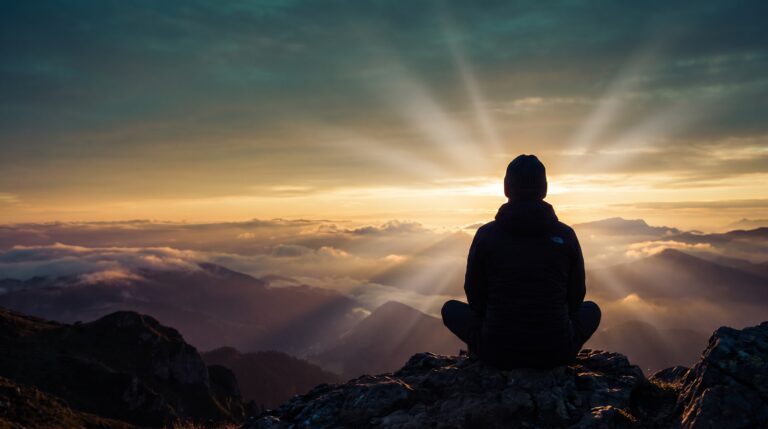
Maybe you have done everything right. Eaten the greens, walked the walk, downloaded the sleep app. And still something feels unfinished. The body is tired in a way a nap does not fix. The mind runs late into the night. The heart carries things nobody sees.
That feeling has an answer, and it is older than any wellness trend. Holistic wellness is the practice of caring for the whole person: body, mind, emotions, spirit and the relationships that hold you. Not one piece at a time. All of it, together, in a way that fits a real life.
This guide is a complete map. We will cover what the word means, where the idea came from, the five dimensions, a daily rhythm, movement, food, sleep, stress, breath and meditation, and where energy healing and other complementary practices fit. We will also say plainly what is tradition and what is tested. And at the end you will build a simple plan of your own. One note before we begin: this is educational, not medical advice. Holistic care works best alongside your doctor, never instead of one.
Key Takeaways
- Holistic wellness cares for the whole person: physical, emotional, mental, spiritual and social.
- The dimensions are connected. Sleep, stress, movement and food shape one another every day.
- Small, steady habits beat big, short-lived overhauls. Start with one or two changes.
- Energy healing and other complementary practices can support comfort and calm. They do not replace medical care.
- Work with a doctor, and tell them what you are trying. The power is within you, and good guidance helps.
What Holistic Wellness Means
The word “holistic” comes from the Greek holos, meaning whole. A holistic view says you are more than a collection of parts. Your knee, your mood, your sleep, your finances, your friendships and your sense of purpose are all threads in one cloth. Pull one and the others move.
That is not a mystical claim. Ask anyone who has lain awake worrying and then felt their stomach tighten the next day. Mind affects body. Body affects mind. Holistic wellness simply takes that seriously and builds a life around it.
It also changes the question. A narrow view of health asks, “What is wrong, and how do I fix it?” A whole-person view asks, “What does this person need to feel well, steady and alive?” The second question includes the first. It just keeps going.
Three ideas sit at the center of it:
- Connection. Body, mind, emotions, spirit and community influence one another.
- Prevention and balance. Daily habits matter as much as treatment when something goes wrong.
- Your own agency. You are a participant in your health, not a passenger. Teachers and practitioners are guides. You do the living.
What holistic wellness is not matters just as much. It is not a rejection of modern medicine. It is not a promise that the right diet or the right energy practice will cure serious illness. And it is not a standard you must meet. You are already enough to begin, wherever you are today.
Try this: Take two minutes and rate each of five areas from one to ten: body, emotions, mind, spirit, relationships. Do not judge the numbers. Just notice which one is quietly asking for attention.
A Short History of Whole-Person Care
Treating the person, not just the symptom, is one of the oldest ideas in healing.
Traditional Chinese medicine and Ayurveda, which developed over thousands of years, both describe health as balance among body, mind and the environment. Ayurveda places daily routines, food, sleep and seasonal living at the center. Traditional Chinese medicine speaks of the flow of vital energy, called qi, and the balance of its qualities. Many ancient Greek physicians in the Hippocratic tradition also paid close attention to diet, climate, rest and temperament. Indigenous healing traditions around the world have long joined the physical, the communal and the sacred.
Modern language arrived much later. In 1948 the World Health Organization described health as a state of complete physical, mental and social well-being, and not merely the absence of disease. That sentence is still widely quoted, and it is plainly a whole-person definition.
In the 1950s and 1960s, physician Halbert Dunn wrote about “high-level wellness,” the idea that health is something you cultivate, not just the lack of illness. In the 1970s a holistic health movement grew in the United States, joining self-care, nutrition, mind-body practices and a new interest in Eastern traditions. Later, groups such as the National Wellness Institute described wellness as a set of connected dimensions, including emotional, physical, social, intellectual, occupational and spiritual.
In the late 1970s Jon Kabat-Zinn began teaching mindfulness-based stress reduction in a hospital setting. That moment helped bring meditation into mainstream medicine as a support for people living with stress and chronic conditions. Today many hospitals offer integrative programs that sit next to conventional care. The word “integrative” is worth remembering. It means combining, not replacing.
So when you practice holistic wellness, you join a long line. Healers, mystics, physicians and ordinary families have all arrived at the same quiet truth: the whole person matters.
A Short Glossary of Holistic Terms
The wellness world borrows words from many places. Here is a plain-language guide to the ones you will meet most often.
- Holistic: Looking at the whole person, including body, mind, emotions, spirit and surroundings.
- Integrative health: Combining conventional medical care with complementary practices, coordinated with your care team.
- Complementary: Used alongside standard medical care.
- Alternative: Used instead of standard medical care. This is the riskier path for serious conditions, and we do not recommend it.
- Mind-body practices: Approaches such as meditation, yoga, tai chi and breathwork that link attention, breath and movement.
- Mindfulness: Paying attention to the present moment on purpose, without judging it.
- Energy healing: A family of practices, such as Reiki, that work with what practitioners call the body’s subtle energy. These come from tradition, and scientific evidence for the energy claims is limited.
- Chakras: Energy centers described in yogic and tantric traditions, usually seven along the spine. A contemplative map, not an anatomical one.
- Qi and prana: The words traditional Chinese medicine and yoga use for vital life force.
- Circadian rhythm: Your body’s roughly 24-hour internal clock, which shapes sleep, hunger and energy.
- Grounding or earthing: Making direct contact with the earth, such as walking barefoot on grass. Many people find it calming. Our guide below explains what is claimed and what is known.
- Self-care: The everyday things you do to protect your health and peace, from a good meal to saying no.
The Five Dimensions of Holistic Wellness
Different models use different numbers. Some name six, some eight. This guide uses five because they are easy to remember and cover the ground. Think of them as five rooms in one house. You live in all of them, whether you notice or not.
Physical Wellness
This is the room most people clean first. It covers movement, food, sleep, rest, and the care you give your body when it asks for help. It also includes the unglamorous work: check-ups, screenings, taking medication as prescribed. Physical wellness is not about a certain size or shape. It is about having the energy to live the life you want, and listening to what your body is telling you.
Emotional Wellness
Emotional wellness is the ability to feel your feelings without being run by them. It means naming what is happening inside, letting grief be grief and joy be joy, and recovering after hard days. It does not mean being positive all the time. Suppressed emotion tends to leak out sideways, through tension, irritability or exhaustion. Many people find that journaling, honest conversation, time in nature and, when needed, a good counselor make a real difference.
Mental Wellness
This is the life of the mind: curiosity, learning, focus, and the stories you tell yourself. A mind that stays curious tends to stay flexible. Mental wellness also means noticing the loops. The worry that repeats at 3 a.m. The inner critic that never takes a day off. Awareness is the first step. Meditation, reading, creative work and learning something new all feed this room.
Spiritual Wellness
Spiritual wellness is a sense of meaning, purpose and connection to something larger than yourself. For some that is a religious path. For others it is nature, prayer, meditation, service or a quiet inner knowing. It does not require any one belief. It asks a few simple questions: What matters to me? What am I here to do? Where do I feel most like myself? Many people find that tending this room makes the other four easier, because meaning gives effort a reason.
Social Wellness
Humans are built for each other. Long-running research on adult life, including the Harvard Study of Adult Development, has repeatedly pointed to close relationships as one of the strongest signs of a healthy, satisfied life. That does not mean you need a crowd. It means a few people who know you, check on you and laugh with you. Community, whether a family, a friend group, a faith circle or an online gathering of fellow seekers, belongs on the list.
Notice how each room opens into the others. A good walk (physical) lifts mood (emotional), clears thinking (mental), can feel sacred under an open sky (spiritual), and is better with a friend (social). That overlap is the whole point.
Try this: Pick the room you scored lowest. Choose one tiny act for it this week. A phone call. A ten-minute walk. Five minutes of silence. Small counts.
Build a Daily Rhythm
If you remember only one section, make it this one. Bodies love rhythm. Regular times for waking, eating, moving and resting give your internal clock something steady to follow, and many people notice better sleep and steadier energy when they do. Ayurveda has taught this for centuries under the name dinacharya, or daily routine. Modern sleep and circadian researchers say something similar in different words.
You do not need a perfect routine. You need a gentle one you can repeat on an ordinary Tuesday. Here is a simple shape to borrow and adjust.
Morning
- Wake at a consistent time, within an hour or so, even on weekends when you can.
- Get outside for a few minutes of daylight. Many sleep experts suggest morning light helps set your body clock.
- Drink some water before the coffee.
- Take three to five minutes of quiet. Breathe, pray, stretch or sit. No phone yet, if you can manage it.
Midday
- Eat a real meal, away from a screen when possible.
- Move for a few minutes after eating. A short walk is plenty.
- Take a true pause in the afternoon: stand, stretch, breathe slowly three times.
Evening
- Finish your last big meal a few hours before bed if that suits you.
- Dim the lights and quiet the screens about an hour before sleep.
- Write down three things that went well, or a thing you are grateful for. Our piece on the power of gratitude explains why this tiny habit matters to so many people.
- Go to bed at roughly the same time each night.
Anchor new habits to old ones. Breathe slowly while the kettle heats. Stretch after brushing your teeth. Give thanks when your head touches the pillow. Habits stick when they ride on something that already happens.
Try this: Choose one anchor in the morning and one in the evening. Write them on a sticky note. Do just those two for a week.
Movement: Let the Body Move
Your body was designed to move, and it tends to reward you for it. Regular movement is linked to better heart health, mood, sleep and independence as we age. Major health bodies, including the World Health Organization, suggest adults aim for roughly 150 to 300 minutes of moderate activity per week, plus muscle-strengthening work on two or more days. Those are general guidelines. Your own doctor knows your situation best.
The good news is that “movement” is wide. It includes brisk walking, gardening, dancing in the kitchen, swimming, yoga, tai chi and qigong. For readers over forty, the aim is not to punish the body. It is to keep it strong, flexible and steady.
Three Kinds of Movement Worth Having
- Gentle cardio. Walking is hard to beat. Thirty minutes most days, split up if you like.
- Strength. Bodyweight exercises, resistance bands or light weights a couple of times a week help protect muscle and bone as years pass.
- Mind-body movement. Yoga, tai chi and qigong join movement, breath and attention. Many people find they calm the nervous system while building balance and flexibility.
Yoga deserves a word. It began as a spiritual discipline, and the poses we know today are only one part of a much larger path. If you are curious about the energetic side, our guide to chakra yoga shows how some practitioners pair poses with the energy centers.
Finally, take your movement outside when you can. Time in green places is associated in many studies with lower stress and better mood. If you have ever felt your shoulders drop on a forest path, you already know. If you want to go further, our complete guide to earthing and grounding explores the practice of making direct contact with the earth.
Try this: Go for a ten-minute walk today without headphones. Notice five sounds, four colors, three textures. Let the walk be the practice.
Food: Nourish, Do Not Punish
Nutrition is one of the loudest corners of the wellness world, and one of the most confusing. Every few months a new rule arrives. Here is the grounded view: the broad patterns that hold up in research are fairly simple, and the rest is personal.
Most nutrition researchers agree that eating mostly whole foods supports long-term health. That means vegetables, fruit, beans and lentils, whole grains, nuts and seeds, healthy fats such as olive oil, and good protein, with fewer ultra-processed foods and less added sugar. Mediterranean-style eating is one of the most studied patterns. But there is no single correct diet for every person, culture or body.
A Gentle Way to Eat
- Add before you subtract. Put one more vegetable on the plate before you ban anything.
- Eat slowly. Chew, taste, notice when you are full. Mindful eating is a practice, not a diet.
- Drink water through the day.
- Cook when you can. The simple act of preparing food is itself nourishing for many people.
- Make it social. Meals shared with others feed more than the body.
The holistic traditions add a few reflections worth keeping. Ayurveda asks you to eat according to your constitution and the season. Traditional Chinese medicine speaks of warming and cooling foods. Some spiritual paths bless the meal before eating. These are cultural and contemplative frameworks. You can borrow the spirit of them, which is attention and gratitude, without treating them as medical rules.
A Word of Care
Be wary of anyone who says a food, a cleanse or a supplement will cure a disease. Herbs and supplements are active substances. They can interact with medications and affect people differently. Always check with your doctor or pharmacist before adding them, especially if you take prescriptions, are pregnant, or manage a chronic condition. If you live with an eating disorder, diabetes, allergies or any condition that needs a specific diet, work with a qualified professional.
Curious how some teachers connect the food on your plate to the subtle body? Our guide to chakra foods shares that symbolic view. Treat it as a reflective practice and keep the basics of good nutrition in place.
Try this: At your next meal, put the fork down between bites for five minutes. Taste. Notice. Say a quiet thank you.
Sleep: The Quiet Foundation
If holistic wellness has a foundation stone, it is probably sleep. Poor sleep makes pain louder, mood heavier and decisions harder. Good sleep helps the body repair and the mind process the day. Sleep organizations generally recommend that adults get seven or more hours a night. Needs vary, and age and health play a part.
Sleep is also the place where all the dimensions meet. Stress keeps you up. Lack of sleep makes stress harder. Late meals, bright screens, unresolved feelings, and a lonely house can all show up at 2 a.m. Treat sleep as a full-life project.
An Evening Wind-Down
- Keep a regular bedtime and wake time.
- Make the bedroom cool, dark and quiet.
- Dim lights and put away screens about an hour before bed.
- Go easy on caffeine in the afternoon and on alcohol near bedtime, which can fragment sleep.
- Try a slow breathing practice, a warm bath, gentle stretching, or a calm body scan.
- If your mind races, keep a notebook by the bed and empty your head onto the page.
Some people also like a short evening ritual: a candle, a prayer, a line of gratitude. These do not need to be religious to work. They tell the nervous system the day is over.
If you snore loudly, wake gasping, struggle with insomnia for weeks, or feel exhausted despite long nights, please talk to your doctor. Sleep problems can have medical causes that deserve proper care.
Try this: Tonight, dim the lights an hour early and breathe out slowly ten times in bed. Let the exhale be longer than the inhale.
Stress: Meeting the Pressure Without Being Ruled by It
Stress is not the enemy. It is the body’s alarm system, and it helps in a real emergency. The trouble comes when the alarm never switches off. Long-lasting stress is linked in research to sleep problems, tension, low mood and other health concerns. Which is why stress deserves a seat at the holistic table.
The aim is not to eliminate stress. It is to build a body and mind that can return to calm. Think of it as a thermostat you can learn to adjust.
Ways People Calm the Nervous System
- Slow breathing. Long, easy exhales tend to signal safety to the body.
- Time outdoors. A park bench counts.
- Movement. A walk can burn off the buzz.
- Connection. Telling someone how you feel is often a bigger relief than expected.
- Creative play. Music, art, gardening, cooking.
- Saying no. Boundaries are medicine.
Some stress is carried not in the schedule but in old, unprocessed pain. If grief, trauma or anxiety feels heavy, a licensed counselor or therapist is a sign of wisdom, not weakness. Spiritual practice can walk beside therapy, and our reflection on healing from trauma spiritually speaks to that gently. If you are ever in crisis, or thinking of harming yourself, contact local emergency services or a crisis line right away.
For a more contemplative take on letting go of what weighs on you, listen to Marisa Liza Pell in Spiritual Stress Detox, a conversation on releasing what no longer serves you.
Try this: When tension rises today, stop and take three slow breaths. Inhale through the nose for four counts. Exhale for six. Ask yourself: what do I actually need right now?
Breath and Meditation: The Doorway Within
Breath is the one part of the nervous system you can steer on purpose. You breathe without thinking, and you can also choose to slow it down. That small bridge between the automatic and the deliberate is why breathing practices appear in nearly every tradition, from yogic pranayama to Taoist and Christian contemplative prayer.
Research on slow breathing is promising for relaxation and stress, though results vary and it is not a cure for any condition. Many people simply find it works. It costs nothing. It can be done in a parking lot.
Three Simple Breath Practices
- Long exhale. Breathe in through the nose for four counts, out through the mouth for six to eight. Repeat for two minutes.
- Box breathing. Inhale four, hold four, exhale four, hold four. Many people use it to settle before a hard conversation.
- Belly breathing. Rest a hand on your abdomen. Let it rise as you inhale and fall as you exhale.
If you have a respiratory condition, are pregnant, or feel dizzy, go gently and skip breath holds. More intense breathwork methods should be learned with a qualified teacher. For a deeper look at the spiritual side, listen to Niraj Naik in The Art of Spiritual Breathwork.
Meditation, Simply
Meditation takes many forms. You can follow your breath, repeat a word, watch your thoughts like clouds, rest in silence, or send kind wishes to others. Studies of mindfulness-based programs suggest benefits for stress and some conditions for many people, though experiences differ and meditation is not right for every situation. Some people find that sitting with difficult feelings stirs up more than they expect. If that happens, go gently, shorten the session, or seek support from a teacher or therapist.
Start tiny. Five minutes beats an hour you never do. Sit comfortably, let your attention rest on the breath, and when your mind wanders (it will), notice and come back. That return is the practice. Our meditation guide walks you through it step by step.
The deeper traditions treat meditation as a path to something larger. If you feel that pull, our guide to spiritual enlightenment traces how different traditions describe it.
Try this: Set a timer for five minutes. Sit. Breathe. When you wander, come back, kindly. Do it again tomorrow.
Energy Healing and Complementary Practices
Here is where we slow down and speak carefully. This is the part of holistic wellness that stirs the most excitement, and the most confusion.
Energy healing is a broad name for practices that aim to work with the body’s subtle energy field. Reiki, pranic healing, healing touch, qigong healing and chakra balancing all belong here. Practitioners describe the experience as deep relaxation, warmth, emotional release or a feeling of peace. Many people tell us they feel calmer and more cared for afterward.
What can we say honestly? Three things.
- The experience of calm is real for many people. Being still, being touched kindly, and being given undivided attention are all soothing. That alone has value.
- The energy claims are tradition-based. Scientific research on whether a subtle energy field exists, or whether these practices work beyond relaxation and the placebo response, is limited and mixed. Health authorities generally describe the evidence as insufficient to say they treat disease.
- They are best used as complements. Never as a replacement for diagnosis, medication or treatment.
If you are curious, our two guides go deeper. Read the overview of energy healing practices, history and research and our energy healing guide for wellbeing. For the chakra system specifically, start with chakra meditation.
Other Complementary Practices You May Meet
- Acupuncture. Fine needles at points on the body. Some research suggests it may help certain kinds of pain for some people. Choose a licensed practitioner.
- Massage and bodywork. Often helpful for tension and relaxation.
- Aromatherapy. Essential oils used for mood and relaxation. Pleasant, but a few oils can irritate skin or affect pets and children. Dilute and use with care.
- Herbal and plant medicine. Traditional in many cultures, and also pharmacologically active. Check with your doctor or pharmacist first.
- Sound and music. Singing bowls, chanting, drumming. Many find them calming and moving.
- Earthing or grounding. Direct contact with the earth. Pleasant for many, and the research is early. See our earthing guide.
- Intuitive and medical intuitive work. Some people find it meaningful. It is not a substitute for medical diagnosis. You can hear one such perspective in our conversation with Julie Ryan.
How to Choose Wisely
- Be wary of anyone who promises a cure, or tells you to stop your medication.
- Be wary of high pressure, big upfront payments or secrecy.
- Ask about training, experience and what a session involves.
- Trust your own sense. If something feels off, you may leave.
- Tell your doctor what you are trying.
That last point is not a formality. It is how integrative care is supposed to work.
Try this: If you are curious about one complementary practice, write down what you hope it will do for you. Then ask: what question should I bring to my doctor first?
Working With Your Doctor
This section matters most, so we will say it plainly. Holistic wellness and medicine are partners.
See your doctor for regular check-ups and screenings. Get new or worrying symptoms checked rather than guessed at. Take prescribed medication as directed unless your doctor tells you otherwise. Bring a list of any supplements, herbs and practices you use, because some can affect tests or interact with drugs. And if you live with a serious or long-term condition, ask whether a complementary practice could safely be added to your plan.
Many people are surprised to find their doctors open to the conversation, especially about sleep, stress, movement, food and meditation. Those are the areas where your daily choices help most, and where medical and holistic advice usually point the same direction.
Think of it this way. Your doctor offers training, tests and treatments. Holistic practice offers the daily living that surrounds them. You need both. And you remain the center of the team.
Build Your Simple Personal Plan
Information alone changes very little. A plan changes things. Here is a gentle five-step way to make your own, in one sitting.
Step One: Check In
Revisit your five scores from earlier. Where are you strong? Where are you running on empty? Be kind. This is a snapshot, not a verdict.
Step Two: Name What You Want
Complete this sentence: “I want to feel more ______ in my daily life.” Steady. Rested. Peaceful. Strong. Connected. Use your own word. It becomes the compass.
Step Three: Choose Two Habits
Only two. Pick one from the physical side (sleep, movement or food) and one from the inner side (breath, meditation, journaling, prayer, time with a friend). Make each so small it feels almost silly. A five-minute walk. Three slow breaths. One glass of water. One call to someone you love.
Step Four: Attach, Schedule, Track
Anchor each habit to something you already do. Put it on the calendar. Then mark a simple check on a wall calendar each day you do it. Missing a day is fine. Missing two in a row is the signal to restart, gently.
Step Five: Review in Thirty Days
After a month, ask three questions. What helped? What did not? What do I want to add or change? Then add one new habit, or deepen one you have. Slow growth lasts.
A sample week might look like this:
- Daily: Five minutes of quiet each morning. A ten-minute walk after lunch. Three things you are grateful for at night.
- Twice a week: Strength work or a gentle yoga class.
- Weekly: One meal with people you care about. One longer time outdoors.
- Monthly: A check-in with yourself using the five scores. A medical appointment as needed.
Adjust it to your life, your health, your age and your energy. If something does not fit, change it. This is your path.
And when you slip, which everyone does, remember that wellness is a practice, not a performance. Come back. That is all.
Try this: Write your two habits on a card and put it where you will see it tomorrow morning.
On Screen: HEAL
HEAL is a feature documentary that explores what it means to be sick, and what it takes to heal. It follows people living with illness and weaves in the views of healers from different traditions, looking at the links between thoughts, emotions, lifestyle and health. It is a thoughtful companion to this guide. As with everything here, take it as inspiration for your own questions, and bring those questions to your doctor. For our full thoughts, read our HEAL film review. The film is available on Next Level Soul.
Books for Your Wellness Journey
- Full Catastrophe Living by Jon Kabat-Zinn. The foundational guide to mindfulness-based stress reduction.
- Wherever You Go, There You Are by Jon Kabat-Zinn. Short, gentle essays on everyday mindfulness.
- Breath by James Nestor. A lively exploration of how we breathe and why it matters.
- The Relaxation Response by Herbert Benson. A physician’s classic on calming the body.
- Mindfulness in Plain English by Bhante Gunaratana. A clear, friendly meditation manual.
- The Body Keeps the Score by Bessel van der Kolk. On trauma and the body. Best read with support if the subject is close to home.
- The Power of Now by Eckhart Tolle. Presence as a daily practice.
As an Amazon Associate, Next Level Soul earns from qualifying purchases.
Where to Go Next
You do not have to do everything. Choose the doorway that calls you.
- New to stillness? Begin with our meditation guide.
- Curious about subtle energy? Read about energy healing practices.
- Want to feel your feet on the earth? Try our earthing and grounding guide.
- Feeling the weight of the past? Read about healing from trauma spiritually.
- Ready for the bigger questions? Explore spiritual enlightenment.
Next Level Soul is a spiritual ecosystem built for seekers: a podcast with new episodes every week, more than 3,500 hours of movies, series, teachings and meditations, and a community walking the path beside you. Take what resonates. Leave the rest. The power is within you, and we are glad to walk with you.
Go Deeper: Watch HEAL
Watch HEAL on Next Level Soul TV Not Ready Yet? Read Our HEAL Review
Frequently Asked Questions
What Is Holistic Wellness?
Holistic wellness is an approach to health that cares for the whole person: body, mind, emotions, spirit and relationships. It treats these areas as connected, so a change in one tends to affect the others.
What Are the Dimensions of Holistic Wellness?
This guide uses five: physical, emotional, mental, spiritual and social. Other models add areas such as occupational, intellectual or environmental wellness.
Is Holistic Wellness the Same as Alternative Medicine?
No. Holistic wellness is about caring for the whole person and can work alongside standard medical care. Alternative medicine means using something instead of standard care, which can be risky for serious conditions.
Can Holistic Practices Replace My Doctor?
No. Holistic practices can support comfort, calm and healthy habits, but they do not replace diagnosis, medication or treatment. Tell your doctor about any practice, herb or supplement you use.
Where Should I Start With Holistic Wellness?
Start small. Check in with the five dimensions, pick the one that needs care, and choose two tiny habits, such as a ten-minute walk and five minutes of quiet. Build from there.
Does Energy Healing Work?
Many people report feeling calm, relaxed and cared for after energy healing such as Reiki. Scientific evidence for the energy claims is limited and mixed, so it is best used as a complement to medical care and not a replacement.
How Much Sleep Do I Need?
Sleep organizations generally recommend seven or more hours a night for adults. Needs vary with age and health, so talk with your doctor if you are always tired or have trouble sleeping.
How Does Meditation Support Wellness?
Many people use meditation to feel calmer and more focused. Studies of mindfulness-based programs suggest benefits for stress for many people, though results differ. Start with five minutes and go gently.
Are Supplements and Herbs Safe?
Herbs and supplements are active substances. They can interact with medications and affect people differently, so check with your doctor or pharmacist before using them.
How Long Does It Take to See Results?
It varies. Many people notice small shifts in sleep, mood or energy within a few weeks of steady habits. Lasting change usually comes from gentle repetition over months.
Can Holistic Wellness Help With Stress?
Practices such as slow breathing, movement, time outdoors, meditation and connection with others help many people feel calmer. For ongoing anxiety, grief or trauma, a licensed counselor or doctor is an important part of care.