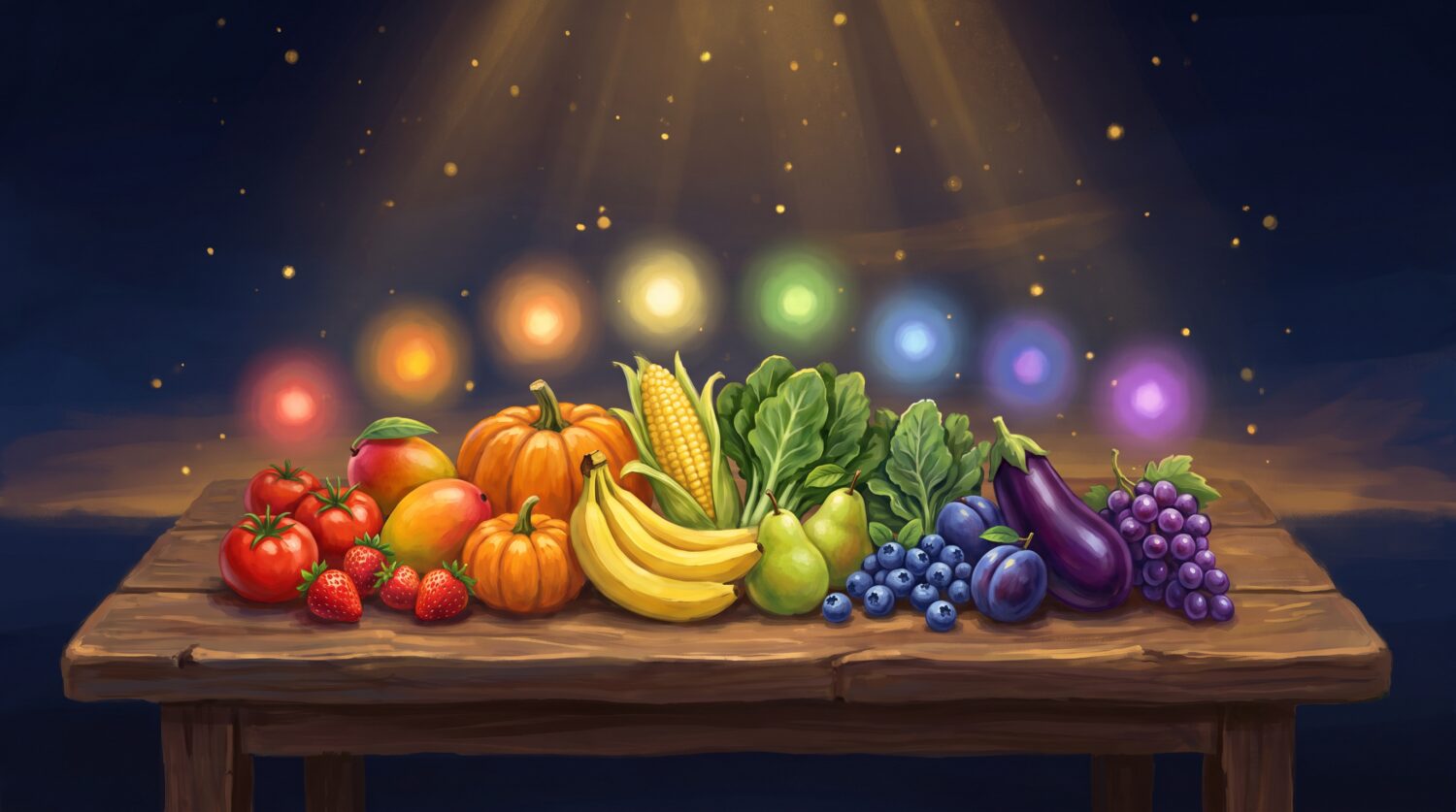
Does the food on your plate have anything to do with your spiritual life? Maybe you have wondered. You eat a bowl of bright vegetables and feel steady. You skip lunch, grab something fast, and feel scattered by three o’clock. Something is connected there, even if it is hard to name.
Chakra foods are one traditional way of naming that connection. The idea is simple: each of the seven energy centers is linked with a color and a theme, and certain whole foods share that color or theme. This guide walks through each one, then gives you simple meal ideas, a one-day eating plan and mindful eating tips. Everything here is offered as tradition and practice. It is not medical advice, and we will say that plainly more than once.
Key Takeaways
- Chakra foods are a tradition-based practice: matching colors and themes of food to the seven energy centers.
- Each chakra has a color, a theme and a family of whole foods long linked with it in modern teaching.
- This is a spiritual practice, not medical advice, and not a substitute for care from a doctor or dietitian.
- Simple meals, a one-day plan and mindful eating habits make it easy to try on a real Tuesday.
- The most powerful ingredient is attention: how you eat matters as much as what you eat.
What Are Chakra Foods?
The word chakra comes from Sanskrit and means wheel. In yogic and tantric traditions, chakras are described as spinning centers of energy along the spine, from the base to the crown of the head. Most modern teaching names seven. Some older tantric texts describe many more, but seven is the version most seekers know.
The food side of the teaching is more recent. The rainbow colors we now attach to the chakras are largely a modern Western development, built on older Indian ideas. Practitioners took the colors and asked a natural question. If red belongs to the root, why not eat red foods while you focus on grounding? If green belongs to the heart, why not fill the plate with leafy greens?
So chakra foods are not an ancient rulebook. They are a creative practice that has grown up around the chakra system, and many people find it a gentle, beautiful way to bring daily life into their spiritual path. Eating becomes a small ceremony. That is the whole point.
If you are brand new to the seven centers, start with our complete guide to the chakras. It holds the full chakra-by-chakra teaching. Here we stay at the table.
Tradition, Not Medicine
Let us be clear before we go further. Chakra foods are a spiritual practice. They are not a diet plan, a treatment or a substitute for medical care. No food on this page is said to cure, treat or prevent any condition, and nothing here should replace the guidance of your doctor or a registered dietitian.
If you live with a health condition, take medication, are pregnant, have allergies or are recovering from an eating disorder, please talk to a qualified professional before you change how you eat. Choose foods that suit your body, your budget and your culture. A food you cannot eat is not a chakra food for you, however nicely it matches a color.
What the practice can offer is something different. It can bring awareness to your plate. It can make you curious about variety. It can turn a rushed habit into a moment of presence. Those are gifts worth having, and none of them require a promise about your body.
Try this: Before you read on, write one sentence on a sticky note: I am exploring this as a practice, and I will listen to my own body and my own doctor. Put it on the fridge.
How Chakra Eating Works: Color, Theme and Practice
Three simple ideas sit underneath the teaching.
- Color. Match the color of the chakra to the color of whole foods on your plate.
- Theme. Each center has a life theme, such as security, creativity, confidence, love, voice, insight and connection. Choose foods and eating moments that echo that theme.
- Element. Earth, water, fire, air, sound, light and spirit are linked with the seven centers. Foods grown in the earth, juicy foods, warm foods and light foods can each carry that feeling.
Notice how the color idea nudges you toward vegetables, fruit, grains, beans, nuts and seeds. That is a good reminder of why so many people enjoy this practice. A plate with many colors is usually a plate with many whole foods on it. It is a practical doorway into varied eating, with a spiritual story wrapped around it.
You do not have to cover all seven chakras every day, and you do not have to be strict. Think of it as a palette, not a prescription. If you want to work with one center for a week, choose that color and let it guide your shopping.
Root Chakra Foods: Red and Grounded
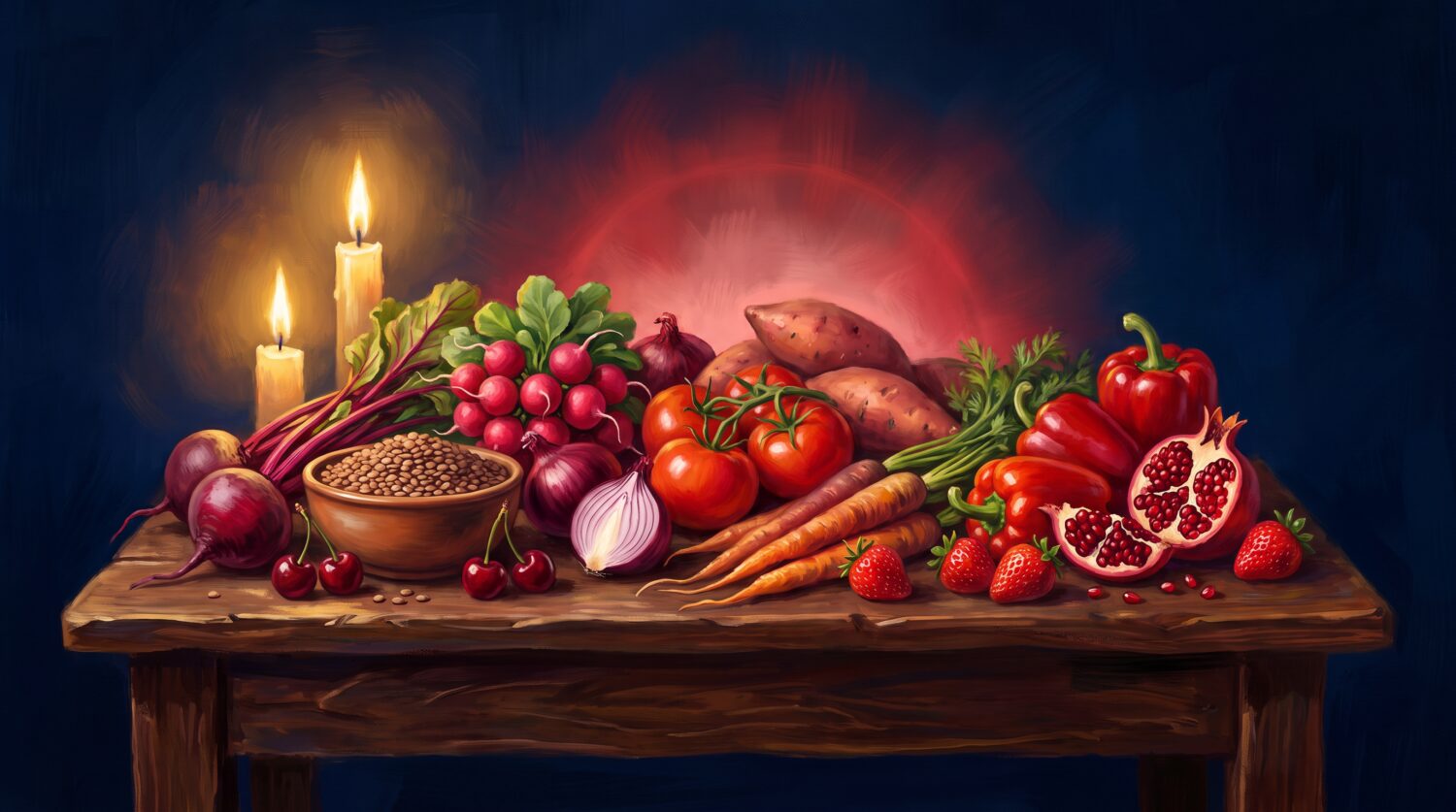
The root chakra (Muladhara) sits at the base of the spine. Its color is red and its element is earth. Tradition links it with safety, stability and the feeling of belonging in your own body and your own home.
The foods practitioners associate with it are red and rooted. Think of things that grow in or close to the ground, and things that feel substantial when you eat them.
- Beets, radishes and red onions
- Carrots and sweet potatoes
- Tomatoes and red peppers
- Strawberries, cherries, raspberries and pomegranate
- Beans and lentils
A warm bowl of lentil soup or roasted root vegetables fits the theme in a way almost everyone understands. It tastes like being taken care of. If the root theme speaks to you, our guide to earthing and grounding pairs naturally with these meals.
Try this: Cook one slow, warm, red-and-earthy meal this week. Eat it at a table, without a screen, with both feet flat on the floor.
Sacral Chakra Foods: Orange and Flowing
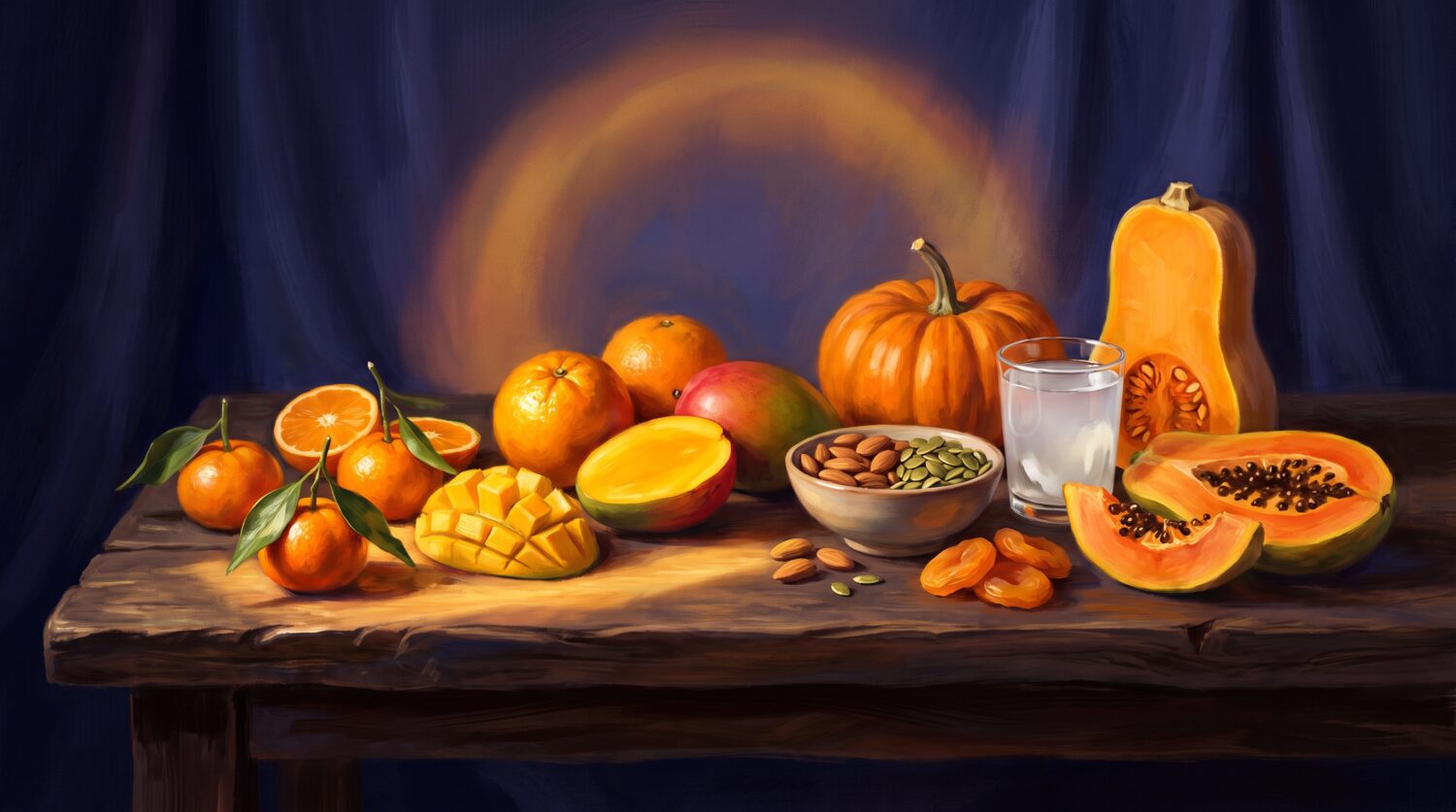
The sacral chakra (Svadhisthana) lives below the navel. Its color is orange and its element is water. Tradition connects it with creativity, pleasure, emotion and the ability to move with change.
The foods linked to it are orange, juicy and sweet in a natural way. They invite enjoyment, which is the heart of this center.
- Oranges, tangerines and mangoes
- Papaya and apricots
- Pumpkin, butternut squash and carrots
- Sweet potatoes
- Nuts and seeds, especially almonds and pumpkin seeds
- Coconut water and plenty of plain water
The water element is a gentle cue to drink more water through the day, which is something most of us forget. A slice of fresh mango eaten slowly, with attention on the taste, is a sacral practice all by itself. Pleasure is not a problem in this tradition. It is part of the path.
Try this: Pick one orange food and eat it with all five senses. What does it smell like? What sound does it make? Then spend ten minutes on something creative, even if it is only doodling.
Solar Plexus Chakra Foods: Yellow and Warm
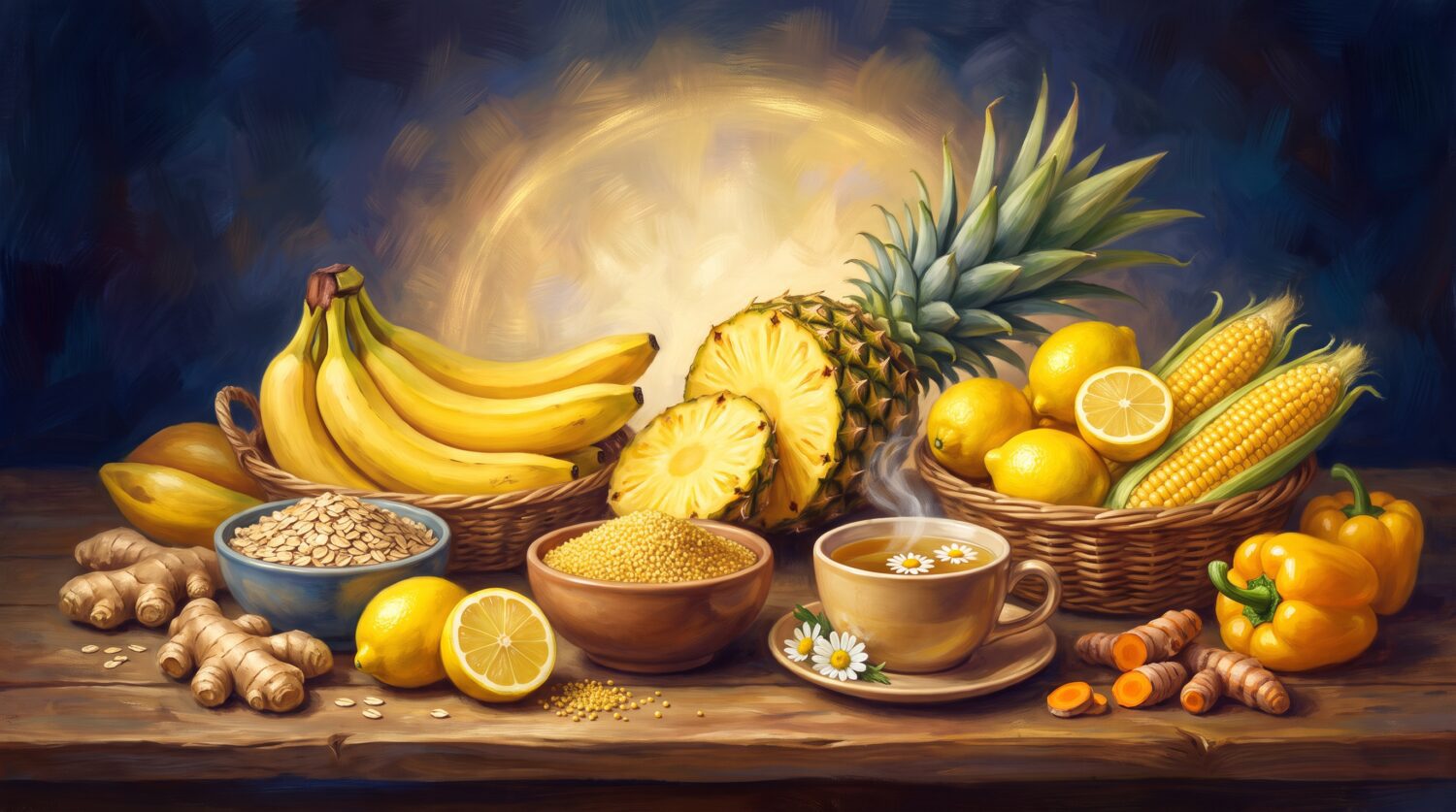
The solar plexus chakra (Manipura) sits in the upper belly. Its color is yellow and its element is fire. It is associated with confidence, willpower and the sense that you can act on what you value. In the old teaching, this is the center of inner fire, which is why warm, golden foods are often chosen for it.
- Bananas and pineapple
- Lemons and yellow grapefruit
- Corn and polenta
- Yellow peppers and yellow squash
- Oats, millet, brown rice and other whole grains
- Ginger and turmeric, used in cooking
- Chamomile and ginger tea
Warming spices and golden grains make this color easy to cook with. A bowl of oatmeal with sliced banana, or a pot of rice with turmeric and a squeeze of lemon, is a good example.
The theme here is not force. It is steady, self-trusting action. Many people find that regular meals, eaten at regular times, quietly support that feeling of steadiness. That is a note about routine, not a health claim.
Try this: Eat breakfast without rushing for three mornings in a row. Before the first bite, say aloud one thing you intend to do today.
Heart Chakra Foods: Green and Open
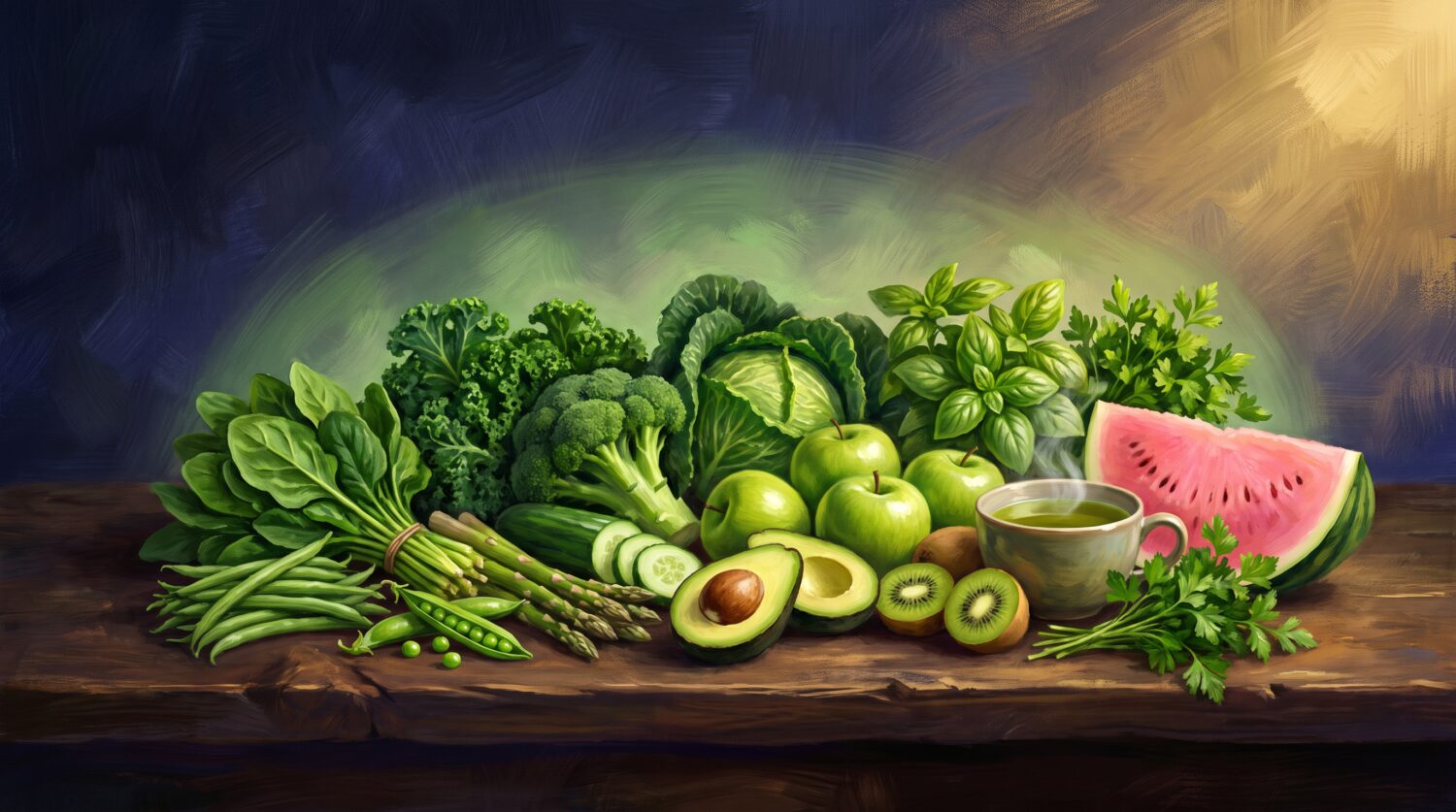
The heart chakra (Anahata) sits at the center of the chest. Its color is green, with pink as a secondary shade, and its element is air. Its theme is love, compassion and connection, to others and to yourself.
Green foods are the classic choice, and they are also the ones most nutrition guidance already tells us to eat more of.
- Spinach, kale, chard and lettuces
- Broccoli, green beans, peas and asparagus
- Cucumber, celery and zucchini
- Avocado, green apples, pears and kiwi
- Fresh herbs such as basil, parsley and cilantro
- Green tea
- Pink foods such as watermelon and rose petal tea, for the secondary shade
The heart center is also about sharing. So the most heart-centered thing you can do with green food may be to cook it for someone else, or to eat a meal with someone you love. A simple salad shared at a table does more for this theme than any ingredient list.
For a broader look at how body, mind and spirit fit together, our guide to holistic wellness is a good companion.
Try this: Make a green meal and invite someone to share it. If that is not possible today, set a place for yourself and treat the meal with the same care you would give a guest.
Throat Chakra Foods: Blue and Clear
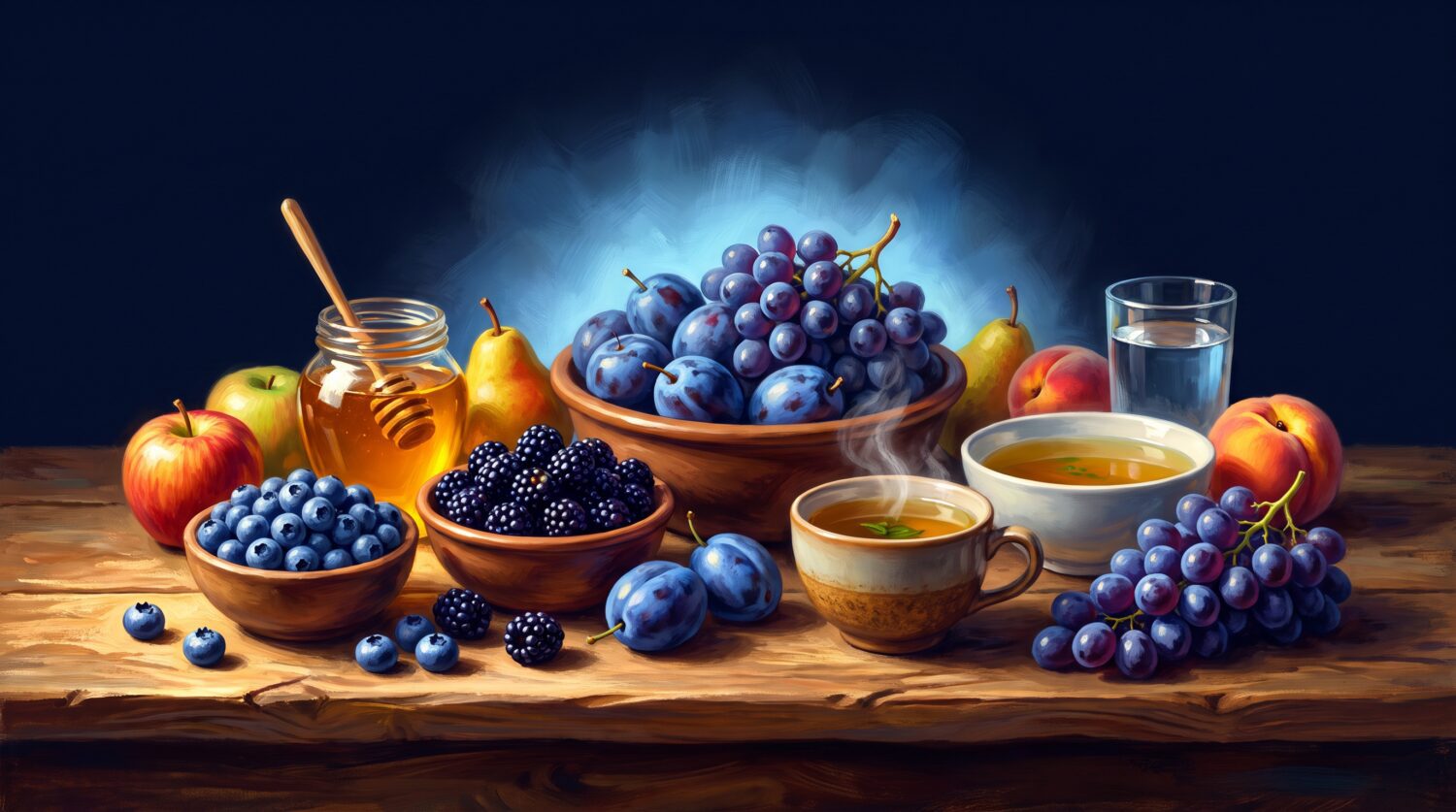
The throat chakra (Vishuddha) sits at the base of the neck. Its color is blue and its element is sound, or ether. The theme is honest expression: saying what is true, kindly, and listening well in return.
True blue foods are rare, so the tradition gets a little creative. Practitioners tend to choose blue-toned fruits, soothing drinks and foods that feel good to swallow.
- Blueberries and blackberries
- Concord grapes and blue plums
- Fresh, juicy fruits such as apples, pears and peaches
- Herbal teas, warm broths and clear soups
- Honey stirred into warm water or tea
- Plenty of water
Warm liquids are the quiet star here. A cup of herbal tea before an important conversation, or before you sit down to write or sing, is a small ritual many people enjoy. It gives your voice a moment of care.
Try this: Make a cup of tea and drink it in silence. Then speak one honest sentence out loud, even if you are alone. Notice how it feels to say it.
Third Eye Chakra Foods: Indigo and Insightful
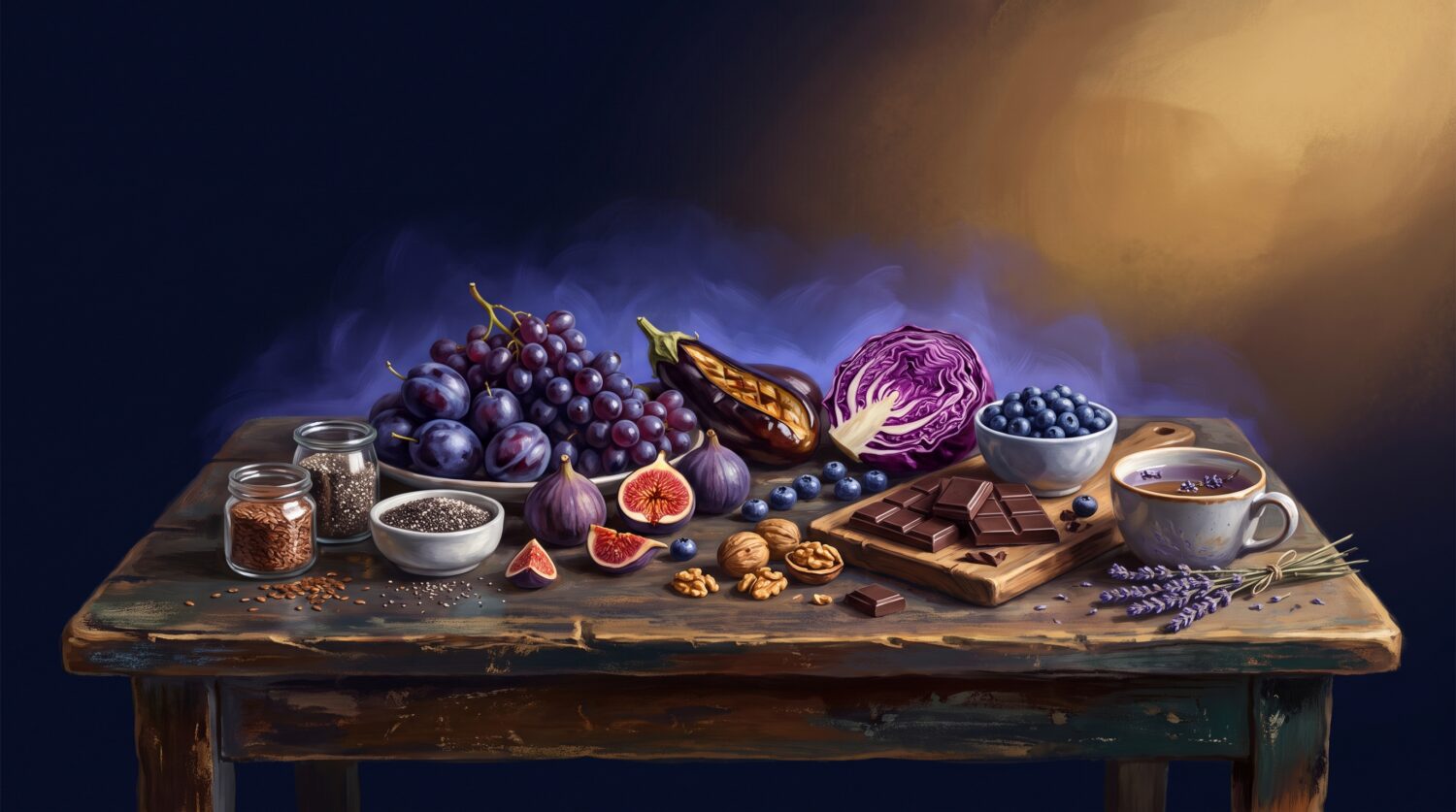
The third eye chakra (Ajna) rests between the eyebrows. Its color is indigo and its element is light. Tradition links it with intuition, imagination and inner sight. If this center interests you, we explore it in depth in our guide to awakening the third eye.
The foods are deep purple and blue-black, with a few from the nut and seed family that practitioners often add.
- Purple grapes, plums, figs and blackcurrants
- Eggplant, purple cabbage and purple carrots
- Blueberries and acai
- Walnuts, flax seeds and chia seeds
- Dark chocolate in small amounts
- Lavender or butterfly pea flower tea
This is the center of quiet knowing, so it suits calm, unhurried eating. A handful of walnuts and grapes eaten in a still moment, away from the phone, fits the mood. Many people pair this center with a few minutes of eyes-closed breathing before the meal.
Try this: Before you eat a purple food, close your eyes for three breaths and ask a simple question: What do I actually need right now? Then listen for the answer, and eat.
Crown Chakra Foods: Violet, White and Light
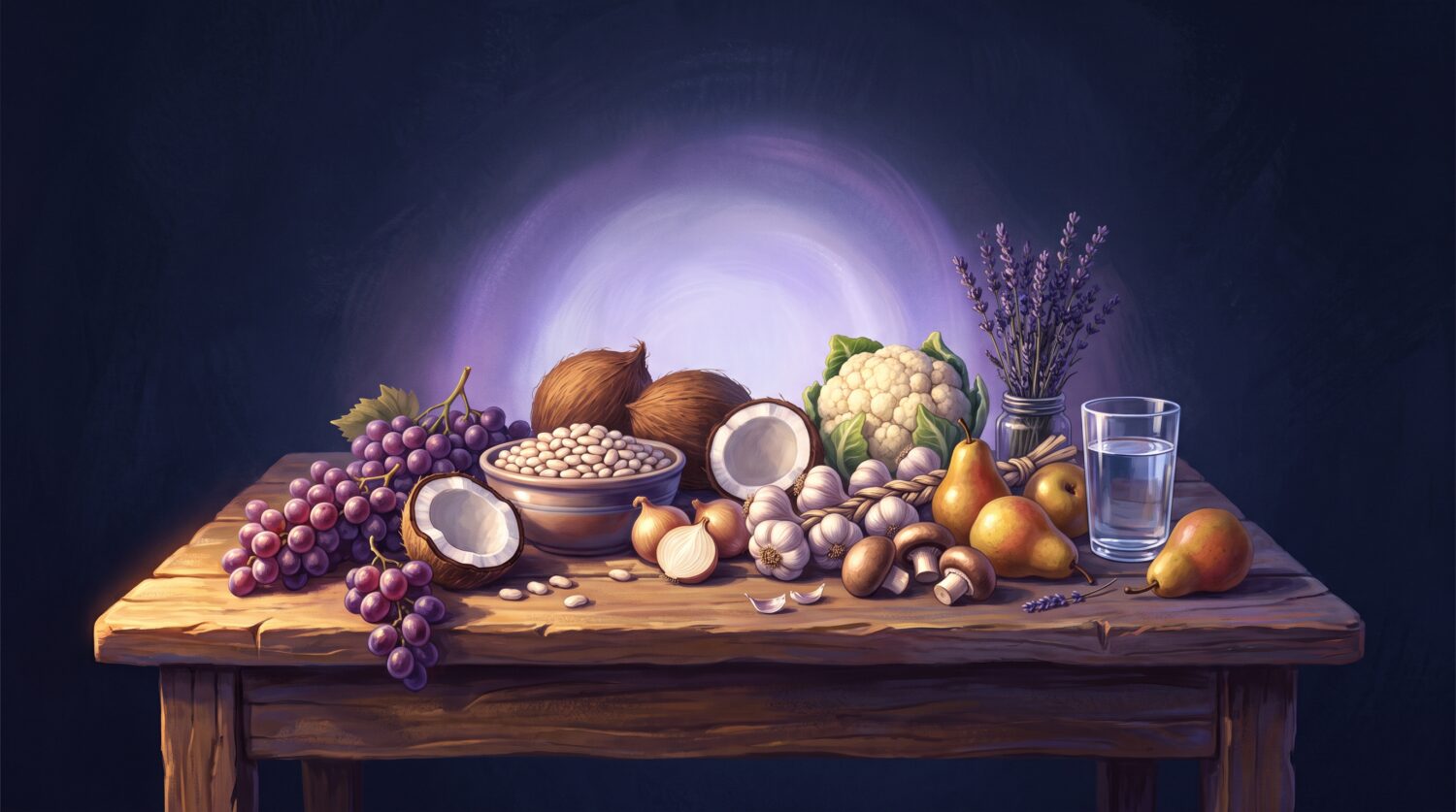
The crown chakra (Sahasrara) sits at the top of the head. Its color is violet or white, and its element is spirit, or pure awareness. Its theme is connection to something larger than yourself.
This is the one center where tradition says food matters least. The crown is nourished by stillness, prayer, meditation, time in nature and silence. Many teachers say the best crown practice is not about a specific food at all.
If you want something on the plate, practitioners lean toward light, simple and clean-tasting choices.
- Cauliflower, garlic, onions and mushrooms (white foods)
- Coconut, pears and white beans
- Violet foods such as lavender and purple grapes
- Fresh water, taken mindfully
- Simple meals eaten in silence
You may see fasting mentioned in connection with the crown. Fasting has a long place in many spiritual traditions, but it is not right for everyone and it is not something to start casually. If you are curious, speak with your doctor first. There is no need to go without food to honor this center. A quiet meal, eaten with gratitude, is plenty.
For a practice that fits this center more directly, try our guide to chakra meditation.
Try this: Eat one meal this week in complete silence. Pause before the first bite and give thanks, in whatever words or wordless way feels true to you.
Simple Meal Ideas for Every Color
You do not need special ingredients, hard recipes or a long shopping list. Here are easy ideas, one for each color, using ordinary kitchen staples. Swap anything that does not suit you.
- Root (red): Roasted beets and carrots over lentils, with a little olive oil and salt.
- Sacral (orange): A smoothie of mango, orange and a spoonful of almond butter, or a pumpkin soup with pumpkin seeds on top.
- Solar plexus (yellow): Oatmeal with sliced banana and cinnamon, or golden rice with turmeric, lemon and corn.
- Heart (green): A big salad with spinach, cucumber, avocado and peas, or a pot of green vegetable soup with fresh herbs.
- Throat (blue): A bowl of blueberries with warm herbal tea on the side, or a clear vegetable broth.
- Third eye (indigo): Roasted eggplant with walnuts, or purple grapes and a few squares of dark chocolate.
- Crown (violet and white): A simple cauliflower and white bean soup, eaten slowly and in quiet.
Most of these are things you already know how to make. That is the beauty of it. The practice does not ask you to become a different cook. It asks you to look at your plate with fresh eyes.
If you enjoy pairing food with other tools, many seekers like to keep a small crystal near the table for each color. We cover that in our guide to chakra stones, though a crystal is never required. The power is within you, not in the object.
Try this: Write the seven colors on a piece of paper. Next to each, list one food you already enjoy. You may find you have a full week of ideas before you even go shopping.
A One-Day Chakra Eating Plan
Here is a gentle sample day that touches all seven colors without turning into a project. It is a template for exploration, not a nutrition plan. Adjust portions, ingredients and timing to fit your own needs and your own health professional’s guidance.
Morning: Sacral and Solar Plexus
Start the day with a glass of water, then a warm bowl of oatmeal topped with sliced banana, a spoonful of chopped mango and a few pumpkin seeds. Orange and yellow arrive together, and the meal is simple. Eat it sitting down. Take three slow breaths before the first bite.
Mid-Morning: Throat
A cup of warm herbal tea and a small handful of blueberries. Sip it without a screen. If you have something important to say today, think about how you want to say it.
Lunch: Heart
A generous green salad with spinach, cucumber, avocado, peas and fresh herbs, with a dressing of olive oil and lemon. Add a scoop of white beans or a grain of your choice. If possible, eat with another person. Ask them one real question and listen to the whole answer.
Afternoon: Third Eye
Purple grapes with a few walnuts. Eat them slowly in a quiet spot, even if it is only your car or a back step. Close your eyes for a minute after you finish.
Dinner: Root
Roasted beets, carrots and sweet potato over lentils, with a little tomato sauce or red pepper. It is warm, grounding and filling. Set the table. Light a candle if you like.
Evening: Crown
No special food. A cup of warm water or caffeine-free tea, ten minutes of silence, and a moment of thanks for the day. Let the evening be quiet.
You do not need to repeat this plan exactly. Many people treat it as a one-day experiment, then carry forward the parts that felt good, such as slower breakfasts or a shared lunch.
Try this: Pick one meal from the plan and do it tomorrow. One. That is enough to begin.
Mindful Eating Tips
If chakra foods have a secret, it is this. The colors point your attention toward the plate, and attention is where the practice really lives. A rushed meal of the “right” foods does very little for the feeling of presence. A slow meal of simple food can do a great deal.
Here are eight habits worth trying, in no particular order.
- Pause before you eat. Take three slow breaths. Feel your feet on the floor.
- Say thank you. To the earth, the farmers, the cook, the source, whatever feels true to you.
- Put the phone away. One meal a day without a screen is a good start.
- Look first. Notice the colors on your plate before the first bite.
- Chew slowly. Put your fork down between bites if that helps.
- Taste with curiosity. Sweet, salty, sour, bitter, savory. What do you notice?
- Listen to your body. Stop when you are satisfied, not stuffed, and eat when you are hungry. Your body is the real teacher here.
- Let go of perfection. If you eat a cheeseburger at a ballgame, you have not failed anything. You are a human being enjoying a day.
That last one matters. This path is about awareness and kindness, never guilt. Food should not become a source of fear or a test you can fail. If chakra eating ever starts to feel stressful or rigid, set it down. The practice is there to serve you, not the other way around.
Some people like to join eating with other quiet practices. Our guide to chakra yoga offers gentle movement for each center, and it pairs well with a thoughtful meal.
Try this: For one week, eat your first three bites of each meal in silence and with full attention. Then eat the rest however you like.
Books to Explore
If this teaching calls to you, a few well-loved books can take you further. These are offered as starting points, not as the last word.
- Wheels of Life by Anodea Judith, a popular introduction to the chakra system. Find Wheels of Life on Amazon.
- Eastern Body, Western Mind by Anodea Judith, which connects the chakras with psychology. Find Eastern Body, Western Mind on Amazon.
- Mindful Eating by Jan Chozen Bays, a gentle guide to paying attention at the table. Find Mindful Eating on Amazon.
- Savor by Thich Nhat Hanh and Lilian Cheung, on mindfulness and eating. Find Savor on Amazon.
Bringing It Home
Chakra foods ask very little of you. A few colors. A slower pace. A moment of thanks. You do not need to buy anything special, follow a strict plan or believe every detail of the tradition. You only need to be willing to eat as if the meal matters.
Start small. Choose one chakra, one color, one meal. See what you notice. Keep what feels good and leave the rest. The deeper teaching behind all of it is simple: the power is within you, and every food, book and practice is only a guide to help you remember it.
When you are ready to see the whole picture, visit our complete chakras guide. And remember, this is spiritual practice, not medical care. Look after your body with the help of the professionals who know it best.
Frequently Asked Questions
What Are Chakra Foods?
Chakra foods are whole foods that tradition and modern teaching link with the color and theme of each of the seven chakras. It is a spiritual practice, not a medical one.
Do Chakra Foods Heal or Treat Any Condition?
No. Chakra foods are not a treatment and nobody should expect them to cure or treat a health condition. They are a mindful, tradition-based way of choosing and enjoying food. For medical concerns, see a doctor or registered dietitian.
What Foods Go With the Root Chakra?
Red and earthy foods are traditionally linked with the root chakra, such as beets, tomatoes, red peppers, strawberries, carrots, sweet potatoes, beans and lentils.
What Foods Go With the Heart Chakra?
Green foods are the classic choice, including leafy greens, broccoli, green beans, peas, avocado, cucumber, fresh herbs and green tea.
Which Chakra Foods Are for the Crown Chakra?
The crown is mostly nourished by stillness, prayer and meditation rather than specific foods. If you want something on the plate, practitioners choose light, simple foods such as cauliflower, coconut and white beans, eaten quietly.
Do I Need to Eat All Seven Colors Every Day?
No. Think of the colors as a palette, not a rule. Many people focus on one chakra for a week, or simply aim for variety over several days.
Is Fasting Part of Chakra Eating?
Fasting appears in some spiritual traditions, but it is not required for chakra foods and it is not right for everyone. Talk to your doctor before trying any fast.
Can I Practice Chakra Eating if I Am Vegan, Vegetarian or Gluten Free?
Yes. The practice centers on color and awareness, so you can choose any foods that fit your needs, allergies, beliefs and culture. If a food does not suit you, leave it out.
What Is Mindful Eating?
Mindful eating means paying full attention to your food and your body while you eat: noticing color, taste and texture, eating slowly, and stopping when satisfied.
Where Did the Idea of Chakra Foods Come From?
The chakra system comes from Indian yogic and tantric traditions. Matching foods to chakra colors is a more recent practice, built on the rainbow color scheme popularized in the modern West.