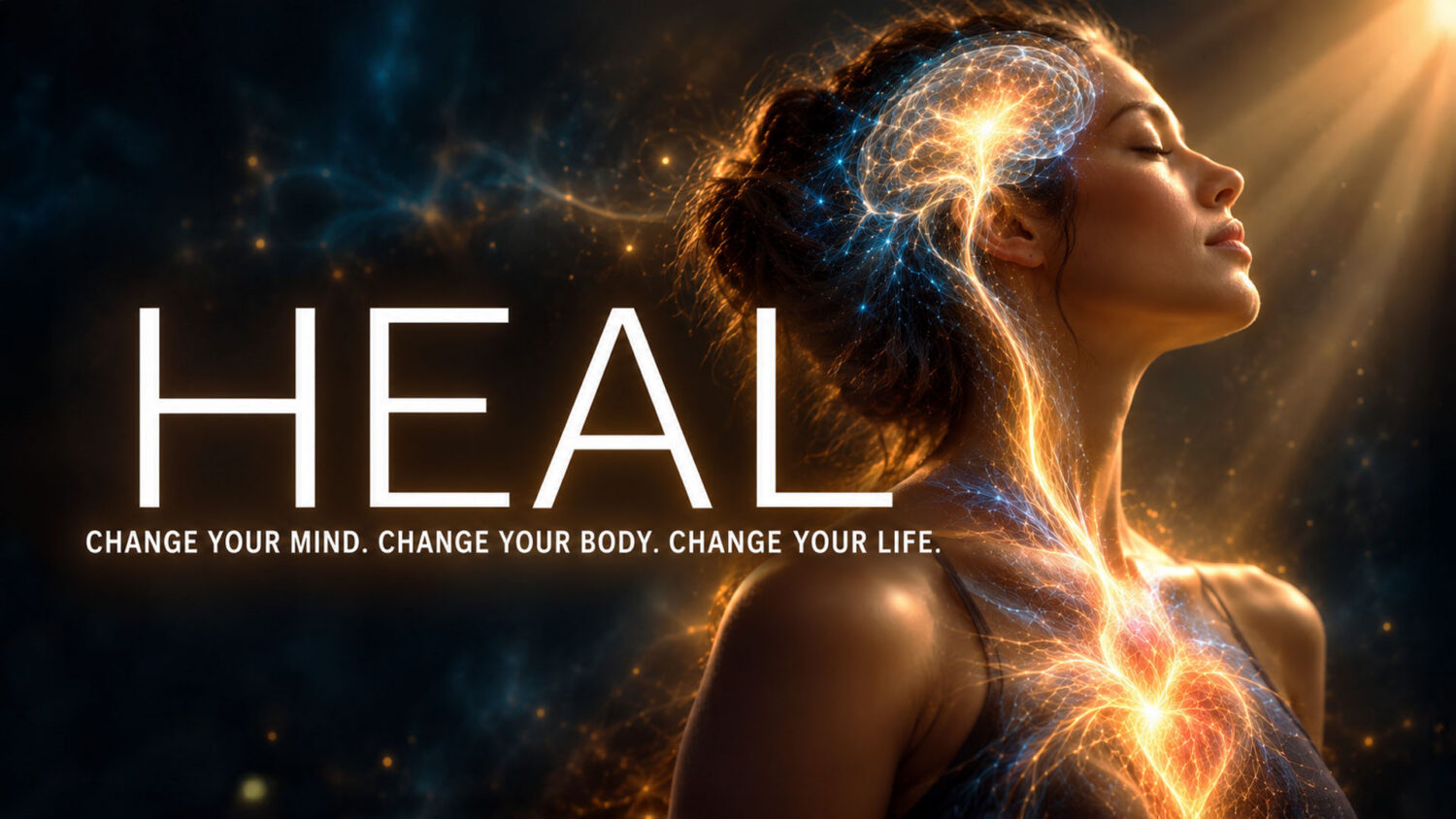
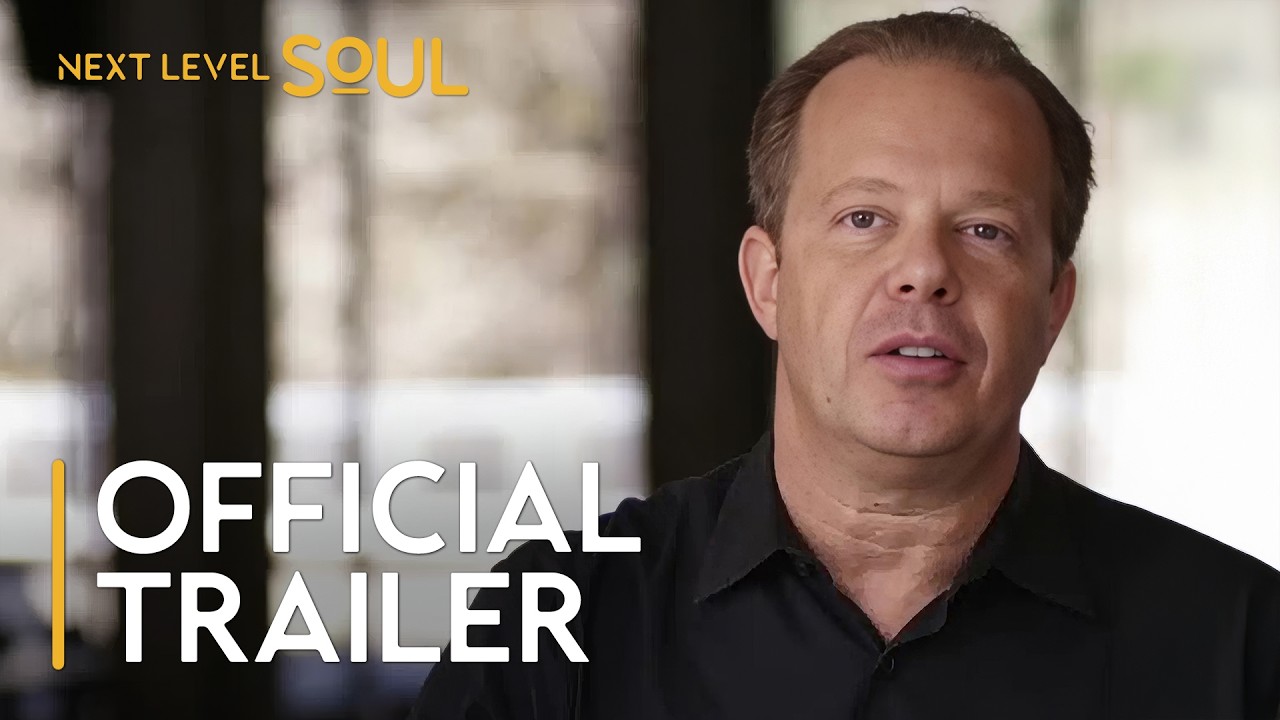
HEAL is more than a documentary, it is a spiritual reckoning. A compassionate, revelatory exploration of what it means to be sick, and what it takes to truly heal. Through raw personal stories, scientific insight, and the wisdom of healers across traditions, the film dismantles outdated paradigms and reveals a deeper truth: healing is not only possible, it is our birthright.
At its core, HEAL reminds us that health is not simply the absence of disease. It is wholeness. Alignment. The harmony of mind, body, and spirit, not as abstract ideas, but as real, measurable forces that determine our vitality.
What unfolds is not a film that promises miracles. It is a mirror, held up to each of us, asking: Do you believe in your body’s ability to heal? And are you willing to reclaim the power you once gave away?
Stories of Suffering, Seeds of Awakening
The film begins with what we all recognize, the struggle. Individuals share their diagnoses: fibromyalgia, lupus, Lyme disease, migraines, cancer. Their stories echo across continents and communities. These are not fringe experiences. They are deeply human ones.
But HEAL is not content with symptom lists and sadness. It dives deeper. Each person is not presented as a victim, but as a hero on a sacred path. A path where illness becomes initiation. Where breaking becomes opening.
One woman shares how her diagnosis led her to meditation and plant-based nutrition. Another discovers that emotional trauma, not bacteria, was the root cause of her mystery illness. Another meets a healer who works not on the body, but on the field around the body, the energy.
What becomes clear is that no two healing journeys are the same. But all share a common thread: they begin with inner alignment.
The Body Remembers What the Mind Forgets
One of the film’s most powerful themes is that our bodies are not just physical structures, they are storytellers. They remember what we’ve suppressed. They carry what we’ve avoided. And when we do not listen, they speak louder.
From migraines to cancer, depression to digestive issues, HEAL invites us to ask: What unresolved story lives in this pain? What emotion have I never given space to breathe?
Experts from across modalities, including Bruce Lipton, Dr. Joe Dispenza, Marianne Williamson, Michael Beckwith, and Deepak Chopra, explain that trauma, belief systems, and unexpressed emotions create stress in the body. Chronic stress creates inflammation. And chronic inflammation lays the foundation for disease.
But there is hope: when we heal the underlying energy, the physical world begins to reflect that shift.
The Science of Self-Healing
HEAL is not anti-science. On the contrary, it is an expansion of science into sacred territory. The film bridges neuroscience, epigenetics, quantum physics, and ancient wisdom to reveal a powerful truth: the body is not a passive machine, it is a living, dynamic field of intelligence.
Dr. Bruce Lipton’s work in epigenetics reveals that our genes are not our fate. They are instructions that respond to our beliefs, environment, and emotions. Change your environment, and your thoughts about yourself, and your biology can change.
Dr. Joe Dispenza shares stunning stories of spontaneous remissions and measurable physical changes after people realigned their mental and emotional patterns. Using brain scans and heart monitors, he shows how meditation and intention can create coherence, not only in the mind, but in the body’s systems.
What we think, believe, and feel matters, not metaphorically, but biologically.
Western Meets Eastern: Integration, Not Opposition
One of the film’s great strengths is its refusal to fall into polarity. HEAL does not reject Western medicine. It does not shame those who choose chemotherapy or surgery. Instead, it calls for integration.
Western medicine excels in acute intervention. But when it comes to chronic illness, autoimmune disorders, or emotional trauma, it often treats symptoms without addressing the root. HEAL proposes that we need both: the precision of science and the compassion of spirit. The emergency room and the meditation cushion. The lab coat and the Reiki table. It is not about choosing one or the other. It is about remembering that healing is not just physical, it is energetic, emotional, and spiritual.
Placebo and the Power of Belief
A surprisingly mystical thread runs through the film’s discussion of the placebo effect. Traditionally dismissed as the brain’s trickery, HEAL reframes placebo as proof of the body’s capacity to respond to belief.
If someone can heal through sugar pills simply because they believe they’re taking medicine, what else is possible when that belief is combined with actual energetic support, conscious nutrition, spiritual practice, and deep emotional work?
The film proposes that belief is not secondary, it is central. And that the mind, when guided by truth, can awaken dormant healing codes in the body.
The Shadow and the Soul
No spiritual healing film would be complete without addressing the emotional underworld. And HEAL doesn’t shy away from it. It gently but clearly states: healing is not about thinking happy thoughts. It is about facing what we’ve buried.
Childhood trauma. Shame. Betrayal. Guilt. Rage. These are not just emotions, they are energies that lodge in the body and shape our health. But when brought into the light, with safety, compassion, and willingness, they can be released. And in that release, life returns. Vibrancy returns. The soul breathes again. One healer in the film puts it this way:
“Healing is not becoming someone new. It’s letting go of who you are not.”
The Power of Community, Intention, and Love
Another subtle but powerful theme is the importance of connection. Many people in the film describe their illness as a time of isolation. But their healing often began when they reconnected, to others, to nature, to Spirit, and most of all, to themselves.
The energy of intention is amplified in community. Prayer circles. Healing groups. Functional medicine practitioners who actually listen. All of these become containers for transformation. And running through it all, beyond science, beyond strategy, is love.
HEAL reminds us that love is not sentimental. It is vibrational. It is the most coherent, healing frequency available. Whether through forgiveness, compassion, or gratitude, love is the medicine the soul is always asking for.
Cinematic Stillness and Sacred Transmission
The pacing of the film, its visuals, and score create a sacred container. Footage of nature, subtle animations of the human body and energy field, and close-ups of vulnerable faces create a space where the viewer is not overwhelmed, but invited in.
HEAL is not just something to watch, it is something to feel. It doesn’t demand your belief. It simply opens a doorway. And gently says, “Come see what’s possible.”
Conclusion: Healing as a Sacred Act of Remembering
HEAL is not promising instant miracles. It is offering initiation. A remembering. A reframing of the most sacred relationship we have, the one with our body, our beliefs, and our soul.
In a culture obsessed with speed and external validation, HEAL returns us to something ancient and essential: the inner healer. The quiet wisdom within. The part of us that has always known the way. For anyone on a healing journey, physical, emotional, spiritual, this film is a balm. A guide. A reminder that you are not alone, you are not broken, and you are not helpless. You are, and have always been, a miracle in motion. And the power to heal… is already inside you.
Keep Exploring
Continue with energy healing practices, The Alchemy of Healing audio course, or browse all Spiritual Cinema reviews.
Frequently Asked Questions
What is the film HEAL about?
HEAL explores what it means to be sick and what it takes to truly heal, through personal stories, scientific insight and the wisdom of healers across traditions.
Does HEAL reject Western medicine?
No. The film calls for integration of Western medicine and holistic approaches, and does not shame those who choose chemotherapy or surgery.
Who appears in HEAL?
Experts mentioned in our review include Bruce Lipton, Dr. Joe Dispenza, Marianne Williamson, Michael Beckwith and Deepak Chopra.
What role does belief play in the film?
HEAL reframes the placebo effect as evidence of the body’s capacity to respond to belief, and treats belief as central to healing.
Where can I watch HEAL?
You can watch HEAL on Next Level Soul TV. Watch HEAL on Next Level Soul TV.