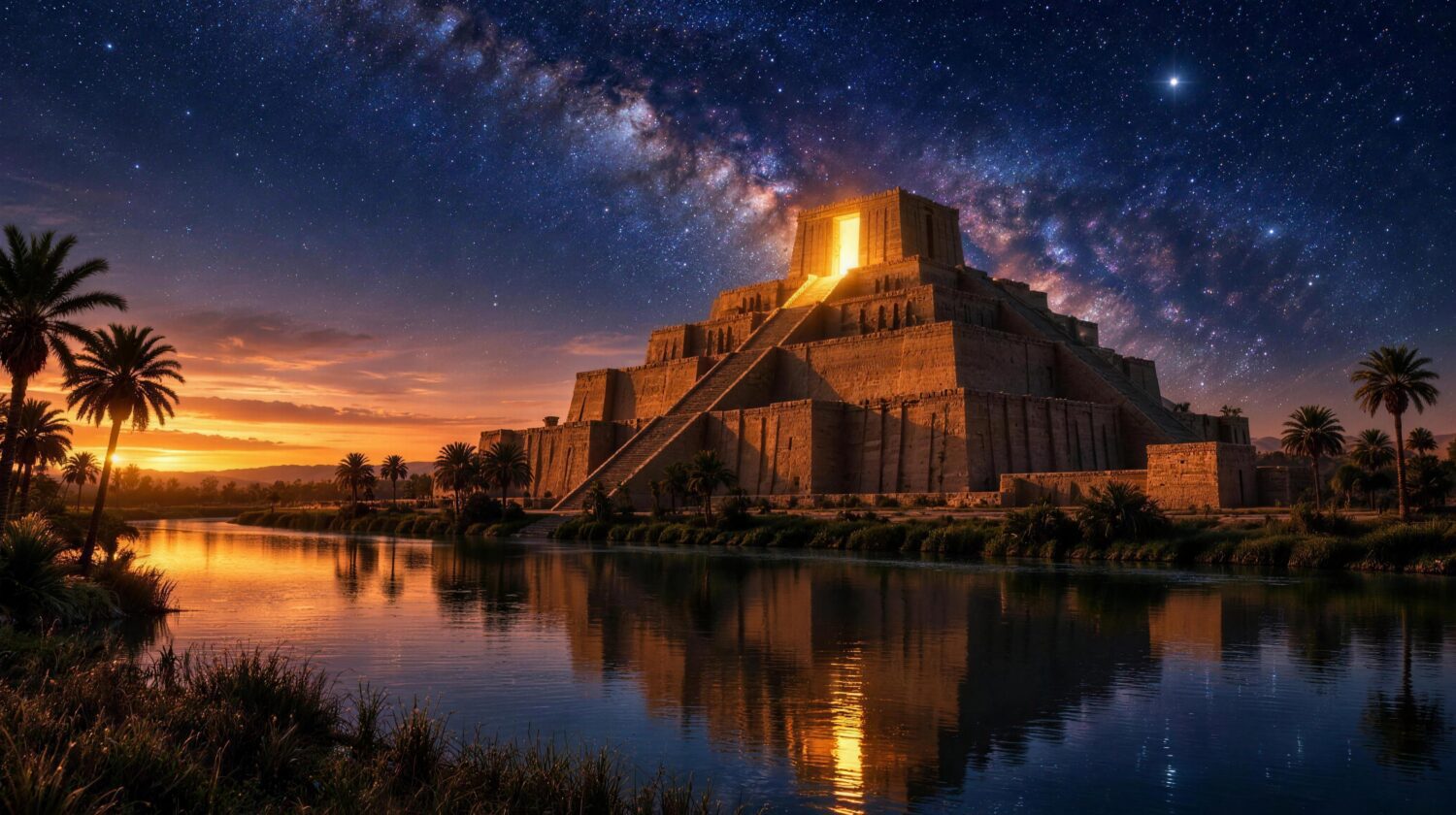
The Anunnaki are the gods of ancient Sumer and Babylon, children of the sky god An and the earth goddess Ki, who decreed the fates of humanity. Modern writers have also cast them as visitors from another world. This guide walks through both stories, so you can see what the tablets say and what has been built on them.
Key Takeaways
- The Anunnaki are gods in Sumerian, Akkadian, Assyrian and Babylonian texts, first named in inscriptions from about 2144 to 2124 BCE.
- The name is usually read as “princely offspring” or “seed of princes.”
- The Atra-Hasis epic (18th century BCE) says humans were made to take over the gods’ labor.
- Zecharia Sitchin’s 1976 theory of aliens from Nibiru is widely rejected by scholars.
- Billy Carson shares his own interpretation in a free video on this page.
How to read this guide. Each section tells you whether you are reading the ancient text, the scholarly view or a modern interpretation, so you can weigh each one clearly.
What Are the Anunnaki?
The Anunnaki are a group of gods in the oldest written religions of Mesopotamia, the land between the Tigris and Euphrates rivers. The Sumerians, Akkadians, Assyrians and Babylonians all wrote about them. In the earliest Sumerian texts they are the children of An, the god of the heavens, and Ki, the goddess of the earth. Their main job was to decree the fates of humanity.
That is the answer from the tablets themselves. Over the last half century the word has also taken on a second life. Writers such as Zecharia Sitchin proposed that the Anunnaki were real beings from another world who came to Earth, mined gold and helped shape humanity. Today you will hear both stories under one name, which is why the subject is so often confused.
This guide keeps the two apart. First we walk through what the ancient texts say, with dates and sources. Then we look at the extraterrestrial reading, who proposed it, and what scholars say about it. Along the way you will hear what Billy Carson shares in his own interpretation on our podcast, and we explain what the story may mean for the soul.
What Does Anunnaki Mean?
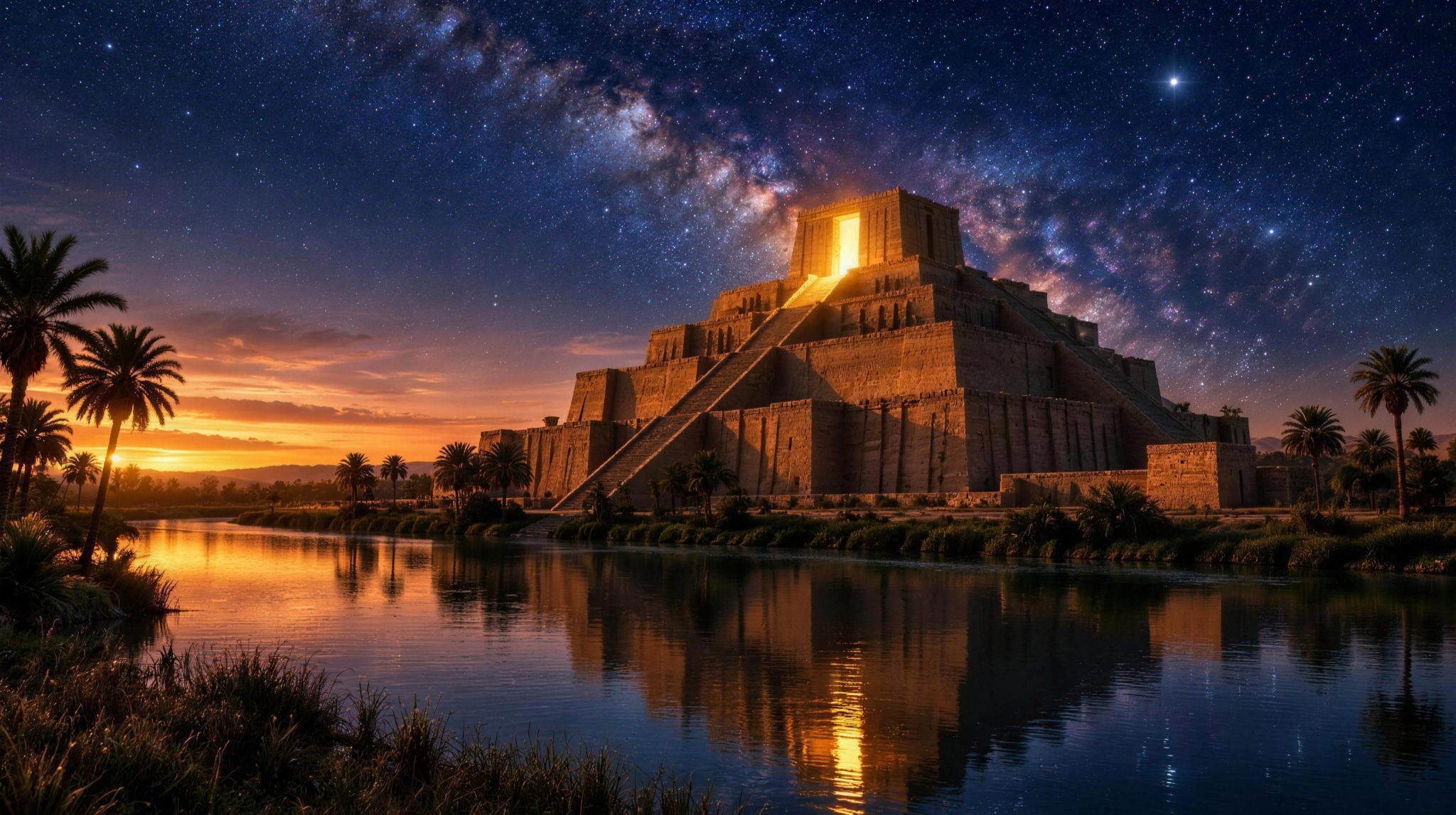
In Sumerian the name is written in several ways, including da-nun-na and da-nun-na-ke4-ne. It is usually understood to mean something like “princely offspring,” “royal offspring” or, more literally, the “seed of princes.” The word was probably pronounced “anunak” and passed into Akkadian as the loanword anunnakku. “Anunnaki” is in fact a grammatical form of that word, which is why scholars note that using it as a proper name is slightly off, though it is how nearly everyone says it now.
You will see many spellings: Anunaki, Annunaki, Anunna, Ananaki and others. They all point to the same group. The name has no etymological link to An, the sky god, even though the Anunnaki were considered his descendants.
Who was the oldest of them?
The oldest of the Anunnaki was Enlil, god of air and chief of the Sumerian pantheon. The Sumerians believed that until Enlil was born, heaven and earth could not be separated. Enlil split them in two. He carried the earth away while his father An carried away the sky.
What the Sumerian Texts Say About the Anunnaki
The earliest known uses of the term come from inscriptions in the reign of Gudea, who ruled around 2144 to 2124 BCE, and from the Third Dynasty of Ur. In those texts the word applies to the most powerful gods, the descendants of An. This group probably included the “seven gods who decree”: An, Enlil, Enki, Ninhursag, Nanna, Utu and Inanna.
A circle of heavenly rulers
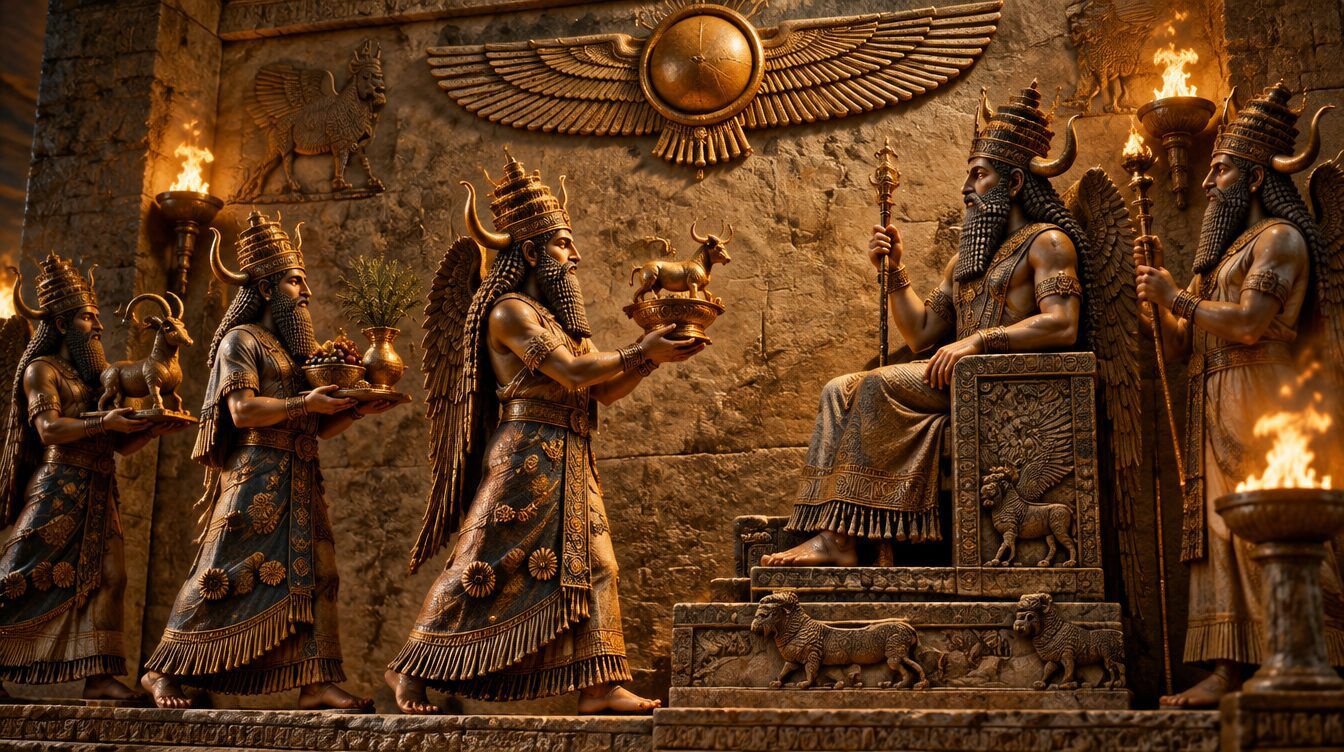
The Anunnaki appear mainly in literature, not in temple ritual. Scholars have found very little evidence of a cult devoted to them as a group, probably because each member had his or her own separate worship. No carving of the entire group has been found either. A few images show two or three members together.
The texts do not agree on how many Anunnaki there were or exactly what each one did. One poem, Enki and the World Order, says they honored Enki with hymns, took up their homes among the people of Sumer and decreed the fates of mankind. Another text names as many as fifty Anunnaki connected with the city of Eridu. In Inanna’s Descent into the Underworld, there are only seven, and they are judges in the underworld who put Inanna on trial.
Gods tied to the sky
Major Sumerian gods were linked to bodies in the sky. Inanna was the planet Venus, Utu the sun and Nanna the moon. An was associated with the stars of the equatorial sky, Enlil with the northern stars and Enki with the southern stars. This is one reason the ancient material attracts modern readers who sense a cosmic dimension in it.
The Anunnaki in Babylonian and Assyrian Texts
The meaning of the name shifted over time. In Akkadian texts of the second millennium BCE the Anunnaki are often portrayed as gods of the underworld. In one short version of Inanna’s descent, Ereshkigal, queen of the underworld, says she drinks water with the Anunnaki and orders them seated on golden thrones.
Igigi and Anunnaki
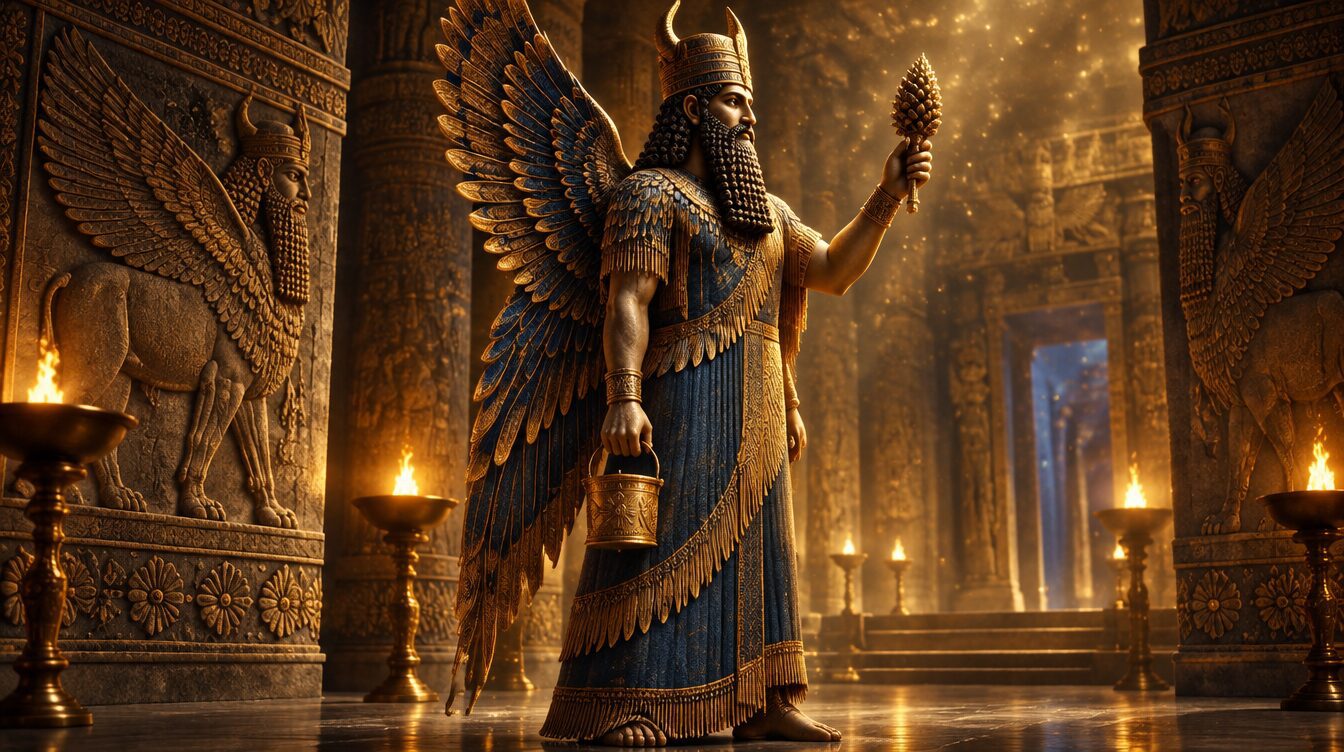
During the Old Babylonian period (about 1830 to 1531 BCE) a second group of gods called the Igigi appears. How the two groups relate is unclear. Sometimes the names seem to be interchangeable, and in other writings, such as the Poem of Erra, they are clearly distinct. From the Middle Babylonian period on, “Anunnaki” was applied generally to the gods of the underworld and “Igigi” to the gods of heaven.
The Epic of Gilgamesh
In the standard Akkadian Epic of Gilgamesh, from around 1200 BCE, Utnapishtim, the survivor of the Great Flood, describes the Anunnaki as seven judges of the underworld who set the land ablaze as the storm approaches. When the flood arrives, the goddess Ishtar and the Anunnaki mourn the destruction of humanity.
Enuma Elish
The Babylonian creation myth Enuma Elish has about a thousand lines on seven clay tablets and is the only complete surviving account of ancient Near Eastern cosmology. In it, Marduk assigns the Anunnaki their positions. A late Babylonian version counts 600 Anunnaki of the underworld and 300 of heaven. In gratitude the Great Gods build Esagila, a temple for Marduk, Ea and Ellil.
The eighth-century BCE Poem of Erra describes the Anunnaki as brothers of the god Nergal and shows them as hostile to humanity. That is a very different picture from a kindly set of creators.
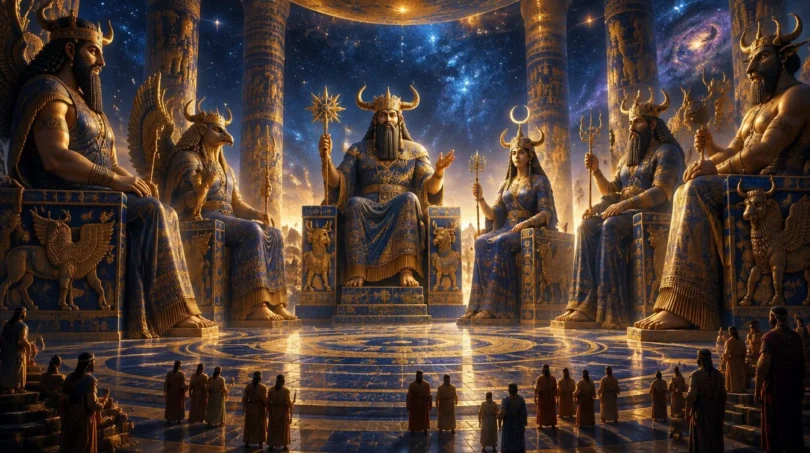
The Great Gods Behind the Name: Anu, Enlil, Enki and Ninhursag
Most people meet the Anunnaki as a single group. The ancient texts tell a richer story. They name individual gods with distinct personalities, domains and relationships, and the family drama between them is the real heart of the tradition. Knowing the main figures makes every later claim easier to weigh.
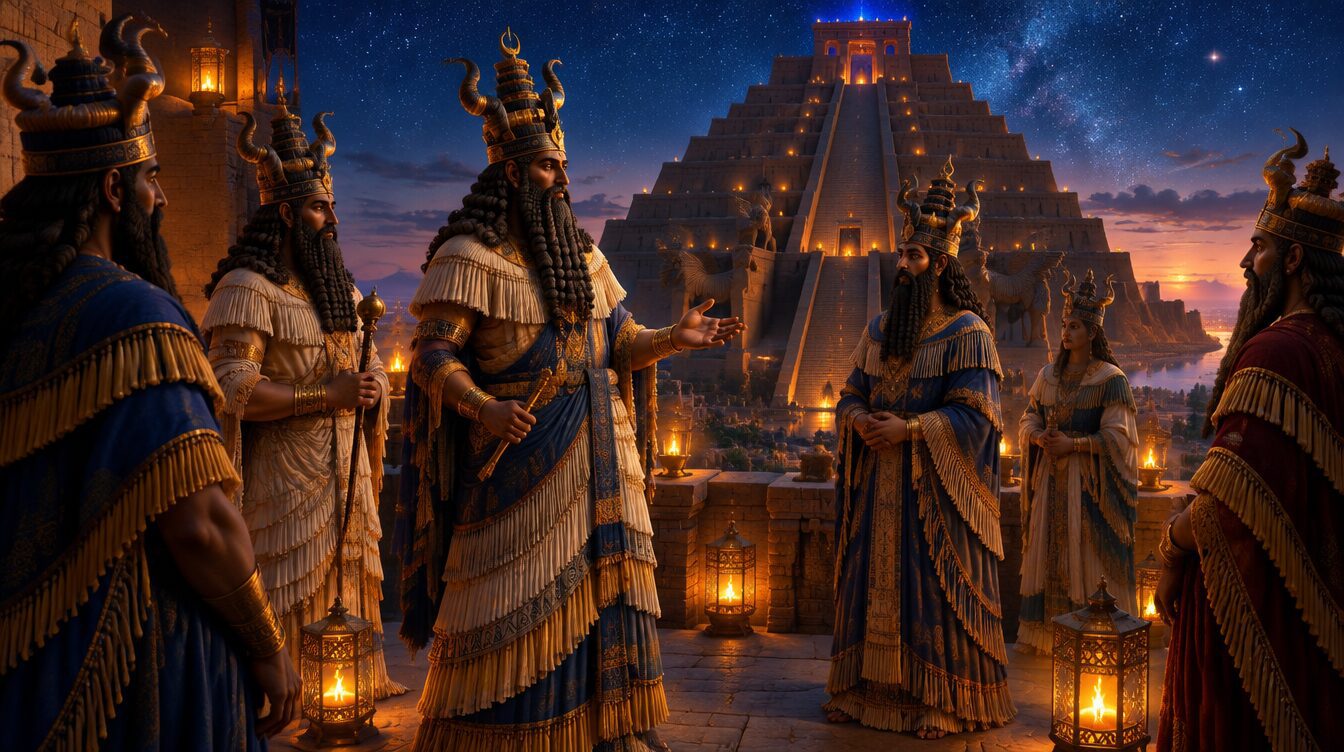
Anu: King of the Heavens
Anu, originally written An in Sumerian, was the divine personification of the sky. He was regarded as the king of the gods and the ancestor of many other deities, and he was seen as a source of both divine and human kingship. He often opens the lists of gods in Mesopotamian texts. Yet his role was largely passive, and he was not commonly worshipped in the way that other gods were.
Anu does appear in stories. In the Akkadian Epic of Gilgamesh, his daughter Ishtar persuades him to give her the Bull of Heaven so that she can send it against Gilgamesh. In another tale, he summons the mortal hero Adapa for breaking the wing of the south wind and offers him the food and water of immortality, which Adapa refuses because Enki had warned him that Anu would offer the food and water of death. Several traditions name Anu’s wife. In some she is Ki, “earth,” and in others Urash or Antu, so that heaven and earth are paired as husband and wife.
Enlil: Lord of Wind and Storm
Enlil is associated with wind, air, earth and storms. He appears first as the chief god of the Sumerian pantheon and was later worshipped by Akkadians, Babylonians, Assyrians and Hurrians. His great temple, the Ekur in the city of Nippur, was regarded as the “mooring rope” of heaven and earth. One Sumerian hymn says Enlil was so holy that not even the other gods could look upon him.
In Mesopotamian cosmology, Enlil separates An (heaven) from Ki (earth), which makes the world habitable for humans. He is the patron of agriculture and the inventor of the mattock. He is also the god who sends the flood in the Babylonian tradition, because humanity’s noise kept him from sleeping. In the Sumerian flood story, Eridu Genesis, he rewards the survivor Ziusudra with immortality. His reputation in later popular writing as the harsh “villain” comes mostly from the Babylonian flood story.
Enki: God of Wisdom, Water and Craft
Enki, known to the Akkadians as Ea, was the god of wisdom, crafts, fresh subterranean waters, magic and incantations. He ruled the Abzu, the freshwater ocean beneath the earth, and his main cult center was the city of Eridu, where his temple was called the E-Abzu. His wife was Damgalnuna, and his children included Marduk. He is usually pictured with streams of water flowing from his body or holding a vase from which water pours.
Enki is the clever counselor of Mesopotamian myth, the god who finds solutions to hard problems. He is regarded as the creator of humankind from clay. In Atra-Hasis, he works with the birth goddess to make people from clay and divine blood, and later he gives the hero Atra-Hasis the advice that allows humanity to survive the flood. Many modern retellings cast Enki as the friend of humanity, and the ancient texts support that picture of a god who shapes, teaches and protects.
Ninhursag: Mother Goddess of the Mountains
Ninhursag, also known as Damgalnuna or Ninmah, was the Sumerian mother goddess of the mountains and one of the seven great deities of Sumer. She is known earliest as a nurturing and fertility goddess. Her best-known myths are Enki and Ninhursag, which describes her dealings with Enki, and Enki and Ninmah, a creation story in which the two compete to fashion humans. She is also the mother of the warrior god Ninurta in the Anzu epic.
| Figure | Domain | Best-known role in the texts |
|---|---|---|
| Anu (An) | Sky and heaven | King of the gods, source of kingship |
| Enlil | Wind, air, storm and earth | Separates heaven and earth, sends the flood in the Babylonian story |
| Enki (Ea) | Fresh water, wisdom and craft | Creates humans from clay, warns the flood hero |
| Ninhursag | Mountains and fertility | Mother goddess, takes part in the creation of humans |
| Inanna (Ishtar) | Love, war and Venus | Queen of Heaven, descends into the underworld |
For another voice on Sumerian mythology, writer and producer Melissa Tittl shares her view of the ancient world in this episode.

Vatican Changed Jesus’ True Teachings: Ancient Beings Hold the Truth with Melissa Tittl
Melissa Tittl shares her view of the ancient world, including Sumerian mythology and the Gnostics, offered as questions worth sitting with.
Inanna and the Descent to the Underworld
No Mesopotamian goddess appears in more myths than Inanna, known to the Akkadians, Babylonians and Assyrians as Ishtar. She is the goddess of war, love and sensuality, tied to political power and divine law, and her primary title is the Queen of Heaven. She was the patron goddess of the Eanna temple in Uruk, and in archaic Uruk she was worshipped as morning Inanna and evening Inanna, reflecting the phases of her planet Venus. Her best-known symbols were the lion and the eight-pointed star.
Her most famous story is the descent into the underworld ruled by her sister Ereshkigal. At the throne room, the seven judges of the underworld declare her guilty and strike her dead. Three days later her attendant Ninshubur pleads with the gods for help, and only Enki answers. He sends two beings to rescue her, and she returns, but the guardians of the underworld seize her husband Dumuzid as her replacement. In the end, he is allowed to return to heaven for half the year while his sister remains below for the other half, which the story links to the cycle of the seasons.
Inanna is also said to have received the mes, the divine powers that represent every aspect of civilization, from Enki. Many readers see her journey as one of the oldest descriptions of death and return in world literature, and it has been read as a story of surrender, transformation and rebirth. It connects naturally to the themes explored in our guides to near-death experiences.
Igigi and Anunnaki: Who Are the Two Groups?
Readers often meet both names and wonder how they differ. The Igigi are described as the mythological figures of heaven. The terms are sometimes used as synonyms, but in the Atra-Hasis myth, the Igigi are the younger gods who serve the Anunnaki and carry the burden of labor until they rebel. Their rebellion is the reason the gods decide to create humankind to take over the work.
This distinction matters for modern claims. A common retelling treats the Anunnaki as a single band of workers who came to Earth. The text describes a divine household in which the work is handed down from one group of gods to another, and then to humans. The difference between the two groups gives you a way to read the story as a story about labor, rebellion and who bears the burden, rather than as a single space mission.
How Humans Were Made: The Atra-Hasis Epic
If you want the passage that most inspires modern Anunnaki theories, it is the Atra-Hasis epic. This is an Akkadian poem from the 18th century BCE, named for its hero, the priest Atra-Hasis, whose name means “exceedingly wise.” The oldest known copy can be dated by its colophon to the reign of Ammi-Saduqa (1646 to 1626 BCE), and the poem kept being copied into the first millennium BCE.
The story in four parts
- Gods at work. An alliance of upper and lower gods shapes Mesopotamia’s farmland. In the epic the Anunnaki and the Igigi are the superior and inferior gods.
- A strike. The gods who do the hardest labor, digging channels and farming, become dissatisfied and rebel against Enlil.
- The first people. With help from divine women, the gods make a first human couple to carry the labor so the gods can rest. In the summary version, after forty days the Igigi rebel and Enki creates humans to replace them.
- The flood. Humanity multiplies, grows noisy and the upper gods plan to destroy their imperfect creations with a great flood.
This is the Mesopotamian account of human origins: people made to serve the gods. It is also the source behind the later flood stories of the region. The text was first pieced together by George Smith as The Chaldean Account of Genesis, and the hero’s name was corrected to Atra-Hasis by Heinrich Zimmern in 1899. In 1965 Wilfred Lambert and Alan Millard published many further tablets, including an Old Babylonian copy from about 1650 BCE, the most complete version to survive.
Anunnaki Timeline: From Tablet to Modern Theory
| Date | What happened |
|---|---|
| c. 2144 to 2124 BCE | The term Anunnaki appears in inscriptions from the reign of Gudea. |
| c. 2112 to 2004 BCE | Third Dynasty of Ur. The Anunnaki appear as the most powerful deities. |
| c. 1830 to 1531 BCE | Old Babylonian period. The Igigi appear alongside the Anunnaki. |
| c. 1646 to 1626 BCE | Oldest dated copy of Atra-Hasis, from the reign of Ammi-Saduqa. |
| c. 1200 BCE | The standard Akkadian Epic of Gilgamesh names the Anunnaki as judges of the underworld. |
| 8th century BCE | The Poem of Erra shows the Anunnaki as hostile to humanity. |
| 1849 | Austen Henry Layard recovers fragments of Enuma Elish in the Library of Ashurbanipal. |
| 1968 | Erich von Daniken publishes Chariots of the Gods? and popularizes ancient astronaut ideas. |
| 1976 | Zecharia Sitchin publishes The 12th Planet, naming the Anunnaki as extraterrestrials. |
| 2010 | Sitchin dies. His books have sold millions of copies in more than 25 languages. |
Echoes in Hittite, Hurrian and Greek Myth
The idea of an older generation of gods living below the earth is not unique to Sumer. The Hurrians and Hittites told of an oldest generation of gods banished to the underworld by younger gods. Hittite scribes identified these deities with the Anunnaki, and in Hurrian they are called “former ancient gods” or “gods of the earth.” Their names vary from text to text, yet they are always eight in number.
Scholars have also noticed a close parallel with the Greek poet Hesiod. The Hittite story of the sky god Anu being overthrown by his son Kumarbi resembles Hesiod’s account of Ouranos being overthrown by Cronus, and the Titans being overthrown by the Olympians. Ouranos is thought to be derived from the Hittite version of Anu. In other words, the story of an old divine order giving way to a new one traveled across the ancient world.
Freddy Silva speaks about the Watchers and the Anunnaki in this conversation. Everything in it is his perspective, and it pairs well with the Igigi and Anunnaki distinction above.

Ancient Watchers and the Bloodline of Jesus with Freddy Silva
Freddy Silva shares his perspective on the Watchers, the Anunnaki and how history slowly becomes myth.
The Flood Stories: Eridu Genesis, Atra-Hasis and Gilgamesh
The Anunnaki appear in three closely connected flood stories. Seeing them side by side shows how an ancient tradition grew and changed over many centuries.
- Eridu Genesis. Also called the Sumerian Creation Myth or Sumerian Flood Myth, this Sumerian work describes how humanity was created by the gods, how the first cities arose, how kingship appeared and how a flood swept over the land. Enlil rewards the survivor Ziusudra with immortality.
- Atra-Hasis. This Babylonian epic tells of the internal conflict among the gods, the creation of humans as workers, the multiplication of humankind and the flood sent by Enlil. Enki warns the hero Atra-Hasis so that humanity survives.
- The Epic of Gilgamesh. A flood story with similar elements is told in the Gilgamesh tradition, where the hero seeks the secret of life and death.
Scholars note that the biblical Genesis flood narrative shows striking parallels with these accounts, and researchers have long assumed an influence on the Hebrew Bible. That is one reason the Anunnaki matter beyond Mesopotamia: they stand near the root of a story told across many cultures about the gods, humanity and a great reset of the world. Our Gnostic Gospels guide shows how later spiritual traditions reworked related themes.
The flood stories raise a natural question about what came before. In this episode, Freddy Silva shares what he says indigenous accounts reveal about the pre-flood civilizations.

Proof of Annunaki Origins and Biblical Giants Found with Freddy Silva
Freddy Silva shares what he says indigenous accounts reveal about the pre-flood civilizations.
The Sumerian King List and the Kings Who Reigned Thousands of Years
One of the most quoted sources in Anunnaki discussions is the Sumerian King List. It is an ancient literary composition written in Sumerian and likely created to legitimize the claims to power of various city-states and kingdoms in southern Mesopotamia during the late third and early second millennium BC. It lists cities, the kings who ruled there and the lengths of their reigns. In the early part of the list, those reigns often span thousands of years.
In its best-known version, recorded on the Weld-Blundell Prism, the list begins with a number of antediluvian kings who ruled before a flood swept over the land, after which kingship passed to Kish. It ends with a dynasty from Isin in the early second millennium BC. The oldest known version dates to the Ur III period, roughly 2112 to 2004 BC.
Many modern writers read the very long reigns as evidence that the early rulers were non-human. Scholars read them differently. The versions differ from one another, with missing sections, rearranged names and different reign lengths, which reflects both copying errors and deliberate editing to fit current needs. More recent research indicates that the list should be used with caution, if at all, for reconstructing the political history of early Mesopotamia. Its purpose was political and literary, and its long reigns belong to the world of legend.
Billy Carson returns to the topic of ancient tablets in this studio conversation, which gives you a second view alongside the Anunnaki video above.

Ancient Tablets Reveal Mankind’s Divine Origins with Billy Carson
Billy Carson shares what he says about ancient tablets, advanced beings and lost cities.
Zecharia Sitchin and the Ancient Alien Theory
The extraterrestrial version of the Anunnaki comes largely from one man. Zecharia Sitchin (1920 to 2010) was born in Baku, raised in what was then Mandatory Palestine and later worked in New York. He taught himself to read Sumerian cuneiform, and in 1976 he published The 12th Planet, the first of a series called the Earth Chronicles.
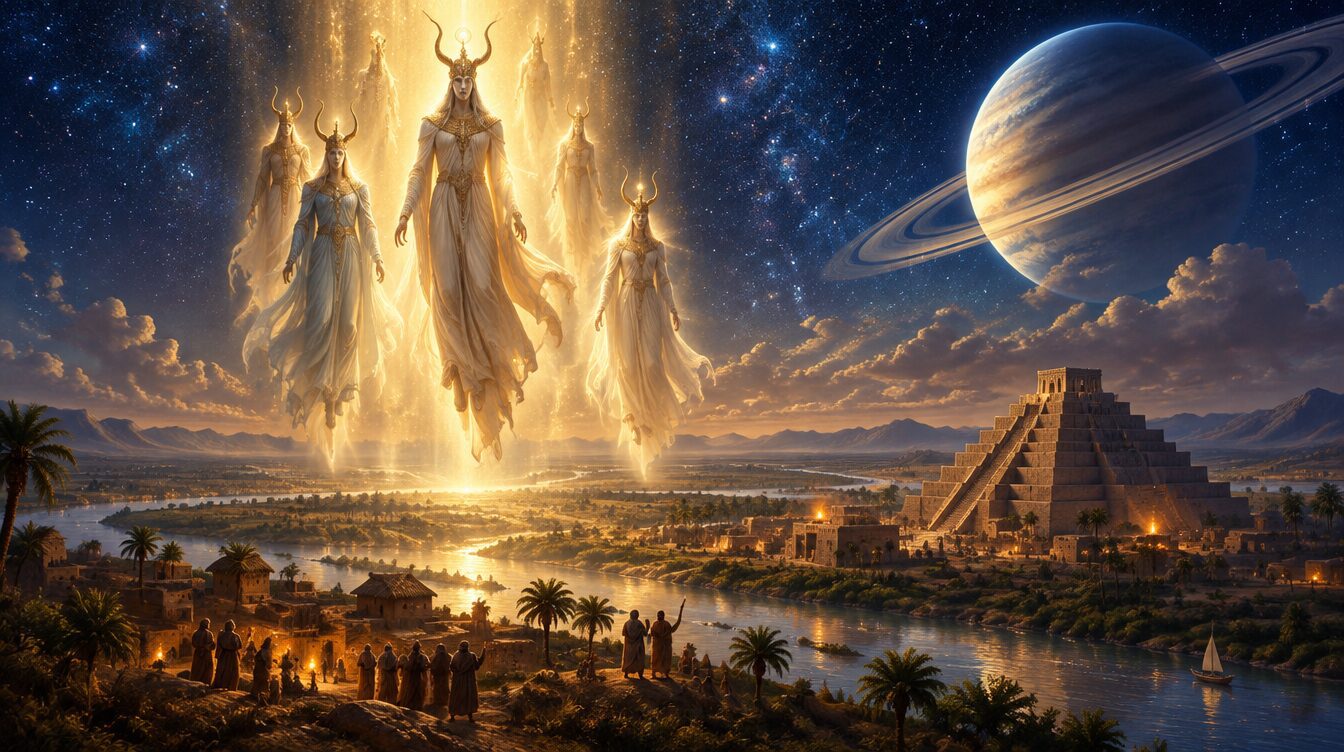
What Sitchin proposed
- Nibiru. An undiscovered planet beyond Neptune on a long orbit of about 3,600 years, home of the Anunnaki.
- Arrival. The Anunnaki, a technologically advanced humanlike race, reached Earth several hundred thousand years ago looking for gold, which they mined in Africa.
- Creation of humans. After a mutiny among the miners, Enki proposed making workers by combining Anunnaki genes with those of Homo erectus.
- Civilization. Sumerian civilization was set up under the guidance of these “gods,” and human kingship was created to link people to them.
- Link to the Bible. Sitchin said the Anunnaki are the Nephilim of Genesis.
He drew on the same tablets described above, including Atra-Hasis, but read them as literal reports of a real expedition. Millions of readers found the story compelling, and it influenced later books, films and even religious movements.
What the Texts Say vs. What Sitchin Says
| Question | Mesopotamian texts, as scholars read them | Sitchin’s reading |
|---|---|---|
| Who are the Anunnaki? | Gods of the pantheon, children of An and Ki. Later, judges of the underworld. | Extraterrestrials from the planet Nibiru. |
| Where do they live? | In heaven, then in the underworld. | On Nibiru, with a base on Earth. |
| Why did humans appear? | The gods made people to take over their labor. | The Anunnaki engineered workers to mine gold. |
| The flood | A divine decision to destroy noisy humanity. | A real catastrophe caused when Antarctic ice melted. |
| Planets | The Sumerians knew of five planets. | The Sumerians knew twelve. |
You can see why the theory is popular. It keeps the tablets’ own storyline and gives it a modern explanation.
Why Scholars Reject the Nibiru Theory
Sitchin’s ideas have been widely rejected by Assyriologists, Sumerologists, historians and astronomers, who describe them as pseudoarchaeology. Their objections fall into three groups.
1. Translation
The biblical scholar Michael Heiser has said he found many inaccuracies in Sitchin’s translations. The historian Ronald Fritze cites Sitchin’s claim that the Sumerian sign DIGIR means “pure ones of the blazing rockets” and says Sitchin’s assignment of meanings to ancient words is strained. Critics who checked his references also report that he quoted out of context or shortened quotations in ways that changed their meaning.
2. Astronomy
Sitchin wrote that ancient civilizations knew twelve planets. Hundreds of decoded Sumerian astronomical seals and calendars show five. A cylinder seal he used as evidence, known as VA 243, has twelve dots he read as planets. Critics say its inscription reads “You are his servant” and that the dots are stars. They also note that Jupiter, not a hidden planet, was associated with Marduk.
3. Literalism
Scholars argue that Sitchin read myth as straight history. Myths often express meaning through story, not a record of events.
The Anunnaki of the tablets are gods, not astronauts. If you are exploring the subject, it helps to know that difference before you meet claims presented as scholarship.
Billy Carson on the Anunnaki
Billy Carson is an author and researcher who has joined Alex on the podcast several times. In episode 385 he shares his own interpretation of who the Anunnaki were. Everything below is his perspective, which differs from the mainstream scholarly reading above, and he is clear that parts are his opinion based on circumstantial evidence.
His main points
- A term, not a name. Billy says “Anunnaki” describes beings who came from heaven to Earth, much as “Earthlings” would describe us to visitors from elsewhere. He sees the same idea in Sumerian, Biblical, Egyptian, Indian and indigenous traditions.
- Origins. He says the texts point to beings from several star systems, and he personally places their home in the Pleiades.
- Arrival. In his reading, the Anunnaki landed about 450,000 years ago and first built a separate civilization.
- Genetic modification. He says about 200,000 years ago laboring Anunnaki rebelled, and one leader proposed adding their essence to an existing being to make a worker. He describes a “worship gene” added to our genome.
- Giants and pyramids. He believes there were giants, including the Nephilim of the Bible, and that pyramids on several continents share one blueprint and align with Orion.
What he asks of listeners
Billy asks people to become researchers and test the claims themselves. His takeaway for the soul is simple: the infinite source is already inside you, the voice in your head can be your higher self, and you have the power to create your own reality, so stop giving your energy to outside sources.
Hear it in his own words in the free video above, then read the full show notes in episode 385 with Billy Carson. You can also follow his earlier conversations on Emerald Tablets and humanity’s origins and the lost texts of Jesus.
Where Scholars and Storytellers Agree
Strip away the disagreements and the two camps overlap in a few places.
- Humanity’s origin story is one of service. The Atra-Hasis epic says people were made to work for the gods. Sitchin and Carson say the same thing in modern language.
- The flood matters. Atra-Hasis is a flood story, and recent research suggests the rise in sea levels at the end of the last Ice Age may have been the real event behind such myths.
- The sky was sacred. Mesopotamian gods were tied to planets, the sun, the moon and the stars.
- The story spread. Hittite and Greek myths echo it, so the tale was clearly important across the ancient world.
Where they part ways is the nature of the Anunnaki: gods in a mythic cosmos or visitors in a physical one. That is a question each reader answers for themselves.
The Mesopotamian creation story also names Tiamat. In this episode, Billy Carson shares his own story of the lost planet Tiamat.

Ancient Discoveries That Will Change Humanity with Billy Carson
Billy Carson shares his story of the lost planet Tiamat and what he says he found inside the Great Pyramid.
Nibiru: From Sitchin to the Doomsday Story
Nibiru has taken on a second life that has nothing to do with ancient tablets. The Nibiru cataclysm is a supposed disastrous encounter between Earth and a large planetary object that certain groups believed would happen in the early 21st century. The idea was first put forward in 1995 by Nancy Lieder, the founder of the website ZetaTalk, who says she receives messages from extraterrestrials. Her predictions of an arrival date were later postponed, and the idea spread through internet doomsday groups and became closely associated with the 2012 phenomenon.
The name Nibiru comes from the writings of Zecharia Sitchin and his interpretation of Babylonian and Sumerian mythology, but Sitchin himself denied any connection between his work and claims of a coming apocalypse. In 2017, a self-described Christian numerologist named David Meade predicted that the cataclysm would happen on September 23, and the claim received wide media coverage. Astronomers and planetary scientists have rejected the idea of a planet-sized object colliding with or passing close to Earth, and they note that such an object would have destabilized the orbits of the planets in ways that would be easy to see today.
It helps to keep three things separate: what the ancient texts say about the Anunnaki, what Sitchin proposed in his books, and what the doomsday movement later built on his name. Each has a different source and a different level of support, and mixing them is the main reason the topic feels so confusing.
Common Claims About the Anunnaki, Checked Against the Texts
| Popular claim | What the sources show |
|---|---|
| The Anunnaki are a single race of extraterrestrials | In the texts they are gods of a divine household, and the Igigi are a separate group of younger gods who serve them in Atra-Hasis |
| Enki created humans through genetic engineering | The texts say Enki, working with a birth goddess, made humans from clay and divine blood, which is a mythic creation story |
| Enlil is a cruel enemy of humanity | He sends the flood in the Babylonian story, yet in Eridu Genesis he rewards the flood survivor with immortality |
| The Sumerian King List proves the kings lived thousands of years | Scholars treat the long reigns as legendary and caution against using the list for early political history |
| Nibiru is coming and will destroy the Earth | Astronomers reject the idea, and Sitchin himself denied a connection to apocalypse claims |
| The Anunnaki are mentioned in ancient texts | True. They appear in Sumerian, Akkadian, Babylonian and Assyrian sources, and echoes appear in Hittite and Hurrian myth |
The Spiritual Meaning of the Anunnaki Story
Whichever reading you favor, the story raises questions that sit at the heart of spiritual life.
Who made us, and why?
The Atra-Hasis epic imagines humanity as a labor force. Many modern readers sense a deeper truth underneath: that we were made for something, and that we have often forgotten it. Spiritual teachers tend to answer that we are here to awaken, not to serve an outside power.
Where does authority live?
If ancient stories describe beings who ruled from above, the spiritual response is often to turn inward. Billy Carson says it directly: stop giving your power to outside sources and take a journey within. That message appears across traditions. See our guide to the Gnostic Gospels, which describe a similar idea of knowledge found within, and our guide to Atlantis for another lost-civilization story.
Are we alone?
Many people feel a pull toward the stars. If that speaks to you, read about what Bashar says about extraterrestrials and explore the idea of starseeds in our glossary.
The Anunnaki in Books, Film and Culture
The ancient astronaut idea has traveled far beyond the library. Erich von Daniken’s Chariots of the Gods? (1968) argued that extraterrestrial visitors shaped early religions. Sitchin’s books followed, and their influence shows up in popular media: the 1994 film Stargate and the 2009 video game The Conduit drew some inspiration from his work, and the screenwriter Roberto Orci has said the villains of Cowboys and Aliens were inspired by Sitchin’s gold-mining Anunnaki. In 2016 an Iraqi minister even cited Sitchin when he claimed Sumerians had built an airport to launch spaceships 5,000 years ago.
Wikipedia also records that the British writer David Icke has linked the Anunnaki to his reptilian theory, adapting Sitchin’s writing to his own agenda. We mention it only so you can recognize it: this is a separate, controversial claim, not part of the Mesopotamian record.
How to Explore the Anunnaki Without Getting Lost
- Start with the texts. Read a translation of Atra-Hasis and the Epic of Gilgamesh. Many are available online and in print.
- Separate three layers. Keep the ancient text, the scholarly reading and the modern theory apart in your notes.
- Check translations. When a book quotes Sumerian, look up the word in a lexicon such as the Sumerian Lexicon Heiser recommends.
- Listen to several voices. Hear Billy Carson, Freddy Silva and Randall Carlson and compare how each handles the same ancient material.
- Journal your reaction. Notice which ideas move you and why.
The Sacred Cities of the Gods: Eridu, Nippur and Uruk
The gods of Mesopotamia were not abstract. Each had a home city and a temple, and those places shaped the stories. Knowing the cities helps you picture the world in which the Anunnaki tradition grew.
| City | God | Temple | Why it mattered |
|---|---|---|---|
| Eridu | Enki | E-Abzu | Enki’s main cult center and regarded as his home, tied to the freshwater Abzu |
| Nippur | Enlil | Ekur | Believed to be built by Enlil himself and regarded as the “mooring rope” of heaven and earth |
| Uruk | Inanna, with Anu also associated | Eanna | Inanna’s early main religious center, and later a home of Anu’s worship |
| Kish | Not tied to a single god here | None named here | The first city to receive kingship in the Sumerian King List after the flood |
These were living centers of worship, trade and learning. Pilgrims came to them, scribes copied texts there and rulers legitimized their power through them. That is how the stories survived long enough to reach us on clay tablets.
How the Gods Changed Over Time
The Mesopotamian pantheon was never fixed. It shifted as cities rose and fell, and the Anunnaki tradition is the record of those shifts.
- Enlil rose in the twenty-fourth century BC with the rise of Nippur. His cult declined after Nippur was sacked by the Elamites in 1230 BC, and he was eventually supplanted as the chief god by Marduk, the national god of Babylon.
- Enki and Ea merged. Enki was already a major deity in the earliest written sources, and by the second half of the third millennium BCE he was syncretized with the Akkadian god Ea. He became part of a triad with Anu and Enlil at the top of the pantheon. With the rise of Babylon and Marduk, his cult lost importance, although he remained a major god in first millennium BCE Babylonia.
- Anu became active late. For most of history Anu was a remote figure. Under Seleucid rule, a new theological system in Uruk redefined him as an active deity who was worshipped by the city’s inhabitants in the final centuries of Mesopotamian history.
- Gods traveled. Enki/Ea was incorporated into Hurrian religion as a major god, and his cult spread into Anatolia and became part of the Hittite pantheon.
This long evolution is one reason scholars are cautious about the idea of a single, fixed story. The gods the Sumerians knew are not exactly the gods of Babylon, and the Babylonian versions are not exactly the Assyrian ones.
Marduk and Ninurta: The Heroes of the Next Generation
Two younger gods carry much of the later story. Marduk, the son of Enki, became the patron god of Babylon. In the later Babylonian Epic of Creation, the creation of humans is explained as a collaboration between Ea and his son Marduk, which shows how the older story was reshaped to honor the rising city. A variant of the divine family tree known from god lists formed the basis of the Enuma Elish.
Ninurta, the son of Enlil and of Ninhursag, appears as a warrior in several myths, including Anzu and the Tablet of Destinies and Lugale. These stories show the Anunnaki family as a household with rivals, heirs and battles for authority, a pattern that echoes in many later myths of a divine succession.
The Mesopotamian View of the Cosmos
To read the Anunnaki as the Sumerians did, it helps to see the world as they pictured it. Heaven (An) and earth (Ki) are first joined, and Enlil separates them so that people can live. Beneath the earth lies the Abzu, the freshwater ocean ruled by Enki, which feeds springs and rivers. Above are the stars, and Enki was associated with the stars of the southern band of the sky in Mesopotamian astronomy. Between and around these realms moved the gods, who were involved in everything from harvests to kingship.
Seen this way, the Anunnaki are less like visitors from a distant planet and more like the powers that hold the cosmos together: sky, storm, water and earth. That is a different mood from the ancient alien story, and many people find it just as awe-inspiring. If the idea of layered worlds speaks to you, our guide to the 4th dimension and the fifth dimension explore how modern spiritual teachers describe higher realms.
A Short Reflection Practice for Ancient Mysteries
Ancient stories do their best work when you let them touch your own life. Here is a simple practice you can try after reading.
- Choose one figure. Pick Anu, Enlil, Enki, Ninhursag or Inanna, whichever draws you most.
- Ask what they represent. Sky and vision, storm and change, wisdom and craft, nurture and the mountain, descent and return.
- Find it in your life. Where is that quality asking for your attention right now?
- Write three lines. What did you notice, what do you want to keep and what do you want to release?
- Return to the source. Read a short passage from a translation and see what new detail stands out.
You do not need to decide whether the Anunnaki were gods, symbols or visitors to receive value from this. The practice works because it turns an ancient story into a conversation with yourself.
A Simple Reading Path for Beginners
If you are new to the subject, this order keeps the picture clear.
- Start with the myths. Read a translation of Atra-Hasis or the flood story in a collection such as Myths from Mesopotamia.
- Learn the gods. Use a reference book to look up Anu, Enlil, Enki, Ninhursag and Inanna.
- Meet the theory. Read Sitchin’s The 12th Planet to understand the ancient astronaut reading and how it differs from the text.
- Hear other voices. Watch the Billy Carson video above, then explore our episodes with Freddy Silva and Randall Carlson.
- Come back to your own experience. Meditate, journal and notice what resonates.
Three Ways to Hold the Anunnaki Story
People come to the Anunnaki with very different worldviews, and each approach has something to offer. It helps to know which lens you are using, because then you can enjoy the story without confusing the lenses.
The Historical Lens
This approach asks what ancient people believed. It studies tablets, languages, cities and temples, and it treats the Anunnaki as the gods of a living religion. The historical lens gives you the sources, the dates and the evolving names, and it is the best foundation for everything else.
The Theory Lens
This approach asks what the texts might mean if read in a new way. It includes Sitchin’s reading and the broader ancient astronaut tradition, and it invites you to imagine a different past. The theory lens works best when you keep the source text open beside it, so you can see exactly where the text ends and the interpretation begins.
The Symbolic and Spiritual Lens
This approach asks what the story says about the human soul. Gods of sky, storm, water and mountain become inner forces. The creation of humans becomes a story of awakening, and Inanna’s descent becomes a map of transformation. Many readers find that this lens makes the story personally meaningful, whatever they conclude about its origin.
Five Questions to Ask About Any Anunnaki Claim
The internet is full of confident claims about the Anunnaki. These five questions will help you sort them quickly.
- What is the source? Is the claim based on a named tablet or text, or on another author’s interpretation?
- Is it a translation or an interpretation? A translation renders the words, while an interpretation adds a reading. Both can be valuable, but they are not the same thing.
- Which tradition is it from? Sumerian, Akkadian, Babylonian and Assyrian sources differ, and a detail from one may not apply to another.
- Do specialists agree? If scholars read the passage differently, find out why. The reasons are often instructive.
- How does it feel when you sit with it? After you have checked the facts, let your intuition weigh in. The best learning combines discernment with an open heart.
Using these questions, you can enjoy the whole range of Anunnaki material, from the clay tablets to modern theories to the stories in our podcast conversations, while staying grounded in what each source can actually tell you.
Robert Edward Grant approaches the ancient watchers and the flood from the Book of Enoch in this episode, a good companion to the Anunnaki and Igigi story.
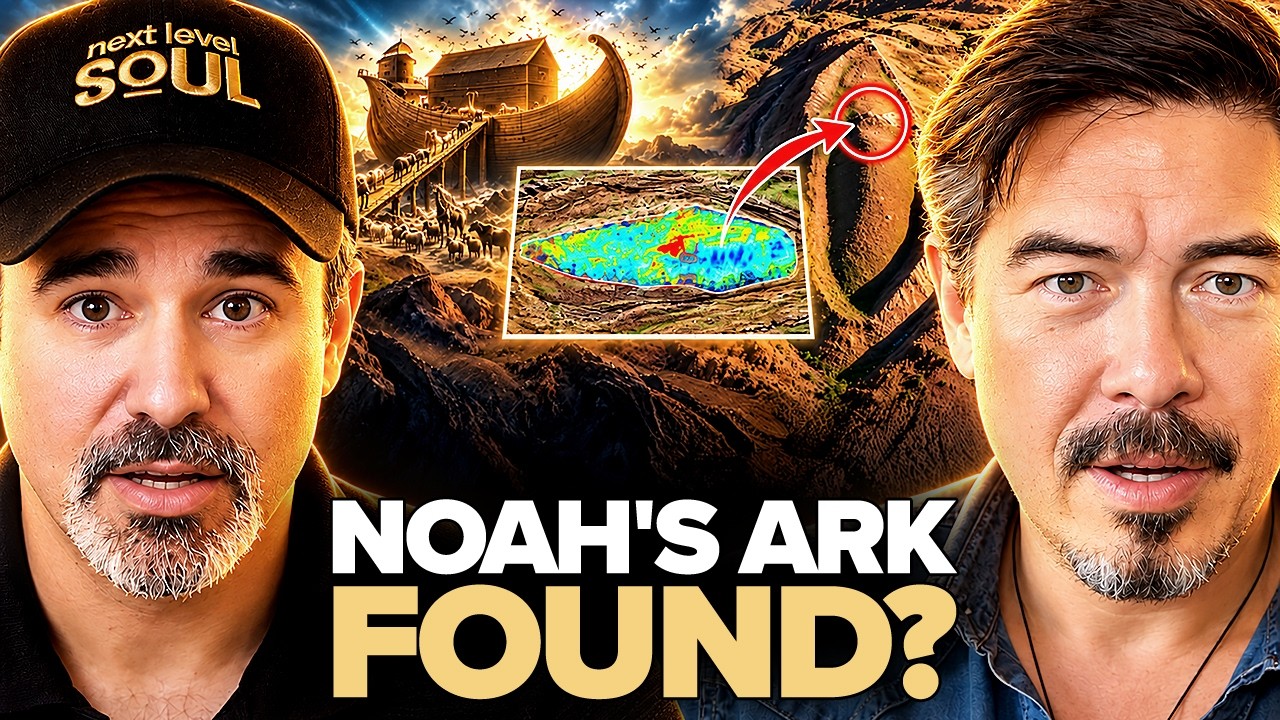
The Book of Enoch & the Discovery of the Real Noah’s Ark with Robert Edward Grant
Robert Edward Grant begins with the Book of Enoch and moves through Noah’s Ark, the Watchers and Orion.
What the Anunnaki Story Can Teach a Seeker
Whether you read the Anunnaki as gods, as symbols or as visitors, the story carries lessons that are easy to feel in your own life. Here are a few that many readers return to.
- Who does the work, and why? In Atra-Hasis, humans are created because the lesser gods are tired of carrying the burden. It is a very old reflection on labor, purpose and freedom. Many people read it as an invitation to ask whether their work expresses their soul or only carries someone else’s load.
- Wisdom helps when power does not. Enki’s role is the clever counselor who solves problems others cannot. The story honors insight, craft and compassion over force.
- Descent and return. Inanna’s journey below and back is a map of the dark night of the soul. She gives up her power, meets her own shadow and returns changed.
- Humanity is invited into a larger story. Whether the account is symbolic or literal, it places human beings inside a cosmic family with a purpose, and that is a feeling many seekers share.
- Stay curious and discerning. The best way to honor an ancient story is to read the sources, listen to different voices and let your intuition guide you.
These themes also appear in our guides to starseeds and in the teachings of Bashar, which approach the question of cosmic origins from a different direction.
Books for Exploring the Anunnaki
If you want to read the sources and the ideas for yourself, these four books make a balanced shelf. The links go to Amazon, and we may earn a small commission at no cost to you.
The 12th Planet by Zecharia Sitchin
The book that launched the modern ancient astronaut reading of the Anunnaki and the Nibiru theory. Read it as a theory to weigh rather than a translation. See it on Amazon.
Myths from Mesopotamia by Stephanie Dalley
A scholarly translation of major Mesopotamian myths, including Atra-Hasis and the Epic of Creation. A good way to read the stories themselves. See it on Amazon.
The Epic of Gilgamesh by Andrew George
A widely used translation of the great Mesopotamian epic, with the flood story, Ishtar and the Bull of Heaven. See it on Amazon.
Gods, Demons and Symbols of Ancient Mesopotamia by Jeremy Black and Anthony Green
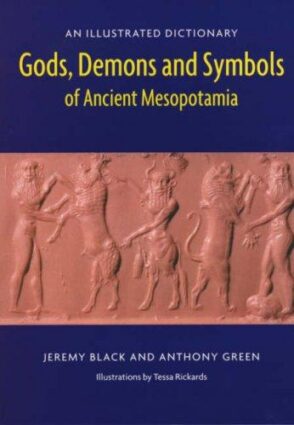
An illustrated dictionary that helps you look up gods, symbols and terms as you read. See it on Amazon.
More Conversations on Ancient Mysteries
- Billy Carson. More on ancient tablets and origins in Emerald Tablets and Humanity’s Origins.
- Freddy Silva. Ancient watchers, giants and the Shining Ones in The Vatican’s Suppression of the Shining Ones.
- Randall Carlson. Lost civilizations and catastrophes in Cataclysms, Atlantis and Gobekli Tepe.

Anunnaki Ancient Secrets Revealed with Billy Carson
Billy Carson shares his interpretation of who the Anunnaki were, in a free video.
A Free Gift
Explore the ancient mysteries, then find your own inner truth.
Reading about the Anunnaki is one thing. Finding your own inner truth is another. The free Sacred Awakening Toolkit is a collection of meditations, teachings and guidance to help you find calm, clarity and balance.
- Exclusive Bashar Channeling (20 Min). An original channeling recorded exclusively for Next Level Soul, with direct insights from one of the most influential channeled teachings of our time.
- 5 Sacred Meditations. Calm the mind, open the heart and reconnect with inner presence.
- Bonus: Cosmic Chakra Meditation (30 Min). Align and activate your energy centers.
- Spiritual Awakening Roadmap PDF. A clear, grounded guide to the awakening process.
Free. Unsubscribe anytime. Your email is safe with us.
Frequently Asked Questions About the Anunnaki
Who are the Anunnaki?
In Mesopotamian texts the Anunnaki are a group of gods, the children of the sky god An and the earth goddess Ki, whose main role was to decree the fates of humanity. Later texts make them judges of the underworld.
What does Anunnaki mean?
The name is usually understood as “princely offspring,” “royal offspring” or “seed of princes.” It was probably pronounced “anunak” in Sumerian.
Were the Anunnaki aliens?
In the ancient texts they are gods, not extraterrestrials. Zecharia Sitchin proposed in 1976 that they were aliens from a planet called Nibiru. Scholars have widely rejected that reading, and Billy Carson offers his own interpretation in our episode.
Who was Zecharia Sitchin?
He was an author born in Baku in 1920 who taught himself Sumerian cuneiform. His book The 12th Planet (1976) and its sequels sold millions of copies and made the ancient astronaut reading of the Anunnaki famous. He died in 2010.
What is Nibiru?
In Sitchin’s theory, Nibiru is an undiscovered planet beyond Neptune on a roughly 3,600-year orbit, home of the Anunnaki. Astronomers and Assyriologists reject the theory, and critics note that Jupiter was the planet tied to Marduk in Babylonian thought.
What does the Atra-Hasis epic say about the creation of humans?
It says the gods made humans to take over the hard labor of the lower gods. The poem dates to the 18th century BCE and also contains a great flood sent to destroy humanity.
How many Anunnaki were there?
The texts do not agree. The “seven gods who decree” is one grouping, one text mentions as many as fifty at Eridu, and a late Babylonian version counts 600 of the underworld and 300 of heaven.
What is the difference between the Anunnaki and the Igigi?
The Igigi appear in the Old Babylonian period. Sometimes the names are used for the same beings, but from the Middle Babylonian period the Anunnaki are the gods of the underworld and the Igigi are the gods of heaven.
What does Billy Carson say about the Anunnaki?
Billy says “Anunnaki” is a term for beings who came from heaven to Earth, that he personally places their home in the Pleiades, and that they modified an earlier hominid to create a worker race. He presents this as his own interpretation.
Are the Anunnaki in the Bible?
The word Anunnaki does not appear in the Bible. Sitchin identified the Anunnaki with the Nephilim of Genesis, and Billy Carson compares them to the giants called Anak. These are their interpretations.
What is the earliest mention of the Anunnaki?
The oldest known uses come from inscriptions in the reign of Gudea of Lagash, around 2144 to 2124 BCE, and from the Third Dynasty of Ur.
Where can I watch Billy Carson talk about the Anunnaki?
You can watch the free video on this page, and read the show notes for episode 385 with Billy Carson on Next Level Soul.
Who were the main Anunnaki gods?
The best-known figures are Anu, king of the heavens, Enlil, lord of wind and storm, Enki, god of wisdom and fresh water, and Ninhursag, the mother goddess of the mountains. Inanna, the Queen of Heaven, is also central to many stories.
What is the difference between the Igigi and the Anunnaki?
The terms are sometimes used as synonyms. In the Atra-Hasis myth, the Igigi are the younger gods who serve the Anunnaki until they rebel, and humans are then created to take over the work.
Who is Enki in Mesopotamian myth?
Enki, also called Ea, is the god of wisdom, crafts, fresh water and magic. He ruled the Abzu, was worshipped at Eridu, and is regarded as the creator of humankind from clay.
Did Enlil really try to destroy humanity?
In the Babylonian flood story, Enlil sends the flood because humanity’s noise kept him from sleeping. In the Sumerian Eridu Genesis, he rewards the flood survivor Ziusudra with immortality.
What is the Sumerian King List?
It is an ancient Sumerian composition listing cities, kings and reign lengths, often spanning thousands of years in its early part. Scholars treat it as a political and literary text and caution against using it for early history.
Who is Inanna?
Inanna, called Ishtar by the Akkadians, is the Mesopotamian goddess of love and war and the Queen of Heaven. She is tied to the planet Venus and is best known for her descent into the underworld.
Where does the Nibiru doomsday story come from?
The name comes from Zecharia Sitchin’s writings. The doomsday claim was first put forward in 1995 by Nancy Lieder, and astronomers reject it. Sitchin himself denied a link between his work and apocalypse predictions.
Are the flood stories connected?
Yes. Eridu Genesis, Atra-Hasis and the Epic of Gilgamesh share flood elements, and scholars note striking parallels with the biblical Genesis flood narrative.
Sources and Further Reading
Anunnaki, Wikipedia. Atra-Hasis, Wikipedia. Zecharia Sitchin, Wikipedia. Enuma Elish, Wikipedia. Ancient astronauts, Wikipedia. Related on Next Level Soul: Episode 385 with Billy Carson, Atlantis: The Complete Guide, The Gnostic Gospels Explained. · Enki (Wikipedia) · Sumerian King List (Wikipedia) · Nibiru cataclysm (Wikipedia)
Go Deeper with NLS Mastery: Your Soul’s Blueprint
If the question of where we come from calls to you, this course helps you map your own soul’s origins and purpose. Karen Bell teaches it in Your Soul’s Blueprint, part of NLS Mastery. Watch the course preview below.