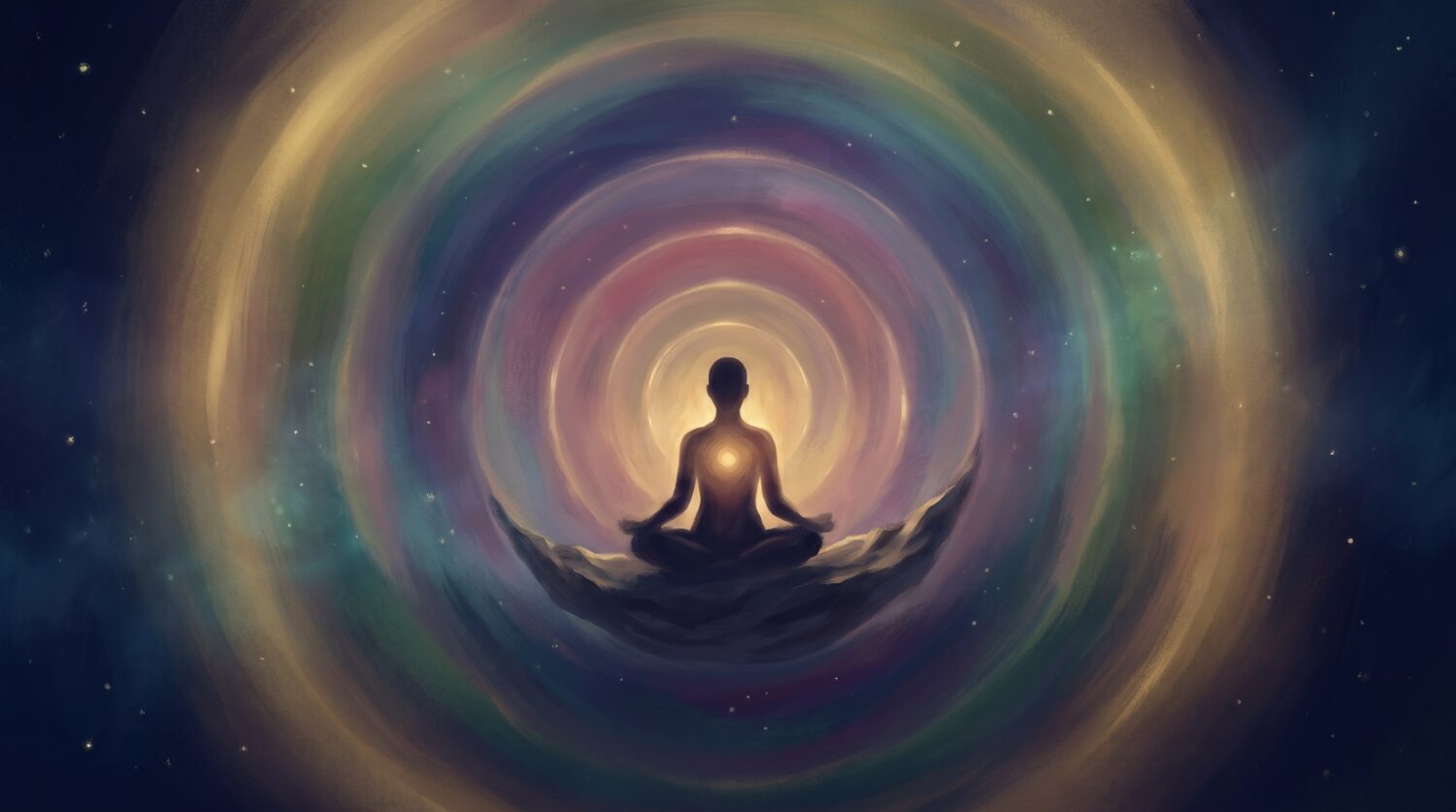
Aura colors are the hues of light that mystics, healers and intuitives say surround the human body, each one revealing a part of your mood, spirit and energy. Red speaks of vitality, orange of creativity, yellow of mind, green of healing, blue of truth, indigo of intuition, violet of spirit, and two colors together tell a richer story than either alone. This guide explains what every color means, what the popular two-color combinations say (green and orange, purple and orange, green and purple, green and yellow), what a lavender aura is, how the layers work, and how to see, read and cleanse your own field.
Maybe you have walked into a room and felt the mood before anyone said a word. Or hugged someone and sensed, in that second, that they were carrying something heavy. Many of us have. Across cultures and centuries, people have given that sense a name: the aura. Hold the colors as a symbolic language for the soul, a mirror and not a verdict. The power is within you, and any chart is only a guide to help you notice what you already know.
Key Takeaways
- Aura colors are a symbolic language for mood, energy and spirit: red for vitality, orange for creativity, yellow for mind, green for healing, blue for truth, indigo for intuition, violet for spirit.
- Most people carry more than one color, and the pairing tells the deeper story. This guide covers green and orange, purple and orange, green and purple, and green and yellow.
- A lavender aura is a soft, pale violet linked with gentle intuition, sensitivity and spiritual openness.
- Every color has a lighter side and a shadow side. No color is bad, and dark does not mean evil.
- Many models describe seven layers, popularized by Barbara Brennan, and Vedanta describes five sheaths called koshas.
- Sensing often comes before seeing. Breath, nature, movement and rest are the heart of cleansing.
The Aura Explained
Ask a dozen teachers and you will hear a dozen versions. The common thread is simple. Every living person is said to be surrounded by an energy field that extends past the skin, holds information about who they are right now, and shows up as light and color to people who can perceive it.
The word itself is old. In Latin and Ancient Greek, aura meant a breeze or a breath, and by the end of the nineteenth century some spiritualist circles used it for the subtle emanation said to surround the body. Breath, wind and spirit are close cousins in many languages, which fits the teaching that the aura is the breath of the soul made visible.
Different traditions use different words. Yogic texts speak of subtle bodies and sheaths. Theosophists wrote about the astral and etheric bodies. Modern energy healers talk about the human energy field. The language changes, but the invitation is the same: you are more than the part of you that can be weighed and measured.
Notice what that does and does not claim. It does not say you are broken, or that a color can condemn you. It offers a vocabulary for something many of us already feel: that mood, health and spirit leave a trace. The power is within you, and any chart of colors is only a guide to help you notice what you already know.
Aura Colors at a Glance
Use this table as a quick reference, then read the longer sections below. The chakra column follows the popular modern rainbow model, in which each energy center is paired with one color. You can explore each center in our guide to the 7 chakras.
| Color | Lighter Side | Shadow Side | Energy Center | Reflection Question |
|---|---|---|---|---|
| Red | Vitality, courage, passion | Anger, restlessness, burnout | Root | Where is my energy going? |
| Orange | Creativity, warmth, confidence | Pride, impulsiveness, people-pleasing | Sacral | What do I want to create? |
| Yellow | Optimism, curiosity, clear mind | Overthinking, perfectionism | Solar plexus | What is my mind chasing? |
| Green | Healing, growth, compassion | Jealousy, possessiveness, over-giving | Heart | Who am I caring for, and am I included? |
| Blue | Calm, honest speech, trust | Fear of speaking up, stagnation | Throat | What is true that I have not said? |
| Indigo | Intuition, insight, inner knowing | Isolation, anxiety | Third eye | What do I already know? |
| Violet or purple | Spiritual connection, wisdom, imagination | Escapism, floating above life | Crown | How can I bring this vision down to earth? |
| Lavender | Gentle intuition, sensitivity, spiritual openness | Overwhelm, thin boundaries | Third eye and crown | What does my sensitivity need today? |
| Pink | Tenderness, gentle love | Naivety, neediness | Heart | Where can I soften? |
| White, gold, silver | Clarity, wisdom, intuition | Disconnection from body or feeling | Crown and beyond | What is grace asking of me? |
| Gray or black | Protection, rest, grounding | Fatigue, blocked energy | Any | What needs rest or release? |
Aura Colors and What They Mean
Here are the colors as most modern teachers describe them. Treat them as a mirror. Meanings vary between teachers, and every color is said to have a lighter and a shadow side. Dougall Fraser, a clairvoyant who sees through the lens of color, says the same on our podcast: every color has a shadow.
Red Aura
Red is the color of vitality, courage, passion and a body that feels at home on the earth. A clear, warm red suggests strength and drive, the person who gets things started and keeps going. A muddy or sharp red is read as anger, restlessness or burnout.
In the chakra model, red belongs to the root, the place of safety, belonging and survival. When red keeps showing up for you, practitioners suggest asking where your energy is being spent and where it is being drained. Grounding practices such as walking barefoot, eating a warm meal and sleeping well help red settle into a steady glow.
Orange Aura
Orange speaks of creativity, warmth, sociability and confidence. It is the color of someone who makes a room feel easier, tells a good story and turns feeling into form. It belongs to the sacral center, the home of pleasure, emotion and the creative current.
In its shadow, orange can mean pride, impulsiveness or a habit of living for approval. An orange field that has gone dim is often described as creative energy that has been blocked by criticism, perfectionism or fatigue. Play, art, dance and honest enjoyment bring it back.
Yellow Aura
Yellow is linked with optimism, curiosity and a bright mind. Think of the person who always has an idea and a laugh. It belongs to the solar plexus, the seat of will, confidence and personal power.
Its shadow side is overthinking, perfectionism and a head that never rests. A pale or flickering yellow is often read as a mind running ahead of the heart. A gentle way to balance it is to move attention down from the head into the belly and breath.
Green Aura
Green is the color most often tied to healing, growth and compassion. Nurses, gardeners, caregivers and good listeners are often described with green. It belongs to the heart center, the bridge between body and spirit.
The shadow shows up as jealousy, possessiveness or giving until there is nothing left for yourself. A green that feels thin or murky is often described as a heart that has been caring for everyone except its owner. The remedy is simple and hard at the same time: receive as well as give.
Blue Aura
Blue stands for calm, honest speech and trust. It is said to glow around people who say what they mean and mean what they say. It belongs to the throat center, the place of voice and truth.
Too much blue, according to some teachers, can turn into fear of speaking up or a quiet stagnation. A dark, heavy blue is sometimes read as words that have been swallowed. Singing, journaling and honest conversation are the classic ways to clear it.
Indigo Aura
Indigo is the deep blue of intuition, insight and inner knowing. People described this way are often thoughtful and drawn to the unseen. It belongs to the third eye, the center of inner sight, which you can explore in our guide to awakening the third eye.
The shadow side is isolation, anxiety or getting lost in the inner world. Meditation and dream work feed indigo, while time with friends, sunlight and a regular routine keep it balanced.
Violet and Purple Aura
Violet is associated with spiritual connection, wisdom and imagination. It is a favorite of visionaries and dreamers. Purple, which sits between indigo and violet, is used almost interchangeably with violet in most aura writing, and both are tied to the crown center, the doorway to the sense of oneness.
In its shadow, violet can point to escapism, a wish to float above ordinary life instead of living it. Prayer, meditation and silence deepen violet, and a practical daily task brings it safely back to earth.
Pink Aura
Pink is the color of tenderness, gentleness and open-hearted love. It is soft but not weak. Many teachers link it to the heart, with a quality of self-compassion and sweetness.
The shadow can look like naivety or neediness, a heart that gives away its boundaries. Pink grows through kindness toward yourself, and through the courage to say a loving no.
White, Gold and Silver Aura
White is said to suggest clarity, openness and a clean slate. Gold is often read as spiritual wisdom, vision or a sense of purpose. Silver is tied to intuition and flow. These show up most in descriptions of deep meditation, prayer and moments of grace. Many teachers also note that too much white can suggest someone is disconnected from their body or feelings.
Gray and Black Aura
Gray is usually read as fatigue, caution or a need for rest. Black or dark patches are said to mark energy that feels blocked, depleted or heavy. Please hear this clearly: dark does not mean evil. Teachers describe it as a place that wants attention, rest or release. Dougall Fraser even describes black as grounding and protective, a color that designers often wear to center themselves.
Reading Your Colors Without Overreading
A few grounding rules help. Most people are said to carry more than one color at once, which is why the next section matters. Colors are described as changing through the day, so a single glimpse is a snapshot, not a life sentence. And no color is better than another. Each one is a doorway into a part of you.
Try this tonight. Pick the color that you feel most drawn to and the one you keep avoiding. Write one sentence about each. You may learn more from the avoided color than from any chart.
Aura Color Combinations: What Two Colors Together Mean
Almost no one carries a single color. Most teachers describe a dominant color, which shows who you are at your core, and one or more supporting colors, which show what you are working with right now. When two colors appear together, read them as a conversation. Each brings its gift, and each softens or sharpens the other.
The meanings below combine the traditional meaning of each color with its energy center, so you can see how the pair interacts. They are offered as reflections, not predictions.
How to Read Two Colors Together
- Which is dominant? The stronger or larger color describes your baseline. The second color describes the quality you are growing into or leaning on.
- Where does each sit? Some teachers place the upper colors around the head and shoulders, the middle colors around the chest, and the lower colors around the belly and hips.
- Do they blend or stay separate? A smooth blend suggests the two qualities are working together. Sharp edges or patches suggest they are still negotiating.
- What does your life say? The best check is simple. If a reading does not match how you feel and live, set it down.
| Combination | Energy Centers | The Blend | The Shadow | Ask Yourself |
|---|---|---|---|---|
| Green and orange | Heart and sacral | Compassion with creative joy | Giving for approval | Am I creating from love or from need? |
| Purple and orange | Crown and sacral | Vision with creative fire | Big dreams, little follow-through | How can I give my vision a body? |
| Green and purple | Heart and crown | Healing with spiritual wisdom | Rescuing, or drifting above life | Am I helping, or avoiding my own life? |
| Green and yellow | Heart and solar plexus | Kindness with clear thinking | Worry about everyone | Can I trust the heart as much as the plan? |
| Lavender | Third eye and crown | Soft intuition and openness | Overwhelm, thin boundaries | What does my sensitivity need? |
Green and Orange Aura Meaning
A green and orange aura joins the heart and the sacral center, the energy of compassion and the energy of creativity. Green brings healing, care and growth. Orange brings warmth, play and the urge to make something. Together they describe a person who helps through creating and creates through caring: the teacher who makes learning joyful, the cook who feeds a whole community, the artist whose work comforts.
When the two blend well, people often feel welcome around you. You are generous without being heavy and fun without being shallow. The shadow of this pair is giving in order to be liked. Green’s tendency to over-give meets orange’s need for approval, and the result can be exhaustion that looks like kindness. Ask yourself whether you are creating and helping from fullness or from a fear of being left out.
To support this pair, practice receiving: let someone else cook, say yes to help, and keep one creative project that is only for you.
Purple and Orange Aura Meaning
A purple and orange aura meets two very different energies. Purple, tied to the crown, carries vision, spiritual connection and imagination. Orange, tied to the sacral center, carries creative drive, pleasure and sociability. This is the color pair of the visionary who actually makes things: the writer who channels ideas, the musician who feels music as a spiritual practice, the healer who is also a performer.
The gift of this blend is inspiration that can be shared. Purple supplies the dream and orange gives it warmth and motion. The shadow is a gap between heaven and earth. Purple can drift into escapism while orange chases the next exciting thing, so ideas multiply and little gets finished. If you see this pair, a practical question helps: what is the one small step that gives my vision a body?
To support this pair, ground the vision in a daily creative habit, even fifteen minutes, and let meditation and play feed one another.
Green and Purple Aura Meaning
A green and purple aura joins the heart and the crown: healing and spiritual wisdom. Green holds compassion and growth. Purple holds insight and connection to something larger. People described this way are often natural healers, counselors, energy workers and spiritual teachers, the ones who sit with pain and see meaning in it.
The gift of the pair is love that sees clearly. You can care deeply without losing the bigger picture, and you can see the bigger picture without losing your tenderness. The shadow comes in two forms. Green’s over-giving can become rescuing, taking on other people’s pain as if it were yours. Purple’s escapism can become a spiritual bypass, using lofty ideas to avoid a hard feeling. The question for this pair is whether you are helping or hiding.
To support this pair, protect your energy with rest and boundaries, and keep a few earthy rituals such as gardening, cooking or time in nature. Our guide to energy healing practices offers many ways to work with this combination safely.
Green and Yellow Aura Meaning
A green and yellow aura joins the heart and the solar plexus: kindness and clear thinking. Green is compassion and healing. Yellow is optimism, curiosity and a bright mind. Together they describe a warm, hopeful, practical person who makes good plans for the people they love. Teachers, counselors, organizers and anyone who can be both caring and clear often show this pair.
The gift is balance between head and heart. The shadow is worry. Yellow’s busy mind can turn green’s care into constant concern about everyone, and the result is a person who solves other people’s problems to avoid sitting in their own. Another version is a heart that gets overruled by a very sensible plan. The question for this pair is whether you can trust the heart as much as the plan.
To support this pair, move attention out of the head with walking, breathing and time outdoors, and schedule real rest so that caring does not turn into managing.
Lavender Aura Meaning
A lavender aura is a pale, soft violet, often described as violet washed with white or a touch of pink. It is not a pairing of two strong colors but a gentle shade that sits between the crown and third eye, which is why it is so often linked with intuition and spiritual openness. People with a lavender aura are described as dreamy, sensitive, empathic and drawn to the quiet, mystical side of life: dreams, signs, music, prayer and the unseen.
The gift of lavender is receptivity. You pick up moods, hear subtle nudges and feel the sacred in small things. The shadow is overwhelm. A very sensitive field can absorb too much from crowds and screens, and it can drift into daydreaming at the expense of daily life. Practices that help are grounding, clear boundaries, short breaks after social time and regular contact with nature.
How is lavender different from a deeper violet or purple? Violet and purple are bolder and often read as wisdom and vision in action. Lavender is lighter and more tender, read as intuition and openness in rest. If you want to explore sensing, join Nikki Dutta’s free masterclass on awakening your psychic abilities.
The Layers of the Aura
Many teachers describe the aura not as one glow but as several layers, like nested ribbons of light. Systems differ in the number of layers and in what they call them. The most popular modern model comes from Barbara Brennan, a former NASA physicist turned energy healer, whose book Hands of Light (1987) described seven.
- The etheric layer: closest to the body, tied to physical sensation, vitality and health.
- The emotional layer: the layer of feelings, often described as flowing and colorful.
- The mental layer: thoughts, beliefs and the stories we repeat about ourselves.
- The astral layer: the bridge between the physical layers and the spiritual ones, linked with love and connection.
- The etheric template: described as a blueprint or pattern for the physical body.
- The celestial layer: spiritual feeling, devotion and bliss.
- The ketheric layer: the outermost, said to hold the sense of unity and the soul’s purpose.
| Brennan Layer | Focus | Vedanta Sheath (Kosha) | Focus |
|---|---|---|---|
| Etheric | Body sensation, vitality | Annamaya, the food sheath | The physical body |
| Emotional | Feelings | Pranamaya, the energy sheath | Breath and life force |
| Mental | Thoughts and beliefs | Manomaya, the mind sheath | Mind and senses |
| Astral | Love and connection | Vijnanamaya, the wisdom sheath | Discernment and insight |
| Celestial and ketheric | Devotion, unity, soul purpose | Anandamaya, the bliss sheath | Joy and the causal body |
The two systems do not match line for line. The table shows where their emphases rhyme. The five sheaths are described in the Taittiriya Upanishad.
Other traditions count differently. Some speak of three bodies, some of five sheaths, some of nine layers. The color of each layer is said to shift with what you are living through, so the colors you notice in the outer field often point to something in a deeper layer. Do not worry about which system is right. Use the one that helps you notice what is going on inside you.
Many of these models connect the layers to the seven energy centers of the body. We keep the chakra-by-chakra details in one place, so when you are ready to go deeper, read our complete guide to the 7 chakras. Think of the chakras as the places energy moves through, and the aura as the field that surrounds and expresses it.
A simple way to work with layers: when you feel off, ask which layer is speaking. Is it the body asking for rest? The heart carrying a feeling? The mind running a worry on repeat? Naming the layer often shows you the next small step.
A Short History of Aura Ideas
The idea of light around the body is very old. Halos appear around holy figures in Greek, Roman, Buddhist and Christian art. Yogic and Vedic teachings describe layered subtle bodies, called koshas, that surround the physical one.
In the 1840s, the chemist Karl von Reichenbach claimed that sensitive people could see a light he called “od” around magnets and people. Later in the 1800s, Theosophy, led by Helena Blavatsky, carried ideas of subtle bodies into the West. In 1911, the physician Walter Kilner published The Human Atmosphere, saying that dye-coated screens helped him see an aura.
In 1901, Annie Besant and C. W. Leadbeater published Thought-Forms, with painted images linking colors to feelings. Those images still shape how many people picture the aura today. In 1939, Semyon Kirlian developed a way to photograph the electrical glow around objects, which people later linked with the aura. In the early 1900s, Leadbeater’s Man Visible and Invisible showed the aura at different stages of a person’s spiritual growth. In 1977, Christopher Hills’ book Nuclear Evolution: The Rainbow Body paired each energy center with one color of the rainbow, the model most modern aura charts still follow. Then, in 1987, Brennan’s Hands of Light brought the layered model to a wide audience.
Channeled and mystical sources added to the picture. Edgar Cayce’s readings described the aura as reflecting a person’s mental and spiritual state. Paramahansa Yogananda taught about prana, the life energy that surrounds and sustains the body. Rudolf Steiner wrote about etheric and astral bodies. The channeled Seth material, through Jane Roberts, described a field of energy shaped by belief and thought. You can hear that last perspective in our conversation with David Cielak on the Seth material.
Each of these voices saw the aura through the lens of their own tradition. Together they show how many cultures have reached for light to describe the soul.
Why You May See Color Around People
Some people see a shimmer or a tint around others, and many see nothing at all. Either way, it helps to know a few ordinary visual effects that can look like aura color, so you can tell a passing effect from a real impression.
- Afterimages. Stare at a bright shape, look away, and your eyes produce a ghost of the opposite color.
- Peripheral vision effects. When you stare softly at one spot, the edges of your vision can fade, shimmer or seem to glow.
- Synesthesia. For some people, senses blend. A person with this trait may truly see colors when they think of a name or look at a face. The experience is real for them.
Aura photography is another popular question. The cameras at fairs and wellness shops generally work by reading skin temperature or conductivity at your hands and turning those readings into colors, so the picture reflects those readings. Many people enjoy it as a playful prompt for reflection. Kirlian photography, developed by Semyon Kirlian in 1939, shows a glowing electrical discharge around an object, and it changes with moisture, pressure and voltage.
Use these as tools for discernment. Whatever you see or sense, it is a starting point for curiosity about yourself. Aura work is a companion to good health care and never a replacement for it.
How to See and Sense Your Aura
With the honest part out of the way, here is a gentle experiment. Treat it as play and curiosity. You are not trying to prove anything. You are learning to pay attention.
A Simple Seeing Exercise
- Sit in a softly lit room. Place a plain, light wall behind a friend, or stand in front of a mirror with a plain wall behind you.
- Rest your gaze near the edge of the head or the shoulders. Do not stare at one point. Let your eyes go soft, as though you are looking through the person.
- Breathe slowly for two full minutes.
- Notice anything at the edges: a faint halo, a shimmer, a tint. Do not chase it.
- Look away at a blank wall. If you see a color ghost, remember that this can be an ordinary afterimage.
- Write down what you noticed, without judging it.
Some people see something right away. Many see nothing. Both are normal. Whatever you notice, hold it as an impression to explore, not as proof.
How to Read What You Notice
- Name the dominant color. Which hue is strongest, or which one do you feel most clearly?
- Look for a second color. Note whether it blends with the first or stays separate. Our section on aura color combinations can help you reflect.
- Note the quality. Is it clear and bright, or muddy and dull? Soft or sharp? Steady or flickering?
- Note the place. Around the head, the heart, the belly or the hands? Location points to the energy center involved.
- Ask what it needs. Rest, movement, expression or company. Choose one small action.
- Write it down. Notes over a week show patterns that a single glimpse never will.
Sensing Without Seeing
Most people who work with energy say sensing comes before seeing. You do not need to see color at all. Try these.
- The hand-field practice. Rub your palms together for ten seconds. Hold them a few inches apart and slowly move them closer and farther. Many people report a feeling of warmth, tingling or gentle resistance. Whatever the cause, it is a good way to tune in to body awareness.
- The room check. Before you enter a space, pause at the door. Take one breath. Ask yourself how your body feels. Notice what changes when you step inside.
- The color check-in. Close your eyes and ask, “If my energy had a color right now, what would it be?” Trust the first answer, then ask what that color needs.
Dougall Fraser’s teaching is that this ability is not reserved for a gifted few. He says the most accurate reading you will ever receive is the one you give yourself. We find that idea steady and encouraging. If you want to hear it in his own words, the episode is below.
Your intuition is a muscle, and it grows with gentle practice. For a structured path, you can explore our Becoming Clairvoyant audio course, or join Nikki Dutta in her free masterclass on awakening your psychic abilities.

Watch the full episode and read the show notes for Dougall Fraser’s conversation on auras and colors.
Cleansing and Caring for Your Energy
If the aura is a field that responds to how you live, then caring for it looks a lot like caring for yourself. There is nothing mysterious required. Practitioners describe “cleansing” as simply making space, letting go of what you have picked up, and returning to yourself. Here are the practices people reach for most.
Signs Your Energy May Need Care
Practitioners often point to a few everyday signals: feeling drained after being with certain people or places, a sense of heaviness you cannot explain, trouble settling at night, irritability, or a fog that will not lift. Treat these as invitations to rest and reset, not as problems to fix.
Breath and Stillness
Slow breathing is the fastest reset most of us have. Try breathing in for four counts and out for six, for two minutes. Picture each exhale carrying away what is not yours. If you want a longer practice, our meditation guide walks through it step by step.
Time in Nature
Walking barefoot on grass, sitting under a tree, or standing near water is a classic aura-clearing practice in many traditions. It is also simply good for the nervous system. For more on reconnecting with the earth, read our guide to earthing and grounding.
Water and Salt
A warm bath with sea salt, or a shower where you imagine the water rinsing the day away, is a gentle ritual many people use after a hard day or a crowded event. It cleans the body, and it gives the mind a clear signal that something is finished.
Sound
Singing bowls, chanting, humming and simple music are used in many cultures to shift how we feel. Even a single long hum, felt in your chest, can slow the breath and settle the mind.
Movement
Stretching, yoga, qigong, dancing in the kitchen and shaking out your arms and legs all count. Stuck energy, practitioners say, loves to move. So does stuck mood.
Rest, Boundaries and Good Company
This one rarely makes the lists, and it may matter most. A tired, overcommitted person will feel drained no matter how many rituals they try. Sleep, saying no, and spending time with people who leave you feeling lighter are some of the strongest energy practices there are.
Crystals and Smoke
Some people use crystals, sage, palo santo or incense as a focus for intention. If that feels meaningful to you, wonderful. Just remember that the object is a helper and the intention is yours. Our guide to chakra stones shows how people pair crystals with the energy centers. If you use smoke, keep a window open and be mindful of anyone with asthma or allergies.
Visualization
Many teachers offer a simple image: see a column of golden light above your head, pouring down around you like a soft shower, filling the space around your whole body. Stay with it for a minute. Then say to yourself, silently, “This is my space.” It takes a minute and it is free.
Balancing by Color
If you have noticed a particular color or shadow, here are simple ways to support it. This is a gentle toolbox, not a prescription.
| If You Notice | Try |
|---|---|
| Restless red | Slow walking, grounding, a warm meal |
| Dim orange | Play, music, anything creative with no goal |
| Busy yellow | Belly breathing, a short walk, single-tasking |
| Tired green | Rest, saying no, receiving help, time with plants |
| Heavy blue | Singing, journaling, an honest conversation |
| Foggy indigo | Sunlight, company, a steady routine |
| Floaty violet or lavender | Barefoot time outdoors, cooking, gentle movement |
| Gray or dark patches | Sleep, water, quiet and time with someone kind |
For a wider look at hands-on and subtle energy work, such as Reiki and qigong, see our guide to energy healing practices. And if you notice that your mood stays low or heavy for weeks, please talk to a doctor or therapist. Energy practices can sit beside good care. They are not a substitute for it.
Making Aura Awareness a Daily Habit
You do not need an hour. A short daily rhythm works better than a big occasional ritual.
- Morning: two minutes of breathing, then the color check-in.
- Midday: step outside, feel your feet, take five slow breaths.
- Evening: shake out your hands, wash your face, and let the day go.
After a week, look back at your notes. Do certain colors keep showing up on certain days? Do they match your sleep, your meals, your conversations? That pattern is the real gift of aura work. It turns vague feelings into something you can notice and tend.
Books on Auras and Subtle Energy
If you would like to read more, these are widely read starting points. Many are written from a spiritual or healing point of view.
- Hands of Light by Barbara Brennan. The best known modern guide to the layered human energy field.
- Thought-Forms by Annie Besant and C. W. Leadbeater. The classic early Theosophical color images.
- Anatomy of the Spirit by Caroline Myss. Energy centers, emotions and health.
- Wheels of Light by Rosalyn Bruyere. A healer’s guide to the chakras and the aura.
- The Subtle Body by Cyndi Dale. A modern encyclopedia of energy anatomy.
As an Amazon Associate, Next Level Soul earns from qualifying purchases.
On Next Level Soul
If this topic is calling you, there is more to explore, and it is all available on Next Level Soul. The Human Aura and Advanced Studies of the Human Aura are audiobooks that go deeper into the classic teachings. Our Chakra Alignment Meditations are a gentle way to practice. Dougall Fraser’s full conversation, Auras and Colors: The Key to Your Vibrational Energy, is on the podcast page. Our Human Aura study guide and workbook turns those teachings into practice.
Where to Go Next
Start small. Tonight, try the color check-in. This week, try the seeing exercise once, with no pressure. This month, read the guide to the 7 chakras and see how the energy centers and the aura fit together. If you are curious about the bigger picture of awakening, our guide to spiritual enlightenment is a good next stop, and our overview of channelers and mediums explains how people work with the unseen.
You do not need special eyes. You do not need a gift. Just a quiet minute, a curious heart and the willingness to listen to what your own energy has been telling you all along. You are already enough to begin.
Sources and Further Reading
- Aura (paranormal), Wikipedia
- Kosha, Wikipedia
- Chakra, Wikipedia
- Kirlian photography, Wikipedia
- Halo (religious iconography), Wikipedia
Go Deeper with NLS Mastery: Awaken Your Psychic Abilities
If you are curious about sensing energy and developing your intuition, you can go deeper with a guided course. Nikki Dutta teaches it in Awaken Your Psychic Abilities, part of NLS Mastery. Watch the course preview below.

Frequently Asked Questions
What are aura colors?
Aura colors are the hues of light that people say they see or sense around a body. Traditional teaching links each one to a mood, trait or kind of energy, such as green for healing and blue for calm, so they work as a symbolic language for the soul.
What does a green and orange aura mean?
A green and orange aura joins the heart and the sacral center: compassion with creative joy. It describes someone who helps through creating and creates through caring, with a shadow of giving in order to be liked.
What does a purple and orange aura mean?
A purple and orange aura blends spiritual vision with creative fire. It suggests an inspired, imaginative person, and the invitation is to give the vision a body through small, steady action.
What does a green and purple aura mean?
A green and purple aura joins healing with spiritual wisdom, the signature of many natural healers and counselors. Its shadow is rescuing other people or floating above your own life, so rest and grounding help.
What does a green and yellow aura mean?
A green and yellow aura joins kindness with a clear, hopeful mind. It describes a warm and practical person, and its shadow is worrying about everyone, so trusting the heart as much as the plan brings balance.
What does a lavender aura mean?
A lavender aura is a soft, pale violet linked with gentle intuition, sensitivity and spiritual openness. People with it are described as dreamy and empathic, and grounding and boundaries help them feel steady.
What does a blue aura mean?
Blue suggests calm, honest communication and trust. A very dark or heavy blue is sometimes read as words left unsaid.
What does a black or dark aura mean?
Teachers usually read dark patches as energy that feels blocked, tired or heavy. It does not mean something evil. It marks a place that needs rest, attention or release.
Can your aura change color?
Yes. Teachers say aura colors shift with mood, health, focus and experience, which is why a single reading is a snapshot rather than a fixed label.
How many layers does the aura have?
Systems differ. Barbara Brennan’s popular model describes seven layers, Vedanta describes five sheaths called koshas, and other traditions describe three or nine.
How can I find my aura color?
Try the color check-in: close your eyes, ask what color your energy is right now, and trust the first answer. Notice the color you are drawn to and the one you avoid, and treat both as clues for reflection.
Can everyone see auras?
Many people sense energy more than they see it, and sensing usually comes first. Gentle practice such as the soft-gaze exercise and the hand-field practice can build awareness over time.
How do I cleanse my aura?
People commonly use slow breathing, time in nature, a salt bath or shower, sound, movement, visualization, rest and good boundaries. Choose what leaves you feeling calm and grounded.