
The Yellow Book is a practical guide to inner work by the Colombian author Samael Aun Weor, first published in 1959 according to Wikipedia. It speaks about meditation, inner discipline, and spiritual energy from the author’s Gnostic point of view. This study guide walks through all 17 sections in plain language, then hands you a workbook to try the ideas on your own life.
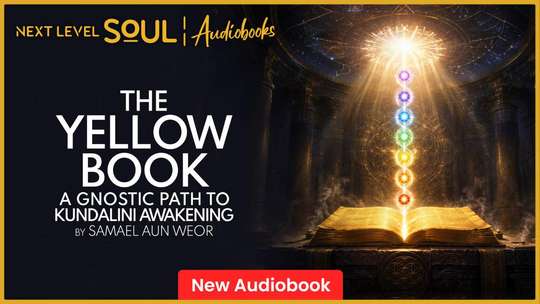
Listen While You Study
The audiobook is available on Next Level Soul TV. Play a chapter, then come back here for the notes and the workbook prompt.
Key Takeaways
- The author teaches inner work through direct experience, not belief alone, so the book invites you to test ideas in daily life.
- Meditation and self-observation sit at the centre, as ways to quiet the mind and get to know yourself.
- Kundalini is a major theme, described by the author as a spiritual energy within, a view that belongs to his tradition.
- Discipline and ethics matter, because the author links steady habits and self-control with lasting change.
- Read it with curiosity and care, treating its claims as the author’s teaching and choosing your own pace.
The Book at a Glance
| Detail | What to Know |
|---|---|
| Author | Samael Aun Weor (1917 to 1977) |
| First published | 1959, according to Wikipedia |
| Chapters | 17 sections: an introduction, 15 chapters, and a conclusion |
| Tradition | Modern Gnostic and esoteric teaching |
| Audiobook | Available on Next Level Soul TV |
What Is The Yellow Book About?
The Yellow Book is presented as a practical guide to esoteric spirituality. The author, Samael Aun Weor, writes about consciousness, meditation, inner discipline, and personal transformation. He draws on symbols from many traditions and offers his own Gnostic reading of them. His claims are part of his teaching, so read them as his view, not as settled fact.
The book is arranged as an introduction, fifteen short chapters, and a conclusion. The titles move across themes such as love, Kundalini, breath, meditation, and inner listening. This guide gives a general overview from those titles. It does not replace the book, and it does not give instructions for any practice.
The Board: 17 Chapters
Each square is a chapter. Tap one to jump to its study notes.
- 1Intro
- 2Love
- 3Kundalini
- 4Two Witnesses
- 5Mantric Song
- 6Wisdom
- 7Urdhvarata
- 8Cosmic Mother
- 9Pranayama
- 10Transmutation
- 11Discipline
- 12Meditation
- 13Experiences
- 14Small Voice
- 15Jinn State
- 16Utensils
- 17Conclusion
Chapter-by-Chapter Study Notes
These notes are our own summary, written to help you follow the book. Each one ends with a small practice you can try this week.
Introduction by Samael Aun Weor
The book opens with a note from the author. Introductions like this usually set out the purpose of the work and how the writer hopes it will be approached. Here, the author presents the book as a practical guide to inner work, based on his Gnostic teachings. Read it as a statement of intent, and notice what he asks of the reader before any teaching begins.
Love
From its title, this chapter looks at love as a foundation for the spiritual path. The author is known for teaching that inner work begins with the heart and with how we treat others. Take this as a general theme rather than a detailed summary. As you read or listen, notice how the author connects love with conscience, patience, and daily behaviour.
The Kundalini
Kundalini is described on Wikipedia as a coiled spiritual energy said to rest at the base of the spine in Indian traditions. The author teaches his own Gnostic view of it, so this chapter likely explains how he frames it. Treat the ideas as his teaching, not as proven fact, and compare them with other sources on the subject.
The Two Witnesses
The title echoes a theme from religious symbolism, where two witnesses appear in a sacred story. The author is known for reading such images as inner symbols. This chapter likely offers his interpretation, which should be understood as his teaching and not a settled reading. Listen for how he links the symbol to the reader’s own inner life.
Mantric Song For The Awakening Of The Kundalini
The title points to the use of sound, song, or chant within the author’s system. Chanting has a long history across spiritual traditions, often tied to focus and devotion. This chapter likely describes how the author sees sound in relation to Kundalini. Take the ideas as his view, and be careful with any practice you read about.
Children Of Wisdom
This title suggests a chapter about people on a path of wisdom, perhaps describing their qualities or responsibilities. The author often speaks of inner development as a duty to oneself and others. Expect general reflections on character and purpose rather than rules. Read it as the author’s picture of what a sincere seeker might become.
Urdhvarata
Urdhvarata is a Sanskrit term. The title suggests a chapter about a specialised teaching, likely linked to the way the author discusses spiritual energy. Because the subject is advanced and symbolic, this guide keeps to general terms. Read it as the author’s teaching, and look up the word from a neutral source to understand its wider background.
The Cosmic Mother
The title points to a feminine divine figure, an idea found in many spiritual traditions. In the author’s Gnostic writing, the Divine Mother appears as a symbol tied to creation and to inner help. This chapter likely explores that image. Treat it as his teaching, and notice what the idea of a divine mother brings up for you.
Christic Egyptian Pranayama
Pranayama means breath practice in Indian traditions. The title suggests the author describes a breathing method with Christian and Egyptian symbolism. This guide does not give instructions. Breathing exercises can affect people differently, so anyone curious should speak with a qualified teacher or health professional. Read the chapter as the author’s description, not as advice.
Sexual Transmutation For Single People
This chapter addresses a sensitive theme that the author treats as part of spiritual life. This guide stays general. In broad terms, he speaks about self-control, ethics, and channelling personal energy toward higher aims. Read it as his viewpoint, with respect and an open mind, and decide for yourself what is useful in your own circumstances.
Order And Esoteric Discipline
The title suggests a chapter about structure, routine, and commitment on the inner path. Many traditions teach that steady habits matter more than dramatic effort. The author likely makes a similar case in his own words. Read it as his advice on discipline, and consider how a gentle, realistic routine could fit your own life.
Meditation
Meditation is a central theme of this book, and this chapter likely explains the author’s approach to quieting the mind and turning inward. Different teachers use different methods, so take his as one view. If you try any practice, start gently and keep it comfortable.
Primary Clairaudient And Clairvoyant Experiences
The title refers to inner hearing and inner seeing, often called psychic experiences. The author describes such experiences as part of the spiritual path. These claims belong to his tradition and are not scientifically established. Read with curiosity and some healthy caution, and remember that anyone troubled by unusual perceptions can seek professional support.
The Still Small Voice
This phrase is familiar from religious writing, where it often means quiet inner guidance. The chapter likely explores how the author understands inner listening and conscience. As a theme, it fits many traditions. Read it as his teaching, and reflect on the difference between loud thoughts and the calmer sense of what feels right.
Jinn State
The term Jinn comes from Islamic and Arabic lore, where it names beings of legend. The author uses it in his own way, and the title suggests a chapter on a special state. This guide keeps to general terms and does not describe any practice. Read it as his claim, with caution, and look at the history of the word from a neutral source.
Utensils And Perfumes
The title suggests a practical chapter about objects and scents that the author associates with spiritual work. Many traditions use incense, candles, or simple tools to set a calm mood. This guide does not detail his system. Read it as his suggestions, and think about how a peaceful space could support your own reflection.
Conclusion
The book closes with a concluding section. Final chapters typically gather the main threads and send the reader back to daily life. Here, the author likely wraps up his message about inner work and personal responsibility. Read it as his closing word, then decide which ideas deserve more thought and which you would rather leave aside.
Key Ideas in Plain Language
| Idea | What It Means | Chapter |
|---|---|---|
| Gnosis | Direct inner knowledge, as opposed to belief alone. Gnostic movements stress personal spiritual knowing. | 1, 17 |
| Kundalini | A spiritual energy said in Indian traditions to rest at the base of the spine. The author gives his own account. | 2, 4, 6 |
| Meditation | Turning attention inward to quiet the mind and observe yourself. | 11 |
| Inner discipline | Steady, ordered habits that support spiritual growth. | 10, 11 |
| Symbolism | Reading religious images and stories as pictures of inner life. | 3, 8 |
| Breath practice | Pranayama is a name for breath work in Indian traditions. Seek qualified guidance before trying any. | 9 |
| Self-control and ethics | The author links personal energy with moral choices, as a theme of respect and restraint. | 10 |
| Inner guidance | A quiet sense of conscience or intuition, called the still small voice in some religious writing. | 14 |
Who This Book Is For
This guide suits curious beginners who want a calm overview of a demanding esoteric book before listening to it. It also helps readers who already know the author and want a way to organise their notes. If you are new to Gnostic ideas, take things slowly, ask questions, and keep your own judgment close at every step.
A 7-Day Way to Use It
- Days 1 and 2: Read the lede and the Board, then listen to the Introduction and Chapter 1, and answer the workbook prompts.
- Days 3 and 4: Move through the middle chapters, one or two a day, noting questions and ideas you want to explore.
- Days 5 and 6: Finish the later chapters and the Conclusion, then review your notes and the key concepts table.
- Day 7: Look back over your answers, choose the ideas that helped, and set one gentle practice to keep.
Your Workbook
Your answers save on this device as you type. They are not sent anywhere. Use the copy button to move them into your own notes.
Watch More on Next Level Soul TV
Next Level Soul TV brings together full episodes, courses, movies, series and audiobooks, ad-free. Join Next Level Soul TV and keep exploring.
Keep Going
- Kundalini
- Yoga for Spiritual Growth: A Practice Beyond the Mat
- Mindfulness in Daily Life: A Complete Guide to Everyday Awareness
Sources and Further Reading
Go Deeper with NLS Mastery: Ancient Meditation for Inner Stillness
The Yellow Book keeps coming back to meditation and turning attention inward. If you want to take that further, Acharya Shunya teaches it in Ancient Meditation for Inner Stillness, part of NLS Mastery. Watch the course preview below.

Frequently Asked Questions
What is The Yellow Book about?
It is presented as a practical guide to esoteric spirituality. The author, Samael Aun Weor, writes about meditation, inner discipline, Kundalini, and personal transformation from his Gnostic viewpoint. His claims are his teaching, and this guide treats them that way.
Who wrote The Yellow Book and when?
Samael Aun Weor, a Colombian-born author who lived from 1917 to 1977, wrote it. Wikipedia lists its first publication as 1959.
What kind of book is it?
It belongs to modern Gnostic and esoteric writing. The author founded a movement he called Universal Gnosticism, according to Wikipedia. It is a book of teachings and claims, not a scientific text, so read it with an open but careful mind.
How many chapters does The Yellow Book have?
This guide covers 17 sections, following the contents shown on the Next Level Soul edition page: an introduction, fifteen chapters, and a conclusion. Other editions may be arranged differently, so check yours if the order seems unfamiliar.
What does the book say about Kundalini?
The author teaches his own account of Kundalini as a spiritual energy within. Wikipedia describes Kundalini in Indian traditions as a dormant energy at the base of the spine. Treat the author’s version as his teaching and compare it with neutral sources.
What role does meditation play in the book?
Meditation is one of the central themes. The author presents it as a way to quiet the mind and look inward. Different teachers use many methods, so take his as one view and begin with gentle, comfortable practice if you try any.
Why does the book mention clairvoyance and clairaudience?
The author describes inner seeing and hearing as experiences some people report on the spiritual path. These are claims within his tradition and are not scientifically established. Approach them with curiosity and caution, and seek professional support if unusual perceptions ever worry you.
How should a beginner read The Yellow Book?
Go slowly, one section at a time. Use this guide for orientation, listen to the matching chapter, then answer the workbook prompts. Treat practices as ideas to understand, not instructions, and talk with a qualified teacher before trying anything physical or unfamiliar.
Is The Yellow Book hard to understand?
It can be, because it uses terms from several traditions and symbolic language. Short chapters help. Look up unfamiliar words such as Kundalini or pranayama in neutral references, and reread sections that feel unclear. This guide explains the main ideas in plain words.
How long does it take to work through this guide?
The suggested plan takes seven days. You can go faster or slower. The goal is steady reflection, not speed, so use whatever pace feels comfortable for you.
How does this study guide help?
It gives a plain overview of each section, a list of key concepts, a simple plan, and a workbook of small reflection prompts. It is our own summary, based on the chapter titles and verified background, and it never replaces the book itself.
Where can I listen to The Yellow Book, and what should I explore next?
The audiobook is available on Next Level Soul TV. Afterwards, you might explore other books on meditation, symbolism, or Gnostic history, or read neutral overviews of the traditions the author mentions, to compare viewpoints.
Spirituality for the Rest of Us™
Movies, teachings and community on Next Level Soul TV.