Reviewed by the Next Level Soul editorial team on October 28, 2026. Facts are checked against the sources listed at the bottom. We update this page as new findings are published.
Noah’s Ark has not been confirmed. But something real is happening at a boat-shaped hill in eastern Turkey, and it deserves a careful look. In the summer of 2026, a Turkish university team spent about 90 days at the Durupınar Formation near Mount Ararat, collecting nearly 1,000 soil samples and mapping the ground with radar. A separate group, Noah’s Ark Scans, says its scans and core drilling point to a buried vessel. Geologists have argued for decades that the formation is natural. Lab results are expected this winter, and the full findings in 2027.
Key Takeaways
- No confirmed discovery. Reports describe radar anomalies, soil samples and pottery fragments. Researchers themselves say the site has not been established as the Ark.
- Where: the Durupınar Formation, about 29 km (18 miles) south of Greater Mount Ararat, near Doğubayazıt in Ağrı province, Türkiye.
- Who: a Sivas Cumhuriyet University team led by archaeologist Cenker Atila, working with the Noah’s Ark Scans group.
- What is next: lab results are expected in winter 2026 to 2027, with the project’s findings to be made public in 2027.
- The counterpoint: a 1996 geology study called the formation a common natural structure, and even some creationist groups are skeptical.
- Why it matters to seekers: the flood story is one of humanity’s oldest. The search says as much about us as about the hillside.
What is the Noah’s Ark discovery everyone is talking about?
The headlines come from one place: the Durupınar Formation, a ship-shaped ridge of rock on the slopes of Mount Tendürek in eastern Türkiye. It has drawn Ark hunters since it was publicized in 1959. In 2026 it got new attention because of three overlapping efforts: a university field season, ground-penetrating radar results, and a core-drilling campaign.
It helps to separate what was measured from what was interpreted. Radar can show that the ground below the surface is layered or different from its surroundings. It cannot, on its own, say that a layer is a wooden ship. That gap between data and story is where most Noah’s Ark headlines live.

What happened in 2026, step by step
| When | What was reported | Source type |
|---|---|---|
| June to Sept 11, 2026 | Field season led by Prof. Cenker Atila (Sivas Cumhuriyet University), roughly 20 to 25 researchers from five countries (reports vary), about 90 days on site. | University announcement via news coverage |
| Summer 2026 | Nearly 1,000 soil samples from about 150 locations, new pottery fragments (age not established), radar mapping. Samples sent to Ankara for lab testing. | Greek Reporter, Greek City Times |
| August 2026 | Unusual underground radar readings. Atila suggested the difference might indicate organic material, potentially decayed wood. | Greek Reporter |
| Oct 1, 2026 | Noah’s Ark Scans founder Andrew Jones said a new radar system gave the team subsurface data for the first time, reaching as deep as 95 meters in some places. His stated theory: buried remains of the Ark. | NewsNation |
| Late Sept to Oct 2026 | Core drilling reported underway. A small camera robot nicknamed Gopher was lowered into a core hole, and cores reportedly returned organic layers for lab analysis. | Greek City Times, Geopop |
| Winter 2026 to 2027 | Prof. Atila expects significant lab findings. Full results due to be made public in 2027. | Greek Reporter, IFLScience |
Where did the Ark land, according to Genesis?
Genesis 8:4 says the Ark came to rest on the “mountains of Ararat,” plural. It does not name a single peak. Since the Middle Ages, scholars have wondered whether the phrase points to Urartu, an old name for the Armenian highlands. That is why searches have ranged across a broad region, and why the modern name Mount Ararat is itself part of the debate.
Genesis 6:15 gives the Ark’s dimensions as 300 cubits long, 50 wide and 30 high. The length of a cubit is the whole question. With the commonly cited royal Egyptian cubit of about 52.4 cm, 300 cubits comes to roughly 157 meters. That happens to match the length usually quoted for the Durupınar formation, which is why proponents find it striking. Reports give the formation’s length as between about 157 and 164 meters, depending on the source.
| Measure | Genesis (6:15) | Durupınar as reported |
|---|---|---|
| Length | 300 cubits, about 157 m with a royal Egyptian cubit (about 135 m with a 45 cm cubit) | About 157 to 164 m depending on the source |
| Elevation | “Mountains of Ararat” (no peak named) | About 2,000 m, on Mount Tendürek |
| Distance from Greater Ararat | Not specified | About 29 km south |
Matching one number is not the same as matching a ship. Skeptics point out that a ridge of roughly any length can be compared with some ancient measurement. What would matter is evidence of construction: joinery, tool marks, worked timber, fasteners, a dateable hull.
What do scientists and skeptics say?
The credentialed consensus has been skeptical since the 1970s. In 1996, geologists at California State University Northridge published a study calling the formation a common geological structure, explained by weathered volcanic minerals, mud upwelling and landslides. One of its authors, David Fasold, had begun as a believer in the boat idea before changing his mind after visiting.
Writers at IFLScience reviewed the 2026 work and concluded that no one has found the Ark, noting that the same group involved also runs paid tours of the site. Even creationist organizations that read Genesis literally have published critical assessments of the Ararat searches. A Skeptical Inquirer piece observes that the Ark has been “found” and lost again every few years since the 1970s.
To be fair to both sides: researchers on the ground say they are using non-invasive methods and expect to publish. Andrew Jones has said his team will keep researching until another site shows comparable evidence. The honest status in late October 2026 is open question, not closed case.
What would actually settle it?
- Dated wood. Radiocarbon or other dating of timber from inside the formation, published with the lab’s methods.
- Worked material. Tool marks, pegs, joins or fasteners that natural processes cannot produce.
- Peer review. Results released in full, so independent geologists and archaeologists can test them.
- Independent replication. A second team, with no stake in the outcome, taking its own samples.
- Context. An explanation of how a ship ended up about 2,000 meters up a volcanic mountain, and when.
Robert Edward Grant on Noah’s Ark: what he told us
We talked about this directly with polymath and author Robert Edward Grant in Episode 735 of the Next Level Soul Podcast, recorded and released October 17, 2026. You can watch or listen to the full conversation, “The Book of Enoch & the Discovery of the Real Noah’s Ark”.
Watch: The Book of Enoch and the Real Noah’s Ark with Robert Edward Grant
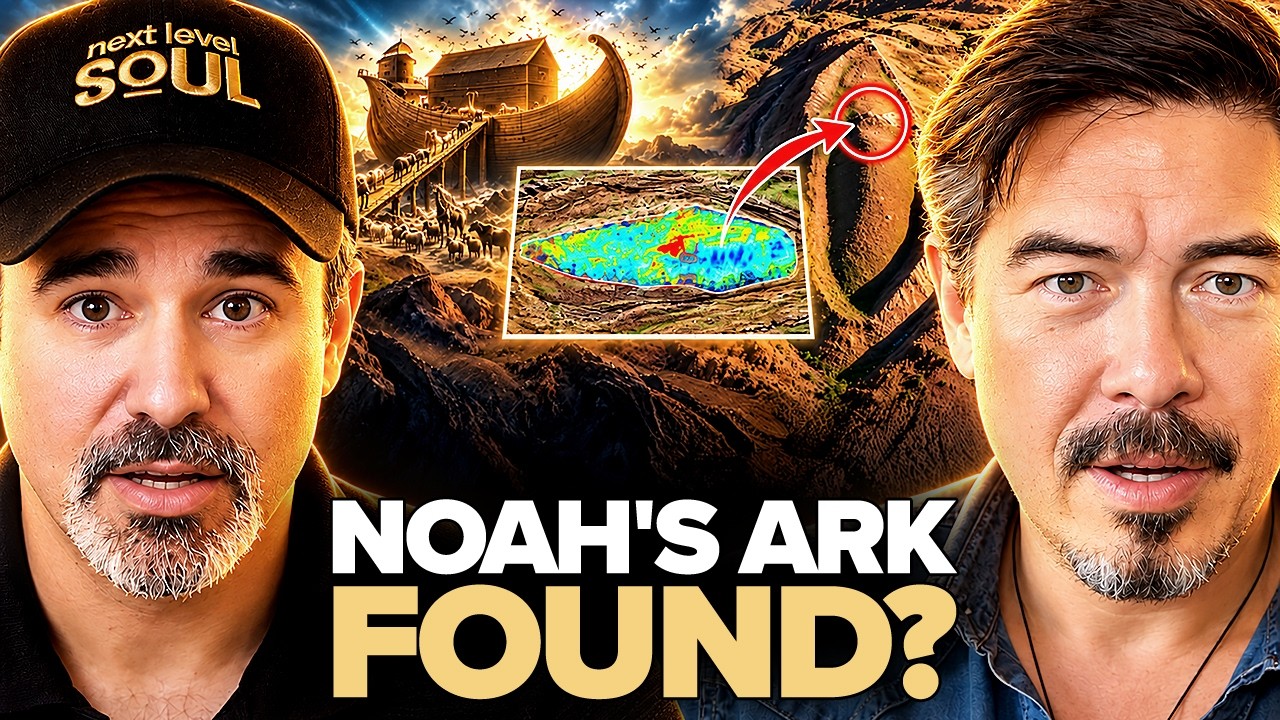
Here is what Robert shared, as his own view:
- He believes the site in Turkey is the Ark, and that its height matches the 30 cubits in Genesis.
- He says core samples showed internal partitions of the kind Genesis describes.
- He argues the cubit in question was most likely the royal Egyptian cubit, which is what produces the matching length.
- He cautioned that surface radioactivity may distort carbon dating, so the true age is not yet known.
- On how the animals could fit, he pointed to the Ark’s three decks, and noted that Noah’s own family was small.
Alex pressed him on the animal question, which is exactly the kind of honest pushback this topic deserves. The conversation also moves through the Book of Enoch, the Watchers and the flood, and what Robert calls humanity remembering its angelic nature. Those parts are his interpretation of the text and tradition, not settled history.
A fair note for readers: as far as published reporting shows, the core results he refers to have not yet been released in a form other researchers can check. That is the single most important thing to watch in 2027. As always, guests’ views and opinions are their own and do not necessarily reflect those of Next Level Soul.
If you want more from Robert, start with Episode 479 on the new world order, Episode 441 on the Giza pyramid discovery and Episode 256 on the pyramids.
What could it mean if it is real? And if it is not?
If the lab results hold up
A verified, dated vessel on a mountain would be among the most consequential archaeological finds in history. It would push scholars to take the flood narrative’s physical footprint seriously, and it would invite new questions about ancient shipbuilding, ancient measurement systems, and what really happened in the region thousands of years ago.
If it turns out to be natural
The story does not shrink. Scholars have long noted that the Genesis flood has older siblings. The Mesopotamian tales of Atrahasis and Utnapishtim feature a flood hero and a boat, and assyriologist Irving Finkel has concluded that the story as we know it originated in ancient Mesopotamia. Humans in many cultures remember a great water and a vessel that carried what mattered through it. You can explore that thread in our guide to the Anunnaki and the ancient texts.
Either way, what is the Ark to a seeker?
A world that has lost its way. One person who listens. A vessel built before the storm arrives, carrying what is worth keeping. That pattern works whether or not a hull is buried in volcanic rock. It asks something very practical of us: what are you building now, and what are you carrying through? The power to answer that is within you. A hillside in Turkey cannot hand it over, and it cannot take it away.
How to read a big “discovery” headline
- Ask what was measured. Radar, soil and pottery are data. “Ship” is an interpretation.
- Ask who is saying it. A university, a peer-reviewed paper, a media interview or a tour operator carry different weight.
- Ask what would change their mind. Good researchers can answer this. Promoters rarely can.
- Hold it lightly and keep listening. You can be curious and careful at the same time.
A short history of Ark searches
| Period | Claim or event |
|---|---|
| Antiquity to Middle Ages | Writers such as Eusebius and Josephus report or cite Ark relics. Searches are described from at least the time of Eusebius (about 275 to 339). |
| 1887 | John Joseph Nouri claims to have found the Ark on the summit of Mount Ararat. |
| 1956 | French industrialist Fernand Navarra publishes a claim of finding Ark wood. |
| 1959 | The Durupınar formation is spotted from the air and begins drawing Ark hunters. |
| 1993 | CBS airs a primetime special, “The Incredible Discovery of Noah’s Ark.” |
| 1996 | Geologists publish a study describing Durupınar as a common natural structure. |
| 2004 | Noah’s Ark Ministries International announces finding Ark parts on Mount Ararat. |
| 2019 to 2025 | Noah’s Ark Scans begins scanning the Durupınar site and reports subsurface patterns. |
| 2026 | Sivas Cumhuriyet University field season, radar, core drilling. Results expected 2027. |
Frequently Asked Questions
Has Noah’s Ark been found?
No. As of late October 2026, researchers have reported radar anomalies, soil samples and pottery near the Durupınar Formation, but none of it has established the site as Noah’s Ark.
Where is the Noah’s Ark site in Turkey?
The Durupınar Formation lies about 29 km (18 miles) south of Mount Ararat, near the town of Doğubayazıt in Ağrı province, close to the Iran border.
Who is behind the 2026 research?
A Sivas Cumhuriyet University team led by archaeologist Cenker Atila, working with the Noah’s Ark Scans group, which has been scanning the site since about 2019.
When will the results be released?
Lab findings are expected in winter 2026 to 2027, and the project says its results will be made public in 2027.
Is the Durupınar formation a natural rock formation?
Most geologists say yes. A 1996 study attributed it to weathered volcanic minerals, mud upwelling and landslides. The research team disagrees and is testing the ground to find out.
How big was Noah’s Ark?
Genesis gives 300 by 50 by 30 cubits. With a royal Egyptian cubit of about 52.4 cm, that is roughly 157 meters long. With a 45 cm cubit it is about 135 meters.
Does the Bible say the Ark landed on Mount Ararat?
Genesis 8:4 says it came to rest on the “mountains of Ararat,” plural. It does not name one peak.
What did Robert Edward Grant say about Noah’s Ark?
In Episode 735 he said he believes the Turkish site is the Ark, pointing to matching height, core-sample partitions and the royal Egyptian cubit. He also cautioned that radioactivity may distort carbon dating.
Are there other flood stories besides Noah’s?
Yes. Mesopotamian texts about Atrahasis and Utnapishtim tell of a flood and a boat, and scholars such as Irving Finkel trace the Genesis story to ancient Mesopotamia.
Why do people keep claiming to find the Ark?
The story is powerful, the region is remote, and every few years new technology offers new images. Claims have appeared since the 1800s, and none has yet passed independent verification.
Keep Going
If stories like this make you want to look deeper at the questions underneath them, that is what we do here. Start with the Next Level Soul Podcast, or watch Robert’s full conversation on Next Level Soul TV.
Sources and Further Reading
- IFLScience, “No, Researchers Haven’t Found Noah’s Ark Near Mount Ararat” (Sept 25, 2026)
- Greek Reporter, “Noah’s Ark Search Uncovers New Pottery Near Mount Ararat” (Sept 23, 2026)
- Greek City Times, “Researchers Drill at Turkey’s Controversial Noah’s Ark Site” (Oct 1, 2026)
- Greek City Times, “Noah’s Ark Mystery Deepens as New Discoveries Emerge” (Sept 24, 2026)
- NewsNation, “Buried remains of Noah’s Ark found, researcher theorizes” (Oct 1, 2026)
- NewsNation, “Noah’s Ark: Researchers claim they may have found it in Turkey”
- Geopop, on the Durupınar core drilling and camera robot (Oct 2, 2026, in Italian)
- Skeptical Inquirer, “The Re-Re-Re-Re-Discovery of Noah’s Ark”
- Wikipedia, “Searches for Noah’s Ark”
- Wikipedia, “Noah’s Ark”
- Next Level Soul Podcast, Episode 735 with Robert Edward Grant