The Human Aura is the early twentieth-century guide to auras, astral colors and thought forms published under the name Swami Panchadasi. It describes the aura as an energy field around every person and explains what its colors are said to mean. This study guide walks through all 10 chapters in plain language, then hands you a workbook to try the ideas on your own life.
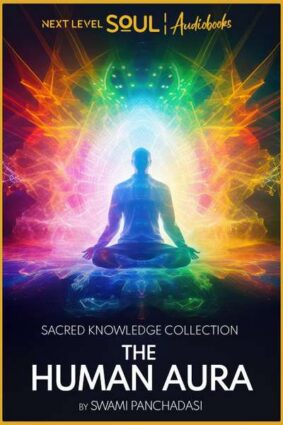
Listen While You Study
The audiobook is available on Next Level Soul TV. Play a chapter, then come back here for the notes and the workbook prompt.
Key Takeaways
- The aura is described as a field around you. The author teaches that every person carries an egg-shaped energy field that reflects who they are.
- Colors are treated as a language. The book says each astral color points to a mood, a quality of thought or a state of health.
- Thoughts are said to take shape. The author describes thought forms as mental energy sent out from the aura, carrying the nature of the thought.
- Your inner state shapes your aura. The teaching is that steady, calm and kind thinking builds a clearer, stronger aura over time.
- Protection is a practice. The final chapters offer mental exercises for shielding yourself and for building your own aura on purpose.
The Book at a Glance
| Detail | What to Know |
|---|---|
| Author | Swami Panchadasi, a pen name attributed to William Walker Atkinson |
| First published | 1912, Yogi Publication Society, Chicago |
| Chapters | 10 |
| Tradition | Esoteric, New Thought and Western occult teaching |
| Audiobook | Available on Next Level Soul TV |
What Is The Human Aura About?
The Human Aura: Astral Colors and Thought Forms is a short instruction book on the aura, the energy field the author says surrounds every living person. It begins with a simple picture of that field, then looks at its layers, its colors, and how it changes with mood and health.
The second half turns practical. The author describes thought forms, the effect of color on daily life, and the idea of auric magnetism. It ends with exercises for building and protecting your own aura. These are the author’s teachings, offered as a system to try and test for yourself.
The Board: 10 Chapters
Each square is a chapter. Tap one to jump to its study notes.
- 1What Is Aura
- 2Prana Aura
- 3Astral Colors
- 4Colors, Cont.
- 5Kaleidoscope
- 6Thought Form
- 7Color Power
- 8Magnetism
- 9Develop Aura
- 10Protection
Chapter-by-Chapter Study Notes
These notes are our own summary, written to help you follow the book. Each one ends with a small practice you can try this week.
What Is the Human Aura
This chapter introduces the basic idea. The author describes the aura as an invisible, egg-shaped field of energy around each person, finer than the physical body and reaching beyond it. He says it carries the stamp of your character and can be sensed by those who develop the faculty. The chapter sets the tone for the whole book: look closely, stay curious, and treat the aura as something that tells a story about the person inside it.
The Prana Aura
Here the author turns to the part of the aura tied to vital force, which he calls prana. He describes it as the layer linked to physical health and energy, and says it can be felt or seen when a person is strong or depleted. The chapter treats vitality as something that shows outward, so that how well you feel and how you look to a sensitive observer are closely connected.
The Astral Colors
This chapter explains how the author reads color in the aura. He teaches that mental and emotional states produce astral colors, and that all the shades grow from a small set of primary colors. The idea is that color is a kind of language: each hue points to a quality of feeling or thought. The chapter gives you the basic key before the next one fills in the detail.
The Astral Colors (Continued)
The second color chapter works through the groups one by one: red, yellow, green, blue, brown, gray, black and white. For each, the author describes what the color and its shades are said to show, from warm and generous feeling to fear, selfishness or calm clarity. Read it as the author’s symbol system, a vocabulary for talking about character rather than a scientific chart.
The Aura Kaleidoscope
This chapter shows the aura as something that moves. The author says its colors shift with mood, with sleep and with sudden emotion, like a kaleidoscope turning. He also describes places and groups of people as carrying a shared atmosphere. The message is that your aura is not fixed. It changes as you change, which is why it is worth paying attention to how you feel through the day.
Thought Form
Here the author describes thought forms: mental energy sent out from the aura that takes a shape matching the thought behind it. He teaches that clear, strong thoughts carry further and that kind or harmful intent is carried with them. Whether or not you accept the picture, the chapter offers a plain lesson, that what you think repeatedly is something you are putting into the world.
Psychic Influence of Color
This chapter looks at color in the world around you. The author argues that the colors in rooms, clothing and surroundings affect mood, health and behavior, and that we respond to them even when we do not notice. He treats color as a quiet influence worth using on purpose. It is a practical bridge between the symbolism of the aura and the choices you make at home.
Auric Magnetism
The author now explains the aura as a store of personal magnetism, the pull and presence a person carries. He describes how a strong aura can steady others, and outlines color-based approaches to healing as taught in his tradition. As elsewhere, these are the author’s claims. The chapter’s steady theme is that a well-kept inner life gives you a calm, noticeable presence.
Developing the Aura
This chapter turns to practice. The author offers ways to strengthen the aura through focused thought, color visualization and honest self-analysis. The core idea is that a clearer aura comes from a clearer mind, built a little at a time through daily attention. It reads like a simple training plan: pick a quality you want, picture its color, and keep returning to it.
The Protective Aura
The final chapter offers methods for protecting yourself. The author teaches that you can picture colored layers of light around the body, mind and feelings, including a white protective circle, to stay steady among harsh or draining influences. Read it as a calming mental exercise. Many readers use the same image as a way to feel settled before a hard day or a crowded room.
Key Ideas in Plain Language
| Idea | What It Means | Chapter |
|---|---|---|
| The aura | An energy field the author says surrounds every person, shaped like an egg and reflecting who they are. | 1, 2 |
| Prana | The vital force the author links to health and energy, shown in one layer of the aura. | 2 |
| Astral colors | A set of colors said to show mood, thought and character, built from a few primary colors. | 3, 4 |
| Shifting aura | The idea that the aura changes with mood, sleep and emotion, and that places and groups carry a shared atmosphere. | 5 |
| Thought forms | Mental energy sent out from the aura that takes a shape matching the thought behind it. | 6 |
| Color influence | The teaching that colors in your surroundings affect mood, health and behavior. | 7 |
| Auric magnetism | Personal presence and pull, described as a store of energy in the aura. | 8 |
| Building the aura | Using focused thought, color visualization and self-analysis to strengthen your aura. | 9 |
| The protective circle | A visualized shield of colored light, including a white circle, for steadiness around others. | 10 |
Who This Book Is For
This guide is for curious beginners who have heard about auras and want a clear map of one early, influential teaching on the subject. It suits readers of New Thought and esoteric writing, anyone drawn to color symbolism, and people who like practical mental exercises. You do not need any background. If you prefer to listen first, the audiobook is on Next Level Soul TV, and this guide can sit beside it as a companion.
A 10-Day Way to Use It
- Days 1 to 3: Read or listen to one chapter a day for Chapters 1 to 3, then do its practice and jot down one line in the workbook.
- Days 4 to 7: Take Chapters 4 to 7, one a day. Use the color and mood check-ins to build a simple daily record.
- Days 8 to 10: Finish with Chapters 8 to 10, and try the building and protection exercises each evening for a few minutes.
- On day 11, reread your notes, mark the practices that felt most useful, and circle the one you want to keep.
Your Workbook
Your answers save on this device as you type. They are not sent anywhere. Use the copy button to move them into your own notes.
Watch More on Next Level Soul TV
Next Level Soul TV brings together full episodes, courses, movies, series and audiobooks, ad-free. Join Next Level Soul TV and keep exploring.
Keep Going
- Aura Colors and Meanings: Layers, Seeing and Cleansing
- Chakras: The Complete Guide to the 7 Energy Centers
- Energy Healing: Practices, History and What the Research Says
Sources and Further Reading
Go Deeper with NLS Mastery: Raising Your Frequency
The author treats the aura as a mirror of your inner state, and that idea runs through the whole book. If you want to take that further, Asil Toksal teaches it in Raising Your Frequency, part of NLS Mastery. Watch the course preview below.

Frequently Asked Questions
What is The Human Aura about?
It is a short instruction book on the aura, an energy field the author says surrounds every person. It covers the aura’s layers, its colors, thought forms, and exercises to build and protect your own aura.
Who wrote The Human Aura and when?
It was published in 1912 by the Yogi Publication Society under the name Swami Panchadasi. That is a pen name attributed to William Walker Atkinson, who wrote under many names.
What kind of book is it?
It belongs to the esoteric and New Thought tradition of early twentieth-century America. It presents its teachings as instruction to try, not as proven science, so we describe its claims as the author’s.
How many chapters does The Human Aura have and what are they?
It has 10 chapters: What Is the Human Aura, The Prana Aura, The Astral Colors, The Astral Colors (Continued), The Aura Kaleidoscope, Thought Form, Psychic Influence of Color, Auric Magnetism, Developing the Aura, and The Protective Aura.
What does the book say astral colors mean?
The author teaches that colors in the aura reflect mood, thought and character, built from a few primary colors. He goes through red, yellow, green, blue, brown, gray, black and white, giving a meaning to each group and its shades.
What is a thought form in this book?
The author describes a thought form as mental energy sent out from the aura that takes a shape matching the thought. He teaches that strong, clear thoughts carry further, which is why he urges care about what we think often.
What does the book teach about protecting your aura?
The final chapter teaches picturing colored layers of light around the body, mind and feelings, including a white protective circle. It is offered as a mental exercise for staying steady around harsh or draining influences.
How can a beginner read The Human Aura?
Go in order, one chapter at a time, and keep notes. Treat the color meanings as a symbol system to explore, and try each small practice before moving on. The first two chapters give the foundation for the rest.
Is The Human Aura hard to read?
It is a short, fairly direct book, but the language is over a century old and some terms, like prana and astral, may be new. Reading with a guide helps, and none of the chapters is long.
How long does it take to get through?
Most people can finish the book in a few sittings. This guide suggests a 10-day plan with one chapter and one small practice a day, which gives the ideas time to settle.
How does this study guide and workbook help?
It gives you a plain-language summary of every chapter, a short list of key ideas, and one small practice per chapter. You can use it before, during or after reading to keep the ideas clear and put them to use.
Where can I listen to The Human Aura, and what should I read next?
The audiobook is available on Next Level Soul TV. For what comes next, try other writing on energy, meditation and the inner life, or revisit the practices here after a week to see what changed.
Spirituality for the Rest of Us™
Movies, teachings and community on Next Level Soul TV.