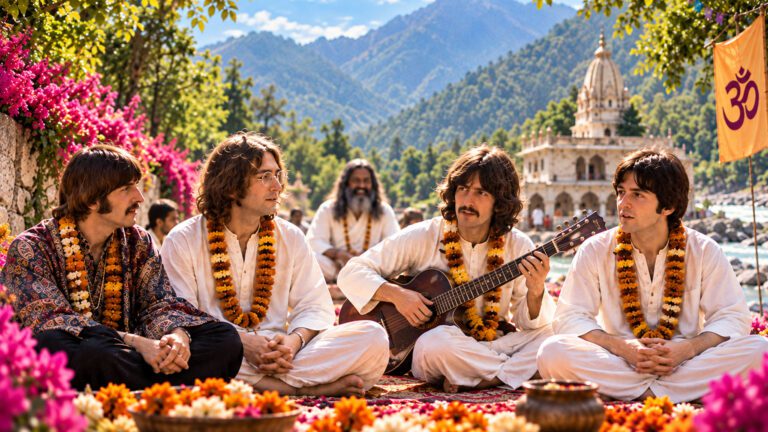
Earthing, also called grounding, is the simple practice of making direct contact with the Earth, barefoot on grass, sand or soil, or indoors through conductive products linked to the ground. This guide covers where the idea came from, how it is said to work, what the research really shows (and does not), how to try it safely, and two films that tell the story.
Key Takeaways
- Earthing and grounding mean the same thing: direct skin contact with the Earth, or a wired connection to it.
- The idea is that the Earth’s surface holds a steady supply of free electrons, and modern life (shoes, floors, buildings) cuts us off from them.
- Published studies report better sleep, stress, pain and recovery, and researchers continue to explore effects on inflammation.
- The free way to start: 20 to 30 minutes barefoot on grass, soil, sand or concrete that is not sealed.
- Indoors, people use grounding sheets, mats, bands and patches that connect to the ground port of a wall outlet.
- Check your outlet, follow product directions, and talk with your doctor if you take medication or have a medical device.
- Two films cover the story: The Earthing Movie and the short film Down to Earth. Both are below.
In This Guide
- What Is Earthing (Grounding)?
- A Short History of Earthing
- How Earthing Works
- What the Research Says
- Reported Benefits of Grounding
- The Earthing Movie and Down to Earth
- Clint Ober on the NLS Podcast
- How to Ground Yourself Outdoors
- How to Ground Indoors
- Choosing a Grounding Product
- Safety and Getting Started Well
- Common Myths and Questions
- Earthing and the Inner Path
- Earthing for Sleep
- Earthing for Your Daily Life
- The Science in More Depth
- Track Your Own Experience
- A Plain English Glossary
- A 7 Day Grounding Practice
- Barefoot Walking and Foot Care
- Making Earthing a Daily Habit
- A Timeline of Earthing
- Earthing and Other Nature Practices
- Questions for Your Doctor
- Common Mistakes to Avoid
- A Grounded Day
- Earthing and Movement
- Earthing When You Travel
- Three Barefoot Meditations
- Keep Exploring on NLS
- Frequently Asked Questions
- Sources and Credits
What Is Earthing (Grounding)?
Maybe you have felt it without a name for it. You kick off your shoes at the end of a long day, step onto cool grass, and something in your body lets go. Your shoulders drop. Your breathing slows. For a minute, the noise of the day gets quieter.
Earthing is the name given to that experience, and to the practice of doing it on purpose. It means making direct contact between your bare skin and the surface of the Earth, or using a conductive system that connects you to the ground. The words grounding and earthing are used interchangeably. Earthing is the term most associated with the work of Clint Ober and the company Earthing.com. Grounding is the plainer word most people search for.
In practice, earthing comes in two forms:
- Outdoor earthing: standing, walking, sitting or lying barefoot on grass, soil, sand, clay or wet ground. Concrete and unsealed brick can also conduct. Asphalt, wood, plastic and most rubber do not.
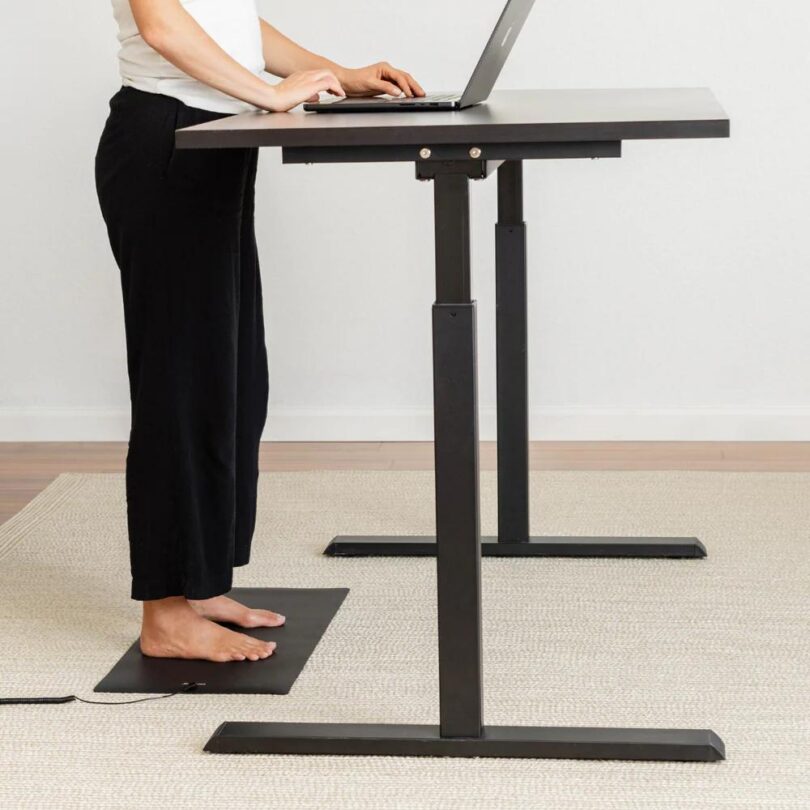
- Indoor earthing: using products such as grounding sheets, mats, bands and patches that connect to the grounding port of a standard wall outlet (or to a ground rod outside) so your skin stays in contact with the Earth’s electrical potential while you sleep, work or relax.
Earthing vs Grounding: Is There a Difference?
No. Earthing and grounding describe the same practice. You may also hear barefoot walking, forest bathing (a different, related practice of time spent among trees), and grounding techniques. That last phrase causes confusion. In therapy, “grounding techniques” usually means mental exercises, like naming five things you can see, to calm anxiety. Those are valuable, but they are not the same as electrical grounding. This guide is about the physical practice of connecting to the Earth.
| Term | What it means | Where you see it |
|---|---|---|
| Earthing | Direct or wired contact with the Earth’s surface | Earthing.com, the book Earthing, The Earthing Movie |
| Grounding | Same practice, the more common search term | Health articles, wellness shops, research papers |
| Barefoot walking | Outdoor earthing without any gear | Parks, beaches, trails |
| Grounding techniques | Mental or breathing exercises for calm and focus | Therapy and mindfulness settings |
| Forest bathing | Slow, mindful time in nature (shoes optional) | Japanese shinrin-yoku and wellness programs |
A Short History of Earthing
Human beings spent almost all of their history in contact with the ground. We slept on the earth, sat on it, walked across it barefoot or in thin hide moccasins. Leather soles conduct a little moisture and charge. Rubber and synthetic soles, which became common only in the last several decades, do not. Raised beds, vinyl flooring and high rise apartments added more layers between us and the ground.
Earthing as a modern idea has a surprisingly practical origin.
Clint Ober and the Cable Industry
Clint Ober spent his career in the cable television and communications industry. In that world, grounding is basic. Equipment is connected to the Earth to stabilize electrical systems and drain unwanted charge, so signals stay clean and people stay safe. As the story is told in his book and in The Earthing Movie, Ober began to wonder in the late 1990s whether the human body, which carries its own tiny electrical signals, might be affected by being separated from the Earth’s natural charge.
He began experimenting on himself, then with others, using conductive patches and sleeping systems. Those early experiments, and the research collaborations that followed with physicians and scientists, led to the term earthing, to the company that became Earthing.com, and to the 2010 book Earthing: The Most Important Health Discovery Ever?, written with cardiologist Dr. Stephen Sinatra and journalist Martin Zucker.
Ober is not a medical researcher by training, and that is part of the story. A practical question from outside medicine, followed by careful experiments and partnerships with physicians and scientists, opened a new way of looking at the body and the Earth.
From Kitchen Table to Documentary
The practice grew slowly through word of mouth. Filmmakers Josh and Rebecca Tickell made a short film called Down to Earth, which later grew into the feature documentary The Earthing Movie: The Remarkable Science of Grounding. Both films are embedded further down this page, along with their trailers.
The oldest wellness practice we have may be the simplest one: take off your shoes and stand on the ground.
How Earthing Works
Here is the idea in plain language, with no jargon you need to memorize.
The Earth Holds a Steady Electrical Charge
The surface of the Earth is electrically conductive and carries a vast, stable reservoir of free electrons. Engineers rely on that every day. When an electrician grounds a building, a radio tower or an airplane on the runway, they are letting excess charge flow into the Earth, which acts as a giant, steady “zero point” for electrical potential.
Your Body Is Also Electrical
Your heart beats because of electrical signals. Your nerves fire electrical impulses. Every cell membrane holds a voltage. Clint Ober likes to say that we are “electrical beings first and chemical beings second,” a line he repeats in his conversation on our podcast. The body is full of electricity, and electricity responds to its surroundings.
Modern Life Insulates Us
Rubber and plastic soles, raised floors, carpets and mattresses all insulate us from the ground. Meanwhile we spend our days surrounded by household wiring, devices and screens that create small electrical fields in the air. A person standing in a room with wiring in the walls can pick up a small voltage on their body, much as an antenna does. A grounded connection gives that charge somewhere to go.
The Three Ideas Behind Earthing
- Equalizing body voltage. When you connect to the Earth, your body potential moves toward the Earth’s potential. Studies report a drop in the voltage measured on the body from ambient electrical fields.
- Free electrons as antioxidants. As set out in the 2012 review in the Journal of Environmental and Public Health, electrons from the Earth can neutralize free radicals (reactive oxygen species), the molecules involved in inflammation.
- Calming the nervous system. Studies report shifts in cortisol patterns, heart rate variability and skin conductance with grounding, along with better sleep and mood.
| Idea | What it means | What research has reported |
|---|---|---|
| Body voltage drops when grounded | Grounding reduces induced voltage from household fields | Measurable drop in body voltage |
| Electrons calm inflammation | Free electrons neutralize reactive oxygen species | Reviews describe an effect on inflammation and recovery |
| Nervous system balance | Grounding supports a calmer stress response | Improvements in cortisol patterns, sleep and mood |
| Blood flow | Grounding may help blood move more freely | Changes in red blood cell behavior consistent with thinner blood |
What the Research Says
Earthing has a growing body of published research, much of it from physicians and scientists working with Clint Ober and the Earthing team. Here are the studies and reviews that come up most often, described plainly.
| Study | What they did | What they reported |
|---|---|---|
| Ghaly and Teplitz, 2004, Journal of Alternative and Complementary Medicine | Adults slept on grounded sheets | More normal cortisol patterns, and improvements in sleep, pain and stress |
| Brown, Chevalier and Hill, 2010 | Studied muscle soreness after exercise | Differences in pain and recovery markers in grounded participants |
| Chevalier, Sinatra, Oschman and Delany, 2013 | Measured red blood cell behavior in 10 healthy adults before and after grounding | Changes consistent with thinner, more freely flowing blood |
| Chevalier, 2015, Psychological Reports | Looked at mood in people who were grounded | Improvements in mood |
| Chevalier, Sinatra, Oschman, Sokal and Sokal, 2012 review | Pulled together the physiology and clinical observations | Set out a framework for how grounding affects inflammation and stress |
| Oschman, Chevalier and Brown, 2015 review | Reviewed grounding, inflammation, wound healing and immune response | Concluded grounding can influence inflammation |
| Menigoz and colleagues, 2020 review | Reviewed research and clinical observations for integrative and lifestyle medicine | Recommended that earthing be part of integrative and lifestyle medicine |
The Common Threads
- Better sleep and more normal cortisol rhythms
- Lower stress and improved mood
- Less pain and soreness, and faster recovery
- A calmer response from the body’s inflammation pathways
- Changes in blood flow and red blood cell behavior
Why Researchers Are Interested
Earthing connects a simple physical fact, that the Earth is a conductor, with the body’s own electrical nature. That is why physicians such as cardiologist Dr. Stephen Sinatra have taken part in the research, and why the work keeps drawing new attention. The Earthing Movie follows many of these researchers and the people who say grounding changed how they feel.
Reported Benefits of Grounding
People who practice earthing describe a handful of changes again and again. Below is what people and researchers report, and what you may notice.
| Reported benefit | What people describe | What research has reported |
|---|---|---|
| Better sleep | Falling asleep more easily, waking less often | Improved sleep and more normal cortisol patterns |
| Lower stress | A calmer baseline, less tension | Lower stress markers and improved mood |
| Less pain and soreness | Easing of aches, quicker feeling of recovery after exercise | Differences in pain and recovery markers |
| Less inflammation | Reduced swelling and redness in some reports and thermal images | Reviews describe an effect on inflammation |
| More energy | Feeling more awake and steady in the day | Widely reported by people who practice earthing |
| Better mood | Feeling lighter and more present | Improved mood in a 2015 study |
| Blood flow | Warmer hands and feet, a sense of better circulation | Changes in blood flow measures in 10 adults |
Sleep and Grounding
Sleep is the benefit people mention most. A few reasons it makes sense to try: you spend about a third of your life in bed, the practice asks nothing of you once it is set up, and a grounded sleep system works quietly while you rest. In the early pilot by Ghaly and Teplitz, people who slept grounded reported improvements in sleep, and their cortisol rhythm moved toward a more typical pattern. Cortisol is the stress hormone that should be higher in the morning and lower at night.
Many people also use blue light filters, a steady bedtime and a dark room alongside grounding. Those habits matter. If you change four things at once, you will not know which one helped, so try adding grounding to a routine that is already steady.
Stress, Mood and a Calmer Nervous System
Standing barefoot outside has a way of slowing us down. The sensation of cool soil or warm sand on your soles pulls attention into the body. That alone can interrupt a loop of worry. Studies also report changes in measures such as heart rate variability. In daily life, the practical result is the same: a few quiet minutes outside, on purpose, tend to feel good.
Pain, Soreness and Recovery
Athletes and people with everyday aches are some of the most curious about grounding. A pilot study on muscle soreness after hard exercise reported differences in pain and recovery markers in grounded participants. Again, the sample was small. If you try grounding for soreness, treat it as a supportive habit next to rest, stretching, hydration and the guidance of your health professional.
Inflammation
This is the claim that gets the most attention and deserves the most care. Reviews by Oschman and colleagues propose that grounding may influence inflammation. Clint Ober describes thermal images in which inflammation looks reduced after about half an hour of grounding. These are interesting observations. They are not a reason to stop any treatment or skip a medical visit. If you live with a chronic or autoimmune condition, bring grounding up with your doctor as one of the things you are curious about.
What You Might Notice in the First Two Weeks
- Falling asleep a little faster, or feeling more rested in the morning
- A softer, steadier mood in the afternoon
- Less tension in the neck and shoulders after a work day
- A greater urge to spend time outside
You may also notice nothing at all. Bodies differ, and a fair trial is two to four weeks of steady practice.
The Earthing Movie and Down to Earth
Two films tell the story of earthing better than any article can. Both are available on Next Level Soul TV, and the trailers are right here.
The Earthing Movie: The Remarkable Science of Grounding
The Earthing Movie is a feature length documentary directed by Josh and Rebecca Tickell. It follows the origin of earthing, the first experiments, and the stories of people who say grounding changed how they feel. It includes voices such as Clint Ober, Deepak Chopra, Amy Smart, Mariel Hemingway, Dr. Stephen Sinatra and Dr. Joseph Mercola, and it points to the research on grounding and inflammation.
Watch the official trailer:
Watch the full film on Next Level Soul TV: The Earthing Movie is available on Next Level Soul TV, along with hundreds of films, series, meditations and conversations to help you awaken and expand.
Down to Earth: The Grounding Film
Down to Earth is the short film that came first, and the story from which the feature documentary grew. It is the quickest way to understand why people are so excited about this simple idea.
Watch the official trailer:
Which Film Should You Watch First?
| If you want | Start with |
|---|---|
| A fast, emotional introduction | Down to Earth |
| The full story, the people and the science | The Earthing Movie |
| A quick taste before you decide | Either trailer above |
Clint Ober on the NLS Podcast
We were honored to sit down with Clint Ober, the man at the center of the earthing story, for Episode 566 of the Next Level Soul Podcast, “Nature’s Way to End Inflammation.” It is a warm, wide ranging conversation about how he got started, why he thinks so many of us feel off in a world of screens and concrete, and what he believes the simplest way back looks like. Watch his most recent interview here:
A few ideas from that conversation that people often remember:
- The ground is a connection point. Ober’s long career in communications taught him that systems work best when they are grounded. He wondered if we do too.
- Start simple. Take your shoes off and stand on the Earth. You do not need to buy anything to begin.
- Indoor tools exist for a reason. Many of us live in cities and work indoors, so there are products that bring a connection to the ground into the home.
- Tune in to experience. People report calmer sleep, less pain and a deeper sense of calm. Pay attention to what you notice in your own life.
You can also find the episode on the Next Level Soul TV app and wherever you listen to podcasts. If you want more conversations about feeling at home in your body, our list of the best spiritual audiobooks is a good next listen.
How to Ground Yourself Outdoors
The oldest method is also the cheapest. If you have a patch of earth within reach, you already have everything you need.
What Surfaces Work
| Surface | Conducts well? | Notes |
|---|---|---|
| Grass and soil | Yes | Damp is better than bone dry |
| Sand | Yes | Wet sand at the water’s edge conducts best |
| Clay and natural stone | Yes | Same rule: moisture helps |
| Concrete and unsealed brick | Usually | Works when it is in contact with the ground and not painted or sealed |
| Asphalt, wood decks, plastic, rubber | No | These insulate you from the Earth |
How to Do It: A Simple Outdoor Practice
Find your spot. A lawn, a park, a backyard, a quiet beach. Make sure the area is clean and safe underfoot.
Take off your shoes and socks. Skin contact is the whole point.
Stand or sit for 20 to 30 minutes. If time is short, even 10 minutes is a fine start.
Breathe slowly and feel your feet. Notice temperature, texture and weight. This pairs well with a simple meditation.
Leave your phone in your pocket. The goal is to be here, with the Earth, for a little while.
How Long and How Often
There is no official dose. Many people aim for 20 to 30 minutes a day, and some do more. Ober describes experiences of noticeable change after about half an hour. In a busy life, a morning coffee on the grass or a short evening walk in bare feet adds up.
Making It Easier
- Keep a pair of easy slip-on shoes by the door so you can step out quickly.
- Take phone calls or video chats barefoot on the porch or lawn.
- Walk on the beach at the water’s edge whenever you travel.
- Do your stretching or meditation outside, even for ten minutes.
- In cold weather, use shorter sessions, and warm up your feet afterward.
Outdoor Safety
- Check the ground for glass, sharp stones, thorns and hot surfaces.
- Avoid lawns recently treated with chemicals.
- If you have diabetes or reduced sensation in your feet, ask your doctor before walking barefoot, and check your feet afterward.
- Never ground yourself during a thunderstorm.
How to Ground Indoors
Not everyone lives near a quiet lawn. If you work in an office, live in a city or deal with long winters, indoor grounding is a practical option. Indoor systems create a conductive path between your skin and the Earth, using the grounding port of a standard wall outlet.
How an Indoor Grounding Product Works
A grounding product has three parts. A conductive surface (a sheet, mat, band, pillowcase or patch) touches your skin. A cord carries the connection. And a plug goes into the ground port of a wall outlet, which is connected to the Earth through your home’s wiring. The plug carries no electricity from the outlet. It only uses the ground connection. This is why a working, properly wired outlet matters, and why testing the outlet is part of setup.
Types of Indoor Grounding Products
| Product type | Best for | How you use it |
|---|---|---|
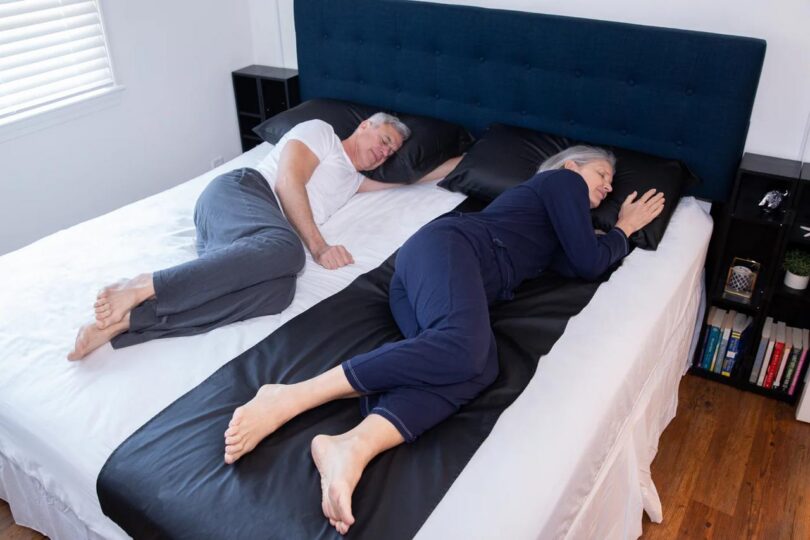
| Grounding sheets and fitted sheets | Sleep | Bare skin touches the sheet while you sleep |
| Grounding pillowcases | Sleep, travel | Face or neck rests on the conductive surface |
| Grounding mats | Desks, floors, couches | Bare feet or hands rest on the mat |
| Wrist and ankle bands | Flexible use during the day | Worn on the skin and connected by cord |
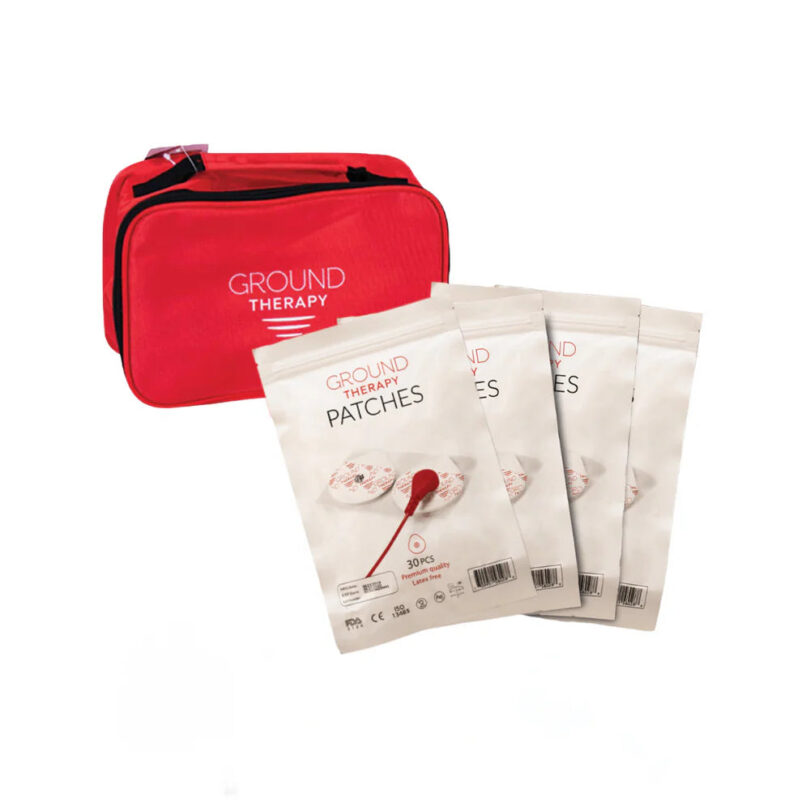
| Patches | Targeted spots, travel | Adhesive patch on skin, connected by cord |
You can browse the full current range, with sizes and details, on Earthing.com. We link to them because we are an affiliate, and because they are the original source of the product category.
How to Set Up an Indoor Grounding System
Test your outlet. Use a simple outlet tester (a few dollars at a hardware store) to confirm the outlet is properly grounded. Many grounding kits include a tester. If the outlet is not grounded, do not use it. Ask an electrician.
Place the product. Put a sheet on your bed, a mat under your desk, or a band on your wrist, as the directions say.
Connect the cord. Plug the cord into the ground port only. Never use it in a standard power slot.
Make skin contact. Conductive products work through bare skin, so avoid thick layers between you and the surface.
Keep going for a few weeks. Give it two to four weeks before you decide how it feels.
Care and Washing
Most grounding fabrics use fine silver or other conductive threads woven into cotton or similar materials. Follow the maker’s washing instructions closely. Harsh detergents, bleach and fabric softeners can affect conductivity, and the product page for each item explains what to avoid.
Choosing a Grounding Product
Start with how you spend your day. The best product is the one you will actually use.
| Your situation | A good first choice | Why |
|---|---|---|
| You want better sleep | A grounding sheet or fitted sheet | You are in bed for hours, and it needs no daily effort |
| You sit at a desk all day | A grounding mat | Your bare feet rest on it while you work |
| You travel often | A pillowcase, patches or a band | Light, easy to pack |
| You are curious but unsure | Free barefoot time first, then a small product | Low cost, low commitment |
| You share a bed | A sheet sized for a part of the bed, or two mats | Each person can choose |
Questions to Ask Before You Buy
- Does the product come with an outlet tester or instructions to test the outlet?
- Is there a return policy or trial period?
- What are the washing instructions?
- Does the product come from a company with a long track record and published research?
- Does the company offer clear instructions and customer support?
See what is available, with current sizes, options and pricing, on Earthing.com.
Prices, bundles and return terms change, so check the current details on the product page before you buy.
Safety and Getting Started Well
Earthing is gentle, and most people try it without any trouble. A responsible guide still needs a clear safety section. Please read this one slowly.
Electrical Safety
- Test the outlet. Use an outlet tester every time you set up in a new place. A grounded outlet is the foundation of safe indoor earthing.
- Use only the ground port. Connect the cord to the ground port and nowhere else.
- Do not use extension cords or damaged cords. Replace a worn cord right away.
- Follow the product directions. Grounding products from reputable makers include built-in resistors and clear instructions. Use them as intended.
- Avoid grounding near water in the home. Do not use a grounding product in the bath or shower, or with wet skin on indoor surfaces near outlets.
- Stay out of storms. Do not ground outdoors or indoors with a cord during a thunderstorm.
- If your home wiring is old or you are not sure about your outlets, ask an electrician to check them.
Health Safety
- A study reported changes in blood viscosity with grounding. If you take blood thinners or have a clotting condition, ask your doctor before starting.
- If you notice any unusual symptoms, such as dizziness, a racing heart or tingling, stop and speak with a health professional.
- Children and older adults can often try barefoot grounding outdoors. For indoor products, an adult should supervise setup.
- Do not stop or change any treatment because of grounding.
A Wellness Practice
Earthing is a wellness practice. It supports how you feel and live, and it works alongside the care you already receive. Keep following your health professional’s advice, and enjoy it as one more simple, natural habit.
Common Myths and Questions
“Is Earthing Only About Feeling Relaxed?”
Relaxation is a lovely part of it. Time outside, barefoot and unhurried, helps anyone feel better. Studies also report measurable changes with grounding, including body voltage, cortisol patterns and blood cell behavior, so there is more going on than a calm moment.
“You Can Ground Through Your Shoes.”
Typically not. Rubber and plastic soles insulate. Leather soles can conduct a little when damp. If you want to ground, bare skin on the Earth, or a conductive product, is what is meant.
“You Can Only Ground on Grass.”
No. Soil, sand, clay and natural stone all work. Concrete can too, when it is in contact with the ground and not sealed. Wet surfaces conduct better than dry ones.
“Grounding Means the Same as Mindfulness Grounding.”
The two are different. A mindful grounding exercise, like feeling your feet on the floor and counting your breaths, can calm anxiety at any time and anywhere. Electrical grounding means physical contact with the Earth. They go well together, and you can do both at once on the grass.
“If I Am Grounded, I Will Never Get Shocked by Static.”
Grounding can reduce static build-up on the body, but it is not a safety shield. Follow normal electrical safety around appliances and outlets.
“Earthing Only Works in Nature, Never Indoors.”
Nothing replaces a long barefoot walk in a green place, for a whole host of reasons. Indoor grounding aims to give you the connection when you cannot get outside, such as during sleep or desk work.
“Grounding Is Part of a Spiritual Belief System.”
You can approach it as a spiritual practice, as a health habit or as simple curiosity. The practice itself does not require any belief.
Earthing in Different Seasons and Places
| Situation | What to try |
|---|---|
| Cold winter | Short outdoor sessions, or an indoor sheet or mat |
| Hot summer | Shaded grass, damp soil or wet sand; protect your feet from hot surfaces |
| Apartment with no yard | A park, a community garden or a grounding mat or sheet |
| Office job | A mat under the desk, plus barefoot lunch breaks on a patch of grass |
| Travel | Beaches, lawns and a light pillowcase or band |
| Rainy days | Damp ground conducts well, so a short barefoot walk after the rain works, as long as there is no lightning |
Earthing With Kids and Pets
Children love being barefoot. Letting them run on the lawn is the easiest, safest form of earthing there is. Many pet owners also notice their dogs and cats choose to lie on the cool ground or the grass. There is no need to buy anything for them. A healthy habit of outdoor time is plenty.
Earthing and the Inner Path
At Next Level Soul, we are all about grounding the profound, so this section keeps its feet on the floor.
Many spiritual traditions talk about being rooted. Teachers of meditation often begin with the feet, with the weight of the body, with the breath moving through the belly. Walking meditation is a practice in many lineages. Indigenous peoples around the world describe the land as a living relative and the soil as medicine. You do not have to adopt any one belief to feel the common thread: the more rooted we are, the more freely we can reach.
That is why earthing fits so naturally with the work we love to share. Spiritual practice can float. We can get lost in ideas, in searching, in screens. Standing on the ground brings us back to the one place we are always living, which is the body, and the present moment.
Three Ways to Pair Earthing With Your Practice
- Meditate barefoot outdoors. Sit on the grass or a blanket with bare skin touching the ground. Ten minutes is enough. If you want a gentle guide, try our chakra meditation and begin with the root.
- Take a mindful barefoot walk. Walk slowly. Feel each step, heel to toe. Let your attention rest in the soles of your feet.
- Listen while you ground. Put on an audiobook or an episode and sit on the grass. Our audio courses and spiritual audiobooks are made for exactly this kind of unhurried listening.
The power is within you. Earthing does not hand you that power. It helps you slow down enough to notice it, and it invites you to feel at home in your body again.
Earthing for Sleep: A Practical Guide
If sleep is the reason you are here, this section is for you. Here is a gentle way to build a grounded evening.
A Simple Grounded Sleep Routine
- Get outside in the early evening. Ten to twenty minutes barefoot on the lawn, even in dim light, helps your body wind down.
- Dim the lights an hour before bed. Lower light tells your body that night is coming.
- Set the phone aside. Put it in another room if you can.
- Use your grounded sheet. Make sure the cord is connected to a tested outlet and that your skin touches the surface.
- Listen or breathe. A slow guided meditation or a few rounds of long exhales helps the body let go.
Tips if You Are Using a Grounding Sheet
- Sleep with as much bare skin touching the sheet as is comfortable.
- Place the cord so it will not catch your feet if you get up at night.
- Keep the cord clear of pets and young children.
- Give it a month. Sleep habits take time to change.
- Wash according to the instructions so the fabric keeps working.
What to Do if You Are Not Sleeping Better
Do not worry. Grounding is one piece of sleep health, and sleep problems have many causes, including stress, caffeine, an irregular schedule, pain, breathing issues and medication. If sleep troubles are lasting or severe, speak with your doctor. Grounding can be a gentle companion, but it is no substitute for finding the root cause.
Earthing for Your Daily Life
For Desk Workers
Long hours in front of a screen can leave us tense, tired and disconnected from our bodies. A grounding mat under the desk lets your bare feet rest on a conductive surface while you work. Pair it with a standing desk if you have one, and take a few barefoot minutes outdoors at lunch. Breaks like these are good for anyone, with or without a mat.
For Athletes and Active People
Recovery is where athletes are curious about earthing. A study on delayed onset muscle soreness reported differences in pain and recovery markers. If you try grounding after training, treat it as one part of a recovery plan that includes sleep, good food, hydration and rest days.
For People Under Stress
If you carry a lot, a short barefoot practice can serve as a daily reset. Stand on the grass. Take five slow breaths. Name three things you can hear. When you feel steadier, let that be enough for now. For deeper support with stress and the nervous system, our free training on stress and detox with Marisa Liza Pell is a thoughtful place to continue.
For Older Adults
Many older adults enjoy the calm of sitting barefoot in the garden. Make sure the ground is even and free of hazards, wear footwear when walking on uneven terrain, and talk with a doctor about any health conditions before starting. A grounding mat under the feet while sitting in a favorite chair can be a comfortable option.
For Families
Turn it into a ritual. A barefoot evening walk after dinner, a weekend picnic on the grass, a beach day with no shoes. Children benefit from outdoor time on its own merits, and shared routines are a gift.
The Science in a Little More Depth
If you like to understand the mechanism, this short section takes you one level deeper without getting lost in the weeds.
Conductivity: Why Some Surfaces Work
A material conducts electricity if charge can move through it easily. Metals conduct. Moist soil conducts because water contains dissolved minerals. The human body conducts too, because it is mostly water with dissolved salts. Rubber and many plastics do not, which is why they are used to insulate wires and the soles of work boots. That is the simple physics behind the idea that rubber shoes cut off a connection that bare feet or leather soles might keep.
Body Voltage
Household wiring creates alternating electrical fields in a room. A person standing in that room can pick up a small induced voltage on their body, which instruments can measure. When the person is grounded, the measured voltage on the body drops sharply. This part of earthing is straightforward physics. What is less clear is whether that drop means anything for health.
Free Electrons and Reactive Oxygen Species
Inflammation in the body involves reactive oxygen species, sometimes called free radicals. These molecules are missing an electron, which makes them reactive. The proposal in the earthing literature is that electrons absorbed from the Earth could give those molecules what they lack and calm the reaction. It is a simple idea with a clear physical basis.
Red Blood Cells and Flow
Red blood cells carry a slight negative surface charge, called zeta potential, which keeps them from clumping together. A study reported that grounding increased this surface charge in ten healthy adults, which would be consistent with blood that flows more freely. Because blood flow may change, we advise talking with a doctor first if you take blood thinners.
The Nervous System and Cortisol
Cortisol follows a daily rhythm. In healthy people it is higher in the morning and lower at night. Chronic stress can flatten that rhythm. The early sleep study reported cortisol patterns moving toward normal in grounded participants.
How to Track Your Own Experience
Because the research is early, your own experience matters. A simple log makes it easy to see what is really happening.
| What to note | How | When |
|---|---|---|
| Sleep quality | Rate 1 to 10 each morning | Daily |
| Stress level | Rate 1 to 10 in the evening | Daily |
| Aches or tension | Note the area and the level | Daily |
| Energy | Rate mid afternoon | Daily |
| Grounding time | Minutes outdoors and nights grounded | Daily |
Keep a two week baseline before you start, if you can. Then practice for four weeks. Compare. If you notice a pattern, great. If you do not, that is useful too.
A Plain English Glossary
| Word | What it means here |
|---|---|
| Earthing | Direct or wired contact with the Earth’s surface |
| Grounding | Another word for earthing |
| Conductive | Allows electrical charge to move through easily |
| Insulator | A material that blocks electrical charge, such as rubber |
| Free electrons | Electrons that can move freely within a conductor, including the Earth’s surface |
| Free radicals | Reactive molecules involved in inflammation and aging |
| Antioxidant | A substance that can calm free radicals |
| Cortisol | A hormone involved in the stress response |
| Zeta potential | The surface charge on cells that keeps them from sticking together |
| Ground port | The round hole on a three-prong outlet that connects to the Earth |
| Outlet tester | A small device that checks whether an outlet is wired and grounded correctly |
A 7 Day Grounding Practice
Want a gentle way to begin? Try this one week plan. Each day takes about twenty minutes or less.
| Day | Practice | Time |
|---|---|---|
| Day 1 | Stand barefoot on grass and breathe. Notice how your feet feel. | 10 minutes |
| Day 2 | Take a slow barefoot walk. Feel heel to toe. | 15 minutes |
| Day 3 | Drink your morning tea or coffee outdoors with bare feet. | 20 minutes |
| Day 4 | Sit on the ground and meditate with your hands resting on the earth. | 15 minutes |
| Day 5 | Watch the Earthing Movie trailer and the Down to Earth trailer, and reflect on what stands out. | 10 minutes |
| Day 6 | Take a phone call or listen to a podcast episode outside, barefoot. | 20 minutes |
| Day 7 | Review your notes. What did you notice? What will you keep? | 10 minutes |
At the end of the week, decide your next step. For some people, that means more barefoot time. For others, it means trying an indoor system. Either way, you will know a little more about how your body feels when it spends time with the Earth.
Barefoot Walking: Care for Your Feet
If you are going to spend more time barefoot, your feet deserve some attention. Modern shoes protect and also weaken the small muscles of the foot, so ease in gently.
Start Gradually
Begin with short sessions on soft ground such as grass or sand. As your feet adapt, extend the time and try varied surfaces. Skin on the soles toughens naturally, and the muscles of the arch and toes get stronger.
Simple Foot Exercises
Toe spreading. Spread your toes wide and hold for five seconds. Repeat ten times.
Short foot. Gently draw the ball of the foot toward the heel without curling the toes, lifting the arch. Hold for five seconds.
Towel scrunch. Sit down, place a small towel on the floor and pull it toward you with your toes.
Ball roll. Roll the sole of your foot over a tennis ball for a minute each side.
Check and Care
- Look over your feet after barefoot time for cuts, splinters or irritation.
- Wash and dry them, and moisturize if the skin is dry.
- If you have diabetes, circulation problems or numbness, talk with your doctor before going barefoot.
- Stop if anything hurts, and return to shoes when you need to.
Making Earthing a Daily Habit
The best practice is the one you keep. A few small tricks help it stick.
Stack It With Something You Already Do
Pair earthing with a daily habit. Your morning coffee on the porch. The first phone call of the day. The ten minutes after dinner. When it rides along with an existing routine, it takes no extra willpower.
Make It Easy
Leave your shoes by the door. Keep a small towel for wiping your feet. Put a mat under your desk where you will see it. The less friction, the more often you will do it.
Make It Pleasant
Choose a spot you love. A shady corner of the garden, a bench in the park, a quiet beach. Bring a cup of tea or a favorite episode. If it feels like a gift, you will return to it.
Share It
Invite a friend or a family member. Barefoot walks are a lovely way to talk. Shared habits last longer, and connection matters as much as anything else on this page.
Be Kind to Yourself
Some days it will rain. Some weeks will be busy. That is fine. There is no streak to protect. Come back to it whenever you can, and let it be something you want, not something you have to do.
Why This Simple Idea Resonates
There is a reason a story about taking off your shoes has traveled so far. Many of us feel the strain of a life lived in rooms, in vehicles and on screens. We sense something is missing, and we cannot always name it. Earthing offers a small, concrete answer: go outside, touch the ground, slow down.
You do not need to agree with every claim to benefit from the invitation. You can be curious and open at the same time. You can read the studies, watch the films, test it for a few weeks and trust what you learn. That is the spirit of a grounded path: no pressure, no pretending, just your own experience, with the Earth under your feet.
If you try it, we would love to hear how it goes. Share what you notice with the Next Level Soul community, and keep exploring the teachers and practices that help you remember who you already are.
A Timeline of Earthing
| When | What happened |
|---|---|
| For most of human history | People live in constant contact with the ground, barefoot or in thin natural footwear |
| Late 1990s | Clint Ober begins experimenting with the idea of connecting the body to the Earth |
| 2004 | Ghaly and Teplitz publish a study on sleep, cortisol, pain and stress in grounded adults |
| 2010 | The book Earthing by Ober, Sinatra and Zucker is published; a study on muscle soreness appears |
| 2012 | A review in the Journal of Environmental and Public Health sets out the framework for how grounding may work |
| 2013 | A study reports changes in red blood cell behavior with grounding |
| 2015 | Further reviews and a study on mood are published |
| 2019 onward | The Earthing Movie reaches a wide audience, based on the earlier short film Down to Earth |
| 2020 | A review calls for earthing to be part of integrative and lifestyle medicine research |
Earthing Compared With Other Nature Practices
Time in nature is good for us in many ways, and earthing is one of several practices that share a common spirit. Here is how they compare so you can mix and match.
| Practice | What you do | What is special about it |
|---|---|---|
| Earthing (grounding) | Make skin contact with the Earth, or a wired connection | Focuses on direct electrical contact with the ground |
| Forest bathing | Walk slowly among trees, using all your senses | Researched for stress, mood and attention |
| Walking meditation | Walk slowly with attention on each step | Combines movement and mindfulness |
| Sun gazing and morning light | Get daylight early in the day | Supports body clock and mood |
| Gardening | Touch soil, plant and tend | Combines movement, nature and purpose |
| Cold water swimming | Brief, safe dips in natural water | An invigorating shock for some; not for everyone |
The easiest combination: a barefoot walk in a park with trees, in morning light, with your phone in your pocket. That is earthing, forest bathing, a walking meditation and a daylight break all in one.
Questions to Bring to Your Doctor
If you have health concerns, bring this short list to your next appointment. You are the expert on your own life, and a good doctor will respect your curiosity.
- I am interested in trying earthing (grounding). Is there any reason it would not be safe for me?
- Do any of my medications make it a concern, especially if one is a blood thinner?
- I have a medical device. Is it fine to use a grounding product near it?
- If I try it, what changes should I watch for and report?
- Are there other low risk habits you would suggest for my sleep, stress or pain?
Common Mistakes to Avoid
- Skipping the outlet test. This is the most important step for indoor systems.
- Wearing socks on the mat. Conductive products need skin contact.
- Using fabric softener on grounding sheets. It can coat the fibers and reduce conductivity.
- Expecting overnight results. Give it a few weeks.
- Changing everything at once. Add grounding to a steady routine so you can see what helps.
- Stopping medical care. Grounding is a supportive habit, not a treatment.
A Grounded Day: Morning to Night
Earthing fits into the day you already have. Here is one way to weave it through, from the first light of morning to the last light of night. Take what you like and leave the rest.
| Time of day | Earthing practice | How it feels |
|---|---|---|
| Morning | Five to ten minutes barefoot on the grass with your first cup of tea or coffee | A gentle, awake start before the day’s noise begins |
| Midday | A barefoot lunch break, or bare feet on a grounding mat at your desk | A reset for the shoulders, neck and mind |
| Afternoon | A short walk in the park, shoes in hand | Fresh energy for the second half of the day |
| Evening | A slow barefoot stroll or time on the porch after dinner | A natural wind down |
| Night | Sleeping on a grounding sheet | Quiet, steady rest |
Morning: Begin Rooted
Step outside before you pick up your phone. Stand on the grass and take a few slow breaths. Notice the temperature of the ground, the sounds around you, the light. This takes five minutes and sets a calm tone for everything that follows. If it is cold or wet, stand on a damp patio or step out for just two minutes and come back in.
Midday: Reset at Work
Long stretches at a desk have a way of tightening the body and narrowing the mind. A grounding mat under your desk keeps your bare feet in contact while you type, take calls or read. Add a barefoot walk on a patch of grass at lunch, and you have given yourself two small gifts without leaving your schedule.
Evening: Wind Down
After dinner, step outside again. A barefoot stroll, a seat on the porch, a few minutes in the garden. Let the light fade and the day settle. Many people find this the easiest habit to keep, because it feels like a reward.
Night: Sleep Grounded
Once your sleep system is set up, it takes no effort at all. You simply go to bed. People describe waking up feeling more rested and more at ease, and it is the part of the practice that works while you are doing nothing.
Earthing and Movement
Earthing pairs beautifully with gentle movement. When your bare feet meet the ground, you get extra feedback from the soles, the ankles and the arches, and many people feel steadier and more present.
- Walking. A barefoot walk on soft grass or sand is the classic. Walk slowly and feel each step from heel to toe.
- Yoga and stretching. Practice on the lawn or on a blanket where your hands and feet touch the ground. Standing poses feel especially rooted outdoors.
- Tai chi and qigong. These slow practices have long emphasized the connection between the feet and the Earth. Doing them barefoot outside is a natural fit.
- Light jogging or playing. On a soft, clean field, running barefoot is playful and strengthening. Start slowly and build up.
- Gardening. Working with the soil, barefoot or with bare hands, combines movement, nature and a sense of purpose.
Earthing When You Travel
Travel is a perfect time to reconnect. New places invite new habits, and long flights and hotel rooms are exactly the kind of insulated spaces where we can use a little grounding.
- Beaches and parks. Walk barefoot at the water’s edge as soon as you arrive. Wet sand is one of the best surfaces.
- Light gear. A grounding pillowcase, band or patch is easy to pack and brings the practice into a hotel room.
- Test hotel outlets. Bring a small outlet tester. Many modern hotels have properly grounded outlets, and a quick check gives you confidence.
- After a long flight. A short barefoot walk on the grass can help you feel settled in a new place.
Three Barefoot Meditations to Try
1. The Root Breath (5 minutes)
Stand barefoot with your feet hip width apart and your knees soft.
Breathe in slowly through the nose and imagine drawing the breath up from the ground through your feet.
Breathe out slowly and imagine sending tension down through your legs and into the Earth.
Repeat for five minutes, letting your shoulders drop with each breath.
2. The Sit and Listen (10 minutes)
Sit on the ground or a low chair with your bare feet on the earth.
Close your eyes and listen. Name three sounds near you, three further away, and the quietest sound you can find.
Rest your hands on your knees and simply be there until the timer ends.
3. The Gratitude Walk (15 minutes)
Walk slowly barefoot on a safe patch of grass.
With each step, silently name one thing you are grateful for.
When you reach the end of your path, pause, breathe and thank the ground beneath you.
If you would like guided support, our chakra meditation guide and the audio courses are lovely companions for time outside.
Keep Exploring on Next Level Soul
If this guide sparked your curiosity, here are a few good places to go next:
- Podcast Episode 566 with Clint Ober, on nature, inflammation and the simplest way to feel connected
- Next Level Soul audio courses, for gentle, narrated learning you can take outside
- Free masterclasses, to explore new teachers with no cost and no pressure
- Next Level Soul TV, our home for films, series, meditations and conversations that help you awaken and expand
Frequently Asked Questions
What Is Earthing?
What Is the Difference Between Earthing and Grounding?
Does Earthing Really Work?
What Are the Benefits of Grounding?
How Long Should I Ground Each Day?
How Do I Ground Myself at Home?
Can I Ground Through Concrete?
Does Grounding Work Through Shoes?
Is It Safe to Use a Grounding Sheet or Mat?
Who Should Not Try Earthing?
Is Earthing a Medical Treatment?
What Are the Best Surfaces for Barefoot Grounding?
Can I Ground in Winter?
What Is The Earthing Movie?
What Is Down to Earth?
Where Can I Buy Grounding Products?
Is Earthing a Spiritual Practice?
Sources and Credits
- Chevalier G, Sinatra ST, Oschman JL, Sokal K, Sokal P. Earthing: Health Implications of Reconnecting the Human Body to the Earth’s Surface Electrons. Journal of Environmental and Public Health, 2012.
- Ghaly M, Teplitz D. The biologic effects of grounding the human body during sleep as measured by cortisol levels and subjective reporting of sleep, pain, and stress. Journal of Alternative and Complementary Medicine, 2004.
- Chevalier G, Sinatra ST, Oschman JL, Delany RM. Earthing (grounding) the human body reduces blood viscosity, a major factor in cardiovascular disease. Journal of Alternative and Complementary Medicine, 2013.
- Brown R, Chevalier G, Hill M. Pilot study on the effect of grounding on delayed onset muscle soreness. Journal of Alternative and Complementary Medicine, 2010.
- Oschman JL, Chevalier G, Brown R. The effects of grounding (earthing) on inflammation, the immune response, wound healing, and prevention and treatment of chronic inflammatory and autoimmune diseases. Journal of Inflammation Research, 2015.
- Chevalier G. The effect of grounding the human body on mood. Psychological Reports, 2015.
- Menigoz W, Latz TT, Ely RA, Kamei C, Melvin G, Sinatra D. Integrative and lifestyle medicine strategies should include Earthing (grounding): review of research evidence and clinical observations. Explore, 2020.
- Ober C, Sinatra ST, Zucker M. Earthing: The Most Important Health Discovery Ever? Basic Health Publications, 2010.
- Josh and Rebecca Tickell. The Earthing Movie: The Remarkable Science of Grounding and Down to Earth, trailers via the Next Level Soul TV YouTube channel.
- Photographs of grounding products courtesy of Earthing.com. Next Level Soul is an Earthing.com affiliate.
- Next Level Soul Podcast, Episode 566, Nature’s Way to End Inflammation with Clint Ober.
This guide is for education and inspiration. It is not medical advice and does not diagnose, treat or cure any condition. Please talk with a qualified health professional about your own situation.
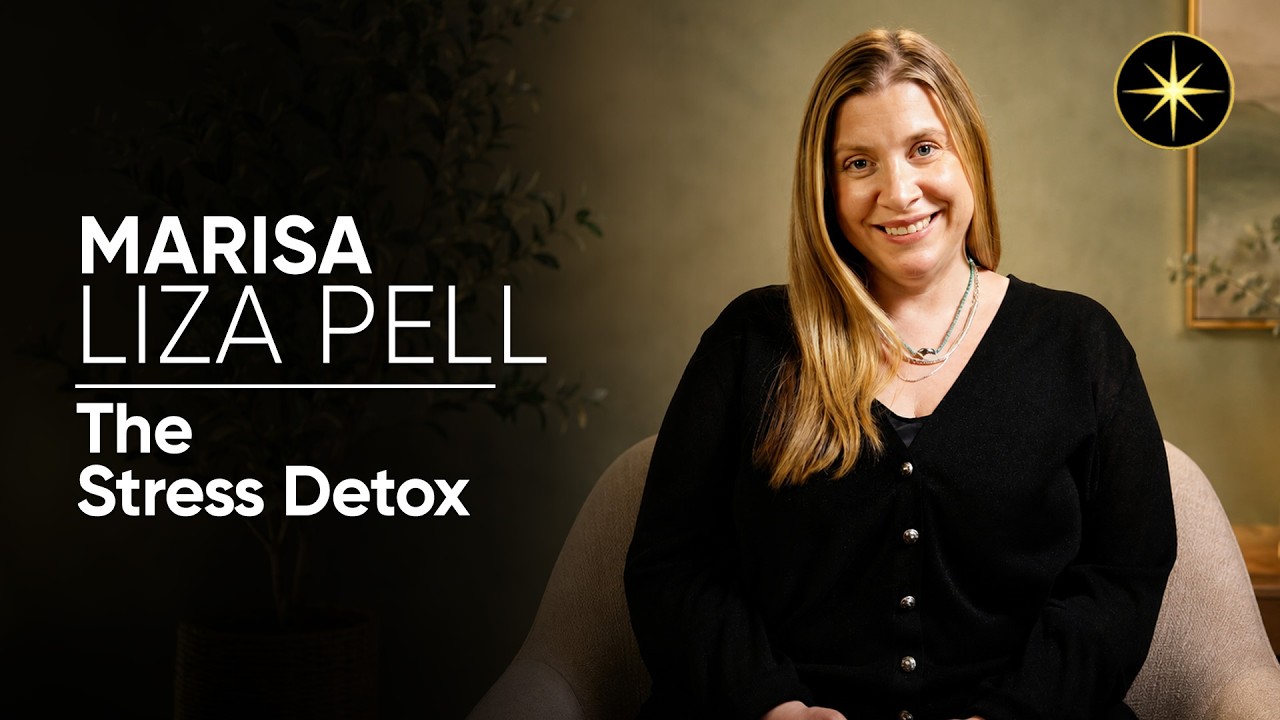
Go Deeper: The Stress Detox with Marisa Liza Pell
Grounding calms the body, and the nervous system is where that peace is held. Marisa Liza Pell teaches how to return to that calm in her Next Level Soul Mastery course.
In this exclusive NLS Mastery course, Marisa Liza Pell guides you through her signature Frequency Upgrade Framework, helping you clear the noise that’s kept you disconnected from your own energy. Each lesson builds on the last, moving you from awareness into action, from what you consume and speak into what you protect and regulate. By the end, you’re not just informed, you’re embodied, grounded enough in your own nervous system to finally hear yourself again.
What you will walk away with
- Notice what drains you
- Turn down the noise
- Protect your peace
- Return to safety within
6 lessons, part of Next Level Soul Mastery, our collection of in-depth courses.
Ready to Take the Next Step on Your Path?
Go barefoot this week. Watch the film. Then explore more teachers, films and practices that help you awaken, heal and expand.