Success, comfort and a full calendar can still leave a quiet question behind them. Finding Happiness takes that question to Ananda, a community built on the teachings of Paramahansa Yogananda. This guide looks at the film, the community and the simple practices that point toward joy.
Key Takeaways
- The film: Finding Happiness, a 1 hour 35 minute docu-drama, is available on Next Level Soul.
- The place: Ananda, founded by Swami Kriyananda in 1968 near Nevada City, California.
- The teacher: Paramahansa Yogananda, who taught that joy is a quality of the soul.
- The practice: daily meditation, service and a community that supports both.
- Try it: five quiet minutes tomorrow morning.
In This Guide
- The Film: Finding Happiness
- The Question Behind the Film
- What Is Ananda?
- Swami Kriyananda: The Founder
- Paramahansa Yogananda in Brief
- Happiness as Something You Cultivate
- Meditation: The Daily Practice
- Service: Joy That Looks Outward
- Why Community Holds a Practice
- How to Watch It Well
- Books and Further Reading
- Sources and Further Research
- Frequently Asked Questions
The Film: Finding Happiness
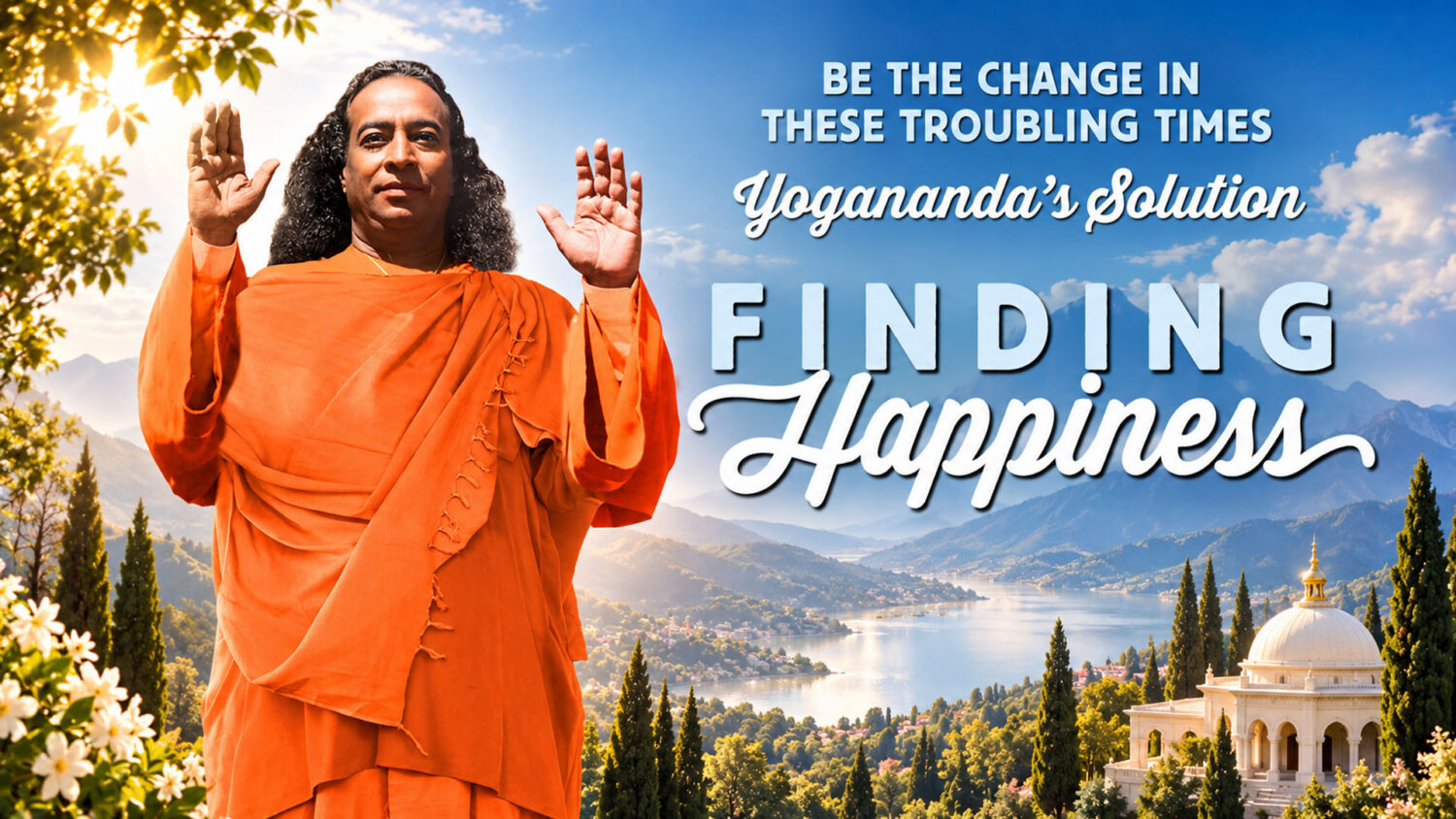
Finding Happiness is a 1 hour 35 minute docu-drama set in Ananda, a spiritual community in Northern California built on the teachings of Paramahansa Yogananda. Actress Elisabeth Rohm plays a reporter sent to write about Ananda as an alternative to the greed and loneliness she sees around her. We follow her as she explores the community and talks with the people who live there, and the film mixes actors with real residents.
It is available on Next Level Soul, and the trailer below is a good place to start.

- Runtime: 1 hour 35 minutes.
- The setting: Ananda, a community of meditators, families and volunteers in Northern California.
- The themes: meditation, inner joy, service and a sense of divine connection.
- Who it is for: anyone curious about meditation, yoga philosophy or intentional community, and anyone who has quietly wondered whether happiness is something you can learn.
Watch Finding Happiness on Next Level Soul. Then come back for the story behind it.
The Question Behind the Film
Where do you go when success, comfort and a full calendar still leave you asking whether this is all there is?
That is the question the reporter carries into Ananda. She arrives as a professional observer, with a notebook and a deadline. What the film asks us to notice is what happens to an observer who stays long enough to listen.
It is a gentle way into a very old idea: that happiness is less a prize at the end of achievement and more a quality of the soul we can learn to recognize. Yogananda taught exactly this, and the community in the film is an attempt to live it together, day by day.
What Is Ananda?
The word ananda is Sanskrit for bliss or joy. The Ananda movement was founded by Swami Kriyananda, born James Donald Walters, and its first community, Ananda Village, was established in 1968 near Nevada City, California.
The idea behind it comes from Yogananda himself, who dreamed of what he called World Brotherhood Colonies: places where people could live simply, meditate daily and support one another on the spiritual path. Ananda grew from that vision into a network of communities, teaching centers and retreats.
Near Nevada City you will also find The Expanding Light, a retreat center where visitors can try yoga and meditation for a few days. For many people, a retreat like that is their first taste of what the film shows.
Swami Kriyananda: The Founder
Kriyananda was born in 1926 in Teleajen, Romania, and met Paramahansa Yogananda in Los Angeles in 1948, at the age of 22. He became Yogananda’s direct disciple, and was later given the name Kriyananda.
He went on to write dozens of books and many songs, and to teach meditation to students around the world. He died in Assisi, Italy, in 2013. In the film he appears in a short scene, blessing the reporter before she leaves.
His life is a reminder that most communities begin with one person who takes a teaching seriously enough to build something around it.
Paramahansa Yogananda in Brief
Yogananda was a yogi and teacher who brought meditation and Kriya Yoga to a wide Western audience. His book Autobiography of a Yogi remains a classic of spiritual literature, read by seekers of every background.
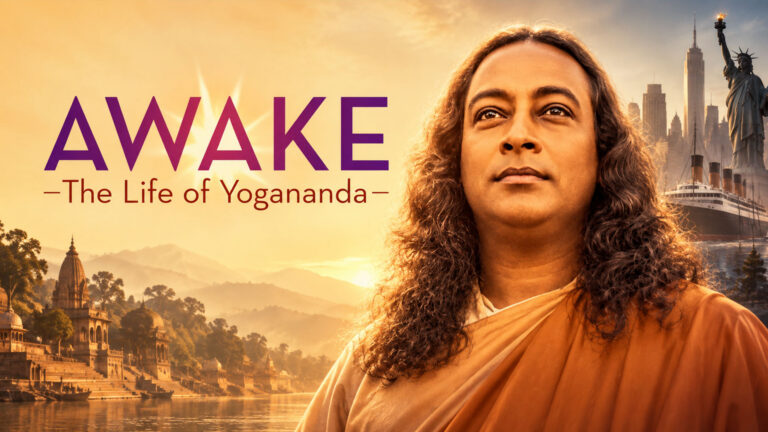
If his story draws you in, our full guide to his life and teachings goes much deeper. Our film Awake: The Life of Yogananda tells his story on screen, and makes a natural companion to Finding Happiness. For the meditation side of his path, see our guide to Kriya Yoga meditation.
Happiness as Something You Cultivate
Most of us were taught that happiness arrives when conditions line up: the right job, the right relationship, the right amount of rest. The teaching behind the film turns that around.
Yogananda taught that joy is already present within us, and that daily practice clears away what hides it. In that view, happiness is not earned. It is remembered.
This is a grounded idea, not a floating one. You do not have to believe anything to test it. You only have to sit quietly for a few minutes and notice what is there when the noise settles.
It also fits what many seekers describe in their own lives. The moments of deepest contentment tend to arrive when nothing is being achieved: a quiet morning, a kind conversation, a walk with no destination.
Meditation: The Daily Practice
Every teaching in the film rests on one habit: sitting down to meditate. Not once, in a retreat, but regularly, in an ordinary life.
Here is a simple way to begin, in the spirit of the film:
- Choose a time. Morning works well, before the day makes its demands.
- Sit comfortably. A chair is fine. Keep your spine upright and your shoulders relaxed.
- Follow your breath. Notice it coming in and going out, without trying to change it.
- Return gently. When your mind wanders, bring it back. The returning is the practice.
- End slowly. Sit for a moment before you reach for your phone.
Five minutes is enough to start. A short practice done daily tends to teach more than a long one done once. If you would like more guidance, our guide to spiritual enlightenment offers wider context for the path.
Service: Joy That Looks Outward
One of the quieter threads in the film is service. People at Ananda give their time to one another and to the wider world, and they do it without a scorecard.
There is something worth noticing here. Many people find that joy shows up most reliably when attention leaves the self for a while. Helping someone move house, cooking for a neighbor or listening without fixing can do what hours of self-analysis cannot.
You do not need a community to try this. Choose one small act of service this week and do it without being asked.
Why Community Holds a Practice
Practicing alone is possible, and plenty of people do it well. Yet on the days when motivation fades, the presence of others can carry you.
That is the heart of the Ananda idea: shared intention makes a practice easier to sustain. Meals, work, music and meditation are all part of one rhythm, so the spiritual life is not something you fit in around everything else.
Most of us will not move into a spiritual village. We can, though, borrow the principle. A weekly meditation with a friend, a book circle or an online gathering gives your practice the same steadying effect.
How to Watch It Well
Give the film a quiet evening. When it ends, sit for a minute before doing anything else, and notice what state you are in.
Keep a notebook nearby, and consider these questions:
- When have I felt a joy that did not depend on circumstances?
- What small act of service could I do this week?
- What would five minutes of daily stillness look like in my real schedule?
- Who could I practice with?
If you are noticing changes in how you see yourself and the world, our guide to spiritual awakening signs may help you make sense of them. And if you want to connect your practice to your daily choices, living with purpose is a good next read.
Books and Further Reading
Yogananda’s own words are the best doorway into the teaching behind the film:
- Autobiography of a Yogi. Yogananda’s classic account of his life and his meeting with teachers across India.
For more guides to spiritual books, see our best spiritual books list.
Sources and Further Research
Frequently Asked Questions
What is Finding Happiness about?
It is a docu-drama in which actress Elisabeth Rohm plays a reporter who explores Ananda, a community built on the teachings of Paramahansa Yogananda, and meets the people who live there. It looks at meditation, inner joy, service and divine connection.
How long is Finding Happiness?
The film runs 1 hour and 35 minutes.
Where can I watch Finding Happiness?
It is available on Next Level Soul. Watch the trailer on this page and find the full film on NLS TV.
What is Ananda?
Ananda is a worldwide movement of spiritual communities founded by Swami Kriyananda, based on the teachings of Paramahansa Yogananda. Its first community, Ananda Village, was established in 1968 near Nevada City, California.
Who was Swami Kriyananda?
He was a direct disciple of Paramahansa Yogananda, a teacher, author and musician, and the founder of Ananda. He met Yogananda in 1948 and died in 2013.
Do I need to meditate already to enjoy the film?
No. The film is an invitation, and it welcomes newcomers as much as experienced practitioners.
Is there another Next Level Soul film about Yogananda?
Yes. Awake: The Life of Yogananda tells his story and is a natural companion to this film.