
Your rising sign, also called your ascendant, is the zodiac sign that was rising over the eastern horizon at the exact moment and place you were born. It shapes the way you meet the world: your first impression, your instinctive style and the lens through which the rest of your birth chart is seen. Because the sky turns once a day, the rising sign changes about every two hours, which is why birth time matters so much.
Key Takeaways
- Your rising sign is the zodiac sign on the eastern horizon at your birth. It is the sign on the cusp of your 1st house.
- It changes roughly every two hours, so you need your birth time and birthplace to find it.
- The rising sign describes your outer style, first impressions and approach to new situations, while the Sun speaks of core identity and the Moon of emotional needs.
- Your chart ruler, the planet that rules your rising sign, is a key to the whole chart.
- In Vedic astrology the same point is called the Lagna and is treated as the starting place of the chart.
- If you do not know your birth time, you can still explore a Sun-based chart, ask family for records, or work with an astrologer on rectification.
New to the zodiac? Start with our guide to astrology, signs, birth charts and cosmic cycles, then return here to go deeper into the first point of your chart.
What Is a Rising Sign?
A rising sign is the zodiac sign that was ascending on the eastern horizon at the moment you were born. Picture the sky as a great wheel of twelve signs turning around the Earth once every 24 hours. At any moment, one sign is just coming up over the horizon in the east. At your birth, that sign was yours.
The exact point where the zodiac meets the eastern horizon is called the Ascendant. It sits at a precise degree of a sign, and the sign it falls in is your rising sign. Astrologers use the two words almost interchangeably: the ascendant is the point, and the rising sign is the sign that point lives in. According to Wikipedia, the ascendant is the astrological sign on the eastern horizon at birth and is associated with physical appearance and an awakening consciousness.
Think of it as the doorway to your chart. Your Sun sign says who you are at the core. Your Moon sign says what you need in order to feel safe. Your rising sign says how you arrive: the energy you bring into a room before you say a word, and the way you instinctively approach anything new. Many people say they feel more seen once they read their rising sign, because it describes what others notice first.
This guide treats astrology as a symbolic language for reflection and self-understanding, the way many spiritual seekers do. You will find a clear explanation of how the rising sign works, what each of the twelve rising signs is said to express, how to find yours and what to do if you do not know your birth time.
Astrologer Pam Gregory explains where astrology comes from and how it works as a language of the sky. It is a good companion to this guide.

Pam Gregory Astrologer: The Origins of Astrology and How It Works
Astrologer Pam Gregory shares the origins of astrology and how she explains it as a language, a helpful frame for understanding why the horizon sits at the heart of a birth chart.
The Ascendant, Descendant, Midheaven and IC
The ascendant is one of four angles of the chart. The angles are the four most sensitive points, created by the horizon and the meridian, the line running from directly overhead to directly underfoot. Together they form a cross that holds the chart in place.
| Angle | Where it sits | Themes astrologers connect to it |
|---|---|---|
| Ascendant (rising sign) | Eastern horizon, the start of the 1st house | Self, body, first impressions, approach to life |
| Descendant | Western horizon, directly opposite the ascendant | Partners, close relationships, what we seek in others |
| Midheaven (MC) | Top of the chart, the highest point of the sky | Public image, vocation, reputation |
| Imum Coeli (IC) | Bottom of the chart, opposite the Midheaven | Home, roots, family, private inner life |
The descendant is always the sign opposite your rising sign. If you have Gemini rising, you have Sagittarius on the descendant. This is one reason the rising sign colors your relationships: it quietly sets up the kind of qualities you tend to look for in others.
Why Does Your Birth Time Matter?
The Earth turns once in about 24 hours, so all twelve signs rise over the horizon in a single day. On average each sign takes about two hours to cross the eastern horizon, though some signs rise faster and others slower depending on the latitude of the birthplace. Two people born on the same day in the same city, a few hours apart, can have completely different rising signs.
That is why the rising sign is so personal. The Sun stays in one sign for about a month, so millions of people share your Sun sign. The Moon changes signs about every two and a half days. The rising sign moves far faster, which makes it one of the most individual parts of the chart.
| Chart point | Moves through one sign in about | How personal it feels |
|---|---|---|
| Sun | One month | Shared by many people born that month |
| Moon | Two and a half days | Shared by people born within a few days |
| Rising sign | About two hours | Narrowed down by your exact birth time and place |
Why Your Birthplace Matters Too
The horizon looks different from every point on Earth. A baby born in Austin at 6:00 a.m. and a baby born in Oslo at the same clock moment will not share the same sky over their eastern horizons. Latitude and longitude both change which degree of the zodiac is rising. This is why any chart calculation asks for the city or town of birth as well as the time.
Time zones and daylight saving time also matter. Birth times are written in local time, and a good calculator converts this to a universal time for you. If you were born during a period with daylight saving time, make sure the calculator handles it, or your rising sign could land in the wrong sign.
How Do You Find Your Rising Sign?
You find your rising sign by calculating a birth chart from three pieces of information: your date of birth, your birth time and your birthplace. You do not need to do the math yourself. Any free birth chart calculator will do it in seconds, and many astrology apps and sites offer one.
- Gather your birth details. Write down your full date of birth, the time you were born (to the minute if you can) and the city or town.
- Open a free birth chart calculator. Search for “free birth chart” and choose a calculator that asks for all three details and lets you pick the birthplace from a list.
- Enter the details carefully. Check AM and PM, and check that the place is the right city and country, since many towns share a name.
- Read the chart. Your rising sign appears as “Ascendant,” “ASC” or “Rising.” It is the sign on the left side of the wheel, at the start of the 1st house.
- Note the degree. The degree matters. A rising sign at 29 degrees is almost in the next sign, so a small error in birth time can change it.
Where to find your birth time: Look at your long-form birth certificate, hospital records, a baby book or a family Bible, or ask a parent or relative. Some places keep birth times in their vital records offices, so you can also ask the office in the place you were born.
Tips for Using a Birth Chart Calculator
- Check which house system it uses. Placidus and Whole Sign are two common systems. Your rising sign stays the same in both, but the houses can look different.
- Check the zodiac. Most Western calculators use the tropical zodiac. Vedic calculators use the sidereal zodiac, which usually gives a different sign.
- Try a second calculator. If two calculators give you the same rising sign, you can trust the result.
- Keep the chart. Save or print the wheel so you can refer to it as you read the rest of this guide.
If you are curious about what the rest of the chart means, our astrology guide explains the planets, signs and houses, and the astrology glossary entry gives a short definition to start from.
Go Deeper with NLS Mastery: Your Soul’s Blueprint
If your rising sign is the doorway to your chart, this course invites you to look at the larger design of your life. Karen Bell teaches it in Your Soul’s Blueprint, part of NLS Mastery. Watch the course preview below.

What Does Your Rising Sign Show?
Astrologers describe the rising sign as the mask, the costume or the front door of the personality. None of those words is meant to suggest it is fake. It is the part of you that meets the world, and over a lifetime it often becomes as real and as valued as the Sun sign. Here are the main areas where the rising sign is said to show up.
Persona and Social Style
Your rising sign describes how you naturally present yourself: the pace of your speech, how much you reveal, how you enter a room and what you do when you feel on display. A fire sign rising often arrives with visible energy. An earth sign rising tends to arrive steady and observant. An air sign rising often arrives curious and talkative. A water sign rising often arrives sensitive and reading the room.
First Impressions
People who meet you for the first time tend to meet your rising sign. This is why friends sometimes say, “You are not what I expected once I got to know you.” The first impression carried the rising sign. The deeper acquaintance revealed the Sun and Moon. Many people find their rising sign explains how strangers describe them.
Body and Appearance
Traditional astrology links the ascendant with the physical body, including posture, build, movement and facial expression. Some astrologers describe typical features for each rising sign, such as a strong brow for Aries or a graceful walk for Libra. Treat these as playful traditions rather than rules. Plenty of people look nothing like their rising sign description, and the symbolism is better read as style and bearing than as bone structure.
Approach to Life
The rising sign also shows your instinctive method for meeting life: do you charge ahead, wait and watch, analyze, negotiate or feel your way in? This is where the rising sign becomes practical. When something new arrives, a job, a move, a person, your rising sign often sets the first reaction before your deeper nature has time to speak.
Rising Sign and Spiritual Growth
Some astrologers, especially in the evolutionary tradition, treat the ascendant as the doorway through which the soul meets this lifetime, a place of learning and a way to grow into your own style. In that view, living your rising sign consciously is part of the path, and the lessons of the sign are tools you develop over the years.
Evolutionary astrology treats the birth chart as a map of the soul’s journey. In this Next Level Soul conversation, Ricky Williams explores that view.

Evolutionary Astrology: Decoding Your Soul’s Journey with Ricky Williams
Ricky Williams joins Alex Ferrari to discuss evolutionary astrology and how a birth chart can speak to the journey of the soul.
A note on care: A rising sign can be a gentle mirror, but it is not a diagnosis or a prediction of your worth. If you are struggling with your mental health or going through a hard season, please reach out to a licensed professional or a crisis line in your area. Astrology can sit beside that support but should never replace it.
The 12 Rising Signs: What Each One Means
Below is a section for each rising sign. For each one you will find the sign’s element and ruling planet, how it tends to come across, its inner world and a growth edge to work with. These are symbolic descriptions from the astrological tradition. Read them as invitations to notice yourself, not as boxes to fit into. If you only know your Sun sign, remember that your rising sign may feel quite different from it.
| Rising sign | Element | Modality | Traditional ruler | Modern ruler |
|---|---|---|---|---|
| Aries | Fire | Cardinal | Mars | Mars |
| Taurus | Earth | Fixed | Venus | Venus |
| Gemini | Air | Mutable | Mercury | Mercury |
| Cancer | Water | Cardinal | Moon | Moon |
| Leo | Fire | Fixed | Sun | Sun |
| Virgo | Earth | Mutable | Mercury | Mercury |
| Libra | Air | Cardinal | Venus | Venus |
| Scorpio | Water | Fixed | Mars | Pluto |
| Sagittarius | Fire | Mutable | Jupiter | Jupiter |
| Capricorn | Earth | Cardinal | Saturn | Saturn |
| Aquarius | Air | Fixed | Saturn | Uranus |
| Pisces | Water | Mutable | Jupiter | Neptune |
The four elements, fire, earth, air and water, are a good first key to the signs. Our guide to the four elements of nature explores how each one is understood across traditions.

Aries Rising
Fire sign, cardinal, ruled by Mars. Descendant: Libra.
Aries rising arrives like the first breath of spring: direct, quick and unmistakably present. People with this ascendant often move fast, speak plainly and meet new situations by stepping in first and thinking second. Others tend to see courage, energy and a lack of fuss.
Inside, the Aries ascendant often carries a strong need to be authentic and to act on instinct. Waiting can feel like a small death. This can look like impatience, but it is often a sincere wish to be real and to get things moving. Because the descendant is Libra, relationships are the great teacher of this rising sign, showing how to share the stage and listen.
Growth edge: Pause long enough to feel what others need before you leap. The gift of Aries rising is initiative, and the lesson is to pair it with care.
Taurus Rising
Earth sign, fixed, ruled by Venus. Descendant: Scorpio.
Taurus rising comes across as calm, grounded and sensual. There is often an unhurried quality, a pleasant voice and a love of comfort, beauty and good food. People may sense you are steady and trustworthy, and that you will not be rushed into anything you have not tasted yourself.
The inner world of this ascendant is built around security. Taurus rising wants a solid base, in the body, in money, in home and in friendships. Change is not unwelcome, but it has to be earned slowly. Because Venus rules the sign, the way into the heart is usually through the senses: music, touch, nature, a well-set table.
Growth edge: Learn that real stability can include flexibility. Trust that you can let go of an old comfort without losing your ground.
Gemini Rising
Air sign, mutable, ruled by Mercury. Descendant: Sagittarius.
Gemini rising arrives with curiosity, a quick wit and a talent for conversation. People with this ascendant tend to ask questions, make connections and move easily between topics and groups. First impressions are often youthful, light and bright, with expressive hands and a lively gaze.
Inwardly, Gemini rising is hungry for information and variety. Boredom is the enemy. This can show up as juggling many interests at once, which can feel scattered but is often a way of gathering the pieces of a bigger picture. Mercury, the ruler, also brings a gift for teaching, writing and translating between worlds.
Growth edge: Choose depth now and then. Staying with one idea until it opens can turn a quick mind into real wisdom.
Cancer Rising
Water sign, cardinal, ruled by the Moon. Descendant: Capricorn.
Cancer rising has a soft, protective presence. Others often feel welcomed by you without knowing why. You may seem shy at first, then warm and caring once trust grows. Many people with this ascendant read moods instantly and have a natural gift for making a space feel like home.
Because the Moon rules the sign, feelings rise and fall like tides, and the rising sign is sensitive to atmosphere. There can be a shell: a quiet pulling back when the environment feels unsafe. Underneath is a deep loyalty and a strong memory for what made you feel cared for.
Growth edge: Learn to nurture yourself as generously as you nurture others, and let people into the shell by degrees rather than all at once or not at all.
Leo Rising
Fire sign, fixed, ruled by the Sun. Descendant: Aquarius.
Leo rising is warm, radiant and hard to miss. There is often a sense of presence, a generous laugh and a natural flair for performance, whether on a stage or in the way you tell a story at dinner. People may remember you as confident, big-hearted and loyal.
The inner world of this ascendant is about heart and creative expression. Leo rising wants to be seen for who it truly is, and wants to give joy in return. Because the Sun rules the sign, the chart’s overall vitality is often linked with how freely you let yourself shine. Hidden under the mane can be a tender need for appreciation.
Growth edge: Offer warmth without needing applause. The deepest Leo gift is the courage to lead from the heart and make space for others to shine too.
Virgo Rising
Earth sign, mutable, ruled by Mercury. Descendant: Pisces.
Virgo rising presents as thoughtful, tidy and observant. People with this ascendant often notice details others miss, speak carefully and prefer to be useful rather than showy. You may come across as modest, capable and a little reserved, with a quiet humor that appears once people know you.
Inwardly, Virgo rising holds high standards and a sincere wish to improve things, including itself. This can slide into worry or self-criticism. Mercury as ruler gives analysis, skill and a love of craft. The descendant in Pisces hints that the lesson of the sign lies in softening, trusting and letting the mystery in.
Growth edge: Let good enough be good enough. Your care for detail is a gift when it is offered with kindness, first of all toward yourself.
Libra Rising
Air sign, cardinal, ruled by Venus. Descendant: Aries.
Libra rising is gracious, balanced and easy to be near. People with this ascendant often have a pleasing manner, a sense of aesthetics and a gift for putting others at ease. You may be seen as diplomatic, fair and charming, someone who makes a gathering feel more harmonious just by arriving.
Inside, Libra rising is oriented toward relationship and fairness. Decisions can take time because you weigh every side, and you feel the discomfort of conflict keenly. Venus rules this sign, as with Taurus, but here the love is for connection, harmony and beauty in the space between people.
Growth edge: Learn to name your own preference, even when it might disturb the peace. Real harmony includes your voice.
Scorpio Rising
Water sign, fixed, traditionally ruled by Mars and, in modern astrology, by Pluto. Descendant: Taurus.
Scorpio rising has a magnetic, intense presence. People with this ascendant often have a penetrating gaze and a way of listening that makes others feel they have been truly seen. First impressions can be private, even mysterious, and some people feel they cannot quite read you at first.
The inner world is deep, loyal and transformative. Scorpio rising tends to guard its feelings until trust is earned, then loves with total commitment. The sign is linked with endings and rebirth, so many people with this ascendant live through several reinventions. If you are drawn to this energy, our guide to Scorpio season explores the sign’s themes further.
Growth edge: Allow yourself to be seen before others have proven themselves. Trust is a muscle, and the first small risks build it.
Sagittarius Rising
Fire sign, mutable, ruled by Jupiter. Descendant: Gemini.
Sagittarius rising comes across as open, optimistic and adventurous. There is often a big laugh, a love of stories and a restless wish to explore, whether on the map or in books and beliefs. People may describe you as honest, funny and enthusiastic, with a refreshing frankness.
Inwardly, this ascendant seeks meaning. Sagittarius rising wants to know what it all means and where the road leads. Jupiter, the ruler, brings a trusting, generous outlook and a talent for seeing the larger picture. The shadow side can be speaking before thinking or avoiding the details of daily life.
Growth edge: Pair your vision with follow-through, and let curiosity about other people’s views deepen your own wisdom.
Capricorn Rising
Earth sign, cardinal, ruled by Saturn. Descendant: Cancer.
Capricorn rising has a composed, dignified air. People with this ascendant often seem older than their years when young and younger than their years later in life. You may be seen as responsible, serious and reliable, with a dry wit that surprises people who thought you only worked.
Inside, Capricorn rising is shaped by a strong sense of duty and a wish to build something lasting. Saturn rules the sign and brings structure, patience and a respect for time. There can be a private worry about not doing enough, and a long climb toward feeling that you have earned your rest.
Growth edge: Allow tenderness and play to sit beside ambition. The strongest structures have warmth built into them.
Aquarius Rising
Air sign, fixed, traditionally ruled by Saturn and, in modern astrology, by Uranus. Descendant: Leo.
Aquarius rising is original, a little detached and often ahead of its time. People with this ascendant tend to stand slightly outside the crowd, offering fresh ideas and a friendly but independent manner. You may be seen as quirky, intelligent and humanitarian, someone who cares about the whole more than any single clique.
The inner world values freedom, truth and a vision of how things could be better. Aquarius rising may find emotions harder to name than ideas, so it can appear cool when it is actually deeply caring. The two rulers, Saturn and Uranus, reflect both discipline and revolution living in one sign.
Growth edge: Bring your heart as close to the room as your mind. Intimacy grows when you share the feelings behind the ideas.
Pisces Rising
Water sign, mutable, traditionally ruled by Jupiter and, in modern astrology, by Neptune. Descendant: Virgo.
Pisces rising is dreamy, gentle and deeply receptive. People with this ascendant often have soft, expressive eyes and an intuitive way of sensing what others feel. You may be seen as compassionate, artistic and a little otherworldly, someone who seems to hold space for things the rest of the room cannot see.
Inwardly, Pisces rising is porous. It absorbs moods and may need regular solitude, water, music or prayer to feel clear. Boundaries can be a lifelong practice. Neptune and Jupiter bring imagination, faith and an instinctive sense of the unity beneath the surface of things.
Growth edge: Build gentle boundaries so your compassion does not drain you. Rest and grounding keep the gift of sensitivity healthy.
Debra Silverman is an astrologer and clinical psychologist known for blending the signs with the psychology of the soul. Here she joins the Next Level Soul podcast.

Astrology Predicts Humanity’s Great Shift in the Near Future with Debra Silverman
Debra Silverman, a soulful astrologer and clinical psychologist, joins Alex Ferrari to talk about astrology and the great shift she sees ahead for humanity.
Rising Sign vs Sun Sign vs Moon Sign
The Sun, Moon and rising sign are often called the Big Three of the birth chart. Together they offer the quickest portrait of a person. Each answers a different question, and you do not need to choose between them. The rising sign is not better or worse than the others. It simply speaks about a different layer of you.
| Sun sign | Moon sign | Rising sign | |
|---|---|---|---|
| Core question | Who am I? | What do I need to feel safe? | How do I meet the world? |
| Symbolism | Identity, purpose, vitality | Emotions, instincts, memory | Persona, first impressions, approach |
| Changes sign about every | One month | Two and a half days | Two hours |
| Needs birth time? | Rarely, only on cusp days | Sometimes, when the Moon changes sign that day | Yes, time and place are required |
| Others notice it | Over time | When they get close | Right away |
How the Big Three Work Together
Imagine someone with a Sun in Capricorn, a Moon in Pisces and Gemini rising. At first meeting, they seem lively, chatty and curious (Gemini). With time, you notice a serious streak, a love of structure and a long-term ambition (Sun in Capricorn). In close relationships, you find a tender, dreamy and easily moved heart (Moon in Pisces). All three are true. This layered picture is why people so often say a Sun sign horoscope fits them only partly.
When the Big Three share an element, such as fire, fire and fire, the personality feels unified. When they differ, the person often feels inner conversation: ambition arguing with sensitivity, or caution arguing with adventure. Neither is a flaw. It is a richer chart.
Which One Matters Most?
Astrologers disagree, and the answer depends on the tradition. Many modern astrologers lead with the Sun, Moon and rising sign. Traditional and Hellenistic astrologers gave special weight to the ascendant and its ruler, and Vedic astrologers treat the Lagna as the foundation. If you want to start with only one idea beyond your Sun sign, the rising sign is often the one that people say they recognize most quickly.
The Houses and the 1st House
A birth chart is divided into twelve houses, and each house describes an area of life. Your rising sign marks the start of the 1st house, and the rest of the houses follow in order around the wheel. The sign on the cusp of each house, and any planets inside it, tell the story of that area of your life.
| House | Area of life |
|---|---|
| 1st | Self, body, identity, how you begin things |
| 2nd | Money, possessions, values, self-worth |
| 3rd | Communication, siblings, learning, local travel |
| 4th | Home, family, roots, private life |
| 5th | Creativity, romance, play, children |
| 6th | Daily work, health routines, service |
| 7th | Partnerships, marriage, close others |
| 8th | Shared resources, intimacy, transformation |
| 9th | Beliefs, higher learning, long journeys |
| 10th | Career, public role, reputation |
| 11th | Friends, groups, hopes for the future |
| 12th | The hidden, the subconscious, solitude, spiritual retreat |
What the 1st House Means
The 1st house is the house of self. It describes your body, your temperament and how you begin anything. Because its cusp is the ascendant, the 1st house is the place where the chart meets the world. Astrologers often say that the 1st house is the doorway through which the energy of the whole chart reaches you.
In some house systems, such as Whole Sign houses, the entire rising sign is the 1st house. In quadrant systems such as Placidus, the 1st house begins at the exact degree of the ascendant and may stretch across two signs. Your rising sign is the same either way, but the boundaries of the houses can shift slightly.
Planets in the 1st House and Near the Ascendant
Any planet inside your 1st house, or sitting within a few degrees of the ascendant, tends to color your personality strongly. Astrologers say it is almost like a second rising sign. Here is how some of the planets are traditionally described there:
- Sun in the 1st house: a strong, visible identity and natural leadership.
- Moon in the 1st house: an emotional, responsive presence that others read easily.
- Mercury in the 1st house: a talkative, quick, curious manner.
- Venus in the 1st house: charm, grace and a pleasing presence.
- Mars in the 1st house: drive, directness and physical energy.
- Jupiter in the 1st house: optimism, generosity and a larger-than-life warmth.
- Saturn in the 1st house: a serious, reserved bearing that often softens with age.
If you have no planets in the 1st house, that is perfectly ordinary. The rising sign and its ruler carry the story instead.
Your Chart Ruler: The Planet That Rules Your Rising Sign
Every sign has a ruling planet, and the planet that rules your rising sign is called your chart ruler. Traditional astrologers consider it one of the most important planets in the whole chart, because it acts as the guide or captain of the personality. Where the chart ruler sits by sign and house shows where your life energy tends to flow.
| Rising sign | Chart ruler (traditional) | Chart ruler (modern, where different) |
|---|---|---|
| Aries | Mars | |
| Taurus | Venus | |
| Gemini | Mercury | |
| Cancer | Moon | |
| Leo | Sun | |
| Virgo | Mercury | |
| Libra | Venus | |
| Scorpio | Mars | Pluto |
| Sagittarius | Jupiter | |
| Capricorn | Saturn | |
| Aquarius | Saturn | Uranus |
| Pisces | Jupiter | Neptune |
How to Read Your Chart Ruler
- Find your chart ruler from the table above.
- Find its sign. The sign shows the style in which your life energy moves. A chart ruler in a fire sign acts boldly, in an earth sign acts practically, in an air sign acts through ideas and in a water sign acts through feeling.
- Find its house. The house shows where the energy goes. Chart ruler in the 10th house points the personality toward career and public life. In the 4th house it points toward home and family. In the 12th it points toward inner life and spiritual work.
- Note its aspects. Planets that make angles to the chart ruler influence how easily it can express itself.
Here is an illustration. Someone with Aries rising has Mars as chart ruler. If Mars sits in Libra in the 7th house, the instinct to act, which belongs to Aries, flows through relationships, partnership and negotiation. The person arrives as an Aries and discovers themselves through other people. This is the kind of dynamic reading a chart ruler makes possible.
Astrologers in the Hellenistic tradition built much of their work around the ascendant and its ruler. The Hellenistic tradition developed in the Mediterranean world, especially in Egypt, in the centuries around the turn of the common era, and its ideas still shape the way many astrologers read a chart today.
Jorge Roque practices Hellenistic astrology, the tradition that gave the ascendant its central place. Hear his perspective in this Next Level Soul episode.

Hellenistic Astrologer Reveals Humanity’s Future 2026 to 2032 with Jorge Roque
Jorge Roque, a Hellenistic astrologer, joins Alex Ferrari to discuss what he sees for humanity between 2026 and 2032.
Where the Word Horoscope Comes From
The word horoscope comes from the Greek horoskopos, often translated as the marker of the hour. In the Hellenistic tradition, the horoskopos was the point rising on the eastern horizon, the ascendant itself. It is a lovely reminder that the first point of the chart was once the very meaning of the word.
What If You Do Not Know Your Birth Time?
If you do not know your birth time, you cannot calculate a reliable rising sign, because the rising sign depends on the minute-by-minute turning of the sky. This is common, and there are good ways forward. Please be cautious with any website that promises your exact rising sign without a time.
Step 1: Try to Find the Real Time
- Ask parents, grandparents or older relatives, and ask what they remember about the day: morning, afternoon, night, a meal before or after.
- Look for a long-form birth certificate, hospital bracelet, baby book or old family papers.
- Contact the hospital or the vital records office in the place you were born and ask whether a birth time is on file.
Step 2: Consider Rectification
Rectification is the practice of working backward from the events of your life to estimate the likely birth time. A skilled astrologer takes major turning points, such as moves, marriages, losses, career changes and health events, and tests which rising sign and degree best match the timing. The result is an estimate, not a certainty, and different astrologers may land on slightly different times. Give an astrologer a generous list of events with dates, and be open to a range rather than a single minute.
Step 3: Use a Sunrise Chart or Noon Chart for Exploration
Many calculators offer a sunrise chart, set for sunrise on your birthday at your birthplace. In a sunrise chart, the Sun sits on the ascendant, so the rising sign is the same as the Sun sign by design. Another option is a noon chart, set for midday. These charts allow you to look at the planets and signs, and some astrologers use them when no time is available. They do not reveal your true ascendant or your houses, so read the rising sign and house parts of them as placeholders only.
Cautions When the Time Is Unknown
- Do not guess by appearance. Choosing a rising sign because the description sounds like you can be misleading, since we all see ourselves through our own lens.
- Hold the answer lightly. A rectified time is a working hypothesis.
- Remember the rest of the chart. The Sun, Moon in most cases, and the planets remain meaningful without the rising sign, and there is plenty to explore while you keep searching.
The Rising Sign in Vedic Astrology: The Lagna
In Vedic astrology, known in Sanskrit as Jyotish, the rising sign is called the Lagna. Wikipedia describes the Lagna as the first moment of contact between the soul and its new life on earth in Jyotish. In the Vedic tradition, the Lagna is considered the foundation of the chart, and the houses are usually counted from it using the Whole Sign method.
Vedic astrology uses the sidereal zodiac, which is aligned with the fixed stars, while most Western astrology uses the tropical zodiac, aligned with the seasons. The two zodiacs are offset by roughly 24 degrees today, so the sign rising in a Vedic chart is often the sign before the Western rising sign. For example, someone with Gemini rising in a Western chart may have Taurus Lagna in a Vedic chart. If your degree is early in a sign, the two systems are very likely to differ.
| Western rising sign | Vedic Lagna | |
|---|---|---|
| Zodiac | Tropical, tied to the seasons | Sidereal, tied to the fixed stars |
| Often the same sign? | Not always; the Lagna is often the previous sign | |
| Role in the chart | One of the Big Three | The starting point of the whole chart |
| Houses | Placidus or Whole Sign | Usually Whole Sign |
The Lagna lord, the planet that rules the Lagna sign, is regarded as the guide of the chart, much like the chart ruler in Western astrology. Many Vedic astrologers also look at the Moon sign (Rashi) alongside the Lagna.
To hear the Vedic approach explained, listen to Vish Chatterji, who discusses it in this Next Level Soul conversation. You can also read our guide to Vedic astrology.

Inside the Mysterious and Ancient Vedic Astrology with Vish Chatterji
Vish Chatterji joins Alex Ferrari to take you inside the ancient system of Vedic astrology.
Rising Sign Myths and Misunderstandings
Myth: The Rising Sign Is Just a Mask
The persona is real. The rising sign describes a style of being that you live in every day, and over the years it often becomes an authentic part of how you express your Sun and Moon. It is more like the front door of a home than a disguise.
Myth: Your Rising Sign Decides How You Look
Some astrologers connect the ascendant with appearance, but it is a symbolic link, not a prediction. Genes and family history shape your features. The rising sign speaks more of bearing, expression and presence.
Myth: Your Sun Sign Is Your Real Self and the Rising Sign Is Minor
The Sun is central in modern horoscopes, but astrologers across the traditions have treated the ascendant as a major point. In Hellenistic and Vedic astrology, it is the starting point of the chart. Think of them as partners rather than competitors.
Myth: Your Rising Sign Is Your Sun Sign Backward or Opposite
The rising sign is independent from the Sun sign. It can be the same sign (if you were born near sunrise), the next sign or any of the twelve. The one rule is that the Sun is near the ascendant when you are born around sunrise, on the opposite side of the chart at sunset and near the top of the chart around midday.
Myth: You Can Guess Your Rising Sign From a Quiz
A personality quiz can be a fun starting point, but a true rising sign comes from the sky at your birth. Quizzes tend to describe flattering traits that fit many people.
Myth: Your Rising Sign Changes as You Grow
Your rising sign is fixed at birth. What changes is how you express it. Many people say that in their twenties they live their Sun and Moon, and by midlife they grow into the rising sign.
What If Your Rising Sign and Sun Sign Are the Same?
If your rising sign and Sun sign match, astrologers sometimes say you have a “double” of that sign. This happens when you are born around sunrise, since the Sun is near the ascendant at dawn. People with a double often seem very true to type: what you see is what you get, and the inner and outer self feel aligned. A double Leo shines inside and out. A double Pisces feels the ocean everywhere.
Rising Signs by Element
If you want a quick feel for your rising sign, begin with its element. The four elements describe the basic temperature of the way you meet life.
Fire Rising: Aries, Leo and Sagittarius
Fire risings arrive with warmth, speed and enthusiasm. They tend to take initiative, inspire others and prefer action to waiting. The shared lesson is patience: letting the flame warm others without burning out.
Earth Rising: Taurus, Virgo and Capricorn
Earth risings arrive with steadiness and a practical eye. They tend to build, tend and refine, and they trust what they can touch. The shared lesson is openness: allowing mystery, play and change to enter a well-ordered life.
Air Rising: Gemini, Libra and Aquarius
Air risings arrive with ideas, words and a social ease. They tend to connect, compare and communicate, and they make good bridges between people. The shared lesson is grounding: bringing thought down into the body and feeling.
Water Rising: Cancer, Scorpio and Pisces
Water risings arrive with sensitivity and emotional depth. They tend to sense moods, protect what they love and feel their way to the truth. The shared lesson is boundaries: protecting the heart without closing it.
How Accurate Does Your Birth Time Need to Be?
The ascendant moves around the full zodiac in a day, so on average it advances about one degree every four minutes. The speed varies by sign and by latitude. That means a birth time that is off by ten minutes can move your ascendant by a few degrees, which only matters if you are near the edge of a sign.
- Your ascendant is in the middle of a sign (between about 5 and 25 degrees): a small error in birth time usually will not change your rising sign.
- Your ascendant is within a few degrees of a sign boundary: a small error could change your rising sign, so check the time carefully.
- You were born close to sunrise or sunset: the signs rising and setting change quickly, so be extra careful.
Astrologers also note that signs do not all rise at the same speed. At northern latitudes, signs such as Capricorn, Aquarius, Pisces, Aries, Taurus and Gemini tend to rise more quickly, while Cancer through Sagittarius tend to take longer to cross the horizon. This is one reason why some rising signs are much more common than others in a given place.
How to Live Your Rising Sign Consciously
Knowing your rising sign is a starting point. The real value comes when you practice it. Here are gentle ways to work with it.
- Notice your first move. For one week, watch how you react in the first few seconds of a new situation. Write down what you see.
- Dress and decorate with intention. Choose colors, textures and settings that feel like the best expression of your rising sign.
- Ask for feedback. Ask three people who know you only slightly how they first saw you. Compare their answers to your sign.
- Honor your chart ruler. Take a little time each week to do something that its planet loves: movement for Mars, beauty for Venus, writing for Mercury, rest and water for the Moon, play for the Sun, study for Jupiter, structure for Saturn.
- Balance with the descendant. Seek out the qualities of the opposite sign in the people and practices you invite in.
Rising Sign in Relationships
Because the rising sign shapes first impressions, it often decides whether people feel drawn to you quickly. Friends and partners sometimes fall in love first with your rising sign and later with your Sun and Moon. The descendant, which is always the sign opposite your rising sign, shows the qualities you tend to seek in a partner.
Journal Prompts for Your Rising Sign
Once you know your rising sign, use these prompts to turn information into insight. Write by hand if you can, and answer quickly without editing.

- When people meet me for the first time, what do they usually say about me? Where does that match my rising sign, and where does it differ?
- Which qualities of my rising sign feel natural, and which feel like a costume I wear for others?
- What is my instinctive first reaction when something unexpected happens? How does that match the style of my rising sign?
- Where do my Sun sign and rising sign agree with each other? Where do they pull in different directions?
- Where is my chart ruler by sign and house, and what area of life is it asking me to bring more energy into?
- What part of my rising sign did I learn to hide as a child, and what would it feel like to express it freely today?
- How do I want to be remembered when I leave a room?
- What is one small way I can live my rising sign more consciously this week?
If these prompts bring up heavy feelings, please be gentle with yourself and reach out to a licensed professional or a crisis line if you need support. Self-reflection works best when you feel safe.
You may also like our guide to the dark night of the soul, which explores deeper inner seasons, and our karma glossary entry for another lens on the patterns that follow us from chart to life.
Books for Going Deeper Into the Birth Chart
These books are good starting points. Each link below goes to Amazon, and we may earn a small commission at no cost to you.
The Inner Sky by Steven Forrest

A popular introduction to reading a birth chart, with sections on the planets, signs and houses. See it on Amazon.
Astrology for the Soul by Jan Spiller
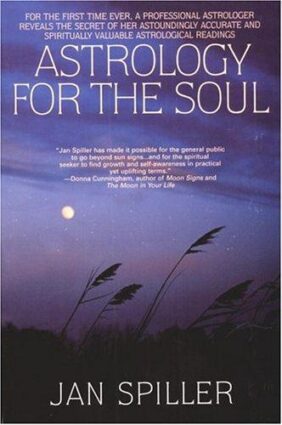
A soul-centered approach built around the Moon’s nodes and the path of growth they describe. See it on Amazon.
The Astrology of Personality by Dane Rudhyar

A classic of humanistic astrology that treats the chart as a map of personal growth. See it on Amazon.
Cosmos and Psyche by Richard Tarnas

A wide-ranging exploration of how planetary cycles and human experience have been seen to mirror each other. See it on Amazon.
More Conversations on Astrology
- Molly McCord. Astrology and feminine energy in Astrology & Feminine Energy in the Stars.
- Heather Ensworth. Astrology, karma and the path ahead for humanity in her NLS conversation.
- Dr. Katy Jane. The Vedic view of humanity’s near future in her NLS episode.
- Pam Gregory. The great alignment and astrology in The Great Alignment.
Keep Exploring Your Chart
Join our free masterclasses, explore NLS Mastery or join the Next Level Soul community for conversations that go deeper into the spiritual path.
Free Masterclasses Explore NLS Mastery Join Next Level Soul TV
Frequently Asked Questions About the Rising Sign
What is a rising sign?
Your rising sign, or ascendant, is the zodiac sign that was rising on the eastern horizon at the moment and place you were born. It describes your outer style, first impressions and instinctive approach to life.
How do I find my rising sign?
Enter your date of birth, exact birth time and birthplace into a free birth chart calculator. Your rising sign appears as Ascendant, ASC or Rising, and it marks the start of your 1st house.
Can I find my rising sign without my birth time?
Not reliably. The rising sign changes about every two hours, so the time is essential. You can search for your birth time in family records, or work with an astrologer on rectification to estimate it.
Why does my birth time matter for my rising sign?
Because the Earth turns once a day, each sign rises over the horizon in turn. Being born a couple of hours earlier or later can put a different sign on the eastern horizon.
What is the difference between a rising sign and an ascendant?
The ascendant is the exact degree where the eastern horizon meets the zodiac. The rising sign is the sign that degree falls in. In everyday use, astrologers use the two terms together.
How often does the rising sign change?
On average, the rising sign changes about every two hours. Some signs rise faster and others slower, depending on the latitude of the birthplace.
Is the rising sign more important than the Sun sign?
Neither is more important in every tradition. The Sun describes core identity, and the rising sign describes how you meet the world. Hellenistic and Vedic astrologers give the ascendant a foundational role in the chart.
What is the difference between Sun sign, Moon sign and rising sign?
The Sun sign speaks of identity and purpose, the Moon sign of emotional needs and instincts, and the rising sign of persona and first impressions. Together they form the Big Three of the birth chart.
Does my rising sign affect how I look?
Traditional astrology links the ascendant with the body and appearance, but it is a symbolic connection rather than a rule. Many astrologers read it more as bearing, expression and style than facial features.
What is a chart ruler?
The chart ruler is the planet that rules your rising sign, such as Mars for Aries rising or Venus for Libra rising. Astrologers consider its sign, house and aspects as a key to the chart as a whole.
What is the 1st house in astrology?
The 1st house is the house of self. It begins at the ascendant and covers your body, temperament and how you start things. Planets in the 1st house strongly color your personality.
What is the Lagna in Vedic astrology?
The Lagna is the Vedic name for the ascendant. It is the starting point of the chart, uses the sidereal zodiac and is often a different sign from the Western rising sign.
What is a sunrise chart?
A sunrise chart is a birth chart set for sunrise on your birthday at your birthplace, so the Sun sits on the ascendant. Some people use it when the birth time is unknown, though it does not show your true rising sign.
What is rectification in astrology?
Rectification is the practice of estimating a birth time by testing which rising sign and degree best match major life events. It gives a working estimate rather than a certain answer.
Can my rising sign be the same as my Sun sign?
Yes. If you were born close to sunrise, the Sun is near the ascendant, so the two signs often match. Astrologers sometimes call this a double.
Do I act like my rising sign?
Often others see you that way first, especially in new situations. Many people say they recognize their rising sign in their first reactions and social style, while their Sun and Moon appear with time.
Sources and Further Reading
Ascendant (Wikipedia) · Astrological house (Wikipedia) · Lagna (Wikipedia) · Horoscope (Wikipedia) · Hellenistic astrology (Wikipedia) · Natal astrology (Wikipedia)