
In Carl Jung’s psychology, the shadow is the part of the personality we do not see in ourselves: the traits, feelings and impulses the conscious mind rejects, hides or never develops. Jung believed that everyone carries a shadow, and that meeting it honestly is one of the first real steps toward wholeness. This guide explains what Carl Jung meant by the shadow, how it fits with the persona, ego, anima, animus and Self, and how people work with it today.
Key Takeaways
- The Carl Jung shadow is the unconscious side of the personality: everything the ego refuses to claim as “me.”
- The shadow is not only dark. It can hold anger and envy, but also buried strengths, creativity and vitality.
- Jung described a map of the psyche: ego, persona, shadow, anima or animus, and the Self.
- When we deny the shadow, we tend to project it onto other people, which is why strong reactions to others often point inward.
- Jung’s name for the lifelong path toward wholeness is individuation, and meeting the shadow is its doorway.
- Shadow work can stir painful memories. If you are struggling, please reach out to a licensed therapist or, in the US, call or text 988.
Want a practical, everyday definition first? See our glossary entry for shadow work, then return here for the full Jungian background.
What Is the Shadow in Carl Jung’s Psychology?
In Jung’s analytical psychology, the shadow is the collection of qualities, desires, memories and instincts that a person has pushed out of conscious awareness because they do not fit the image of who that person believes or wants to be. It lives in the unconscious, which is why we rarely see it directly. We see it in dreams, in slips of the tongue, in sudden moods, and above all in the way we react to other people.
Jung often used the shadow as a plain way of naming “the other side” of the personality. If the conscious self is the part that stands in the light, the shadow is what falls behind it. The brighter we insist on being, the longer and denser the shadow becomes. Jung wrote about this in several places, including his late work Aion (1951), where he describes the shadow as the first thing a person meets when they begin to look inward.
Two points are worth holding from the start. First, the shadow is personal. What sits in your shadow depends on the family, culture and religion you grew up in, because what was unwelcome there is what went underground. A child told “never be angry” and a child told “never be weak” will grow shadows with very different contents.
Second, the shadow is not the same as evil. Jung did believe that people are capable of cruelty and that denying this capacity makes it more dangerous. But he also taught that much of the shadow is simply unlived life: talents we were too shy to use, honest feelings we were taught to hide, and parts of our nature that never got a chance to grow.
That is why so many seekers are drawn to the idea. It offers a humane way to understand our own contradictions without shame. For the wider landscape of what lies beneath awareness, see our guide to the subconscious mind.
Who Was Carl Jung?
Carl Gustav Jung was a Swiss psychiatrist and the founder of analytical psychology. He was born on July 26, 1875, in Kesswil, Switzerland, and died on June 6, 1961, in Küsnacht, near Zurich. He grew up in a household shaped by religion, and he later said that his inner life, including dreams and visions from childhood, mattered to him as much as the outer world.
He trained in medicine at the University of Basel and began his psychiatric career at the Burghölzli clinic in Zurich under Eugen Bleuler. There he did early research on word association, which helped show how emotionally charged “complexes” can disrupt thought and speech. That work brought him to the attention of Sigmund Freud.
Jung and Freud began corresponding around 1906 and met in 1907. For several years they were close colleagues, and Freud saw the younger man as a possible heir to psychoanalysis. The friendship broke down around 1912 to 1913. Jung felt that Freud’s focus on sexuality was too narrow, and he wanted room for myth, religion and the symbolic life. Freud, in turn, resisted that direction.
What followed was a period Jung later called a confrontation with the unconscious. He recorded visions and inner dialogues in a large illustrated manuscript now known as The Red Book, which was published to the public in 2009. Many Jungians see this period as the seed of his later ideas, including the shadow, the archetypes and individuation.
In the decades that followed he wrote Psychological Types (1921), which introduced the terms introvert and extravert to a wide audience, and he explored alchemy, mythology, comparative religion and dreams. His idea of synchronicity, or meaningful coincidence, remains one of his best-known contributions. The Myers-Briggs personality framework was also built on his model of psychological types, although many research psychologists question that test.
Jung did not leave a neat, finished system. His writing evolved over fifty years, and different books emphasize different things. Scholars still debate how to read him, and his ideas are not accepted as experimental science. They are best understood as a rich, symbolic map of inner experience that many people find useful for reflection and growth.
Jung also described a vision from 1944 that he had during a serious illness, in which he felt he was seeing the Earth from far above. He tells this in his memoir Memories, Dreams, Reflections. If near-death experiences interest you, our guide to near-death experiences explores accounts like these.
Jung’s Map of the Psyche: Ego, Persona, Shadow, Anima, Animus and Self
The shadow only makes full sense inside Jung’s larger picture of the psyche. He described layers and figures that work together, and he used the word archetype for the deep, shared patterns that shape human experience across cultures, such as the mother, the hero, the wise old man and the trickster.
| Part of the psyche | What Jung meant | Everyday picture |
|---|---|---|
| Ego | The center of conscious awareness; the part that says “I.” | Your daily sense of being a particular person with a name and a history. |
| Personal unconscious | Forgotten, repressed or overlooked personal experience, organized into complexes. | The memory you cannot place, or the touchy subject you steer around. |
| Collective unconscious | A deeper layer shared by all people, containing the archetypes. | The reason myths from different cultures echo each other. |
| Persona | The social mask we show the world. | The professional voice, the polite smile, the role you play for others. |
| Shadow | What the ego rejects or never develops. | The temper, jealousy or hidden talent you deny. |
| Anima and animus | Inner figures of “the other” within the psyche, often met in dreams and relationships. | The inner guide and the type of person you are drawn to. |
| Self | The archetype of wholeness and the organizing center of the whole psyche. | The deeper identity that includes both light and shadow. |
Think of the ego as a small boat on a very large sea. The persona is the flag on the mast, chosen to be seen. The shadow is the cargo in the hold that nobody mentions. The Self is the sea and the sky together, the whole that contains the boat and gives the voyage its meaning.
Go Deeper with NLS Mastery: Becoming Nobody
If the persona and the ego are the masks we wear, this course invites you to loosen your grip on who you think you have to be. Kyle Cease teaches it in Becoming Nobody, part of NLS Mastery. Watch the course preview below.

How the Shadow Forms
Jung did not think we are born with a shadow. We build one as the ego grows. A baby is whole and unselfconscious. Then the world begins to respond: this behavior earns praise, that one earns a frown. A child quickly learns which parts of themselves are welcome and which are risky. The welcome parts become the identity. The rest does not vanish. It goes underground.
Here are some of the common ways that happens:
- Family messages. “Good girls don’t get angry.” “Boys don’t cry.” “Don’t be so full of yourself.” Each rule creates a pocket of the self that must be hidden.
- Cultural and religious values. Any community that prizes purity, productivity or modesty will push the opposite qualities into the shadow of its members.
- Shame and fear. Moments of humiliation teach us to bury the trait that caused them, whether it was loudness, neediness or ambition.
- Choosing one path. Becoming a doctor, a monk or a parent means leaving other possible selves unlived. Those unlived selves collect in the shadow.
- Ideals we cannot meet. The higher the ideal, the larger the gap between it and our real behavior, and the more material falls into shadow.
Jung also noticed that the shadow tends to be the inferior side of the personality in a specific sense. A person who lives mainly through logic often has a shadow of raw feeling. A person who lives through feeling may have a shadow that is blunt or critical. In his theory of psychological types, the least developed function is the one most likely to behave primitively when it finally breaks through.
The personal shadow and the archetypal shadow
Jung drew a line between the personal shadow and a deeper, archetypal shadow. The personal shadow is made of your own history. It can usually be recognized, named and gradually integrated. The archetypal layer reaches into the collective unconscious and shows up in the figures humanity has long used to picture darkness: the devil, the trickster, the destroyer, the double. Jung warned that the deepest layer is not something a person simply “fixes” by willpower, and that it calls for humility.
Shadow vs Persona vs Ego: What Is the Difference?
These three words are often mixed up, so it helps to see them side by side. The ego is who you consciously think you are. The persona is the face you show. The shadow is what both of them leave out.
| Ego | Persona | Shadow | |
|---|---|---|---|
| Role | Center of conscious identity and choice | Social mask adapted to others’ expectations | Rejected or undeveloped parts of the personality |
| Awareness | Conscious | Mostly conscious, but easy to over-identify with | Mostly unconscious |
| Origin of the word | Latin for “I” | Latin for the mask worn by actors in the Roman theater | The dark form cast when something stands in light |
| How it shows up | Self-image, will, decisions | Job title, manners, curated image | Projections, triggers, dreams, slips, compulsions |
| Risk if over-identified | Rigidity and a small, defended sense of self | Feeling like a fake, or like an empty role | Being run by hidden impulses |
| Healthy relationship | Strong but flexible, in dialogue with the whole psyche | A flexible garment, not a second skin | Acknowledged, understood and put to good use |
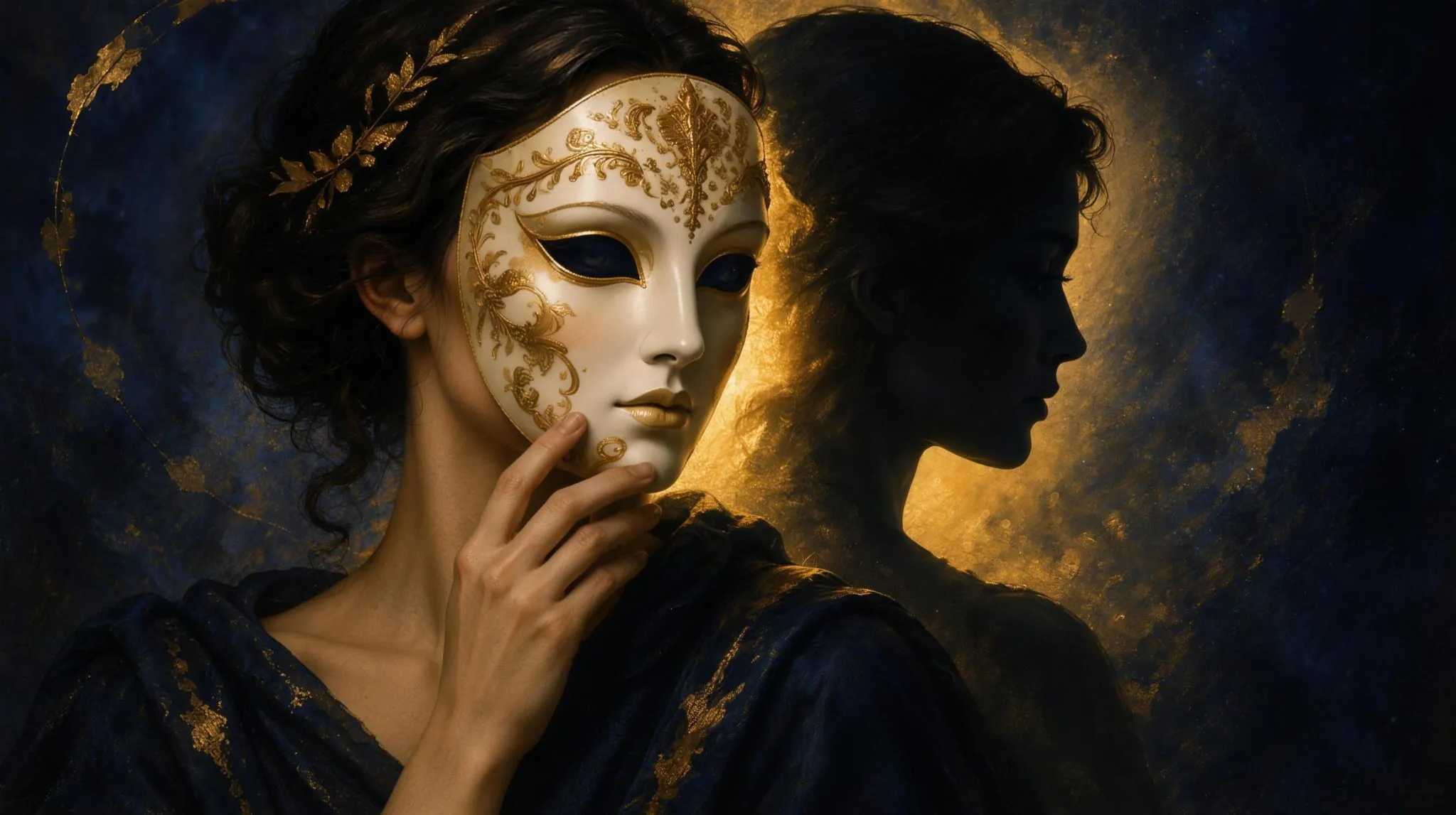
Jung warned that the persona is necessary. We cannot walk through a workplace or a family gathering with every raw feeling exposed. The problem begins when a person believes they are the mask. Someone who becomes entirely their job title, their spiritual image or their role as “the strong one” has handed the rest of themselves to the shadow. The more perfect the mask, the more pressure builds behind it.
This is also why spiritual people are not exempt. A person who identifies as peaceful and loving may have a very large shadow of anger, and a person who identifies as a rational skeptic may have a shadow full of longing for meaning. The shadow is shaped by whatever the persona rules out.
How Do You Know Your Shadow Is Active? Common Signs
Because the shadow is unconscious, you cannot look at it straight on. You infer it from its effects, much as astronomers infer a planet from the pull it exerts on others. Jungians often point to patterns like these:
- Disproportionate reactions. A small comment sets off a flash of rage, contempt or hurt that seems bigger than the moment deserves.
- Strong judgments. You find yourself repeating a harsh verdict about a certain type of person, such as the arrogant, the lazy or the needy.
- Intense admiration or envy. Whatever you idolize or resent in others may be a quality you have not claimed in yourself.
- Repeating patterns. The same kind of conflict, partner or boss keeps arriving in different costumes.
- Slips and “accidents.” Saying the wrong name, forgetting a promise, or sabotaging a goal you say you want.
- Compulsions and secrets. Behavior you hide, excuse or cannot seem to stop.
- Recurring dreams. Pursuing figures, intruders, unknown people of your own sex, or dark rooms in familiar houses.
- Feeling hollow. A sense that you are performing your life rather than living it.
None of these is proof on its own. They are invitations to curiosity, not diagnoses. A sensible rule is to treat a repeating pattern as a question: “What might this be showing me about a part of myself I have not met?”
Projection: How We See Our Shadow in Other People
Projection is the process Jung considered most central to the shadow. When we cannot bear to see a trait in ourselves, the psyche quietly moves it outward and we see it in someone else. The person who “carries” our projection seems to us unusually irritating, threatening or fascinating, and we may feel certain that the problem lies entirely with them.
Projection is not a character flaw. Jung treated it as a normal feature of human psychology and the main reason the shadow becomes visible at all. It is also not always negative. We can project admired qualities onto teachers, partners, celebrities and spiritual leaders, a pattern some Jungians call the golden shadow. That term was popularized later by writers such as Robert Bly rather than by Jung himself, but it follows from his thinking.
The aim is not to decide that everything you dislike in another person is secretly yours. Real people sometimes do behave badly, and boundaries still matter. The practice is to ask honestly whether part of the charge is yours, so that you respond to the person in front of you rather than to a figure from your own inner world.

How Your Ego Can Destroy Your from the Inside with Sacha Gervasi
Sacha Gervasi joins Alex Ferrari to discuss how the ego can work against us from the inside.
Anima, Animus and the Self: What Lies Beyond the Shadow
Jung taught that the shadow is the first figure we meet inside, but it is not the last. As the shadow becomes familiar, other inner figures begin to appear.
Anima and animus
Jung used anima for the inner feminine figure in a man’s psyche and animus for the inner masculine figure in a woman’s psyche. He described them as bridges to the deeper unconscious, often first noticed through dreams, fascination and romantic projection. When we fall into a “perfect” love and later feel disillusioned, Jung would say we may have been seeing our own inner figure in another person.
These ideas reflect the time Jung wrote in, and many modern Jungians have widened them beyond a strict male and female pairing. A common contemporary reading is that everyone has inner figures of “the other” that carry qualities the conscious personality has not yet claimed. The shadow, in his scheme, is usually the same sex as the dreamer, while the anima or animus is the opposite, and meeting them is a second stage of inner work.
The Self
At the center of Jung’s map sits the Self, which he considered the archetype of wholeness. It is not the ego with a capital letter. It is the organizing core of the whole psyche, conscious and unconscious together. Jung noticed that dreams and art often present the Self in symbols of unity such as circles, mandalas, a divine child, or a wise elder. Many people find the idea close to what spiritual traditions call the higher self or the soul. If that interests you, read our guide to connecting with your higher self.
In this picture, the ego is not meant to be defeated. It is meant to enter a relationship with the Self, the way a small island learns it belongs to a continent. The shadow is the road between them. You cannot reach the Self by going around the shadow.
Connecting to Your True Self with Michael Neill
Michael Neill, a teacher of human consciousness, talks about connecting to your true self.
The Collective Shadow: When Whole Groups Disown Their Darkness
Jung believed that what happens in one person also happens on a larger scale. Families, communities, religions and nations each build an image of who they are, and each has a shadow made of what the group refuses to admit. This is the collective shadow.
You can see its logic in how societies choose scapegoats. A group that sees itself as pure, disciplined or righteous may project impurity, laziness or wickedness onto an outsider. History offers many painful examples. Jung wrote essays on the subject in the years surrounding the Second World War, including “Wotan” (1936), where he argued that a whole society can be seized by forces it has not recognized in itself. His point was not to excuse anyone. It was to say that denial of the shadow, at any scale, is dangerous.
The same thread runs through many spiritual paths. Our guide to the dark night of the soul describes how long periods of inner darkness have been understood across traditions as a kind of purification rather than a mere failure.
The Shadow in Dreams
For Jung, dreams were a natural doorway to the unconscious. He did not treat them as simple wish fulfillment, as Freud tended to. He saw dreams as expressions of the psyche that often compensate for the one-sidedness of waking life. A person who is too nice by day may dream of a violent stranger. A person who is too rigid may dream of a wild animal or a fool.
According to Jungian writers, the shadow in a dream commonly appears as a figure of the same sex as the dreamer. It may be an intruder, a pursuer, a rival, a criminal, a beggar or a person the dreamer dislikes. It might also take the form of an animal, a shape in darkness, or a dim room in a familiar house.
Jung’s own house dream
Jung described a famous dream in Memories, Dreams, Reflections. He dreamed that he was in an unfamiliar house with several floors. The upper floor was furnished in an elegant, eighteenth-century style. Going down, he found older and older rooms, then a cellar from the Roman period, and then a stairway leading into a cave with the remains of a very ancient culture. Jung read the dream as a picture of the layers of the psyche, from the personal consciousness of the upper rooms down to the primitive depths shared by all of humanity. He dreamed it in 1909, during the period of his friendship with Freud, and Freud interpreted it differently.

The image is a good one to carry. The shadow tends to be found in the cellar and in the stairways down: the places we avoid in the house of the self.
How to work with a shadow dream
- Write it down as soon as you wake, in present tense, including how you felt.
- Note the figure who disturbs or attracts you. Describe them without judgment: age, mood, clothing, what they want.
- Ask what quality they carry that you would never admit to, and where you might have a mild version of it.
- Look for the gift. Many dream intruders hold energy you need, such as boundaries, assertiveness or passion.
- Make a small real-world gesture that honors what you learned, such as saying a clear no or taking a creative risk.
If you want to go further, our guide on lucid dreaming looks at how people learn to become aware inside dreams. Two NLS podcast guests who work with dream symbolism are below.

Understanding the Meaning of Your Dreams with Machiel Klerk
Dream expert Machiel Klerk joins Alex Ferrari to talk about what our dreams may be telling us.

Common Dreams and How to Decode Them with Kelly Sullivan Walden
Kelly Sullivan Walden explains common dreams and how to decode them.
Dream symbols can be personal and layered, and no single dictionary of symbols will be right for everyone. Jung himself cautioned against fixed meanings. If dreams are very disturbing or follow trauma, please bring them to a licensed therapist rather than working alone.
Active Imagination: Jung’s Method for Meeting the Shadow
Jung developed a technique he called active imagination, which he began using in the years after his break with Freud. In it, a person enters a relaxed, wakeful state, brings an inner image or figure to mind, and then engages with it as though in conversation. The figure might come from a dream, a mood or a drawing. The important part is that you allow it to speak and answer in its own voice, while staying present as yourself.
Jung used active imagination in his own Red Book work and taught it to others. It is different from simply daydreaming or controlling a story. It asks for two things at once: openness to what appears and a firm ethical center. It is a strong practice and not one to push when you are overwhelmed.
A gentle, grounded version looks like this:
- Sit quietly and take a few slow breaths. Set a time limit of ten to twenty minutes.
- Recall a shadow figure from a dream or a person who strongly triggers you.
- Greet the figure in your imagination and ask a simple question: “What do you want me to know?”
- Write down the reply without editing it.
- Thank the figure and close the session. Walk, stretch or have a glass of water to return to ordinary awareness.
Many practitioners combine this with a simple meditation practice so that the body is calm before and after.
Individuation: The Path Toward Wholeness
Individuation is Jung’s word for the lifelong process of becoming a whole, distinct person. It does not mean becoming selfish or standing apart from others. It means, in his sense, bringing the conscious and unconscious sides of the psyche into relationship so that you live from a more complete center instead of from a role.
Jung believed individuation tends to intensify in the second half of life, when the early tasks of building a career, a family and an identity have been met and the question “Is this all I am?” begins to knock. Many people experience this as a midlife restlessness, a spiritual hunger, or a period of loss that forces deeper reflection.
A rough sequence is often described, though Jung warned it is not a ladder:
- Meeting the persona. Seeing the mask as a mask.
- Meeting the shadow. Owning what has been disowned.
- Meeting the anima or animus. Opening to the inner other and to deeper feeling and meaning.
- Meeting the Self. Sensing a center larger than the ego that can hold the whole.
Individuation never fully ends. Jung considered it a direction rather than a destination. If you are in a stage of life where everything feels like it is changing, our guide to spiritual awakening and your own soul purpose may help you orient.

How to Integrate the Shadow: A Jungian Approach Step by Step
Integration does not mean acting out every impulse. Jung was clear that the goal is consciousness, not indulgence. To integrate a shadow trait is to know it, take responsibility for it, and choose how to use its energy. Here is a grounded sequence that draws on his ideas.
Step 1: Notice the charge
Start by catching strong reactions as they happen. When you feel heat, defensiveness or fascination, pause and name it silently: “Something is being touched.” You are not trying to fix anything yet. You are simply learning your patterns.
Step 2: Name the trait
Ask what quality you are reacting to. Be specific: arrogance, neediness, selfishness, laziness, cruelty, ambition. Write it as a single word or short phrase.
Step 3: Look for your own version
This is the hardest step. Ask honestly, “When have I shown a version of this, maybe in a smaller or hidden form?” You may find it in your thoughts, in old memories, or in the way you treat yourself. You are not required to like what you find. You are only required to be truthful.
Step 4: Trace the origin
Ask where the trait became unwelcome. Who in your family or culture disapproved? When were you shamed for it? Understanding the origin turns a vague sense of “I am bad” into “I learned to hide this.”
Step 5: Find the gift inside it
Almost every shadow trait has a healthy form. Anger can become boundaries. Selfishness can become self-respect. Envy can point toward a desire you have neglected. Ask, “What does this trait protect, and what could it become if I used it consciously?”
Step 6: Act in a small, conscious way
Integration shows up in behavior. If your shadow contains assertiveness, practice one clear, kind “no” this week. If it holds playfulness, schedule an hour of play. Small actions teach the psyche that the old rule no longer applies.
Step 7: Make it a relationship, not a project
The shadow does not respond to being attacked or conquered. It responds to being listened to. Return to the practice regularly and with kindness. For a deeper foundation in self-compassion, see our guide to self-love.
Practical Shadow Exercises Inspired by Carl Jung
These are reflective exercises drawn from Jungian ideas. They are not therapy and not a substitute for it. Choose one at a time.
- The trigger list. For a week, write down every time someone irritates you strongly. Beside each, write the trait. At the end of the week, look for the trait that appears most often.
- The admiration list. Write the names of five people you admire intensely and the qualities you envy. These qualities are often buried strengths. Choose one to practice in a small way.
- The three-person check. Think of someone who bothers you. Ask three questions: What do they do that bothers me? Where do I do something similar? What would I need to accept about myself to feel less bothered?
- The mask inventory. List the roles you play: parent, boss, helper, healer, rebel. For each, ask what you must hide in order to play it.
- The dialogue. Write a short conversation between you and a shadow figure. Let the figure answer in its own voice. Reread it the next day.
Shadow Journal Prompts
Journaling lets the shadow speak at a slower pace. Pick one prompt and write for ten minutes without stopping.
- What qualities in other people make me angry or contemptuous, and where might I carry a quieter form of them?
- What was I told as a child that I must never be?
- Which of my emotions do I judge most harshly in myself?
- If my shadow could speak, what would it ask me to stop pretending?
- What would I do if I were not afraid of being judged?
- When do I feel like a fraud, and what mask am I wearing then?
- What part of me have I been exiling in order to be accepted?
Is the Shadow Only Dark? The Golden Shadow
A common misunderstanding is that the shadow is a bin of bad traits. Jung’s own use of the word was wider than that: the shadow is whatever the ego has not accepted, and this includes qualities that are creative, loving or powerful but felt as unsafe. A child raised to stay small may bury confidence. A teenager mocked for sensitivity may bury tenderness. A woman taught to be modest may bury ambition.
Writers after Jung gave this positive side the name golden shadow. It is the hidden gold of the personality, and it is usually discovered the same way as the dark shadow: through projection. When you feel dazzled by another person’s courage, wit or radiance, it may be your own gold looking back at you.
Shadow Work and the Spiritual Path
Many spiritual seekers are drawn to light: meditation, positivity, love and compassion. Those are real treasures. Jung’s insight was that the light grows unstable when it has nothing to stand on. Psychotherapist John Welwood later coined the phrase spiritual bypassing in the 1980s to describe using spiritual ideas to avoid unresolved emotional wounds. Jung’s shadow work is a counterweight to that tendency.
Common Myths About Jung’s Shadow
- Myth: The shadow is evil. It is the unaccepted part of you. It contains aggression, but also creativity, tenderness and vitality.
- Myth: Shadow work means indulging your dark side. Jung’s aim was awareness and responsibility, not acting on every impulse.
- Myth: You can eliminate your shadow. Jung said the shadow is part of being human. The task is relationship, not removal.
- Myth: Only “bad” people have one. Everyone does. Those who see themselves as especially good may have the largest.
- Myth: Shadow work is a quick fix. Jung described a lifelong process. A weekend of journaling opens a door, but it does not finish the work.
- Myth: Every famous Jung quote is real. Many lines shared online as Jung’s cannot be traced to his writings. If a quote matters to you, look for its source in his Collected Works.
A line from Jung you can trace
One genuine passage that uses the shadow as a metaphor comes from Psychology of the Unconscious (first published in German in 1912, translated into English in 1916): “Where love rules, there is no will to power; and where power predominates, there love is lacking. The one is the shadow of the other.” It shows how Jung thought in pairs of opposites, each hidden inside the other.
What Do Psychologists Say? Science and Limits
Jung’s work sits at the edge of modern science. Analytical psychology is respected as a body of clinical and cultural insight, and ideas such as projection and the unconscious influenced later therapists. But concepts like the collective unconscious and archetypes are not experimentally proven, and researchers criticize parts of his work as difficult to test. Many therapists use Jungian ideas as a lens alongside evidence-based methods. Hold the shadow as a useful map, not as a literal claim about the brain.
A Note on Care
Looking at difficult parts of yourself can bring up grief, shame or old trauma. Go at your own pace, and stop if you feel overwhelmed. If you are struggling, please reach out to a licensed therapist, including one trained in Jungian approaches. If you are in crisis or thinking about harming yourself, call or text 988, the Suicide and Crisis Lifeline in the United States, or contact your local emergency number. The material on this page is for reflection and education and is not medical or mental health advice.
Books to Explore Carl Jung and the Shadow
These books are good starting points. Each link below goes to Amazon, and we may earn a small commission at no cost to you.
Memories, Dreams, Reflections by Carl Jung
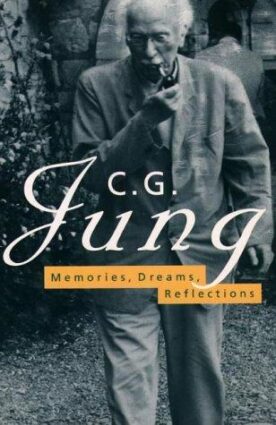
Jung’s autobiographical account, recorded and edited with Aniela Jaffé and published after his death. It includes the house dream and his 1944 vision. See it on Amazon.
Man and His Symbols by Carl Jung
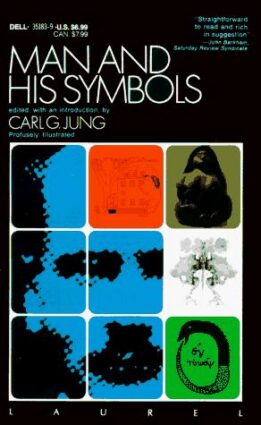
A well-illustrated introduction for general readers, published in 1964, with chapters by Jung and several of his colleagues. See it on Amazon.
Owning Your Own Shadow by Robert A. Johnson
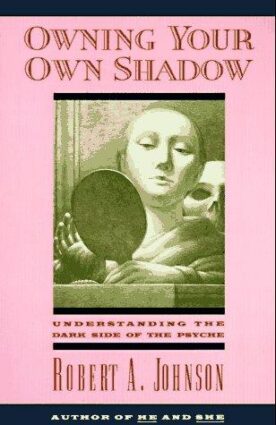
A short, readable Jungian introduction by analyst Robert A. Johnson on how the shadow shapes everyday life. See it on Amazon.
Meeting the Shadow edited by Connie Zweig and Jeremiah Abrams

A 1991 anthology of essays on the shadow from many writers and traditions. See it on Amazon.
The Dark Side of the Light Chasers by Debbie Ford
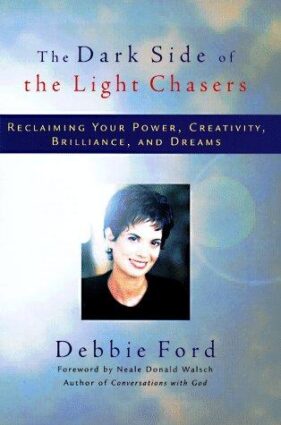
A popular, practice-focused book on facing the shadow, written for spiritual seekers. See it on Amazon.
Keep Going on Your Inner Journey
Explore free teachings and guided courses with Next Level Soul.
Frequently Asked Questions About Carl Jung’s Shadow
What is the Carl Jung shadow?
In Carl Jung’s psychology, the shadow is the unconscious part of the personality made of traits, feelings and impulses the conscious mind rejects or never develops. It can hold anger and envy, but also hidden strengths.
What did Carl Jung mean by the shadow self?
He meant the side of ourselves we do not recognize or admit, often because it did not fit what our family, culture or ideals approved. Jung believed that everyone has one.
What is the difference between the shadow and the persona?
The persona is the social mask we show the world. The shadow is what stays hidden behind it. The ego, our conscious sense of “I,” usually identifies with the persona and overlooks the shadow.
Is the shadow good or bad?
It is neither. The shadow contains some difficult traits, but also buried talents, creativity and vitality. Jung stressed awareness and responsibility, not indulgence.
What is shadow projection?
Projection is when we see our own disowned qualities in other people. Strong irritation, judgment or fascination toward someone can be a clue that the trait relates to something in us.
What is the collective shadow?
The collective shadow is what a group, culture or nation refuses to admit about itself. Jung believed that when it is denied, it tends to be projected onto outsiders or scapegoats.
What is individuation?
Individuation is Jung’s term for the lifelong process of becoming a whole and distinct person by bringing the conscious and unconscious sides of the psyche into relationship.
How do you integrate the shadow?
Notice your strong reactions, name the trait, look for your own version of it, trace where it came from, find its gift, and then act on it in a small, conscious way.
How does the shadow appear in dreams?
Jungians say it often appears as a figure of the same sex as the dreamer, such as an intruder, a pursuer or someone you dislike. It may also appear as an animal or a dark room.
What are anima and animus?
Anima is the inner feminine figure in a man’s psyche and animus is the inner masculine figure in a woman’s, in Jung’s theory. Many modern Jungians treat them as inner figures of “the other” for anyone.
What is the golden shadow?
The golden shadow is the positive side of the shadow: admirable qualities such as confidence or creativity that we have buried and often notice only in other people. The term was popularized by later writers.
Did Carl Jung invent shadow work?
Jung introduced the concept of the shadow in analytical psychology. The phrase “shadow work” is a modern term for practices that follow his ideas, and Jung himself did not use it as a brand.
Is Jung’s shadow scientifically proven?
Jungian concepts are not proven by laboratory experiment and are debated by researchers. Many people and therapists nevertheless find them useful as a symbolic map for self-reflection.
When should I see a therapist about shadow work?
If the material brings up trauma, intense distress, or thoughts of harming yourself, please see a licensed therapist. In the US you can call or text 988 at any time for the Suicide and Crisis Lifeline.
Sources and Further Reading
Carl Jung (Wikipedia) · Shadow (psychology) (Wikipedia) · Analytical psychology (Wikipedia) · Persona (psychology) (Wikipedia) · Individuation (Wikipedia) · Collective unconscious (Wikipedia) · The Red Book (Jung) (Wikipedia)