The sacral chakra, called Svadhisthana in Sanskrit, is the second of the seven main chakras in the Hindu tantric system. It is traditionally linked to water, emotion, pleasure and creativity, and is located a couple of finger-widths above the root chakra, around the lower belly. This guide explains its meaning, its symbols, the vam seed mantra and gentle ways to work with it, alongside the chakra colors you may already know.
Key Takeaways
- Meaning: Svadhisthana is Sanskrit for “where your being is established.” It is the second chakra.
- Location: Around the lower abdomen, about two finger-widths above the root chakra in the traditional description.
- Symbols: Water element, six petals, a white crescent moon and the seed syllable vam. Orange is the modern Western color.
- Themes: Emotion, pleasure, creativity, relationships and self-image, as described in tradition.
- Honest limits: Chakras are a spiritual and symbolic framework. There is no scientific evidence that they exist as measurable structures, so use this as reflection, not as medical advice.
What Is the Sacral Chakra?
The sacral chakra is the second primary energy center in the chakra system of Hindu Tantrism. Its Sanskrit name, Svadhisthana, is usually translated as “where your being is established,” from swa (self) and adhishthana (dwelling or base). It follows the root chakra (Muladhara) and sits just before the solar plexus.
In traditional descriptions the sacral chakra governs the watery side of being human: feeling, desire, pleasure, intimacy and creative flow. It is said to be connected with the unconscious, with emotion and with the sense of taste. In modern spiritual language, people often call it the center of creativity and emotional connection.
Before we go further, one honest note. Chakras come from tantric traditions, and in the modern West they have been reshaped into a colorful self-help map. We can enjoy that map as reflection. We should not treat it as anatomy or as a substitute for health care.
| Question | Quick answer |
|---|---|
| What is it? | The second chakra in the Hindu tantric system. |
| Sanskrit name | Svadhisthana (“where your being is established”). |
| Location | Lower abdomen, around two finger-widths above the root chakra; front point just below the navel. |
| Color | Orange in the modern Western scheme. |
| Element | Water, with a white crescent moon. |
| Seed mantra | Vam. |
| Petals | Six. |
| Themes | Emotion, pleasure, creativity, relationships, self-image. |
| Is it scientifically proven? | No. It is a spiritual and symbolic framework. |
If you have physical or emotional health concerns, particularly around the pelvis, reproductive health, sexuality or trauma, please talk with a qualified professional. This guide is spiritual reflection, not treatment.
Symbols and Traditional Associations
Classical descriptions of Svadhisthana are rich in imagery. Here is how scholars and tantric texts present it.
| Feature | Traditional description |
|---|---|
| Element | Water, shown as a white crescent moon within the lotus. |
| Lotus | Six vermilion petals. |
| Petal syllables | baṃ, bhaṃ, maṃ, yaṃ, raṃ, laṃ. |
| Seed mantra (bija) | vaṃ (“vam”), moon-white. |
| Deity | Vishnu is the central deity in many descriptions, with the goddess Rakini as his power. Some schools name Brahma and Saraswati instead. |
| Water deity | Varuna presides over the water element. |
| Sense | Taste. |
| Modern color | Orange. |
The six petals
Each of the six petals carries a Sanskrit syllable, and tradition associates them with six modes of consciousness or tendencies, sometimes called vrittis. In some descriptions these include affection, delusion and suspicion. That is a reminder that the sacral chakra is not only about pleasure; it is about the full range of human feeling.
Water and the moon
Water is the oldest image for feeling. It flows, pools, settles and moves in tides. The crescent moon in the chakra’s diagram adds the sense of cycles and the unconscious. Together they suggest that this center is about learning to move with emotion rather than fighting it.
Echoes in other traditions
Other systems have similar ideas. Tibetan Vajrayana describes a “secret place” about four finger-widths below the navel. Some Western occultists place the sacral center at Yesod on the Kabbalistic Tree of Life, the sphere of foundation and the moon. These are parallels, not identical maps, and their differences are as interesting as their similarities.
Sacral Chakra Location and Color
Traditionally, Svadhisthana is placed along the spine, about two finger-widths above the root chakra at the tailbone. Its front point is described as just below the navel. In modern practice people often work with the lower belly and low back as a whole.
The orange color usually associated with the sacral chakra comes from the modern rainbow scheme, not from the older tantric texts. The color scheme is credited largely to the Theosophist Charles Leadbeater’s 1927 book The Chakras, and one scholar, Kurt Leland, argues that the full modern combination of colors and qualities first appeared together in the 1970s. Seeing orange in your visualizations is a helpful tool, not an ancient requirement.
Our chakra colors guide gives the full tour of the rainbow system.
Where the Chakra System Comes From
The Sanskrit word chakra means wheel or circle. In the Vedas it refers to literal wheels and cycles, not to energy centers. The Upanishads describe subtle channels called nadis but not the later chakra theory.
Chakra-based systems emerged around the eighth century CE. Early Buddhist tantric texts such as the Hevajra Tantra describe four chakras. Hindu texts later expanded the system, and some Kaula works present six chakras plus the crown center. The best known seven-chakra system was popularized in the West by Sir John Woodroffe in The Serpent Power (1919), a translation of the sixteenth-century text Sat-chakra-nirupana.
Theosophists such as H. P. Blavatsky introduced the idea of chakras as real if hidden energy centers in the 1880s. Later twentieth-century writers added colors, glands and many other correspondences. That means the sacral chakra you meet today is a blend of old Indian symbolism and modern Western spirituality.
It is also closely tied to the idea of kundalini energy, the rising energy said in tantric traditions to move through the chakras. If that interests you, read about it with care and, ideally, with an experienced teacher.
Themes of the Sacral Chakra
Different teachers emphasize different themes. Common ones include:
- Emotional flow. The ability to feel emotions and let them move.
- Pleasure and enjoyment. Savoring food, music, touch and rest.
- Creativity. Making things for their own sake.
- Relationships and intimacy. How we relate and where our boundaries are.
- Self-image. How we see our own body and worth.
Notice that none of these are good or bad. They are simply areas of life. The sacral chakra is a lens for asking, “Where am I rigid? Where am I flowing?” Many people find that a gentle question works better than a diagnosis.
Signs of Balance and Imbalance
Spiritual teachers often describe signs of a “balanced” or “blocked” sacral chakra. These descriptions are modern interpretations, not clinical findings, and they should never be used to diagnose yourself.
| Theme | When it feels open or flowing | When it feels stuck or overwhelmed |
|---|---|---|
| Emotions | You can feel and name emotions without being swept away. | Emotions feel numb, or they flood you. |
| Creativity | Ideas arrive and you enjoy making things. | You feel creatively blocked or self-critical. |
| Pleasure | You can enjoy simple pleasures without guilt. | Guilt, shame or excess around pleasure. |
| Relationships | You can connect and also hold boundaries. | Clinging, avoidance or people-pleasing. |
| Body | You feel at home in your body. | Discomfort with your body or its sensations. |
Traditional sources link guilt in particular with a blocked Svadhisthana. That is a beautiful thing to notice, because guilt often hides in plain sight. If guilt comes up, treat it with kindness. It may also be a doorway to shadow work, the practice of meeting the parts of ourselves we usually avoid.
If you notice persistent low mood, anxiety, trauma responses or difficulties with intimacy or sexual health, please seek support from a licensed professional. A chakra practice can sit beside that support, not replace it.
Gentle Practices for the Sacral Chakra
The practices below are inspired by yoga and tantric tradition and by modern spiritual teachers. Choose one or two and treat them as invitations.
1. Chant the seed sound Vam
The bija mantra for Svadhisthana is vam (pronounced “vahm”). Sit comfortably, rest your hands on your lower belly, and repeat the sound aloud, in a whisper or silently for five minutes. Feel the vibration in your belly. For a wider look at the practice, see our guide to mantras.
2. Move your hips
Yoga asanas that open the hips are often used for this chakra. Gentle options include bound angle pose, low lunge and slow hip circles. Go only as far as feels comfortable, and skip any pose that hurts.
3. Spend time with water
Since water is its element, time near water is a simple ritual. Take a long shower with attention to the sensation, walk by a river, or hold a warm mug of tea slowly. Let the practice be sensory, not performative.
4. Breathe into the belly
Breathwork can help ground the practice. A slow belly breath, where the lower ribs and belly expand on the inhale, is a gentle starting point. For guided options, try our guided breathwork page.
5. Make something with no purpose
Draw, sing badly, dance in the kitchen, arrange flowers. The sacral chakra is often described as the home of play. Give yourself ten minutes with no outcome.
6. Journal about feeling
Try these prompts: What do I enjoy that I rarely allow myself? Where do I say yes when I mean no? What does my body want today?
7. Traditional yogic practices
Some texts mention practices such as vajroli and ashvini mudras for this center. These are advanced techniques that are best learned from an experienced yoga teacher. For simpler hand gestures, ask a yoga teacher about mudras.
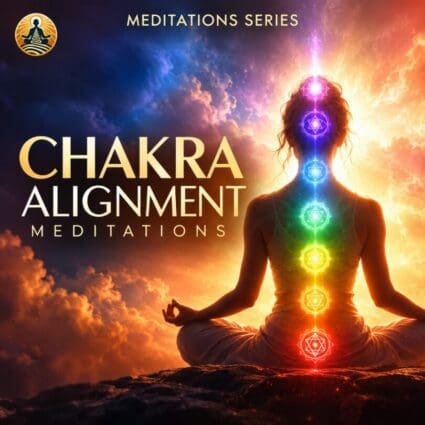
Next Level Soul TV
Go Deeper with Chakra Alignment Meditations
Seven guided meditations to balance and align your energy centers, a natural companion to this article. Listen on Next Level Soul TV.
Yoga Poses for the Sacral Chakra
Yoga teachers often pair the second chakra with poses that open and soften the hips and lower belly. This is a modern habit more than a classical rule. The older texts speak of mudras and breath for Svadhisthana, while the named poses below come from the wider hatha yoga tradition and are matched to the chakra by many contemporary studios.
| Pose | Name and background | How teachers describe it |
|---|---|---|
| Bound angle | Baddha Konasana, from baddha (bound) and kona (angle). Also called butterfly or cobbler’s pose. The seat appears in the 15th-century Hatha Yoga Pradipika under the name Bhadrasana. | Sit with the soles of the feet together and let the knees fall open. Stay tall, breathe slowly. |
| Garland pose | Malasana, from mala (garland). Iyengar’s Light on Yoga describes it as a deep squat with arms hanging like a garland. | A low squat, heels down or supported on a folded blanket. Rest the palms together at the chest. |
| Low lunge | Anjaneyasana, named for the devoted figure Hanuman, son of Anjana. | Drop the back knee to the mat, lift the chest, and let the front hip open. |
| Pigeon | Eka Pada Rajakapotasana, the one-legged king pigeon family of poses. | A reclined or folded version, often supported with a cushion under the hip. |
Move slowly, keep the breath moving, and let each pose last a few long exhales. Come out the moment you feel pinching or pain, and use blocks or blankets freely. If you have an injury, hip or back concerns, or are pregnant, check with a physician or a qualified yoga teacher first. These poses are a gentle movement practice, not a treatment.
To close, lie down for a few minutes of rest. A restful practice such as yoga nidra pairs well with a hip-focused session.
Sacral Chakra Affirmations
An affirmation is a short sentence you repeat so that your attention rests on one idea. Nothing in the classical sources prescribes affirmations for Svadhisthana; they are a modern, secular add-on that many chakra teachers use alongside the seed sound vam. Treat them as a way to practice kinder self-talk, not as a switch that changes your life.
Choose one that feels believable, even if only a little. Say it aloud with a hand on your lower belly, or write it at the top of a journal page.
- I am allowed to feel what I feel.
- Pleasure is a natural part of being alive.
- I can say no and still be loved.
- My emotions move through me like water.
- I make room for play today.
- My body is a place I can come home to.
- I welcome change without rushing it.
If a line stirs up resistance, that is useful information. Write down what your mind says back, and explore it gently, perhaps with the prompts in the journaling section above. Pair the words with a few minutes of a short guided meditation if sitting quietly helps you settle.
The Sacral Chakra and Creativity
Creativity is one of the most common themes attached to Svadhisthana today. Teachers link it to water: ideas that move, pool and move again. The Sanskrit name, often translated as “one’s own abode,” gets read as a reminder to feel at home in your own imagination before showing it to anyone.
In this modern reading, a creative block is not a failure. It is a prompt to ask what feeling is waiting underneath: perfectionism, fear of judgment, tiredness, or simply no time for play. Again, this is reflection, not diagnosis, and a writer’s block can also just be a busy week.
- Lower the stakes. Give yourself ten minutes and promise that nothing will be shared.
- Start with the body. A short hip-opening sequence or a walk by water can shift your mood before you begin.
- Use your hands. Doodle, cook without a recipe, knead clay, rearrange a shelf.
- Follow pleasure. Notice which small task makes you lose track of time, and do more of it.
- Keep a feeling journal. Write one line a day about what you enjoyed, however small.
On a real Tuesday, that might mean humming while you wash dishes or sketching on the back of a receipt. Small and regular beats grand and rare.
What Does Science Say About Chakras?
Honest answer: there is no scientific evidence that chakras exist as measurable structures in the body, and no recognized way to measure them. Some modern sources associate the sacral chakra with the reproductive glands or organs, but those correspondences were added in the early twentieth century, and they are not established medical facts.
That does not make the practices meaningless. Slow breathing, gentle movement, time near water, creative play and reflective journaling are each worth trying in their own right, and many people find them calming. The chakra story gives these simple things a shape and a meaning. If that helps you, wonderful. If it does not, you can take the practices and leave the framework.
Be wary of anyone who claims that unblocking a chakra will cure an illness or fix a relationship. That is not what the traditions teach, and it is not something we can promise.
A Ten-Minute Sacral Chakra Practice
If you would like something concrete to try today, here is a simple sequence. It draws on the traditional symbols without making any health claims.
- Arrive (1 minute). Sit or lie down comfortably. Let your shoulders drop and your jaw soften.
- Hands to belly (1 minute). Rest your palms on your lower belly. Feel the breath gently lift them.
- Picture water (2 minutes). Imagine a calm pool or river. You do not need to see a perfect image. Notice the feeling of ease.
- Add the sound (3 minutes). Softly chant vam on each exhale. Let the sound hum in the belly.
- Ask one question (2 minutes). In silence, ask, “What do I need to feel today?” Wait without forcing an answer.
- Close (1 minute). Take a slow breath, open your eyes and write one sentence about what you noticed.
Repeat it a few mornings in a row. Small, regular practice is usually kinder than one big effort. If a session brings up strong feeling, slow down, open your eyes, look around the room and take a few ordinary breaths. You are always allowed to stop, and you never need to push through to prove anything.
The Sacral Chakra in Relationships and Beside the Other Chakras
Because Svadhisthana is associated with intimacy and relationships, teachers often use it to reflect on how we connect. Questions worth sitting with include: Do I feel safe being close to people? Can I ask for what I want? Do I stay in situations out of guilt?
Chakra teachers also describe the centers as working together. The root chakra is about safety and belonging, the sacral about feeling and flow, and the solar plexus about will and personal power. Many people find it helps to feel safe first, then feel, and then act. That order is a teaching metaphor, not a rule, but it can be a kind way to approach change.
If you find yourself stuck, notice whether you are being asked to move toward feeling, or toward rest. Sometimes the most sacral thing you can do is to take a day off.
Go Deeper
If this guide has been useful, here are good next steps:
- Explore all seven centers in our chakra colors guide.
- Learn how sound and repetition work in our overview of mantras.
- Read about kundalini energy and how tradition describes it.
- Try a short guided meditation for body awareness.
Svadhisthana invites us to be at home in ourselves. Start with something small: a warm bath, a song, a sentence in your journal. Let it be easy.
Go Deeper with NLS Mastery: Ancient Meditation for Inner Stillness
Chakra work grows deeper with a steady meditation practice, and this course teaches an ancient way to find stillness. Acharya Shunya teaches it in Ancient Meditation for Inner Stillness, part of NLS Mastery. Watch the course preview below.
Frequently Asked Questions
What is the sacral chakra?
It is the second chakra in the Hindu tantric system, called Svadhisthana in Sanskrit. It is traditionally associated with water, emotion, pleasure and creativity.
Where is the sacral chakra located?
In the traditional description it sits along the spine about two finger-widths above the root chakra, with a front point just below the navel. In practice, people often focus on the lower belly.
What color is the sacral chakra?
Orange in the modern Western rainbow scheme. The older tantric texts describe the lotus in vermilion with a white crescent moon for water.
What does Svadhisthana mean?
It is Sanskrit for “where your being is established,” from swa (self) and adhishthana (dwelling).
What is the sacral chakra mantra?
The seed mantra is vam, pronounced like “vahm.” Many people chant it aloud or silently while resting their hands on the lower belly.
What element is the sacral chakra?
Water. In tradition the water element is symbolized by a white crescent moon and the deity Varuna.
What are signs of a blocked sacral chakra?
Spiritual teachers describe emotional numbness or overwhelm, creative blocks, guilt around pleasure or difficulty with boundaries. These are reflective descriptions, not medical diagnoses.
How do you balance the sacral chakra?
Common suggestions include chanting vam, hip-opening yoga, time near water, creative play, breathwork and journaling. Treat them as gentle practices, not treatments.
Is the sacral chakra real?
Chakras are part of a spiritual and symbolic tradition. There is no scientific evidence that they exist as measurable body structures.
What is the difference between the sacral and root chakra?
The root chakra (Muladhara) is the first chakra, associated with grounding and safety. The sacral chakra comes next and is associated with emotion, pleasure and creativity.
How many petals does the sacral chakra have?
Six. Each carries a Sanskrit syllable: baṃ, bhaṃ, maṃ, yaṃ, raṃ and laṃ.
What are the best yoga poses for the sacral chakra?
Yoga teachers commonly suggest hip-opening poses such as bound angle pose (Baddha Konasana), garland pose (Malasana), low lunge and gentle pigeon. This pairing is a modern convention, and the poses should be practiced within your comfort and with guidance if you have injuries.
What are some sacral chakra affirmations?
Common examples include “I am allowed to feel what I feel” and “Pleasure is a natural part of being alive.” They are a modern self-talk practice and not part of the classical tantric texts.
Sources and Further Reading
Spirituality for the Rest of Us™
Movies, series, documentaries, audiobooks, audio courses and guided meditations on awakening and consciousness, all in one place. 14-day money-back guarantee.