





Hindu gods and goddesses are the many forms through which Hinduism understands one ultimate reality, called Brahman. The best known are the Trimurti of Brahma the creator, Vishnu the preserver and Shiva the transformer, along with goddesses such as Lakshmi, Saraswati and Durga, and beloved deities like Ganesha, Hanuman and Krishna. Hindus often say there are 33 types of deities, and traditional counts also speak of 330 million.
Key Takeaways
- One and many: many Hindus see the gods as forms of one ultimate reality, Brahman.
- The Trimurti: Brahma creates, Vishnu preserves, Shiva transforms.
- The goddesses: Lakshmi, Saraswati, Parvati and Durga are central in Shaktism and household worship.
- Avatars: Vishnu is said to descend to earth in forms such as Rama and Krishna.
- Living tradition: practice varies by region, family and lineage.
How Hinduism Understands Its Gods
Hinduism is not a single organized church, and its idea of the divine is wide. Some followers focus on one chosen deity, called an ishta devata. Others see all deities as faces of the same source. The phrase 330 million gods is often quoted, but it is usually read as a way of saying the divine is beyond counting. The Vedic term for 33 groups of devas is the older count.
Gods are approached through puja (worship), mantra, music, festivals and pilgrimage. Our mantras guide and the Gayatri mantra article show how sound connects devotees to the divine.
Main Hindu Deities at a Glance
| Deity | Role | Common symbols |
|---|---|---|
| Brahma | Creator | Four faces, lotus, swan |
| Vishnu | Preserver | Conch, discus, blue skin |
| Shiva | Transformer and destroyer of ego | Trident, crescent moon, Ganga river |
| Lakshmi | Prosperity and grace | Lotus, gold coins, elephants |
| Saraswati | Knowledge, music, arts | Veena, white swan |
| Parvati | Divine mother, devotion | Lion, lotus |
| Durga | Protection, victory over evil | Lion or tiger, many arms |
| Kali | Time, change, liberation | Dark skin, garland of skulls |
| Ganesha | Remover of obstacles | Elephant head, modak, mouse |
| Hanuman | Devotion, strength | Mace, monkey form |
| Krishna | Love, wisdom, the Bhagavad Gita | Flute, peacock feather |
| Rama | Dharma, the ideal king | Bow, hero of the Ramayana |
The Trimurti: Brahma, Vishnu and Shiva
Brahma creates the universe, though he is rarely worshipped on his own. Vishnu sustains order and descends as avatars when the world needs restoring, including Rama and Krishna. Shiva dissolves what has run its course so that new life can begin, and is also the great yogi who meditates in the Himalayas.
Together they describe a cycle: creation, preservation and transformation. Seekers often read the cycle in their own lives as beginnings, stability and endings.
The Great Goddesses
Devi, the goddess, is honored as the active power of the universe, called Shakti. Lakshmi brings prosperity and grace. Saraswati governs learning and the arts. Parvati is the loving divine mother, and Durga fights evil with fearless compassion. Kali embodies time and fierce transformation, freeing devotees from fear and ego.
The sacral chakra is often linked to creative Shakti energy. For the wider system of energy centers, see our chakras overview.
Beloved Deities: Ganesha, Hanuman and Krishna
Ganesha, the elephant-headed son of Shiva and Parvati, is invoked at the start of any new venture. Hanuman is the model of devotion and courage in the Ramayana. Krishna is the teacher of the Bhagavad Gita, which speaks of duty, devotion and the self beyond the body.
Avatars, Ishta Devata and Worship
An avatar is a divine descent into the world. Vishnu’s ten avatars, called the Dashavatara, include Matsya the fish, Rama, Krishna and in many lists the Buddha. An ishta devata is the deity you feel closest to. You can honor yours with a simple altar, flowers, a lamp and a daily mantra.
Learning with Respect
These deities belong to a living tradition with millions of devoted followers. Learn from Hindu teachers where you can, avoid treating sacred images as decor and approach the stories as a seeker who wishes to understand, not to collect.
What the Word Deity Means in Hinduism
In English, people often say Hinduism has many gods. Hindus themselves describe a more layered picture. At the highest level, many traditions teach one ultimate reality called Brahman, beyond form. The deities, called devas and devis, are ways of approaching that reality through form, story and feeling.
The old idea that there are 330 million gods comes from a phrase that uses the word koti, which can mean both type and ten million. Many scholars and teachers read it as a poetic way to say that the divine appears in countless forms, not as a literal head count. This is why the answer to how many Hindu gods are there depends on the tradition you ask.
Shiva, Vishnu and Devi: The Three Major Streams
Most Hindus are devoted to one of three streams. Shaivas honor Shiva as the supreme being, Vaishnavas honor Vishnu and his forms, and Shaktas honor the goddess, called Devi or Shakti, as the highest power. Smartas, another tradition, honor several deities as equal paths to the same truth.
These traditions do not compete in the way outsiders sometimes assume. A person may have a chosen deity, called an ishta devata, and still respect others. This flexible approach is one of the features that makes Hindu thought distinct.
Shiva: Destroyer, Yogi and Lord of Dance
Shiva is often shown seated in meditation, with a crescent moon in his matted hair, the river Ganga flowing from his head, a snake around his neck and a trident in his hand. He is the destroyer in the Trimurti, though destruction here means the clearing that allows renewal. As Nataraja, the lord of dance, he dances the cosmos into and out of being.
Shiva is also linked to yoga, asceticism and inner stillness. The lingam, an abstract form, is the most common way he is honored in temples. Maha Shivaratri, the great night of Shiva, is a major festival marked by fasting and night long prayer.
Vishnu and His Avatars
Vishnu is the preserver, shown with blue skin, four arms and a conch, discus, mace and lotus. He rests on the cosmic serpent Shesha. When the world needs rebalancing, he descends as an avatar. Traditional lists name ten, called the dashavatara, including a fish, a tortoise, Rama, Krishna and, in some lists, the Buddha.
Rama, hero of the epic Ramayana, and Krishna, teacher in the Bhagavad Gita, are among the best loved figures in all of India. Their stories shape festivals, music, dance and daily ethics for hundreds of millions of people.
The Goddesses: Lakshmi, Saraswati, Parvati, Durga and Kali
Lakshmi, the goddess of fortune and prosperity, is honored at Diwali. Saraswati is the goddess of learning, music and speech, honored by students and artists. Parvati is the gentle consort of Shiva and mother of Ganesha and Kartikeya. Durga is the warrior goddess who rides a lion or tiger and defeats the buffalo demon Mahishasura.
Kali, dark and fierce, devours time and ego. She is often misread by outsiders as only terrifying, but devotees see her as a loving mother who destroys fear. Navaratri, the nine nights, honors the goddess in her many forms.
Ganesha, Hanuman and Kartikeya
Ganesha, the elephant headed son of Shiva and Parvati, is the remover of obstacles. He is called on at the start of new ventures, weddings and journeys. His large ears suggest listening, his small mouth restraint, and his broken tusk sacrifice for learning.
Hanuman, the monkey devotee of Rama, stands for devotion, strength and service. Kartikeya, also called Murugan or Skanda, is the warrior son of Shiva, especially honored in South India. These three show how Hindu tradition honors strength, wisdom and loyalty in different forms.
Animals and Vehicles: The Vahanas
Each deity has an animal companion called a vahana, meaning vehicle. Shiva rides the bull Nandi, Vishnu rides the eagle Garuda, Lakshmi is shown with an owl or elephants, Durga with a lion or tiger, Ganesha with a mouse, and Saraswati with a swan or peacock.
These animals do not only transport the deity. They express qualities. The mouse beneath Ganesha, for example, is read as the restless mind brought under control by wisdom.
Worship in Practice: Puja, Darshan and Festivals
Hindu worship centers on puja, a ritual of offering flowers, light, incense and food to an image, and darshan, the act of seeing and being seen by the deity. Many homes keep a small shrine, and visits to temples bring communal singing and prayer.
Major festivals include Diwali, the festival of lights, Holi, the festival of color, Navaratri and Maha Shivaratri. Each ties together story, season and community.
| Deity | Role | Common symbols |
|---|---|---|
| Brahma | Creator | Four faces, lotus, swan |
| Vishnu | Preserver | Conch, discus, mace, lotus |
| Shiva | Transformer | Trident, crescent moon, Nandi |
| Lakshmi | Prosperity | Lotus, gold coins |
| Saraswati | Learning and arts | Veena, swan |
| Durga | Protection | Lion, weapons |
| Kali | Time and fearlessness | Dark skin, garland |
| Ganesha | Remover of obstacles | Elephant head, mouse |
| Hanuman | Devotion and strength | Mace, mountain |
Reading the Gods with Respect
Hindu deities are living figures of worship for over a billion people. If you are not Hindu, treat their images with care, avoid using them as casual decoration, and learn the stories before drawing conclusions.
To explore inner practices linked to these traditions, you may enjoy our guides to yoga, the chakras and meditation. They offer a gentle bridge from the stories to your own daily life.
Brahma and Saraswati in Detail
Brahma is the creator in the classical trio of Hindu deities, yet he has far fewer temples than Shiva or Vishnu. He is usually shown with four faces, each associated with one of the four Vedas, and seated on a lotus. His mount is the hamsa, a swan or goose that tradition links with discernment. In some Puranic accounts he emerges from a lotus growing from Vishnu’s navel.
The best known temple dedicated to him is at Pushkar in Rajasthan, which draws pilgrims especially around the festival month of Kartik. Stories explain his limited worship in various ways, and they differ from text to text, so it is best to treat any single explanation as one tradition’s account rather than the final word.
Saraswati, goddess of knowledge
Saraswati is revered as the goddess of learning, speech, music and the arts. She is shown dressed in white, seated on a white lotus or beside a swan, holding a veena, a book and a rosary. In the Rigveda, Saraswati is first praised as a river, and over time she became the divine patron of wisdom and eloquence.
Students, musicians and writers honor her, especially on Vasant Panchami in late winter, when books and instruments are often placed before her image. In many regions of India, children begin writing their first letters on this day.
The Trimurti and the Tridevi
You will often see Brahma, Vishnu and Shiva described together as the Trimurti, meaning “three forms.” They are associated with creation, preservation and dissolution. This grouping is real in Hindu literature, but it is not equally emphasized everywhere. Many Vaishnavas regard Vishnu as supreme, many Shaivas regard Shiva as supreme, and many Shaktas regard the Goddess as supreme.
The Tridevi is the parallel grouping of three goddesses: Saraswati, Lakshmi and Parvati (sometimes Durga). They are linked with knowledge, prosperity and power. In popular storytelling they are the consorts of Brahma, Vishnu and Shiva. Shakta traditions, however, see the Goddess as the source of the whole cosmos, not a partner to anyone.
| Trimurti | Role | Tridevi counterpart | Area of life |
|---|---|---|---|
| Brahma | Creation | Saraswati | Knowledge, speech, arts |
| Vishnu | Preservation | Lakshmi | Prosperity, grace, fortune |
| Shiva | Dissolution and renewal | Parvati | Power, devotion, transformation |
It helps to remember that the Trimurti is a teaching device, a way to describe the cycle of creation, maintenance and renewal. It is not a family tree that every devotee shares.
Rama and the Ramayana
Rama is regarded as the seventh avatar of Vishnu and is beloved across India and Southeast Asia as an ideal of duty, honor and compassion. His story is told in the Ramayana, traditionally attributed to the sage Valmiki, and retold in countless languages, including Tulsidas’s Awadhi version, the Ramcharitmanas.
The story in brief
- Rama, prince of Ayodhya, is set to be crowned king, but a palace promise sends him into forest exile for fourteen years.
- His wife Sita and his brother Lakshmana follow him.
- The demon king Ravana abducts Sita and carries her to Lanka.
- Rama allies with Sugriva and the devoted Hanuman, and the army crosses the sea to Lanka.
- Rama defeats Ravana, Sita is reunited with him, and they return to Ayodhya.
Diwali is associated in many regions with this homecoming, as lamps are said to have welcomed Rama back. Other communities celebrate Diwali for different reasons, which shows how layered Hindu festivals can be. The Ramayana is also a living performance tradition, from village storytelling to the annual Ramlila plays.
Krishna and the Bhagavad Gita
Krishna is honored as the eighth avatar of Vishnu in many traditions, and by some devotees as the supreme God himself. He appears in many forms: the mischievous child stealing butter, the cowherd playing the flute, the friend of the Pandavas, and the teacher on the battlefield.
The Bhagavad Gita is a section of the epic Mahabharata. It takes the form of a dialogue between Krishna and the warrior Arjuna, who hesitates before a great battle. A few of its major themes are listed here, only as an introduction to a deep text.
- Dharma: doing one’s duty with integrity.
- Karma yoga: acting without clinging to the fruits of action.
- Bhakti: loving devotion as a path to the divine.
- Jnana: the path of knowledge and discernment.
- Equanimity: steadiness in success and failure.
Commentators across traditions read the Gita differently, so a good translation with notes is worth seeking out. For readers interested in the practical side, the yoga tradition draws heavily on these ideas.
The Ten Avatars of Vishnu (Dashavatara)
The Dashavatara is a traditional list of ten descents of Vishnu to restore balance in the world. Lists and order vary a little between texts and regions. In some Vaishnava lists the Buddha appears as the ninth, and in others Balarama takes that place. The table below follows a widely used version.
| No. | Avatar | Form | Core story |
|---|---|---|---|
| 1 | Matsya | Fish | Saves Manu and sacred texts from a great flood |
| 2 | Kurma | Tortoise | Supports the mountain used to churn the ocean of milk |
| 3 | Varaha | Boar | Lifts the Earth from the cosmic waters |
| 4 | Narasimha | Man-lion | Protects the devotee Prahlada from the tyrant Hiranyakashipu |
| 5 | Vamana | Dwarf priest | Reclaims the worlds from King Bali with three steps |
| 6 | Parashurama | Warrior sage | Confronts abuse of power among rulers |
| 7 | Rama | Prince | Defeats Ravana and upholds dharma |
| 8 | Krishna | Cowherd and statesman | Guides Arjuna and teaches the Gita |
| 9 | Buddha or Balarama | Sage or elder brother of Krishna | Varies by tradition |
| 10 | Kalki | Warrior on a white horse | Foretold to appear at the end of the present age |
Surya and the Vedic Gods
The oldest layer of Hindu scripture, the Rigveda, praises gods who are often forces of nature. Many of them are less central in worship today, but they remain present in ritual, mantra and story.
| Deity | Domain | Notes |
|---|---|---|
| Surya | The sun | Shown in a chariot drawn by seven horses; honored at festivals such as Makar Sankranti and Chhath |
| Indra | Rain, storm and thunder | Chief god in much of the Rigveda; wields the vajra, a thunderbolt |
| Agni | Fire | Carries offerings to the gods in the sacred fire ritual |
| Varuna | Waters and cosmic order | Guardian of rita, the moral and natural order |
| Vayu | Wind and breath | Linked with prana, the life breath |
| Soma | Sacred plant and the moon | A ritual drink and a deity of inspiration |
Surya is still worshipped directly. Many people offer water to the rising sun, and the sun salutation sequences in modern yoga take their name from this reverence. The Vedic elements also echo ideas explored in our guide to the four elements.
The Navagraha: Nine Celestial Influences
The Navagraha are nine heavenly bodies honored in Hindu astrology and temple practice. They are the sun, the moon, five visible planets, and two lunar nodes. Many South Indian temples have a shrine to the nine, and devotees circle it as a gesture of respect.
| Graha | Celestial body | Traditional association |
|---|---|---|
| Surya | Sun | Vitality and authority |
| Chandra | Moon | Mind and emotion |
| Mangala | Mars | Energy and courage |
| Budha | Mercury | Speech and intellect |
| Guru (Brihaspati) | Jupiter | Wisdom and teaching |
| Shukra | Venus | Arts and relationships |
| Shani | Saturn | Discipline and time |
| Rahu | Northern lunar node | Ambition and disruption |
| Ketu | Southern lunar node | Detachment and insight |
These are traditional associations within Jyotisha, the Indian astrological system. They are cultural and spiritual teachings, not scientific claims. If you are curious about how astrology works across cultures, start with our overview of astrology.
Regional Deities
Hinduism is not one uniform system. Many beloved deities are tied to a particular region, language or temple. Here are a few widely known examples.
Murugan
Murugan, also called Kartikeya or Subramanya, is especially cherished in Tamil Nadu and among Tamil communities worldwide. He is shown with a spear called the vel and a peacock mount. The Arupadai Veedu are six major temples sacred to him in Tamil Nadu.
Ayyappan
Ayyappan is worshipped at Sabarimala in Kerala. Pilgrims traditionally observe a period of austerity, often forty-one days, wearing dark clothing and following strict discipline before making the climb.
Jagannath
Jagannath, “Lord of the Universe,” is honored at Puri in Odisha as a form of Vishnu or Krishna. His wooden image, with large round eyes, is distinctive. The Rath Yatra, when enormous chariots carry Jagannath and his siblings through the streets, draws huge crowds.
Venkateswara
Venkateswara, also called Balaji or Srinivasa, is a form of Vishnu enshrined at Tirumala in Andhra Pradesh. The temple is among the most visited places of worship in the world, and offerings include devotees donating their hair.
Vitthal
Vitthal, or Vithoba, is the beloved deity of Pandharpur in Maharashtra, often identified with Vishnu or Krishna. The Varkari tradition walks to Pandharpur in an annual pilgrimage, singing the devotional poetry of saints such as Tukaram and Dnyaneshwar.
Village Deities and Local Guardians
Alongside the great temples, countless village and family deities protect local communities. They are known by many names, such as Gramadevata, Kuladevata and Ishta Devata. A village goddess may guard a settlement against illness or crop failure, while a family deity is inherited through the household line.
Examples include Mariamman in Tamil regions, Khandoba in Maharashtra and Bhairava in various places. Worship may include festivals, processions and offerings specific to that community. Scholars often note that these local traditions and the great Sanskrit ones influence each other, so the boundary between them is porous.
This is one reason it is impossible to give a single count of Hindu practice. The same person might honor a family deity at home, Hanuman on Tuesdays, and a regional temple on pilgrimage.
The Gayatri Mantra in Context
The Gayatri mantra is among the most revered verses in Hinduism. It appears in the Rigveda and is addressed to Savitr, a solar deity often connected with Surya. Its theme is illumination: a prayer that the divine light may inspire the mind. Many Hindus recite it at dawn, and it traditionally plays a role in initiation ceremonies.
The mantra is chanted in Sanskrit, and pronunciation matters to many practitioners. Translations vary, so look for an explanation from a teacher or reputable source rather than a single line of English. Whether you recite or simply listen, approach it with respect. It can sit well alongside a quiet meditation practice.
How to Visit a Hindu Temple Respectfully
Visitors are generally welcome at many temples, though rules vary by temple and region, and some sanctums are restricted. When in doubt, watch what others do and ask politely.
- Dress modestly. Cover shoulders and knees. Some temples have stricter dress codes.
- Remove your shoes before entering, and often before the courtyard.
- Wash hands and feet where facilities are provided.
- Walk clockwise around shrines if you join a circumambulation.
- Ask before photographing, especially inside the sanctum, where it is often forbidden.
- Accept prasad (blessed food) with your right hand and eat it respectfully.
- Keep quiet and calm, and avoid pointing your feet at images or people.
- Leave leather items outside if the temple requests it, and follow any rules about footwear and bags.
Offerings such as flowers, fruit or coconut are common, and temple shops usually sell them. A simple bow with palms together is always appropriate.
Glossary of Hindu Terms
| Term | Meaning |
|---|---|
| Deva / Devi | God and goddess; a luminous or divine being |
| Ishvara | Lord; a personal form of the supreme |
| Brahman | The ultimate reality in many Hindu philosophies |
| Avatar | A descent of a deity into the world |
| Murti | A sacred image or statue of a deity |
| Puja | Ritual worship with offerings |
| Darshan | Seeing and being seen by the divine |
| Prasad | Food blessed by offering to a deity |
| Bhakti | Loving devotion |
| Dharma | Right conduct and cosmic order |
| Mantra | A sacred sound or phrase |
| Vahana | The animal mount of a deity |
| Ishta devata | One’s chosen personal deity |
| Kuladevata | Family or lineage deity |
Hindu Festivals Calendar
Most Hindu festivals follow lunar calendars, so the dates move each year on the Gregorian calendar. The table lists the usual season, and regional customs differ.
| Festival | Usual season | Honors or marks |
|---|---|---|
| Makar Sankranti | Mid January | The sun’s northward turn; Surya |
| Vasant Panchami | Late winter | Saraswati and the arrival of spring |
| Maha Shivaratri | February or March | Shiva; night vigils and fasting |
| Holi | March | Spring, and the story of Prahlada |
| Rama Navami | March or April | Birth of Rama |
| Hanuman Jayanti | Spring | Birth of Hanuman |
| Rath Yatra | June or July | Jagannath at Puri |
| Raksha Bandhan | August | Bonds between siblings |
| Janmashtami | August or September | Birth of Krishna |
| Ganesh Chaturthi | August or September | Ganesha |
| Navaratri and Dussehra | September or October | The Goddess; victory of good over evil |
| Diwali | October or November | Lakshmi, light, and Rama’s return in many regions |
How Many Gods Are There? A Further Look
You may have heard the figure of 33 crore, or 330 million, gods. The Sanskrit word koti can mean “type” or “category” as well as “ten million,” and many scholars and teachers read the traditional phrase as 33 types of divine beings rather than a literal head count. Others take the number as a poetic way of saying “countless.” The Vedic texts themselves speak of thirty-three gods in some passages.
Different Hindu philosophies explain the many deities differently. Advaita Vedanta sees all forms as expressions of one formless reality. Devotional traditions may focus on one supreme person, such as Vishnu, Shiva or the Goddess, with others as manifestations or devoted attendants. Some communities honor many deities without ranking them. All of these views exist within the broader tradition, and Hindus themselves do not agree on a single answer.
A respectful way to approach it is to ask the person in front of you which deity they worship and why. The answer is usually personal, specific, and full of family history.
Where the Stories Come From: The Main Texts
Knowing the sources makes the deities easier to follow. Hindu literature is vast, and different texts are loved by different communities. Here is a short orientation.
| Text group | What it contains | Deities featured |
|---|---|---|
| Vedas | Hymns, rituals and early philosophy | Agni, Indra, Surya, Varuna and others |
| Upanishads | Teachings on the self and ultimate reality | Few personal deities; focus on Brahman |
| Ramayana | Epic of Rama and Sita | Rama, Sita, Hanuman |
| Mahabharata | Epic of the Kuru dynasty, including the Gita | Krishna and many others |
| Puranas | Stories of creation, gods and lineages | Vishnu, Shiva, Devi, Ganesha |
| Devi Mahatmya | Hymns praising the Goddess | Durga and the Great Goddess |
You do not need to read them all. Many people meet the gods first through family stories, songs, festivals and television retellings, and learn the texts later. If you want to go deeper into the philosophy behind the stories, practices like meditation and chakra study draw on the same Indian roots.
Reading Hindu Images: Arms, Hands and Objects
Hindu images are rich in visual language. Multiple arms usually suggest a deity’s many powers and ability to act in many ways at once, not a literal anatomy. Each object held carries meaning, and the same object can appear in different hands across traditions.
| Object | Often held by | Common meaning |
|---|---|---|
| Conch (shankha) | Vishnu | The primal sound and the call to dharma |
| Discus (chakra) | Vishnu, Krishna | The wheel of time and protection |
| Trident (trishula) | Shiva, Durga | Mastery over past, present and future, or three qualities of nature |
| Lotus | Lakshmi, Saraswati | Purity and spiritual unfolding |
| Mace (gada) | Hanuman, Vishnu | Strength and discipline |
| Veena | Saraswati | Music, learning and harmony |
| Raised hand | Many deities | The gesture of reassurance and protection |
Hand gestures in images are mudras, and many overlap with the gestures in our mudra guide.
Sources and Further Reading
Go Deeper with NLS Mastery: Awakening Divine Consciousness
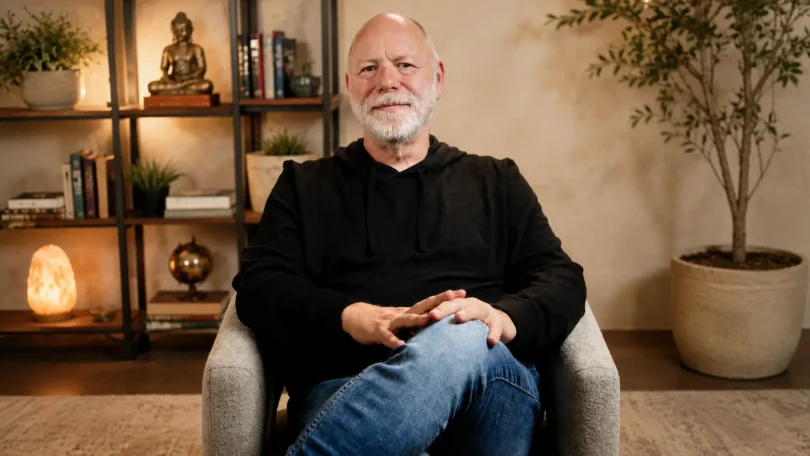
A guided course on awakening divine consciousness. Paul Selig teaches it in Awakening Divine Consciousness, part of NLS Mastery. Watch the course preview below.
Frequently Asked Questions
Who are the main Hindu gods?
Brahma, Vishnu and Shiva form the Trimurti. Ganesha, Hanuman, Krishna and Rama are also widely worshipped.
Who are the main Hindu goddesses?
Lakshmi, Saraswati, Parvati, Durga and Kali are among the most important, honored as forms of Shakti.
How many Hindu gods are there?
A common phrase says 330 million, usually understood as meaning countless. The Vedic tradition speaks of 33 groups of devas.
Is Hinduism polytheistic?
It includes many deities, and many Hindus see them as forms of one reality, Brahman. Scholars describe this variously as polytheism, monotheism or henotheism.
What is the Trimurti?
The Trimurti is the trio of Brahma the creator, Vishnu the preserver and Shiva the transformer.
Who is the most powerful Hindu god?
It depends on the tradition. Vaishnavas center Vishnu, Shaivas center Shiva and Shaktas center the Goddess.
What is an avatar in Hinduism?
An avatar is a descent of a deity, most often Vishnu, into the world to restore balance. Rama and Krishna are the best known.
Why does Ganesha have an elephant head?
In the traditional story, Shiva restored the boy Ganesha to life with an elephant head. He is honored as the remover of obstacles.
What is puja?
Puja is a ritual of worship that may include flowers, light, incense, food offerings and mantras.
Can non-Hindus learn about Hindu deities?
Yes. Approach with respect, learn from authentic sources and avoid treating sacred figures as trends.
Spirituality for the Rest of Us™
Movies, series, documentaries, audiobooks, audio courses and guided meditations on awakening and consciousness, all in one place. 14-day money-back guarantee.