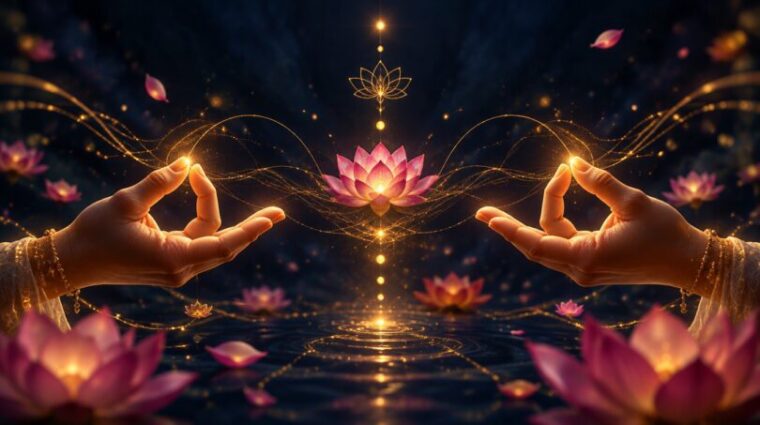
A mudra is a hand gesture that carries meaning. In yoga, meditation, Buddhist art and classical Indian dance, the hands are used as a language: palms together for gratitude, a raised palm for fearlessness, thumb and finger joined for focus. The word mudra comes from Sanskrit and is often translated as seal or gesture.
This guide explains what the most common mudras mean, how to form each one, how the fingers connect to the five elements, and how to start a simple daily practice. You do not need to be flexible, experienced or even sitting cross-legged. You only need your hands and a few quiet minutes.
Key Takeaways
- A mudra is a symbolic hand gesture used in yoga, meditation, art and dance.
- Each finger is linked to one of five elements: fire, air, space, earth and water.
- Gyan Mudra and Anjali Mudra are the easiest places to begin.
- Hold a mudra for 5 to 15 minutes with slow, steady breathing.
- Mudras are a contemplative practice, not medical treatment.
What Is a Mudra?
According to Wikipedia, a mudra is a symbolic or ritual gesture in Hinduism and Buddhism. Some mudras involve the whole body, but the most familiar ones are performed with the hands and fingers. You can see them everywhere: in statues of the Buddha, in temple carvings, in classical dance and in a modern yoga class.
The idea behind them is simple. The hands hold a great many nerve endings, and the gestures give the mind something to rest on. When the hands are still and the pose is clear, the mind has less to chase. Practitioners describe a mudra as a way of sealing in an intention, such as calm, courage or gratitude.
The Five Elements and Your Fingers
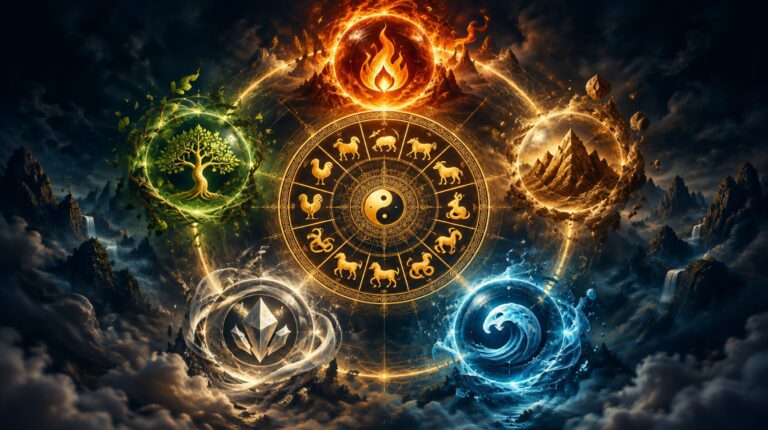
In the traditional system, each finger represents an element. Touching a fingertip to the thumb is said to bring that element into balance. The thumb stands for fire and acts as the connector.
| Finger | Element | Quality |
|---|---|---|
| Thumb | Fire | Will and energy |
| Index finger | Air | Thought and movement |
| Middle finger | Space | Openness and awareness |
| Ring finger | Earth | Stability and grounding |
| Little finger | Water | Flow and feeling |
This is why Prithvi Mudra, ring finger to thumb, is the grounding one, and Varuna Mudra, little finger to thumb, is the one for flow. Once you know the chart, many mudras begin to make sense by themselves.
Mudra Meanings: 22 Hand Gestures
Here are the most common mudras, how to form them and what they are traditionally associated with. Use the chart as a starting point and follow what feels natural to you.
| Mudra | How to form it | Traditional meaning |
|---|---|---|
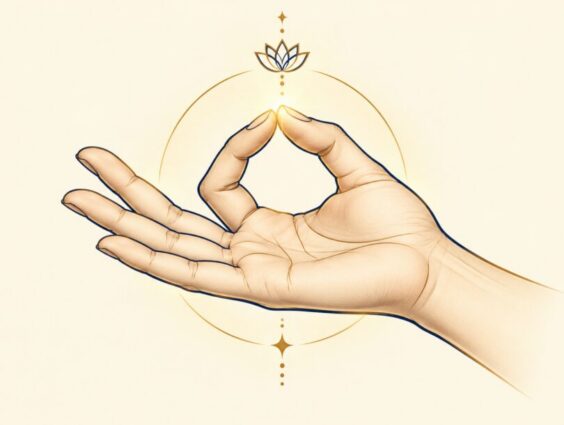
| Gyan Mudra | Tip of the thumb touches the tip of the index finger; other fingers extended. | Focus, clarity and open learning. The most widely used seated meditation hand position. |
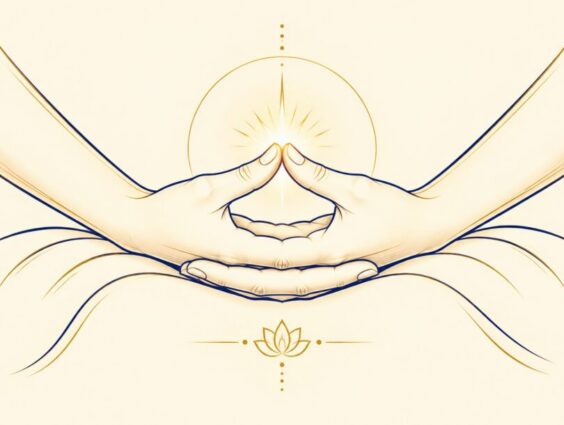
| Dhyana Mudra | Hands rest in the lap, right over left, palms up, thumb tips lightly touching. | Stillness and deep meditation. Often seen in images of the seated Buddha. |
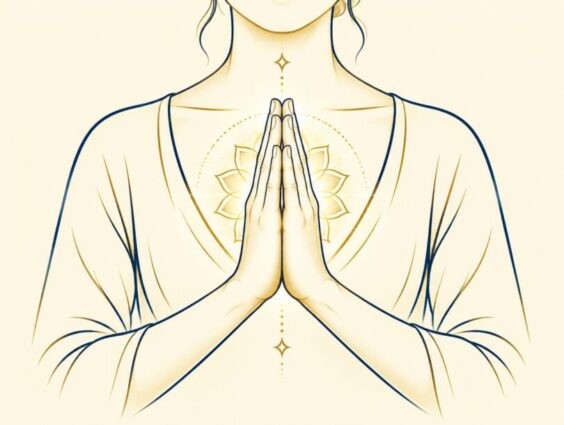
| Anjali Mudra | Palms pressed together at the heart. | Respect, gratitude and greeting. The gesture behind “namaste.” |
| Prana Mudra | Tips of the thumb, ring finger and little finger touch; other two extended. | Vitality and energy. Traditionally used when feeling tired or depleted. |
| Apana Mudra | Tips of the thumb, middle finger and ring finger touch. | Grounding and release. Associated with letting go of what you no longer need. |
| Apana Vayu Mudra | Index finger curls to the base of the thumb; middle and ring finger tips touch the thumb tip. | Called the heart mudra. Associated with calm, steadiness and an open heart. |
| Surya Mudra | Ring finger folds to the base of the thumb, and the thumb presses gently over it. | Warmth and the fire element. Associated with energy and inner heat. |
| Vayu Mudra | Index finger folds to the base of the thumb, and the thumb presses over it. | Eases restlessness. Traditionally used to settle the air element, which is linked to a busy mind. |
| Varuna Mudra | Tip of the little finger touches the tip of the thumb. | Water and flow. Associated with softness, adaptability and emotional balance. |
| Prithvi Mudra | Tip of the ring finger touches the tip of the thumb. | Earth and grounding. Associated with stability and feeling rooted. |
| Shuni Mudra | Tip of the middle finger touches the tip of the thumb. | Patience and discernment. Associated with staying steady through delay. |
| Akasha Mudra | Middle finger tip and thumb tip touch, as in Shuni, held with the intention of spaciousness. | Space and openness. Associated with listening, quiet and expansion. |
| Shunya Mudra | Middle finger folds to the base of the thumb, and the thumb presses over it. | Emptiness and inner space. Used in some traditions to quiet outer noise. |
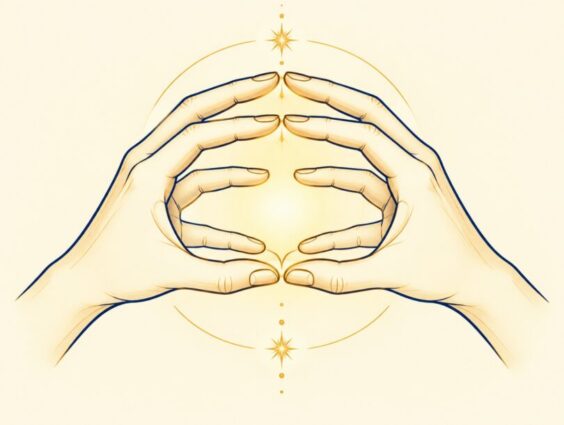
| Hakini Mudra | All fingertips of both hands touch lightly, as if holding a ball. | Concentration and memory. Often held at the brow while focusing on the third eye. |
| Kubera Mudra | Tips of the thumb, index and middle fingers touch; ring and little fingers fold into the palm. | Associated with focus on prosperity and clear intention. |
| Padma Mudra | Palms together at the heart, fingers and thumbs spread open like a lotus bloom. | Openness and purity of heart. The lotus rises from mud and still blooms. |
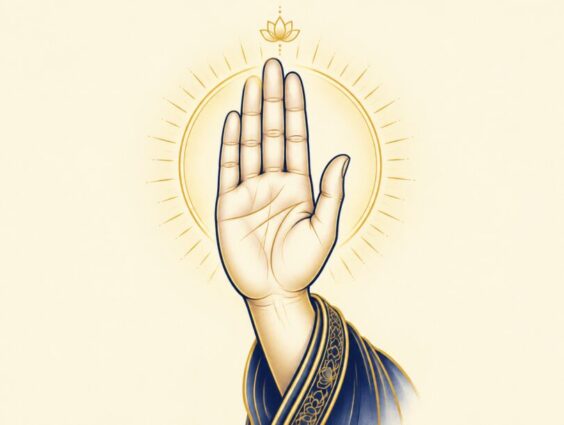
| Abhaya Mudra | Right hand raised to shoulder height, palm facing out. | Fearlessness and protection. Common in Buddhist and Hindu art. |
| Varada Mudra | Hand extended downward, palm facing out. | Giving, compassion and generosity. |
| Bhumisparsha Mudra | Right hand reaches down to touch the earth, left hand rests in the lap. | Witness and steadiness. The Buddha is said to have used it to call the earth to witness his awakening. |
| Dharmachakra Mudra | Thumbs and index fingers form circles in front of the chest, hands facing each other. | Turning the wheel of teaching. Associated with learning and the sharing of wisdom. |
| Kali Mudra | Hands clasped, index fingers extended and pointing up, other fingers interlaced. | Strength and cutting through what holds you back. |
| Bhairava Mudra | Right hand rests over left in the lap, both palms up. | Calm and unity. Associated with balance between opposites. |
Hand Mudras for Meditation
If you are new, you do not need all twenty-two. Three are enough to begin.
Gyan Mudra for focus
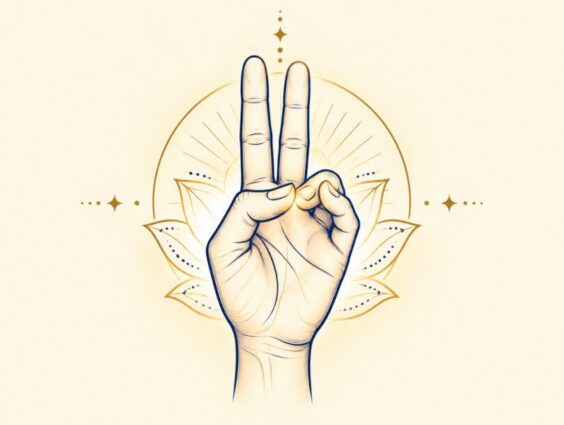
Rest your hands on your knees, palms up or down. Touch the tip of each thumb to the tip of each index finger and let the other three fingers extend softly. Breathe slowly. This is the classic hand position for seated meditation, and many people find it a calm place to start.
Anjali Mudra for gratitude
Bring your palms together at the center of your chest, thumbs resting against the breastbone. Close your eyes and think of one thing you are grateful for. It takes thirty seconds and works anywhere.
Prithvi Mudra for grounding
Touch the tip of the ring finger to the tip of the thumb on both hands. Feel the weight of your body in the chair or on the floor. Many people use this one when they feel scattered or rushed.
How to Practice Mudras
- Sit comfortably. A chair is fine. Keep your spine tall and your shoulders soft.
- Form the mudra gently. Use light pressure. Never force or strain the fingers.
- Breathe slowly. Let the breath settle into a steady rhythm.
- Set one intention. Peace, focus, courage, or simply presence.
- Hold for 5 to 15 minutes. Release and shake out your hands.
Pair your practice with a longer sit using our meditation guide, or hold Hakini Mudra while focusing on the brow in the third eye guide.
Choosing a Mudra by Intention
Traditional teachers pair mudras with what you hope to bring into the moment. Here is a simple way to choose.
| If you want | Try |
|---|---|
| Focus and clarity | Gyan Mudra or Hakini Mudra |
| Calm and stillness | Dhyana Mudra or Apana Vayu Mudra |
| Grounding | Prithvi Mudra or Apana Mudra |
| Energy and warmth | Prana Mudra or Surya Mudra |
| Gratitude | Anjali Mudra |
| Courage | Abhaya Mudra or Kali Mudra |
| Openness | Akasha Mudra or Padma Mudra |
Mudras in Buddhist Art
Look closely at a statue of the Buddha and the hands will tell you which moment is shown. In Bhumisparsha, one hand touches the ground and the earth is called to witness the moment of awakening. In Dharmachakra, the hands turn the wheel of the teaching. In Abhaya, the raised palm says there is nothing to fear. In Varada, the lowered palm offers what the heart has to give. Learning these four gestures makes any temple or museum visit richer.
Mudras in Hindu Practice and Dance
In Hindu ritual, mudras accompany prayer, offerings and chanting. In classical Indian dance such as Bharatanatyam, a single-hand gesture can stand for a lotus, a bird or a river, and a dancer strings them together to tell a story. In yoga, the same tradition produced the seated gestures people use to settle the mind. The hands are a language, and the practice is learning to read it.
Pairing Mudras with Breath and Mantra
A mudra works well with a simple breath count. Inhale for four, exhale for six, and let the hands hold their shape. You can also repeat a single word or mantra on the exhale. When the mind wanders, return to the feeling of the fingertips touching. That small return is the practice.
Common Mistakes
- Pressing too hard. Light contact is enough.
- Holding tension in the shoulders. Let the arms rest on the knees or thighs.
- Chasing results. Notice how you feel and leave the rest.
- Changing mudras every day. Stay with one for a week and see what it teaches you.
- Forgetting the breath. The hands and the breath work together.
A Simple 10-Minute Daily Routine
- Minute 1: sit, close your eyes and take five slow breaths.
- Minutes 2 to 3: Anjali Mudra at the heart, and name one thing you are grateful for.
- Minutes 4 to 9: Gyan Mudra on the knees, breathing slowly and returning to the fingertips when the mind wanders.
- Minute 10: release the hands, rub your palms together and rest them over your eyes.
That is the whole practice. Do it for seven days and notice what changes.
Mudras, Chakras and Energy
Many traditions connect mudras with the body’s energy centers. Earth-related gestures are linked with the root of the body, while Hakini is linked with the brow. You can learn more about the centers in our chakras guide and about the rising energy that yoga describes in our kundalini guide. These are traditional maps, and many seekers find them useful as a way to organize their attention.
Where Mudras Come From
Mudras appear in some of the oldest sacred art of India and spread across Asia with Buddhism. Statues of the Buddha show a handful of fixed gestures. Abhaya means “no fear,” Bhumisparsha calls the earth as witness, and Dharmachakra represents the teaching. In classical dance, hand gestures tell stories word by word. In yoga, the same gestures became tools for stillness.
A Note on Health
Mudras are a gentle practice, and most are safe for most people. Skip any position that causes pain, numbness or tingling. Traditional writings make health claims for individual mudras, but research has not confirmed them, so please do not use mudras in place of medical care. If you have a health condition, speak with your doctor.
Making It Yours
- Start small. One mudra, five minutes, once a day.
- Anchor it. Use the same time each day, such as before breakfast or before bed.
- Notice, do not judge. Some days feel still and some do not.
- Trust yourself. A gesture is a doorway. The stillness you find is yours.
Hear It From the Guests
These Next Level Soul Podcast conversations pair well with a mudra and meditation practice.

Yogiraj SatGurunath Siddhanath: The Kriya Path to Awakening
Yogiraj SatGurunath Siddhanath, a Himalayan mystic, joins Alex Ferrari to talk about the kriya path and awakening. Watch the full episode and read the show notes.

Loch Kelly: Awakening in a Chaotic World
Loch Kelly, a teacher of effortless mindfulness, joins Alex Ferrari to talk about awakening in a chaotic world. Watch the full episode and read the show notes.

Niraj Naik: The Art of Spiritual Breathwork
Niraj Naik, a breathwork guide and former pharmacist, joins Alex Ferrari to talk about the art of spiritual breathwork. Watch the full episode and read the show notes.
Sources and Further Reading
Spirituality for the Rest of Us™
Films, teachings and community on Next Level Soul TV.
Frequently Asked Questions
What do mudras mean?
A mudra is a symbolic hand gesture used in yoga, meditation, dance and sacred art, mostly in Hindu and Buddhist traditions. The word is Sanskrit and is often translated as seal or gesture. Each one is associated with a particular quality, such as focus, peace or fearlessness.
What is the most common mudra?
Gyan Mudra, where the thumb and index finger touch, is the most commonly used in meditation. Anjali Mudra, palms together at the heart, is the one most people have seen in yoga class.
How long should I hold a mudra?
Many teachers suggest starting with 5 to 15 minutes while seated or breathing slowly. You can hold a mudra longer or in short rounds across the day. Comfort matters more than the clock.
Do mudras really work?
Mudras are a contemplative practice. Many people find that holding a gesture gives the mind an anchor and makes meditation easier to settle into. Traditional claims about physical healing have not been proven by research, so treat mudras as a mindfulness aid and not as medical treatment.
Which mudra is best for beginners?
Start with Gyan Mudra or Anjali Mudra. Both are simple, comfortable and widely taught.
What are the five elements in mudras?
In the traditional system each finger links to an element. The thumb is fire, the index finger is air, the middle finger is space, the ring finger is earth and the little finger is water. Touching a finger to the thumb is said to bring that element into balance.
Can I do mudras anywhere?
Yes. Most hand mudras can be held while sitting, walking slowly or resting your hands on your knees, which makes them easy to bring into a daily routine.
What is the difference between a mudra and a hand pose in yoga?
Many yoga hand poses are mudras. The word is also used for full-body seals and for the symbolic hand gestures in classical Indian dance.
Are there mudras for anxiety or stress?
Traditional teachings pair Vayu Mudra, Apana Vayu Mudra and Prithvi Mudra with calming and grounding. If anxiety is affecting your daily life, please also speak with a doctor or qualified professional.
What is Hakini Mudra?
Hakini Mudra brings the fingertips of both hands together and is associated with concentration and memory. It is often held at the brow while focusing on the third eye.
Are mudras part of Buddhism or Hinduism?
Both. Hindu texts and yoga traditions use hand mudras in worship and meditation, and Buddhist art shows the Buddha in specific mudras such as Abhaya and Bhumisparsha.
Can I use mudras with breathwork?
Yes. Many people pair a mudra with slow breathing or mantra, using the hands as a cue for the practice.
Go Deeper with NLS Mastery: Ancient Meditation
Ancient meditation for inner stillness. Acharya Shunya teaches it in Ancient Meditation, part of NLS Mastery. Watch the course preview below.