The Gene Keys are a contemplative system created by British author Richard Rudd, built around 64 archetypes that mirror the 64 hexagrams of the I Ching. Each Key moves through three levels, Shadow, Gift and Siddhi, as a map for how a limiting pattern can become a creative strength and then something close to pure presence. It is a symbolic self-reflection tool, not a science, and it works best as an invitation to contemplate your own patterns. If you know Human Design, you will notice a family resemblance.
Key Takeaways
- What it is: A system of 64 archetypes, based on the I Ching, used for contemplation and self-reflection.
- Founder: Richard Rudd, whose book The Gene Keys was published by Watkins in 2013.
- Core idea: Each Key has a Shadow, a Gift and a Siddhi: a spectrum of consciousness.
- Relation to Human Design: They share the 64-gate structure and sources, but they are different systems with different aims.
- Honest limit: No empirical scientific basis; the word “genetic” is used metaphorically.
What Are the Gene Keys?
The Gene Keys are a system of 64 archetypes. Each one describes a pattern of human experience, from the way fear contracts us to the way love opens us. The structure borrows from the 64 hexagrams of the I Ching, and the system’s author draws a parallel with the 64 codons of the human genetic code.
That last parallel is symbolic. The Gene Keys are not a genetics test and they do not read your DNA. The words “gene” and “frequency” are used as metaphors. Critics point this out, and it is fair to say so up front. Supporters value the system for its contemplative depth and symbolic richness rather than for any scientific claim.
Scholars generally place it within modern Western esotericism and symbolic self-development, alongside other tools that use the I Ching, astrology and mystical traditions as raw material.
Gene Keys at a Glance
| Question | Quick answer |
|---|---|
| Who created it? | Richard Rudd, a British author born in 1967. |
| Main book? | The Gene Keys: Embracing Your Higher Purpose (Watkins, 2013). |
| How many Keys? | 64, mirroring the 64 I Ching hexagrams. |
| The three levels? | Shadow, Gift and Siddhi. |
| What is a Profile? | A personal chart that combines astrological calculations with the I Ching, according to the official site. |
| Is it scientific? | No. It is a symbolic and contemplative system. |
| Best use? | Reflection, journaling and contemplation, not prediction. |
Richard Rudd and Where the System Came From
Richard Rudd is a British author born on 7 September 1967. He describes the origins of the Gene Keys in a long contemplative period that began after a transformative experience in 1987, which he interprets as a moment of heightened vision. Over the following decades he developed the Keys, and he published The Gene Keys: Embracing Your Higher Purpose with Watkins Publishing in 2013. Watkins’ Spiritual 100 list ranked him at number 87 for 2025. You can read more on our page about Richard Rudd.
Later works include The 64 Ways (2018) and The Art of Contemplation (2019). The official site also presents a guided program called the Golden Path, described as a way to apply the Keys to your life and understand your Profile.
It helps to hold these origin stories lightly. A founder’s account of a mystical experience is a personal testimony. It is a meaningful part of the story, not independent proof.
Watch Our Interview with Richard Rudd
Richard Rudd sat down with Alex Ferrari on the Next Level Soul Podcast to talk about how the Gene Keys came to him and how people can work with them. Press play below to hear it in his own words.
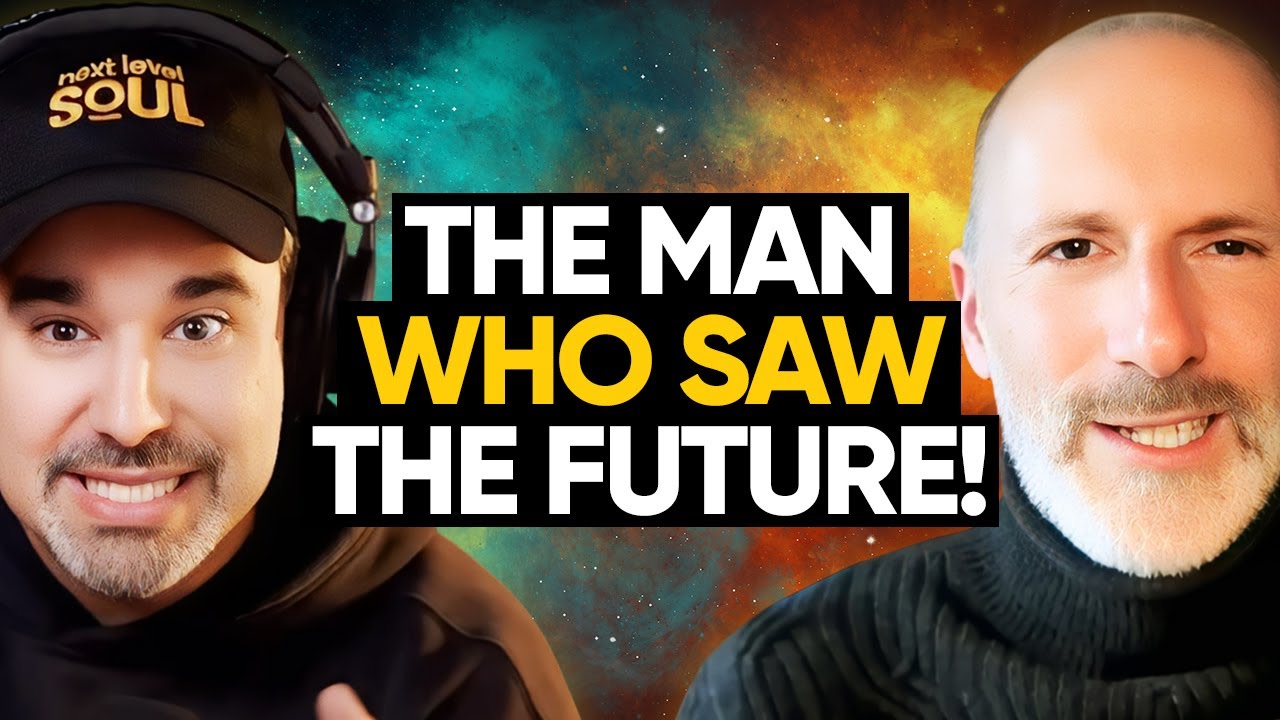
Watch the full episode and read the show notes.
Shadow, Gift and Siddhi: The Spectrum of Consciousness
The heart of the system is a three-level spectrum that applies to every Key.
| Level | What it describes | Everyday flavor |
|---|---|---|
| Shadow | Limiting patterns or unconscious expressions | Reacting from fear, habit or old stories |
| Gift | Creative potential and transformation | Responding with presence and skill |
| Siddhi | A transcendent spiritual essence | A rare, open, almost wordless clarity |
The idea is that a Shadow is not an enemy. It is the same energy in a contracted form. Contemplating a Shadow, the teaching goes, can allow it to shift toward its Gift. The Siddhi is described as the highest expression and is less something you achieve than something that may be glimpsed.
A Tuesday example. Say your Shadow is irritability when plans change. Instead of scolding yourself, you might notice where the irritation lives in your body, breathe, and ask what quality is underneath. That small shift, from self-criticism to curiosity, is the practical heart of the method. If this appeals to you, our guide to shadow work covers similar ground in a different tradition.
Gene Keys vs Human Design
The two systems are often mentioned together, and the overlap is real. Both organize human experience around 64 archetypes tied to the I Ching. Human Design was created by Alan Robert Krakower, who published as Ra Uru Hu, after an alleged mystical experience in 1987, and he published The Human Design System in 1992. It draws on astrology, the I Ching, Kabbalah, Vedic philosophy and modern physics, and it sorts people into types such as Generators and Projectors.
The Gene Keys invite a more contemplative approach. They are less about strategy for decision-making and more about moving through the Shadow, Gift and Siddhi spectrum. Many people use Human Design to find their chart and the Gene Keys to reflect on what each gate means.
| Feature | Gene Keys | Human Design |
|---|---|---|
| Founder | Richard Rudd | Ra Uru Hu (Alan Robert Krakower) |
| Structure | 64 Keys; Shadow, Gift, Siddhi | 64 gates; types, centers, authority |
| Main emphasis | Contemplation and consciousness | Type, strategy and decision-making |
| Shared base | I Ching, astrology, esoteric traditions | I Ching, astrology, esoteric traditions |
| Scientific support | None established | None established |
Critics note that the Gene Keys resemble Human Design, which they also regard as non-scientific. A fair summary: both are symbolic frameworks, and both are only as useful as the reflection they inspire. For a fuller picture, start with our Human Design guide.
How to Start With the Gene Keys
You can begin without buying anything beyond a book or a free chart. Here is a gentle path.
- Get your Profile. The official site describes a Profile that combines astrological calculations with the I Ching. A free chart tool typically asks for your birth details.
- Pick one Key. Choose a single Key from your chart. Do not try to read all 64 at once.
- Read the three levels. Read the Shadow, Gift and Siddhi for that Key slowly.
- Notice the Shadow in daily life. Where did it show up this week? Write one sentence, without judgment.
- Contemplate, do not analyze. Sit for five minutes with a question like “What is under this pattern?”
- Return weekly. Revisit the same Key for a few weeks before moving to another.
A short sitting practice can help. Try one of our guided meditations before you journal. Also see astrology if you want context for how birth charts are read.
Honest Limits and Common Misconceptions
- “It reads your DNA.” It does not. The genetic language is metaphorical.
- “It can predict your future.” It is a reflection tool, not a prediction system.
- “It proves a scientific link between I Ching and genes.” The 64 hexagrams and 64 codons share a number, and that is the parallel. A shared number is not a mechanism.
- “It is the same as Human Design.” They overlap in structure but differ in emphasis and founder.
- “I must buy the whole program.” Many people start with the book. Spend only what feels right.
There is early academic interest. A 2022 article in the Counseling and Family Therapy Scholarship Review from Regis University explored using the Gene Keys alongside Bowen Family Systems Theory, suggesting they might help clients reflect on family and social programming. That is an exploration of use, not proof that the system works.
Gene Keys is a spiritual and reflective practice, not mental health treatment. If you are working through trauma, anxiety or depression, please work with a licensed professional as well.
Go Deeper
These Next Level Soul pages pair well with a Gene Keys journey.
- Look into the I Ching to see where the 64 hexagrams began.
- Read Richard Rudd’s book slowly, one Key at a time.
- Compare your Gene Keys reflections with your Human Design chart.
- Keep a short journal of Shadow moments and what softened them.
Go Deeper with NLS Mastery: Connecting to Your Higher Self
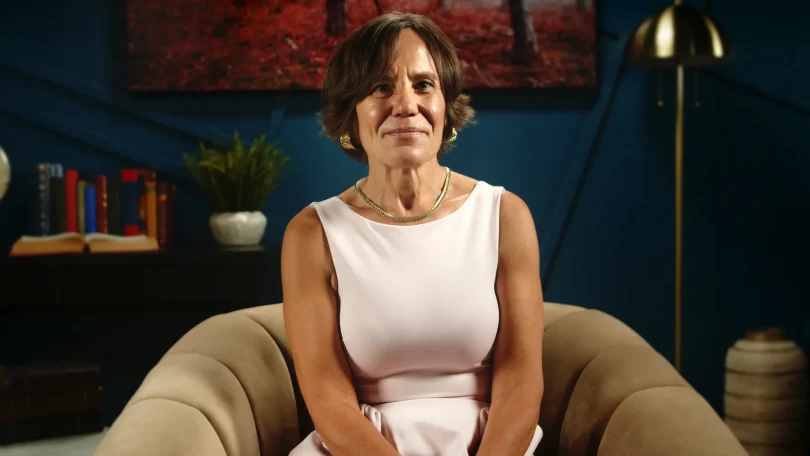
Genevieve’s Mastery course explores light and consciousness, a natural companion to contemplating the Shadow-to-Gift spectrum. Genevieve Taeger teaches it in Connecting to Your Higher Self, part of NLS Mastery. Watch the course preview below.
Frequently Asked Questions
What are the Gene Keys?
They are a system of 64 archetypes created by Richard Rudd, based on the I Ching and used for contemplation and self-reflection.
Who created the Gene Keys?
British author Richard Rudd, who published The Gene Keys: Embracing Your Higher Purpose with Watkins in 2013.
What do Shadow, Gift and Siddhi mean?
They are three levels of each Key: Shadow is a limiting pattern, Gift is its creative potential, and Siddhi is a transcendent essence.
How many Gene Keys are there?
There are 64, mirroring the 64 hexagrams of the I Ching and the 64 codons of the genetic code.
Is Gene Keys the same as Human Design?
No. They share the 64-part structure and sources like the I Ching, but they have different founders and different emphases.
Is Gene Keys scientific?
No. Critics note the lack of empirical basis and the metaphorical use of words like genetics and frequency.
What is the Golden Path in Gene Keys?
It is a guided program offered by the Gene Keys community to help you apply the Keys and understand your Profile.
How do I find my Gene Keys profile?
You use your birth details with a chart tool, such as the one on the official Gene Keys site. The profile combines astrological calculations with the I Ching.
Can Gene Keys predict my future?
No. It is a reflective tool and does not predict events.
Where should a beginner start?
Many people start with Richard Rudd’s book, pick one Key from their chart, and contemplate its Shadow, Gift and Siddhi slowly.
Sources and Further Reading
Spirituality for the Rest of Us™
Movies, series, documentaries, audiobooks, audio courses and guided meditations on awakening and consciousness, all in one place. 14-day money-back guarantee.