
Psychometry is the claimed psychic ability to sense information about an object’s history, or the people connected to it, by holding or touching it. The word was coined in 1842 by the American physician Joseph Rodes Buchanan, and it is not the same thing as psychometrics, the science of psychological testing. It sits within the wider field of intuition development and is also called object reading.
Key Takeaways
- Meaning: Claimed ability to sense an object’s history by touching it.
- Origin: Coined in 1842 by Joseph Rodes Buchanan, from Greek words for soul and measure.
- Not the same as: Psychometrics, the measurement science used in psychological testing.
- Evidence: No scientific evidence supports it; skeptics point to cold reading and bias.
- Practice: A gentle sensing exercise that doubles as a mindfulness and imagination practice.
What Is Psychometry?
In the paranormal sense, psychometry means picking up impressions about an object by touch. A practitioner might hold a ring, a letter or a key and describe feelings, images or events they sense are linked to it. The underlying belief is that objects can hold a kind of imprint of the people and experiences around them, and that a sensitive person can read it. The same practice is also known as token-object reading.
The word comes from the Greek psyche, meaning soul or spirit, and metron, meaning measure. It literally means soul-measuring. Today people often use it for object reading in psychic circles, in fiction, and at psychic fairs.
Psychometry at a Glance
| Question | Quick answer |
|---|---|
| What does it mean? | Claimed ability to sense an object’s history or owner by touching it. |
| Who coined the word? | Joseph Rodes Buchanan, an American physician, in 1842. |
| Other names? | Object reading, token-object reading, psychoscopy. |
| Is it the same as psychometrics? | No. Psychometrics is the science of measuring things like intelligence and personality. |
| Does science support it? | No. Researchers find no evidence and attribute apparent hits to cold reading and bias. |
| Is it related to clairvoyance? | Often grouped with it. Psychometry is clairvoyance tied to a physical object. |
| Can anyone try it? | Yes, as a mindful, imaginative exercise, with honest expectations. |
Psychometry vs. Psychometrics
The two words look nearly identical, and search results mix them up. They have very different meanings.
| Term | Meaning | Field |
|---|---|---|
| Psychometry | Claimed psychic reading of objects by touch | Parapsychology, spiritual practice |
| Psychometrics | Theory and technique of measuring things like intelligence, personality and mental traits | Psychology and education |
Psychometrics is a recognized branch of psychology. It uses mathematical models to measure traits that cannot be observed directly. Joseph Rodes Buchanan coined psychometry in connection with paranormal phenomena, not with testing. If you were hoping to learn about personality tests, you want psychometrics. If you want object reading, read on.
The History of Psychometry
Joseph Rodes Buchanan (1814 to 1899) was an American physician who taught physiology at the Eclectic Medical Institute in Cincinnati, Ohio. He promoted psychometry from the 1840s onward as a new science, and his work appealed strongly to Spiritualists. In his Manual of Psychometry he described it as the dawn of a new civilization.
The geologist William Denton continued the work. In 1863 he published The Soul of Things, which described experiments in which he and others reported impressions from rocks and fossils. Later in the century psychometry became a staple of stage acts and séances. The psychologist Joseph Jastrow criticized the early work as based on delusion and wishful thinking.
Psychometry has remained part of popular culture since. It appears as a plot device in novels, television and movies, and it is still offered at psychic fairs.
What the Evidence Says
It is worth being direct. There is no scientific evidence that psychometry works. Skeptical researchers attribute apparent successes to two things: cold reading and confirmation bias.
Cold reading is a set of techniques used to seem perceptive without prior knowledge of a person. A reader asks probing questions, watches reactions and expands on what lands. The subject often supplies the meaning. One common tool is the Barnum statement, a remark that feels personal but fits almost anyone.
The Barnum effect, also called the Forer effect, was shown in 1948 when the psychologist Bertram Forer gave 39 students the same vague description, taken from an astrology book. They rated it on average 4.30 out of 5 for accuracy. A good reader of an object may give impressions that feel personal for similar reasons. As one psychologist put it, self-validation is no validation.
Psychometry is a spiritual and imaginative practice. It is not a way to find missing people, solve crimes or make decisions about health, money or safety. Police surveys find most departments do not consider psychics credible or useful. Please rely on professionals for anything serious.
Does that make it worthless? Not necessarily. Many people experience object reading as a form of mindful attention, or as storytelling that helps them connect with a memory. You can value the experience without claiming it proves anything.
How People Practice Psychometry
If you want to try it as a mindfulness and intuition exercise, here is a gentle approach. Treat it as play with attention, not a test of whether you are gifted.
- Choose an object with a story. A family keepsake, an old book, a piece of jewelry. Ask a friend to hand you something without telling you its history.
- Settle. Take five slow breaths. Put the object in your open hands.
- Notice the physical first. Weight, temperature, texture, smell. This anchors you in what is actually there.
- Notice what rises. A feeling, a color, a memory, an image. Do not chase it or judge it.
- Write it down. Short phrases, exactly as they come. Resist polishing.
- Check with care. Ask the friend about the object only after you finish writing. Count hits and misses honestly, including the vague ones.
- Repeat a few times over a week. See whether you do any better than guessing. Many people learn more about how their imagination works than about the objects.
That last step matters. Writing down impressions before checking, and counting misses, is the best protection against fooling yourself. It also turns the practice into a real exercise in noticing.
Related practices
People who like psychometry often explore other intuitive arts. Clairvoyance is the broader idea of seeing beyond ordinary perception, and the same sensing skills show up in empath experiences. Some folks use Akashic Records meditation for a similar sense of reading a field of information, with the same need for honesty about evidence.
Ethics and Safety
- Be wary of high-pressure readers. A genuine, respectful practitioner does not claim certainty or scare you.
- Never pay to remove a curse or fix a problem. That is a common scam pattern.
- Do not use it for serious decisions. Health, legal and financial choices need qualified professionals.
- Treat other people’s belongings with respect. Ask permission before handling an item, especially an heirloom or something connected to grief.
- Mind your tone. Sharing impressions about someone’s loved one can land heavily. Gentleness matters.
Held with care, psychometry is a small ritual of attention. It invites you to slow down and notice.
Go Deeper
To build your sensing skills in a grounded way, our intuition development guide is the best place to start. For a related tool that people use to ask the subconscious questions, see pendulum dowsing.
Go Deeper with NLS Mastery: Awaken Your Psychic Abilities
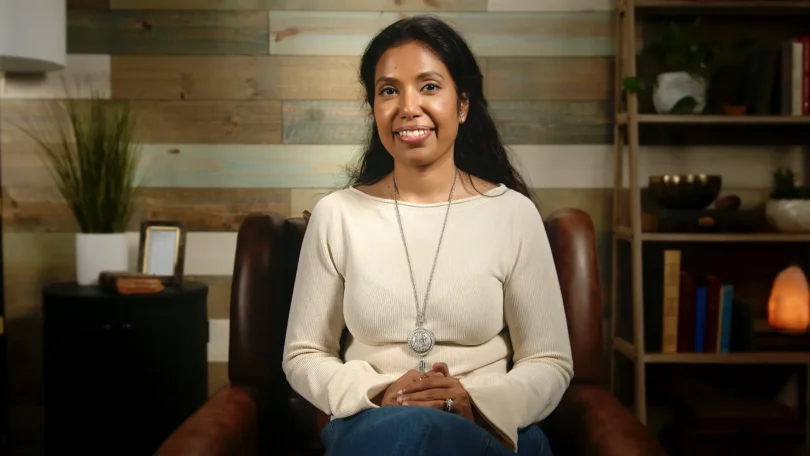
Nikki’s course guides you through developing intuition and psychic sensitivity with grounded, honest practice, a fitting next step after exploring object reading. Nikki Dutta teaches it in Awaken Your Psychic Abilities, part of NLS Mastery. Watch the course preview below.
Frequently Asked Questions
What is the meaning of psychometry?
Psychometry is the claimed ability to sense information about an object’s history or owner by touching it. It is also called object reading or token-object reading.
Who invented the word psychometry?
The American physician Joseph Rodes Buchanan coined it in 1842, from Greek words meaning soul and measure.
What is the difference between psychometry and psychometrics?
Psychometry is a paranormal claim about reading objects. Psychometrics is a branch of psychology that measures traits like intelligence and personality.
Is psychometry real?
There is no scientific evidence that it works as claimed. Skeptics attribute apparent successes to cold reading and confirmation bias.
What is a psychometrist?
A psychometrist, in the psychic sense, is someone who says they can read an object’s history by touching it. In psychology, the similar word refers to a person who administers tests.
How does psychometry work according to believers?
Believers say objects hold an energetic imprint of their owners and events, and that a sensitive person can pick up that imprint through touch.
Is psychometry the same as clairvoyance?
They are often grouped together. Psychometry is usually described as a form of clairvoyance connected to a physical object.
Can you learn psychometry?
You can practice it as a mindful attention exercise. Write impressions before checking them, and count misses honestly, so you learn how your own mind works.
Who was William Denton?
He was a geologist who continued Buchanan’s work and published The Soul of Things in 1863, describing psychometry experiments with rocks and fossils.
Is psychometry dangerous?
The practice itself is harmless as a mindful exercise. The risk comes from paying high-pressure readers or relying on readings for serious decisions.
Sources and Further Reading
Spirituality for the Rest of Us™
Movies, series, documentaries, audiobooks, audio courses and guided meditations on awakening and consciousness, all in one place. 14-day money-back guarantee.