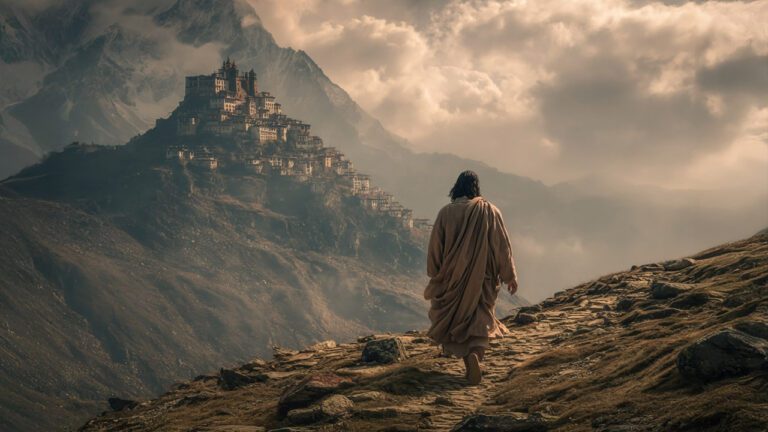
A tall figure in a white turban stands in a New York room in 1875, and a colonel who has just co-founded a society sees him with his own eyes. That, at least, is how Henry Steel Olcott told it. The visitor was the Master Morya, the first of the Himalayan teachers to be named in the modern Western esoteric tradition and the one Helena Blavatsky said she had known since her youth. This guide follows him from the Theosophical founders to the Mahatma Letters, from the Roerichs to the Summit Lighthouse, and says honestly which parts are documented, which are claims, and which are debated by scholars. For the wider picture, begin with our complete guide to the Ascended Masters.
Key Takeaways
- Who he is: El Morya, also called Master M., Mahatma Morya or Morya Khan, a Master of the Wisdom in the Theosophical tradition and later an Ascended Master of the First Ray.
- Where the story begins: Blavatsky said she first met him in London in 1851. Olcott described a visit in 1875. The Mahatma Letters (1880 to 1884) carry his voice.
- His ray: the First Ray of will, power and protection, associated with the color blue and with leadership grounded in service.
- The debated parts: his true identity (a Rajput, said some; the Maharaja of Kashmir, argued K. Paul Johnson; unknown, said others), the letters’ authorship, and whether Blavatsky ever reached Tibet.
- Later traditions: Helena and Nicholas Roerich (Agni Yoga), Alice Bailey, the Bridge to Freedom, and the Summit Lighthouse, which places his retreat in Darjeeling.
- Our stance: reverent, not credulous. The teaching can be valuable even when the history is uncertain.
In This Guide
- Who Is El Morya?
- Blavatsky, London 1851 and the Rajput Prince
- Colonel Olcott and the Turbaned Visitor
- The Mahatma Letters and the Voice of M.
- Precipitated Letters, the Shrine and the Scandal of 1884
- Who Was He Really? The Debated Identities
- The Tibet Question
- The First Ray: Will, Power and Protection
- Helena Roerich, Agni Yoga and the Banner of Peace
- Alice Bailey, the Hierarchy and the Great Invocation
- The I AM Activity, the Bridge to Freedom and the Summit Lighthouse
- The Lives Attributed to Him
- Darjeeling, the Temple of Goodwill and Shigatse
- What Did Morya Teach?
- The Warrior Saint: Morya and the Kshatriya Path
- How Morya Compares with Kuthumi, Saint Germain and Others
- Honest Questions and Cautions
- A Mystic’s Reading: Why Morya Matters Now
- A Practice: Seven Days of Steady Will
- Books and Further Reading
- Who Will Connect with This Master
- Keep Exploring
- Frequently Asked Questions
Who Is El Morya?
Of all the Masters named in the modern esoteric world, El Morya may be the one with the strongest outline. He is the stern one. Where other Masters are described as gentle, mystical or artistic, Morya is described as a man of will, a ruler by temperament, a teacher who sets high standards and expects them to be met.
In the Theosophical tradition he is called Master M., or Mahatma Morya, and he is said to be a Rajput, a member of the warrior and ruling caste of northern India. He is said to live in a body that has been prolonged by yogic discipline, mostly in Tibet. He is the Master who, according to Blavatsky and Olcott, stood behind the founding of the Theosophical Society in 1875. Later traditions gave him the title El Morya, a form that comes from the I AM and Summit Lighthouse streams, and they place him as Chohan, or lord, of the First Ray.
His name carries different spellings. You will see Morya, Moria, El Morya Khan and Mahatma M. They all point to the same figure in the literature. For this guide we use Morya for the Theosophical Master and El Morya for the Ascended Master of the later teachings.
Keep in mind that nearly everything we know about Morya comes through other people. He left no autobiography and no verifiable record in the public archives of India or Tibet. What we have are testimonies, a body of letters whose authorship is disputed, and a century of devotion. We will keep those categories clear as we go.
Blavatsky, London 1851 and the Rajput Prince
Helena Petrovna Blavatsky was born in Ekaterinoslav, in the Russian Empire, in 1831. She grew into a restless, brilliant and combative woman who traveled widely and claimed contact with unseen teachers from childhood. In later years she described a decisive meeting. In August 1851, she said, she was in London, in Hyde Park, during the Great Exhibition, when she saw a tall Indian man in a turban. She recognized him as the figure who had appeared in her visions since she was a girl. He told her, she said, that she had a role to play in a work he and his brothers were preparing.
Blavatsky often described this man as a Rajput prince, and she identified him with the Master she called Morya. She did not give a surname or a place of birth that can be checked. No record from the Exhibition names him. As a result, the London meeting stands as a founding story, told by one person, that cannot be independently confirmed.
The story matters because it shows how Blavatsky understood her work. She presented herself as a messenger, not an originator. The ideas in Isis Unveiled (1877) and The Secret Doctrine (1888) were, in her account, partly given to her by Masters. Morya was the one she named as her main guide. If you want to see the world as she did, imagine her life as an apprenticeship, with an unseen teacher issuing assignments.
For a thoughtful biography that treats her with sympathy and without gullibility, see Gary Lachman’s Madame Blavatsky: The Mother of Modern Spirituality.
Colonel Olcott and the Turbaned Visitor
Henry Steel Olcott was a very different personality. Born in New Jersey in 1832, he was a lawyer, a journalist and a former Union Army officer who had investigated the Lincoln assassination. In 1874 he met Blavatsky at a farmhouse in Vermont while investigating spiritualist phenomena, and the two began a friendship that lasted until her death in 1891. In 1875, with William Q. Judge and others, they founded the Theosophical Society in New York.
Olcott wrote a long memoir, Old Diary Leaves. In it he describes a night in 1875 when he saw an Oriental visitor in his room in New York, a man with a turban and white garments, who left behind a piece of cloth as evidence. Olcott identified him as the Master who would later be named Morya. He also described receiving letters in the early years from other teachers, including the Egyptian Brotherhood of Luxor, a story we meet again in our guide to Serapis Bey.
Olcott was a sincere, practical man. Many early members trusted him because he was not given to fantasy. That is part of why his testimony counts as more than gossip. But it is still testimony. He wanted to believe, and he admitted that his own investigations of these phenomena were limited by his devotion to Blavatsky.
Olcott went on to become a great organizer. He traveled to India with Blavatsky in 1879, helped to revive Buddhist education in Sri Lanka, and built the Theosophical Society headquarters at Adyar, near Madras, where the story of the Mahatma Letters takes place.
The Mahatma Letters and the Voice of M.
The key document is the correspondence known as The Mahatma Letters to A. P. Sinnett. Alfred Percy Sinnett was the editor of a major English language newspaper in India, The Pioneer, published at Allahabad. Through Blavatsky he began a correspondence in 1880 with two Masters, Koot Hoomi and Morya. A. O. Hume, a senior colonial official and founder of what became the Indian National Congress, joined the exchange. The letters went on through 1884 and were published in 1923, edited by A. T. Barker.
In these letters Morya has a distinct voice. He is blunt and economical. He is also sharply witty, with a dry humor that surprises first time readers. Again and again he reminds Sinnett that the Masters are bound by rules about what may be shared, and that discipleship asks for more than curiosity. Compared with Koot Hoomi’s patient style, Morya’s is more soldierly.
The letters cover a wide range. They discuss the ethics and the limits of occult teaching, the nature of the universe, the afterlife and the idea that spiritual progress involves service rather than escape. They also contain the material that Sinnett turned into The Occult World (1881) and Esoteric Buddhism (1883), the first Western books to present the Masters as teachers.
If you are new to the letters, expect a demanding read. Many are fragmentary, and they come with a long argument over who really wrote them. That argument is the next topic.
Precipitated Letters, the Shrine and the Scandal of 1884
The Masters’ letters did not arrive by post. They appeared, according to witnesses, in surprising ways: in a cushion, in the air above a table, in a sealed locker. Theosophists call this precipitation. Skeptics call it conjuring. At the society’s headquarters in Adyar, a cabinet called the Shrine in an upstairs room became the best known place of these arrivals.
In 1884, Blavatsky and Olcott were traveling in Europe when the trouble started. Emma Coulomb, a housekeeper at Adyar who had fallen out with Blavatsky, claimed that she and her husband had helped fake the Shrine phenomena, using a sliding panel. She produced letters she said proved Blavatsky’s guilt. The matter was taken up by the Society for Psychical Research in London. Richard Hodgson went to India, investigated in 1884 and 1885, and reported that Blavatsky had written the Mahatma Letters herself with the help of confederates.
That might have been the end. It was not. The Hodgson Report has long been debated. In 1986 the handwriting expert Vernon Harrison re-examined the evidence and argued that Hodgson’s methods were seriously flawed. The Society for Psychical Research published his critique. This did not prove that the letters came from Himalayan Masters. It only reopened the question of whether Hodgson’s verdict was as firm as it looked.
So where does that leave us? On one side stand centuries of human fraud in the spiritualist era, and a strong report. On the other stand loyal witnesses and a challenge to the report’s methods. An honest reader can hold both: there is real evidence that some phenomena were faked or at least staged, and there is real doubt about the case against the letters as a whole. If you are drawn to the teaching, you do not need to resolve this to benefit from it.
Who Was He Really? The Debated Identities
Because Blavatsky was protective of her teachers, she revealed little about their worldly lives. That secrecy invited speculation, and scholars have tried to put names to the Masters.
The best known attempt is by K. Paul Johnson, in The Masters Revealed (1994). Johnson argued that Blavatsky’s Masters were idealized portraits of real people, and he suggested that Morya was Maharaja Ranbir Singh of Jammu and Kashmir (1830 to 1885), a Hindu Rajput ruler who was a Sanskrit scholar and a Vedantin. Olcott did visit Ranbir Singh in Jammu in November 1883, and he wrote warmly about him. Johnson read this as part of a puzzle that Blavatsky deliberately obscured.
Others have strongly disagreed. Daniel Caldwell, in a monograph reviewed in Quest magazine, argued that the identifications collapse under a critical reading of the primary evidence, especially Olcott’s own accounts. Other commentators add that Olcott met the Maharaja in 1883 and did not recognize him as his Master, and that the Maharaja asked Olcott for mesmeric treatment of his pain, which seems odd for an adept. Caldwell does not dismiss Johnson’s research as a whole. He calls the conclusions a house of cards.
Some writers link the name to the ancient Mauryan dynasty, whose emperor Chandragupta ruled in the fourth century before the common era. In Blavatsky’s remarks, Morya is a Kshatriya, a member of the warrior caste. That fits the Rajput claim, but it proves nothing about a specific man.
The honest summary is this. Morya’s identity is unknown. Johnson’s suggestion is a serious hypothesis, not a settled fact, and it is contested by other serious researchers. If the Masters were real people, they have not been named beyond doubt. If they were something else, we are looking at symbols that have had very real effects.
The Tibet Question
In the Theosophical account, Morya lived in Tibet, in the region of Shigatse, near the great monastery of Tashilhunpo, the traditional seat of the Panchen Lama. Koot Hoomi lived nearby. The two shared a ravine and a lodge, according to the letters, and Blavatsky said she had spent time with them there.
This has been one of the most contested claims. Blavatsky said she spent years in Tibet in the 1850s and 1860s. No outside evidence confirms that she reached central Tibet, and many historians doubt it. Some of the Tibetan terms in her writings are inaccurate or garbled, and some Buddhist scholars have criticized how Esoteric Buddhism and The Secret Doctrine describe Tibetan teaching. At the same time, her work helped open Western interest to Buddhism and Hindu philosophy at a time when almost nobody in Europe or America knew anything about them.
The Himalayas, in this tradition, are less a map location than a symbol: the high, cold, clear place where the mind can see far. Whether or not a real Master ever sat in a stone house near Shigatse, the image of a hidden, wise brotherhood sustained and inspired generations of seekers. To hear more about the Himalayan sage tradition from a living perspective, listen to our conversation with Yogiraj SatGurunath Siddhanath on the Kriya path to awakening.
The First Ray: Will, Power and Protection
In the system of the seven rays, Morya serves the First Ray. Alice Bailey named it the Ray of Will or Power. The Summit Lighthouse and the I AM tradition use blue as its color and speak of its qualities as faith, power, protection and the will of God.
What does that mean in everyday terms? The First Ray is the ray of beginnings and of decisions. It is the ray of the person who starts something, who takes responsibility, who says “I will” and means it. Its virtues include courage, directness, leadership, self-reliance and a steady loyalty to a purpose larger than oneself. Its shadow, in the tradition, is pride and a hardness that crushes others.
In the larger picture of the Hierarchy, the First Ray is linked to government, to order and to the planning of cycles. Bailey wrote of Master M. as a Master who works with leaders and with the shaping of nations. In the Summit teaching, El Morya is the Chohan of this ray, the Lord who oversees its work. He is described as a patient, formidable trainer who teaches disciples to align their wills with the divine will.
Alongside the other rays, the First is not better or worse. A mature person needs all seven. But for people who struggle with indecision, passivity or the fear of taking charge, the First Ray is often the one they most need. For the colors and their places in the body, see our guides to the seven chakras and aura colors.
Helena Roerich, Agni Yoga and the Banner of Peace
One of the most remarkable chapters in the Morya story involves a Russian painter and his wife. Nicholas Roerich (1874 to 1947) was an artist, archaeologist and mystic. His wife, Helena Roerich (1879 to 1955), was a gifted writer and a spiritual seeker who had studied Blavatsky closely. From the early 1920s, Helena said that she was in contact with Master Morya, whom she often called Master M. or the Teacher. She recorded a long series of texts, which she and Nicholas published as Agni Yoga, or Living Ethics, between 1920 and the 1930s.
The Roerichs led a famous expedition across Central Asia from 1925 to 1928, passing through Sikkim, Kashmir, the Altai and Mongolia. In the 1930s, Nicholas drew up the Roerich Pact, a treaty to protect cultural treasures in times of war, marked by a banner of three spheres inside a circle. It was signed at the White House on 15 April 1935 by the United States and twenty other countries of the Americas. It was an important forerunner of later international agreements to protect cultural property.
Here, the Morya tradition shows practical fruit. The Agni Yoga books stress service, heroism, the cooperation of nations and the cultivation of inner fire, a lifelong and active mysticism. Critics note that the Roerichs’ political friendships and some of their claims drew controversy, and that their texts also draw heavily on Blavatsky. The Agni Yoga Society and the Roerich museums keep the work alive.
If you wish to explore this strand, search for Agni Yoga and Leaves of Morya’s Garden on Amazon.
Alice Bailey, the Hierarchy and the Great Invocation
Alice Ann Bailey (1880 to 1949) was born in England, became a Theosophist in the United States and left the Theosophical Society around 1920 to begin her own work. She said she wrote her books by telepathic dictation from the Tibetan Master Djwal Khul. In her scheme, which she called the Spiritual Hierarchy, Master M., or Morya, is a Master of the First Ray and a member of what she called the Council of the Hierarchy. Koot Hoomi works on the Second Ray, with Djwal Khul as a disciple.
Bailey’s writings do not present Morya as a figure to worship. They describe him as one of many senior servants of humanity. She also introduced practices that grew out of the same current, such as the Triangles work of linking in thought with two other people to hold a vision of goodwill, and the Great Invocation, a short world prayer first released in 1945. If you want to read her work, you can listen to Initiation, Human and Solar on Next Level Soul, and read our own interview with the channeler Kathlyn Kingdon on Djwal Khul.
Note the difference in tone. Where the Theosophical letters give Morya a personality, Bailey makes him part of a structure. That tells you how the Master tradition evolved: from letters and personalities to a cosmology of offices and rays.
The I AM Activity, the Bridge to Freedom and the Summit Lighthouse
The Master known as El Morya reached a larger American audience through the movements that followed Guy Ballard’s I AM Activity. In the I AM tradition he appears as El Morya Khan, a member of the original Masters of the Ancient Wisdom. According to the account of the Bridge to Freedom, founded in 1951 by Geraldine Innocente (writing as Thomas Printz), Morya was the one who asked her to begin a new activity to spread the teachings.
Mark Prophet, who had been involved in this stream, founded the Summit Lighthouse in 1958. In the Prophets’ system, El Morya is the Chohan of the First Ray and a major figure in the Darjeeling Council. He is described as the sponsor of the Summit Lighthouse itself. The Prophets published a great many dictations that they said came from him, including teaching on the will of God and on the path of the chela, or disciple.
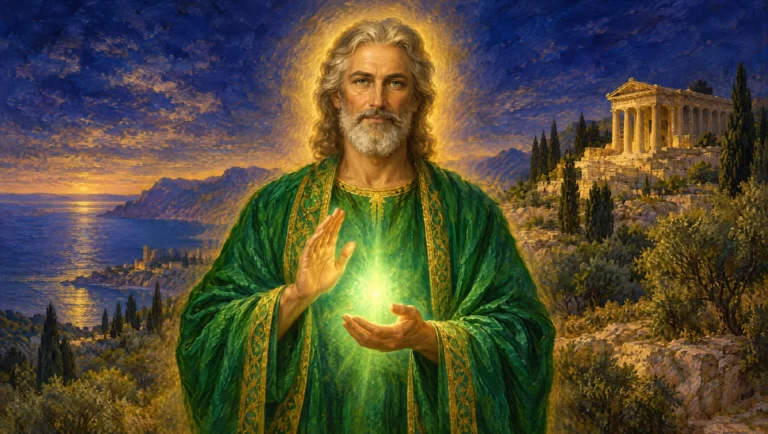
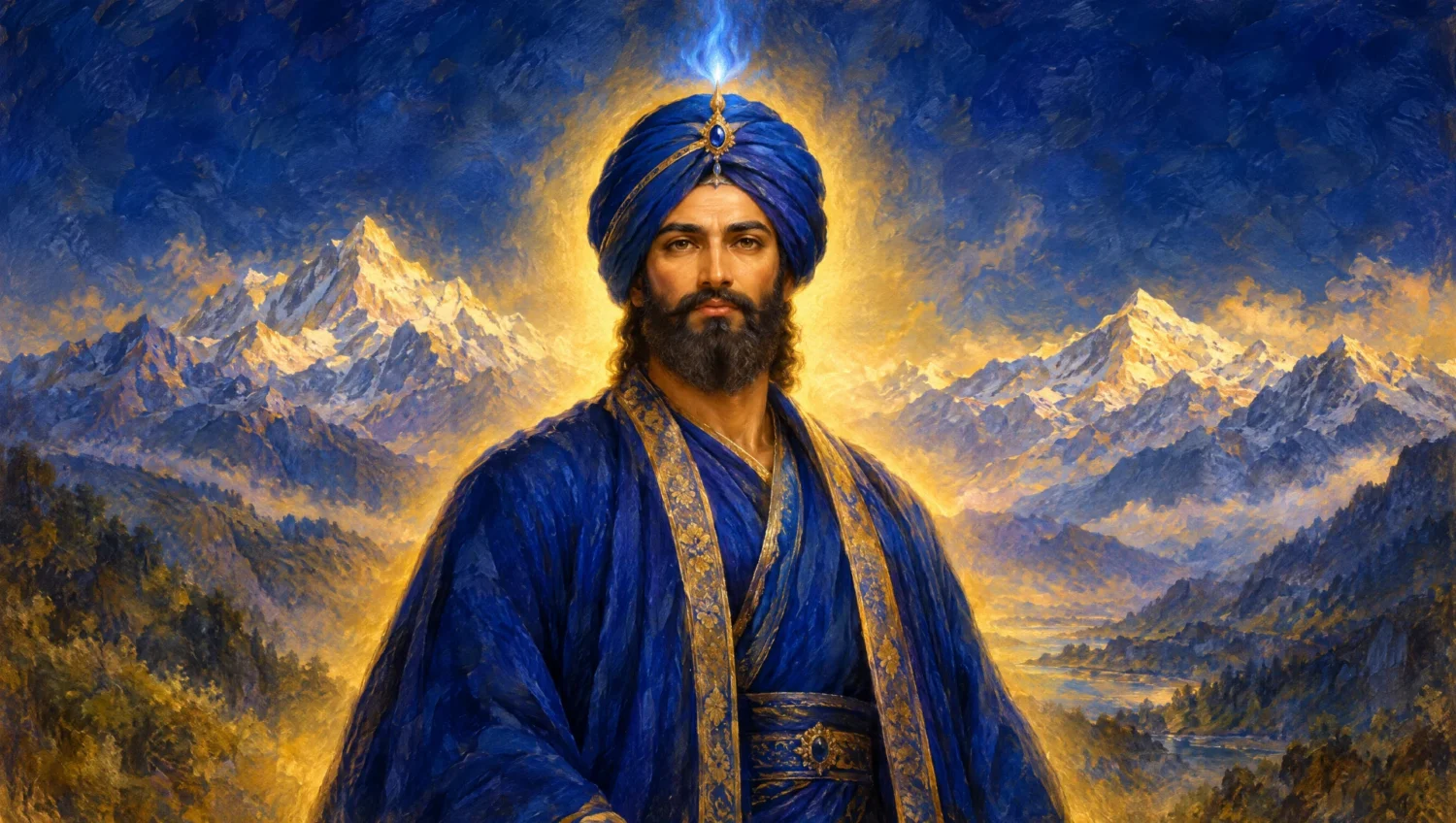
Note that the Summit tradition also describes El Morya as the head of the original Theosophical Mahatmas. The tradition combined the story of the Himalayan Master with the American focus on the Ascended Masters, giving us the figure we meet today: a blue-robed, turbaned Chohan guiding the work of a very large Brotherhood.
To see the overall pattern, read our Ascended Masters guide, which shows how the Theosophists, the I AM movement and the Prophets built on each other and sometimes disagreed.
The Lives Attributed to Him
The Summit tradition and related teachings attribute a series of earlier lives to El Morya. The list is long, and it belongs to belief rather than history. The names usually given include:
- Melchior, one of the three Magi in the Christmas story.
- King Arthur of British legend.
- Thomas Becket (1119 or 1120 to 1170), Archbishop of Canterbury, murdered in his cathedral.
- Sir Thomas More (1478 to 1535), the English statesman executed under Henry VIII.
- Akbar the Great (1542 to 1605), the Mughal emperor known for religious tolerance.
Look at the pattern. Each of these was a leader who combined power with conscience, a king, a counselor or a primate who faced a hard choice between worldly authority and higher principle. Becket and More both died for refusing to bow to a king. Akbar was a ruler who tried to bring Hindus, Muslims and others into dialogue. The pattern reads like a portrait of the First Ray.
Of course, none of these links can be historically demonstrated. Hindu and Buddhist traditions know the idea of rebirth, but the Western esoteric tradition of listing famous past lives is a modern practice that deserves a cool head. In our guide to reincarnation we look at what the beliefs and the research actually say.
Darjeeling, the Temple of Goodwill and Shigatse
Two places belong to the Morya story. The first is in Tibet, the shared lodge near Shigatse that we met above. The second belongs to the Summit tradition: the Darjeeling Retreat, also called the Temple of Goodwill, in the etheric octave above Darjeeling in the eastern Himalayas of India. According to the Prophets, this retreat is the seat of the Darjeeling Council, which meets to direct the work of the First Ray and the affairs of governments. Students are invited to visit in meditation or sleep to receive instruction in goodwill, leadership and the use of the will.
Darjeeling has a real history behind the image. It was a British hill station in the nineteenth century, a gateway to Sikkim and Tibet, and the base from which expeditions and traders moved across the mountains. Many of the early Theosophical stories touch this part of the world. Tea plantations, Buddhist monasteries and mountain views still draw visitors, and more than one seeker has felt a calm presence there.
As with all the retreats, treat the Temple of Goodwill as an article of faith. It is not a physical building. It offers a metaphor for the hope that the will of nations can be shaped by goodwill, and that, somewhere above the noise, there is a council keeping watch.
What Did Morya Teach?
Here we have to separate sources. The Theosophical Morya, in the letters, teaches in a few strands that are surprisingly consistent.
- Service over salvation. The aim of spiritual growth is to become more useful to the human family, not to escape from it.
- Discipline and testing. A disciple, or chela, is tested again and again. Obedience to the highest in oneself is the lesson, not obedience to a person.
- Brotherhood. The first object of the Theosophical Society, to form a nucleus of the universal brotherhood of humanity, was said to come from the Masters.
- The laws of nature. The universe is lawful. Karma and rebirth are not punishments but the working of cause and effect.
- Caution about psychic show. Phenomena are of small value compared with character.
The later traditions add themes. The I AM and Summit teachings stress the will of God, faith, protection of the soul, and a spirit of loyalty to the divine plan. The Roerich texts add heroism, cooperation and the idea of fire as the energy of consciousness. Bailey’s materials stress goodwill and the building of right human relations.
Notice how these all rest on the same intuition: that a person of real strength puts that strength at the disposal of something greater. If you want to see how closely this resembles a classic teaching of India, read on.
The Warrior Saint: Morya and the Kshatriya Path
Morya is described as a Rajput, a Kshatriya. In Indian tradition the Kshatriyas are the protectors, the people whose duty is to defend the weak and to govern with justice. The great scripture on this path is the Bhagavad Gita, in which the warrior Arjuna lays down his bow on the battlefield, overwhelmed by sorrow. His teacher Krishna tells him to act, to do his duty without clinging to the result, and to offer the action to the Divine.
Morya’s teaching echoes this. A disciple must act. Sitting on a mountain, enjoying bliss while the world burns, is not the highest path. The Master’s work is to turn will into service. This is not a call to violence. In the Theosophical letters, the “battle” is for the soul and for the welfare of the many.
Compare this with the contemplative paths. The yogi, the monk and the mystic often turn inward and let the world fade. The Kshatriya model says the opposite: go into the world with courage. Both are valid. They suit different temperaments. You may find that your own spiritual life swings between them, depending on the season. When you feel stuck in dreaming, Morya’s way is a useful corrective. When you feel exhausted by effort, other Masters can restore you. For the Gita’s own spirit and the Himalayan lineage, you may enjoy the story of Sri Yukteswar Giri and the teaching of Kriya Yoga meditation.
How Morya Compares with Kuthumi, Saint Germain and Others
In the Theosophical letters, Morya and Koot Hoomi are often contrasted. Morya is the senior and sterner partner. Koot Hoomi is the gentle, scholarly, more public voice. Blavatsky described Morya as her own Master, and she was in turn described as a chela who had to be trained rigorously. Many readers feel that Morya is easier to respect and Koot Hoomi easier to love.
Next to Saint Germain, the contrast is also clear. Saint Germain’s ray is Seventh: ceremonial order, mercy and transmutation. Morya’s is First: will and direction. If Saint Germain asks, “What can be changed in you?”, Morya asks, “What will you do next?” The two work together in the tradition. Morya begins the cycle with a decision, and Saint Germain completes it in form.
Next to Djwal Khul, the contrast is again instructive. Djwal Khul is a scribe and a systematizer. Morya is an initiator and a commander. In the Bailey scheme, one explains and the other launches.
All of them stand in a lineage that includes the spiritual teachers of every culture. For a broad overview, see the Ascended Masters guide. For the cross-cultural background of Master teachings, including claims about Jesus in India and Tibet, our guide to the lost years of Jesus is a useful companion.
Honest Questions and Cautions
Did Morya Exist as a Living Person?
Nobody has produced independent proof. Blavatsky, Olcott and a handful of others said they met him. Skeptics say the evidence points to Blavatsky as the author of the letters, and defenders say that case is weaker than it looks. The question is open.
Can We Trust the Mahatma Letters?
Treat them as a historical source with uncertain authorship. Whether they were composed by Masters, by Blavatsky, or by both in some way, they shaped modern spirituality. Read them for their ideas, and keep your own judgment on origins.
Why Do the Traditions Disagree About Him?
Theosophists, Bailey’s students, the Roerich societies and the Summit Lighthouse each offer a different Morya, with different offices and details. Some of them reject the claims of the others. When you read about him, check which stream you are in.
Is the Idea of a “Great White Brotherhood” a Problem?
The wording is dated, and some readers are rightly uncomfortable with it. The “white” refers to light, not race. Still, it is worth noting that some Theosophical writings of the period carry racial theories that we reject today. A modern reader can take what is wise and set the rest aside.
Is It Healthy to Follow a Master’s Orders?
Be careful here. Morya’s tradition speaks of discipline and of obedience to the highest in oneself. It does not require you to hand your decisions to a guru or an organization. If a group claims to speak for El Morya and demands money, loyalty or secrecy, ask the same questions you would ask of any authority.
A Mystic’s Reading: Why Morya Matters Now
We live in a time of drift. Many spiritual seekers are gentle by temperament and wary of power. That is understandable. Power has been misused in the name of God more times than anyone can count. But a spirituality that refuses all use of will ends up powerless, and it leaves the world to those who have no scruples.
Morya stands for a different image of strength. It is the strength of a person who has done the inner work and can therefore be trusted with outer responsibility. The tradition calls this will, but you might call it integrity: the alignment of what you say, what you want and what you do.
If you carry a vision you have not yet acted on, a project, a boundary, a conversation, a calling, Morya’s energy is a reminder that the moment of decision is always now. Not later, when you feel ready. Now, in the small place where you actually stand.
A Practice: Seven Days of Steady Will
This is a simple contemplative exercise inspired by the First Ray. You do not have to believe in Masters to try it.
- Choose one commitment. Something small and real: a daily walk, a letter you have been avoiding, a boundary you need to set. Write it on paper in one sentence.
- Morning intention (two minutes). Sit quietly. Imagine a deep blue light at your center, steady and calm. Say inwardly: I will do this one thing today.
- Act once. Do the smallest meaningful step toward your commitment. Do not wait to feel ready.
- Midday check. Breathe for one minute. Ask: Is my action in line with my values?
- Practice goodwill. Once each day, silently wish well to someone who is difficult for you. This steadies the will with kindness.
- Evening review (three minutes). Note what you did, without judgment. Give thanks for any progress.
- Day seven. Review the week. Decide whether to continue, adjust or choose a new commitment.
Will without kindness can harden. Always pair this practice with goodwill. If you notice yourself becoming rigid or harsh, ease off.
Books and Further Reading
- The Mahatma Letters to A. P. Sinnett. The primary source for the Theosophical Morya and Koot Hoomi.
- The Masters Revealed, by K. Paul Johnson. A scholarly and contested attempt to identify the historical figures behind the Masters.
- Madame Blavatsky: The Mother of Modern Spirituality, by Gary Lachman. A balanced and readable biography.
- Madame Blavatsky’s Baboon, by Peter Washington. A lively and skeptical history of the Theosophical movement.
- Lords of the Seven Rays, by Mark and Elizabeth Clare Prophet. The First Ray and its Chohan in the Summit tradition.
- The Masters and Their Retreats, by Mark and Elizabeth Clare Prophet. For the Darjeeling retreat and the Council.
- Initiation, Human and Solar, by Alice A. Bailey. Her account of the Hierarchy.
If you buy through these Amazon links, it supports our work at no extra cost to you.
Who Will Connect with This Master
Morya may speak to you if you are a builder or a leader, if you tend to hold back from acting, or if you appreciate a clear, no-nonsense spirituality that asks something of you. He may also be a good companion if you work in public service, in organizing, in activism, in business with a conscience.
If you find stern teachers hard, you may feel more at home with gentler Masters. Many students move back and forth. Our Inner Path audio course offers ten lessons in a very quiet voice, and may balance the First Ray’s firmness.
Keep Exploring
To read the Theosophical sources behind Morya, listen to Theosophy and The Ocean of Theosophy, both available on Next Level Soul. The series Ascended Masters Channeled brings several Masters together, and Hope Messages for Humanity from the Ascended Masters with Chanel Lingenfelder is a gentle companion.
Two Mastery audio courses fit this theme. The Hidden Science of the Soul offers 13 chapters on who you really are, and Mystery Schools of the Ancients offers 22 chapters on the universal laws taught by the old schools. Both are included with Next Level Soul membership. You can also explore NLS Mastery and our free masterclasses.
Watch Ascended Masters, Channeled on Next Level Soul TV
An eight-episode series in which renowned channeler Genevieve Taeger brings through Buddha, Mary Magdalene, Athena, Mother Mary, Jesus, Saint Germain, Yogananda and Kuan Yin. Each episode is a channeled message, offered as spiritual guidance and not as historical record.
Episodes that connect with this guide: Ascended Master Saint Germain and Ascended Master Jesus.
Frequently Asked Questions
Who is El Morya?
El Morya is a Master of the Wisdom in the Theosophical tradition, known as Master M. or Mahatma Morya. In the I AM and Summit Lighthouse traditions he is an Ascended Master and the Chohan of the First Ray of will, power and protection.
Is El Morya a real historical person?
There is no independent historical proof. Blavatsky and Olcott described him, and the Mahatma Letters carry his voice, but their authorship is disputed. K. Paul Johnson suggested he was Maharaja Ranbir Singh of Kashmir, a theory other researchers reject.
What is the First Ray?
The First Ray is the ray of will and power. Its color in the Summit tradition is blue, and its qualities include courage, leadership, faith and protection. Alice Bailey called it the Ray of Will or Power.
What are the Mahatma Letters?
They are letters to A. P. Sinnett and A. O. Hume between 1880 and the mid 1880s, said to come from the Masters Koot Hoomi and Morya. They were published in 1923. The Hodgson Report of 1885 claimed Blavatsky forged them, but later critics have challenged its methods.
What is Agni Yoga?
Agni Yoga, or Living Ethics, is a body of texts recorded by Helena Roerich between 1920 and the 1930s, which she said came from Master Morya. It emphasizes service, heroism and the cultivation of inner fire.
Where is El Morya’s retreat?
In the Theosophical account he lives in Tibet near Shigatse. In the Summit Lighthouse teaching his retreat is the Temple of Goodwill, an etheric retreat above Darjeeling in India. The retreats are articles of faith, not physical places.
What past lives are attributed to El Morya?
The Summit tradition lists Melchior, King Arthur, Thomas Becket, Sir Thomas More and Akbar the Great. These are claims of belief, not historical findings.
How is El Morya different from Kuthumi?
In the Theosophical letters Morya is the sterner and more senior Master, while Koot Hoomi (Kuthumi) is the gentler and more scholarly. Morya serves the First Ray of will, and Kuthumi is linked with the Second Ray of love and wisdom.
Can I work with El Morya without joining a group?
Yes. Many people simply read the sources, practice goodwill and use the First Ray as a theme for developing courage and integrity. No group is needed. Be cautious of any organization that asks for large sums or strict obedience.