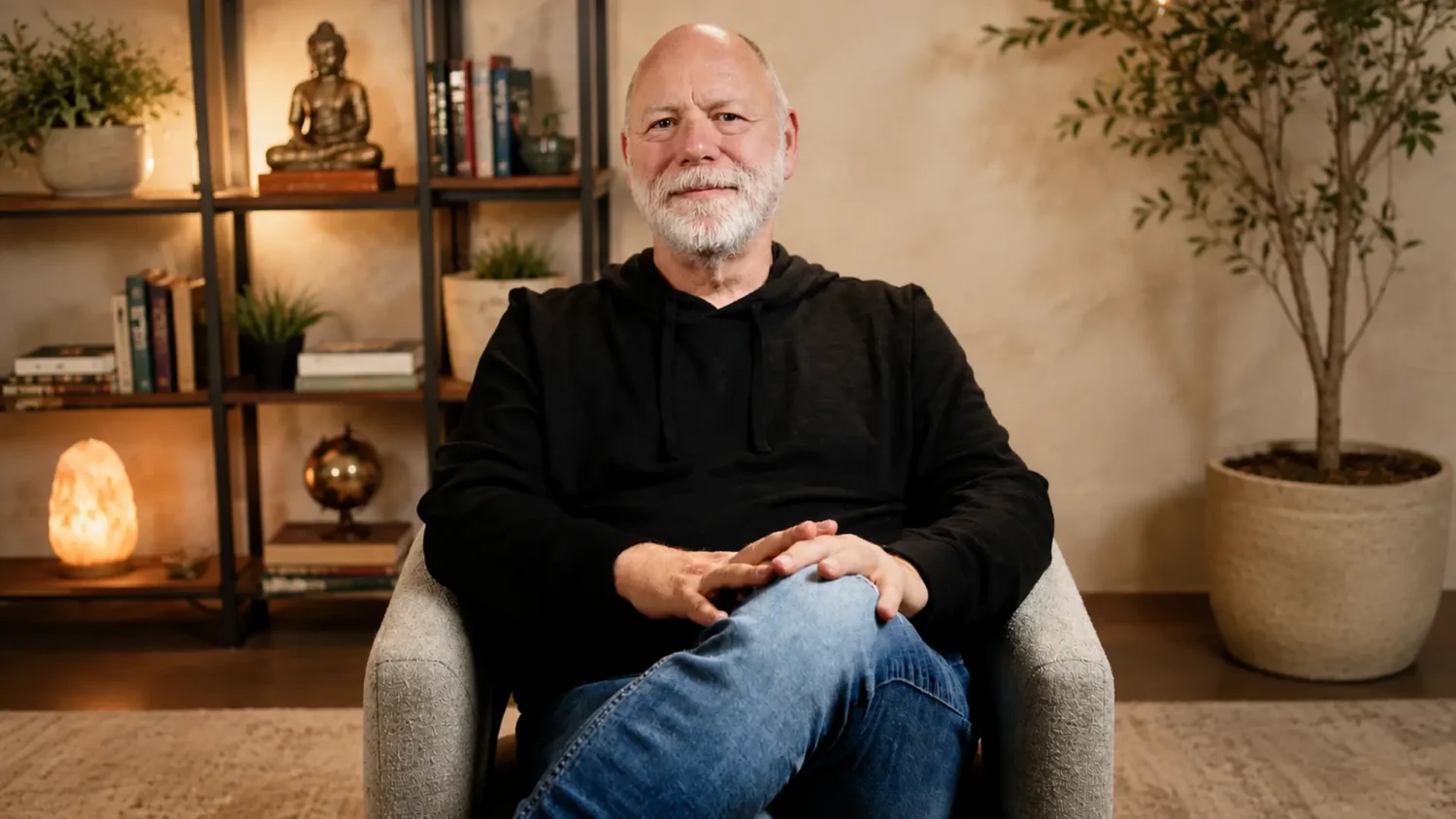
Jane Roberts (1929 to 1984) was an American author and poet who, beginning in December 1963, entered a trance state and spoke for a personality who called himself Seth. Her husband Robert Butts took down the sessions, and the result is the Seth Material, one of the most influential bodies of channeled teaching of the twentieth century. This guide covers who Jane Roberts was, how the Seth sessions began, what Seth teaches, every major book and where to start reading.
Key Takeaways
- Who: Jane Roberts, born May 8, 1929 in Albany, New York, died September 5, 1984 in Elmira, New York at age 55.
- The start: Roberts and her husband Robert Butts began using a Ouija board in late 1963. Coherent messages from Seth began on December 2, 1963.
- The sessions: Roberts spoke for Seth in trance while Butts wrote down the words in shorthand. Sessions ran for 21 years, with one year off during her final illness.
- The teaching: You create your reality through your beliefs and emotions. The present is your point of power. You are a multidimensional self who lives many lives.
- The books: The Seth Material (1970), Seth Speaks (1972) and The Nature of Personal Reality (1974) are the best-known starting points.
- The skeptic: Roberts herself called Seth’s statements theories. Her honesty about doubt is part of why the material has lasted.
Start with the basics. If you want the short version first, read Seth Material: What It Is and Where to Start, then come back here for the full story.
Who Was Jane Roberts? The Short Answer
Jane Roberts was a writer first. She published poetry, short stories, children’s literature, science fiction, fantasy and nonfiction before she became known for the Seth sessions. Starting in December 1963 she began speaking, in trance, for a personality named Seth. Over the next two decades those sessions became a long series of books that introduced many readers to the idea that consciousness creates reality.
Seth’s ideas are the root of a lot of what you hear in spiritual circles today: that your beliefs shape your experience, that you are more than one lifetime, and that the present moment is where change happens. This guide walks through the story in order.
The Life of Jane Roberts
| Jane Roberts | |
|---|---|
| Born | May 8, 1929, in Albany, New York. Raised nearby in Saratoga Springs. |
| Education | Skidmore College from 1947 to 1950, on a poetry scholarship. |
| Marriage | Married Robert Fabian Butts Jr. on December 27, 1954, in Sayre, Pennsylvania. |
| Early writing | Poetry, short stories, children’s literature, nonfiction, science fiction, fantasy and novels. Her science fiction appeared in The Magazine of Fantasy and Science Fiction. |
| Recognition | The only woman invited to the 1956 Milford science fiction writers’ conference. |
| Home | Moved to Elmira, New York, in 1960 with Butts. |
| Died | September 5, 1984, in Elmira, New York, at age 55. |
That background matters. Roberts was a trained, professional writer with a practical, observant mind. As Wikipedia and other sources note, she was skeptical of Seth’s origins from the start. She did not set out to start a movement.

Jane Roberts and Seth Timeline: 1929 to Today
The story spans more than half a century. Here are the dates that matter, in order, so you can see how a quiet writer in upstate New York became the source of one of the most widely read channeled bodies of work.
| Date | What happened |
|---|---|
| May 8, 1929 | Dorothy Jane Roberts is born in Albany, New York, and grows up in nearby Saratoga Springs. |
| 1947 to 1950 | She attends Skidmore College on a poetry scholarship. |
| December 27, 1954 | She marries the artist Robert Fabian Butts Jr. in Sayre, Pennsylvania. |
| 1956 to 1959 | Her science fiction and fantasy stories appear in The Magazine of Fantasy and Science Fiction. She is the only woman invited to the 1956 Milford conference. |
| 1960 | The couple moves to Elmira, New York, where they will live for the rest of her life. |
| September 1963 | Roberts describes a sudden rush of ideas that she writes up as The Physical Universe as Idea Construction. |
| December 2, 1963 | Coherent messages from a personality who later calls himself Seth begin, using a Ouija board. |
| January 2, 1964 | Roberts dictates a session aloud for the first time instead of using the board. |
| February 1964 | A friend attends the first session held with another person present. The board is dropped after the 27th session. |
| 1966 | How To Develop Your ESP Power is published, later retitled The Coming of Seth. |
| September 1967 | Her ESP classes begin. They run until February 1975. |
| 1970 | The Seth Material is published. |
| 1972 | Seth Speaks, the first book dictated as a Seth book, is published. |
| 1974 | The Nature of Personal Reality is published. |
| 1977 and 1979 | The two volumes of The “Unknown” Reality appear. |
| 1979 and 1981 | The Nature of the Psyche and The Individual and the Nature of Mass Events follow. |
| 1982 | Roberts spends a month in the hospital. Her health declines over the following years. |
| September 5, 1984 | Jane Roberts dies in Elmira at age 55. |
| 1986 | Dreams, Evolution and Value Fulfillment is published after her death. |
| 1995 to 1997 | The Magical Approach and The Way Toward Health are released. |
| 1997 onward | The Early Sessions begin to appear in nine volumes, followed by The Personal Sessions (2003) and The Early Class Sessions (2008). |
| May 26, 2008 | Robert Butts dies. He had spent decades guarding and editing the material. |
How the Seth Sessions Began
In late 1963 Roberts was researching a book on extrasensory perception. She and Butts decided to try a Ouija board as an experiment. Coherent messages from a male personality began on December 2, 1963. He later identified himself as Seth.
Within a short time Roberts no longer needed the board. She could hear Seth in her mind and speak his words aloud while in trance. Butts took down every word in shorthand that he devised for the purpose. Roberts held regular sessions for 21 years, until her death in 1984, with a one-year break during her final illness.

David Cielak of the Seth Center tells this story in our conversation. He says that even Jane and Rob were unsure at first, and that they consulted psychologists and doctors before continuing. Listen to the full account in episode 732 of the Next Level Soul Podcast.
How the Seth Sessions Actually Worked
The setup was simple and domestic. Roberts sat in a rocking chair in the Elmira apartment. Butts sat nearby with a notebook. When the session began, Roberts went into a trance, her voice changed, and she spoke as Seth. Butts took down what was said in a shorthand he had developed himself. Afterward Roberts usually did not remember the content and often read the transcript the next day to find out what Seth had said.
What people noticed in the room
- A different voice. Accounts describe Seth’s voice as deeper and more masculine than Jane’s, with a distinct accent that no one could place.
- A changed manner. While speaking as Seth, Roberts appeared by turns stern, humorous or professorial.
- Clear modern language. Unlike the trance speech of Edgar Cayce, which was often antiquated and winding, Seth’s sentences were modern and easy to follow.
- Ordinary habits. Roberts sometimes smoked or sipped wine or beer during sessions. It was not a solemn ritual.
Two kinds of sessions
| Type | Who attended | What it produced |
|---|---|---|
| Book sessions | Almost always private, held on Monday and Wednesday evenings from 1967 through 1982. | Dictation for the Seth books, delivered in long monologues. |
| ESP class sessions | Groups of students, usually Tuesday and some Thursday nights, from September 1967 to February 1975. | Teaching, questions and answers, and material later collected as The Early Class Sessions. |
| Personal sessions | Individuals who had written to Roberts for help. | Private guidance. She never charged for these. Collected in The Personal Sessions. |
Roberts held well over a thousand sessions across the 21 years. At the start she charged a few dollars per class to cover costs, and she dropped the fee once the books sold well. By February 1982 she and Butts were still receiving 30 to 50 letters and packages a week from readers.
Why Butts matters. Robert Butts was more than a note taker. He added footnotes, appendices and context to every Seth book, describing what was happening in their lives at the time of each session. Many readers consider those notes part of what makes the books believable and human.
The ESP Classes
From September 1967 to February 1975, Roberts held regular ESP classes, usually on Tuesday nights and some Thursdays. Students could hear Seth speak through her and ask him questions. The classes let a small circle test the ideas in real time and are a large part of why the material reads like a conversation rather than a lecture.

Who Is Seth?
Seth described himself as an “energy personality essence no longer focused in physical matter.” He said he had finished his earthly incarnations and spoke from an adjacent plane of existence. He asked listeners to judge the teaching by how it worked in their lives.
Roberts, for her part, stayed cautious. She often called his statements “theories.” That tension is part of the Seth story and one reason it speaks to people who are curious but not ready to believe. We cover how other channelers describe their entities in our guides to Darryl Anka and Bashar and channelers and mediums.
The Core Teachings of Seth
| Teaching | In plain language |
|---|---|
| You create your reality | Consciousness creates matter. Your thoughts, feelings and beliefs shape what you experience. |
| The point of power | Change happens in the present moment. You do not have to wait for the past to release you. |
| The entity and the multidimensional self | Your larger self, called the entity, includes past selves, current incarnated selves and their “probable” counterparts. |
| Reincarnation and karma | You live many lives. What you learn and choose carries forward. |
| Dreams and the senses | The ordinary senses also filter out information, as David Cielak notes in our episode. Dreams are a doorway to other parts of the self. |

If you want to follow the thread into modern manifestation teaching, read Manifestation vs Law of Attraction. For the lives-and-learning side, see Reincarnation: Beliefs, Research and What Past Lives Really Mean and Soul Contracts. For the dream side, our guide to lucid dreaming is a good first step.
The Big Ideas of the Seth Material, Explained
The table above gives the headlines. This section slows down and explains each one the way the Seth books present it. Remember that Roberts herself often called Seth’s statements “theories.” Read them as a framework to test against your own life, not a doctrine to accept.
1. You create your own reality
This is the idea Seth is best known for. According to the Seth Material, consciousness creates matter, not the other way around. Your thoughts, feelings, expectations and beliefs form the lens through which events take shape, and they help build the circumstances you meet. The religious historian John Newport called this the central focus of the Seth Material and a foundational concept of the New Age movement.
Seth is direct about the mechanism. Beliefs generate emotion, emotion colors what you notice and remember, and over time your life organizes around those patterns. One line from the material sums it up: you get what you concentrate upon. Notice what this does and does not say. It does not say every event is your fault. It says the part you can influence is your inner stance, and that is where change begins.
2. The point of power is in the present
Many people believe the past decides the future. Seth turns that around. The point of power, the place where you can actually act, is the present moment. You can examine an old belief now and choose a different response now. That is why the material pairs so well with practices such as mindfulness and meditation: both train attention on the only moment in which you can do anything.
3. The entity and the many selves
Seth describes a larger self, called the entity, as a whole made of many parts. The entity includes the inner self, selves it has been through past existences, the selves currently living in physical bodies, and all of their probable counterparts. The scholar Wouter Hanegraaff notes that Seth uses several terms for this idea, including entity, whole self, gestalt and oversoul, and that later New Age authors adopted similar language, often calling it the higher self.
In practice, this means you are not a single isolated personality. You are one focus of something larger that is also living other lives. Jane Roberts explored the same idea in fiction in the Oversoul Seven books.
4. Reincarnation without a ladder
Reincarnation is a core principle of the material, along with karma, past lives and the life between lives. If you want the wider background, see our guide to reincarnation beliefs, research and what past lives mean. Seth’s version stresses learning and choice more than punishment, and it treats the lives of an entity as connected in a web rather than a simple line.
5. Probable realities
Every choice has alternatives, and Seth says those alternatives are real somewhere. The paths you did not take are probable realities, lived by probable selves of the same entity. This is one of the most distinctive Seth ideas, and it is why readers sometimes compare the material to modern talk of parallel timelines. The writer Michael Talbot, who studied both paranormal research and quantum physics, said he found that Seth described a view of reality he had reached only after great effort.
6. All That Is
Seth does not speak of a distant, judging God. The material uses the term All That Is, and also the phrase the multidimensional God, for the source of everything, which is present within each consciousness rather than above it. This is a major reason the material appealed to people who felt cut off from traditional church language. The historian Robert Fuller described Seth as a guide for what he called unchurched American spirituality.
7. Dreams and other states of consciousness
Dreams are treated as real activity of the whole self, not just mental leftovers. Roberts herself began recalling her dreams vividly soon after her first experience in 1963, including two that proved precognitive. If dreams interest you, see our guide to lucid dreaming.
8. Mass events and shared reality
If individuals create their reality, what about wars, disasters and shared events? Seth’s answer, developed in The Individual and the Nature of Mass Events, is that large events arise from the combined beliefs and expectations of many people. The books comment on a few contemporary events as examples, including the Jonestown deaths and the Three Mile Island accident.
9. Good, evil and the purpose of life
The material takes up the nature of good and evil, the purpose of suffering and the story of Christ. We cover Seth’s view of Jesus in a separate section below. The consistent thread is that life is a field for learning and creative expression, and that value is fulfilled through experience.
Seth Glossary: Key Terms in Plain Language
Seth readers use a specific vocabulary. This quick reference will save you confusion when you open the books.
| Term | What it means |
|---|---|
| Seth | The personality who spoke through Jane Roberts. He called himself an “energy personality essence no longer focused in physical matter.” |
| Ruburt | Seth’s name for Jane Roberts. |
| Joseph | Seth’s name for Robert Butts. |
| Session | One sitting in which Roberts spoke for Seth while Butts took notes. Also called a reading. |
| All That Is | Seth’s term for the source of everything, also called the multidimensional God. |
| Entity | The larger self, made of the inner self, past selves, current selves and their probable counterparts. Also called the whole self, gestalt or oversoul. |
| Point of power | The present moment, where change can be made. |
| Probable realities | The alternate versions of events and selves that arise from every choice. |
| Inner self | The part of you responsible for building your body and physical environment, in the Seth view. |
| Outer ego | The part of you that you know as yourself, whose beliefs and expectations shape what unfolds. |
| Idea construction | The notion that physical reality is built from ideas. It was the title of Roberts’s first notes in 1963. |
| Aspect psychology | The approach Roberts described in Adventures in Consciousness and Psychic Politics, treating the self as having many aspects. |
A related term you may meet is the spiritual glossary on this site, which defines many of these words in more detail.
The Seth Books in Order
These are the books marked as Seth books, in the order they were published. As an Amazon Associate, Next Level Soul earns from qualifying purchases made through the links below, at no extra cost to you.
| Book | Year | What it is | Buy |
|---|---|---|---|
| The Seth Material | 1970 | The first Seth book, which brought the sessions to a wide audience. | Find on Amazon |
| Seth Speaks: The Eternal Validity of the Soul | 1972 | The book most readers start with. | Find on Amazon |
| The Nature of Personal Reality | 1974 | Seth on how beliefs shape daily experience. | Find on Amazon |
| The “Unknown” Reality, Volumes 1 and 2 | 1977, 1979 | Wide-ranging sessions in two volumes. | Find on Amazon |
| The Nature of the Psyche: Its Human Expression | 1979 | On the inner life and the psyche. | Find on Amazon |
| The Individual and the Nature of Mass Events | 1981 | How individual beliefs relate to world events. | Find on Amazon |
| Dreams, Evolution and Value Fulfillment | 1986 | Published after Roberts’s death. | Find on Amazon |
Later volumes include The Magical Approach (1995), The Way Toward Health (1997), The Early Sessions, The Personal Sessions (2003) and The Early Class Sessions (2008), per the bibliography on Wikipedia.
Every Seth Book, One by One
Roberts’s husband and publishers ended up with a long shelf. This guide walks through the main Seth books in the order they were written, with a plain description of what each one is for and who it suits. The Seth Learning Center recommends reading the books in the order they were written, starting with Seth Speaks. Titles below link to Amazon (affiliate links, see the note under the book tables).
The Seth Material (1970)
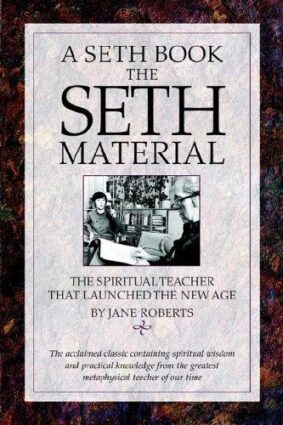 The Seth Material is the first book. Roberts wrote it herself from the sessions held between 1963 and 1969, so it reads as a story as much as a teaching. It describes how the sessions began, the early doubts, and a first overview of Seth’s ideas. Wikipedia notes that it is a summary and discussion of the early session material. Best for: readers who want the human story of how it started.
Seth Speaks (1972)
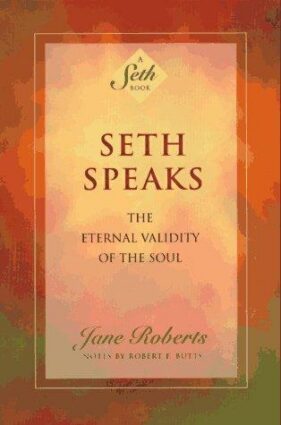 Seth Speaks: The Eternal Validity of the Soul is the first book dictated as a Seth book, and the one most often recommended as a starting point. It covers the nature of reality, death and what follows, reincarnation and the experience of consciousness beyond the body. Best for: first-time readers who want the core worldview in Seth’s own voice.
The Nature of Personal Reality (1974)
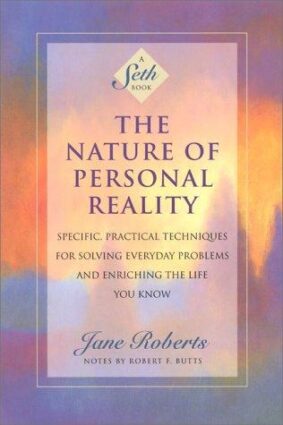 The Nature of Personal Reality is the most practical of the books. It focuses on how beliefs shape experience and includes exercises for noticing and changing them. Its back cover carries testimonials from Marianne Williamson, Deepak Chopra, Shakti Gawain, Louise Hay and others. Best for: readers who want tools they can use this week.
The “Unknown” Reality, Volumes 1 and 2 (1977 and 1979)
 The “Unknown” Reality was channeled in 1974 and 1975. These two volumes go deeper into the structure of the self, probable realities and the way consciousness extends beyond the physical world. They are denser than the earlier books. Best for: readers who have finished Seth Speaks and want more depth.
The Nature of the Psyche: Its Human Expression (1979)
 The Nature of the Psyche was channeled between 1975 and 1977. It looks at how the larger self expresses itself in human life, covering subjects such as dreams and everyday experience. Best for: readers curious about the psychology side of the material.
The Individual and the Nature of Mass Events (1981)
 The Individual and the Nature of Mass Events was channeled in 1977 to 1979 and addresses a hard question: how does personal reality creation relate to large shared events? It comments on events of the time, including Jonestown and Three Mile Island. Best for: readers wrestling with how the ideas apply to the wider world.
The Magical Approach (1995)
 The Magical Approach: Seth Speaks About the Art of Creative Living was channeled in 1980 and published much later. It turns the teachings toward creative, joyful living. Best for: readers who want encouragement as well as theory.
Dreams, Evolution and Value Fulfillment (1986)
Dreams, Evolution and Value Fulfillment was channeled in 1982 and published in two volumes after Roberts’s death. It takes on dreams, evolution and the idea of value fulfillment. Wikipedia notes that the last Seth books appear to be incomplete because of her illness. Best for: committed readers who want the late work.
The Way Toward Health (1997)
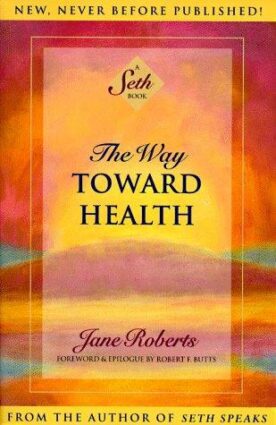 The Way Toward Health was channeled in 1984, the year Roberts died, and published in 1997 with a foreword by Robert Butts. It applies the teachings to health and healing. Best for: readers interested in the mind-body side of the work, and in the final chapter of Roberts’s life.
The Session Collections
For the raw material, the New Awareness Network publishes the transcripts: The Early Sessions (sessions 1 to 510, nine volumes, edited by Butts), The Personal Sessions (seven volumes of material not used elsewhere) and The Early Class Sessions (four volumes from the ESP classes). These are for dedicated readers who want to follow the material as it unfolded.
A Suggested Reading Order
- Seth Speaks for the full worldview.
- The Nature of Personal Reality for practice.
- The Seth Material for the story behind it.
- The “Unknown” Reality for depth.
- The remaining Seth books in the order they were written.
Jane Roberts’s Other Books
Not everything Roberts wrote is a Seth book. These are the ones readers ask about most.
| Book | Year | What it is | Buy |
|---|---|---|---|
| How To Develop Your ESP Power (later The Coming of Seth) | 1966 | Her first account of the early Seth sessions. | Find on Amazon |
| The Education of Oversoul Seven | 1973 | The first Oversoul Seven novel. | Find on Amazon |
| Adventures in Consciousness | 1975 | An introduction to what she called aspect psychology. | Find on Amazon |
| Psychic Politics | 1976 | An aspect psychology book. | Find on Amazon |
| The God of Jane | 1981 | Her own psychic manifesto. | Find on Amazon |
The Oversoul Seven trilogy is a novel based on the Seth Material. It consists of The Education of Oversoul Seven (1973), The Further Education of Oversoul Seven (1979) and Oversoul Seven and the Museum of Time (1984). It is a story-shaped way into the ideas for readers who prefer fiction to philosophy.
Jane Roberts the Writer, Before and Beyond Seth
It is easy to forget that Roberts built a literary career before the first Ouija session. Her poetry appeared in the Saratoga newspaper and in the Skidmore College magazine Profile in the late 1940s, and later in small literary journals. Her science fiction and fantasy stories ran in The Magazine of Fantasy and Science Fiction and Fantastic Universe between 1956 and 1964, and one was later anthologized in a collection edited by Isaac Asimov. Her 1963 novel The Rebellers was published by Ace Books.
Why this matters for how you read Seth
Her fiction often dealt with clairvoyance and reincarnation, yet Roberts and Butts did not believe in extrasensory abilities when they began. That detail is part of why many readers find her account credible as a story: she was a skeptic and a working writer who ended up following an experience she had not planned. It is also the point critics seize on, since a trained writer with an interest in such themes could, they argue, produce the material unconsciously. Both readings are discussed in the criticism section.
The Oversoul Seven books
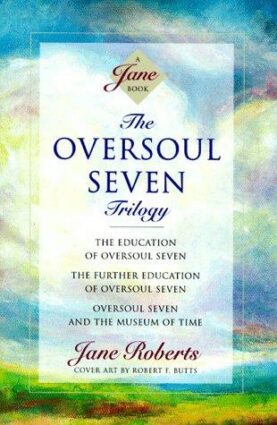 Roberts wrote a fiction trilogy to explore Seth’s ideas about reincarnation and oversouls through story. The Education of Oversoul 7 appeared in 1973, The Further Education of Oversoul Seven in 1979 and Oversoul Seven and the Museum of Time in 1984. They were collected as The Oversoul Seven Trilogy in 1995. If the nonfiction feels dense, the novels are a gentler doorway. Find the set here: The Oversoul Seven Trilogy.
Other channeled works from Roberts
Roberts also said she wrote, using a process she described as automatic typing, material in the voices of the philosopher William James and the painters Rembrandt and Paul Cezanne. These appeared as The Afterdeath Journal of an American Philosopher, The World View of Rembrandt and The World View of Paul Cezanne.
Where to Start Reading
- If you want the full Seth voice: start with Seth Speaks. The Seth Learning Center recommends reading the books in the order they were written, beginning with it.
- If you want practice: pick up The Nature of Personal Reality, which focuses on how beliefs shape daily experience.
- If you prefer story: read the Oversoul Seven novels.
- If you prefer listening: watch the conversation with David Cielak below.
David notes that if you read the entire body of work and did two sessions a day, it would take about four years. You do not need to finish it to benefit.
Hear the Seth Story From a Seth Center Teacher
In this episode, David Cielak tells the story of Jane and Rob, explains what Seth said about Jesus, and shares why the idea that we create our reality from the inside out still matters.
What Seth Said About Jesus
One of the most talked-about parts of the material is how Seth treated Jesus. David Cielak says that from the Seth perspective there was no single person called Jesus, although several figures informed the story. Our full conversation is in episode 732. For wider context, our guides to the Gnostic Gospels and the lost years of Jesus cover other teachings on the same questions.
What Seth Taught About Death and the Afterlife
Death is one of the subjects the Seth Material covers most directly. Wikipedia’s summary lists after-death experiences, guardian spirits, ascension to planes of higher consciousness, and the cycle of death and rebirth among its topics, and Seth Speaks is subtitled The Eternal Validity of the Soul.
The main ideas, in plain language
- Consciousness continues. The self is not limited to one body or one lifetime.
- Death is a transition. The material treats it as a change of focus, not an ending.
- Learning carries forward. What you learn and choose in one life informs the next, in the reincarnation framework described above.
- You are never alone. The books speak of guidance for the self beyond physical life.
Seth himself said he had completed his earthly incarnations and spoke from an adjacent plane of existence. For comparison with what people report from the edge of death, see our guide to Eben Alexander and his near-death experience.
One caution applies here, as with any teaching about death: these are claims offered by the material, not facts anyone has independently verified. If you are grieving, let the ideas comfort you where they help, and seek human support too.
Seth on Health and Healing
Roberts’s own health made this topic personal. The last book dictated before her death, The Way Toward Health, applies Seth’s ideas about beliefs and the body to illness and recovery. In the material, the inner self builds and maintains the physical body, and the beliefs of the outer ego help shape how that body functions. Butts himself believed that in Jane’s case her early psychological conditioning mattered more than any physical tendency toward her arthritis.
This is the most delicate area of the Seth Material, and it deserves care. Reading that beliefs influence health can be empowering, and it can also be misread as blame for being ill. The books are meant to encourage self-understanding. They are not a substitute for medical treatment, and nothing here should replace advice from a doctor.
Seth Compared With Other Channeled Teachings
| Jane Roberts and Seth | Darryl Anka and Bashar | |
|---|---|---|
| Began | December 1963, with a Ouija board | Early 1980s |
| Who speaks | An “energy personality essence no longer focused in physical matter” | An extraterrestrial from Essassani, speaking from our perceived future |
| Main idea | You create your reality through beliefs and emotions | You create your experience through your beliefs and state of being |
| Main tools | Books, sessions and class discussions | The Formula and the Five Laws of Reality |
The ideas overlap. Seth is widely regarded as a cornerstone of New Age thought and as one of the most influential channeled texts after the Edgar Cayce readings and A Course in Miracles. Read more in Darryl Anka and Bashar: The Complete Guide.
Seth Compared With Other Channeled Texts
Wikipedia calls the Seth Material the most influential channeled text of the post-war period after the Edgar Cayce books and A Course in Miracles. Here is how they differ in style and purpose.
| Work | Style | Focus |
|---|---|---|
| Seth Material | Modern, clear monologues delivered in trance, with a husband’s notes | Reality creation, the multidimensional self, dreams |
| Edgar Cayce readings | Antiquated, winding trance speech | Health, past lives, prophecy |
| A Course in Miracles | Scribed text with a lesson workbook | Forgiveness and a shift in perception |
| Bashar | Live Q and A with Darryl Anka | Following excitement, parallel realities |
For the live channeling tradition that followed Seth, read our full guide to Bashar.
Jane Roberts’s Final Years and Death
Roberts lived with illness for much of her life. She had rheumatoid arthritis, as her mother did, and her health became severe in the early 1980s. In early 1982 she spent a month in the hospital. She recovered somewhat, but she was bedridden for the last year and a half of her life and spent 504 consecutive days in a hospital in Elmira. She died on September 5, 1984, at age 55. Her work with Seth had slowed during this time, and the last Seth books appear to be unfinished.
Butts carried on afterward. He supervised publication of the remaining material, including The Early Sessions, and arranged for the recordings, manuscripts and notes to be given to Yale University Library. He remarried, and he died on May 26, 2008. Many readers see his decades of editing as the reason the material survived in such complete form.
Robert Butts: The Man Behind the Notebook
Robert Fabian Butts Jr. was a commercial artist and painter when he met Jane at a party in February 1954. They married that December. In Elmira he worked in a local greeting card company while Jane worked in an art gallery. During the sessions he sat across from her and recorded every word in a shorthand of his own making. After her death he became the guardian of the archive, edited the later volumes, remarried and kept the work going until he died in 2008.
Seth gave Butts a name inside the sessions, Joseph, just as Jane was Ruburt. Their partnership is part of what makes the story unusual: a married couple, both working artists, who were not interested in the paranormal and decided to treat an unexpected experience as a project to study.
Reception, Criticism and Legacy
The Seth Material has been admired and challenged. Scholar Catherine Albanese credits the 1970 book with helping launch national awareness of communication with non-physical entities. Robert C. Fuller said Seth guided “unchurched” American spirituality. Critics such as James Alcock argue that there seems little need to consider any supernatural explanation. Paul Cunningham concluded in 2010 that fraud and cryptomnesia are highly improbable. Charles Upton argued that the texts misunderstand Christianity and Eastern religions.
Roberts’s papers are held by the Yale University Library’s Manuscripts and Archives (MS 1090), a sign of how seriously the material has been preserved.
Seth’s Influence on the New Age Movement
Few channeled works have reached as far. The religious historian Catherine Albanese wrote that the 1970 release of The Seth Material launched an era of nationwide awareness of communication with other-than-human entities and helped shape the self-identity of an emerging New Age movement. Jon Klimo credits the Seth books with bringing the idea of channeling to a broad public audience. Wikipedia describes the material as one of the cornerstones of New Age philosophy, and as the most influential channeled text of the post-war period after the Edgar Cayce books and A Course in Miracles.
Who has said Seth mattered to them
The cover of the 1994 edition of The Nature of Personal Reality carries testimonials from Marianne Williamson, Deepak Chopra, Shakti Gawain, Dan Millman, Jim Henson, Louise Hay and Richard Bach. Williamson says Seth was one of her first metaphysical teachers. The writer Michael Talbot called Seth’s explanation of reality a view he had reached only after years of study of paranormal phenomena and quantum physics.
A global readership
Study groups formed across the United States soon after publication and now meet around the world. Seth titles have been translated into Chinese, Spanish, German, French, Dutch and Arabic, and many websites and online groups discuss the material.
An archive at Yale
The Jane Roberts Papers (MS 1090) at Yale University Library hold her journals, poetry, correspondence, audio and video recordings and other material. The collection fills 498 boxes and about 164 linear feet of shelf space.
To follow the line from Seth to modern teachers, read our complete guide to Darryl Anka and Bashar and our overview of channelers and mediums.
Criticism and Skepticism: What Critics Say
A guide that only praised the material would not be useful. Here is how critics and researchers have responded, so you can weigh it yourself.
| Viewpoint | Who | The argument |
|---|---|---|
| Psychological skeptic | James Alcock | The sessions may be unconscious production, and there is little need to consider any supernatural cause. |
| Researcher | Paul Cunningham | In a 2010 paper on Seth’s origin, he concluded that fraud and cryptomnesia (forgotten memories resurfacing) are highly improbable explanations. |
| Borrowed ideas | Karen Stollznow | Much of the work has been criticized as drawing on Christian and Eastern philosophy. |
| Religious critics | Charles Upton and others | The texts misunderstand Christianity and Eastern religions. Some Christian commentators describe the material as demonic. |
Roberts herself was candid about doubt. She first assumed Seth was a part of her own mind, consulted a psychologist, and kept calling his statements theories. Her husband acknowledged parallels between Seth’s ideas and Eastern traditions. You do not have to resolve the question of Seth’s origin to find the ideas worth testing.
Seven Seth-Inspired Practices to Try
You can explore these ideas without accepting every claim. Each practice below is a simple experiment drawn from the themes of the books.
- Belief audit. Write down three beliefs about money, love or work. Ask whether each is a fact or an expectation.
- Catch the thought. For one day, notice the thought that comes just before a strong emotion.
- Present-moment reset. When stuck, pause and ask what you can do right now. Seth calls this the point of power.
- Dream notebook. Keep paper by the bed and record whatever you remember on waking. Roberts began recalling dreams vividly at the start of her story.
- Probable path journaling. Write about a decision you did not make. What did that path offer, and what does it tell you about what you want?
- Evidence log. Record one piece of evidence each day that a changed belief is showing up in your life.
- Quiet time. Sit in meditation for five minutes and let ideas rise without judging them.
For a wider toolkit, see Manifestation vs Law of Attraction and the power of gratitude.
Who Should Read the Seth Books, and Who Might Not
The Seth books are long and demanding. This quick guide may save you time.
- Good fit: readers who like systems of ideas, enjoy reading in small sections and are happy to test claims rather than accept them.
- Good fit: people curious about the roots of manifestation and the law of attraction.
- Maybe later: readers who want a short, quick summary. Start with the episode on this page or our Seth Material overview.
- Take care: anyone who finds that channeled material makes them anxious or confused. Take breaks and talk with a trusted friend or professional.
Why the Seth Material Endures
More than half a century after the first session, readers still pick up the books. Several reasons come up again and again.
- It gives a framework, not a command. Roberts called the statements theories and invited readers to test them.
- It is written in modern English. The sessions avoid archaic language, which makes difficult ideas easier to follow.
- It offers practice. Several books include exercises.
- It arrived at the right moment. The early 1970s saw growing interest in consciousness, and Seth gave that interest a vocabulary.
- It has a real human story. Butts’s footnotes keep the material grounded in the daily life of two ordinary people.
Today, resources such as the Seth Learning Center keep the books and audio in print, and study groups continue to meet around the world.
Common Misconceptions About Seth and Jane Roberts
“Seth said you can think anything into existence.”
The material is more careful than that. It says beliefs, feelings and expectations shape experience over time, and it links change to examining those beliefs in the present moment. It does not promise instant results from a single thought.
“Jane Roberts was a lifelong psychic.”
She was not. By her own account she and Butts did not believe in extrasensory ability when they began, and she approached the Ouija board as research for a book. She was a poet and fiction writer first.
“Seth is the same as Bashar or other channeled entities.”
They are separate traditions. Seth came through Jane Roberts from 1963 to 1984. Bashar is channeled by Darryl Anka. Our Bashar guide explains that teaching in full.
“The Seth books are one book.”
There are many titles, plus nine volumes of early sessions and further collections. The Seth Material (1970) is only the first.
“You have to believe Seth was a spirit to benefit.”
Not at all. Roberts treated his statements as theories, and many readers use the ideas as a framework for self-examination without taking a position on where they came from.
How to Read the Seth Books Without Getting Overwhelmed
- Go slowly. A few pages at a time works better than long sittings. The books are dense.
- Read Butts’s notes. The footnotes and appendices give human context and often make the ideas clearer.
- Keep a notebook. Write down one idea per session and one place it might show up in your day.
- Try before you decide. When a passage suggests a practice, do it for a week before judging it.
- Join a group. Study groups meet around the world and can help with the harder chapters.
- Pair reading with listening. Our episode with David Cielak is a good companion to the books.
Seth, Consciousness and Modern Ideas
Seth’s claim that consciousness creates matter runs against the usual scientific assumption that matter produces consciousness. The material also describes a living network of consciousness, a form of panpsychism, in which even inert matter takes part in constructing physical reality. Michael Talbot, who studied quantum physics and paranormal research, felt Seth had articulated a view he reached only after much effort, and Norman Friedman wrote a book comparing Seth with the physicist David Bohm. Skeptics remain unconvinced, and the claims are not scientifically established. Treat the comparisons with physics as interesting parallels, not proof.
If you want to see how these ideas show up in practice, our guides to chakras and soul contracts cover related territory.
How to Try the Seth Ideas for Yourself
- Choose one belief. Pick a belief about money, love, work or health that may be holding you back.
- Track it for a week. Each evening, note where the belief showed up and what you did next.
- Act from the present. Seth calls the present the point of power. Change one small action today.
- Pay attention to dreams. Keep a notebook by the bed and write down what you remember.
- Keep what works. Roberts treated Seth’s statements as theories. You can too.
Books by Other Authors About Seth
Many writers have built on the Seth Material. The Wikipedia bibliography lists these among them:
- Susan Watkins. Conversations with Seth (two volumes) and Speaking of Jane Roberts, a memoir of the author.
- Nancy Ashley. A series of Seth workbooks: Create Your Own Reality, Create Your Own Happiness and Create Your Own Dreams.
- Lynda Madden Dahl. Several guides for Seth readers, including Ten Thousand Whispers and Living a Safe Universe.
- Norman Friedman. Bridging Science and Spirit, comparing Seth with the physicist David Bohm.
- Richard Kendall. The Road to Elmira, a former student’s account of Jane’s classes.
- Paul Helfrich. Seth: The Ultimate Guide.
These are secondary works. Read the Seth books first, then explore.
More Conversations on Channeling and Consciousness
- Sonia Choquette. Channeled messages for a time of change in The Channeled Messages That Humanity Needs.
- Jim McCarty. One of the best-known channeled texts of the twentieth century in RA’s The Law of One with Jim McCarty.
- Cindy Edison. A conversation about channeling and why humanity chooses fear in Channeling: Why Humanity Chooses Pain and Fear.

What Channeled Master Seth Said About the True Jesus with David Cielak
David Cielak of the Seth Center explains the Seth material, what Seth said about Jesus and why we create our reality from the inside out.
A Free Gift
Hear a channeled teaching, then try the ideas for yourself.
Reading about channeled wisdom is one thing. Hearing it is another. The free Sacred Awakening Toolkit is a collection of meditations, teachings and guidance to help you find calm, clarity and balance.
- Exclusive Bashar Channeling (20 Min). An original channeling recorded exclusively for Next Level Soul, with direct insights from one of the most influential channeled teachings of our time.
- 5 Sacred Meditations. Calm the mind, open the heart and reconnect with inner presence.
- Bonus: Cosmic Chakra Meditation (30 Min). Align and activate your energy centers.
- Spiritual Awakening Roadmap PDF. A clear, grounded guide to the awakening process.
Free. Unsubscribe anytime. Your email is safe with us.
Frequently Asked Questions About Jane Roberts and Seth
Who was Jane Roberts?
Jane Roberts (1929 to 1984) was an American author of poetry, fiction and nonfiction who became known for the Seth sessions, in which she spoke for a personality named Seth while in trance.
Who is Seth?
Seth described himself as an “energy personality essence no longer focused in physical matter.” He said he had finished his earthly incarnations and spoke from an adjacent plane of existence.
How did Jane Roberts start channeling Seth?
She and her husband Robert Butts used a Ouija board in late 1963 while she researched a book on ESP. Coherent messages began on December 2, 1963, and she soon began speaking for Seth in trance.
What is the Seth Material?
It is the body of books and sessions that came from Roberts’s trances, including The Seth Material (1970), Seth Speaks (1972) and The Nature of Personal Reality (1974).
What are the main teachings of Seth?
You create your reality through beliefs and emotions, the present is the point of power, you are a multidimensional self, and you live many lives.
What is the multidimensional self?
In Seth’s teaching, the entity is a larger self that includes past selves, current incarnated selves and their probable counterparts.
Which Seth book should I read first?
The Seth Learning Center suggests starting with Seth Speaks. For a hands-on approach, The Nature of Personal Reality focuses on how beliefs shape daily experience.
Did Jane Roberts believe in Seth?
Roberts was skeptical of Seth’s origins and often called his statements theories, while continuing the sessions for 21 years.
Who took notes during the Seth sessions?
Her husband Robert Butts took down the words in shorthand while Roberts was in trance.
What were the ESP classes?
Roberts held ESP classes from September 1967 to February 1975, where students could hear Seth speak and ask him questions.
What is Oversoul Seven?
It is a novel trilogy by Roberts based on the Seth Material: The Education of Oversoul Seven (1973), The Further Education of Oversoul Seven (1979) and Oversoul Seven and the Museum of Time (1984).
Where are Jane Roberts’s papers?
They are held by the Yale University Library’s Manuscripts and Archives as MS 1090.
What did Seth say about Jesus?
Per David Cielak, from the Seth perspective there was no single person called Jesus, although several figures informed the story. Hear the full discussion in episode 732.
How many Seth books are there?
Wikipedia counts ten volumes of Seth books dictated through Roberts, plus posthumous session collections edited by Robert Butts.
Which Seth book should I read first?
Most readers begin with Seth Speaks. The Seth Learning Center recommends reading the books in the order they were written, starting with that title. If you want practical exercises first, try The Nature of Personal Reality.
Did Jane Roberts remember what Seth said?
Usually not. She said she did not recall the content of a session and often read the transcript afterward.
How long did the Seth sessions last?
Roberts held sessions for 21 years, from late 1963 until her death in 1984, with a one-year pause during her final illness. She held more than 1,500 trance sessions.
What happened to Jane Roberts?
She had long-standing rheumatoid arthritis. She spent 504 consecutive days in an Elmira hospital and died on September 5, 1984, at age 55.
Who was Robert Butts?
He was Jane Roberts’s husband. He took notes in shorthand during sessions, added footnotes and appendices to the Seth books and later arranged for the archive to go to Yale.
Where are Jane Roberts’s papers?
The Jane Roberts Papers (MS 1090) are held at Yale University Library Manuscripts and Archives.
Is the Seth Material the same as the law of attraction?
They are related but not identical. The Seth Material says you create your own reality through beliefs and expectations, and John Newport traces that foundational concept to it. Law of attraction teaching is a later popular form of similar ideas.
Did Seth speak through anyone else?
Some authors have claimed to channel Seth. In the introduction to Seth Speaks, Seth says communications would come exclusively through Roberts to protect the integrity of the material.
Who was influenced by the Seth Material?
Marianne Williamson, Deepak Chopra, Shakti Gawain, Dan Millman, Jim Henson, Louise Hay and Richard Bach are among those who gave testimonials about its effect on them.
Sources and Further Reading
Jane Roberts, Wikipedia. Seth Material, Wikipedia. Bibliography of Jane Roberts, Wikipedia. The Oversoul Seven Trilogy, Wikipedia. Seth Learning Center, the official site for the Seth books. Related on Next Level Soul: Seth Material: What It Is and Where to Start, Episode 732 with David Cielak, Darryl Anka and Bashar: The Complete Guide.
Go Deeper with NLS Mastery: Awakening Divine Consciousness
If channeled teaching speaks to you, this course takes you further into divine consciousness. Paul Selig teaches it in Awakening Divine Consciousness, part of NLS Mastery. Watch the course preview below.