






Manifestation is the practice of holding a clear intention, then aligning your thoughts, feelings and actions with it so that what you want has a real chance to take shape in your life. It grew out of the New Thought movement of the 1800s and became widely known through the law of attraction. Used well, it is less about wishing and more about getting honest, getting clear and then moving.
Key Takeaways
- Meaning: manifestation is turning a clear intention into lived reality through focus, belief and consistent action.
- Origin: it traces back to the New Thought movement and the idea that thought shapes experience.
- Practice: the most common tools are journaling, visualization, affirmations and gratitude, always paired with action.
- Reality check: intention does not replace effort. It directs your attention and your choices.
- Next step: pick one intention, write it plainly, and take one small action today.
What Does Manifestation Mean?
The word comes from the Latin manifestare, to make plain or visible. In a spiritual setting it means bringing something from the inner world of thought and intention into the outer world of experience.
Most people use the word in one of two ways. The first is practical: you decide what you want, you get very clear about it, and your attention starts to notice opportunities you would have missed. The second is metaphysical: consciousness itself shapes reality, and your inner state meets the world in a way that matters.
At Next Level Soul we hold both ideas loosely and test them in daily life. The power is within you, and every tool is only a guide to help you remember that. Our manifestation examples guide shows what the practice looks like in real situations, so this article stays focused on the meaning and the method.
Manifestation at a Glance
| Question | Quick answer |
|---|---|
| What is it? | Aligning intention, belief and action so a desired outcome can take shape |
| Where does it come from? | The New Thought movement of the 1800s, later popularized as the law of attraction |
| Common tools | Journaling, visualization, affirmations, gratitude, meditation |
| What it needs | A clear intention and consistent action |
| Common mistake | Waiting for results without changing anything in daily life |
Where the Idea Comes From
The modern idea grew out of the New Thought movement in the United States during the 1800s. Writers such as Phineas Quimby and later Wallace Wattles taught that the mind has a creative influence over health, work and circumstance. The phrase law of attraction became popular in the early 1900s and again after 2006.
Older traditions point in a similar direction. Hermetic teaching says the mind is the root of experience, and many contemplative paths teach that attention shapes what we see. If you want that deeper layer, read about the law of correspondence and the Hermetic principles behind it.
How Manifestation Works in Practice
Journaling
- Clarity. Name what you want in plain words. Vague wishes give your attention nothing to hold.
- Belief and feeling. Spend time in the feeling of the outcome, because that state changes how you act and what you notice.
- Alignment. Look at the habits, fears and stories that pull against your intention, and loosen them.
- Action. Take the next real step, even a small one. This is where manifestation becomes visible.
Psychology offers a grounded view of why this can work: focused goals direct attention, mental rehearsal builds confidence, and consistent action compounds. We do not promise outcomes, and nobody can. We offer a practice that keeps you pointed in the direction you chose.
Common Manifestation Methods
Journaling
Write your intention in the present tense, then list three actions you will take this week. Writing slows the mind and makes the goal concrete.
Visualization
Spend five minutes each morning picturing the outcome in detail, including how you will feel and what you will do. Many people pair this with a short meditation. Our best meditation books list is a good place to find a method that suits you.
Affirmations and gratitude
Short statements you can honestly believe work better than big claims. Gratitude for what is already true keeps the practice from turning into constant wanting.
Scripting
Write a page from the future as if it has already happened. Treat it as a creative exercise that clarifies what you actually want.
Common Misconceptions
You do not need to think only positive thoughts. Suppressing fear does not help. Notice it, then choose your next action anyway.
Manifestation is not a substitute for effort. The teachers worth listening to pair intention with work.
It is not a way to blame yourself. Illness, loss and hard luck are not proof that you thought wrong. Life includes things nobody chooses.
It is not magic on demand. Timelines vary, and some intentions change as you grow. That is part of the path.
How to Start This Week
Choose one intention that matters to you, and keep it small enough to act on. Write it in one sentence. Spend five minutes a day with it, then do one concrete thing that moves it forward, such as sending an email, signing up for a class or having an honest conversation.
If you want a reading list, our best manifestation books guide gathers the titles seekers return to most. Review your progress after thirty days and adjust. That rhythm of intention, action and review is the whole practice.
A Short History of Manifestation
The modern idea of manifestation grew out of a movement called New Thought, which began in the United States in the nineteenth century. Teachers such as Phineas Quimby argued that beliefs shape health and circumstances. Their ideas spread through books and lectures and later fed into popular titles such as The Science of Getting Rich by Wallace Wattles, published in 1910, and Think and Grow Rich by Napoleon Hill, published in 1937.
In the mid twentieth century, a teacher named Neville Goddard taught that imagination is the creative faculty and that people should feel the end of a wish as already real. In 2006 the book and documentary The Secret brought the phrase law of attraction to a worldwide audience. Since then, social media has turned manifestation into a daily vocabulary, with scripting, vision boards and numbered methods spreading quickly.
Older roots go back much further. Many wisdom traditions teach that attention, intention and prayer shape a life. What is new is the language, which blends spiritual ideas with self help. If you want to see how the law of attraction fits in, read our guide to the law of attraction.
Manifestation and the Law of Attraction
The law of attraction says that like attracts like: positive thoughts bring positive results and negative thoughts bring negative ones. Manifestation is the practice built on that idea. Many teachers use the two terms as if they mean the same thing, but you can practice manifestation as a form of focused intention without accepting every claim of the law.
It is worth being honest here. There is no scientific evidence that thoughts alone change the physical world. What research does support is that clear goals, expectations and habits influence behavior, and behavior changes outcomes. So the safest way to understand manifestation is as a method for directing your attention and effort, with a spiritual layer for those who value it.
For a list of real situations, see our manifestation examples. This article focuses on the meaning and the method.
What Psychology Says About Manifesting
Psychology offers several findings that overlap with manifestation without proving its metaphysics. Albert Bandura’s work on self efficacy shows that believing you can act effectively makes you more likely to try and to persist. Research on goal setting shows that specific, challenging goals tend to lead to better performance than vague ones.
Studies by psychologist Gabriele Oettingen suggest that simply fantasizing about a perfect future can lower effort, because the mind feels the reward early. Her method, called mental contrasting, asks you to picture the wish, then picture the real obstacle, and plan how you will respond. It is often summarized as WOOP: wish, outcome, obstacle, plan.
A separate study by Lien Pham and Shelley Taylor found that students who imagined the steps of preparing for an exam did better than those who only imagined a good grade. The practical lesson is clear. Visualize the process, not just the result.
The Difference Between Wishing and Manifesting
A wish is a hope that stays in the mind. Manifestation, as practiced by most thoughtful teachers, includes four elements: a clear intention, a belief that you can move toward it, aligned action, and a willingness to let go of the exact form.
Letting go matters because rigid demands can create anxiety. Many people find it easier to hold a core feeling, such as security, freedom or connection, and stay open to several ways it might arrive. A person who wants a loving home may find it in a place or a form they did not expect.
| Approach | Focus | Common pitfall |
|---|---|---|
| Wishing | Hope for a result | No steps, no change |
| Positive thinking | Optimistic mindset | Ignores real obstacles |
| Manifestation | Intention plus action | Blaming yourself when things are slow |
| Mental contrasting | Wish, obstacle, plan | Skipping the plan step |
Step by Step: A Grounded Manifestation Practice
Here is a method that blends the spiritual and the practical. It takes about twenty minutes a day at first, and less once it becomes a habit.
Step one, get clear. Write what you want in one or two sentences, and then write why. The why matters more than the what, because it tells you what you actually need. Step two, check your beliefs. Note any thought that says it is not possible, and ask whether it is a fact or a fear.
Step three, picture the process. Spend a few minutes imagining the first small steps, not only the goal. Step four, act. Choose one action you can take within a day, such as sending a message, booking a class or setting aside money. Step five, review each week, adjust and give thanks for any progress.
Scripting, Journaling and Gratitude in Detail
Scripting means writing a short story in the present tense as if your wish has already happened. The writing is not a spell. It is a way to practice a feeling and to notice details you may have skipped, such as what a normal morning looks like when the goal is real.
Gratitude journaling means writing three things you appreciate each day. Research on gratitude, including work by Robert Emmons, finds that regular practice is linked to higher wellbeing. In a manifestation practice, gratitude keeps you from living only in the future and reminds you that your life already holds good things.
Affirmations are short statements such as I am learning to trust myself. Many people find that affirmations feel false if they are too big a jump from what they believe. Try statements that you can half believe, and make them specific and kind.
Popular Methods: 369, 55 by 5 and Vision Boards
Several named methods circulate online. The 369 method asks you to write an intention three times in the morning, six times in the afternoon and nine times at night. The 55 by 5 method asks you to write an intention 55 times a day for five days. A vision board gathers images and words that represent your goals in one place you see daily.
These are repetition and focus tools. There is no scientific proof that the numbers matter, but repetition keeps a goal in view, and many people find the ritual calming. If a method feels like pressure, set it aside. The best practice is the one you can keep gently.
Manifesting Money, Love and Career
People use manifestation most often for money, relationships and work. For money, pair intention with a budget, a savings plan or a skill you can build. For love, work on how you treat yourself and others, since a practice that makes you more open and steady will help real connection.
For career, write down the type of work you want, list three people who do it, and message one of them this week. In each case the manifestation sets direction, and the action does the carrying.
We cannot promise any result, and no practice replaces professional guidance on health, money or legal matters.
Why Manifestation Sometimes Seems Not to Work
When a wish does not appear, people often assume they did something wrong. This idea can be cruel. Life contains luck, timing, systems and other people’s choices, and no mindset can control them all.
Practical reasons for a stall include unclear goals, no action, conflicting wishes, and impatience. A spiritual reading may say the timing is not right or a different path is coming. Either way, treat a delay as information. Review the plan, ask for help and keep your self respect.
Be careful with toxic positivity, the habit of pushing away painful feelings. Healthy manifestation includes honest grief, anger and fear. Feelings that are acknowledged tend to move, while feelings that are denied tend to linger.
Manifestation and the Inner Work of Healing
Many teachers now connect manifestation with shadow work and emotional healing. Hidden beliefs such as I do not deserve this can quietly steer choices. Exploring them through journaling, therapy or guided practice can free up energy for the life you want. Our guide to shadow work is a good place to start.
Meditation also supports the practice by calming the mind, so your intentions come from clarity rather than craving. See our meditation guide and our page on mindfulness for simple ways to begin.
A 30 Day Manifestation Plan
Week one is for clarity. Each day, write one page on what you want and why, and note one belief that gets in the way. Week two is for gratitude and body care. Write three appreciations a day, sleep well, and move your body gently.
Week three is for action. Choose three small steps and do one every other day. Week four is for review. Reread your pages, mark what has changed, and decide what to keep. At the end of the month, you will have a clearer sense of what you want, a record of your effort and a steadier relationship with your own mind.
To continue learning, explore our best manifestation books for deeper reading from many perspectives.
Manifestation in World Religions and Prayer Traditions
People have been asking the universe, or God, or the divine, for what they need for as long as there are records. The modern word “manifestation” is recent, but the human habit behind it is very old. Looking at how different traditions handle it can make your own practice feel less like a trend and more like part of a long human conversation.
A quick note before we go on. These traditions are lived faiths with their own teachings, and they would not all describe their practices as manifestation. The comparisons below are loose, offered for context, and every tradition deserves to be understood in its own terms.
Prayer of petition in the Abrahamic faiths
In Judaism, Christianity and Islam, prayer includes asking. Christians often point to the Gospel passages that encourage asking, seeking and knocking. Muslims practice du’a, a personal supplication that can be made at any time, in any language. Jewish tradition includes petitionary prayer inside the daily liturgy, alongside praise and thanks.
What stands out is the posture. The person praying does not command the outcome. They ask, they trust, and they accept that the answer may be yes, no, or not yet. That humility is a useful lesson for anyone who has been told that thoughts alone control reality.
Sankalpa, mantra and intention in Indian traditions
In yoga and Hindu practice, a sankalpa is a resolve or heartfelt intention, often spoken at the start of a practice such as a meditation or a ritual. It is short, positive, and stated as if already true. If you have ever heard a teacher invite you to set an intention before yoga class, you have met a descendant of this idea. You can explore the wider path in our guide to yoga.
Mantra practice also plays a role. Repeating a sacred sound is understood by practitioners as a way to steady the mind and align it with a purpose. Buddhist traditions add a different emphasis, speaking of intention (cetana) as the seed of action and its results, while cautioning against clinging to outcomes.
Indigenous and earth-based practices
Many Indigenous peoples hold ceremonies for rain, harvest, healing and safe travel. These are communal, tied to specific land and lineage, and carry protocols that outsiders should not casually copy. The shared thread with manifestation is the belief that human intention and the larger living world are in relationship. The difference is that these practices usually serve a community rather than one person’s wish list.
Manifestation vs Intention vs Prayer
These three words get mixed up constantly. They overlap, but they carry different assumptions about who or what is doing the work. Seeing the differences helps you choose the approach that actually fits your beliefs.
| Practice | Core idea | Where the power sits | Typical form |
|---|---|---|---|
| Manifestation | Focused thought, feeling and action move you toward a desired outcome | Mostly in you, sometimes with the universe | Scripting, visualization, affirmations, aligned action |
| Intention | A clear statement of direction and values | In your choices and attention | One sentence set at the start of a day or practice |
| Prayer | Communication with God, the divine or a higher power | In a power beyond you, with your participation | Words, silence, ritual, community worship |
| Meditation | Training attention and awareness | In your relationship with your own mind | Breath, mantra, open awareness |
Many people blend them. Someone might pray in the morning, set an intention for the day, and write a script in the evening. There is no rule against it. What matters is that you are honest with yourself about what you believe and what you are actually doing.
If you want a practice that does not depend on any particular belief about the universe, intention setting is the simplest. It asks only that you decide what matters and notice whether your actions match. Our meditation guide is a good companion for that.
The Role of Emotions and the Nervous System
Most manifestation teachers say you must “feel it” as though it has already happened. There is something useful here, and something that needs careful handling. This section is general education, not medical advice, and anyone dealing with anxiety, trauma or depression should work with a qualified professional.
Why feeling matters
Emotions shape attention. When you feel hopeful and settled, you tend to notice opportunities, ask for help, and follow through. When you feel threatened or exhausted, attention narrows toward what could go wrong. So a calm, positive state can support the kind of behavior that moves a goal forward, even without any mystical mechanism.
Calm first, then focus
Many people try to visualize their dream life while their body is wound up with worry. It is hard to feel genuine ease in that state, and forcing it can backfire into a feeling of failure. A gentler approach is to settle first. Slow breathing, a short walk, or a few minutes of mindfulness can help you come to the practice from a steadier place.
Do not bypass difficult feelings
Spiritual bypassing is the habit of using positive thinking to avoid pain that needs attention. If grief, anger or fear is present, pretending it is gone will not make it leave. Acknowledging it honestly, and getting support when needed, is part of a mature practice. Positive emotion that sits on top of suppressed emotion tends to feel thin.
A good test is simple. After your practice, do you feel a little more spacious and clear, or a little more tense and pressured? Spaciousness is a good sign. Pressure suggests it is time to slow down.
Self-Sabotage and Limiting Beliefs
Sometimes the thing standing between you and what you want is a quiet inner rule you have never examined. Psychologists call these core or limiting beliefs: fixed ideas such as “money is hard to keep” or “people like me do not get chosen.” They often form early, and they can shape decisions without announcing themselves.
Common signs of self-sabotage
- Starting strong, then going quiet right before a result is possible.
- Putting off a small, obvious step for weeks.
- Talking yourself out of opportunities before anyone says no.
- Feeling uneasy or guilty when things go well.
- Choosing goals that are safe because failure would sting less.
None of these makes you broken. They are usually protective habits that once made sense. The aim is to notice them with kindness so they stop running the show.
A simple limiting beliefs exercise
- Write down one goal in a single sentence.
- Underneath, finish this sentence five times without editing: “The reason I cannot have this is…”
- Circle the line that stings the most. That is usually the live one.
- Ask: Where did I first learn this? Whose voice is it? Is it a fact or an old conclusion?
- Write a more accurate replacement that you can actually believe, such as “I am learning how to earn and keep money” instead of a leap to “I am a millionaire.”
- Choose one small action that supports the new statement, and do it today.
If the exercise stirs up something heavy, take it slowly. Deeper patterns are often best explored with a therapist or a guided approach such as shadow work.
How to Write a Good Intention
A vague wish gives your mind nothing to work with. A well-written intention is specific enough to guide choices and kind enough that you do not dread reading it. Here is a simple recipe you can use for any area of life.
Five qualities of a strong intention
- Present tense. Write it as something you are living into: “I am building a steady freelance income.”
- Positive. Say what you want, not what you want to avoid.
- Specific. Name the area, the quality or the number if a number matters.
- Within your influence. Focus on what you can act on, not on controlling another person.
- Believable. Stretch yourself, but not so far that your mind rolls its eyes.
Weak and strong examples
| Area | Weak version | Stronger version |
|---|---|---|
| Work | I want a better job | I am applying to three roles that use my skills in project planning, and I show up to interviews prepared and calm |
| Money | I do not want to be broke | I am building a savings habit, adding a set amount every payday, and I review my spending each Sunday |
| Relationships | I want my ex to come back | I am open to a kind, honest relationship, and I am becoming someone who communicates clearly |
| Health habits | I will be perfect and never skip | I move my body for twenty minutes on most days in a way I enjoy |
| Inner life | I want to stop being anxious | I am practicing a few minutes of quiet breathing each morning and treating myself gently |
Notice that the stronger versions include actions. That is deliberate. An intention that points at something you will do tends to feel more alive than one that only describes a result. For more ideas, see our manifestation examples.
Visualization Techniques: Process vs Outcome
Visualization is the most popular manifestation tool, and also the one most often done in an unhelpful way. Research on mental imagery, including work associated with Shelley Taylor and Lien Pham on student exam preparation, suggests that imagining the steps you will take tends to serve people better than imagining only the finished result. The reason makes sense when you think about it: a pleasant outcome picture can feel like arrival, while a process picture rehearses the work.
Outcome visualization
You picture the result: the keys to your new home, the finished manuscript, the stage you are about to walk onto. This can be motivating and enjoyable, and it helps clarify what you want. Used alone, it may lull you into feeling the work is done.
Process visualization
You picture the path: sitting down at the desk at the same time each day, making the awkward phone call, handling a setback calmly. You rehearse what you will do and how you will respond. This builds familiarity and confidence in the actions that actually move things forward.
A five minute practice that uses both
- Sit comfortably and take a few slow breaths.
- Spend one minute picturing the outcome in simple sensory detail: what you see, hear and feel.
- Spend two minutes picturing the first three steps you will take this week, in order.
- Spend one minute picturing one likely obstacle and how you will respond to it.
- Finish by writing down the very next action and when you will do it.
The obstacle step is a close cousin of the WOOP method already described above, and it is often the most valuable part. If you find it hard to hold images, you can speak or write the scene instead. Visualization is a skill, and it improves with regular quiet practice.
Manifesting with the Moon Cycles
Many people like to time their practice to the moon. This is a folk and spiritual tradition rather than anything shown by science, and the moon has no measured effect on whether a goal comes true. Its real value is as a rhythm. A monthly cycle gives you a natural reason to pause, reflect and begin again.
| Moon phase | Traditional theme | A simple practice |
|---|---|---|
| New moon | Beginnings and seeds | Write three intentions for the coming month |
| Waxing crescent and first quarter | Building and commitment | Take one clear action toward each intention |
| Full moon | Culmination and gratitude | Review what has grown, and write down what you are thankful for |
| Waning moon | Releasing and rest | Let go of a habit or belief that is not serving you |
If this resonates, enjoy it. If it does not, you lose nothing by skipping it. A calendar reminder on the first of each month does the same job. Those curious about the wider symbolism can read about astrology and the zodiac signs, which many moon practices draw on.
Ethical Manifesting: Privilege and Systems Honesty
A fair conversation about manifestation has to include the world outside your head. Not everyone starts from the same place. Health, money, family, geography, discrimination and plain luck all shape what is possible. A practice that ignores this can quietly turn into blame.
Avoid the blame trap
If someone is struggling with illness, poverty or injustice, telling them they “attracted” it is unkind and inaccurate. Hardship is rarely a personal thought failure. A healthy practice never uses manifestation as a verdict on someone’s life, including your own.
Questions worth asking
- Does my goal depend on someone else losing out?
- Am I trying to control another person’s feelings or choices?
- Would I be comfortable if everyone affected knew what I was asking for?
- Am I also doing the practical and, where fair, collective work that helps things change?
Manifest alongside others
Some of the most meaningful intentions are shared: a healthier neighborhood, a fairer workplace, a family that listens better. These ask for action with other people, not only private reflection. Pair your personal practice with generosity, and let your goals include more than your own comfort.
Criticisms and Skeptical Views
Manifestation has plenty of critics, and some of their points are fair. Hearing them out makes your own practice sturdier.
Common criticisms
- No evidence for a cosmic mechanism. Scientists and philosophers point out that there is no established evidence that thoughts alone change external events. The psychological benefits are real, but they work through attention, motivation and behavior.
- Blame and shame. If results are said to follow thoughts, people who struggle can feel responsible for their own hardship.
- Positive thinking can backfire. Gabriele Oettingen’s research suggests that purely positive fantasy about the future can lower effort for some people. That finding is a big reason mental contrasting, and the WOOP method, exist.
- Commercial pressure. Courses, products and promises can overstate what a practice can do, and a few have been aimed at people in vulnerable moments.
- Magical thinking about money and health. Skipping practical or medical steps in favor of belief can cause real harm.
A fair middle view
You can take the critics seriously and still find value in the practice. Many thoughtful people treat manifestation as a structured way to clarify goals, build optimism that includes planning, and stay consistent. Held that way, it makes no claims about the cosmos that it cannot support. Keep your practice honest, and keep one foot firmly in the practical world.
Illustrative Examples (Hypothetical)
The following short stories are invented composites to show how the ideas above can look in daily life. They are not real people, and they do not describe typical results.
Maya and the career change
Maya wants to move from retail into graphic design. She writes the intention “I am building a design portfolio and sharing it with people who can hire me.” She schedules three evenings a week for practice projects, visualizes the process of finishing each one, and uses a WOOP plan for the evenings she feels too tired. After several months she has a portfolio and a few small freelance jobs. The practice did not hand her anything. It kept her showing up.
Daniel and the money belief
Daniel notices he always says “money slips through my fingers.” Using the limiting beliefs exercise, he realizes he picked up that idea from watching a stressful family situation. He replaces it with “I am learning to handle money calmly,” sets up an automatic savings transfer, and checks his accounts weekly. His income does not change overnight, but his stress does.
Priya and the slow outcome
Priya sets an intention to find a supportive community after moving to a new city. Months pass with little progress. Instead of concluding she did it wrong, she reviews her routine, joins two local groups, and adjusts the intention to focus on attending regularly. Connection grows slowly, through repeated showing up. For more real-world style ideas, browse our manifestation examples.
Daily Routine Templates
A routine matters more than any single technique. These templates are short on purpose. Pick one, run it for two weeks, and adjust.
Morning routine (10 minutes)
- Drink some water and take five slow breaths before reaching for your phone.
- Read your written intention aloud once.
- Spend two minutes visualizing today’s most important action.
- Write down the one task that will move your goal forward.
- Name one thing you are looking forward to.
Evening routine (10 minutes)
- Write three things that went well, however small.
- Note one action you took toward your goal.
- Note one obstacle and what you will try tomorrow.
- Release the day with a few slow breaths or a short body scan.
- Read your intention once more, then let it go and rest.
Weekly check-in (20 minutes)
Once a week, review your notes. What moved forward? What stalled? What needs to change in the plan, the intention or the schedule? A weekly review keeps the practice grounded in reality and stops it from drifting into daydreaming.
Glossary of Manifestation Terms
| Term | Meaning |
|---|---|
| Manifestation | The practice of focusing thought, feeling and action on a desired outcome |
| Law of attraction | The belief that like attracts like, so focus and feeling shape experience |
| Intention | A clear statement of what you are moving toward |
| Scripting | Writing about your desired life as if it is already happening |
| 369 method | Writing an intention three times in the morning, six at midday and nine at night |
| 55 by 5 | Writing an affirmation 55 times a day for five days |
| Vision board | A collage of images and words that represent your goals |
| WOOP | Wish, Outcome, Obstacle, Plan: a planning method developed from Gabriele Oettingen’s research |
| Affirmation | A short positive statement repeated to shape attitude |
| Limiting belief | An unexamined idea that restricts what you believe is possible |
| Aligned action | Practical steps that match your stated intention |
| Spiritual bypassing | Using spiritual ideas to avoid difficult feelings or responsibilities |
| Sankalpa | A heartfelt resolve in Sanskrit traditions |
Troubleshooting Table
| What you notice | Possible reason | What to try |
|---|---|---|
| Nothing seems to change | The intention is vague or has no action attached | Rewrite it with specifics and add one weekly step |
| You feel anxious doing the practice | You are forcing a feeling you do not have | Settle your body first and soften the wording |
| You keep abandoning the routine | It is too long or too demanding | Cut it to five minutes and attach it to an existing habit |
| Your inner voice says it is silly | The goal is too big a leap | Choose a nearer milestone you can believe |
| You feel envy or impatience | You are comparing your timeline to others | Return to gratitude and your own progress notes |
| Results come and then fade | Habits have not changed underneath | Build systems that support the goal, not only the mindset |
| Practical blocks keep appearing | Real constraints such as money, health or time | Work on the constraint directly and get help where needed |
For a deeper look at stuck patterns, revisit the section above on why manifestation sometimes seems not to work, and consider reading from our list of best manifestation books.
How to Know If It Is Working
Waiting for a dramatic result is the slowest way to judge a practice. Better signals show up sooner, and they are within your control to track.
Early signs
- You can state what you want in a clear sentence.
- You are taking small actions more consistently than before.
- You notice opportunities, people and information related to your goal.
- Your self-talk about the goal is kinder and more specific.
- You recover from setbacks faster.
A simple tracking method
Keep a short log with three columns: date, action taken, and how you felt. After thirty days, read it through. Patterns tend to appear that you would never have noticed day to day. If the log is empty, that is information too, and a cue to make the routine smaller.
When to adjust
If six to eight weeks pass with consistent effort and no movement, it is reasonable to change the plan. Change the goal, the method, or the timeline. Adjusting is not failure. It is how every skill is learned.
Sources and Further Reading
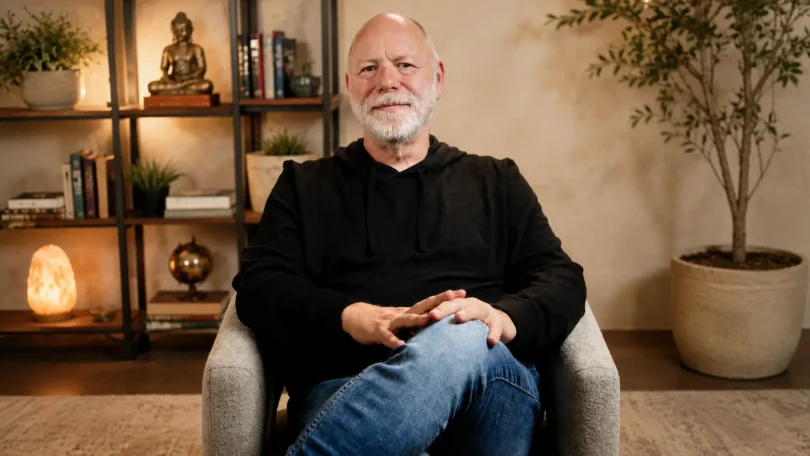
Go Deeper with NLS Mastery: Awakening Divine Consciousness
A guided course on awakening divine consciousness. Paul Selig teaches it in Awakening Divine Consciousness, part of NLS Mastery. Watch the course preview below.
Frequently Asked Questions
What does manifestation mean?
Manifestation means bringing a clear intention into lived reality by aligning your thoughts, feelings and actions with it. It combines focused intention with real-world action.
What is the simple definition of manifesting?
Manifesting is deciding what you want, getting clear about it, believing it is possible and taking steps toward it. The inner work shapes attention and the outer work creates results.
Where does manifestation come from?
The modern idea grew out of the New Thought movement of the 1800s and was popularized as the law of attraction. Related ideas appear in Hermetic and contemplative traditions.
Is manifestation the same as the law of attraction?
They are closely related. The law of attraction is the idea that like attracts like, and manifestation is the practice of working with that idea. Read our law of attraction guide for more.
Does manifestation really work?
Results differ from person to person, and nobody can promise outcomes. Clear goals, steady attention and consistent action are known to help people move toward what they want.
How do you start manifesting?
Write one clear intention, spend a few minutes each day visualizing it, and take one concrete action. Review your progress weekly.
How long does manifestation take?
There is no fixed timeline. Some intentions show movement within weeks, and others take months or change shape as you grow.
Do I have to think positively all the time?
No. Honest feelings, including fear, are part of the process. The practice asks you to notice them and still choose your next step.
What are the best manifestation techniques?
Journaling, visualization, affirmations, gratitude and scripting are the most common. Choose the one you will actually do.
What are common manifestation mistakes?
Waiting without acting, setting vague goals, comparing your timeline to others and using the practice to blame yourself when life is hard.
Where can I see manifestation examples?
Our manifestation examples article walks through real-life scenarios, from work to relationships.
Spirituality for the Rest of Us™
Movies, series, documentaries, audiobooks, audio courses and guided meditations on awakening and consciousness, all in one place. 14-day money-back guarantee.