The Aquarian Gospel of Jesus the Christ is Levi H. Dowling’s 1908 retelling of the life of Jesus, which Dowling said he received from what he called the Akashic records. It tells the story of Mary, John and Jesus, and fills in the years between childhood and ministry that the New Testament leaves out. This study guide walks through all nine parts in plain language, then hands you a workbook to try the ideas on your own life.
Listen While You Study
The audiobook is available on Next Level Soul TV. Play a part, then come back here for the notes and the workbook prompt.
Key Takeaways
- Dowling claimed a mystical source, saying he transcribed the story from the Akashic records, a claim that rests on his word alone.
- The book fills the “lost years,” the long gap between Jesus at twelve and his public work at thirty.
- It sends Jesus on a world journey, studying in India, Tibet, Persia, Assyria, Greece and Egypt before he teaches.
- Scholars are cautious, and many regard the travel material as not historically supported.
- The teaching is practical, pointing readers toward love, service, self-mastery and a living inner faith.
The Book at a Glance
| Detail | What to Know |
|---|---|
| Author | Levi H. Dowling (1844 to 1911) |
| First published | 1908 |
| Parts in this guide | 9, grouped from the book’s 22 lettered sections |
| Tradition | Esoteric Christianity and New Thought |
| Audiobook | Available on Next Level Soul TV |
What Is The Aquarian Gospel of Jesus the Christ About?
The Aquarian Gospel of Jesus the Christ was published in 1908 by Levi H. Dowling, an Ohio-born preacher and writer. Dowling said he spent about forty years in study and meditation, then wrote the book in the early morning hours from what he called the Akashic records. Those are described as a mystical record of all events.
The book follows the life of Jesus from the births of Mary, John and Jesus through the crucifixion, resurrection and the founding of the church. Its best known feature is the account of the “lost years,” when Jesus is said to study with sages in many lands. Scholars generally do not accept that part as history, but readers still value its teaching.
The Board: 9 Parts
Each square is a part. Tap one to jump to its study notes.
- 1Births
- 2Childhood
- 3India, Tibet
- 4Persia, Greece
- 5Egypt, Sages
- 6John, Intro
- 7Ministry
- 8Arrest, Trial
- 9Rising, Church
Part-by-Part Study Notes
These notes are our own summary, written to help you follow the book. Each one ends with a small practice you can try this week.
Birth and Early Life of Mary; Birth and Infancy of John the Harbinger and of Jesus
The book opens with the family story behind the gospel. It describes the birth and early life of Mary, then the births of John, called the Harbinger, and of Jesus. Dowling treats these births as part of a larger plan, and he presents the families as devout and prepared. Think of this part as the foundation. It sets the tone for the whole book: the events are told as spiritual history, with unseen guidance behind ordinary lives. Read it as the author’s own telling, not as the standard Gospel account.
Education of Mary and Elizabeth in Zoan; Childhood and Early Education of John; Childhood and Early Education of Jesus
Here Dowling describes how the three central figures were taught. Mary and Elizabeth are educated in Zoan, and John and Jesus each receive early schooling. The book stresses that great teachers are prepared, not simply born. In this telling, learning, prayer and discipline begin early and shape character long before any public work. This part reads like a story of growing up with purpose. It invites you to think about what formed you, and what you are still learning today.
India; Tibet and Western India
Now the book begins the story of the lost years. Dowling describes Jesus traveling to India, then to Tibet and western India, where he meets teachers and is tested. Scholars regard this travel material as not historically supported, and the book itself rests on the author’s claim of a mystical source. Within the story, the lesson is humility: a wise person keeps learning and listens to other traditions. Read it as symbolic and spiritual teaching, and notice the respect shown for wisdom from many places.
Persia; Assyria; Greece
The journey continues west through Persia, Assyria and Greece. In each place Dowling describes Jesus meeting priests, philosophers and teachers, learning from them and sharing what he knows. The book portrays these exchanges as respectful and full of insight. Historians point out anachronisms in the travel chapters, so it is wise to treat them as the author’s vision. Spiritually, the message is that truth is not owned by one people, and that a real seeker is willing to listen before speaking.
Egypt; The Council of the Seven Sages of the World
The travels end in Egypt, which the book treats as a place of ancient mystery teaching. Dowling then describes a Council of the Seven Sages of the World, a gathering that confirms Jesus is ready for his mission. This is the high point of the preparation. The idea is that spiritual work needs training, testing and the support of wise guides. In plain terms, readiness comes before action. Take it as the author’s symbolic picture of a mentor community.
The Ministry of John the Harbinger; Introductory Epoch
With preparation complete, the story returns home. John the Harbinger begins his ministry, calling people to change and prepare. Then the Introductory Epoch opens the public work of Jesus. Dowling presents John as the one who clears the path and Jesus as the one who follows with a larger message. This part works like a doorway. It shows how a mission begins quietly, with preparation and a clear call. It also asks you to think about what you are preparing for.
First, Second and Third Annual Epochs of the Christine Ministry
This is the heart of the book. Dowling divides the ministry into three annual epochs. Here Jesus teaches, heals, gathers followers and speaks about love, service, forgiveness and the inner kingdom. Many sayings and events will feel familiar from the New Testament, with the author adding his own details and esoteric framing. The emphasis falls on practice: a faith that is lived, not only believed. Read slowly, and look for the teachings you could actually apply in daily life.
The Arrest and Betrayal; The Trial and Execution
The story turns dark. Dowling tells of the arrest and betrayal of Jesus, followed by the trial and execution. As elsewhere, he adds his own spiritual reading to a story most readers already know. The focus is on courage, steadiness and love under pressure. The book presents the death as a meaningful passage, not an end. This part invites you to reflect on how you respond when things go wrong, and whether your values hold when it costs you something.
The Resurrection; Materialization of the Spiritual Body; Establishment of the Christine Church
The final part moves from loss to new life. Dowling describes the resurrection, then explains what he calls the materialization of the spiritual body, an esoteric idea that the soul can take visible form. The book ends with the founding of the Christine Church. The message is hope: love and spirit outlast death, and the teaching is meant to be carried on by ordinary people. Take it as the author’s vision of a living, shared faith.
Key Ideas in Plain Language
| Idea | What It Means | Part |
|---|---|---|
| Akashic records | In esoteric traditions, a mystical record of all events. Dowling said he drew the book from it. This is his claim, not something that can be tested. | 1 |
| The lost years | The gap in the New Testament between Jesus at about twelve and thirty. The book fills it with travel and study, which scholars do not treat as history. | 3, 4, 5 |
| Aquarian Age | The idea of a new spiritual era of brotherhood and understanding. It gives the book its name and its hopeful tone. | 9 |
| Wisdom of many traditions | The story shows Jesus learning from teachers in many lands. The point is respect for truth wherever it is found. | 3, 4, 5 |
| The Christ within | The Christ is described as a spiritual presence that can awaken in every person, not only in one historical figure. | 6, 7 |
| Love and service | Love shown through helping others is the book’s steady moral center throughout the ministry. | 7 |
| The spiritual body | Dowling teaches that the soul has a finer body that can be made visible. He uses this to explain the resurrection. | 9 |
| Preparation before mission | Each key figure is trained, tested and guided first. The book treats readiness as part of the calling. | 2, 5, 6 |
Who This Book Is For
This guide is for curious beginners, students of esoteric Christianity, and anyone who wants to understand the “lost years” story and why people still talk about it. You do not need to agree with Dowling to learn from the book. Read it as one author’s spiritual vision, compare it with other sources, and keep what helps you grow. The workbook turns each part into a small practice.
A 9-Day Way to Use It
- On days 1 to 3, read or listen to Parts 1 to 3, then write your answer to each Try it prompt in a notebook.
- On days 4 to 6, move through Parts 4 to 6 and note which ideas about learning and preparation feel true for you.
- On days 7 to 9, finish Parts 7 to 9, and do one Try it practice each day, even if it is small.
- On day 10, reread your notes, circle what stood out, and choose one practice to keep.
Your Workbook
Your answers save on this device as you type. They are not sent anywhere. Use the copy button to move them into your own notes.
Watch More on Next Level Soul TV
Next Level Soul TV brings together full episodes, courses, movies, series and audiobooks, ad-free. Join Next Level Soul TV and keep exploring.
Keep Going
- The Lost Years of Jesus Christ: India, Tibet, Egypt, Persia and Beyond
- Jesus of Nazareth: Life, Teachings and Legacy as an Ascended Master
- Gospel of Thomas Explained: The Hidden Sayings of Jesus
Sources and Further Reading
Go Deeper with NLS Mastery: The True Teachings of Jesus
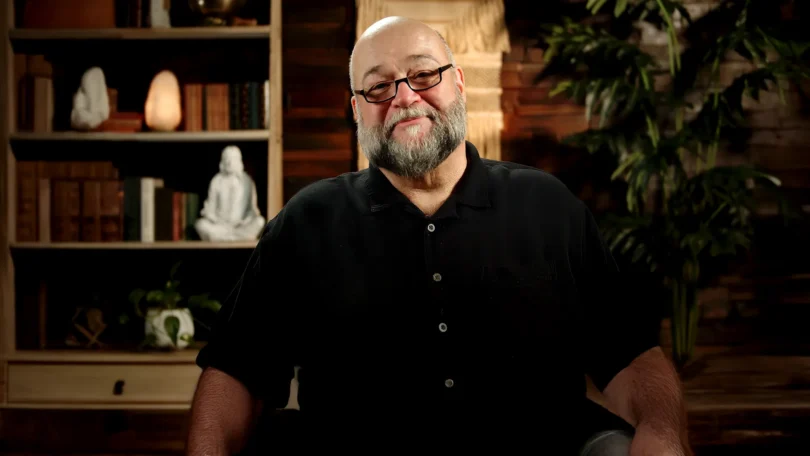
Dowling presents the life of Jesus as a path of inner awakening, learning and love in action, and many readers want to bring that kind of growth into daily life. If you want to take that further, John Davis teaches it in The True Teachings of Jesus, part of NLS Mastery. Watch the course preview below.
Frequently Asked Questions
What is The Aquarian Gospel of Jesus the Christ about?
It is a retelling of the life of Jesus, from the births of Mary, John and Jesus through the crucifixion, resurrection and founding of the church. Its most unusual feature is an account of the years the New Testament does not cover.
Who wrote it and when?
Levi H. Dowling, an American preacher and writer who lived from 1844 to 1911. The book was first published in 1908. Dowling said he received the text from the Akashic records.
What kind of book is it?
It is an esoteric Christian text with links to New Thought and Theosophy. It is not part of the Bible, and churches do not treat it as scripture. Readers value it as spiritual literature.
How many parts are in this guide, and what are they?
This guide uses nine parts: births, childhood, India and Tibet, Persia to Greece, Egypt and the Sages, John and the Introductory Epoch, the three ministry epochs, arrest and trial, and resurrection and the church. The book itself has 22 lettered sections.
What are the “lost years” in this book?
They are the roughly 18 years between Jesus at twelve and thirty that the Bible does not describe. Dowling fills them with travel to India, Tibet, Persia, Assyria, Greece and Egypt. Scholars generally regard this material as not historically supported.
What does Dowling mean by the Akashic records?
In esoteric thought, the Akashic records are a non-physical record of everything that has happened. Dowling said he read the story of Jesus there. This is his claim and cannot be independently checked.
What does the book teach about the Christ?
Dowling presents the Christ as a spiritual presence that can awaken in every person, not only in Jesus. The ministry chapters stress love, service, forgiveness and the inner life as the path to that awakening.
How should a beginner read it?
Go one part at a time and treat it as one author’s spiritual vision. Compare it with the New Testament, note what resonates, and do the small Try it practice at the end of each part.
Is it hard to read?
The language is formal and a little old-fashioned, but the short chapters and clear story make it approachable. Listening can make it easier, and this guide gives you a plain-language map.
How long does it take to go through it?
The 9-day plan in this guide takes about 20 to 30 minutes a day. You can go faster or slower. Reading the whole book usually takes longer, so pace yourself.
How does this study guide and workbook help?
It gives you a plain summary of each part, a list of key ideas, a simple daily plan and one small practice for each part. It helps you understand the book and then use it.
Where can I listen to the audiobook?
The audiobook is available on Next Level Soul TV. If you enjoy it, you may also like other books on esoteric Christianity, the life of Jesus, and the Akashic records.
Spirituality for the Rest of Us™
Movies, teachings and community on Next Level Soul TV.