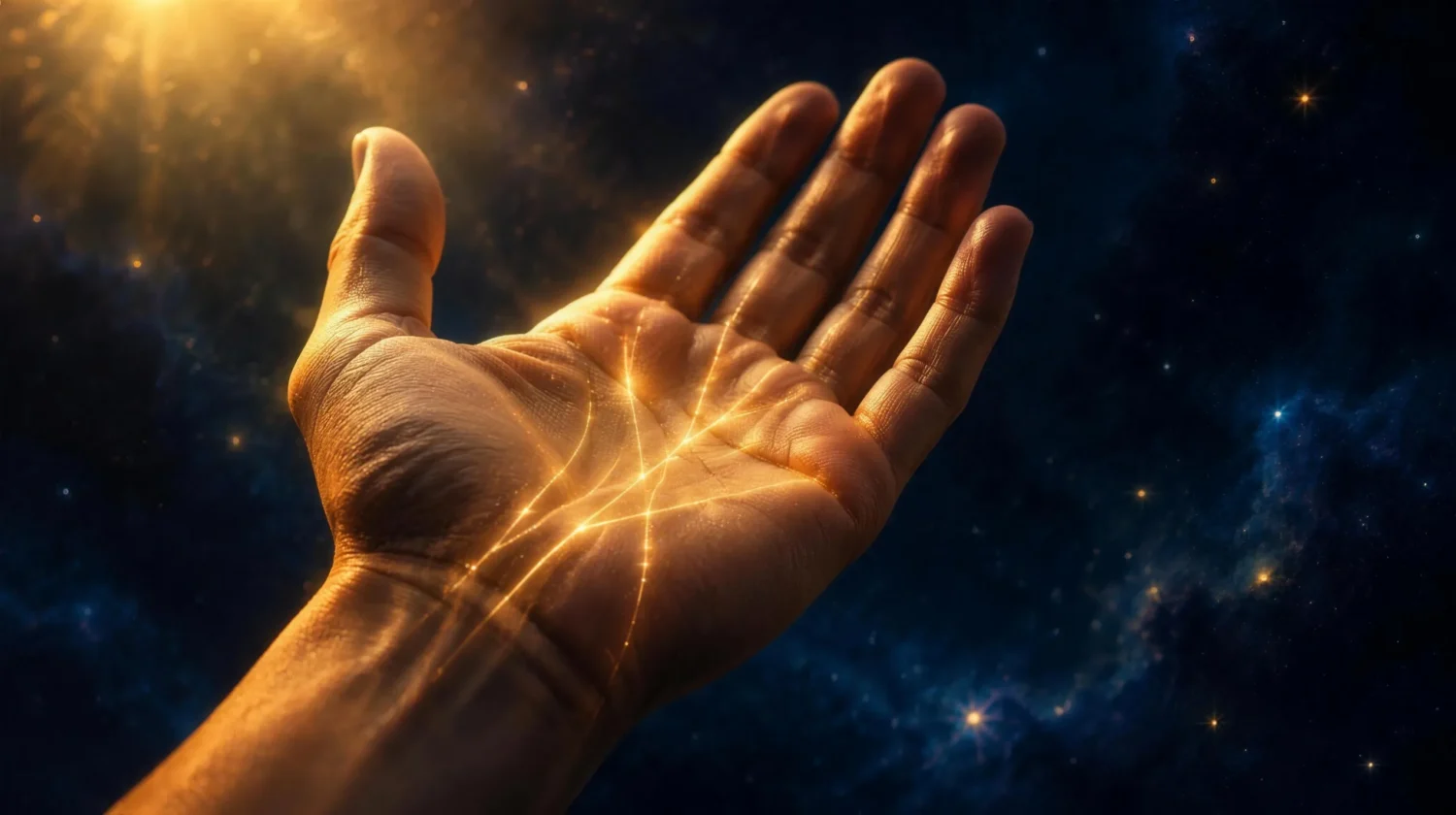
Palmistry, also called palm reading or chiromancy, is the practice of reading the lines, shapes and mounts of the hand to reflect on a person’s character, patterns and potential. The three lines most people look at first are the heart line, the head line and the life line, and each is read by its length, depth, curve and breaks.
This guide explains where palmistry comes from, what the major lines and mounts mean, how hand shapes are read and how to look at your own palms step by step. It is a reflective practice, so hold what you read lightly and let it spark curiosity. For related tools, see our guides to mudra meanings and intuition development.
Key Takeaways
- What it is. Palmistry reads the lines, mounts and shape of the hand as a mirror for character and patterns.
- The big three. The heart line, head line and life line are the first lines most readers study.
- Mounts and shapes. Seven mounts and four hand types (earth, air, fire, water) add detail.
- Not a forecast. No line promises length of life or a fixed fate. Use it as a mirror and keep your free will.
- Start simple. Read both hands, write down what you notice and revisit in a few months.
What Is Palmistry?
Palmistry is a form of divination that studies the hand. Practitioners look at the major lines, the fleshy pads called mounts, the shape of the hand and fingers, and sometimes skin texture and nails. The idea is that the hand is a map you can read for temperament, strengths and the shape of a life.
The practice goes by several names: palmistry, palm reading, chiromancy (reading the hand) and chirology. Traditions of hand reading are described in India, China and the ancient Mediterranean, and in the late 19th and early 20th centuries the Irish palmist William John Warner, known as Cheiro, brought it to a wide Western audience.
A Short History of Palm Reading
Hand reading is old and widespread. Indian traditions of samudrika shastra, the study of bodily marks, include reading the palm. Greek and medieval European writers described chiromancy, and the practice persisted through the Renaissance despite periods of suspicion. By Cheiro’s day, it had become a fashionable parlor art and a subject of serious curiosity for seekers.
Palmistry is not the same as Indian palm leaf reading, also called Nadi reading. Palm leaf readers use ancient texts written on leaves, found through your thumbprint, rather than the lines of your hand. We cover that practice with a guest below.
The Major Palm Lines and What They Mean
Most palmists begin with four principal lines. Read them as tendencies, not fixed outcomes.
| Line | Where to Find It | Common Reading |
|---|---|---|
| Heart line | The curve across the upper palm, beneath the fingers | Emotional life, how you give and receive love, and your sense of connection. |
| Head line | The line across the middle of the palm | Thinking style, curiosity, focus and how you solve problems. |
| Life line | The arc that curves around the base of the thumb | Vitality, energy and major life changes. It is not read as a measure of how long you will live. |
| Fate line | A vertical line running up the center of the palm, not present in everyone | Sense of direction, career path and how much outside circumstance shapes your life. |
| Sun line | A vertical line below the ring finger | Creativity, recognition and joy in what you do. |
| Mercury line | A line from the base of the palm toward the little finger | Communication, wellbeing habits and business sense. |
A deep, clear line is usually read as a strong expression of that theme. A faint or broken line is read as a theme that is shifting or that you can strengthen with attention. Palmists often add that lines can change over a lifetime as you change.
The Mounts of the Hand
Mounts are the raised pads at the base of each finger and around the palm. Each is named for a planet or deity from classical astrology.
| Mount | Location | Common Reading |
|---|---|---|
| Jupiter | Below the index finger | Ambition, leadership and confidence. |
| Saturn | Below the middle finger | Responsibility, discipline and seriousness. |
| Apollo (Sun) | Below the ring finger | Creativity, charm and appreciation of beauty. |
| Mercury | Below the little finger | Communication, wit and commerce. |
| Venus | The fleshy base of the thumb | Love, warmth, vitality and sensuality. |
| Moon (Luna) | The outer edge of the palm opposite the thumb | Imagination, intuition and sensitivity. |
| Mars | Between the thumb and index finger, and on the outer palm | Courage, drive and resilience. |
Hand Shapes: Earth, Air, Fire and Water
Many palmists group hands into four types linked to the classical elements. Look at the palm shape and the length of the fingers compared with the palm.
- Earth hands have square palms and shorter fingers. They are read as practical, steady and grounded.
- Air hands have square palms and longer fingers. They are read as curious, communicative and mentally active.
- Fire hands have longer palms and shorter fingers. They are read as energetic, bold and spontaneous.
- Water hands have longer palms and longer fingers. They are read as sensitive, intuitive and empathic.
How to Read Your Own Palm, Step by Step
- Choose a hand. A common teaching is that your non-dominant hand shows what you were born with and your dominant hand shows what you have made of it. Look at both and notice the differences.
- Find good light. Use soft daylight and relax your hand without stretching it flat.
- Start with the shape. Notice the palm and finger proportions and name your element.
- Read the major lines. Look at the heart, head and life lines first, noting length, depth and breaks.
- Look at the mounts. Notice which pads feel full or flat.
- Write what you notice. Record your observations and what feels true. Revisit them in a few months.
Holding Palmistry Lightly
Palmistry is best used as a mirror for self-reflection, not a forecast or a medical test. No line promises a length of life, a marriage or an illness. If you consult a palm reader, look for someone who speaks with care and ethics. Lisa Williams, a psychic medium, says she stands for ethics in how readings are delivered, and that is a good standard for any reading.
The deeper invitation is to know yourself. Teachers like Dr. Q Moayad remind us that no life is set in stone, because everyone keeps free will and choice. Let the hand show you a pattern, then choose what to do with it.
Watch: A Conversation on Palm Leaf Reading and Free Will
This NLS guest explains a different hand and thumbprint tradition from India.
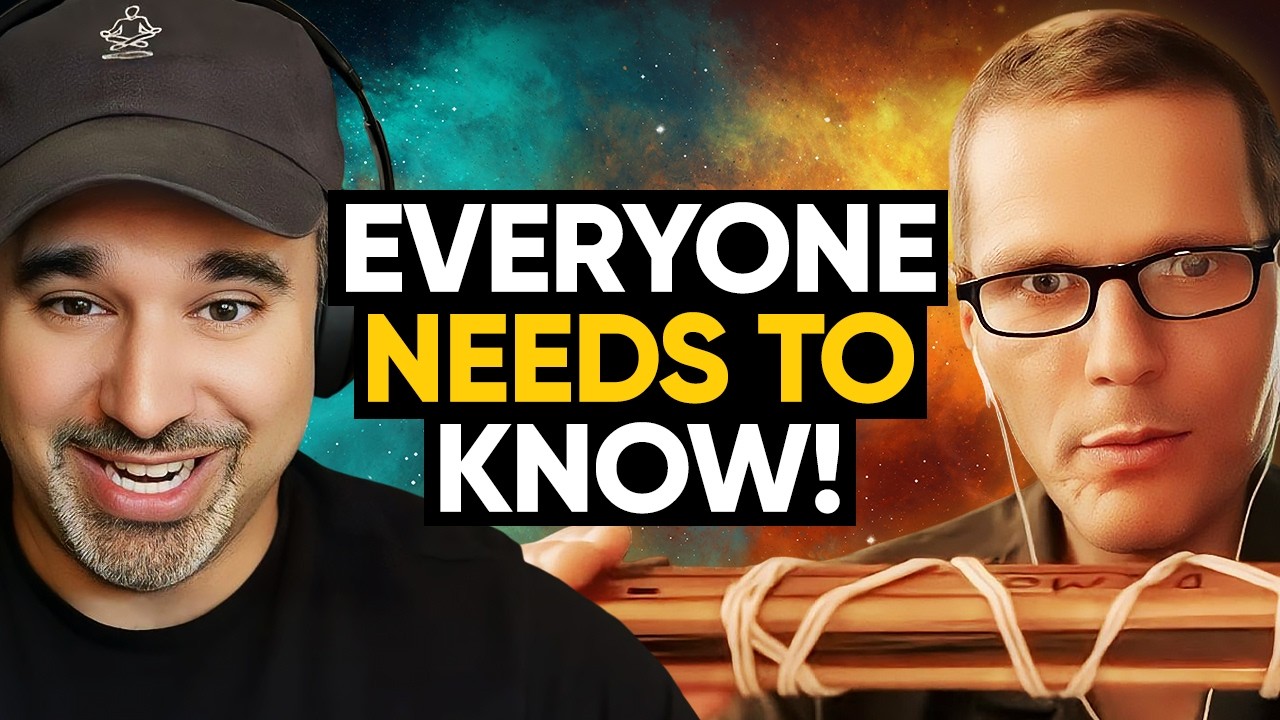
Dr. Q Moayad: Decode Your Life with Indian Palm Leaf Reading
Dr. Q Moayad explains Indian palm leaf reading, also called Nadi reading, how a reader finds your leaf through your thumbprint and why he says no life is set in stone. Watch the full episode and read the show notes.
Watch More on Next Level Soul TV
Next Level Soul TV brings together full episodes, courses, movies, series and audiobooks, ad-free. Join Next Level Soul TV and keep exploring.
Go Deeper with Next Level Soul
- Mudra Meanings: 22 Hand Gestures and What They Do
- Intuition Development
- Tarot Cards: The Complete Guide to Meaning, Spreads and Practice
- Astrology: The Complete Guide
- Chakras: The Complete Guide
- Dr. Q Moayad on Indian Palm Leaf Reading
- NLS Mastery: Awaken Your Psychic Abilities with Nikki Dutta
- The full spiritual glossary
Sources and Further Reading
Spirituality for the Rest of Us™
Movies, teachings and community on Next Level Soul TV.
Go Deeper with NLS Mastery: Awaken Your Psychic Abilities
Curious about developing your own intuition with guidance and care? Nikki Dutta teaches it in Awaken Your Psychic Abilities, part of NLS Mastery. Watch the course preview below.

Frequently Asked Questions
What is palmistry?
Palmistry, also called palm reading or chiromancy, is the practice of reading the lines, mounts and shape of the hand to reflect on character, patterns and potential.
What are the main lines in palmistry?
The main lines are the heart line, the head line and the life line. Many palmists also read the fate line, the sun line and the mercury line.
What does the life line mean?
The life line curves around the base of the thumb and is read as vitality, energy and major life changes. It is not read as a measure of how long you will live.
What does the heart line mean?
The heart line runs across the upper palm and is read as your emotional life, how you give and receive love and your sense of connection.
Which hand should I read?
A common teaching is that the non-dominant hand shows what you were born with and the dominant hand shows what you have made of it. Look at both.
Do palm lines change?
Many palmists say lines and marks can shift over time as a person changes, which is why they suggest looking again after a few months.
What are the mounts of the hand?
Mounts are the raised pads at the base of each finger and around the palm, named for planets and deities such as Jupiter, Saturn, Apollo, Mercury, Venus, Moon and Mars.
What is the difference between palmistry and palm leaf reading?
Palmistry reads the lines and shape of your hand. Indian palm leaf reading, or Nadi reading, uses ancient texts written on leaves that are found through your thumbprint.
Is palmistry accurate?
Palmistry is a reflective, traditional practice, not a scientific test. Use it as a mirror for self-knowledge and do not make major decisions from it.
Can I learn palmistry on my own?
Yes. Start with the shape of your hands and the major lines, keep notes and read from reliable books. To explore intuition more broadly, consider a course like Awaken Your Psychic Abilities with Nikki Dutta.