A meditation app for sleep plays slow, guided sessions that help you put the day down and let your body soften toward rest. The best fit is an app with a gentle voice, a sleep timer, a fade-out and sessions that end quietly, used as a calm bedtime ritual rather than a cure. It is a relaxation practice, not treatment, so if sleep trouble is ongoing, a doctor or sleep professional is the right next step.
Key Takeaways
- Wind-down tool: Sleep meditations help you slow down before bed. They are a relaxation practice, not a treatment.
- Features that matter: A soft voice, a sleep timer, a fade-out ending and a quiet interface beat a long feature list.
- Ritual beats novelty: The same time, the same chair and the same few sessions teach your body what comes next.
- Gentle with the screen: Dim the display, turn on do not disturb and let the audio run without looking at it.
- Know the limits: If you cannot sleep for weeks, or you feel unwell, see a qualified professional.
What Is a Meditation App for Sleep?
Most people do not lie awake because they forgot how to sleep. They lie awake because the day is still running. Replaying a conversation. Planning tomorrow. Listening to the house. A meditation app for sleep gives that busy mind something slower to follow.
In practice, it is an app that offers guided sessions, soundscapes, breathing exercises or slow narration designed for the hour before bed and for the moment you turn out the light. Many are a form of guided meditation, where a voice leads you through relaxation, breath or imagery.
It helps to be honest about what this is. A sleep meditation is a spiritual and relaxation practice. It can make the evening feel softer. It is not a medical treatment, and it will not fix every night.
Meditation App for Sleep at a Glance
| Question | Quick answer |
|---|---|
| What is it? | An app with guided meditations, breathing, soundscapes or stories made for winding down. |
| Common session types | Body scan, breath counting, visualization, yoga nidra style rest, soft soundscapes. |
| Typical length | 10 to 45 minutes, often with a timer that fades the audio out. |
| Best time to start | 20 to 30 minutes before you want to be asleep, not as you turn out the light. |
| What to avoid | Bright screens, loud ads, sudden sounds and promises of guaranteed sleep. |
| Health note | A relaxation practice, not treatment. See a professional for persistent sleep problems. |
How Do Sleep Meditations Work?
They work the way a lullaby works. Not by forcing sleep, but by changing what you are doing in the minutes before it. Slow breathing, a steady voice and a body scan give your attention one gentle job, and the rest of the mind gets quieter around it.
Several traditions have used this idea for a long time. In yoga tradition, yoga nidra is a guided practice of deep rest. Wikipedia describes it as a state of consciousness between waking and sleeping, typically induced by a guided meditation. Buddhist traditions teach mindfulness of breathing, called anapanasati, which many sleep sessions echo with simple breath counting.
What does modern research say? It is encouraging in places and uneven in others. The NCCIH overview of meditation and mindfulness notes that much of the research has been preliminary or not scientifically rigorous. That is a reason to stay curious and modest, not a reason to skip a practice you enjoy.
Sleep trouble has many causes, including stress, pain, medications, caffeine and medical conditions. A meditation app can be one calm part of your evening, but it cannot tell you why you are not sleeping.
What Features Matter in a Meditation App for Sleep?
A long feature list does not make a good bedtime tool. These are the things that actually change the experience at ten at night.
A voice you can drift with
Voice is the whole instrument. Listen for a slow pace, real pauses and an invitational tone. If the voice makes you tense, no feature will rescue it.
A sleep timer and a fade-out
A timer lets the audio end on its own. A gradual fade is better than a hard stop, because a sudden silence can pull you back awake.
A quiet ending
Some sessions finish with a bell or a cheerful sign-off. For sleep, you want sessions that simply trail off.
A dark and simple screen
A dim mode, a clean layout and no pop-ups matter more than you would think. If the app nudges you with notifications at night, turn them off.
Offline downloads
Downloaded sessions mean you can put the phone in airplane mode. No alerts, no buffering, no temptation to scroll.
Variety without overload
A handful of voices and styles is plenty. You are looking for two or three sessions that reliably feel good, then you will return to them for months.
Honest claims
Be wary of any app that promises to fix insomnia or guarantees sleep. Honest tools describe what they offer and leave the medicine to medicine.
Types of Sleep Meditation You Will Find
| Type | What it feels like | Who it may suit |
|---|---|---|
| Body scan | Attention moves slowly from feet to head, softening as it goes | People who hold tension in the body |
| Breath counting | Gentle counting of breaths, often to ten and back | Busy minds that like a simple task |
| Visualization | A quiet place imagined in detail: a forest path, a shoreline | People who think in pictures |
| Yoga nidra style rest | Guided deep rest, lying down, with a sequence of body and breath cues | Anyone drawn to a traditional approach |
| Soundscapes | Rain, ocean, wind or soft tones with little or no talking | People who find voices distracting |
| Bedtime stories | A slow, low-stakes story told in a soothing voice | Those who like narrative over instruction |
You do not need all of them. Try one from each family over a week, notice which you remember least of (you probably fell asleep), and keep that one.
If you like the body-based end, our guide to body scan meditation explains how that practice works without an app.
How to Use a Meditation App for Sleep: Step by Step
- Set a wind-down time. Choose a consistent hour, about 30 minutes before you want to be asleep.
- Prepare the phone. Download the session, turn on do not disturb, lower the brightness and set a sleep timer.
- Get comfortable first. Lie down, loosen your clothing and let the pillow take the weight of your head.
- Start the session and put the phone down. Screen face down, out of reach if you can.
- Follow the voice, not the clock. Do not check how long it has been. If your mind wanders, that is normal. Return to the breath or the voice.
- Let sleep take over. If you drift off mid-session, that is not failure. That is the point.
- If you are still awake at the end, stay quiet. Rest with your eyes closed rather than reaching for the phone.
The first week is for experimenting. By the second, your body will start to recognize the sequence, and the ritual itself becomes part of the cue.
For an evening practice that lives outside any screen, the end of day meditations on Next Level Soul are organized for exactly this transition.
Building a Bedtime Ritual Around It
A meditation works best as the last step in a small sequence, not as a rescue at 2 a.m. Think of it as the closing line of the day.
- Close the day. Write tomorrow’s three tasks on paper so your mind can stop holding them.
- Dim the lights. A lower light tells the body that evening has arrived.
- Warm the room, cool the air. Many people sleep best in a cooler room with warm blankets.
- Pair it with a gentle breath. Our guide to guided breathwork covers slow, comfortable breathing. Never strain.
- Keep it the same. The same two or three sessions, night after night, beat constant searching.
The Wikipedia entry on sleep hygiene lists common habits such as a consistent schedule and limiting caffeine and alcohol near bedtime. It also notes that evidence for those habits is mixed. Treat them as gentle experiments, not rules.
Common Misconceptions About Sleep Meditation
- “I must stay awake for the whole session.” No. Falling asleep during a sleep meditation is a normal and welcome result.
- “If I do not sleep within minutes, it failed.” Relaxation is the practice. Sleep is the by-product, and it arrives on its own schedule.
- “An app can replace medical care.” It cannot. Ongoing sleeplessness deserves a conversation with a professional.
- “More sessions means better sleep.” Often the opposite. Repetition builds the cue.
- “It has to be silent.” Some people sleep to voices, others to rain or tones. Choose what actually relaxes you.
One more honest note. The NCCIH reports that a 2020 review found around 8 percent of participants in meditation studies reported an unwanted effect, a rate similar to that for psychological therapies. If a practice leaves you more anxious or unsettled, stop, and talk with a qualified professional.
When Sleep Needs More Than a Meditation
Meditation is a gentle companion. It is not a diagnosis. Reach out to a doctor or sleep professional if:
- You have had trouble sleeping most nights for several weeks.
- You feel very tired during the day, or you snore loudly, or someone notices you stop breathing at night.
- Low mood or constant worry is part of the picture.
- You are tempted to rely on sleep aids or alcohol to get through the night.
There is no spiritual failure in asking for help. A practice and a professional can sit side by side.
Sleep Meditation and Next Level Soul
Next Level Soul TV is a spiritual library with guided meditations, not a dedicated meditation app. Membership is $19.99 a month or $199 a year, with 3,500+ hours of content and a 14-day money-back guarantee. If you want a library to explore rather than a single-purpose tool, start with the guided meditations. The relaxation and intention meditations suit the hour before sleep.
Many people also like a meditation audiobook in the evening, as long as the narrator is slow and the subject is gentle.
Go Deeper with NLS Mastery: Ancient Meditation for Inner Stillness
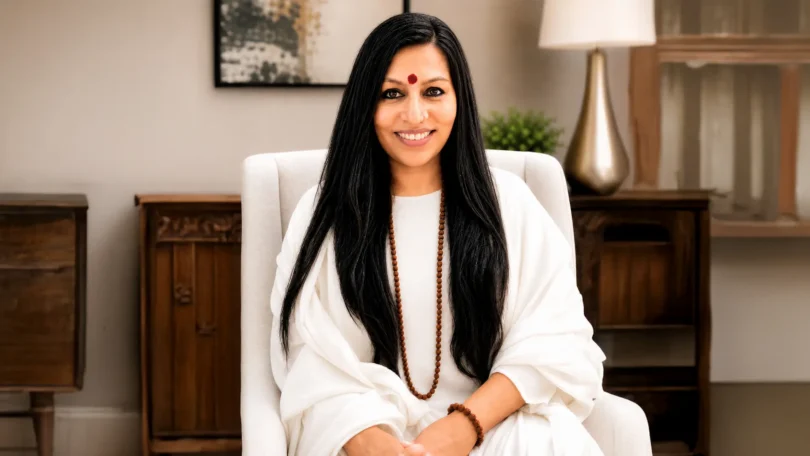
Acharya Shunya brings an ancient, gentle approach to meditation that can deepen the quiet you are practicing at the end of the day. Acharya Shunya teaches it in Ancient Meditation for Inner Stillness, part of NLS Mastery. Watch the course preview below.
Frequently Asked Questions
What is the best meditation app for sleep?
The best one is the one whose voice relaxes you. Look for a sleep timer, a fade-out, offline downloads and sessions that end quietly, then test two or three styles for a week.
Does meditation help you sleep?
Many people find that slow breathing and guided relaxation help them wind down. Research is mixed and often early, so treat it as a relaxation practice rather than a treatment.
How long should a sleep meditation be?
Anything from 10 to 45 minutes works. Start with 15 to 20 and use a timer that fades out.
Is it okay to fall asleep during a guided meditation?
Yes. For sleep meditations, drifting off is the goal, not a failure.
Should I use headphones or a speaker?
Either. A low-volume speaker avoids cords and discomfort, while headphones can help with noise. Soft sleep headbands are an option if you lie on your side.
Are free sleep meditation apps good enough?
Often, yes. Free tiers usually include several sessions and a timer. Check that ads do not interrupt and that downloads work offline.
What if meditation makes me more awake?
Some people feel more alert when they focus on the body or breath. Try a soundscape or a story instead, or practice earlier in the evening.
Can I use a meditation app for sleep every night?
Yes, if you enjoy it. Rotate a few favorite sessions so the ritual stays comforting and does not become a source of pressure.
Is yoga nidra the same as sleep meditation?
They overlap. Yoga nidra is a traditional guided practice of deep rest often done lying down, and many sleep meditations borrow from it.
Is Next Level Soul TV a meditation app?
No. Next Level Soul TV is a spiritual library with guided meditations, alongside movies, series, documentaries and audiobooks.
When should I see a doctor about sleep?
If trouble sleeping lasts several weeks, affects your days, or comes with low mood, loud snoring or breathing pauses, speak with a qualified professional.
Sources and Further Reading
Spirituality for the Rest of Us™
Movies, series, documentaries, audiobooks, audio courses and guided meditations on awakening and consciousness, all in one place. 14-day money-back guarantee.