
Your life path number is a single digit, or a master number, calculated from your birth date. In numerology it describes the main lesson, strengths and direction of your life. To find yours, reduce your month, day and year to single digits, add them together, and keep 11, 22 or 33 if one of them appears as the total.
Below you will find the exact steps with examples, the meaning of every life path number from 1 to 9, the three master numbers, and a grounded way to use the number as a mirror for your choices. Numerology is a spiritual practice, not a science. We offer it the way we offer astrology: as a symbolic language for reflection.
Key Takeaways
- Your life path number comes from your full birth date and is the most important number in a numerology reading.
- Reduce the month, day and year separately, add them, then reduce again. Stop at 11, 22 or 33 if you land on one.
- Each number from 1 to 9 carries a core lesson. The master numbers carry a higher calling and more pressure.
- Use the number as a mirror for reflection, not as a prediction or a limit.
How to Calculate Your Life Path Number
The method uses only your birth date. Reduce each part of the date to a single digit by adding its digits together. Then add the three results and reduce once more. The one exception is that numerologists do not reduce a total of 11, 22 or 33. Those are the master numbers.
- Reduce the month. March is 3. November is 11, which reduces to 1 + 1 = 2.
- Reduce the day. The 28th becomes 2 + 8 = 10, then 1 + 0 = 1.
- Reduce the year. 1985 becomes 1 + 9 + 8 + 5 = 23, then 2 + 3 = 5.
- Add the three numbers and reduce the sum until you have a single digit or a master number.
Example: March 28, 1985. The month is 3, the day is 1 and the year is 5. The total is 3 + 1 + 5 = 9, so the life path number is 9.
Master number example: January 6, 2002. The month is 1, the day is 6 and the year is 2 + 0 + 0 + 2 = 4. The total is 1 + 6 + 4 = 11. It is not reduced, so the life path number is 11.
Some teachers add every digit of the birth date in one pass and reach the same number most of the time. If two methods give you different answers, read both descriptions and notice which one feels like your life.
Quick check: if you were born on the 29th, 30th or 31st, reduce the day the same way (29 becomes 2 + 9 = 11, then 2). A few teachers keep 11 as a master number when it appears in the month or day. Others reduce it first. Pick one method, use it consistently, and note which description fits you better. The point of the exercise is self-knowledge, not getting a perfect score on arithmetic.
Online calculators do the same steps in a second, but doing it by hand once helps you see why your number looks the way it does.
Life Path Numbers at a Glance
| Number | Keyword | Core strength | Core lesson |
|---|---|---|---|
| 1 | The Leader | Independence and drive | Lead without isolating yourself |
| 2 | The Peacemaker | Sensitivity and partnership | Keep your own voice |
| 3 | The Communicator | Creativity and expression | Focus your gifts |
| 4 | The Builder | Discipline and reliability | Stay open to change |
| 5 | The Adventurer | Freedom and curiosity | Commit without feeling caged |
| 6 | The Nurturer | Care and responsibility | Give without losing yourself |
| 7 | The Seeker | Wisdom and insight | Trust people as well as ideas |
| 8 | The Powerhouse | Ambition and authority | Balance power with values |
| 9 | The Humanitarian | Compassion and vision | Let go and finish cycles |
| 11 | The Messenger | Intuition and inspiration | Ground your sensitivity |
| 22 | The Master Builder | Vision made practical | Carry big dreams without burnout |
| 33 | The Master Teacher | Selfless service | Care for yourself as you care for others |
Where Numerology and the Life Path Come From
Britannica describes numerology as the use of numbers to interpret a person’s character or to predict the future, resting on the old Pythagorean idea that all things can be expressed in numbers. Wikipedia notes that the modern Pythagorean method gives the Latin alphabet values from 1 to 9, much as Greek and Hebrew letters once carried number values. Whether Pythagoras himself taught this is debated. The scholar Walter Burkert argued that the number philosophy belongs to later Pythagoreans such as Philolaus, and the habit of reducing a name or date to one digit is a later development still.
That history explains the tone of the practice. Numerology belongs to a long human habit of finding meaning in numbers, from the Greek and Hebrew traditions of letter values, known as isopsephy and gematria, to the numbers people notice on clocks and license plates. If you notice repeating numbers, our guides to the 111 angel number, the 333 angel number and the 777 angel number cover that side of the practice.
Life Path Numbers 1 to 9 Explained
Life Path 1: The Leader
Ones are here to learn independence. You tend to start things, trust your own judgment and dislike being told how to do something. The strength is initiative and courage. The shadow is stubbornness, or a loneliness that comes from refusing help. Your growth edge is learning that real leadership includes listening. Careers that reward self-direction, such as founding, coaching or building a practice of your own, often fit.
Life Path 2: The Peacemaker
Twos are here to learn cooperation. You read rooms well, notice what people leave unsaid and often become the glue in a family or team. The strength is empathy and patience. The shadow is people-pleasing, where you go quiet to keep the peace and resent it later. Your growth edge is saying what you need clearly and early. Partnership, counseling and mediation are natural homes.
Life Path 3: The Communicator
Threes are here to learn expression. You have humor, imagination and a need to make something and share it, whether that is words, music, art or conversation. The strength is joy that lifts a room. The shadow is scattered energy and a fear of being judged, which can lead to starting a lot and finishing little. Your growth edge is choosing one channel and showing up for it. Writing, teaching and the arts are common paths.
Life Path 4: The Builder
Fours are here to learn structure. You value reliability, plain effort and systems that work. The strength is follow-through, because when you commit, it gets done. The shadow is rigidity, overwork and a worry that anything unplanned will fall apart. Your growth edge is trusting that change can also build something. Trades, operations, finance and any role where steady craft matters tend to suit you.
Life Path 5: The Adventurer
Fives are here to learn freedom. You are curious, adaptable and restless when life becomes routine. The strength is the ability to start over and make friends anywhere. The shadow is escape, where movement replaces depth and commitments feel like cages. Your growth edge is finding freedom inside commitment rather than away from it. Travel, sales, media and work with variety keep you engaged.
Life Path 6: The Nurturer
Sixes are here to learn responsibility in love. You care for family, community and home, and people lean on you. The strength is warmth and a sense of duty. The shadow is over-giving, control disguised as help, and perfectionism about how others live. Your growth edge is letting people carry their own lives and receiving care in return. Healing work, teaching, design and community roles are common.
Life Path 7: The Seeker
Sevens are here to learn trust through understanding. You think deeply, need quiet and often feel drawn to spirituality, research or the mysteries beneath ordinary life. The strength is insight. The shadow is withdrawal, skepticism that turns into cynicism, and difficulty letting people close. Your growth edge is trusting people as well as ideas. Study, writing, meditation and analysis fit well. Many seekers find their way to practices like meditation for spiritual awakening.
Life Path 8: The Powerhouse
Eights are here to learn how to handle power and resources. You think in terms of goals, results and influence, and you often rise into responsibility. The strength is vision combined with endurance. The shadow is an identity built on status, money or control. Your growth edge is aligning achievement with values, and measuring success by more than numbers. Business, leadership, law and finance are common paths.
Life Path 9: The Humanitarian
Nines are here to learn compassion and completion. You see the bigger picture, feel for people you have never met and often carry a quiet wisdom. The strength is generosity of spirit. The shadow is holding on to old wounds, taking on the world’s pain and leaving things unfinished. Your growth edge is letting cycles end cleanly. Service, healing, teaching and creative work with a message often fit.
Master Numbers 11, 22 and 33
Master numbers are the only totals numerology leaves unreduced. Teachers describe them as a higher octave of the single digit beneath them, meaning more potential and more pressure. If you have one, you can read both meanings: 11 includes the lessons of 2, 22 of 4, and 33 of 6.
Life Path 11: The Messenger
Elevens are intuitive, idealistic and sensitive to atmosphere. You may sense things before you can explain them, and others often look to you for inspiration. The challenge is nervous energy and self-doubt. Grounding practices, honest rest and one clear outlet for your ideas matter more than usual. When overwhelmed, many Elevens live as a 2 and lean on partnership.
Life Path 22: The Master Builder
Twenty-twos pair big vision with practical skill. You want to build something that outlasts you, such as an organization, a system or a community. The challenge is the weight of that expectation, which can lead to procrastination or burnout. Break the vision into steps. When it feels like too much, the 4 below it offers a steady way forward.
Life Path 33: The Master Teacher
Thirty-threes are devoted to healing and service. Compassion is your native language, and you often become the person others confide in. The challenge is self-sacrifice that ignores your own needs. Boundaries are part of the path, not a betrayal of it. Many people who carry a 33 live as a 6 in daily life and grow into the larger role over time.
Life Path vs Your Other Core Numbers
Your life path number is one of several numbers in a full numerology chart. It describes the road. The others describe the traveler.
| Number | Calculated from | What it shows |
|---|---|---|
| Life Path | Full birth date | Your main lessons and direction |
| Expression (Destiny) | Letters of your full birth name | Your talents and how you act in the world |
| Soul Urge (Heart’s Desire) | Vowels in your birth name | What you want at a deep level |
| Personality | Consonants in your birth name | How others first see you |
| Birthday | Day of the month | A specific gift you bring |
The name-based numbers use the Pythagorean letter chart, where A, J and S equal 1, B, K and T equal 2, and so on through 9. Start with your life path number, then add the others if the practice resonates.
How to Use Your Life Path Number Wisely
A number is a mirror, not a verdict. The most useful way to work with it is to treat each description as a set of questions you can ask yourself.
- Read your number and underline what is true. Ignore the rest. No description fits perfectly, and that is normal.
- Name your shadow honestly. Every number has a pattern that costs you something. Seeing it early is the real gift.
- Turn the lesson into one habit. A Four might schedule one unplanned afternoon each week. A Two might practice stating one need each day.
- Pair it with practice. Meditation, journaling and reflection give the number somewhere to land. Our guide to the stages of spiritual awakening is a good companion.
- Compare it with other tools. Many people read their life path alongside astrology and their Saturn return, and notice where the themes agree.
Life Path Numbers in Love and Relationships
Your life path number shapes what you need from a partner and where you tend to get stuck. Read these as patterns to notice, not as rules about who you can love.
| Number | What you need | Common pattern | Practice |
|---|---|---|---|
| 1 | Respect for your independence | Taking charge, then feeling alone | Ask for input before deciding |
| 2 | Reassurance and closeness | Absorbing a partner’s moods | Name your needs out loud |
| 3 | Play, conversation and appreciation | Avoiding heavy talks with humor | Stay in hard conversations |
| 4 | Stability and loyalty | Resisting spontaneity | Plan a surprise together |
| 5 | Space and adventure | Pulling away when things deepen | Share what scares you |
| 6 | Home and shared responsibility | Fixing and controlling | Let your partner choose |
| 7 | Quiet, depth and trust | Retreating into your own head | Say what you are thinking |
| 8 | A partner who matches your drive | Making work the priority | Protect time that is not productive |
| 9 | Shared purpose and compassion | Idealizing people | Accept people as they are |
When two people compare numbers, look for the practice more than the pairing. A One and a Two often struggle over who decides, and they also balance each other well when each learns the other’s strength. A Five and a Four may clash over freedom and routine, then discover that each holds something the other lacks. Compatibility charts only point to likely friction. The work of a relationship is still honesty, repair and showing up.
Life Path Numbers, Career and Purpose
Your number does not choose your job. It points to the conditions in which you do your best work. A Four can thrive in a creative field if it has structure. A Five can build a lasting business if it offers variety. Ask what environment lets your strengths show up, then look for roles that provide it.
- 1 and 8 tend to want authority over their work and measurable results.
- 2 and 6 tend to do their best work with people, in service, care or collaboration.
- 3 and 5 tend to need expression and change, and wilt in repetitive roles.
- 4 and 7 tend to prefer depth, craft and time to think.
- 9 tends to seek work with a larger meaning, and may feel flat in purely commercial roles.
If your job drains you, check whether the problem is the field or the conditions. Many people discover that a small change, such as more autonomy for a One or more quiet for a Seven, restores the work they thought they had outgrown.
Life Path Number and Your Personal Year
Your life path number stays fixed, but numerologists also track a personal year number that changes every year and describes the theme of the current cycle. Add your birth month, your birth day and the current calendar year, reducing each first, then reduce the total.
Example for 2026: someone born on March 28 uses 3 (March) + 1 (the 28th) + 1 (2 + 0 + 2 + 6 = 10, then 1). The total is 5, so this is a Personal Year 5, a year of change and movement.
| Personal year | Theme |
|---|---|
| 1 | New beginnings |
| 2 | Patience and partnership |
| 3 | Creativity and expression |
| 4 | Building and effort |
| 5 | Change and freedom |
| 6 | Home and responsibility |
| 7 | Reflection and study |
| 8 | Results and power |
| 9 | Completion and release |
Think of the life path as the road and the personal year as the weather on it. The two together give a fuller picture than either alone.
Your Life Path Number and Spiritual Growth
Numerology is one of several symbolic languages people use to understand their inner life. Astrology uses planets, the chakras use energy centers, and numerology uses numbers. Each offers a different way to ask the same question: what am I here to learn?
If you are in a period of change, your life path number can offer a gentle frame. A Three going through a creative block, or a Seven going through a season of doubt, can use the description as a reminder that the pattern is familiar and not a sign of failure. People who feel pulled toward deeper practice often find that a spiritual awakening brings these themes into sharper focus, because awakening tends to surface the very lessons your number describes.
Whatever your number, the invitation is the same. Notice your patterns, practice the opposite on purpose, and let the lesson become a skill. A number cannot do that work for you, but it can tell you where to begin.
Common Mistakes When Reading Your Number
- Calculating from the wrong date. Use your actual birth date, not a legal or adopted date, unless you have a reason to prefer one.
- Reducing too early or too late. Reduce month, day and year first, then add. Stopping at 11, 22 or 33 only applies to the final total in most methods.
- Treating the number as fate. A description of tendencies is not a prediction. You can grow past any pattern.
- Ignoring the shadow. Reading only the flattering paragraph misses the part that helps you change.
- Comparing yourself to others. A 5 is not freer than a 4, and an 8 is not more successful than a 2. Each number carries gifts and costs.
Finally, remember that you are more than a single number. Your upbringing, health, choices and relationships all shape who you are. The life path number is one lens among many, and it works best when you look through it alongside honest self-observation.
What Numerology Can and Cannot Tell You
Numerology has no scientific support as a predictive system, and Wikipedia and Britannica both frame it as a belief practice rather than a measured one. Descriptions are broad, and broad descriptions are easy to recognize yourself in, a tendency psychologists call the Barnum effect. That does not make the practice worthless. People have always used symbols to organize reflection, and a good prompt can help you see your life more clearly.
The healthy approach is to hold it lightly. Use it to ask better questions, not to make major decisions about money, health or relationships. If a reading frightens you or tells you what you cannot do, set it down. Your number describes tendencies, and tendencies can be shaped by choice.
Go Deeper with NLS Mastery: Your Soul’s Blueprint
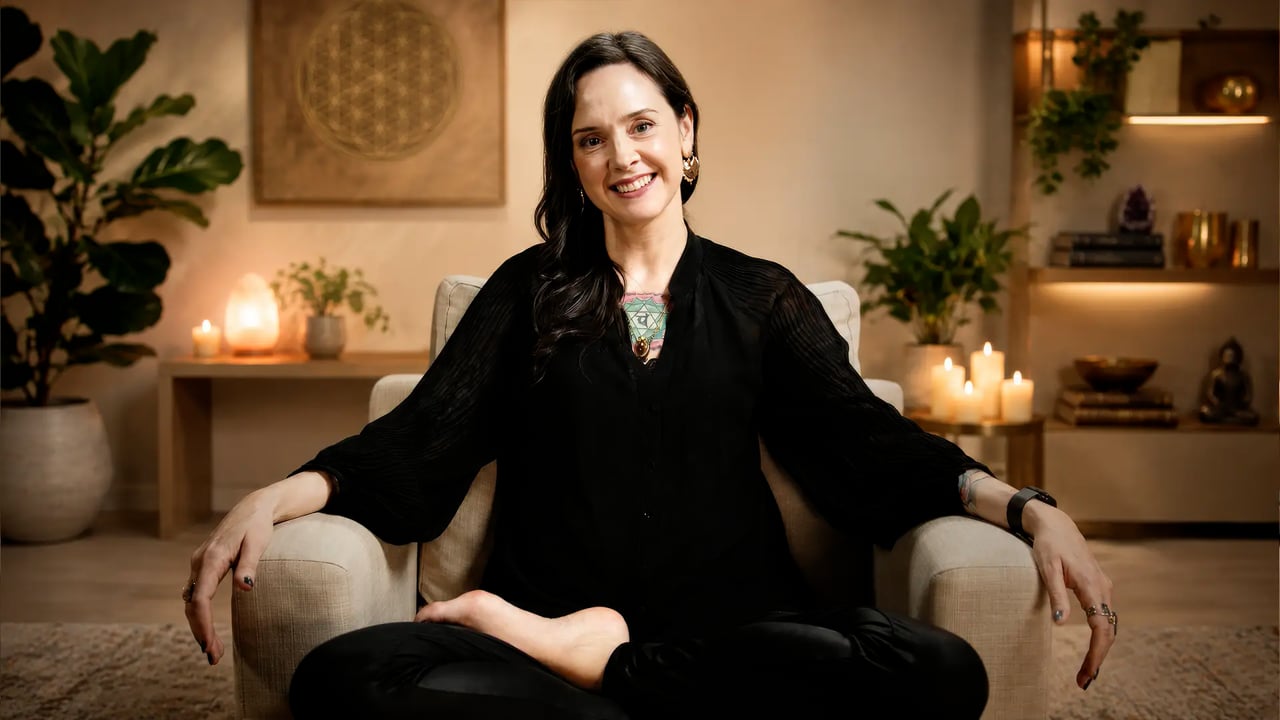
Looking for the purpose behind your path? Remember who you are and reconnect with the purpose your soul came here to fulfill. Karen Bell teaches it in Your Soul’s Blueprint, part of NLS Mastery. Watch the course preview below.
Frequently Asked Questions
How do I calculate my life path number?
Reduce your birth month, day and year separately to single digits, add the three results, and reduce again until you have one digit. If the total is 11, 22 or 33, stop there, because those are master numbers. For March 28, 1985 the answer is 3 + 1 + 5 = 9.
What is the most common life path number?
There is no official count, but because master numbers are only reached from certain totals, the single digits from 1 to 9 appear far more often than 11, 22 or 33. Numerologists generally describe master numbers as less common.
What is the rarest life path number?
Most numerologists regard 33 as the rarest, because very few birth dates add up to it. Dates that reach 22 are also uncommon, and 11 appears more often than the other two master numbers.
Does my life path number ever change?
No. It comes from your birth date, so it stays the same for life. What changes is how you express it. Many people describe living the lower digit of a master number, such as a 2 for an 11, until they feel ready for the higher calling.
What if my life path number is 11, 22 or 33?
Read both the master number and its reduced digit. Eleven includes the energy of 2, twenty-two includes 4, and thirty-three includes 6. Most teachers say it is normal to live the single digit first and grow into the master number.
Is numerology real?
Numerology is a spiritual and symbolic practice, not a science, and it has no demonstrated ability to predict events. Many people still find it valuable as a framework for self-reflection. We suggest treating it as a mirror, not a forecast.
What is the difference between a life path number and a destiny number?
The life path number comes from your birth date and shows your main lessons. The destiny, or expression, number comes from the letters of your full birth name and shows your talents and how you act in the world. Both belong in a complete reading.
Are life path numbers compatible with each other?
Numerologists describe some pairings as easier, such as 1 with 5 or 3 with 6, and others as more demanding. Compatibility in this system is a guide to likely friction points, not a rule. Real relationships depend far more on communication and values than on digits.
What is a personal year number?
A personal year number describes the theme of the current year in numerology. Add your birth month, birth day and the current year, reducing each, and reduce the total to a single digit. It runs from January 1 in most systems and repeats in a nine-year cycle.
Can I find my life path number from just my birth year?
No. The life path number needs the full birth date, because the month and day are part of the calculation. The birth year alone gives only one of the three parts, which is not enough for an accurate reading.
Sources and Further Reading
Spirituality for the Rest of Us™
Movies, teachings and community on Next Level Soul TV.