

The best books on consciousness are Anil Seth’s Being You for the neuroscience, Donald Hoffman’s The Case Against Reality for a bold challenge to how we think about perception, and Rupert Spira’s The Nature of Consciousness for the view from direct experience.
Below are 15 books in three groups: the science and philosophy of consciousness, ideas that reach beyond the brain, and the inner path of awareness. Scientists do not agree on what consciousness is, so each entry says plainly where the author stands and where the evidence is thin.
Key Takeaways
- Start with Anil Seth or Annaka Harris. Both are clear, current and written for non-specialists. Harris is the shortest way into the question.
- For the hardest question, read Chalmers or Hoffman. They ask why there is any experience at all, and what reality might be if perception is not a window onto it.
- Books that reach beyond the brain are bold. Sheldrake, Radin, van Lommel, Laszlo and Campbell ask whether consciousness is more than brain activity. Their claims are debated, and we say where.
- For practice, turn inward. Spira and Singer move from theory to direct experience of awareness.
- Prefer to listen? Seven authors on this list have been guests on our podcast, linked below.
What Is Consciousness?
Consciousness is the fact of experience: the feeling of being aware, of seeing a color, feeling joy or having a thought. Scientists and philosophers disagree about how it arises. Some say the brain produces it. Others say it is a basic feature of reality, or that the brain filters or shapes something larger.
Philosopher David Chalmers called the puzzle of why physical processes come with experience at all the hard problem of consciousness in the 1990s, and the name stuck. Consciousness books cluster around that question. For a full overview, start with our guide to consciousness, and for the teaching that awareness is one without a second, see what is non-duality.
Books on Consciousness at a Glance
| Book | Best for | Type | Voice |
|---|---|---|---|
| Being You (Seth) | The brain-based account | Science | Neuroscientist |
| The Case Against Reality (Hoffman) | Rethinking perception | Science | Cognitive scientist |
| Conscious (Harris) | A short first look | Science | Author and philosopher-minded writer |
| The Conscious Mind (Chalmers) | The hard problem | Philosophy | Philosopher |
| Irreducible (Faggin) | Consciousness and AI | Science | Physicist and inventor |
| The Idea of the World (Kastrup) | Analytic idealism | Philosophy | Philosopher and computer scientist |
| Science Set Free (Sheldrake) | Questioning science’s assumptions | Beyond the brain | Biologist |
| Entangled Minds (Radin) | Psi research | Beyond the brain | Parapsychology researcher |
| Consciousness Beyond Life (van Lommel) | Medical evidence | Beyond the brain | Cardiologist |
| Science and the Akashic Field (Laszlo) | A unifying theory | Beyond the brain | Philosopher of science |
| My Big TOE (Campbell) | A full model of reality | Beyond the brain | Physicist |
| From Science to God (Russell) | Science meets spirit | Beyond the brain | Physicist and futurist |
| The Nature of Consciousness (Spira) | Direct experience | Awareness | Non-dual teacher |
| Power vs. Force (Hawkins) | A map of states | Awareness | Psychiatrist |
| The Untethered Soul (Singer) | Daily practice | Awareness | Meditation teacher |
How Do I Choose the Right Book on Consciousness?
Start with the kind of answer you want. If you want what neuroscience says, pick Seth or Harris. If you want the deepest philosophical puzzle, pick Chalmers or Kastrup. If you want ideas that stretch past the brain, pick Sheldrake, van Lommel or Russell. If you want to experience awareness rather than theorize, pick Spira or Singer.
A few simple guides help:
- New to the subject? Read Conscious first, then Being You.
- Love big ideas? Try The Case Against Reality or Irreducible.
- Spiritual and curious about science? Try From Science to God or Science and the Akashic Field.
- Want practice? The Untethered Soul is the gentlest start.
For reading across the whole path, see our lists of the top spiritual books and the best books for spiritual awakening.
The Science and Philosophy of Consciousness
Six books by neuroscientists, philosophers and a physicist who treat consciousness as a serious open question.

1. Being You: A New Science of Consciousness
Anil Seth (Dutton, 2021)
Seth, a neuroscientist at the University of Sussex, argues that perception is a kind of controlled hallucination in which the brain makes its best guess about the world, and that the sense of self is rooted in the living body.
Clear, current and readable, with a grounded view that consciousness is tied to being alive. Seth does not claim the mystery is solved.
Best for: Readers who want the leading brain-based account in plain language.
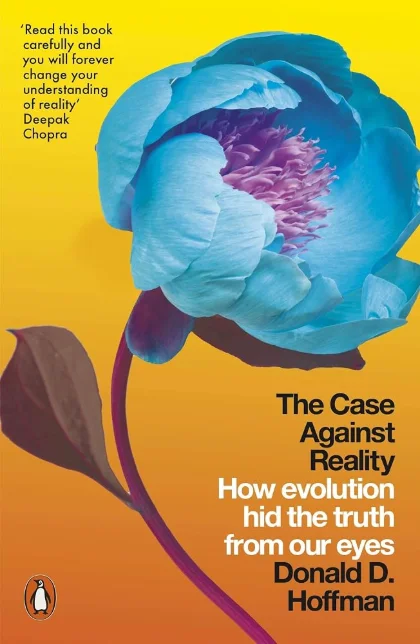
2. The Case Against Reality
Donald D. Hoffman (Penguin, 2020)
Hoffman, a cognitive scientist at the University of California, Irvine, argues that evolution shaped perception to guide survival, not to show us reality as it is. He proposes that consciousness may be the basic ingredient of the world.
A bold, mind-bending argument. Many scientists dispute it, so read it as a serious challenge to ordinary assumptions rather than a settled view. Hoffman has been a guest on our podcast.
Best for: Readers who enjoy a daring, well-argued idea.

3. Conscious: A Brief Guide to the Fundamental Mystery of the Mind
Annaka Harris (Harper, 2019)
A short, clear guide to the mystery of experience. Harris asks what it would mean if consciousness were more widespread than we assume, and she walks through the puzzles without pushing a single answer.
At about a hundred pages, it is the quickest way into the question.
Best for: Readers who want a brief, honest first look.
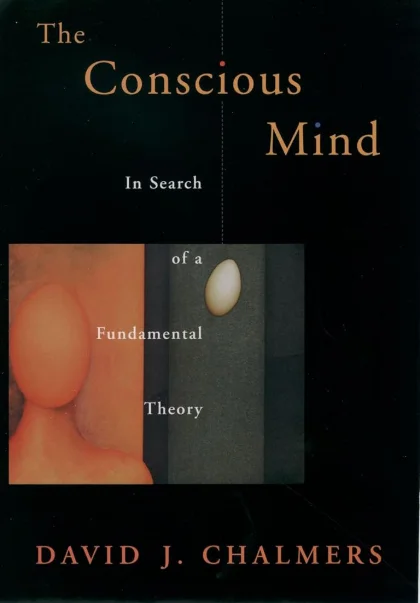
4. The Conscious Mind
David J. Chalmers (Oxford University Press, 1997)
Chalmers, a philosopher, made the hard problem famous: why physical processes in the brain are accompanied by experience at all. The book builds a careful case that consciousness cannot be fully explained by physical facts alone.
It is academic and demanding, a book for slow reading. It rewards patience and gives you the language the whole debate uses.
Best for: Serious readers who enjoy philosophy.

5. Irreducible
Federico Faggin (Essentia Books, 2024)
Faggin led the design of the first commercial microprocessor, the Intel 4004. He now argues that consciousness is fundamental and cannot be reduced to computation, and he draws on his own experience of awareness.
A personal and passionate case from an engineer who changed his mind. His theory is his own and remains speculative, so read it with that in mind.
Best for: Readers curious about consciousness and artificial intelligence.

6. The Idea of the World
Bernardo Kastrup (Iff Books, 2019)
Kastrup, a philosopher and computer scientist, argues for analytic idealism: the view that reality is fundamentally mental, and that the physical world is how mind appears to us.
Dense and rigorous, with a clear stance. It is one position among several, and well worth meeting on its own terms.
Best for: Readers who like careful philosophical arguments.
Beyond the Brain: Fields, Psi and Survival
These six books ask whether consciousness might be more than brain activity. They draw on research and personal experience that mainstream science often disputes, so read them with curiosity and a critical eye.
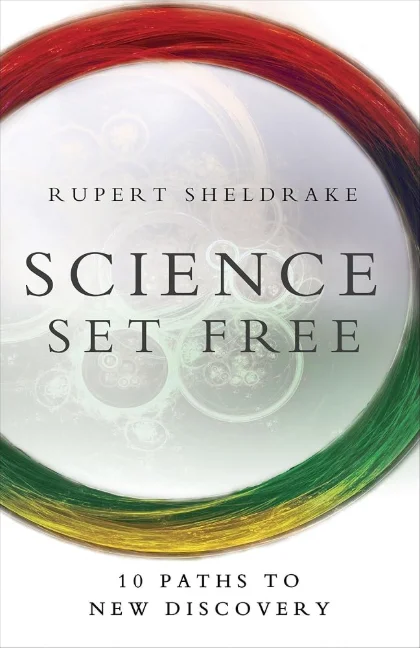
7. Science Set Free
Rupert Sheldrake (Deepak Chopra Books, 2013)
Sheldrake, a biologist, questions ten assumptions he sees in modern science, among them that nature is mechanical and that the mind is inside the head. He suggests the mind may reach beyond the brain.
Written for general readers with plenty of curiosity. His ideas, such as morphic resonance, are widely disputed by mainstream scientists. Sheldrake spoke with us about consciousness and the soul.
Best for: Readers who like to question the assumptions of science.
View on Amazon▶ Watch the Interview with Dr. Rupert Sheldrake
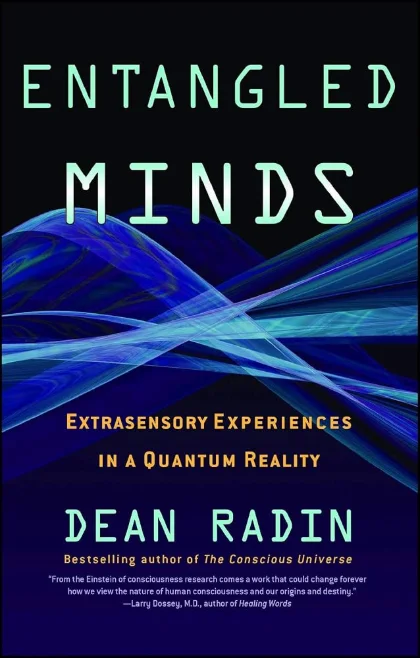
8. Entangled Minds
Dean Radin (Paraview Pocket Books, 2006)
Radin, a researcher at the Institute of Noetic Sciences, reviews experiments on telepathy, presentiment and other psi effects, and links them to ideas from quantum physics.
He makes a determined case for the data. Skeptics challenge the methods and the results, so it is best read as one side of a live debate. Radin joined us to talk about science and consciousness.
Best for: Readers curious about the research on psychic experience.

9. Consciousness Beyond Life
Pim van Lommel (HarperOne, 2010)
Van Lommel, a Dutch cardiologist, led a study of cardiac arrest survivors published in The Lancet in 2001. He argues that consciousness may not depend on the brain alone and that near-death experiences point that way.
A physician’s careful tone makes this a good bridge between medicine and metaphysics. Others read the same evidence differently. For more, see our guide to near-death experiences.
Best for: Readers who want medical evidence and near-death research.

10. Science and the Akashic Field
Ervin Laszlo (Inner Traditions, 2007)
Laszlo, a philosopher of science, proposes that a deep information field underlies the universe and holds a record of everything that happens in it, a modern take on the Akashic Records.
A short, accessible book that weaves physics and metaphysics together. The Akashic field is a hypothesis, not an established finding. See our list of the best Akashic Records books.
Best for: Readers who like big-picture synthesis.

11. My Big TOE
Thomas Campbell (Lightning Strike Books, 2003)
Campbell, a physicist, offers a trilogy in which reality is a kind of virtual reality and consciousness is evolving through experience toward love. It combines his scientific training with years of inner exploration.
It runs to more than 800 pages and the model is untested, so treat it as a thought experiment you can explore. Campbell spoke with us about reality, disclosure and conscious AI.
Best for: Readers who want one complete model to think with.

12. From Science to God
Peter Russell (Elf Rock Productions, 2024)
Russell, who studied theoretical physics and experimental psychology at Cambridge, invites readers to put consciousness at the center of the picture. He asks whether consciousness is the ground of reality rather than a late product of matter.
Short, fluent and personal, with a meditator’s sense of what is at stake. A gentle bridge from science to spirit.
Best for: Readers who want a calm, thoughtful bridge between science and spirit.
Awareness and the Inner Path
These three books turn the question inward. They are less about theories of consciousness and more about what awareness is like when you look at it directly.

13. The Nature of Consciousness
Rupert Spira (Sahaja Publications, 2017)
Spira, a teacher in the non-dual tradition, collects essays on awareness as the one reality in which all experience appears. The book includes an afterword by Bernardo Kastrup.
Thoughtful and calm, it speaks to the question of mind and matter from direct experience. Spira has been a guest on our podcast. See also our guide to non-duality.
Best for: Readers drawn to non-dual teachings.
14. Power vs. Force
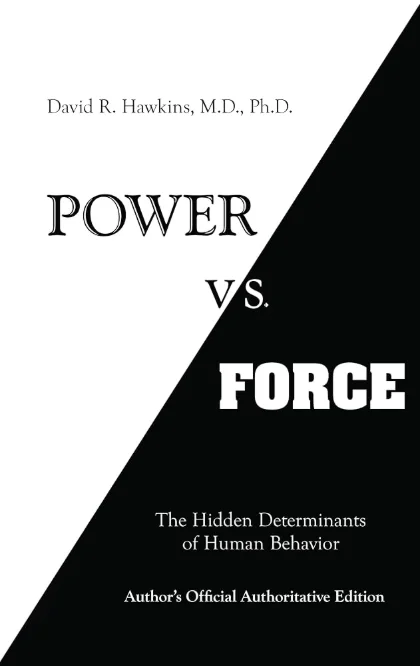
David R. Hawkins (Hay House, 2014)
Hawkins, a psychiatrist, presents a map of consciousness that ranks emotional and spiritual states on a scale from shame to enlightenment. First published in 1995, it has a devoted following.
His method relies on muscle testing, which has not been validated in controlled research, so treat the scale as a contemplative framework rather than a measurement.
Best for: Readers who find maps and stages helpful.

15. The Untethered Soul
Michael A. Singer (New Harbinger Publications / Noetic Books, 2007)
Singer, who founded the Temple of the Universe meditation center in Florida, teaches how to step back from the constant voice in your head and rest as the one who is aware of it.
Plain, warm and practical, it turns the consciousness question into a daily practice. A good first book for the inner path.
Best for: Readers who want a gentle, practical start.
An Honest View of Consciousness
Consciousness is an open question. Neuroscientists, philosophers and spiritual teachers all take it seriously, and none has a settled answer. The books here disagree with each other, sometimes sharply, and several authors in the second and third groups make claims that mainstream science does not accept.
Use these books as guides, not authorities. Read the strongest argument on each side, notice what rings true in your own experience, and set aside what does not. Nothing here replaces medical or mental health care. If you are struggling, please reach out to a professional, or call or text 988 in the US.
As an Amazon Associate, Next Level Soul earns from qualifying purchases.
Hear It From the Guests
Prefer to listen? These Next Level Soul Podcast conversations feature authors from this list in their own voices.
We are Living in a Simulation with Donald Hoffman
Donald Hoffman shares what he says about spacetime as a headset, simulation theory, many shows at once, and being deeply one. Watch the full episode and read the show notes.
The Science of Consciousness & the Soul with Rupert Sheldrake
Biologist Rupert Sheldrake on morphic resonance, memory in nature, telepathy, the history of the soul, and consciousness beyond the body. Watch the full episode and read the show notes.

Awareness, Consciousness & the Nature of Self with Rupert Spira
Rupert Spira explains awareness, consciousness and the nature of self, and how to bring spiritual understanding into relationships and daily life. Watch the full episode and read the show notes.
Akashic Records & the Quantum Field with Dr. Ervin Laszlo
Dr. Ervin Laszlo talks with Alex Ferrari about the Akashic field, coherence, and realigning with nature. Watch the full episode and read the show notes.
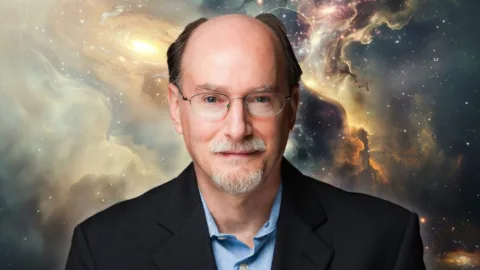
Science-Backed Psychic Abilities with Dean Radin Ph.D
Dr. Dean Radin talks with Alex Ferrari about science and magic, consciousness, and experiments with dogs and their owners. Watch the full episode and read the show notes.
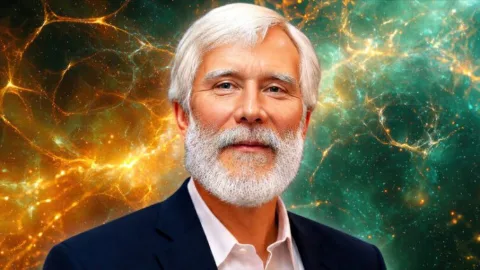
Full Disclosure Will Trigger a Global Awakening with Tom Campbell
Physicist Tom Campbell explains reality as a data stream, humanity’s choice between love and fear, and what full disclosure and conscious AI could mean. Watch the full episode and read the show notes.
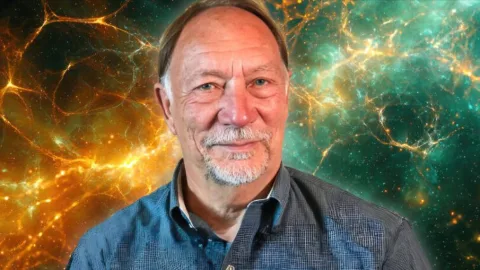
Quantum Physics & Spirituality Connection with Peter Russell
Peter Russell talks with Alex Ferrari about studying consciousness, meditation as removing the veils, and the sense of I. Watch the full episode and read the show notes.
Watch More on Next Level Soul TV
Next Level Soul TV is our own home for films, series and teachings on consciousness and what lies beyond. Here are six to start with.

Go Deeper with NLS Mastery: Ancient Meditation Course
Consciousness is easier to understand once you have rested in it. Ancient meditation practices for quieting the mind and reaching deep inner stillness. Acharya Shunya teaches it in Ancient Meditation Course, part of NLS Mastery. Watch the course preview below.

Sources and Further Reading
Spirituality for the Rest of Us™
Movies, teachings and community on Next Level Soul TV.
Frequently Asked Questions
What is the best book on consciousness for beginners?
Annaka Harris’s Conscious is the shortest and clearest first look, at about a hundred pages. Anil Seth’s Being You is the next step for a fuller, brain-based account.
What is the hard problem of consciousness?
It is the question of why physical processes in the brain are accompanied by subjective experience at all. Philosopher David Chalmers named it in the 1990s, and his book The Conscious Mind develops it.
Which book explains consciousness from a neuroscience view?
Anil Seth’s Being You is the most accessible, arguing that perception is a controlled hallucination and that the self is rooted in the living body.
Is consciousness produced by the brain?
Most neuroscientists think so, and they study how brain activity relates to experience. Others, including several authors here, propose that consciousness is fundamental or that the brain filters it. The question is still open.
What is panpsychism?
Panpsychism is the view that consciousness, or something like it, is a basic feature of the world. Annaka Harris explores the idea in Conscious without insisting on it.
What is analytic idealism?
It is the view that reality is fundamentally mental. Bernardo Kastrup argues for it in The Idea of the World.
Which books suit spiritual readers?
Rupert Spira’s The Nature of Consciousness, Michael Singer’s The Untethered Soul and David Hawkins’s Power vs. Force speak to awareness as a lived experience rather than a theory.
Do scientists accept books like Entangled Minds or Science Set Free?
Not widely. Dean Radin and Rupert Sheldrake are serious researchers, but mainstream science disputes their methods and conclusions. Read them as one side of a live debate.
What is the difference between consciousness and awareness?
In everyday use the words overlap. Consciousness often means the whole field of experience, while awareness often points to the simple knowing presence behind thoughts, which teachers like Rupert Spira describe as the one reality.
Do near-death experiences say anything about consciousness?
Researchers such as Pim van Lommel argue they suggest consciousness may not depend on the brain alone, while others explain them as brain activity under stress. Our guide to near-death experiences covers both views.
How can I explore consciousness through practice?
Meditation is the usual path. Our guide to consciousness includes practices, and the NLS Mastery course by Acharya Shunya teaches ancient meditation for inner stillness.
Can I hear consciousness researchers on your podcast?
Yes. Our guests include Donald Hoffman, Rupert Sheldrake, Rupert Spira, Ervin Laszlo, Dean Radin, Tom Campbell and Peter Russell, all linked above.


