
A guided meditation app plays recorded sessions in which a teacher talks you through the practice, step by step. It is a good fit if you are new, if your mind races when you sit in silence, or if you simply like a voice to lean on. Choose by the teacher’s voice and pacing first, then by session length, style and price, and remember that you can explore a whole library of guided meditations on Next Level Soul alongside any app you use.
Key Takeaways
- What it is: Recorded sessions where a voice leads you through breath, body, imagery or reflection.
- Best for: Beginners, busy minds, and anyone who wants structure and company.
- Test the voice: A voice that suits you matters more than a long feature list. Sample before you commit.
- Mix it up: Alternate guided sessions with short silent sits so you are not dependent on the voice.
- Keep expectations honest: Guided meditation is a spiritual and relaxation practice. It is not treatment, and results vary.
What Is a Guided Meditation App?
Imagine sitting down and hearing a calm voice say, “Notice your feet on the floor.” That is the heart of a guided meditation app. A teacher or narrator leads you through a practice, often with gentle music or soft sound, and you follow along.
According to the overview of guided meditation, it is not one single technique. It can blend meditation music, guided imagery, relaxation, mindfulness and sometimes journaling, and it can be delivered in person, in recordings or both. An app is simply a convenient way to carry those recordings with you.
That variety is why two guided sessions can feel completely different. One might spend ten minutes on the breath. Another might walk you through a garden in your imagination. A third might invite you to scan the body from head to toe.
Guided Meditation App at a Glance
| Question | Quick answer |
|---|---|
| What is it? | An app with recorded sessions where a voice leads your meditation. |
| Who benefits most? | Beginners, restless minds, people who like structure. |
| Typical length | 3 to 30 minutes, often with a choice of length. |
| What to compare | Voice, pacing, teaching style, session length, cost, offline access. |
| Common styles | Breath, body scan, visualization, loving-kindness, sleep and relaxation. |
| Main limit | It is easy to rely on the voice and never practice without it. |
| Health note | A spiritual and relaxation practice, not a medical treatment. |
Why So Many People Prefer Guidance
Silence can be a lot at first. The mind jumps. You wonder if you are doing it right. A guide answers those worries gently, in real time.
- Direction. You always know what to do next.
- Pacing. The teacher tells you when to settle, when to deepen and when to return.
- Company. A human voice can feel like a companion rather than a task.
- Variety. Different themes keep the habit fresh.
- Accessibility. You do not need prior training.
Traditions have long worked this way. Teachers have guided students aloud for centuries, and the oral instruction is part of how many lineages pass on practice. Recording that voice is a modern twist on something very old.
Types of Guided Sessions You Will Find
| Type | What happens | When it helps |
|---|---|---|
| Breath-focused | The guide anchors you to the breath and brings you back when you drift | Learning to settle; daily practice |
| Body scan | Attention moves slowly through the body | Evening wind-down; noticing tension |
| Visualization | You imagine a place, light or scene | Creative, spiritual or relaxation themes |
| Loving-kindness | You offer phrases of goodwill, often beginning with yourself | Softening self-criticism; connection |
| Intention-setting | You reflect on what you want to bring into the day | Mornings; new beginnings |
| Sleep-focused | Slow, soothing narration for the end of the day | Winding down before bed |
| Theme-based | Chakras, frequencies, awakening, gratitude and more | Spiritual exploration |
If you are curious about the body-based end of the spectrum, yoga nidra is a traditional guided practice that people use for deep rest. If you like thematic sessions, Next Level Soul organizes meditations around ideas such as chakra alignment and love frequency.
What Makes Guidance Good
You do not need a perfect recording. You need one that works for you. Here is what to listen for.
Voice, tone and pace
Is the voice warm without being syrupy? Does it leave silence? A guide who talks every second can crowd out your own experience. A guide who leaves space trusts you to be present.
Language that invites rather than commands
“You might notice” sits differently than “You must relax.” Invitational language respects that your experience is yours.
Clear roots and honest claims
Good guides tell you where the practice comes from and do not promise miracles. If a session says it will cure something, move on. The National Center for Complementary and Integrative Health says most research on meditation is preliminary or uneven in quality, so any strong promise deserves caution.
Music and sound
Soft music can help some people settle and irritate others. Look for apps that let you lower or remove the music, or choose voice-only sessions.
Length and structure
Short sessions make daily practice realistic. Longer ones can be wonderful once you are settled. Choose the length of your worst day, not your best.
How to Use a Guided Meditation App Well
- Decide your time. Same slot, most days. Attach it to something you already do.
- Choose the session before you sit. Do not browse while the clock ticks.
- Silence notifications. Use do not disturb or airplane mode, with the session downloaded.
- Settle first. Take three slower breaths before you press play.
- Follow the voice, lightly. If you drift, return to the next instruction. No scolding.
- Rest for a minute at the end. Do not leap up. Let the room come back.
- Note one line. A word, a feeling, a thought. It helps you see patterns over time.
- Add a silent sit once a week. Even three minutes with a timer builds confidence.
Breath is a common thread through most guided sessions. If you want to practice it separately, guided breathwork is a gentle place to start. And if you are still deciding between tools, our broader guide to the meditation app options explains how to match an app to your goals.
Guided vs Unguided: You Do Not Have to Choose
| Guided | Unguided (timer) | |
|---|---|---|
| Best for | Learning, restless minds, themes | Established practice, quiet, independence |
| Support | A voice tells you what to do | You return to your own anchor |
| Risk | Dependence on the voice | Getting lost without a method |
| Cost | Often needs an app or library | Free; a timer is enough |
| Idea | Use it to learn the shape of practice | Use it to deepen what you learned |
Many long-term meditators use both. They sit silently most days and turn to a guided session when life is heavy or when they want a theme. That is not a lapse. It is flexibility.
If You Want to Need the Voice Less
You can gently stretch your independence. Try this over a few weeks.
- Choose sessions with longer silences.
- End a guided session and keep sitting for two extra minutes.
- Replace one guided session per week with a timer and a simple breath count.
- Notice that you can bring yourself back. That moment of return is the skill.
Nothing says you must wean off. If a voice supports you, keep it.
What a Ten-Minute Guided Session Often Looks Like
Sessions vary, but many follow a similar arc. Knowing it helps you relax into it.
| Minutes | What the guide often does | What you can do |
|---|---|---|
| 0 to 1 | Invites you to settle and close or soften your eyes | Arrive. Feel the seat beneath you. |
| 1 to 3 | Directs attention to the breath or the body | Notice, without changing anything. |
| 3 to 7 | Offers the main practice: counting, scanning, imagery or phrases | Follow lightly. Return when you drift. |
| 7 to 9 | Leaves more silence and gently widens attention | Rest in what is here. |
| 9 to 10 | Brings you back to the room and the day | Move fingers and toes, take a slow breath. |
Notice that the drift is built in. The guide expects your mind to wander and keeps inviting you back. That return is not a detour from the practice. It is the practice.
Themes Worth Exploring as You Grow
After a few weeks of simple breath and body sessions, you may feel curious about other flavors. Here are some themes people often explore, each from a particular tradition or modern approach.
- Loving-kindness. A Buddhist practice of offering goodwill, described in the Wikipedia overview.
- Gratitude. Simple reflection on what you appreciate, found in many spiritual paths.
- Chakra work. In Hindu and tantric tradition, attention is placed on energy centers in the body.
- Intention and visualization. Picturing how you wish to meet your day.
- Rest and sleep. Slow narration to close the evening.
Each of these can be explored through a guided session. Attribute them to their traditions in your own mind: they are paths people have walked for generations, and they work differently for different people.
Practical Tips for Real Life
- Download a few sessions. You will not have signal on the day you need them.
- Make a small set. Three favorites are enough: a short one, a medium one, and an evening one.
- Rotate teachers. Different voices open different doors.
- Try a commute session. Only if it is safe. Never practice while driving.
- Pair it with a ritual. A candle, a cup of tea, a particular chair. Cues help.
- Be gentle with streaks. If counting days makes you tense, stop counting.
If you share a home, tell the people around you that you are taking ten minutes. A closed door and a clear time can protect the practice.
Misconceptions and Honest Limits
“Guided meditation is for beginners only.” Not so. Experienced practitioners use guided sessions for themes, journeys and rest.
“If I fall asleep, I failed.” Falling asleep happens. If you want to stay awake, sit up, open your eyes slightly or practice earlier in the day.
“It will always feel calm.” Sometimes feelings surface. The NCCIH notes meditation is usually considered low-risk, while a minority of people in studies report negative experiences, most often anxiety or low mood. If that happens, stop, ground yourself, and speak to a qualified professional.
“An app can replace care.” It cannot. Guided meditation is a spiritual and relaxation practice, not treatment for any condition.
Educational information only, not medical advice. If you live with trauma, anxiety, depression or persistent insomnia, please talk with a licensed professional before beginning intensive practice.
Go Deeper With Next Level Soul
If you are drawn to guided meditation as part of a wider spiritual path, Next Level Soul TV is a spiritual library with guided meditations, not a dedicated meditation app. You will find the guided meditations alongside movies, series, documentaries, audiobooks and audio courses. It is $19.99 a month or $199 a year, covers 3,500+ hours, and includes a 14-day money-back guarantee.
If you would like to explore sound-based practice next, the binaural beats meditations offer a different texture. Take them as a spiritual and relaxation experience, not a treatment.
Go Deeper with NLS Mastery: Ancient Meditation for Inner Stillness
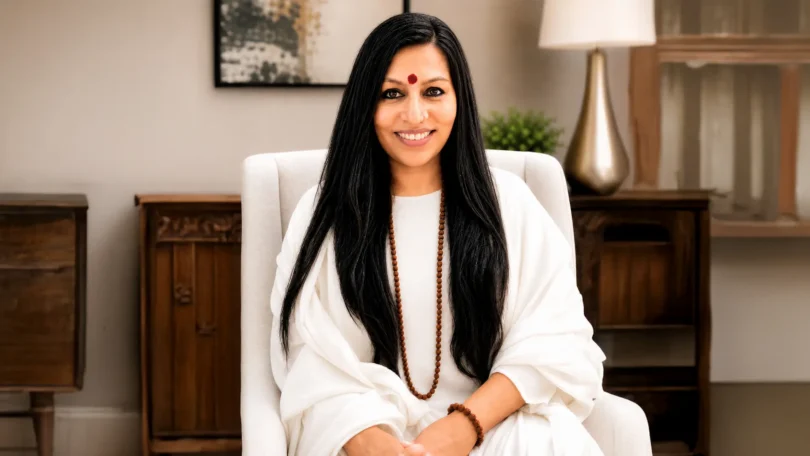
When you are ready to move from following a voice to sitting with your own, this course teaches meditation as an ancient path to inner stillness. Acharya Shunya teaches it in Ancient Meditation for Inner Stillness, part of NLS Mastery. Watch the course preview below.
Frequently Asked Questions
What is a guided meditation app?
It is an app with recorded sessions where a teacher or narrator leads you through a meditation. Sessions can focus on breath, body, imagery, kindness or sleep.
Are guided meditation apps good for beginners?
Yes. A voice gives you direction and pacing, which can make starting less intimidating. Short sessions of five to ten minutes are a common start.
How do I choose the right guided meditation app?
Listen to a few sessions and notice the voice and pace. Then compare session lengths, themes, cost, offline access and how clearly the app describes its teachings.
Is guided meditation better than silent meditation?
Neither is better. Guided is great for learning and restless minds. Silent suits an established practice. Many people use both.
How long should a guided meditation be?
Five to twenty minutes suits most people. Pick the length you can complete on your busiest day.
Can I use a guided meditation app to sleep?
Many people do, with slow sleep-focused narration. If sleep problems persist, please speak with a healthcare professional.
What if I fall asleep during guided meditation?
It happens and is not a failure. Try sitting upright, practicing earlier in the day, or opening your eyes slightly.
Do I need headphones?
Not required. Headphones can reduce distractions and help with sound, but a speaker works fine in a quiet room.
Are free guided meditation apps worth using?
Often yes. Many offer a solid selection of sessions at no cost. Paid plans usually add more content and features.
Is Next Level Soul TV a guided meditation app?
No. It is a spiritual library with guided meditations alongside movies, series, documentaries, audiobooks and audio courses.
Can guided meditation replace therapy?
No. It is a spiritual and relaxation practice and should not replace professional care.
Sources and Further Reading
Spirituality for the Rest of Us™
Movies, series, documentaries, audiobooks, audio courses and guided meditations on awakening and consciousness, all in one place. 14-day money-back guarantee.