
A dark empath is a person who can read and understand other people’s emotions very well, yet uses that skill to influence or manipulate rather than to care. The term describes someone who combines high empathy with traits such as narcissism, manipulation, or a lack of remorse. It is a popular psychology label, not a medical diagnosis, and it is very different from the spiritual meaning of an empath.
Key Takeaways
- Core idea: high cognitive empathy (reading emotions) combined with self-serving or manipulative traits.
- Not a diagnosis: dark empath is a descriptive term from personality research and popular psychology.
- Different from an empath: a spiritual empath feels others’ emotions and tends toward care; a dark empath understands emotions and may use them as leverage.
- Common signs: charm that feels rehearsed, knowing your sore spots, guilt-tripping, and warmth that disappears when you disagree.
- Protect yourself: trust patterns over words, keep clear boundaries, and lean on people who feel safe.
What is a dark empath?
The phrase “dark empath” describes a person who scores high on empathy and also high on what psychologists call the dark triad: narcissism, Machiavellianism, and psychopathy. Because they read emotions accurately, they can be charming, attentive, and persuasive. They can also use what they learn about you to get what they want.
Researchers separate empathy into parts. Cognitive empathy is the ability to understand what someone feels. Affective empathy is feeling it along with them. A dark empath tends to be strong in the first and weaker in the second, so they can see your pain without being moved to help.
| Question | Quick answer |
|---|---|
| What is a dark empath? | Someone with strong emotional insight who uses it to manipulate or serve themselves |
| Is it a diagnosis? | No, it is a descriptive label, not a clinical condition |
| How is it different from an empath? | An empath feels and cares; a dark empath understands and may exploit |
| Is it the same as a narcissist? | Not exactly, but narcissistic traits are often part of the picture |
| Can they change? | Some people grow with honest self-work, but change must come from them |
The concept sits next to the spiritual idea of the empath, which is why the two are often confused.
Empath vs dark empath: the key difference
A spiritual empath absorbs emotions from others and often feels overwhelmed in crowds. Their sensitivity usually leads to compassion, and they often struggle with boundaries because they care too much. If that sounds familiar, our guide to meditation for empaths can help.
A dark empath is the mirror image in one important way. They are tuned in to your emotions, yet they use that knowledge for control. Where an empath gives too much, a dark empath takes. The difference is not the skill. It is the intention.
| Trait | Spiritual empath | Dark empath |
|---|---|---|
| Main gift | Feels others’ emotions | Reads others’ emotions |
| Typical motive | Care and connection | Advantage and control |
| Response to your pain | Wants to help | Notices it and may use it |
| Boundaries | Often too soft | Often used as a weapon |
| After conflict | Takes it personally | Stays composed and blames you |
Common signs of a dark empath
No single sign proves anything. Look for a pattern over time, especially how someone behaves when they do not get their way.
- Charm that feels targeted: they mirror your interests and say what you most want to hear.
- Knowing your sore spots: they remember your insecurities and bring them up at telling moments.
- Guilt-tripping: they present your needs as selfish and theirs as urgent.
- Hot and cold warmth: affection that turns on and off depending on whether you comply.
- Weak accountability: apologies that shift blame or never quite arrive.
- Subtle isolation: gentle comments that make your friends or family seem unreliable.
- Calm under pressure: they stay composed while you feel emotionally off balance.
If several of these appear, trust your body. A persistent feeling of tension or confusion around one person is information worth listening to.
Why people become dark empaths
There is no single cause. Some researchers point to early environments where reading others was a survival skill. Others note that emotional insight combined with a low sense of guilt makes manipulation easy. This does not excuse harm, but it can explain why the pattern feels so polished.
Spiritually, many teachers describe such behavior as a person who is cut off from their own heart. In that view, the work is not to hate them but to protect yourself and remain clear. Our guide to shadow work looks at the parts of ourselves we avoid.
How to protect your energy
You do not need to diagnose anyone to protect yourself. You only need to notice how interactions affect you and respond with boundaries.
- Slow down your reply. Manipulation depends on speed, and a pause gives you room.
- Judge by actions and patterns, not by words.
- State one clear limit and keep it without over-explaining.
- Keep an outside perspective through trusted friends, a mentor, or a counselor.
- Reduce what you share about your fears and sensitive history.
- Ground yourself after contact with a walk, a shower, or a few minutes of quiet breathing.
Our intuition development guide can help you trust what you sense. If a relationship leaves you afraid or controlled, please reach out to a licensed therapist or a local support service.
Questions to ask yourself when a relationship feels off
Naming what you notice is the first step. These questions help you step out of the fog without needing a label for the other person.
- Do I feel more like myself or less like myself after we talk?
- Do I rehearse what I will say to avoid their reaction?
- When I set a limit, is it respected or punished?
- Does this person take responsibility when they hurt me?
- Would I give this advice to a friend in my position?
Write your answers down. Patterns show up quickly on paper, and they are easier to share with a counselor or a trusted friend.
A grounded spiritual practice can help here. Return to your breath, feel your feet on the floor, and remind yourself that your worth does not depend on anyone’s approval. The power is within you.
What if you worry that you are one?
Many people ask this after reading the traits. The fact that you are asking is a good sign, since the label is built around a lack of self-reflection. If you notice that you sometimes use your insight to win rather than to connect, you can choose differently. Start with honesty, ask for feedback, and practice caring about outcomes for the other person. Growth is possible when you want it.
Where the Term Comes From
“Dark empath” is a popular label, not a clinical diagnosis. It gained attention after a 2021 paper led by researcher Nadja Heym of Nottingham Trent University, which looked at people who scored high on both empathy and the so-called dark triad of personality traits: narcissism, Machiavellianism and psychopathy. The researchers found that this combination exists, and that it differs from the usual picture of a dark personality as cold and clueless about other people’s feelings.
The finding matters because it complicates a comfortable belief. Many of us assume that empathy and harm are opposites. The research suggests that understanding what another person feels does not automatically make someone want to protect them. Empathy can be used to comfort, and it can also be used to manipulate.
A word of caution: do not use the label to diagnose people you know. Psychologists use careful assessments, and ordinary conflict, selfishness or a bad week does not make someone a dark empath. If you are trying to understand a specific relationship, the more helpful question is how that person treats you over time.
Dark Empath Compared With Related Types
| Typical empath | Narcissist | Dark empath | |
|---|---|---|---|
| Reads others’ emotions | Yes, often intensely | Often limited | Yes, skillfully |
| Cares about others’ wellbeing | Usually yes | Often only when it helps them | Varies, often selective |
| Uses insight to help | Commonly | Rarely | Sometimes, but also to influence or exploit |
| How it feels to others | Warm, attuned | Self-focused, obvious | Charming, perceptive, then confusing |
The last row is the one that gets people into trouble. Because a dark empath can sound understanding, the red flags are easy to miss at first.
Signs People Describe
People who use this term usually describe a pattern, not one incident. None of these alone means anything. Together, over time, they can tell you something.
- They seem to know exactly what to say to you, and then later use that knowledge against you.
- Their kindness appears when they want something, and disappears when they do not.
- They remember your insecurities and bring them up in arguments.
- They are charming in public and different in private.
- They rarely apologize, or apologize in a way that shifts blame back onto you.
- You often leave conversations feeling confused, guilty or unsure of your own memory.
How to Protect Your Energy
- Watch behavior, not words. Compare what a person says with what they do over several months.
- Keep your own record. If you feel confused after conversations, a short private note afterward can keep your sense of events steady.
- Set one clear boundary at a time. Notice how the person responds. Respect for small boundaries tells you a lot.
- Do not share your deepest vulnerabilities early. Trust is built gradually.
- Lean on people outside the relationship. Friends, family or a counselor can offer a view you may not have access to from inside.
- Take care of your body. Sleep, food and movement make it easier to think clearly.
If you feel unsafe in a relationship, please reach out for help. In the United States, the National Domestic Violence Hotline is available at 1-800-799-7233, and a therapist can help you sort out what you are experiencing.
A Note for Empaths
Highly sensitive people sometimes worry that learning about dark empaths will make them suspicious of everyone. A healthier way to hold it is as discernment, which means trusting your warmth while also checking whether it is returned. Real empaths are not naive. They can feel deeply and still say no. If you want to explore your own sensitivity, a short daily note about what you pick up from others, and what actually belongs to you, is a good place to start.
Go Deeper with NLS Mastery: Awaken Your Psychic Abilities
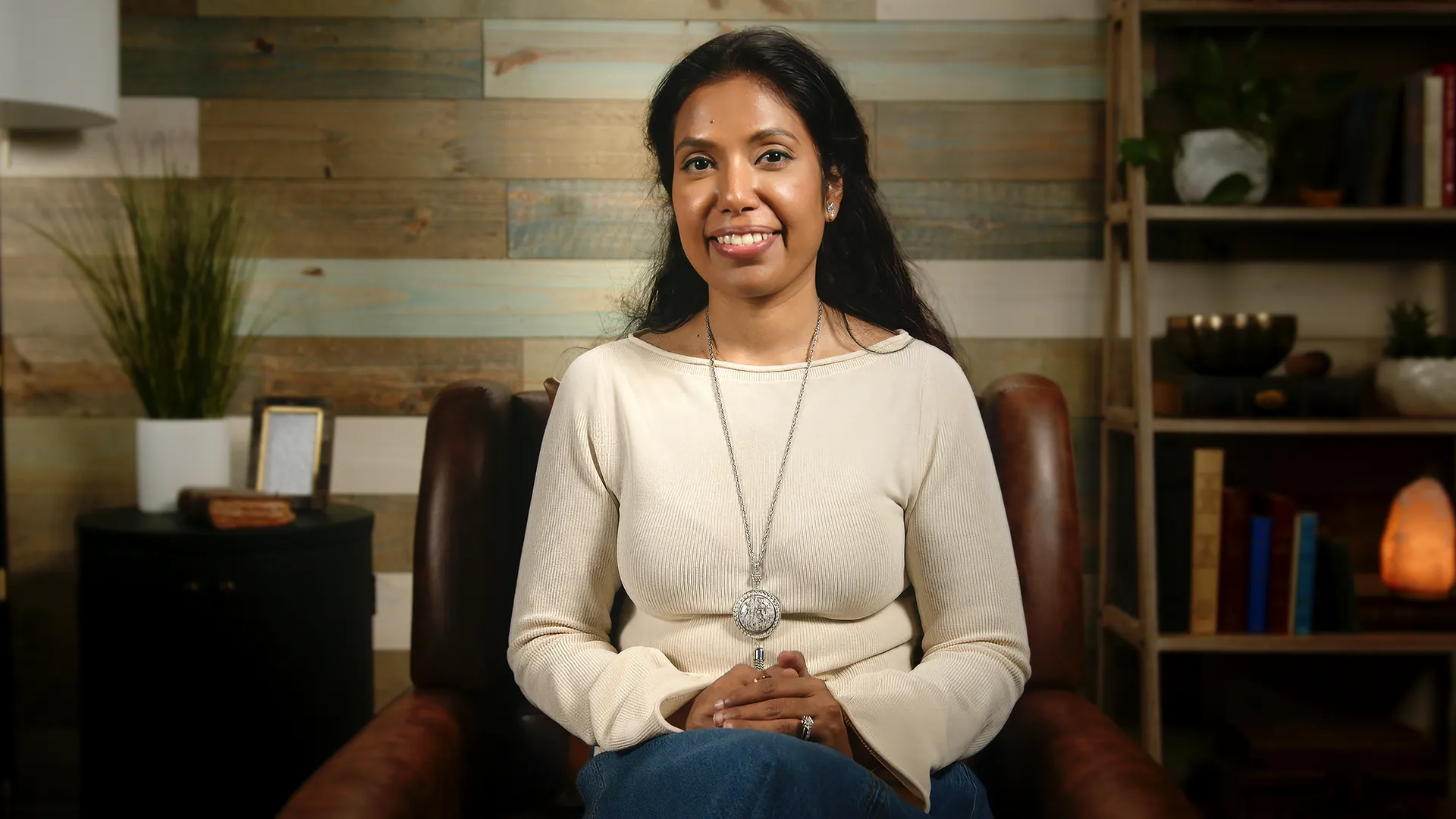
Learn to trust and develop the intuitive senses you already carry. Nikki Dutta teaches it in Awaken Your Psychic Abilities, part of NLS Mastery. Watch the course preview below.
Frequently Asked Questions
What is a dark empath?
A dark empath is a person with strong emotional insight who also shows manipulative or self-serving traits. They understand how others feel and may use it for advantage.
Is a dark empath a real diagnosis?
No. It is a descriptive term from personality research and popular psychology, not a clinical diagnosis.
What is the difference between an empath and a dark empath?
An empath feels others’ emotions and tends to care. A dark empath reads emotions and may use them to influence or control.
Is a dark empath a narcissist?
Not always. Narcissistic traits often appear, but a dark empath can show a mix of traits, and only a qualified professional can diagnose a disorder.
What are the signs of a dark empath?
Targeted charm, knowing your sore spots, guilt-tripping, hot and cold warmth, weak accountability, and subtle isolation are common patterns.
Can a dark empath be spiritual?
They may use spiritual language, but spirituality rooted in care shows up in consistent kindness, humility, and accountability.
How do I protect myself from a dark empath?
Slow down, rely on patterns not words, set clear limits, and keep supportive people around you. Reduce what you share about your vulnerabilities.
Can a dark empath change?
Some people grow through honest self-reflection and support, but change has to be their own choice and takes time.
Why do dark empaths seem so charming?
Because they read emotions well, they can mirror what you value and say what you want to hear, which feels warm at first.
What should I do if I think someone close to me is a dark empath?
Document patterns, set boundaries, lean on trusted people, and consider speaking with a therapist. If you feel unsafe, seek local support.
Sources and Further Reading
Spirituality for the Rest of Us™
Movies, series, documentaries, audiobooks, audio courses and guided meditations on awakening and consciousness, all in one place. 14-day money-back guarantee.