
Maybe something has been shifting for a while now. The life you built still looks fine from the outside, but a quiet voice keeps asking whether this is all there is. Old beliefs feel too small. Old routines feel hollow. You find yourself crying at a sunset, or sitting in the car in silence, or lying awake at three in the morning with a question that has no easy answer.
If that sounds familiar, you are not broken, and you are not alone. What you may be feeling is a spiritual awakening: a gradual (and sometimes sudden) widening of awareness in which you begin to see yourself, other people and life itself in a deeper way. This guide walks through the fifteen signs people most often describe, the stages the journey tends to follow, what to do at each one, and the questions seekers ask most. It includes a careful look at the dark night of the soul, because that stage deserves honesty and gentleness.
One note before we begin. Awakening is a spiritual idea, not a medical diagnosis, and no list can tell you where you are. Treat everything here as a map to explore, not a verdict. The power is within you, and every teacher, book and article (this one included) is only a guide to help you remember it.
Key Takeaways
- A spiritual awakening is a widening of awareness, often set off by loss, change, or a long-held question.
- Common signs include questioning old beliefs, shifting friendships, vivid dreams, synchronicities and deeper compassion.
- Most people move through five broad stages: stirring, questioning, the dark night, opening and integration.
- The dark night of the soul is real, and it is not something to face alone. Reach out for support.
- Awakening is not perfection or escape. It is a return to ordinary life with new eyes.

Many people also explore how to raise your vibration and kundalini energy during an awakening.
What Is a Spiritual Awakening?
A spiritual awakening is the moment (or the long season) when you begin to wake up to a bigger reality than the one you have been living inside. You start to notice the difference between you and the stream of thoughts running through your head. You sense that life has a meaning that does not depend on titles, bank accounts or other people’s approval.
Every tradition has its own name for it. Buddhists speak of bodhi, which means awakening. Hindu and yogic teachers speak of self-realization. Christian mystics describe an inner illumination. Sufis write about the heart opening. The words differ, but the movement is similar: from living on autopilot to living with awareness.
It helps to separate two things. An awakening is the first opening, the recognition that there is more. Enlightenment, as the great traditions describe it, is a deeper and more stable realization that unfolds over a lifetime. Think of awakening as the door and enlightenment as the long road beyond it. If you want that bigger picture, read our guide to spiritual enlightenment, which covers the names, the stories and the paths across traditions.
Notice what awakening is not. It is not a superpower. It is not a reward for being special. It is not a permanent state of bliss. Most people who describe it say it feels less like gaining something and more like remembering something they had set down long ago.
Try this: Sit quietly for two minutes and ask, “What am I noticing that I did not notice a year ago?” Write down whatever comes. That list is the start of your own map.
What Sets an Awakening in Motion
For some people, awakening arrives like weather. For others, it is a slow sunrise. Either way, there is often a trigger. Practitioners and teachers commonly point to a handful of them.
- Loss. The end of a marriage, the death of someone you love, a job that disappears.
- Illness or a brush with death. People who come close to dying often return changed. Our guide to near-death experiences explores accounts of this kind of shift.
- Burnout and exhaustion. When the old way of living simply stops working.
- Deep stillness. A retreat, a long meditation, a season of quiet.
- Becoming a parent, or becoming empty-nested. Identity changes, and the questions rise.
- A teacher, a book or a conversation. Sometimes a single sentence lands in exactly the right place.
- No clear reason at all. Some people wake up gradually, with nothing dramatic behind it.
None of these is required. You do not have to go through a crisis to awaken, and going through a crisis does not mean you are awakening. Hard seasons can simply be hard. What matters is what you do with the question that rises inside you.
15 Signs of a Spiritual Awakening
Here are the fifteen signs seekers describe most often. You may recognize a few, or many. You do not need to have all of them, and having them does not make you more or less spiritual. These are reports from people and traditions, not a checklist or a test.
1. A Deep Sense That Something Is Missing
It is often the first sign. Nothing is obviously wrong, yet the old satisfactions have gone quiet. A promotion, a purchase or a vacation brings less than it used to. Underneath, there is a longing you may not be able to name.
Teachers in many traditions treat that longing as a compass, not a problem. It is the part of you that already knows there is more, calling you toward it. Instead of rushing to fill it, try letting it speak.
2. Questioning the Beliefs You Inherited
You begin to ask where your beliefs came from. Religion, family rules, politics, ideas about money and success. Did you choose them, or were they handed to you? This can be uncomfortable, especially if you grew up in a rigid tradition.
Questioning is not betrayal. Many seekers keep what is true and loving in their roots and let the rest fall away. The point is to hold your beliefs consciously, rather than by habit.
3. Feeling Disconnected From Your Old Life
Conversations feel thin. Routines feel like a costume. You may feel like an observer watching your own life from a short distance. Some people find this lonely, and some find it oddly freeing.
This sense of distance is often the beginning of a healthy gap between you and your thoughts. You are starting to notice that there is a “you” who sees the movie, not only the movie itself.
4. Shifts in Friendships and Relationships
Some friendships deepen. Others fade without drama. You may crave honest conversation over small talk, and you may lose patience with gossip or constant complaining. Family dynamics can feel different too.
It can hurt to outgrow people. Go gently. You do not have to cut anyone off. You can simply stop forcing connections that no longer fit, and make room for people who meet you where you are now.
5. Heightened Sensitivity
Crowds, loud noise, harsh lights and heavy news may feel like too much. You may pick up on the mood of a room as soon as you walk in. Some people describe this as being more empathic. Whatever you call it, your nervous system seems to be turned up.
Protect your energy the practical way. Take quiet breaks, spend time outside, limit the news, and notice which people and places leave you steady. Sensitivity is not weakness. Learning to care for it is part of the path.
6. Vivid Dreams and Changes in Sleep
Dreams may become more vivid, symbolic or emotional. You might wake at the same hour each night, or find your sleep patterns shifting. Many seekers keep a dream journal during this season and find that recurring images start to make sense over time.
Sleep changes have many causes, including stress and health. If your sleep is suffering for more than a short while, talk to your doctor. Spiritual meaning and physical care can sit side by side.
7. Synchronicities
The right book falls into your hands. A stranger says exactly what you needed to hear. You keep noticing the same number, the same animal, the same phrase. Carl Jung used the word synchronicity for meaningful coincidences that seem to connect inner experience with outer events.
Many people read these as gentle confirmation that they are on the right track. Others see them as a sign that attention itself has sharpened. Either way, you can hold them lightly. If you are curious about number patterns in particular, our angel numbers guide explains how people interpret them.
8. Waves of Emotion and Old Feelings Rising
Grief you thought you had finished. Anger you did not know was there. Sudden joy for no reason. As you slow down, feelings that were pushed aside often come up to be felt. It can seem like you are moving backward, when you are actually clearing space.
Let the waves move through you. Name what you feel. Breathe. Talk to someone you trust, and consider a counselor or therapist if the feelings are heavy. Feeling deeply is part of being awake, not a sign that something has gone wrong.
9. Losing Interest in What Used to Matter
Status, gossip, endless busyness, certain entertainment, even certain foods or habits can lose their pull. You may feel less competitive and less interested in proving yourself. Some people worry that they are becoming apathetic.
There is a difference between numbness and release. Numbness feels flat and heavy. Release feels lighter, even when it comes with a little sadness. If you are unsure which one you are in, pay attention to whether you still care about people and about life. Awakening tends to bring more care, not less.
10. A Pull Toward Nature and Stillness
You crave trees, water, open sky and silence. A walk without headphones becomes a kind of prayer. Many seekers say nature is where they first felt that quiet sense of belonging to something larger.
This is one of the easiest signs to follow. Go outside. Put your bare feet on the ground if you can. Spend ten minutes simply looking at something alive. Our guide to earthing and grounding offers simple ways to reconnect.
11. Growing Intuition
You get a sense about a person or a decision before you can explain why. A gut feeling turns out to be right more often than you expected. Inner knowing starts to compete with the voice of logic and other people’s opinions.
Intuition is a skill, and it grows with attention. Notice your first quiet impression, check it against what happens, and learn how it feels in your body. Our intuition development guide shares practices that help you trust it wisely.
12. Compassion for Others and for Yourself
You feel moved by other people’s pain, and you judge less. Strangers start to look like people with stories. Perhaps most surprising, you become kinder to yourself. The harsh inner critic softens.
Spontaneous compassion is one of the most consistent signs that traditions describe. It is also one of the most reliable. Many teachers say that if a spiritual experience does not make you kinder, it has not finished its work.
13. Less Fear of Death and Impermanence
You think about death more calmly. Not with morbid interest, but with a growing sense that life is larger than one body and one lifetime. Impermanence stops feeling like a threat and starts to feel like a teacher.
People who have had near-death experiences often describe this shift most strongly. You do not need to come close to dying to feel it. Sitting with the fact that everything changes can make each ordinary day feel precious.
14. Physical Sensations and Shifts in Energy
Some seekers report fatigue, headaches, tingling, pressure in the head, waves of warmth or buzzing energy, changes in appetite, or feeling suddenly drained. Traditions have names for some of these, including kundalini energy and the opening of the third eye.
Here is the grounded rule: see a doctor first. Physical symptoms deserve medical attention, and ruling out a health cause is not a lack of faith. If your doctor finds nothing and you are curious about the energetic traditions, you can read about kundalini energy and the third eye and the Ajna chakra. Go gently, and avoid forcing anything.
15. A Quiet Sense of Oneness and Peace
For a moment (or for a few days) the boundary between you and everything else feels thinner. A pocket of peace appears beneath the noise, a stillness that does not depend on how the day is going. Many people describe it as love without an object.
These glimpses may come and go. That is normal. They are not meant to be held onto. They are meant to show you what is possible, so you can walk toward it with patience.
Try this: Pick the three signs that resonate most. Write one sentence about how each shows up in your daily life. Then choose one small, kind thing you can do for yourself this week in response.
Spiritual Awakening Symptoms: Physical, Emotional and Mental
People often search for spiritual awakening symptoms, and the signs above show up in three broad areas of life. Everyone is different, and you may notice only a few of these.
Physical symptoms
Many people describe changes in sleep, such as waking at the same hour of the night, vivid dreams, or needing more rest. Some describe tiredness, shifts in appetite, a stronger sensitivity to crowds, noise or light, or a feeling of restless energy. These experiences are personal reports, not diagnoses.
Emotional symptoms
Waves of emotion are common: sadness without an obvious cause, old memories surfacing, sudden joy, or a feeling of being between two lives. Many people also feel less interested in what used to matter and more drawn to quiet.
Mental symptoms
Questioning inherited beliefs, a pull toward meaning, noticing synchronicities and a loop of big questions are often described. Some people feel foggy or disoriented while their view of life reorganizes.
A note on your health: physical symptoms have many possible causes. If something is persistent, painful or worrying, or if you feel hopeless, please speak with a doctor or a mental health professional. A spiritual explanation should never replace medical care.
The Stages of Spiritual Awakening
Awakening does not follow a strict schedule, and no two journeys look alike. Still, mystics and modern teachers keep describing a similar arc. In her 1911 study Mysticism, Evelyn Underhill laid out a path that includes awakening, purification, illumination, the dark night and union. Zen’s ten ox-herding pictures, drawn in China centuries ago, show a seeker finding, taming and finally returning to the marketplace with open hands.
Here is a plain-language version in five broad stages. Think of them as seasons, not steps. You may move back and forth, or live in two at once.
Stage One: The Stirring
This is the early restlessness. A feeling that something is off. A question you cannot shake. You may notice the first few signs from the list above: the sense that something is missing, a pull toward stillness, a new curiosity about big questions.
The stirring can feel exciting, confusing or both. Many people go looking for answers in books, podcasts, retreats and conversations. That curiosity is healthy.
What to do at this stage:
- Follow your curiosity without rushing to conclusions.
- Start a simple journal. Write down questions, dreams and moments of wonder.
- Begin a short daily practice, even five minutes of quiet. Our meditation guide is an easy place to start.
- Be gentle with the people around you. They have not changed, and they may not understand yet.
Stage Two: The Questioning
Now the questions get louder. Who am I without my roles? What do I actually believe? What do I want my life to stand for? Old certainties loosen. You may feel pulled in two directions: toward the new openness and back toward the comfort of the familiar.
This is often when relationships shift, careers are reconsidered and beliefs are re-examined. It can feel like standing between two shores.
What to do at this stage:
- Sort your beliefs into three piles: what you know from your own experience, what you were told, and what you are still deciding.
- Find a few safe people to talk with, whether a friend, a community, a counselor or a spiritual teacher.
- Study broadly, but keep your own discernment. A teacher or book is a guide, not a replacement for your inner knowing.
- Practice slowing down before big decisions. You do not need to change everything this month.
Stage Three: The Dark Night of the Soul
Some people move through awakening without a hard stretch. Many do not. The phrase “dark night of the soul” comes from the sixteenth-century Spanish mystic and poet Saint John of the Cross, who used it to describe a season in which the sense of spiritual closeness seems to disappear. Meaning drains away. Practices that once felt nourishing feel empty. You may wonder if you lost your way, or if any of it was real.
Today people use the phrase more broadly for a period of deep inner struggle that can accompany a spiritual shift. It can include sadness, anxiety, loneliness, a loss of identity, or a feeling of being cut off from life and from the sacred. Teachers in many traditions say this is a stage of letting go, in which old ways of seeing fall apart so something truer can form. People who have come through it often say it changed them for the better.
That is a hopeful story, and it can be true. But it is also important to say plainly: a painful season is not always a spiritual stage. Depression, anxiety, grief, trauma and burnout are real, and they deserve real care. A dark night and a mental health struggle can look similar from the inside, and they can happen at the same time. You do not need to work out which one it is before you ask for help.
If you are struggling right now, please reach out. You do not have to carry this by yourself. Talk with a trusted friend, a licensed therapist or counselor, or your doctor. If you feel hopeless, or you are thinking about harming yourself, contact a crisis line right away. In the United States you can call or text 988 to reach the Suicide and Crisis Lifeline. Outside the United States, contact your local emergency number or a local crisis service. This article is spiritual guidance, not medical or mental health advice.
If you are in the middle of this stage now, here is what many teachers and counselors suggest.
What to do at this stage:
- Get support. Bring a therapist, counselor or physician into the circle, along with spiritual friends. Both kinds of help matter.
- Keep the basics steady. Sleep, food, water, daylight and movement. They sound small, and they hold a great deal.
- Simplify your practice. Skip long, intense sessions for now. A few slow breaths, a short walk, a prayer in your own words.
- Do not make irreversible decisions. Hold off on quitting jobs, ending marriages or giving away what you own until the fog lifts.
- Let it be a season. Dark nights end. Write that on a card if you need to see it.
- Be wary of anyone who profits from your pain. You do not need an expensive cure. You need patience, care and honest company.
If you would like to hear from people who have lived it, the Next Level Soul Podcast conversation with Guy Pearce on surviving a dark night of the soul is a warm, honest place to begin.

Stage Four: The Opening
After the hard season (or sometimes without one), something softens. You feel lighter. Compassion deepens. Synchronicities seem to multiply. Peace shows up more often, and it lasts a little longer. Many people describe a growing trust: that life is not against them, that they are held by something larger, and that they do not need to control every outcome.
This is also a tender stage. New openness can make you eager to tell everyone what you have discovered. It can also lead to what teachers call spiritual bypassing, which is using spiritual ideas to avoid hard feelings or real-world responsibilities. Staying honest with yourself is the safeguard.
What to do at this stage:
- Enjoy it, without clinging. Glimpses come and go, and that is part of the pattern.
- Deepen a regular practice: meditation, prayer, breathwork, time in nature, journaling.
- Share what you have learned only when asked, and listen more than you speak.
- Look at your shadow too. Notice where you still react, judge or hide. Awakening does not erase the human parts of you. It lets you meet them with kindness.
- Explore your intuition and your sense of purpose. Our guide to connecting with your higher self offers a grounded way in.
Stage Five: Integration
This is the long, quiet, practical stage, and it may be the most important. Integration means bringing what you have seen into the everyday. Paying bills with awareness. Loving your family with more patience. Doing your work with more honesty. Showing up when it is dull.
It is the stage the ox-herding pictures end on: the seeker returns to the marketplace. Awakening was never meant to take you out of life. It is meant to change how you live inside it.
What to do at this stage:
- Keep a simple daily rhythm. A little practice every day beats an intense retreat once a year.
- Serve in some way, however small. Volunteer, mentor, listen, cook for a neighbor.
- Repair what needs repairing: relationships, health, money habits, boundaries.
- Stay a student. Stay humble. Teachers who say they have nothing left to learn are worth a second look.
- Find a community of fellow seekers who will walk with you for the long haul.
One more thing about the stages. They are not a ladder you climb once and finish. People circle back. A loss can send you into a new dark night years later. A new depth of love can open a fresh stage of opening. Treat the map as a companion, not a scoreboard.
A Short Glossary of Awakening
If the vocabulary of spirituality ever made you feel like you walked into the middle of a conversation, this section is for you. Here are the words you will meet most often, in plain language.
- Awakening: The first recognition that there is more to life and to you than your everyday story. A widening of awareness.
- Ego: The sense of “me” built from your name, history, roles and opinions. Spiritual traditions do not say the ego is bad. They say it is not the whole of who you are.
- Dark night of the soul: A season of deep inner struggle, named by Saint John of the Cross, in which old meaning falls away. See the stages above.
- Spiritual emergency: A term used by Stanislav and Christina Grof for an intense crisis that accompanies a spiritual opening. It is a reminder that support from qualified professionals matters.
- Synchronicity: Carl Jung’s word for meaningful coincidences that seem to link inner and outer life.
- Kundalini: In yogic tradition, a subtle energy said to rest at the base of the spine and rise through the body. Read more in our kundalini guide.
- Third eye: The Ajna chakra, associated in tradition with intuition and inner vision, located between the eyebrows. See our third eye guide.
- Non-duality: The teaching that the sense of separation between self and world is not the deepest truth. Our guide to non-duality explains it clearly.
- Shadow: The parts of yourself you have pushed out of sight, such as hidden fears, anger or shame. Meeting them with kindness is a core piece of growth.
- Higher self: The wiser, calmer part of you that many seekers sense beneath the noise. Some traditions describe it as the soul.
- Integration: Living what you have learned in ordinary life. The long work after the big experiences.
- Consciousness: Awareness itself. Our guide to what consciousness is compares the main views.
Awakening Across Time and Traditions
Spiritual awakening is not a new-age invention. People have described it for thousands of years, in nearly every culture, using different words and images.
According to Buddhist tradition, Siddhartha Gautama awakened under a fig tree at Bodh Gaya after a night of deep meditation, and became the Buddha, “the awakened one.” In the Hindu and yogic traditions, sages describe liberation, or moksha, as the recognition of the true Self. Zen speaks of kensho, a sudden glimpse of your original nature. Sufi poets wrote of the lover who dissolves into the Beloved. Christian mystics such as Teresa of Avila and Saint John of the Cross mapped the soul’s journey with startling honesty, including its darkest stretches.
In the early twentieth century, scholars began studying these experiences in a more systematic way. William James explored mystical states in The Varieties of Religious Experience in 1902. Richard Maurice Bucke collected accounts of sudden illumination in Cosmic Consciousness in 1901. Evelyn Underhill traced the stages of the mystic way. Later, Aldous Huxley argued in The Perennial Philosophy that the world’s mystical traditions share a common core. Paramahansa Yogananda brought the yogic teaching of self-realization to the West in Autobiography of a Yogi.
In recent decades, awakening has also become a subject for psychology and meditation research. That research is ongoing, and it includes a useful caution: researchers, including a team at Brown University, have documented that meditation can sometimes bring difficult experiences. It is one more reason to move gently and to seek guidance when things feel intense.
What do all these voices have in common? They describe a shift from a small, separate sense of self toward something larger, more loving and more free. They also agree that the path is walked in daily life, with humility, patience and kindness.

Practices That Support an Awakening
Big shifts need small, steady supports. These practices are drawn from many traditions, and none of them require special equipment or beliefs. Pick one or two and keep them simple.
- Meditation. Even ten minutes a day trains the habit of noticing your thoughts without being carried away by them. Beginners can start with our guide on how to meditate.
- Mindfulness in ordinary moments. Wash dishes slowly. Taste your tea. Feel your feet on the floor. Our mindfulness practices are built for everyday life.
- Journaling. Write what you are noticing, feeling and wondering. Patterns become clear on the page.
- Time in nature. Walk, sit by water, look at the sky. Let the natural world calm your system.
- Breathwork. Slow, gentle breathing steadies the body. Avoid intense or forced breathing techniques without proper guidance.
- Movement. Walking, stretching, yoga, dance. The body is part of the path.
- Service. Helping others pulls you out of your own story and into connection.
- Rest. Sleep, quiet evenings, days with no plan. Awakening needs recovery time.
- Community. Find people who can talk about these things without judgment. We rise together.
A simple five-minute morning routine can tie these together. Take three slow breaths. Place a hand on your heart. Ask, “What do I need to know today?” Sit in silence for a few minutes. Then write one line about what you noticed. That is enough.
Try this: Choose one practice and commit to it for seven days. Not forever, only a week. At the end, notice what changed and decide whether to continue.
Staying Grounded While You Awaken
Awakening can make the world feel more magical and more overwhelming at the same time. These guardrails help.
- Care for the body first. Eat real food. Move. Drink water. See a doctor for physical symptoms.
- Keep your daily responsibilities. Work, family and chores are not distractions from the path. They are the path.
- Question big claims. Be cautious of anyone who says they alone hold the answer, asks for large sums of money, or pressures you to cut off friends and family. The power is within you. A good teacher points you back to it.
- Avoid spiritual bypassing. Positive thinking is not a replacement for grieving, boundaries or therapy.
- Do not rush. You do not need to awaken faster than your life can hold. Slow is fine.
- Ask for help early. A therapist who respects your spiritual life can be a wonderful ally.
Common Myths About Spiritual Awakening
- “Awakened people are always happy.” People who awaken still feel sadness, anger and fear. They tend to meet those feelings with more space and less self-judgment.
- “You have to quit your life.” Most paths are made for people with jobs, families and bills. Awakening is lived in the middle of ordinary days.
- “It only happens to special people.” Traditions say the capacity is universal. You are already enough to begin.
- “Bigger experiences mean more progress.” Visions, energy surges and dramatic events can be meaningful, but teachers consistently say that kindness, honesty and humility are the real measure.
- “It is a one-time event.” For most people it is a long unfolding with many layers.
- “If I feel awful, I am doing it wrong.” Hard seasons happen. They do not mean you failed.
When Life Itself Wakes You Up
Some of the most powerful awakenings begin with a sudden brush with the edge of life. Many people who have reported a near-death experience describe returning with a stronger sense of purpose, less fear of dying and a deeper love for the people around them. We explore those accounts in our complete guide to near-death experiences, and on the Next Level Soul Podcast, where guests share their stories in their own words.
You do not have to nearly die to learn what they learned. Their message is simple and practical: love matters, presence matters, and the time to live fully is now. If you are looking for a first step, take one small action today that reflects what you would regret leaving undone.
Books on Spiritual Awakening
- The Power of Now by Eckhart Tolle. A gentle guide to presence and awakening.
- The Untethered Soul by Michael A. Singer. A clear look at the voice in your head and how to rest in awareness.
- The Dark Night of the Soul by Gerald G. May. A thoughtful, compassionate look at spiritual dry seasons.
- Spiritual Emergency edited by Stanislav Grof and Christina Grof. Essays on intense spiritual crises and how to support them.
- Autobiography of a Yogi by Paramahansa Yogananda. A classic story of a seeker’s path.
- Mysticism by Evelyn Underhill. The classic study of the stages of the mystic way.
As an Amazon Associate, Next Level Soul earns from qualifying purchases.
Learn More on Next Level Soul
- Spiritual Enlightenment Meaning, paths and signs across traditions.
- Kundalini Energy The yogic teaching on rising energy.
- Awakening the Third Eye A guide to the Ajna chakra.
- Near-Death Experiences The complete guide.
- Surviving a Dark Night of the Soul A podcast conversation with Guy Pearce.
- Secret to Spiritual Awakening A podcast conversation with Ora Nadrich.
Where to Go Next
You do not need to do all of this at once. Choose one next step. Read the guide on spiritual enlightenment to see the long road ahead. Sit with the meditation guide for ten minutes. Browse our free masterclasses and meet teachers who can walk with you. Or simply go outside, take a slow breath and notice that you are here.
Whatever stage you are in, you are not behind and you are not lost. You are awake enough to be asking. That is a beginning worth honoring. Take it one gentle day at a time, and reach for support when you need it.
Go Deeper with NLS Mastery: Awakening Divine Consciousness
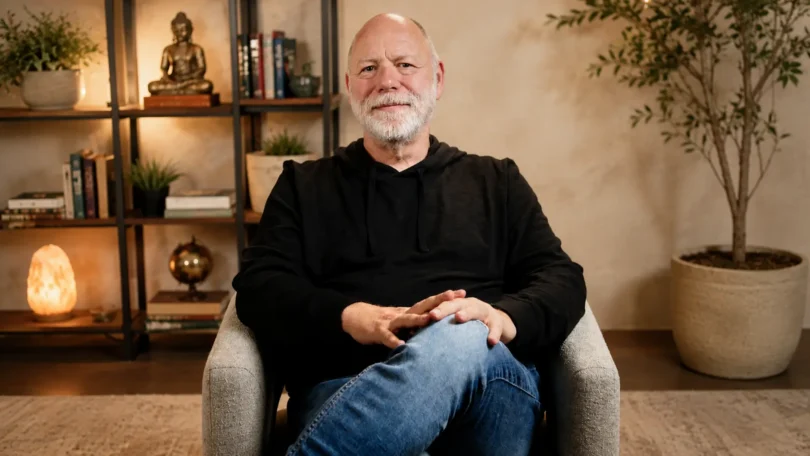
A teaching on stepping into higher awareness, from one of the best-known channels of our time. Paul Selig teaches it in Awakening Divine Consciousness, part of NLS Mastery. Watch the course preview below.
Frequently Asked Questions
What Are the Signs of a Spiritual Awakening?
Common signs include a sense that something is missing, questioning inherited beliefs, shifting friendships, heightened sensitivity, vivid dreams, synchronicities, waves of emotion, a pull toward nature, growing intuition, deeper compassion and a quiet sense of peace. No one has all of them, and they are reports, not a test.
What Are the Stages of Spiritual Awakening?
Most people describe five broad stages: the stirring, the questioning, the dark night of the soul, the opening and integration. They are seasons rather than steps, and many people circle back through them more than once.
How Long Does a Spiritual Awakening Last?
There is no fixed timeline. Some people describe an intense shift lasting months or a few years, and most teachers describe the wider path as lifelong. Think of it as an unfolding, not an event with an end date.
What Is the Dark Night of the Soul?
A season of deep inner struggle in which old meaning falls away. The phrase comes from the sixteenth-century mystic Saint John of the Cross. A painful season is not always spiritual, so if you are struggling, please reach out to a therapist, doctor or crisis line. In the United States, call or text 988.
Can a Spiritual Awakening Be Mistaken for Depression or Anxiety?
Yes. They can look similar from the inside, and they can happen together. You do not need to figure out which one it is before asking for help. A professional who respects your spiritual life can be a strong ally.
What Triggers a Spiritual Awakening?
Common triggers include loss, illness, burnout, a brush with death, deep stillness, a major life transition, or a teacher or book that lands at the right moment. Some people have no clear trigger at all.
Why Do Friendships Change During an Awakening?
As your values and attention shift, some connections no longer fit. You may want deeper conversation and less gossip. You do not have to cut anyone off. You can let go of what feels forced and welcome people who meet you where you are.
Can You Have Physical Symptoms During a Spiritual Awakening?
Some people report fatigue, headaches, tingling or changes in sleep and appetite. These symptoms can have medical causes, so see a doctor first. If nothing is found, gentle practices like rest, time in nature and slow breathing can help.
What Should I Do If I Think I Am Awakening?
Keep it simple. Build a small daily practice, care for your body, journal what you notice, talk with people you trust, and avoid big irreversible decisions. Question anyone who pressures you or profits from your fear.
Is Spiritual Awakening the Same as Enlightenment?
The terms overlap. Awakening usually means the first recognition that there is more to life, while enlightenment describes a deeper and more stable realization that unfolds over time. See our guide to spiritual enlightenment for the full picture.