Spiritual symbols are shapes, signs and images that carry layers of meaning beyond what the eye sees. A lotus is a flower, and it is also a story about rising from the mud into light. An ankh is a cross with a loop, and it is also an ancient promise about life.
Symbols are one of the oldest ways people have spoken about the sacred. They travel across cultures, survive empires and show up in jewelry, temples, tattoos and dreams. Many of us feel pulled to a particular symbol before we can say why. That pull is worth listening to.
This guide walks through more than twenty-five of the most recognized spiritual symbols, where they come from and what they are traditionally said to mean. You will find them grouped by tradition, with a quick reference table, a simple way to read any symbol and a note on using them respectfully. Use it as a map. Then trust your own sense of what speaks to you, because the power is within you.
Key Takeaways
- Spiritual symbols are shapes and images that point to meanings beyond words, such as life, unity, protection and awakening.
- Major symbols include Om, the lotus, yin and yang, the mandala, the ankh, the Eye of Horus, the hamsa, the triskelion and the tree of life.
- Many come from living traditions, so it is wise to learn their context and use them with respect.
- You can read any symbol with five simple questions: its origin, its shape, its traditional meaning, how it feels to you and how you will use it.
- The meaning that matters most is the one that resonates with you, grounded in what the symbol has meant for others.
- Symbols work best as reminders for reflection, not as lucky charms.
What Are Spiritual Symbols?
A symbol stands for something beyond itself. The definition of a symbol is simply something that represents an idea, process or entity. A spiritual symbol does this for the sacred. It gives a shape to the unseen so that people can hold it, share it and return to it.
That is why symbols appear in nearly every tradition. They compress a teaching into an image you can take in at a glance and carry in a pocket. Depth psychologists such as Carl Jung went further and suggested that certain images recur across cultures because they speak to patterns in the human psyche, which he called archetypes. You do not need to hold that theory to notice that the same circles, trees and eyes keep returning.
Spiritual Symbols at a Glance
| Symbol | Tradition or Origin | Core Meaning |
|---|---|---|
| Om | Hindu, Buddhist, Jain, Sikh | The sound of the cosmos, unity |
| Lotus | Buddhist, Hindu, Egyptian | Purity, awakening, rebirth |
| Yin and yang | Chinese philosophy | Balance of complementary opposites |
| Mandala | Hindu, Buddhist, Jain | Wholeness, focus, the cosmos |
| Dharma wheel | Buddhist | The path of teaching and liberation |
| Sri Yantra | Hindu | Creation, the union of energies |
| Third eye | Hindu, Buddhist and many others | Inner sight, intuition |
| Ankh | Ancient Egypt | Life, the breath of life |
| Eye of Horus | Ancient Egypt | Protection, healing, restoration |
| Scarab | Ancient Egypt | Transformation, rebirth |
| Feather of Ma’at | Ancient Egypt | Truth, balance, justice |
| Cross | Christian | Sacrifice, redemption, resurrection |
| Star of David | Jewish | Jewish identity, the meeting of above and below |
| Dove | Christian and wider use | Peace, the Holy Spirit |
| Hamsa | Middle East and North Africa | Protection, blessing |
| Nazar | Turkey, Middle East, Mediterranean | Protection from the evil eye |
| Triskelion | Many cultures, often linked to Celtic art | Cycles, movement, threefold unity |
| Triquetra | Celtic art, later Christian use | Threefold unity, eternity |
| Celtic knot | Celtic art | Endless connection |
| Pentacle | Modern pagan and Wiccan | The five elements, protection |
| Dreamcatcher | Ojibwe | Protection of sleep and dreams |
| Medicine wheel | Many Indigenous nations of North America | Balance, the four directions |
| Ouroboros | Ancient Egypt and Greece | Cycles, renewal |
| Infinity symbol | Modern, with spiritual use | Eternity, endless flow |
| Labyrinth | Many cultures, Christian use in Europe | The journey inward and back |
| Tree of life | Many cultures | Connection of earth and heaven, growth |
Symbols From Eastern Traditions
Om
Om is a sacred sound and written symbol used in Hindu, Buddhist, Jain and Sikh practice. It is chanted at the start of prayers and meditations and is linked to the sound of the cosmos. The Hindu text known as the Mandukya Upanishad offers a famous reflection on its meaning. Read the short definition in our Om glossary entry.
The Lotus
The lotus grows from muddy water and opens clean and bright. In Buddhism it stands for awakening, the idea that clarity can rise from difficulty. In Hindu art it is linked to deities such as Lakshmi. In ancient Egypt the lotus was associated with the sun and rebirth. Each of the seven chakras is drawn as a lotus with its own number of petals.
Yin and Yang
Yin and yang come from Chinese philosophy. Yin is receptive, quiet and cool. Yang is active, bright and warm. Each holds a seed of the other, which is why the symbol shows a dot of each color inside the opposite half. It teaches balance, not a winner.
The Mandala
The word mandala means circle in Sanskrit. A mandala is a circular design used in Hindu, Buddhist and Jain practice as a map of the cosmos and an aid to focus. Tibetan monks create sand mandalas over days and then sweep them away as a teaching on impermanence.
The Dharma Wheel
The dharma wheel, often shown with eight spokes, is a Buddhist symbol of the teaching of the Buddha. The eight spokes are commonly linked to the Noble Eightfold Path.
Sri Yantra
The Sri Yantra is a diagram of nine interlocking triangles used in Hindu meditation as a map of creation. Four triangles point upward and five point downward, and they are read as the union of masculine and feminine energies around a central point.
The Third Eye
The third eye is the symbol of inner sight. In Hindu and Buddhist teaching it is linked to the center between the brows and to intuition and insight. It appears in art as an eye on the forehead of deities.
Symbols From Ancient Egypt
The Ankh
The ankh is a cross topped with a loop, an ancient Egyptian hieroglyph meaning life. In Egyptian art, gods hold it to the lips or nose of a person, a gesture of giving the breath of life.
The Eye of Horus
The Eye of Horus is an Egyptian symbol of protection, healing and royal power. It is tied to a myth in which the eye of Horus is wounded and then restored, which is why it stands for wholeness regained.
The Scarab
The scarab is a dung beetle that the Egyptians linked to the rising sun and to the god Khepri. Rolling its ball across the ground, it became a picture of the sun crossing the sky and of renewal, so scarab amulets stood for transformation and rebirth.
The Feather of Ma’at
In Egyptian belief, the heart of the deceased was weighed against the feather of the goddess Ma’at, who stood for truth, balance and cosmic order. A heart lighter than the feather passed on. The feather became a symbol of living in truth.
Symbols From Jewish and Christian Traditions
The Cross
The cross is the central symbol of Christianity, linked to the crucifixion and resurrection of Jesus. For believers it stands for sacrifice, redemption and new life. Crosses also appear in many older traditions as symbols of the meeting of heaven and earth.
The Star of David
The Star of David is a six-pointed star made of two interlocking triangles. It is widely recognized as a symbol of Jewish identity. Its two triangles are often read as the meeting of above and below.
The Dove
In Christian art the dove represents the Holy Spirit. With an olive branch it became a symbol of peace, drawn from the story of Noah. Today it is used well beyond Christianity as a sign of peace and gentleness.
The Tree of Life in Kabbalah
In the Jewish mystical tradition of Kabbalah, the Tree of Life is a diagram of ten spheres joined by 22 paths, mapping how the divine becomes the world.
Protection Symbols
Many cultures use symbols as shields. They work through meaning, memory and intention, and they give people a feeling of being watched over.
The Hamsa
The hamsa is a palm-shaped amulet used across the Middle East and North Africa, often called the Hand of Fatima in Muslim traditions and the Hand of Miriam in Jewish traditions. It is linked to blessing and protection, often with an eye in the center. See also our hamsa glossary entry.
The Nazar
The nazar is a blue glass eye amulet used in Turkey, the Middle East and the Mediterranean to turn away the evil eye, a look believed to bring harm. Learn more in our evil eye glossary entry.
The Eye of Horus, above, is another well-known protective symbol. Whether a symbol protects you is a matter of belief. What a good symbol reliably does is remind you to stay centered and aware.
Celtic and European Symbols
The Triskelion
The triskelion, with its three spiraling arms, is found in many cultures and is often linked to Celtic art. Its meanings vary, and are often read as cycles, movement and threefold unity such as past, present and future.
The Triquetra
The triquetra is a figure of three interlaced arcs with no beginning or end. It appears in Celtic art and was later used in Christian settings as a symbol of the Trinity.
Celtic Knots
A Celtic knot is a design of interwoven lines that loop without an end. It is commonly read as a picture of eternity and the connection of all things.
The Pentacle
The pentacle is a five-pointed star inside a circle. In modern Wicca and many pagan paths its five points stand for the elements of earth, air, fire, water and spirit, and the circle for protection and unity. It is often misunderstood by people outside those traditions.
Symbols From Indigenous Traditions
Symbols from Indigenous nations belong to living peoples with their own languages, teachings and protocols. The brief notes here are an invitation to learn from the source, and the meanings vary from nation to nation.
The Dreamcatcher
The dreamcatcher began with the Ojibwe people as a woven hoop hung over a sleeping child to protect their dreams. It later spread to other nations and into popular culture.
The Medicine Wheel
The medicine wheel is a circle divided into four parts, used by many Indigenous nations of North America. It often stands for balance, the four directions and the cycles of life, and its specific meanings differ between nations.
Universal Symbols of Cycles and Connection
The Ouroboros
The ouroboros, a snake eating its own tail, appears in ancient Egypt and Greece. It stands for cycles, renewal and the unity of beginning and end.
The Infinity Symbol
The infinity symbol, a sideways figure eight, entered mathematics in the 1600s. In spiritual use it stands for eternity and endless flow.
The Labyrinth
A labyrinth has a single winding path to the center and back, unlike a maze with dead ends. Walking one is a meditation on the journey inward and the return to everyday life.
The Tree of Life
The tree of life appears in cultures around the world as a bridge between earth and sky, roots and branches. It stands for growth, connection and the unity of all living things.
The Sun and the Moon
Nearly every culture reads the sun as life and vitality, and the moon as cycles and intuition. Our guide to moon phases shows how each phase carries its own tone.
For the symbols of the natural world, see our guide to the spiritual meanings of animals and omens.
Alchemical Symbols of the Elements
In the tradition of alchemy, the four classical elements have simple triangle symbols. An upward triangle stands for fire. A downward triangle stands for water. Air is an upward triangle with a line across it, and earth is a downward triangle with a line across it. You can see more in the alchemical symbol overview. These small shapes show how much meaning a simple form can carry.
Sacred Geometry Symbols
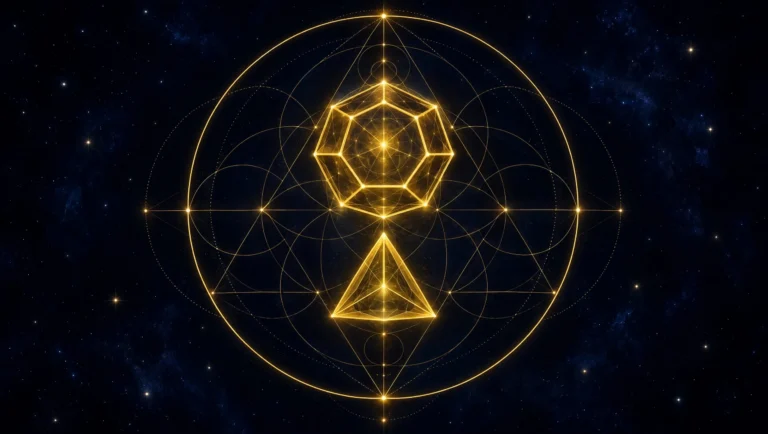
Some of the most beloved modern spiritual symbols come from sacred geometry. The Seed of Life, the Flower of Life, Metatron’s Cube and the Merkaba all use circles, triangles and lines to point at unity and creation. Each has its own guide on Next Level Soul.
Symbols by Theme
| If You Are Looking For | Symbols to Explore |
|---|---|
| Protection | Hamsa, nazar, Eye of Horus, dreamcatcher |
| Awakening | Lotus, Om, third eye, dharma wheel |
| Balance | Yin and yang, medicine wheel, Feather of Ma’at |
| Life and rebirth | Ankh, scarab, tree of life, ouroboros |
| Unity and wholeness | Mandala, Seed of Life, Celtic knot, circle |
| The inner journey | Labyrinth, Sri Yantra, spiral |
How to Read a Symbol: Five Questions
- Where does it come from? Name the tradition or culture. A symbol makes the most sense inside its home.
- What is the shape doing? Notice the circle, the line, the number of parts and the direction of movement.
- What has it traditionally meant? Read two or three reliable sources, not just one.
- How does it feel to you? Sit with it quietly for a few minutes and notice what rises.
- What will you do with it? Decide whether it is a reminder, a focus for meditation or a piece of art.
Symbols in Dreams and Signs
Symbols do not only live on altars and jewelry. They also arrive in dreams and in the small coincidences of daily life. A recurring image can be a useful prompt for reflection. Keep a notebook by your bed and write down what you see, then ask what it points to in your life. For meaningful coincidences, see our glossary entry on synchronicity. If you are drawn to a deeper path, our guide to spiritual awakening is a good next step.
How to Choose a Symbol That Is Right for You
- Notice the pull. Which symbols do you keep returning to? Start there.
- Learn the context. Spend ten minutes reading where it comes from and what it means to the people who hold it sacred.
- Sit with it. Look at the symbol quietly for a few minutes.
- Place it with intention. Choose a spot where it will remind you of something you care about.
- Let it evolve. Your relationship with a symbol can change over time. That is fine.
Using Symbols With Respect
Many symbols are sacred to people who practice the traditions they come from. Om, the dharma wheel, the hamsa, the cross, the Star of David and the dreamcatcher are all part of living cultures. A respectful approach is simple. Learn what the symbol means, avoid using it as a purely decorative trend piece in places it would feel inappropriate, and buy from artists connected to the tradition when you can. If you plan a tattoo, take extra time to learn the symbol and the culture, and consider asking someone from the tradition. Curiosity and humility go a long way.
A Grounded Way to Hold Symbols
Symbols do not hold power by themselves. They hold the meaning that people have poured into them over centuries, and the meaning you bring now. Used well, they help you pause, remember and return to what matters. That is a quiet kind of power, and it is yours.
If you want to explore the energy centers of the body next, read our complete chakras guide.
Frequently Asked Questions
What are spiritual symbols?
Spiritual symbols are shapes, signs and images that represent sacred ideas such as life, unity, protection or awakening. They appear in nearly every tradition and are used in art, prayer, meditation and jewelry.
What are the most common spiritual symbols?
Among the most recognized are Om, the lotus, yin and yang, the mandala, the ankh, the Eye of Horus, the hamsa, the tree of life, the triskelion and the dharma wheel.
What does the lotus symbolize?
The lotus is commonly a symbol of purity, awakening and rebirth. It grows from muddy water and opens clean, which is why many traditions see it as a picture of clarity rising from difficulty.
What does Om mean?
Om is a sacred sound and symbol in Hindu, Buddhist, Jain and Sikh traditions. It is linked to the sound of the cosmos and is chanted at the start of prayers and meditations.
What does yin and yang represent?
Yin and yang represent complementary opposites in Chinese philosophy, such as quiet and active, dark and light. Each contains a seed of the other, and the symbol teaches balance.
What does the ankh symbolize?
The ankh is an ancient Egyptian symbol for life. It is often shown being held by gods to a person’s nose or lips as a gesture of giving the breath of life.
What does the Eye of Horus mean?
The Eye of Horus is an Egyptian symbol of protection, healing and royal power. It is tied to a myth in which the eye is wounded and restored, so it stands for wholeness regained.
What is the best symbol for protection?
Common protection symbols include the hamsa, the nazar or evil eye amulet and the Eye of Horus. Whether a symbol protects is a matter of belief, and it works best as a reminder to stay centered.
What symbol means peace?
The dove with an olive branch is the best known symbol of peace. Others include the lotus, which is linked to inner calm, and the circle, which stands for wholeness.
What is the symbol for spiritual awakening?
The lotus is the most common symbol of awakening. Others include Om, the third eye and the dharma wheel.
What is a mandala used for?
A mandala is a circular design used in Hindu, Buddhist and Jain practice as a map of the cosmos and an aid to meditation. Many people also color or draw mandalas for calm and focus.
Is it disrespectful to wear spiritual symbols?
It can be if worn without understanding. Learn the meaning, avoid using sacred symbols as purely trendy decoration, and support artists connected to the tradition when you can.
How do I find the symbol that is right for me?
Notice which symbols you are drawn to, learn their background, sit with them quietly and see what rises. The meaning that resonates with you, grounded in tradition, is the right one.
Do spiritual symbols really protect you?
That is a matter of personal belief. What symbols reliably do is remind you to stay present and centered, which can shape how you move through your day.
Sources and Further Reading
Spirituality for the Rest of Us™
Movies, teachings and community on Next Level Soul TV.