

A mindful meditation app offers guided sessions, timers and reminders that help you practice present-moment awareness, which is the heart of mindfulness. Choose one that explains its approach clearly, keeps sessions short enough to finish, and encourages you to carry attention into daily life rather than keeping it on the screen. Mindfulness comes from Buddhist tradition, was adapted into secular programs in the 1970s, and is best treated as a practice to explore, not a promise.
Key Takeaways
- Roots: Mindfulness translates the Pali word sati and sits within the Buddhist path; secular programs adapted it from 1979.
- Formal and informal: Sitting sessions train attention; everyday moments, such as washing dishes, apply it.
- What to look for: A clear approach, short sessions, a voice you like, honest claims and gentle reminders.
- Use the app lightly: Let it support practice, then carry the skill into your day.
- Honest limits: Mindfulness is a spiritual and relaxation practice, not treatment. Evidence is mixed and often preliminary.
What Is a Mindful Meditation App?
A mindful meditation app is a tool for practicing mindfulness, usually through guided sessions, a timer, short check-ins and sometimes courses. The word “mindful” points to a specific kind of attention: noticing what is happening, here and now, with openness and without rushing to judge it.
The National Center for Complementary and Integrative Health describes mindfulness as keeping attention on the present moment without judging it, and notes that it is often taught alongside other skills in structured programs. See their overview, Meditation and Mindfulness: What You Need To Know.
Apps tend to offer three things. They give you instructions, so you know what to do. They give you a rhythm, so you remember to do it. And they give you variety, so the practice does not go stale. The rest is up to you.
Mindful Meditation App at a Glance
| Question | Quick answer |
|---|---|
| What is mindfulness? | Present-moment awareness held with openness; a practice drawn from Buddhist tradition and adapted into secular programs. |
| What does the app do? | Guides sessions, times them, reminds you to practice, and may teach basics through courses. |
| Typical session | 3 to 20 minutes of breath, body or open awareness. |
| Good for | Learning to notice, pausing during busy days, building a regular practice. |
| Watch for | Overpromising, streak pressure and screen time that undermines the practice. |
| Health note | A spiritual and relaxation practice. Not treatment. |
Where Mindfulness Comes From
The English word “mindfulness” translates the Pali sati (Sanskrit smriti), which in Buddhist texts relates to memory, recollection and present awareness. According to the Wikipedia article on mindfulness, right mindfulness is the seventh element of the Noble Eightfold Path. In Buddhist tradition it sits alongside ethics and wisdom, not apart from them.
The breath is a classic anchor. The Anapanasati tradition, attributed to the Buddha and set out in the Anapanasati Sutta, teaches awareness of breathing as a path to steadiness and insight.
In 1979, Jon Kabat-Zinn founded Mindfulness-Based Stress Reduction at the University of Massachusetts Medical School. As the MBSR page describes, the program runs eight weeks, with weekly group sessions and a one-day retreat, and combines mindfulness meditation, body scanning and yoga. It brought mindfulness into hospitals, schools and workplaces, and eventually onto phones.
Along the way, critics have raised a fair point. When mindfulness is packaged as a productivity tool, some say it loses its ethical and spiritual roots. That critique is sometimes called “McMindfulness.” You do not have to resolve the debate. It is enough to know it exists and to ask what you want from your own practice.
Formal and Informal Practice: Where an App Fits
Mindfulness has two broad sides. An app helps most with the first. Your life provides the second.
| Practice | What it looks like | Where the app helps |
|---|---|---|
| Formal | Sitting, lying down or walking with a set time and an anchor such as the breath | Guidance, timing, reminders, structured courses |
| Informal | Noticing taste, sound, touch or emotion during ordinary activity | Occasional prompts; mostly your own attention |
Ten minutes of formal practice teaches you what attention feels like. Informal practice is where you use it: noticing the first sip of tea, the weight of a bag on your shoulder, the tightening in your chest before an email. For more ideas, read mindfulness in daily life.
What to Look For in a Mindful Meditation App
A clear approach
Does the app say whether it teaches secular mindfulness, a Buddhist lineage or a blend? You do not need to like every option. You deserve to know which one you are getting.
A teacher you trust
Mindfulness instruction depends on tone. A gentle, unhurried voice that invites noticing works better for many people than a brisk, goal-driven one.
Short sessions and a flexible timer
Three to ten minutes is a real start. The ability to set your own timer later lets the app grow with you.
Balanced reminders
Reminders can help you remember. Too many become noise. Choose a single daily nudge and switch off the rest.
Honest claims
Be cautious of apps that promise to fix stress, sleep or mood. The research is mixed. The Wikipedia article above notes that early studies were criticized for weak methods, newer work uses better designs, and a 2016 review of school-based programs found no measured improvements at post-intervention or three-month follow-up. Mindfulness can be valuable, and the evidence is still developing.
Privacy and terms
Check how your data is stored and how subscriptions renew. Practice can bring up private feelings, and you should be comfortable with where that information goes.
How to Practice Mindfulness With an App
- Pick a daily anchor time. After coffee, before a meal, or just before bed.
- Start with five minutes of breath awareness. Let the guide point you to the breath where it is most noticeable: nostrils, chest or belly.
- Silence the phone. Do not disturb mode, session already downloaded.
- Meet wandering with kindness. When you notice your mind has left, say “thinking” or “wandering” and return. That moment of noticing is the rep.
- Add a body scan. Once a week, try a body scan meditation, adapted into secular programs from a Burmese vipassana tradition, per the mindfulness article.
- Take it outside the session. Once a day, pick one routine activity and do it with full attention.
- Review weekly. Ask what you noticed, not whether you did it right.
To extend your toolkit, guided breathwork pairs well with mindfulness. And if you want a broader view of how to choose among apps, our main meditation app guide covers the options in depth.
A Simple First Month With a Mindful Meditation App
| Week | Formal practice | Informal practice |
|---|---|---|
| 1 | 5 minutes of breath awareness, five days | One mindful breath before each meal |
| 2 | 7 minutes, adding a short body scan twice | Notice sounds while you walk |
| 3 | 10 minutes, mixing guided and timer-only | Listen fully in one conversation a day |
| 4 | 10 to 15 minutes, your favorite style | Pause before replying to messages |
At the end of the month, review. Which anchors did you enjoy? Which times of day worked? Did the app help, or did a plain timer do the job? Keep what serves you.
Be kind about the gaps. Many people drop a week and think the whole project has failed. In mindfulness, the moment you notice you have stopped is itself a moment of awareness, and you can begin again right there.
Ten Mindful Moments That Take Under a Minute
An app can remind you. These small practices make the reminder useful.
- Feel your feet before you stand up.
- Take one slow breath before you open a message.
- Notice the temperature of the water as you wash your hands.
- Name three sounds you can hear right now.
- Listen fully to the first sentence someone says to you.
- Feel the weight of your body in the chair before a meeting.
- Taste the first bite of a meal.
- Look at one thing outside the window for ten seconds.
- Put your hand on your chest and notice your breath.
- Pause before you answer a question.
None of these require an app, and none of them need to be perfect. They are small doors back into the present.
Misconceptions and Honest Limits
“Mindfulness means having no thoughts.” It does not. It means noticing thoughts as thoughts.
“Mindfulness is always relaxing.” Sometimes it is. Sometimes attention reveals tension, sadness or restlessness. The NCCIH reports that meditation is generally low-risk, and that some participants in studies report negative experiences such as anxiety or low mood. If that happens, ease off and speak to a qualified professional.
“An app can replace a teacher.” It can start you on the path. A live teacher or a community can answer questions an app cannot.
“More minutes always means better.” Not at all. Regular, comfortable practice tends to serve you better than occasional marathon sessions.
Educational information, not medical advice. Mindfulness is a spiritual and relaxation practice and should not replace professional care for any condition.
Go Deeper on Next Level Soul
Next Level Soul TV is a spiritual library with guided meditations, not a dedicated meditation app. You can explore the guided meditations, plus audiobooks, series and audio courses on awakening and consciousness, for $19.99 a month or $199 a year, with a 14-day money-back guarantee and 3,500+ hours of content.
If you like thinking about how spiritual practice and everyday life meet, that is exactly the question the library is built around.
Go Deeper with NLS Mastery: Ancient Meditation for Inner Stillness
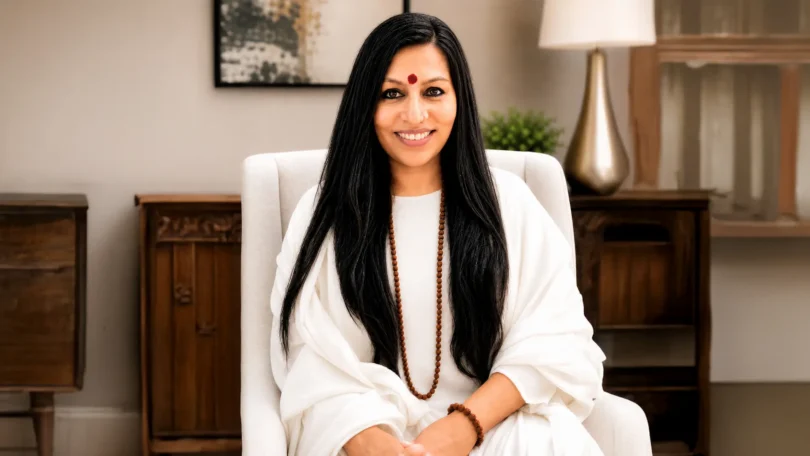
For a rooted, unhurried approach to present-moment awareness, this course shares meditation as taught in the ancient Vedic tradition. Acharya Shunya teaches it in Ancient Meditation for Inner Stillness, part of NLS Mastery. Watch the course preview below.
Frequently Asked Questions
What is a mindful meditation app?
It is an app that guides mindfulness practice with sessions, timers, reminders and sometimes courses, helping you build present-moment awareness.
How is mindfulness different from other meditation?
Mindfulness emphasizes open, non-judging awareness of the present moment. Other styles may focus on a mantra, visualization or devotion.
Where does mindfulness come from?
The word translates the Pali sati from Buddhist tradition. Modern secular programs, such as Mindfulness-Based Stress Reduction founded in 1979, adapted it.
How long should I practice with a mindful meditation app?
Five to ten minutes a day is a common starting point. Regularity matters more than length.
Can a mindfulness app help with stress?
Many people find mindfulness settling, but research is mixed and often preliminary. It is a relaxation and spiritual practice, not a treatment.
Do I need to be Buddhist to use mindfulness?
No. Mindfulness has roots in Buddhist tradition, and secular programs teach it without religious belief.
What is the difference between formal and informal mindfulness?
Formal practice is a set time of sitting or walking with an anchor. Informal practice is paying attention during daily activities.
Is it normal to feel uncomfortable during mindfulness?
Sometimes. Attention can reveal tension or difficult feelings. If it feels like too much, stop and consult a qualified professional.
Can I practice mindfulness without an app?
Yes. A quiet place and a timer are enough, and many practices need nothing at all.
What should I avoid in a mindfulness app?
Be cautious of strong promises, constant notifications and pressure to keep streaks.
Is Next Level Soul TV a mindful meditation app?
No. It is a spiritual library with guided meditations, along with movies, series, documentaries, audiobooks and audio courses.
Sources and Further Reading
Spirituality for the Rest of Us™
Movies, series, documentaries, audiobooks, audio courses and guided meditations on awakening and consciousness, all in one place. 14-day money-back guarantee.


