

The Major Arcana is the set of 22 trump cards in a tarot deck, numbered 0 to 21 from The Fool to The World. Each card stands for a big life theme such as new beginnings, love, change or completion. The cards began as an Italian card game in the 1400s and became a tool for reflection, not a guarantee of the future.
Key Takeaways
- Meaning: 22 trump cards, 0 to 21, that represent major life themes and archetypes.
- Origin: Italian trump cards of the 15th century; occult use grew in France from the 1780s.
- The story: The Fool’s Journey reads the cards as one path from beginning to wholeness.
- Practice: Pull one card, notice first, ask three questions, then write and act.
- Caution: Tarot is for reflection. Do not use it in place of medical, legal or financial advice.
What Is the Major Arcana?
The Major Arcana is the group of 22 trump cards in a tarot deck, numbered 0 to 21, from The Fool to The World. In tarot reading they stand for big themes and turning points in a life: beginnings, love, challenge, change, wisdom and completion. The other 56 cards, the Minor Arcana, usually speak to everyday events.
If you are new to the cards, start here. The Major Arcana is the heart of the deck. When several of these cards show up in a reading, many readers take it as a sign that the question touches something larger than a passing mood.
A quick note on tone. Tarot is a tool for reflection and storytelling, not a way to predict the future with certainty. We read the cards as mirrors: they ask better questions, and you supply the answers. For a wider introduction to the deck as a whole, see our guide to tarot cards.
Major Arcana at a Glance
| Question | Quick answer |
|---|---|
| How many cards? | 22, numbered 0 to 21 (some older decks number the Fool differently or leave it unnumbered). |
| What does “arcana” mean? | From Latin for “secrets” or “mysteries.” Major means the larger secrets. |
| First card? | The Fool (0), the beginning of the journey. |
| Last card? | The World (XXI), completion and wholeness. |
| What do they represent? | Major life themes, lessons and archetypes, rather than small daily events. |
| Where did they start? | As the trump suit in Italian card games in the 15th century. |
| Are they fortune telling? | They are used that way by many readers, though they began as a game. Treat readings as reflection. |
| What is the Fool’s Journey? | A popular way to read cards 0 to 21 as one story of growth. |
Where the Major Arcana Came From
Tarot began as a card game, not a mystical system. In northern Italy in the mid-1400s, card makers added a fifth set of illustrated cards, called trionfi or “triumphs,” to the usual four-suit pack, along with a Fool. These cards ranked above the other suits, acting as trumps. The Visconti-Sforza decks are among the oldest that survive.
At first the trumps were pictures without fixed names or numbers, and their order was not standardized. Over time, regional patterns settled. The Tarot de Marseille became one of the best-known.
The leap into the occult came later. In the 1780s in France, writers such as Antoine Court de Gébelin claimed the trumps held ancient Egyptian wisdom. Historians do not support that claim, but it set the stage. Etteilla created the first dedicated fortune-telling methods and decks. Éliphas Lévi tied the cards to Kabbalah, and groups like the Hermetic Order of the Golden Dawn built elaborate correspondences with astrology and the Tree of Life.
The version most people picture today comes from 1909. Arthur Edward Waite commissioned artist Pamela Colman Smith, who had joined the Golden Dawn in 1901, to illustrate a new deck. It was published in England by Rider that December. Smith’s full-scene pictures, including for the small cards, became the model for countless later decks, and the Rider-Waite-Smith deck remains the most widely used today. In that deck, Strength became VIII and Justice XI, a swap made to fit Golden Dawn astrological links.
All 22 Major Arcana Cards and Their Meanings
Here is a quick-reference table. Meanings vary by reader, deck and question, so treat these as starting points. Names follow the Rider-Waite-Smith deck.
| No. | Card | Core themes (upright) | Invitation (reversed or shadow side) |
|---|---|---|---|
| 0 | The Fool | New beginnings, trust, openness | Recklessness, hesitation |
| I | The Magician | Skill, focus, making things happen | Scattered effort, trickery |
| II | The High Priestess | Intuition, inner knowing, mystery | Ignoring your gut, secrets |
| III | The Empress | Nurture, creativity, abundance | Smothering, creative block |
| IV | The Emperor | Structure, authority, stability | Rigidity, control |
| V | The Hierophant | Tradition, teaching, shared values | Dogma, blind conformity |
| VI | The Lovers | Union, choice, alignment of values | Disharmony, avoiding a choice |
| VII | The Chariot | Drive, willpower, direction | Lack of direction, forcing |
| VIII | Strength | Courage, patience, gentle power | Self-doubt, harshness |
| IX | The Hermit | Solitude, reflection, inner light | Isolation, withdrawal |
| X | Wheel of Fortune | Cycles, change, turning points | Resisting change, bad timing |
| XI | Justice | Fairness, truth, cause and effect | Dishonesty, avoiding accountability |
| XII | The Hanged Man | Pause, surrender, new perspective | Stalling, needless sacrifice |
| XIII | Death | Endings, transformation, release | Clinging, fear of change |
| XIV | Temperance | Balance, patience, blending | Excess, imbalance |
| XV | The Devil | Attachment, shadow, temptation | Release, breaking free |
| XVI | The Tower | Sudden upheaval, revelation | Fear of change, delayed collapse |
| XVII | The Star | Hope, healing, renewal | Discouragement, disconnection |
| XVIII | The Moon | Dreams, uncertainty, the subconscious | Confusion lifting, anxiety |
| XIX | The Sun | Joy, clarity, vitality | Dimmed enthusiasm |
| XX | Judgement | Reckoning, calling, rebirth | Self-doubt, ignoring the call |
| XXI | The World | Completion, wholeness, integration | Unfinished business, lingering |
Death rarely means literal death in tarot. It is about endings that make room for something new. The Tower is not a curse either. It points to a structure that was already unstable and the clarity that follows.
Reversals deserve a word. Some readers turn cards upside down in the shuffle and read them differently; others skip reversals completely and lose nothing. When a card lands reversed, many readers take it as the same energy blocked, turned inward, or showing up in excess. The right-hand column above is a prompt, not a verdict. If reversals feel like too much while you are learning, read every card upright.
One Question to Carry for Each Card
Meanings are only useful if they touch a real life. Use the question beside each card as a journaling prompt. It works for the card you pulled today or for any card that keeps appearing.
| No. | Card | A question to journal with |
|---|---|---|
| 0 | The Fool | What would I try if I trusted myself a little more? |
| I | The Magician | Which tool do I already have that I am not using? |
| II | The High Priestess | What do I already know but have not admitted? |
| III | The Empress | What needs tending in my life right now? |
| IV | The Emperor | Where would a firm boundary bring me peace? |
| V | The Hierophant | Which teaching or tradition still serves me? |
| VI | The Lovers | Which choice matches what I truly value? |
| VII | The Chariot | What am I steering toward, and who holds the reins? |
| VIII | Strength | Where can I answer pressure with patience? |
| IX | The Hermit | What would I hear if I got quiet for a day? |
| X | Wheel of Fortune | What cycle is turning, and what is mine to do? |
| XI | Justice | What is the honest account of this situation? |
| XII | The Hanged Man | What shifts if I look from the other side? |
| XIII | Death | What is finished and ready to be released? |
| XIV | Temperance | Where is a little more balance possible? |
| XV | The Devil | What do I cling to that I could loosen? |
| XVI | The Tower | What was never stable, and what comes next? |
| XVII | The Star | What small hope can I tend today? |
| XVIII | The Moon | What fear is shaping what I see? |
| XIX | The Sun | What is simply going well, and can I enjoy it? |
| XX | Judgement | What is calling me to rise? |
| XXI | The World | What have I completed that deserves a pause? |
The Fool’s Journey: Reading the Cards as One Story
One of the most useful ways to learn the Major Arcana is as a single story. The Fool, a traveler with nothing but trust, walks through each card in order. Along the way he learns, stumbles, grows and returns changed. This idea is popular among modern readers, and it makes the cards far easier to remember than memorizing 22 separate meanings.
Cards 0 to 7: Building a Self
The Fool steps out. The Magician learns to use his tools. The High Priestess teaches him to listen inwardly. The Empress and Emperor show nurture and structure. The Hierophant offers tradition. The Lovers pose a choice, and the Chariot is the first act of will.
Cards 8 to 14: Meeting Life
Strength brings courage and compassion. The Hermit withdraws to find his own light. The Wheel turns. Justice weighs consequences. The Hanged Man surrenders and sees things upside down. Death clears what is finished. Temperance blends the opposites.
Cards 15 to 21: Shadow, Collapse and Return
The Devil shows what we cling to. The Tower breaks false structure. The Star brings quiet hope. The Moon walks through fear and uncertainty. The Sun brings clarity and joy. Judgement is a call to rise. The World closes the circle, and a new Fool begins again.
Here is the whole path in one breath. A traveler sets out with open hands (0), gathers skill and listens inward (I and II), learns to nurture and to build (III and IV), meets tradition, love and ambition (V to VII), then faces the real tests: courage, solitude, luck, fairness and surrender (VIII to XII). Loss and balance follow (XIII and XIV). The darkest stretch, attachment, collapse and fear (XV to XVIII), gives way to joy, a call to rise and a sense of completion (XIX to XXI).
The Fool is the one card without a fixed place. In some decks it is the unnumbered card, in others it sits at the start as 0, and in others it is placed at the end as XXII. That flexibility fits the story. The Fool is both the beginner and the person who has come all the way around.
The Jungian reading came from Sallie Nichols, who published Jung and Tarot: An Archetypal Journey in 1980. She read the trumps as archetypes on the path of individuation. Many modern readers borrow the same idea without the psychology: the Journey is simply a gentle way to ask which chapter you are in. Pick the card that feels closest to your week, then read the one before it and the one after it. That small habit often says more than any single meaning.
Notice that the darker cards are not punishments. They are chapters. If the language of individuation, the lifelong process of becoming whole, speaks to you, our guide to shadow work pairs well with the Devil, the Tower and the Moon.
How to Read the Major Arcana: A Simple Practice
You do not need psychic gifts to begin. You need curiosity and a few quiet minutes.
- Pull one card. Shuffle however you like and draw a single Major Arcana card from a Major-only stack, or from the full deck.
- Look before you look it up. Spend a full minute noticing colors, figures, direction, mood. What do you feel first?
- Ask three questions. What is happening in this card? Where is that in my life? What is one small action it suggests?
- Then check a guidebook. Compare your read with the traditional meaning. Notice where they agree and where they differ.
- Write one sentence. Record the card and your takeaway. Over time you will build your own library of meanings.
- Take one real-world step. If The Hermit shows up, maybe it is a phone-free walk. If it is The Sun, call someone you love.
As your skill grows, try a three-card spread: past, present, future, or situation, challenge, advice. Remember that a reading reflects possibilities and patterns. It does not lock in your fate. For ways to sharpen the inner sense that readers rely on, explore intuition development.
Reading Major Arcana Cards in a Spread
Once you can read one card, a spread is just a few cards in conversation. Start with how many Major Arcana cards appear, then where they sit.
- Count them. In a ten-card spread from a full 78-card deck, one or two trumps is ordinary. Many readers treat a spread full of them as a sign the question touches something larger than the day-to-day.
- Read the position first. A Major card in the “challenge” position speaks about a theme, not a single event. The same card in “advice” invites a larger step.
- Let Minor cards add detail. If The Hermit sits beside a Three of Cups, the two can be read together: a need for quiet, and a gathering of friends to come back to.
- Notice the order. Look at the numbers. A low trump next to a high one can suggest a beginning leading to a completion, much like a short Fool’s Journey.
- Try a Majors-only reading. Take just the 22 trumps and pull three for situation, challenge and advice. It keeps the focus on themes and is gentle on beginners.
A simple example. You pull The Star, The Tower and The Sun. One reader might say: a hopeful start, an upset in the middle, and a clearer place to land. Another might read it differently, and that is fine. The cards open a conversation, and you decide what it means.
Before you draw, take three slow breaths. A few minutes of quiet from one of our guided meditations can help you read the images with a calmer mind. Close by writing down what you saw, then one thing you will do.
Major Arcana vs Minor Arcana
| Feature | Major Arcana | Minor Arcana |
|---|---|---|
| Number of cards | 22 | 56 |
| Structure | Numbered 0 to 21, no suits | Four suits (wands, cups, swords, pentacles) of 14 cards each |
| Typical scope | Life themes, spiritual lessons, turning points | Daily events, moods, practical matters |
| Imagery | Archetypal figures like the Fool or the Moon | Scenes and symbols tied to a suit |
| When many appear | Often read as a sign of a significant chapter | Often read as everyday circumstances |
Neither half is better. The Major cards give meaning, and the Minor cards give detail. Together they let a reader tell a story that is both big and practical.
In many modern decks the four suits are tied to the classical elements: wands to fire, cups to water, swords to air and pentacles to earth. A reader might see a Major card as the theme of the chapter and the suit cards as the scenes inside it. Pulling a trump alongside a run of cups, for example, would shift the story toward feelings and relationships.
Misconceptions and Healthy Boundaries
Tarot carries plenty of myths. A few worth clearing up:
- Tarot is ancient Egyptian wisdom. Historians trace the cards to 15th-century Italy and a card game. The Egyptian story came in the 1700s.
- Death means someone will die. It means an ending and a transition, not a literal event.
- The cards predict a fixed future. Treat them as reflection. You always have choices.
- You need to be psychic. You need attention and honesty. Intuition grows with practice.
- Reversed cards are bad. They often suggest a shadow side, inward focus or blocked energy.
Keep healthy boundaries. Do not use tarot to make major medical, legal or financial decisions, and be cautious about anyone who claims to remove curses or demands payment for fear-based readings. If you are going through a hard time, a licensed counselor is a better first call than a card spread. The cards can sit beside that care as a journaling companion.
If you want to explore the symbolic language of the deck further, our guide to spiritual symbols and meanings offers helpful context.
Go Deeper with NLS Mastery: Awaken Your Psychic Abilities
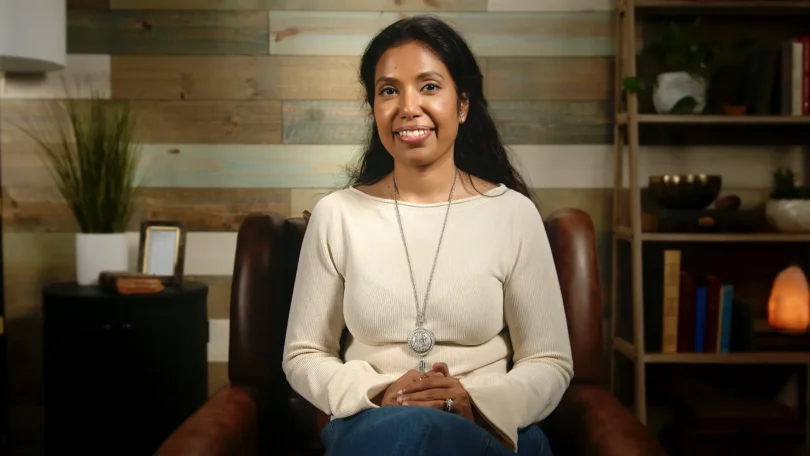
Nikki’s course on intuition and psychic development helps you trust your inner reading, which is the real skill behind working with tarot. Nikki Dutta teaches it in Awaken Your Psychic Abilities, part of NLS Mastery. Watch the course preview below.
Frequently Asked Questions
What is the Major Arcana in tarot?
It is the set of 22 trump cards numbered 0 to 21, from The Fool to The World. They represent major life themes and spiritual lessons.
How many Major Arcana cards are there?
There are 22. In a full 78-card deck, the other 56 cards make up the Minor Arcana.
What does arcana mean?
Arcana comes from Latin and means secrets or mysteries. Major Arcana means the larger secrets of the deck.
What is the first card of the Major Arcana?
The Fool, numbered 0. It represents beginnings, trust and the start of the journey.
What is the last Major Arcana card?
The World, numbered XXI. It stands for completion, wholeness and integration.
What is the difference between Major and Minor Arcana?
The Major Arcana covers big life themes with archetypal images. The Minor Arcana has four suits of 14 cards each and usually points to daily matters.
Does the Death card mean actual death?
Almost never. In tarot it symbolizes an ending, a transformation or a letting go that makes space for something new.
Is The Tower a bad card?
It signals sudden upheaval, but many readers see it as the collapse of something unstable and a path to clarity. It is a hard card, not a curse.
What is the Fool’s Journey?
It is a modern way of reading cards 0 to 21 as one story of a traveler growing through life’s stages.
Where did the Major Arcana originate?
The trump cards first appeared in northern Italy in the 15th century as part of a card game. Occult and divination uses developed later, mainly in France from the 1780s.
Which Major Arcana card should a beginner learn first?
Many start with The Fool, since it opens the story, then add one card a day. Spend a minute with the image before reading the meaning.
Sources and Further Reading
Spirituality for the Rest of Us™
Movies, series, documentaries, audiobooks, audio courses and guided meditations on awakening and consciousness, all in one place. 14-day money-back guarantee.


